
Abstract
AimTo investigate the potential antioxidant and neuroprotective effects of ebselen on the retina in a glaucoma model.MethodsThe rats in the control group were not operated on and received no treatment. In the rats in other groups, an increase in intraocular pressure was induced by limbal vein cauterization. The rats in the sham and ebselen groups were administered, respectively, 1 mL/kg/day dimethyl sulfoxide solution and 400 µmol/kg/day ebselen for 14 days. On the 14th day, the eyes were enucleated. The levels of malondialdehyde (MDA), nitric oxide (NO), and nitric oxide synthase-2 (NOS-2) in anterior chamber fluids were measured. The retina was subjected to immunohistochemical staining for glial fibrillary acidic protein (GFAP), S-100, and vimentin.ResultsThe mean levels of MDA, NO, and NOS-2 were higher in the sham group compared to the control group (P < .05). The mean levels of MDA, NO, and NOS-2 in the ebselen group did not differ significantly from those in the control group (P > .05). The retinal immunostainings in the sham group showed significant increases in the expression of apoptosis, GFAP, S-100, and vimentin compared with the control group (P < .05). In the ebselen group, the expression levels of apoptosis, GFAP, S-100, and vimentin were significantly lower than in the sham group (P < .05). ConclusionEbselen has neuroprotective effects on the retina in the experimental glaucoma model.
Keywords
Introduction
Glaucoma, a leading cause of preventable blindness, is a multifactorial optic neuropathy characterized by retinal ganglion cell (RGC) loss, visual field defects, and optic nerve head excavation. Elevated intraocular pressure (IOP) is the primary and only modifiable risk factor for the disease; therefore, IOP reduction remains the cornerstone of management. Surgical treatment is considered when the target IOP cannot be achieved or when glaucomatous damage progresses despite maximal medical therapy. The disease involves thinning of the retinal nerve fiber layer and irreversible loss of RGCs, underscoring the importance of neuroprotective approaches in glaucoma management.1,2 Ebselen, a selenium-based antioxidant, possesses multiple pharmacological properties, including neuroprotective, anti-inflammatory, reactive nitrogen species scavenging, and anti-apoptotic effects.3 It has been shown to reduce neuronal death and ischemic injury in experimental models, supporting its potential as a neuroprotective agent.4 Based on these findings, we hypothesize that ebselen may provide neuroprotective and antioxidant benefits in the glaucomatous retina. To our knowledge, its retinal effects in glaucoma have not been previously investigated. Therefore, this study evaluates the neuroprotective and antioxidant actions of ebselen in a rat model of glaucoma.
The objective of this study was to investigate whether ebselen exerts neuroprotective and antioxidant effects in an experimental rat model of glaucoma.
Materials and Methods
Ethical Approval and Experimental DesignThis study was approved by the institutional ethics committee and conducted in compliance with the Association for Research in Vision and Ophthalmology (ARVO) guidelines and the Guidelines for the Housing of Rats in Scientific Institutions. Twenty-one Sprague–Dawley rats (250 g, 2–3 months old) were housed under controlled conditions (22–26°C, 12-hour light/dark cycle) and fed standard chow. Water was withheld for 12 hours before surgery. All experimental, biochemical, and histopathological procedures were performed as described in the authors’ previous study.5Study GroupsThe rats were randomly divided into three groups of seven animals each. Group 1 (Control): No surgical procedure or treatment was applied. Group 2 (Sham): Intraocular pressure (IOP) elevation was induced, and rats received intraperitoneal dimethyl sulfoxide (DMSO) at 1 mL/kg/day for 14 days. Since ebselen is insoluble in saline, DMSO (Sigma-Aldrich, St. Louis, MO, USA) was used as its solvent and served as the placebo. Group 3 (Ebselen): After IOP induction, rats were intraperitoneally administered ebselen at 400 μmol/kg/day for 14 days.Anesthetic TechniqueAnesthesia and analgesia were induced with an intramuscular injection of ketamine hydrochloride (50 mg/kg; Ketalar, Eczacıbaşı, Turkey) and xylazine hydrochloride (5 mg/kg; Rompun, Bayer, Turkey). Additionally, 1% proparacaine hydrochloride was applied topically to both eyes before surgical procedures.
Induction of Intraocular Pressure Elevation: Following anesthesia and analgesia, ocular hypertension was induced by cauterizing the episcleral veins, including three branches of the limbal veins, except for the nasal quadrant, using a unipolar ophthalmic cautery.6 The eyes were then irrigated with saline, and antibiotic drops were applied.
Intraocular Pressure Measurement: Intraocular pressure was measured with a Tono-Pen tonometer to obtain accurate, repeatable readings. Ten readings with less than 5% error were averaged for each measurement. IOP was recorded before surgery and on postoperative days 5 and 10 after topical instillation of 1% proparacaine hydrochloride.
Histopathologic Preparation: After anesthesia and analgesia, the eyes were enucleated. Aqueous humor samples were aspirated with a 27-gauge needle to measure malondialdehyde (MDA) and nitric oxide (NO) levels. Iris and ciliary body tissues were collected for nitric oxide synthase-2 (NOS-2) analysis. The retina and optic nerve from the remaining posterior segment were dissected for immunohistochemical evaluation of glial fibrillary acidic protein (GFAP), vimentin, and S-100 expression, and apoptosis was assessed using the TUNEL (terminal deoxynucleotidyl transferase-mediated dUTP-biotin nick-end labeling) method.Determination of MDA, NO, and NOS-2 LevelsEqual volumes of aqueous humor were collected from each eye. Malondialdehyde (MDA), an indicator of lipid peroxidation, was quantified using a commercial MDA kit (Immuchrom GmbH, Hessen, Germany) via high-performance liquid chromatography (HPLC) with fluorescence detection (excitation: 515 nm; emission: 553 nm). Nitric oxide (NOx) levels were measured using a nitrite/nitrate colorimetric assay kit (Cayman Chemical, Ann Arbor, MI, USA) with an ELISA device. For Western blot analysis of NOS-2, frozen ciliary body samples were homogenized in RIPA lysis buffer containing protease and phosphatase inhibitors and centrifuged at 10,000 × g for 10 minutes. Protein concentrations were determined using a Qubit fluorometer, and 50 μg of protein per sample was loaded onto SDS-PAGE gels, electrophoresed, and transferred to PVDF membranes (An iBlot Dry Blotting System was used to transfer proteins). Membranes were incubated with polyclonal anti-NOS-2 antibody (1:200; Santa Cruz Biotechnology, CA, USA), followed by secondary antibody and chromogenic detection.TUNEL and Retinal Immunohistochemistry StainingApoptotic Cell ScreeningFive-micrometer sections from paraffin-embedded tissues were mounted on polylysine-coated slides. Apoptotic cells were detected using the ApopTag® Plus Peroxidase In Situ Apoptosis Detection Kit (Chemicon, S7101, USA) following the manufacturer’s protocol. After deparaffinization, rehydration, and proteinase K treatment, endogenous peroxidase activity was blocked with 3% hydrogen peroxide. Sections were incubated with TdT, followed by anti-digoxigenin peroxidase, and visualized with diaminobenzidine. Sections were counterstained with Harris hematoxylin. Positive controls used breast tissue, and negative controls omitted TdT. Apoptotic cells were identified by brown-stained nuclei, while blue-stained nuclei indicated normal cells. TUNEL staining intensity was semi-quantitatively scored as 0 (none), 1 (light), 2 (moderate), or 3 (intense).GFAP, S-100, Vimentin ImmunohistochemistryFour-micrometer sections of the retina and optic nerve were prepared from paraffin-embedded tissue blocks for immunohistochemical analysis. Staining for GFAP, S-100, and vimentin was performed using respective antibody kits (Lifespan BioSciences, Seattle, WA) on an automated Ventana Benchmark XT system. Following staining, sections were sealed and examined under an Olympus light microscope, and representative images were captured at 40× magnification. Nuclear immunoreactivity for GFAP, S-100, and vimentin was evaluated semi-quantitatively and classified as weak (+), moderate (++), or strong (+++).Ethical ApprovalThis study was approved by the Ethics Committee of Fırat University (Date: 22.11.2011, Decision No: 126).Statistical AnalysisData were analyzed using SPSS 16.0 and are presented as mean ± standard deviation (SD). A P value < 0.05 was considered statistically significant. Parametric data were analyzed by one-way ANOVA followed by Tukey’s post hoc test. In contrast, nonparametric data were evaluated using the Kruskal-Wallis test followed by the Mann-Whitney U test. The Wilcoxon test was applied to related variables.
Reporting GuidelinesThis study was reported in accordance with the ARRIVE guidelines for animal research.
Results
Intraocular PressureMean intraocular pressure (IOP) significantly increased in both the sham and ebselen groups after episcleral vein cauterization (P < .05), whereas the control group showed no significant change (P > .05) (Table 1). The sham group exhibited significantly higher IOP than controls at postoperative days 5 and 10 (P < .05).
MDA LevelsAqueous humor MDA levels were significantly elevated in the sham group compared to controls (P < .01). Ebselen treatment markedly reduced MDA levels compared with the sham group (P < .01), and no significant difference was observed between the ebselen and control groups (P > .05) (Table 2).NO LevelsNitric oxide (NOx) levels were significantly higher in the sham group versus controls (p≤0.01). Ebselen significantly decreased NOx levels compared to the sham group (P < .05), with no significant difference from controls (P > .05) (Table 2).
NOS-2 levels: Ciliary body NOS-2 levels were significantly elevated in the sham group compared to controls (P < .05). Ebselen treatment markedly decreased NOS-2 levels relative to both the sham and control groups (P < .01) (Table 2).
Retinal Immunohistochemistry and TUNEL staining. Apoptosis: Retinal apoptosis, assessed by TUNEL staining, showed weak positivity in the control group (Supplementary Figure 1A). In the sham group, TUNEL positivity was markedly increased, particularly in the OPL and INL, indicating significant apoptosis (P < .05) (Supplementary Figure 1 B). Ebselen treatment significantly reduced apoptosis compared with the sham group, with staining similar to the control group (Supplementary Figure 1C). When examined in retinal sections, the TUNEL+ RGC layer was observed in the IPL and INL. Compared with the control group, the prevalence of TUNEL staining increased in the sham group and was statistically significant (P < .05). In the ebselen group, TUNEL+ cells were significantly decreased (P < .05).
Hematoxylin and Eosin (H&E) StainingH&E-stained retinal sections demonstrated thinning of the INL in the sham group (Supplementary Figure 2 B), reflecting pressure-induced retinal damage. The control group exhibited normal retinal thickness (Supplementary Figure 2 A), while the ebselen group showed preserved INL thickness similar to controls (Supplementary Figure 2 C).GFAP ImmunohistochemistryRetinal GFAP staining indicated weak positivity (+1) in the control group (Supplementary Figure 3 A). Sham eyes exhibited strong GFAP immunoreactivity (+++) throughout Müller cells and their processes, particularly in the IPL, INL, OPL, and ONL, extending even to the photoreceptor layers (Supplementary Figure 3B, P < .05). Ebselen treatment reduced GFAP expression (++), resembling the control pattern, without extending to the photoreceptor layer (Supplementary Figure 3 C, P < .05 vs. sham).
S-100 ImmunohistochemistryMüller cell S-100 expression was limited to INL and sparsely in RGCs in controls (+1, Supplementary Figure 3 D). Sham eyes showed significantly increased S-100 immunoreactivity (+++) across IPL, INL, and ONL (P < .05, Supplementary Figure 3 E). Ebselen treatment reduced S-100 expression (++), notably decreasing staining in the IPL and ONL compared to sham (P < .05, Supplementary Figure 3F).
Vimentin ImmunohistochemistryControl retinas displayed vimentin expression (+1) in RGC, IPL, OPL, and MC processes in INL (Supplementary Figure 3 G). Sham group retinas showed significantly increased vimentin immunoreactivity (+++) across all retinal layers, including the ONL (P < .05, Supplementary Figure 3H). Ebselen treatment restored vimentin expression to near-control levels (+1) in RGC, IPL, INL, and OPL (P < .05 vs. sham, Supplementary Figure 3 I).
Discussion
Glaucoma is a major cause of irreversible vision loss worldwide, primarily due to RGC apoptosis and axonal degeneration.7 Although elevated IOP is a key risk factor, neuronal damage may persist even with controlled IOP, underscoring the importance of neuroprotective strategies. Oxidative stress and lipid peroxidation are thought to contribute significantly to glaucomatous neurodegeneration.8 Malondialdehyde (MDA), a marker of lipid peroxidation, indicates oxidative stress–related RGC damage and has been reported to increase in glaucoma patients and in experimental models.9 In our study, MDA levels increased in the sham group but decreased after ebselen treatment, indicating reduced oxidative-nitrative stress and supporting ebselen's neuroprotective potential in glaucoma. Oxidative and nitrosative stress play a critical role in glaucomatous optic nerve damage. Experimental studies have demonstrated NOS-2 expression in the retina and optic nerve head, implicating NO in glaucoma pathogenesis.10 Under inflammatory conditions, excessive NO production by inducible NOS-2 contributes to cytotoxicity and apoptosis via the formation of reactive nitrogen species.11 Elevated IOP upregulates NOS-2 expression and protein nitration, while NOS-2 inhibition protects RGCs from degeneration.12 In the present study, apoptosis observed in the RGC, inner nuclear, and inner plexiform layers supports the involvement of NOS-2– mediated nitrative stress in glaucomatous neurodegeneration. Ebselen, a seleno-organic compound with antioxidant and anti-inflammatory properties, inhibits NOS activity and NO production. Consistent with previous reports, NOS-2 and NO levels were significantly lower in the ebselen-treated group, suggesting that ebselen mitigates glaucomatous injury by reducing oxidative and nitrative stress.3,13 Multiple hypotheses exist regarding RGC apoptosis in glaucoma, including axoplasmic flow blockage, neurotrophin withdrawal, elevated vitreous glutamate, and vasospasm.14 Experimental studies using TUNEL assays have demonstrated that apoptosis occurs mainly in the RGC layer.15 Glaucomatous neurodegeneration is further associated with axonal loss, microglial activation, and activation of inflammatory cytokines and the complement pathway.16 In the present study, TUNEL staining revealed significantly higher apoptosis in the sham group and reduced apoptosis in the ebselen-treated group, supporting the neuroprotective effect of ebselen on RGCs. Astrocytes, Müller cells (MCs), and microglia play dual roles in retinal homeostasis, contributing to both neuroprotection and neurodegeneration.17 Experimental models have shown that elevated IOP triggers glial activation, which is associated with neuronal degeneration and debris clearance.18 Glial fibrillary acidic protein (GFAP), primarily expressed in MCs, is a sensitive marker of retinal stress and is markedly upregulated following IOP elevation.19 In our study, GFAP expression was increased in the sham group but reduced with ebselen treatment, indicating that ebselen suppresses glial activation and protects against retinal injury. Vimentin, an intermediate filament protein, maintains cytoskeletal integrity in MCs and astrocytes.20 Experimental glaucoma models have shown increased vimentin expression in the retinal nerve fiber layer, reflecting MC activation and altered glutamate metabolism.21 In our study, vimentin expression was elevated in the sham group but decreased with ebselen treatment, suggesting that ebselen reduces glial activation and cytoskeletal stress in the glaucomatous retina. S-100 protein, a Ca²⁺-binding guanylate cyclase activator, is a specific marker of retinal MCs in adult mammals.22 Its upregulation in experimental glaucoma indicates MC activation and injury.18 In our study, S-100 expression was markedly increased in the sham group, particularly in MCs within the inner nuclear layer, but decreased after ebselen treatment, suggesting that ebselen protects against MC damage. Ebselen, an organoselenium compound, exhibits antioxidant, anti-inflammatory, and neuroprotective properties.23 Acting as a glutathione peroxidase mimetic, it scavenges reactive oxygen and nitrogen species, thereby reducing lipid peroxidation and oxidative stress. Owing to its lipid solubility, ebselen readily penetrates cells and protects neural tissues from ischemia- or reperfusion-induced injury.24 Animal studies have demonstrated that ebselen reduces oxidative stress and lipid peroxidation, resulting in significant neuroprotection in various tissues.4 Oxidative stress is a major contributor to apoptosis, and ebselen limits injury-induced cell death primarily through its antioxidant effects. Although ocular studies are limited, available evidence indicates that systemic ebselen can penetrate ocular barriers, normalize retinal MDA and GSH levels, preserve glutathione peroxidase activity, and reduce oxidative damage in experimental models of retinal injury and cataract formation.18,19,25 In our study, ebselen reduced MDA, NO, and NOS-2 levels in aqueous humor and decreased retinal apoptosis, GFAP, S-100, and vimentin expressions in TUNEL and immunohistochemical analyses.
Limitations
The small sample size may limit the generalizability of the findings. Future studies with larger sample sizes and extended follow-up periods are needed to confirm the neuroprotective and antioxidant effects of ebselen in experimental glaucoma.
Conclusion
Ebselen demonstrates significant neuroprotective effects in experimental glaucoma by reducing oxidative and nitrative stress, inhibiting RGC apoptosis, and attenuating glial activation. The treatment lowered MDA, NO, and NOS-2 levels and decreased the expression of GFAP, vimentin, and S-100 in retinal tissues. These findings suggest that ebselen may serve as a promising therapeutic agent to complement intraocular pressure–lowering strategies and protect retinal neurons from glaucomatous damage.
Declarations
Animal and Human Rights Statement
All procedures performed in this study were in accordance with the ethical standards of the institutional and/or national research committee and with the 1964 Declaration of Helsinki and its later amendments, or comparable ethical standards.
Informed Consent
Not applicable.
Data Availability
The datasets used and/or analyzed during the current study are available from the corresponding author on reasonable request.
Conflict of Interest
The authors declare no conflict of interest.
Funding
None.
Author Contributions (CRediT Taxonomy)
Conceptualization: N.D., B.T.
Methodology: N.D., N.C., B.T.
Data Curation: N.D., N.C.
Formal Analysis: N.İ., İ.H.Ö., T.K.
Investigation: N.D., N.C., T.D.
Writing – Original Draft Preparation: N.D.
Writing – Review & Editing: B.T., S.F.F.
Supervision: B.T.
AI Usage Disclosure
The authors declare that no AI-assisted technologies were used.
Abbreviations
ARVO: Association for research in vision and ophthalmology
DMSO: Dimethyl sulfoxide
GFAP: Glial fibrillary acidic protein
INL: Inner nuclear layer
IOP: Intraocular pressure
IPL: Inner plexiform layer
MC: Müller cell
MDA: Malondialdehyde
NO: Nitric oxide
NOS-2: Nitric oxide synthase-2
ONL: Outer nuclear layer
OPL: Outer plexiform layer
RGC: Retinal ganglion cell
TUNEL: Terminal deoxynucleotidyl transferase-mediated dUTP-biotin nick-end labeling
References
- Cook C, Foster P. Epidemiology of glaucoma: what’s new? Can J Ophthalmol. 2012;47(3):223-226. doi:10.1016/j.jcjo.2012.02.003
- Quigley HA. Glaucoma: macrocosm to microcosm. The Friedenwald lecture. Invest Ophthalmol Vis Sci. 2005;46(8):2662-2670. doi:10.1167/iovs.04-1070
- Azad GK, Tomar RS. Ebselen, a promising antioxidant drug: mechanisms of action and targets of biological pathways. Mol Biol Rep. 2014;41(8):4865-4879. doi:10.1007/s11033-014-3417-x
- Lapchak PA, Zivin JA. Ebselen, a seleno-organic antioxidant, is neuroprotective after embolic strokes in rabbits; synergism with low-dose tissue plasminogen activator. Stroke. 2003;34(8):2013-2018. doi:10.1161/01.str.0000081223.74129.04
- Can N, Catak O, Turgut B, et al. Neuroprotective and antioxidant effects of ghrelin in an experimental glaucoma model. Drug Des Devel Ther. 2015;9:2819-2829. doi:10.2147/dddt.s83067
- Mittag TW, Danias J, Pohorenec G, et al. Retinal damage after 3 to 4 months of elevated intraocular pressure in a rat glaucoma model. Invest Ophthalmol Vis Sci. 2000;41(11):3451-3459.
- Broadway D, Drance S. Glaucoma and vasospasm. Br J Ophthalmol. 1998;82(8):862-870. doi:10.1136/bjo.82.8.862
- Moreno MC, Campanelli J, Sande P, et al. Retinal oxidative stress induced by high intraocular pressure. Free Radic Biol Med. 2004;37(6):803-812. doi:10.1016/j.freeradbiomed.2004.06.001
- Erdurmuş M, Yağcı R, Atış Ö, et al. Antioxidant status and oxidative stress in primary open-angle glaucoma and pseudoexfoliative glaucoma. Curr Eye Res. 2011;36(8):713-718. doi:10.3109/02713683.2011.584370
- Pang IH, Johnson EC, Jia L. Evaluation of inducible nitric oxide synthase in glaucomatous optic neuropathy and pressure-induced optic nerve damage. Invest Ophthalmol Vis Sci. 2005;46(4):1313-1321. doi:10.1167/iovs.04-0829
- Aslan M, Yücel İ, Akar Y, et al. Nitrotyrosine formation and apoptosis in rat models of ocular injury. Free Radic Res. 2006;40(2):147-153. doi:10.1080/10715760500456219
- Neufeld AH, Sawada A, Becker B. Inhibition of nitric oxide synthase 2 by aminoguanidine provides neuroprotection of retinal ganglion cells in a rat model of chronic glaucoma. Proc Natl Acad Sci U S A. 1999;96(17):9944-9948. doi:10.1073/pnas.96.17.9944
- Bosch-Morell F, Romá J, Marín N, et al. Role of oxygen and nitrogen species in experimental uveitis: anti-inflammatory activity of the synthetic antioxidant ebselen. Free Radic Biol Med. 2002;33(5):669-675. doi:10.1016/s0891-5849(02)00954-1
- Levin LA, Louhab A. Apoptosis of retinal ganglion cells in anterior ischemic optic neuropathy. Arch Ophthalmol. 1996;114(4):488-491. doi:10.1001/archopht.1996.01100130484027
- Gross RL, Ji J, Chang P. A mouse model of elevated intraocular pressure: retina and optic nerve findings. Trans Am Ophthalmol Soc. 2003;101:163-169.
- Kuehn MH, Kim CY, Ostojic J, et al. Retinal synthesis and deposition of complement components induced by ocular hypertension. Exp Eye Res. 2006;83(3):620-628. doi:10.1016/j.exer.2006.03.002
- Battisti WP, Wang J, Bozek K, et al. Macrophages, microglia, and astrocytes are rapidly activated after crush injury of the goldfish optic nerve: a light and electron microscopic analysis. J Comp Neurol. 1995;354(2):306-320. doi:10.1002/cne.903540211
- Lam TT, Kwong JM, Tso MO. Early glial responses after acute elevated intraocular pressure in rats. Invest Ophthalmol Vis Sci. 2003;44(2):638-645. doi:10.1167/iovs.02-0255
- Woldemussie E, Wijono M, Ruiz G. Müller cell response to laser-induced increase in intraocular pressure in rats. Glia. 2004;47(2):109-119. doi:10.1002/glia.20000
- Dabbs DJ, ed. Diagnostic immunohistochemistry. 2nd ed. Saunders Elsevier; 2006:200-253.
- Carter-Dawson L, Shen F, Harwerth R, et al. Glutamine immunoreactivity in Müller cells of monkey eyes with experimental glaucoma. Exp Eye Res. 1998;66(5):537-545. doi:10.1006/exer.1997.0447
- Donato R. S100: a multigenic family of calcium-modulated proteins of the EF-hand type with intracellular and extracellular functional roles. Int J Biochem Cell Biol. 2001;33(7):637-668. doi:10.1016/s1357-2725(01)00046-2
- Sakurai T, Kanayama M, Shibata T, et al. Ebselen, a seleno-organic antioxidant, as an electrophile. Chem Res Toxicol. 2006;19(9):1196-1204. doi:10.1021/tx0601105
- Porciuncula LO, Rocha JB, Boeck CR, et al. Ebselen prevents excitotoxicity provoked by glutamate in rat cerebellar granule neurons. Neurosci Lett. 2001;299(3):217-220.
- Aydemir O, Güler M, Kaya MK, et al. Protective effects of ebselen on sodium-selenite-induced experimental cataract in rats. J Cataract Refract Surg. 2012;38(12):2160-2166. doi:10.1016/j.jcrs.2012.07.022
Tables
Table 1. Mean IOP value changes according to days
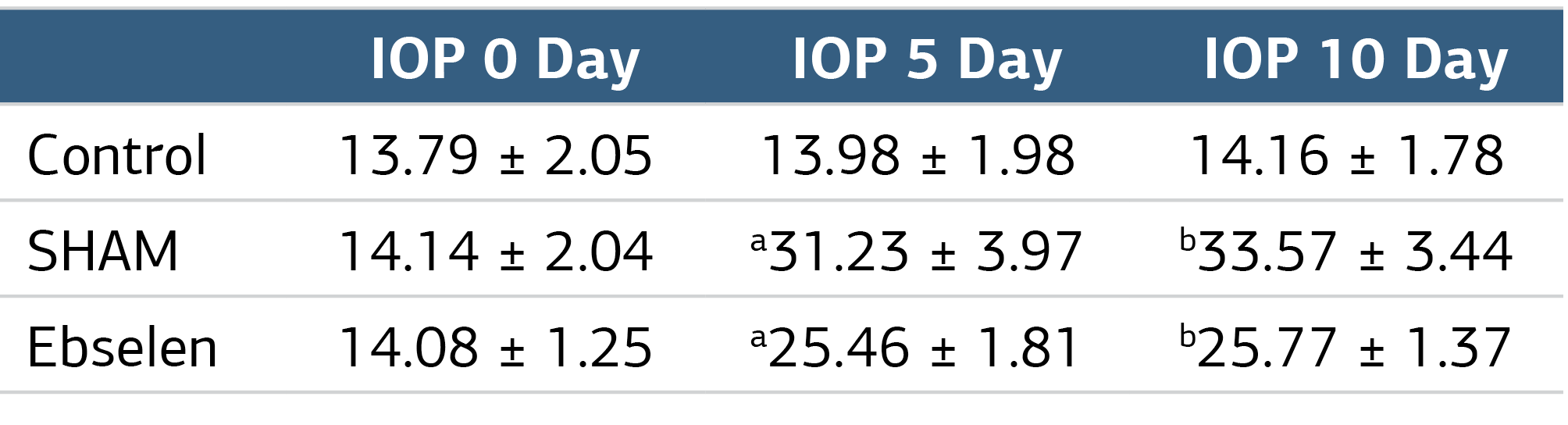
Iop:Intraocular pressure, aCompared to the control group there is a significant difference in IOP on day 5 (P < .05) bCompared to the control group there is a significant difference in IOP on day 10 (P < .05)
Table 2. MDA, NOx and NOS-2 levels by group
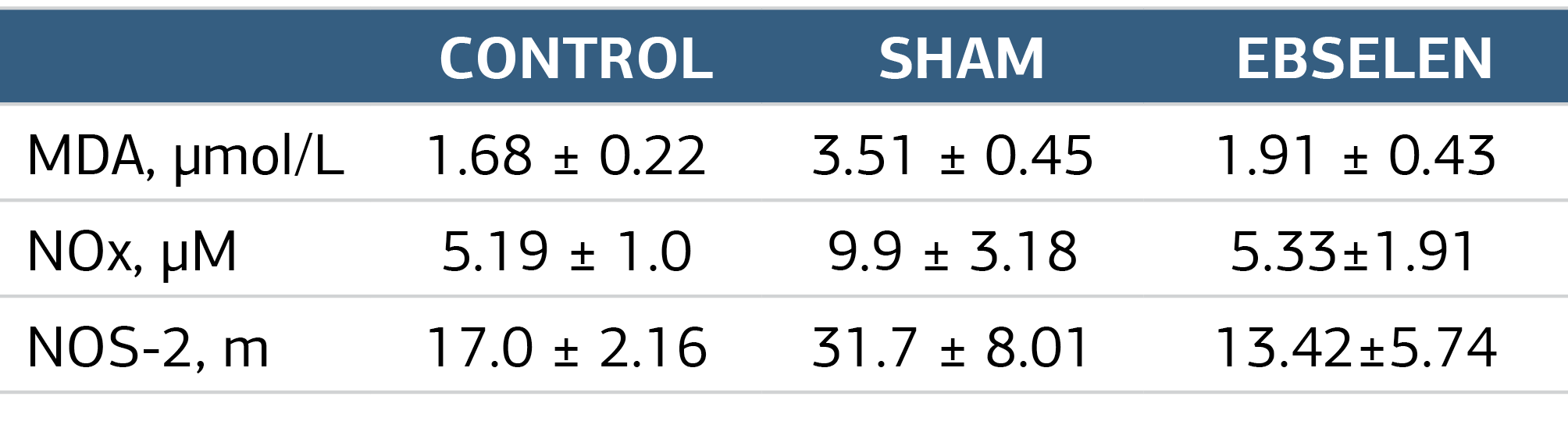
MDA: Malondialdehyde,NOx: Nitric oxide, NOS-2: Nitric oxide synthase 2
Additional Information
Publisher’s Note
Bayrakol MP remains neutral with regard to jurisdictional and institutional claims.
Rights and Permissions

This work is licensed under a Creative Commons Attribution-NonCommercial 4.0 International License (CC BY-NC 4.0). To view a copy of the license, visit https://creativecommons.org/licenses/by-nc/4.0/
About This Article
How to Cite This Article
Nesrin Demir, Tamer Demir, Nagehan Can, Nevin İlhan, İbrahim Hanifi Özercan, Tuncay Kuloğlu, Shirin Foroughifar, Burak Turgut. Neuroprotective role of ebselen in an experimental glaucoma model. Ann Clin Anal Med. Articles in Press. doi:10.4328/ACAM.22973
Publication History
- Received:
- 03.11.2025
- Accepted:
- 09.12.2025
- Published Online:
- 17.01.2026
- Printed:
- 01.10.2026