
Abstract
AimThis study aims to investigate the relationship between the viscoelastic properties of the lower extremity muscles and balance in children with CP.MethodsConducted between May and September 2023, this descriptive study included 16 children with Spastic CP treated at a private center in İstanbul. Muscle tone, stiffness, and elasticity of the hamstring, gastrocnemius, and tibialis anterior muscles were assessed using Myoton Pro, and balance was evaluated with the Pediatric Berg Balance Scale. Spearman correlation analysis was used to examine the relationship between muscle biomechanics and balance.ResultsThe average age of the children was 8.63±2.85 years. The mean tone, elasticity, and stiffness of the hamstring were 15.89±2.17, 244.19±51.18, and 0.85±0.12, respectively. For the Gastrocnemius, they were 14.16±3.77, 244.38±47.25, and 0.89±0.13. For the Tibialis Anterior, they were 19.05±2.28, 393.44±78.48, and 1.12±0.19. Negative correlations were found between muscle tone and stiffness of the Hamstring (r = -0.446; -0.411; P = .004; 0.04), Gastrocnemius (r = -0.307; -0.181; P = .002; 0.004), and Tibialis Anterior (r = -0.138; -0.364; P = .001; 0.003) with balance. No significant correlation was found between muscle elasticity and balance.ConclusionOur findings suggest that children with higher muscle tone and stiffness may have more pronounced balance problems. Therefore, rehabilitation programs should be tailored to individual needs and include specific strategies for managing muscle tone.
Keywords
Introduction
Cerebral Palsy (CP) is defined as a non-progressive neurological disorder that affects movement, posture, and muscle coordination, limiting daily life activities. The prevalence of CP is 2-2.5 per 1000 live births. It is the leading cause of physical disability in childhood, with clinical manifestations depending on the type, location, and extent of injury to the central nervous system.1 CP generally arises from damage or abnormalities in the developing brain that occur before birth or during delivery, but can also manifest in early childhood. CP is characterized by varying degrees of motor impairment, ranging from mild to severe. Particularly, damage to the motor cortex, which is responsible for planning, executing, and controlling voluntary movements, can lead to muscle spasticity in CP.2
Spasticity is a condition that typically arises from damage to the central nervous system and is characterized by involuntary, rapidly increasing muscle resistance. Clinically, spasticity manifests as a velocity-dependent increase in muscle tone in response to passive joint movement, exaggerated tendon reflexes, clonus, and spasms. It is a component of upper motor neuron syndrome and is associated with muscle hyperexcitability. Clinical findings include increased muscle tone, hyperreflexia, clonus, and sometimes painful muscle spasms.2,3 In spastic muscles, there is a noticeable decrease in the diameter of muscle fibers. This can lead to reduced muscle strength and increased muscle fatigue. Additionally, these changes in muscle fiber size can adversely affect overall muscle function.4 In spastic muscles, there is a significant increase in connective tissue. This increase affects the muscle's stiffness and elasticity, potentially restricting its ability to move and making daily activities more challenging for the individual.5 The normal alignment of muscle fibers in spastic muscles is disrupted, resulting in abnormal alignment. This prevents the muscle from contracting effectively and negatively impacts its overall function. Such abnormal alignment of muscle fibers reduces the muscle’s ability to generate force.6 Furthermore, it has been reported that spasticity reduces muscle elasticity, thereby negatively affecting their normal stretching and elongation capacity. Increased muscle tone can also influence muscle stiffness. This increase can lead to reduced normal joint mobility, the development of contractures over time, and a decline in motor performance.7
Spasticity impairs postural control, reducing an individual’s ability to maintain balance. As the severity of spasticity increases, so do its negative effects on balance and mobility; however, some studies show that the severity of spasticity does not directly affect balance, but rather that sensory functions such as proprioception are more affected. Balance can be defined as the ability to maintain the body’s position against gravity. It is crucial in both static (stationary posture) and dynamic (during movement) conditions and is often compromised in individuals with CP. Balance control relies on the complex interactions between the musculoskeletal system, central nervous system, and sensory feedback.8 Compared to typically developing children, children diagnosed with CP have greater difficulty maintaining their balance, resulting in increased agonistic co-activation. The constant contraction of muscles restricts joint mobility, hindering the free movement necessary to maintain balance. Additionally, the lack of coordination between spastic muscles leads to significant challenges in achieving dynamic balance. The continuous state of muscle contraction results in decreased muscle strength and flexibility, adversely affecting the ability to maintain balance and prevent falls.9 It has also been shown that skeletal muscle stiffness reduces antagonist muscle strength and increases energy expenditure.10 Muscle tone, stiffness, and elasticity have been shown in some studies to affect balance. Muscle stiffness and elasticity, particularly in the lower extremity and trunk muscles, can influence both static and dynamic balance. For example, increases in muscle stiffness and changes in elasticity have been associated with significant improvements in balance performance; however, changes in muscle elasticity may not always be statistically significant. However, studies on the effects of muscle stiffness and tone (viscoelastic properties) on balance are insufficient. Therefore, this study aims to investigate the relationship between the viscoelastic properties of lower extremity muscles and balance in children with Cerebral Palsy.Research QuestionsThis study seeks to answer the following questions:
- Is lower-extremity muscle tone associated with balance in Spastic Type Cerebral Palsy?
- Is lower-extremity muscle stiffness associated with balance in Spastic Type Cerebral Palsy?
- Is lower-extremity muscle elasticity associated with balance in Spastic Type Cerebral Palsy?
Materials and Methods
Type of Research (Design)This was a prospective cross-sectional study.Location and Time of the StudyThis research was conducted at a private Special Education and Rehabilitation Center located in İstanbul between May 11 and September 30, 2023.Population and Sample of the ResearchThe study included children aged 5-15 years who were diagnosed with Unilateral Spastic Cerebral Palsy, were willing to participate, and whose parents signed the Informed Consent Form. The inclusion criteria for this study were: being at Gross Motor Function Classification System (GMFCS) levels I-III, being between the ages of 5-15, having a Communication Function Classification System (CFCS) level of I-III, and having regularly attended a physiotherapy and rehabilitation program for the past 6 months. The exclusion criteria were receipt of Botulinum Toxin-A injections or orthopedic surgery within the past six months.
The sample size was determined to be 14 children diagnosed with CP, based on an effect size of 0.647, with a 90% confidence interval and a 5% margin of error.11 The study included 16 children diagnosed with CP.Data Collection ToolsIn this study, data were collected using a Demographic Information Form, a myotonometer, and the Pediatric Berg Balance Scale.Demographic Information FormDeveloped by the researchers, this form included the children's age, gender, weight, height, type of CP, and GMFCS level.Gross Motor Function Classification System (GMFCS)The functional level of the participants was assessed using the GMFCS, which is the most suitable system for classifying disabled children. The GMFCS ranges from level 1 to 5, with level 1 representing the mildest and level 5 representing the most severe functional status.12MyotonometerA myotonometer (MyotonPRO, Myoton AS, Estonia) was used to evaluate muscle tone, stiffness, and elasticity of the hamstrings, gastrocnemius, and tibialis anterior muscles. The MyotonPRO device allows the application of a preliminary pressure of 0.18 N to the tissue before measurement. The operator knows that the correct and sufficient amount of pressure is applied when the red light on the device probe's plexiglass frame turns green. The device then delivers a mechanical force of 0.4 N with a 15 ms stimulus, repeated 5 times. These mechanical stimuli create damped natural oscillations in the examined tissue, and the device analyzes these oscillations to automatically calculate the mechanical properties.13 Three measurements were taken for each evaluation area, and the averages were recorded.
Standard Procedure for the Assessment of the Hamstring, Gastrocnemius, and Tibialis Anterior Muscles Using MyotonPRO. The participant should be in a comfortable position (usually supine or prone) with the muscles relaxed. The belly of the muscle to be measured is identified by palpation and marked on the skin. The MyotonPRO device is placed perpendicularly on the marked point, and the probe is gently applied to the skin. Typically, 5 to 10 consecutive measurements are taken for each muscle, and the average values are used.
Measurements were performed with the muscles at rest, and repeated assessments were conducted by the same evaluator at the same anatomical points to improve reliability. The parameters measured include muscle stiffness, tone, and elasticity. To ensure the reliability of the measurements, repeated assessments should be performed by the same person and at the same location.Pediatric Berg Balance Scale (PBBS)In our study, the Pediatric Balance Scale (PBS), which has been proven to be valid and reliable in children with CP, was used. PBS is a scale used to assess functional balance, predict future dysfunction, and show sensitivity to changes in balance skills. The test can be completed in approximately 20 minutes and does not require any special equipment. The scale consists of 14 items in total. Additionally, the minimal clinically important difference for the test has been determined to be between 3.66 and 5.83 points.14Ethical ApprovalThis study was approved by the Ethics Committee of Bandırma Onyedi Eylül University (Date: 10.05.2023, Decision No: 2023/166).Statistical AnalysisData were analyzed using IBM SPSS (Statistical Package for Social Sciences) version 25.0. The normality of the data distribution was evaluated using the Shapiro-Wilk test, and the results indicated that the data were not normally distributed. Therefore, non-parametric tests were applied.
Descriptive statistics were presented using minimum, maximum, mean, standard deviation, median, frequency, and percentage values. To investigate the relationships between muscle viscoelastic properties (tone, stiffness, and elasticity) and balance (Pediatric Berg Balance Scale scores), Spearman’s rank correlation analysis was conducted.
Considering the number of multiple comparisons and the risk of Type I error, a Bonferroni correction was applied to the P values. The strength of the correlation coefficients (Spearman’s rho) was interpreted based on commonly accepted thresholds in the literature. Accordingly, correlation values between 0.00 and 0.10 were considered trivial; values between 0.10 and 0.39 were interpreted as weak; values between 0.40 and 0.69 as moderate; values between 0.70 and 0.89 as strong; and values between 0.90 and 1.00 as very strong.15Reporting GuidelinesThis study was reported in accordance with the STROBE guideline.
Results
The demographic and clinical characteristics of the children are presented in Table 1. The study sample comprised 16 participants. The mean age was 8.63±2.85 years (range: 5–13), the mean height was 128.25±17.94 cm (range: 100–157), and the mean weight was 31.69±13.98 kg (range: 15–63). In terms of gender distribution, 31.3% were girls (n =5 ) and 68.8% were boys (n = 11). According to GMFCS classifications, 43.8% of participants were Level I (n = 7), 18.8% were Level II (n = 3), and 37.5% were Level III (n = 6).
The mean viscoelastic properties of the assessed muscles are summarized in Supplementary Figure 1. The average tone of the hamstring muscle was 15.89±2.17, its average stiffness was 244.19±51.18, and its average elasticity was 6.00±20.80. For the gastrocnemius muscle, the mean tone was 14.16±3.77, the mean stiffness was 244.38±47.25, and the mean elasticity was 0.89±0.13. The tibialis anterior muscle demonstrated a mean tone of 19.05±2.28, a mean stiffness of 393.44±78.48, and a mean elasticity of 1.12±0.19. The Pediatric Berg Balance Scale score was calculated as 33.00±19.60.
In Supplementary Table 1, Correlation Between Muscle Viscoelastic Properties and Pediatric Berg Balance Scale Score, a negative correlation was identified between the Pediatric Berg Balance Scale and hamstring muscle tone and stiffness (r = –0.446; –0.411), gastrocnemius muscle tone and stiffness (r = –0.307; –0.181), and tibialis anterior muscle tone and stiffness (r = –0.138; –0.364). However, no significant association was observed between the elasticity parameters of any of the three muscles and balance.
Discussion
This study examined how the viscoelastic properties of lower- extremity muscles are associated with balance performance in children with cerebral palsy (CP). The findings demonstrate that increased tone and stiffness in the hamstring, gastrocnemius, and tibialis anterior muscles are associated with poorer balance outcomes.
Upper motor neuron–related impairments in CP lead to hypertonia, restricted muscle–tendon growth, and altered gait biomechanics, which collectively contribute to musculoskeletal dysfunction.16,17 Balance is fundamental for functional mobility, including sit-to-stand transitions, ambulation, and fall prevention. Previous studies consistently report reduced PBBS scores in children with CP.18,19 Our PBBS findings align with this evidence, further confirming diminished balance performance in this population.
The tibialis anterior, gastrocnemius, and hamstring muscles operate synergistically to stabilize posture, particularly through ankle strategy mechanisms.20 In CP, central nervous system damage disrupts normal tone modulation, leading to abnormal activation patterns.21 Using the MyotonPro, we observed higher tone values, particularly in the tibialis anterior muscle, consistent with reports identifying its prominent role in dynamic balance responses.22
A negative correlation was identified between muscle tone and balance, supporting the established link between spasticity, impaired motor control, and reduced postural stability.23 Increased stiffness further compounds these difficulties by limiting joint mobility, diminishing proprioceptive feedback, and reducing adaptability of postural responses.24
No significant association was found between muscle elasticity and balance. This may reflect the multifactorial nature of balance control, which depends not only on muscular properties but also on visual-vestibular inputs, trunk control, proprioception, muscle strength, and compensatory strategies. The degree of elasticity change in our cohort may have been insufficient to influence balance, or the assessed muscles may not have directly impacted the specific balance tasks measured. Overall, the results emphasize the central role of tone and stiffness management in optimizing functional balance in children with CP. Targeted interventions focusing on spasticity reduction, motor control enhancement, and coordinated multidisciplinary rehabilitation remain essential to improving postural stability and overall functional outcomes.25
Limitations
This study has several limitations. First, the sample size was restricted to 16 children, which reduced statistical power and limited the generalizability of the findings. The fact that all participants were recruited from a single private rehabilitation center in İstanbul may have resulted in a relatively homogeneous group with respect to clinical characteristics and therapeutic approaches. The cross-sectional design of the study does not allow for the determination of causality between muscle viscoelastic properties and balance. Additionally, assessing balance solely using the Pediatric Berg Balance Scale may have overlooked other important parameters, such as functional mobility and gait performance.
Conclusion
This study examined the relationships among muscle tone, stiffness, and elasticity of the lower-extremity muscles and balance in children with unilateral spastic cerebral palsy. Our findings showed that increased muscle tone and stiffness in the hamstring, gastrocnemius, and tibialis anterior muscles negatively affected balance. However, no significant relationship was found between muscle elasticity and balance. This may be explained by the multifactorial nature of balance control and individual neuromotor differences. Additionally, symmetry in the trunk muscles was observed to positively affect postural balance. In conclusion, interventions aimed at improving balance in children with cerebral palsy should take into account muscle tone, stiffness, and trunk symmetry. Approaches that enhance muscle strength and flexibility are also important for supporting functional mobility.
For future research, there is a significant need for studies that delve deeper into the effects of muscle tone and elasticity on balance. This will enable a better understanding of the variability in muscle structure and its impact on balance performance. Additionally, it is recommended to conduct broader studies that include a range of treatment methods. Research comparing different treatment protocols, particularly those employing multidisciplinary approaches, can help identify the most effective rehabilitation strategies.
Declarations
Animal and Human Rights Statement
All procedures performed in this study were in accordance with the ethical standards of the institutional and/or national research committee and with the 1964 Declaration of Helsinki and its later amendments, or comparable ethical standards.
Informed Consent
Written informed consent was obtained from the parents or legal guardians of all participants.
Data Availability
The datasets used and/or analyzed during the current study are not publicly available due to patient privacy reasons, but are available from the corresponding author on reasonable request.
Conflict of Interest
The authors declare no conflict of interest.
Funding
None.
Author Contributions (CRediT Taxonomy)
Conceptualization: D.A., E.A.
Methodology: D.A., E.A.
Investigation: D.A., E.A.
Data Curation: D.A.
Formal Analysis: D.A., E.A.
Writing – Original Draft: D.A.
Writing – Review & Editing: E.A.
Supervision: E.A.
AI Usage Disclosure
The authors declare that no AI-assisted technologies were used.
Abbreviations
CFCS: Communication function classification system
CP: Cerebral palsy
GMFCS: Gross motor function classification system
PBBS: Pediatric berg balance scale
PBS: Pediatric balance scale
SD: Standard deviation
References
- Patel DR, Neelakantan M, Pandher K, Merrick J. Cerebral palsy in children: a clinical overview. Transl Pediatr. 2020;9(Suppl 1):S125-35. doi:10.21037/ tp.2020.01.01
- McDougall J, Chow E, Harris RL, Mills PB. Near-infrared spectroscopy as a quantitative spasticity assessment tool: a systematic review. J Neurol Sci. 2020;412:116729. doi:10.1016/j.jns.2020.116729
- Ko H-Y, Huh S. Spasticity. Handbook of spinal cord injuries and related disorders: a guide to evaluation and management. 2021. p.467-82.
- Lieber RL, Fridén J. Functional and clinical significance of skeletal muscle architecture. Muscle Nerve. 2000;23(11):1647-66. doi:10.1002/1097- 4598(200011)23:113.0.co;2-m
- Smith LR, Lee KS, Ward SR, Chambers HG, Lieber RL. Hamstring contractures in children with spastic cerebral palsy result from a stiffer extracellular matrix and increased in vivo sarcomere length. J Physiol. 2011;589(Pt 10):2625-39. doi:10.1113/jphysiol.2010.203364
- Fridén J, Lieber RL. Spastic muscle cells are shorter and stiffer than normal cells. Muscle Nerve. 2003;27(2):157-64. doi:10.1002/mus.10247
- Mathewson MA, Lieber RL. Pathophysiology of muscle contractures in cerebral palsy. Phys Med Rehabil Clin N Am. 2015;26(1):57-67. doi:10.1016/j.pmr.2014.09.005
- Shumway-Cook A, Woollacott MH. Motor control: translating research into clinical practice. Lippincott Williams & Wilkins; 2006;18.
- Alashram AR, Annino G. A novel neurorehabilitation approach for neural plasticity overstimulation and reorganization in patients with neurological disorders. Phys Med Rehabil Kurortmed. 2023;33(05):261-9. doi:10.1055/a-2004-5836
- Chuang L-L, Wu C-Y, Lin K-C, Lur S-Y. Quantitative mechanical properties of the relaxed biceps and triceps brachii muscles in patients with subacute stroke: a reliability study of the Myoton-3 myometer. Stroke Res Treat. 2012;2012:617694. doi:10.1155/2012/617694
- Havuç S, Aydeniz A, Başaran S. Serebral palsili çocuklarda spastisitenin myotonometri ile değerlendirilmesi ve spastisitede elektrik stimulasyonun etkinliği [Evaluation of spasticity in children with cerebral palsy using myotonometry and the effectiveness of electrical stimulation on spasticity]. Cukurova Med J. 2018;43(Suppl 1):56-62.
- El Ö, Baydar M, Berk H, Peker Ö, Koşay C, Demiral Y. Interobserver reliability of the Turkish version of the expanded and revised Gross Motor Function Classification System. Disabil Rehabil. 2012;34(12):1030-3. doi:10.3109/09638288.2011.632466
- Huang J, Qin K, Tang C, et al. Assessment of passive stiffness of medial and lateral heads of gastrocnemius muscle, Achilles tendon, and plantar fascia using the MyotonPRO. Med Sci Monit. 2018;24:7570-6. doi:10.12659/MSM.909550
- Chen C-L, Shen I-H, Chen C-Y, Wu C-Y, Liu W-Y, Chung C-Y. Validity, responsiveness, minimal detectable change, and minimal clinically important change of the Pediatric Balance Scale in children with cerebral palsy. Res Dev Disabil. 2013;34(3):916-22. doi:10.1016/j.ridd.2012.11.006
- Dancey CP, Reidy J. Statistics without maths for psychology. Pearson Education; 2007.
- Graham HK, Boyd R, Carlin JB, et al. Does botulinum toxin a combined with bracing prevent hip displacement in children with cerebral palsy and “hips at risk”?: a randomized, controlled trial. J Bone Joint Surg Am. 2008;90(1):23-33. doi:10.2106/JBJS.F.01416
- Gage JR, Schwartz MH, Koop SE, Novacheck TF. the identification and treatment of gait problems in cerebral palsy. John Wiley & Sons; 2009.
- Abd-Elfattah HM, Galal DOSM, Aly MIE, Aly SM, Elnegamy TE. Effect of pilates exercises on standing, walking, and balance in children with diplegic cerebral palsy. Ann Rehabil Med. 2022;46(1):45-52. doi:10.5535/arm.21148
- Heyrman L, Desloovere K, Molenaers G, et al. Clinical characteristics of impaired trunk control in children with spastic cerebral palsy. Res Dev Disabil. 2013;34(1):327-34. doi:10.1016/j.ridd.2012.08.015
- Day JT, Lichtwark GA, Cresswell AG. Tibialis anterior muscle fascicle dynamics represent postural sway during standing balance. J Appl Physiol. 2013;115(12):1742-50. doi:10.1152/japplphysiol.00517.2013
- Franki I, Bar-On L, Molenaers G, et al. Tone reduction and physical therapy: strengthening partners in treatment of children with spastic cerebral palsy. Neuropediatrics. 2020;51(2):89-104. doi:10.1055/s-0039-3400987
- Di Giulio I, Maganaris CN, Baltzopoulos V, Loram ID. The proprioceptive and agonist roles of gastrocnemius, soleus and tibialis anterior muscles in maintaining human upright posture. J Physiol. 2009;587(Pt 10):2399-416. doi:10.1113/jphysiol.2009.168690
- Burtner P, Qualls C, Woollacott M. Muscle activation characteristics of stance balance control in children with spastic cerebral palsy. Gait Posture. 1998;8(3):163-74. doi:10.1016/S0966-6362(98)00032-0
- Lieber RL, Fridén J. Muscle contracture and passive mechanics in cerebral palsy. J Appl Physiol (1985). 2019;126(5):1492-1501. doi:10.1152/ japplphysiol.00278.2018
- Ward R, Reynolds JE, Bear N, Elliott C, Valentine J. What is the evidence for managing tone in young children with, or at risk of developing, cerebral palsy? A systematic review. Disabil Rehabil. 2017;39(7):619-30. doi:10.3109/0963828 8.2016.1153162
Tables
Table 1. Demographic and clinical characteristics of children
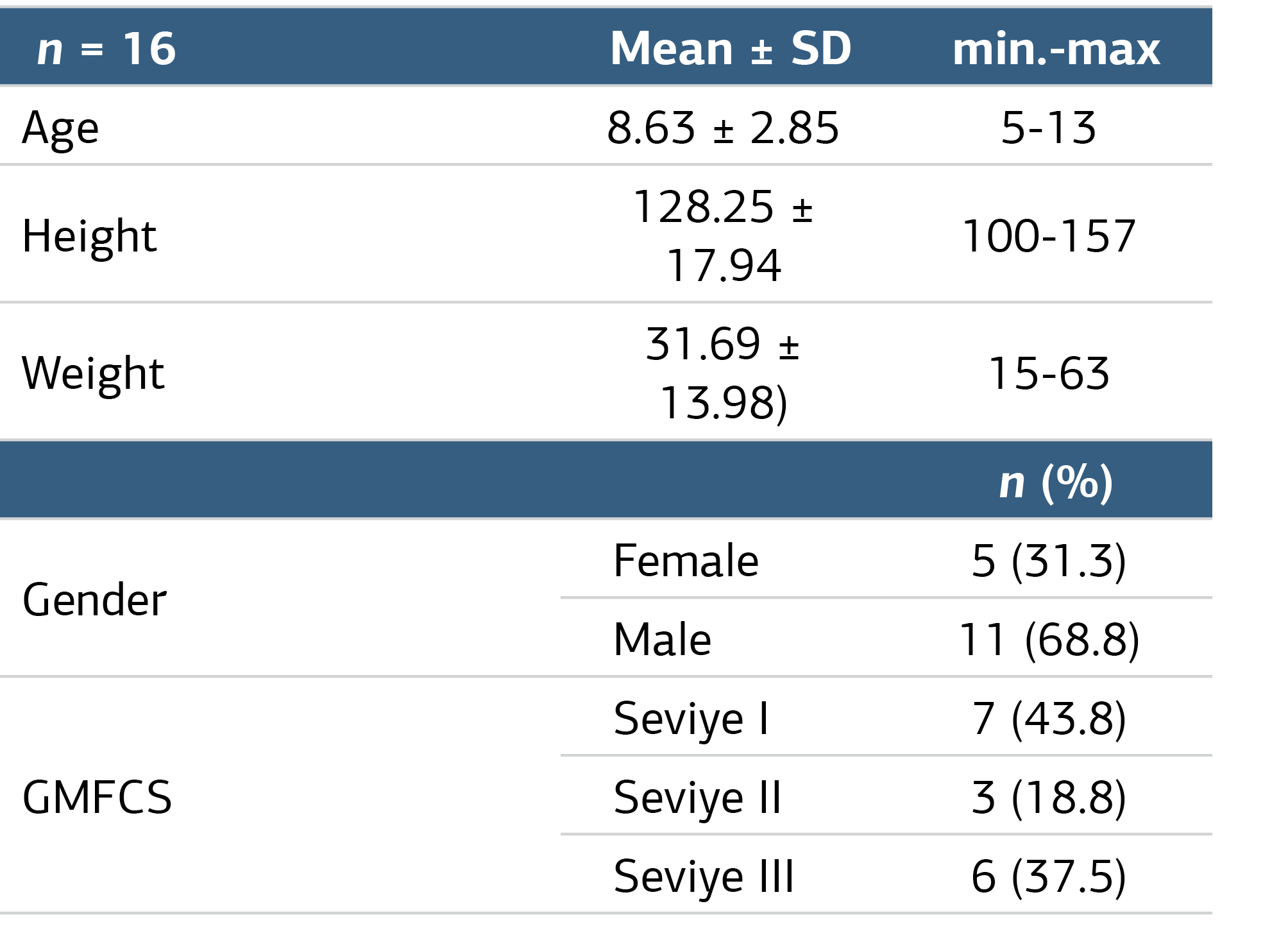
Abbreviations: Mean = Average; SD = Standard deviation; Min = Minimum; Max = Maximum
Additional Information
Publisher’s Note
Bayrakol MP remains neutral with regard to jurisdictional and institutional claims.
Rights and Permissions

This work is licensed under a Creative Commons Attribution-NonCommercial 4.0 International License (CC BY-NC 4.0). To view a copy of the license, visit https://creativecommons.org/licenses/by-nc/4.0/
About This Article
How to Cite This Article
Derya Azim, Emine Atıcı. The relationship between the viscoelastic properties of lower extremity muscles and balance in children with spastic cerebral palsy. Ann Clin Anal Med 2026;17(10):1046-1050. doi:10.4328/ACAM.22999
Publication History
- Received:
- 19.11.2025
- Accepted:
- 12.01.2026
- Published Online:
- 21.01.2026
- Printed:
- 01.10.2026