
Evaluation of oxidative stress parameters and serum fetuin-A levels in patients with polycystic ovary syndrome
Pregnancy and critical COVID-19 care
Authors
Abstract
Aim The objective of this study was to evaluate the relationship between polycystic ovary syndrome and oxidative stress and insulin resistance, to evaluate oxidative stress parameters and serum Fetuin-A levels in polycystic ovary syndrome (PCOS), and to investigate the role of these parameters in PCOS.
Methods The study included 32 PCOS patients and 25 healthy voluntary women with matching age and body mass index. Serum fasting blood glucose, insulin, HbA1c, HDL cholesterol, LDL cholesterol, triglycerides, total cholesterol, malondialdehyde (MDA), peroxynitrite, peroxynitrite, 4-hydroxynonenal, nuclear factor erythroid 2-related factor 2 (NRF 2), Fetuin-A parameters were studied in blood samples obtained from each participant during the early follicular period following 8-10 hours of fasting.
Results Fasting glucose, insulin, HbA1c, HOMA-IR values, which were examined to evaluate carbohydrate metabolism, were found to be significantly higher in the group with PCOS (p<0.05). Triglyceride, total cholesterol, LDL cholesterol, HDL cholesterol levels were found to be significantly higher in the group with PCOS compared to the control group (p<0. 05). MDA, 4 hydroxynonenal levels, which were examined as oxidant substances for oxidative stress assessment, were found to be significantly higher in patients with PCOS compared to the control group (p<0.05). Although peroxynitrite levels, which are among reactive nitrogen species, were found to be higher in the PCOS group compared to the control group, it was not statistically significant (p>0.05). Antioxidant system regulator NRF2 levels were examined and significantly lower NRF2 levels were detected in the PCOS patient group compared to the control group (p<0.05). No difference was detected between the groups in terms of Fetuin A levels (p>0.05).
Conclusion In this study, results supporting the association between PCOS and oxidative stress and insulin resistance were found. Using oxidant and antioxidant markers in the clinical course follow-up and shaping the treatment according to these markers may be beneficial in terms of preventing long-term complications.
Keywords
Introduction
Polycystic Ovary Syndrome is an endocrinological and metabolic pathology affecting women of reproductive age. This syndrome is characterized by androgen excess, ovulatory dysfunction, and polycystic ovaries.1 The etiology of PCOS is not exactly known. In the physiopathology of the syndrome, changes in gonadotropin dynamics that occur with the interaction of genetic and environmental factors, hyperandrogenemia as a result of steroidogenesis defects, insulin resistance as a result of insulin release, and action disorders, dyslipidemia, and oxidative stress are prominent. Oxidative stress occurs when the balance between free radicals and antioxidant systems that occur during cellular cycles in the biological system is disturbed in the direction of oxidant substances, resulting in excessive production of reactive oxygen species.2 Reactive oxygen types can cause DNA damage, lipid peroxidation, and protein damage and indirectly disrupt intracellular signaling pathways. Increased reactive oxygen species and impaired signaling pathways cause mitochondrial dysfunction in polycystic ovary syndrome. Reactive oxygen species, exacerbated by insulin resistance, cause abnormal ovarian remodeling, multiple cyst formation, and anovulation.3
Considering all these, insulin resistance and oxidative stress may play important roles in the development of PCOS and long-term complications of the syndrome.
The aim of this study was to evaluate oxidative stress markers and serum Fetuin A levels, which may be indicative of insulin resistance, in women with polycystic ovary syndrome (PCOS) and healthy controls in order to provide new parameters for monitoring the long-term metabolic complications of this syndrome and to contribute to the determination of treatment strategies accordingly.
Materials and Methods
It was conducted prospectively between January 2020 and May 2020 with 32 women aged 18-40 years with PCOS and 25 healthy women without a diagnosis of a systemic disease who applied to the Endocrinology outpatient clinic. The study was approved by the local ethics committee and informed consent was obtained from all participants. The inclusion criteria for the PCOS group were to be a woman aged 18-40 years and to have been diagnosed with PCOS according to the Rotterdam 2003 criteria. The inclusion criteria for the healthy group were not having any known chronic diseases and drug use, being a woman between the ages of 18-40, and not having menstrual irregularities and hirsutism. Body mass indexes of all patients participating in the study were calculated. A 10 ml venous blood sample was collected from the volunteers in the morning following 8-10 hours of fasting within the first 3 days of menstruation. After the blood was centrifuged at 4000 rpm for 10 minutes, the separated serum samples were placed in Eppendorf tubes and stored at -80 ºC. Serum samples were analyzed for hormone profile (FSH, LH, testosterone, DHEAS, 17 hydroxyprogesterone, TSH, fT4), lipid profile (total cholesterol, HDL, LDL, TG), fasting blood glucose, HbA1c, insulin, liver and kidney function tests, oxidant parameters (MDA, peroxynitrite, 4-hydroxynonenal), NRF 2, Fetuin A levels were measured.
Ethical ApprovalThe study was approved by the Ethics Committee of Gaziantep University (Date: 15.01.2020, Decision No: 2020/15).
Statistical AnalysisThe conformity of numerical variables to normal distribution was tested with the Shapiro-Wilk test. Student t-test was used to test normally distributed variables in two groups, and the Mann-Whitney U test was used to test non-normally distributed variables in two groups. The relationship between numerical variables was tested with the Spearman rank correlation coefficient. ROC curve analysis was performed to determine the cut-off point. Descriptive statistics for normally distributed variables were given as mean and standard deviation, and for abnormally distributed variables as median 25% and 75% quartiles. Categorical variables were expressed in numbers and percentages. SPSS 22.0 Windows version package program was used in the analysis. p<0.05 was considered significant.
Reporting GuidelinesThe study was reported in accordance with STROBE guidelines.
Results
Before the study, the participants were divided into two groups as polycystic ovary patients (n = 32) and healthy controls (n = 25). Statistical analysis showed that there was no significant difference between the PCOS group and the control group in terms of age, height, weight, and body mass index (BMI) (Table 1).
LDL, HDL, triglyceride, and total cholesterol levels were analyzed to compare lipid profiles of the patients and the control group. All parameters were significantly higher in the patient group compared to the control group (Table 2).
Fasting glucose, insulin, HOMA-IR, HbA1c, and Fetuin A parameters were measured to evaluate carbohydrate metabolism in both groups. Insulin, fasting glucose, HbA1c level, and HOMA index were significantly higher in the PCOS group compared to the control group. No significant difference was found for Fetuin A level in both groups (Table 2).
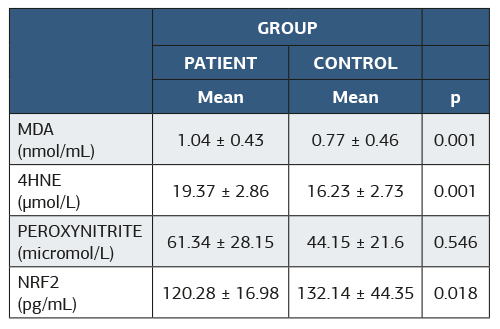
In order to investigate the role of oxidative stress in PCOS, MDA, 4HNE, peroxynitrite, and NRF2 levels, which can be considered as antioxidant system indicators, were examined. MDA and 4HNE levels were significantly higher in the PCOS group compared to the control group. Peroxynitrite levels were higher in all patients compared to the control group; however, no statistical difference was observed. NRF 2 level was observed to be significantly lower in patients with PCOS (Table 3).
Discussion
PCOS is a common endocrinologic disorder affecting 6-20% of women in reproductive age. Hyperandrogenism is characterized by menstrual disorder, anovulation, and infertility. It plays an important role in women’s health as it poses many risks such as type 2 diabetes mellitus, dyslipidemia, and early atherosclerosis. Hyperinsulinemia is a common finding in patients with PCOS and has a causal relationship with an increased risk of cardiovascular disease.4 In this study, 32 patients aged 18-40 years diagnosed with PCOS and 25 healthy volunteers of reproductive age without any health problems were included, and BMI, lipid profiles, fasting glucose, insulin, HbA1c, testosterone, DHEAS levels, MDA, peroxynitrite, 4 hydroxynonenal, NRF2 and Fetuin A parameter which may be related to insulin resistance were examined in the two groups.
Dyslipidemia is very common in PCOS patients and may have different presentations.5 In numerous studies, the most common pattern was hypertriglyceridemia, increased small dense LDL cholesterol levels, and decreased HDL cholesterol levels.6 A comprehensive meta-analysis conducted in 2011 found that LDL cholesterol was significantly higher in women with PCOS when subset analyses including BMI-matched patients were performed.7
The finding that LDL cholesterol levels were higher in PCOS patients in studies with similar BMI and control groups has led to the inference that LDL cholesterol levels are less dependent on body weight and may be partly related to hyperandrogenism.8
In our study, similar to the literature, LDL cholesterol levels were significantly higher in the PCOS group compared to the control group. However, no correlation was found with androgen levels.
There are many studies in the literature on hypertriglyceridemia in patients with PCOS.9,10 Nevertheless, although elevated triglycerides represent a common lipid abnormality in PCOS, a meta-analysis found that only three studies found triglyceride concentrations exceeding 150 mg/dl and these were in women who were overweight or obese.7 In our study, in parallel with these studies, triglyceride levels were found to be significantly higher in the patient group. TG level was above 150 mg/dl in 8 patients in our study. TG levels and BMI levels exhibited a correlation in these 8 patients. Although low HDL levels are one of the common lipid abnormalities in PCOS, HDL levels were found to be higher in the patient group in our study contrary to the literature. The relatively small number of patients and healthy volunteers may have led to this result; hence, large-scale studies are needed.
There are studies in the literature examining the relationship between PCOS and oxidative stress. In particular, to investigate the role of oxidative stress in the pathogenesis of the disease, MDA, one of the oxidative stress biomarkers, and glutathione (GSH), one of the anti-oxidative biomarkers, were examined. In the literature, oxidative stress marker levels were found to be significantly higher, and antioxidant marker levels were found to be significantly lower in patient groups with PCOS compared to control groups.11,12 In a meta-analysis study, it was found that MDA levels were 47% higher in women with PCOS compared to the control group. In contrast, the level of glutathione, a representative of the antioxidant system, was 50% lower.13,14 Similar to the literature, the MDA levels measured in our study were found to be significantly higher in the PCOS group compared to the control group.
Secondary products of lipid peroxidation, which have not been previously studied in patients with PCOS, may also provide insight into the severity of oxidative stress. Among these products, 4 hydroxynonenal is an important compound with physiological concentrations in the submicromolar range (<0.1 μM) that can increase to micromolar levels under oxidative stress.15
Although 4HNE has been found to be involved in the etiopathogenesis of many diseases and has been defined as “the second toxic messenger of free radicals”, “one of the most physiologically active lipid peroxides” and “one of the main generators of oxidative stress” in many studies, 4HNE levels have never been examined in patients with PCOS.16 In our study, 4HNE levels were examined in the patients with PCOS and the control group and it was found that 4HNE levels were significantly higher in the patients with PCOS.
As a mediator of protein oxidation and nitration, lipid peroxidation, mitochondrial dysfunction and cell death, peroxynitrite, like other oxidative stress products, have been the subject of research in some important diseases thought to be associated with oxidative stress, such as cancer, neurodegeneration, stroke, inflammatory conditions, cardiovascular problems, and diabetes mellitus.17 Studies have suggested that the levels of peroxynitrite and its derivatives may also be elevated in insulin resistance and new studies have been initiated in this field. Considering that hyperinsulinism and insulin resistance also play a role in the etiopathogenesis of PCOS, peroxynitrite levels were compared with the control group in our study. Although peroxynitrite levels were found to be higher in the patient group, no statistically significant difference was found between the two groups. Assuming that peroxynitrite increases as a result of long-term complications of oxidative stress, it may be considered that no difference was detected since none of the patients in our study developed complications. Large-scale studies are needed.
There are many intracellular signaling pathways that regulate the antioxidant response involved in cellular defense against oxidative or electrophilic stress by increasing cellular antioxidant capacity. Probably the most important of these pathways and the subject of much research is the NRF2 pathway. With the idea that NRF2 and components of NRF2 regulatory pathways may represent novel therapeutic targets for oxidative stress-related diseases, we examined NRF2 levels in the patients with PCOS and the controls and found significantly lower NRF2 levels in the patients with PCOS compared to the controls.
Insulin resistance and hyperinsulinism are crucial for the etiopathogenesis of PCOS. Some studies have emphasized that insulin resistance is an initiating factor for PCOS in individuals with high BMI. Studies have reported that two-thirds to one-third of PCOS patients have an abnormal degree of insulin resistance.18
Fetuin-A (α2-heremans-schmid glycoprotein) is a serum glycoprotein of approximately 60 KDa, synthesized mainly in the liver. Although it first attracted attention as a negative acute phase reactant in acute inflammation states, it has been the subject of studies in recent years in terms of the possibility of being an indicator of insulin resistance. Fetuin-A has been reported to bind to insulin receptor kinase in skeletal muscle and adipocytes and exert an endogenous inhibitory effect on the insulin receptor. Thus, it reduces the rate of autophosphorylation and slows insulin signaling. Animal experiments have shown that Fetuin-A knock-out mice are more sensitive to insulin than the control animals.19,20 The human Fetuin-A gene is located on chromosome 3q27, known as the metabolic syndrome and diabetes susceptibility locus. Genetic studies have shown that a single nucleotide polymorphism in the Fetuin-A gene is associated with the effect of insulin on adipocytes in healthy people and Type 2 diabetics.21
Limitations
The literature contains quite limited information on the effect of Fetuin-A in patients with PCOS. Recently, some researchers have shown that insulin resistance may be a good indicator of insulin resistance in patients with PCOS.22,23 Nonetheless, the relationship between insulin resistance and Fetuin-A is still controversial. It has been suggested that the relationship found in the studies may be due to genetic factors and some cytokines released from adipose tissues. Some studies have even reported that there is no relationship between them.24 In our study, there was no significant difference in terms of Fetuin A levels between the two groups.
Conclusion
In our study, PCOS was found to be associated with insulin resistance and dyslipidemia. This may pose a risk factor for metabolic complications and cardiovascular diseases. The fact that there was no significant difference between the groups in terms of fetuin-A levels indicates that additional studies are needed on the relationship between fetuin-A and insulin resistance. The fact that oxidative stress markers are high and antioxidant metabolites are low in PCOS patients may contribute to the determination of new strategies in the follow-up and treatment of long-term metabolic complications of this syndrome.
Declarations
Ethics Declarations
The authors declare that all procedures performed in this study were conducted in accordance with institutional, national, and international ethical standards.
Animal and Human Rights Statement
All procedures performed in this study were in accordance with the ethical standards of the institutional and/or national research committee and with the 1964 Helsinki Declaration and its later amendments or comparable ethical standards.
Informed Consent
Written informed consent was obtained from all participants included in the study.
Data Availability
The datasets used and/or analyzed during the current study are not publicly available due to patient privacy reasons but are available from the corresponding author on reasonable request.
Conflict of Interest
The authors declare that there is no conflict of interest.
Funding
None.
Author Contributions (CRediT Taxonomy)
Conceptualization: B.G.T., S.T.
Methodology: B.G.T., E.G.A.C.
Formal Analysis: S.T.
Investigation: B.G.T., E.G.A.C.
Data Curation: B.G.T.
Writing – Original Draft: B.G.T.
Writing – Review & Editing: E.G.A.C., S.T.
Supervision: S.T.
Abbreviations
4HNE: 4-hydroxynonenal
BMI: Body mass index
DHEAS: Dehydroepiandrosterone sulfate
FSH: Follicle-stimulating hormone
HbA1c: Hemoglobin A1c
HDL: High-density lipoprotein
HOMA-IR: homeostatic model assessment for insulin resistance
LDL: Low-density lipoprotein
LH: Luteinizing hormone
MDA: Malondialdehyde
NRF2: Nuclear factor erythroid 2-related factor 2
PCOS: Polycystic ovary syndrome
ROC: Receiver operating characteristic
TSH: Thyroid-stimulating hormone
References
-
Rotterdam ESHRE/ASRM-Sponsored PCOS consensus workshop group. Revised 2003 consensus on diagnostic criteria and long-term health risks related to polycystic ovary syndrome (PCOS). Hum Reprod. 2004;19(1):41-47. doi:10.1093/humrep/deh098
-
Desai V, Prasad NR, Manohar SM, Sachan A, Narasimha SR, Bitla AR. Oxidative stress in non-obese women with polycystic ovarian syndrome. J Clin Diagn Res. 2014;8(7):CC01-CC3.
-
Liu J, Zhang D. Sichuan Da Xue Xue Bao Yi Xue Ban. 2012;43(2):187-190.
-
Rutter MK, Meigs JB, Sullivan LM, D’Agostino RB Sr, Wilson PW. Insulin resistance, the metabolic syndrome, and incident cardiovascular events in the Framingham Offspring Study. Diabetes. 2005;54(11):3252-3257. doi:10.2337/diabetes.54.11.3252
-
Wekker V, van Dammen L, Koning A, et al. Long-term cardiometabolic disease risk in women with PCOS: a systematic review and meta-analysis. Hum Reprod Update. 2020;26(6):942-960. doi:10.1093/humupd/dmaa029
-
Rizzo M, Berneis K. Lipid triad or atherogenic lipoprotein phenotype: a role in cardiovascular prevention?. J Atheroscler Thromb. 2005;12(5):237-239. doi:10.5551/jat.12.237
-
Wild RA, Rizzo M, Clifton S, Carmina E. Lipid levels in polycystic ovary syndrome: systematic review and meta-analysis. Fertil Steril. 2011;95(3):1073-9.e11. doi:10.1016/j.fertnstert.2010.12.027
-
Valkenburg O, Steegers-Theunissen RP, Smedts HP, Dallinga-Thie GM, et al. A more atherogenic serum lipoprotein profile is present in women with polycystic ovary syndrome: a case-control study. J Clin Endocrinol Metab. 2008;93(2):470-476. doi:10.1210/jc.2007-1756
-
Berneis K, Rizzo M, Lazzarini V, Fruzzetti F, & Carmina E. Atherogenic lipoprotein phenotype and low-density lipoproteins size and subclasses in women with polycystic ovary syndrome. The Journal of clinical endocrinology and metabolism, 2007;92(1):186–189. doi:10.1210/jc.2006-1705
-
Berneis K, Rizzo M, Hersberger M, et al. Atherogenic forms of dyslipidaemia in women with polycystic ovary syndrome. Int J Clin Pract. 2009;63(1):56-62. doi:10.1111/j.1742-1241.2008.01897.x
-
Sabuncu T, Vural H, Harma M, Harma M. Oxidative stress in polycystic ovary syndrome and its contribution to the risk of cardiovascular disease. Clin Biochem. 2001;34(5):407-413. doi:10.1016/s0009-9120(01)00245-4
-
Zhang D, Luo WY, Liao H, Wang CF, Sun Y. Sichuan Da Xue Xue Bao Yi Xue Ban. 2008;39(3):421-423.
-
Murri M, Insenser M, Fernández-Durán E, San-Millán JL, Luque-Ramírez M, Escobar-Morreale HF. Non-targeted profiling of circulating microRNAs in women with polycystic ovary syndrome (PCOS): effects of obesity and sex hormones. Metabolism. 2018;86:49-60. doi:10.1016/j.metabol.2018.01.011
-
Dursun P, Demirtaş E, Bayrak A, Yarali H. Decreased serum paraoxonase 1 (PON1) activity: an additional risk factor for atherosclerotic heart disease in patients with PCOS. Hum Reprod. 2006;21(1):104-108. doi:10.1093/humrep/dei284
-
Csala M, Kardon T, Legeza B, et al. On the role of 4-hydroxynonenal in health and disease. Biochim Biophys Acta. 2015;1852(5):826-838. doi:10.1016/j.bbadis.2015.01.015
-
Zarković M. The role of oxidative stress on the pathogenesis of graves’ disease. J Thyroid Res. 2012;2012:302537.
-
Ischiropoulos H. Protein tyrosine nitration--an update. Arch Biochem Biophys. 2009;484(2):117-121. doi:10.1016/j.abb.2008.10.034
-
Stepto NK, Cassar S, Joham AE, et al. Women with polycystic ovary syndrome have intrinsic insulin resistance on euglycaemic-hyperinsulaemic clamp. Hum Reprod. 2013;28(3):777-784. doi:10.1093/humrep/des463
-
Mori K, Emoto M, Yokoyama H, et al. Association of serum fetuin-A with insulin resistance in type 2 diabetic and nondiabetic subjects. Diabetes Care 2006;29(2):468. doi:10.2337/diacare.29.02.06.dc05-1484
-
Ix JH, Wassel CL, Kanaya AM, et al. Fetuin-A and incident diabetes mellitus in older persons. JAMA 2008;300(2):182-188. doi:10.1001/jama.300.2.182
-
Stefan N, Hennige AM, Staiger H, et al. Alpha2-HeremansSchmid glycoprotein/fetuin-A is associated with insulin resistance and fat accumulation in the liver in humans. Diabetes Care 2006;29(4):853-857. doi:10.2337/diacare.29.04.06.dc05-1938
-
Hizli S, Abaci A, Ozdemir O, Akelma Z, Akin O. Relation of fetuin A levels with cardiac, subcutaneous lipid accumulation and in- sulin resistance parameters in Turkish obese children. J Pediatr Endocrinol Metab 2016;29:669-673.
-
Enli Y, Fenkci SM, Fenkci V, Oztekin O. Serum fetuin-A levels, insulin resistance and oxidative stress in women with polycystic ovary syndrome. Gynecol Endocrinol 2013;29:1036-1039. doi:10.3109/09513590.2013.829442
-
Gulhan I, Bozkaya G, Oztekin D, Uyar I, Kebapcilar AG, Pamuk B. Serum fetuin-A levels in women with polycystic ovary syndrome. Arch Gynecol Obstet 2012;286:1473-1476. doi:10.1007/s00404-012-2494-0
Tables
Table 1. Comparison of demographic characteristics
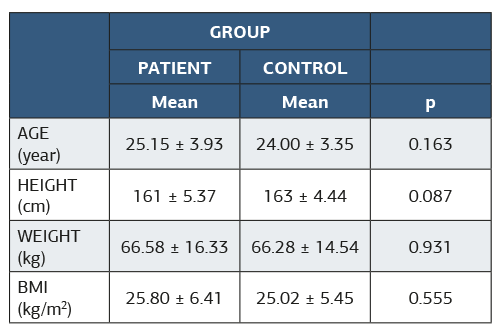
Table 2. Comparison of lipid profile levels and carbohydrate metabolism parameters
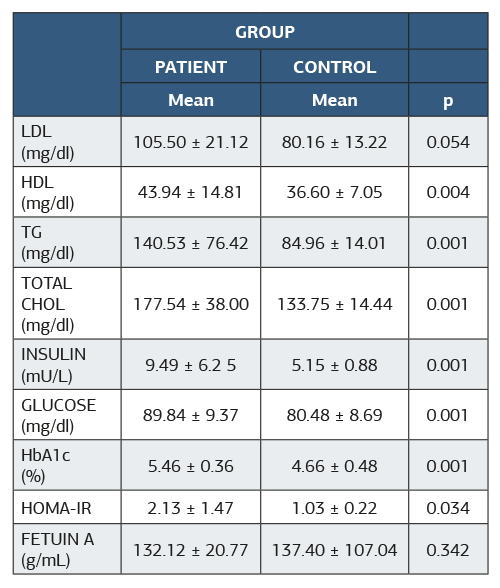
Table 3. Comparison of oxidative stress parameters
Additional Information
Publisher’s Note
Bayrakol MP remains neutral with regard to jurisdictional and institutional claims.
Rights and Permissions

This work is licensed under a Creative Commons Attribution-NonCommercial 4.0 International License (CC BY-NC 4.0). To view a copy of the license, visit https://creativecommons.org/licenses/by-nc/4.0/
About This Article
How to Cite This Article
Bedriye Gizem Tekin, Esma Gülsun Arslan Cellat, Suzan Tabur, Seyithan Taysı. Evaluation of oxidative stress parameters and serum fetuin-A levels in patients with polycystic ovary syndrome. Ann Clin Anal Med 2026;17(6):561-565. doi:10.4328/ACAM.22066
- Received:
- December 6, 2023
- Accepted:
- January 15, 2024
- Published Online:
- May 27, 2025
- Printed:
- June 1, 2026