
Abstract
AimThe aim of this study was to determine the effects of spinal alignment and joint range of motion on the quality of life and self-esteem of children with cerebral palsy (CP) and to examine the differences between them and their typically developing peers.MethodsThe participants consisted of 30 people aged 10-18 years. The group CP (n = 15) was selected from individuals who were at levels 1-3 on the Gross Motor Function Classification Test. The control group (n = 15) consisted of individuals without any mental or physical disability. Participants were administered the Spinal Alignment and Range of Motion Measure (SAROMM), the Self-Perception Profile for Children (SPPC), and the Pediatric Quality of Life Inventory (PedsQL).ResultsIn the CP group, a significant difference was found between SAROMM and the total scale and the physical health subscale of PedsQL (P = .020, r = -0.594). No significant association was found between SAROMM and the SPPC in either group (P = .571, r = -0.159). A relationship was found between quality of life and physical influence; spinal straightness did not influence quality of life, but problems in the extremities affected the quality of life of people with CP (P = .006, r = -0.674).ConclusionIt should not be ignored that physical stress negatively affects the quality of life of people with CP. The absence of a relationship between physical impairment and self-perception is believed to stem from the relatively low levels of functional impairment observed in the individuals with cerebral palsy who participated in our study.
Keywords
Introduction
CP is a neuromuscular disorder resulting from an immature brain during the prenatal, natal, or postnatal periods.1 The average incidence of CP is estimated to range from 1.5 to 3.0 per 1,000 live births; these figures can vary among selected patient groups depending on various risk factors.2
Musculoskeletal issues in individuals with CP are known as non-progressive, leading to activity limitations in movement and postural development, as well as permanent impairments in certain muscles.3 CP affects individuals motorically, sensorially, cognitively, emotionally, and socially.4 Major problems observed in children with CP include visual and auditory impairments, oromotor issues, cognitive and sensory-perceptual difficulties, language and speech problems, musculoskeletal issues, urinary and gastrointestinal system problems, behavioral issues, and pain.5
Problems with trunk control can lead to muscle imbalances and spinal alignment disorders. Muscle tone disorders, combined with deformities and reduced physical activity, result in postural abnormalities.6 Impaired trunk control can lead to spinal deformities, with scoliosis being one of the most common deformities.7 Although CP presents with varying severity and distribution among individuals, it is a lifelong condition that affects quality of life and psychosocial well-being. Functional impairments in individuals with CP can restrict their participation in social activities compared to their healthy peers, negatively impact self-perception, and reduce their quality of life.8
The concept of self-esteem is a multidimensional psychosocial construct encompassing an individual’s thoughts, feelings, attitudes, and evaluations of oneself. Therefore, examining self-concept in individuals with cerebral palsy provides a comprehensive perspective not only on clinical and physical recovery but also on psychosocial adjustment and overall quality of life.9 Physically disabled children may have a different self-concept compared to their non-disabled peers. Children with CP may struggle, particularly in areas that require advanced motor skills, such as sports, due to their physical limitations. These difficulties may affect their self-perception. The impact of performance challenges on self-concept has attracted limited research interest.10 Our study aims to determine the effects of physical impairment on the quality of life and self-concept of children with CP, and to examine the differences between them and their typically developing peers. Another objective of our study is to assess the influence of self-concept in the treatment of CP, to highlight the need for a biopsychosocial approach in treatment rather than focusing solely on physical impairment if self-concept issues are identified. Additionally, to the best of our knowledge, this study is the first in the literature to examine both physical impairment and self-concept together.
Materials and Methods
Our study was designed as a 'Case-Control Study'.ParticipantsThe sample size was calculated using the G*Power program (version 3.1.9, Kiel University, Germany) based on the results of Ziebell et al.10 for SPPC and Fine Motor Proficiency. Ziebell et al. reported an average Fine Motor Proficiency of 3.7 for the study group and 3 for the control group. The sample size calculation considered a 95% confidence level, 95% statistical power, 5% alpha, a d = 1.4 effect size, and was analyzed using the Mann-Whitney U test. The analysis determined that a minimum of 13 participants per group was necessary.
The participants consisted of 30 individuals registered at the Yalova Fark Special Education and Rehabilitation Center, where the study was conducted. The CP group (n = 15) was selected from among individuals who met the inclusion criteria. The control group (n = 15) comprised individuals without intellectual or physical disabilities. Prior to the study, all individuals and their families were informed about the study, and those who agreed to participate signed an informed consent form.
Inclusion criteria for CP cases: Participants were required to be classified at level I or III according to the Gross Motor Function Classification System (GMFCS), to have no systemic disease that could affect the study's test parameters, and to be free of intellectual disability. Individuals at GMFCS levels IV and V were not included because these levels are frequently associated with significant communication difficulties that could interfere with the administration and reliability of the outcome measures.
Inclusion criteria for non-CP cases: Not having any systemic disease that could affect the test parameters used in the study, and not having any intellectual or physical disabilities. The data for participants were obtained through face-to-face interviews with individuals and their families, as well as from institutional records.
Exclusion criteria: For both groups, having poor communication skills and having additional diseases that affect physical and cognitive status. For CP participants, having undergone botulinum toxin injections, dorsal selective rhizotomy, or soft tissue surgery within the last year. The participant inclusion process is shown in Figure 1.Assessment MethodsThe assessment methods used in this study are as follows: Spinal Alignment and Range of Motion Measurement (SAROMM), PedsQL, and Self-Perception Profile for Children (SPPC).Spinal Alignment and Range of Motion Measurement Test (SAROMM)SAROMM consists of two sections:
1. Spinal alignment
2. Range of motion and muscle flexibility
Each section begins with observing the individual's alignment and posture. If "normal" or "optimal" spinal alignment is not observed, the individual is given three opportunities to actively correct these positions. Scoring is recorded on the score sheet on the first page after completing the SAROMM. The total SAROMM score is determined by summing the Spinal Alignment and Range of Motion scores. The score ranges from 0 to 104, and the obtained score is directly proportional to the level of physical impairment.11 The Turkish version of the test for children was developed by Arıkan et al.12Pediatric Quality of Life Inventory (PedsQL)This is a general quality-of-life scale frequently used in research to assess the physical and psychosocial experiences of children aged 2-18, independent of disease. It consists of 4 subscales and 23 items: Physical Functioning, Emotional Functioning, Social Functioning, and School Functioning. Items are scored between 0 and 100. A higher score indicates a better quality of life.13 The Turkish validity and reliability study of the test was conducted by Memik et al.14Self-Perception Profile for Children (SPPC)Information on the psychometric properties of this scale in the United States is available in the manual. The Turkish adaptation of the scale was done by Şekercioğlu in 2009. This scale is a self-assessment tool consisting of 36 items and 6 subscales. Scoring: Items are rated from 4 (higher self-judgment) to 1 (lower self-judgment). The score range is between 36 and 144, and the obtained score is directly proportional to self-perception.15
The assessment methods mentioned above were applied to the participants with the accompaniment of their families. Although the SPPC and PedsQL scales are self-administered, they were administered with the assistance of a researcher. The SAROMM test was administered and scored by a physiotherapist in the physical disability support education room at the special education and rehabilitation center where the study was conducted.Ethical ApprovalThis study was approved by the Ethics Committee of Kütahya Health Sciences University (Date: 28.04.2021, Decision No: 2021/08-17).Statistical AnalysisStatistical analysis was performed using IBM SPSS (version 25.0; IBM Corp., Armonk, NY, USA). Data were expressed as mean ± standard deviation. Data expressed as scores were compared using Spearman’s correlation analysis. In the Spearman analysis, the strength of correlation was categorized as follows: negligible (r = 0.00–0.10), weak (r = 0.10–0.39), moderate (r = 0.40–0.69), strong (r = 0.70–0.89), and very strong (r = 0.90–1.00).15 The Mann-Whitney U test was used to determine differences between groups. A P value of <0.05 was considered statistically significant.
Reporting GuidelinesThis study was reported in accordance with the STROBE guideline.
Results
The study included 30 individuals with an average age of 14.73 years. Of the participants, 20 were male (66.6%), and 10 were female (33.3%). In the CP group, six individuals were classified as Level 1, two as Level 2, and seven as Level 3 according to the GMFCS criteria. The demographic information of the participants is shown in Table 1. It was determined that participants in both groups had similar physical characteristics (Z: -0.89 - (-1.32), P < .05).
The relationship among spinal alignment, range-of-motion scores, and the individual's quality of life and self-perception is shown in Table 2. According to this, there is a negative, moderately significant correlation between the SAROMM total score and the PedsQL total score in the study group (r = -0.594, P = .020). A negative and moderately significant correlation was also found between the Normal Range of Motion and Muscle Flexibility subscore of the SAROMM and the total score of the PedsQL (r = -0.674, P = .006). Similarly, a negative and moderately significant correlation was observed between the Normal Range of Motion and Muscle Flexibility subscore and the PedsQL subscales (r = -0.546, P = .035; r = -0.516, P = .049, respectively).
Significant differences were found in all subscores of the SAROMM between the groups (Z: -3.511 - (-4.788), P < .05). Significant differences between the groups were also observed in the total PedsQL score (Z: -3.739) and the Physical Functioning subtest (Z: -4.304) (P < .05). The significance values of the test scores between groups are shown in Table 3.
Discussion
Our study aimed to determine the effects of spinal alignment and range of motion on the quality of life and self-perception of children with CP and to examine the differences between them and their typically developing peers. According to our study, the level of impairment in CP individuals affects their quality of life but does not significantly impact their self-perception.
In their systematic review, Russo et al. observed that the included studies involved children aged 3-16 years.16 Another systematic review reported including individuals with CP aged 8-12 years.17 Similarly, our study included participants aged 10-18 years, suggesting that the age range of participants in other studies is comparable to ours.
The SAROMM was used to assess participants' physical impairments. Bartlett et al. indicated that the determinants of physical impairment are the range of motion in the extremities and spinal alignment.18 In a 2020 study by Arıkan et al., the SAROMM was used to assess spinal alignment and range of motion in 125 individuals with CP. The results showed that children with good functional levels had fewer spinal deformities than those with joint limitations, whereas children with lower functional levels experienced greater severity of both spinal and joint limitations.11 Similarly, in our study, individuals with greater physical impairments had lower SAROMM scores, consistent with the literature.
Our study aimed to investigate how physical impairments affect self-perception. Keser et al. compared self-perception and emotional-behavioral issues between children with chronic illnesses and healthy children (n = 150). The results indicated a significant difference in emotional and behavioral issues and self-perception between children with and without chronic illnesses.12 Given that individuals with CP have chronic conditions and are more susceptible to chronic diseases, we expected similar results. However, because of our inclusion and exclusion criteria, individuals with GMFCS levels 4 and 5 and those with systemic diseases were excluded, which may have led to different results. It is suggested that investigating whether individuals with CP, who face various chronic issues and are more socially isolated compared to healthy peers, have more affected self-perceptions could provide additional insights.
Espin-Tello et al. examined the extent to which functional capacity determines self-esteem in individuals with CP. They found that individuals with higher functional capacity exhibited higher self-esteem, likely due to factors such as education, activities, and life adjustments.19 Wely et al. studied the effects of a physical activity stimulation program on social participation, self-perception, and quality of life. Although the program did not affect quality of life, it was associated with long-term positive effects on social participation and self-perception.20 Arnoni et al. conducted an experimental study with virtual reality-based rehabilitation games for individuals with CP, finding improvements in both functionality and self-perception.21 In contrast, our study considered physical impairment regardless of activity level. Manuel et al. found a relationship between low functional capacity and low self-esteem, differing from our results.22 Riad et al. examined walking parameters in 44 individuals with CP and found a significant correlation between walking scores and self-esteem.23 Given that physical impairment directly affects walking patterns, it can be inferred that individuals with lower impairment levels have higher self-perception. Participants in our study, being at a higher functional level, are thought to have less of an effect on self-perception.
Our study investigated the impact of physical impairment on the quality of life in individuals with CP. Similar studies in the literature also reveal comparable results.23,24 According to Monbaliu et al., dystonia, in particular, significantly impacts quality of life and physical activity levels, with physical impairment adversely affecting all parameters.24 Our study found a relationship between normal joint mobility and quality of life, suggesting that joint range of motion impacts daily functionality and participation.
Russo et al. explored the relationship between self-concept, self-perception, and quality of life in individuals with CP, reporting that lower quality of life was associated with reduced self-perception.25 The lack of significant differences in self-perception in our study is thought to be due to the participants' lower functional impairment levels.
Limitations
It is known that the educational attainment of individuals with CP is lower than that of their typically developing peers, which is considered a potential limitation of the study. The administration of the SPPC and PedsQL under the supervision and assistance of parents may have reduced the objectivity and reliability of the test results. Additionally, the lengthy test completion times may have affected the accuracy of the results. It is acknowledged that the limited number of participants may have reduced the study's statistical power. The presence of a large number of individuals who either did not wish to participate or did not meet the participation criteria resulted in an analysis with less data, which might have affected the findings.
Conclusion
In conclusion, as the level of physical impairment (especially extremity involvement) increases in children with CP, their quality of life deteriorates. Although no relationship was found between physical impairment and self-perception, the potential impact of self-perception should not be overlooked. Therefore, it is recommended that treatment be applied within a multidimensional approach rather than focusing solely on physical impairment. Given the limited number of studies in this area, our study is considered an important contribution.
Declarations
Animal and Human Rights Statement
All procedures performed in this study were in accordance with the ethical standards of the institutional and/or national research committee and with the 1964 Declaration of Helsinki and its later amendments, or comparable ethical standards.
Informed Consent
Prior to the study, all individuals and their families were informed about the study, and those who agreed to participate signed an informed consent form.
Data Availability
The datasets used and/or analyzed during the current study are not publicly available due to patient privacy reasons, but are available from the corresponding author on reasonable request.
Conflict of Interest
The authors declare no conflict of interest.
Funding
None.
Author Contributions (CRediT Taxonomy)
Conceptualization: M.K.Ş., C.C.A.
Methodology: M.K.Ş., C.C.A.
Investigation: M.K.Ş.
Data curation: M.K.Ş.
Writing – original draft: M.K.Ş., C.C.A.
Writing – review & editing: C.C.A.
AI Usage Disclosure
AI tools were used only for translation and language editing during the preparation of this manuscript. The authors carefully reviewed and revised the generated text and assume full responsibility for the accuracy and integrity of the final manuscript.
Acknowledgements
The authors would like to thank all participants and their families for their cooperation and participation in this study.
Abbreviations
CP: Cerebral palsy
GMFCS: Gross motor function classification system
SAROMM: Spinal alignment and range of motion measure
SPPC: Self-perception profile for children
SPSS: Statistical package for the social sciences
STROBE: Strengthening the reporting of observational studies in epidemiology
References
- Richards CL, Malouin F. Cerebral palsy: definition, assessment and rehabilitation. Handb Clin Neurol. 2013;111:183-195. doi:10.1016/B978-0-444-52891-9.00018-X
- Sadowska M, Sarecka-Hujar B, Kopyta I. Cerebral palsy: current opinions on definition, epidemiology, risk factors, classification and treatment options. Neuropsychiatr Dis Treat. 2020;16:1505-1518. doi:10.2147/NDT.S235165
- Vitrikas K, Dalton H, Breish D. Cerebral palsy: an overview. Am Fam Physician. 2020;101(4):213-220.
- Livanelioğlu A, Kerem MG. Serebral palside fizyoterapi [Physiotherapy in cerebral palsy]. Ankara, Türkiye: Pelikan Kitabevi; 2009:18-19.
- Pruitt DW, Tsai T. Common medical comorbidities associated with cerebral palsy. Phys Med Rehabil Clin N Am. 2009;20(3):453-467.
- Michael-Asalu, A., Taylor, G., Campbell, H., Lelea, L. L., & Kirby, R. S. Cerebral palsy: diagnosis, epidemiology, genetics, and clinical update. Adv Pediatr. 2019;66:189-208. doi:10.1016/j.yapd.2019.04.002
- Tessier DW, Hefner JL, Newmeyer A. Factors related to psychosocial quality of life for children with cerebral palsy. Int J Pediatr. 2014; 2014:204386. doi:10.1155/2014/204386
- Gilson, K. M., Davis, E., Reddihough, D., Graham, K., & Waters, E. Quality of life in children with cerebral palsy: implications for practice. J Child Neurol. 2014;29(8):1134-1140. doi:10.1177/0883073814535502
- Cheong S, Lang C, Hemphill S, Johnston L. What constitutes self-concept for children with CP? A delphi consensus survey. J Dev Phys Disabil. 2016;28(2):333-346. doi:10.1007/s10882-015-9471-z
- Badia, M., Riquelme, I., Orgaz, B., Acevedo, R., Longo, E., & Montoya, P. Pain, motor function and health-related quality of life in children with cerebral palsy as reported by their physiotherapists. BMC Pediatr. 2014;14:192. doi:10.1186/1471-2431-14-192
- Arıkan Z, Mutlu A, Livanelioğlu A. Farklı fonksiyonel seviyedeki serebral palsili çocuklarda omurga düzgünlüğü ve kas iskelet sistemi etkileniminin değerlendirilmesi [Evaluation of spinal alignment and musculoskeletal involvement in children with cerebral palsy at different functional levels]. Turk J Physiother Rehabil. 2020;31(2):171-179.
- Keser N, Kapçı EG, Odabaş EF. Farklı kronik hastalığı olan ve olmayan çocukların benlik algısı, duygusal-davranışsal sorunlar ve ana-baba tutumları açısından karşılaştırılması [Comparison of self-perception, emotional-behavioral problems, and parental attitudes in children with and without chronic illnesses]. Turk J Child Adolesc Ment Health. 2012;19(2):57-68.
- Sönmez S, Başbakkal Z. Türk çocuklarının pediatrik yaşam kalitesi 4.0 envanterinin (pedsql 4.0) geçerlilik ve güvenilirlik çalışması [Validity and reliability study of the Pediatric Quality of Life Inventory 4.0 (PedsQL 4.0) for Turkish children]. Turk Klin J Pediatr. 2007;16(4):229-237.
- Memik NC, Agaoglu B, Coskun A, Uneri OS, Karakaya I. The validity and reliability of the Turkish Pediatric Quality of Life Inventory for children 13–18 years old. Article in Turkish. Turk Psikiyatri Derg. 2007;18(4):353.
- Şekercioğlu G, Koç N. Çocuklar için benlik algısı profilinin uyarlanması ve farklı değişkenlere göre ölçme değişmezliğinin test edilmesi [Adaptation of the Self-Perception Profile for Children and testing measurement invariance across different variables]. Elem Educ Online. 2017;16(4):1425-1450. doi:10.17051/ilkonline.2017.342965
- Russo RN, Goodwin EJ, Miller MD, Haan EA, Connell TM, Crotty M. Self-esteem, self-concept, and quality of life in children with hemiplegic cerebral palsy. J Pediatr. 2008;153(4):473-477. doi:10.1016/j.jpeds.2008.05.040
- Cheong SK, Johnston LM. Systematic review of self-concept measures for primary school aged children with cerebral palsy. Res Dev Disabil. 2013;34(10):3566-3575. doi:10.1016/j.ridd.2013.07.023
- Bartlett, D. J., Hanna, S. E., Avery, L., Stevenson, R. D., & Galuppi, B. Correlates of decline in gross motor capacity in adolescents with cerebral palsy in Gross Motor Function Classification System levels III to V: an exploratory study. Dev Med Child Neurol. 2010;52(7):155-160. doi:10.1111/j.1469-8749.2010.03632.x
- Espín-Tello SM, Dickinson HO, Bueno-Lozano M, Jiménez-Bernadó MT, Caballero-Navarro AL. Functional capacity and self-esteem of people with cerebral palsy. Am J Occup Ther. 2018;72(3):7203205120p1-7203205120p8. doi:10.5014/ajot.2018.025940
- Van Wely L, Balemans AC, Becher JG, Dallmeijer AJ. The effectiveness of a physical activity stimulation programme for children with cerebral palsy on social participation, self-perception and quality of life: a randomized controlled trial. Clin Rehabil. 2014;28(10):972-982. doi:10.1177/0269215513500971
- Arnoni JLB, Verdério BN, Pinto AMA, Rocha NACF. Effects of active videogame-based intervention on self-concept, balance, motor performance and adaptive success of children with cerebral palsy: preliminary study. Fisioter Pesqui. 2018;25(3):294-302.
- Manuel JC, Balkrishnan R, Camacho F, Smith BP, Koman LA. Factors associated with self-esteem in pre-adolescents and adolescents with cerebral palsy. J Adolesc Health. 2003;32(6):456-458. doi:10.1016/S1054-139X(03)00050-8
- Riad J, Broström E, Langius-Eklöf A. Do movement deviations influence self-esteem and sense of coherence in mild unilateral cerebral palsy? J Pediatr Orthop. 2013;33(3):298-302. doi:10.1097/BPO.0b013e31827d0b5b
- Monbaliu E, De Cock P, Mailleux L, Dan B, Feys H. The relationship of dystonia and choreoathetosis with activity, participation and quality of life in children and youth with dyskinetic cerebral palsy. Eur J Paediatr Neurol. 2017;21(2):327-335. doi:10.1016/j.ejpn.2016.09.003
- Schober P, Boer C, Schwarte LA. Correlation coefficients: appropriate use and interpretation. Anesth Analg. 2018;126(5):1763-1768. doi:10.1213/ANE.0000000000002864
Tables
Table 1. Demographic Characteristics of Participants
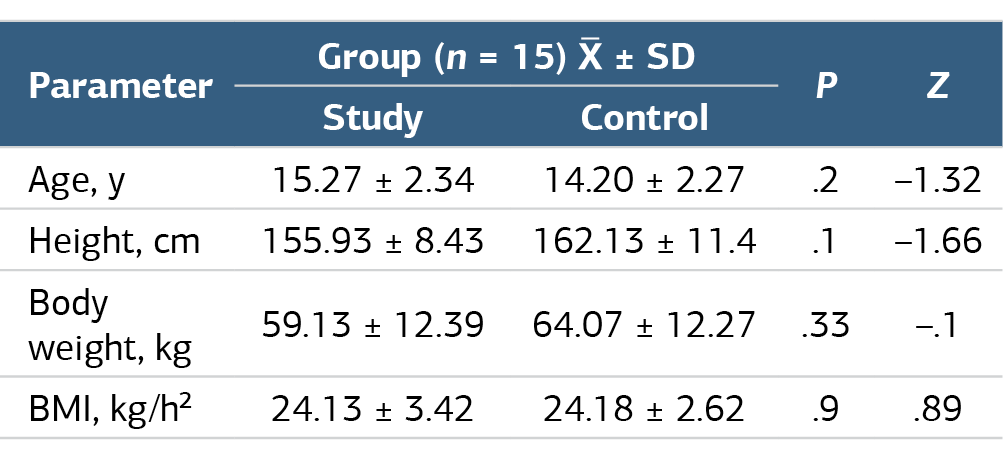
Abbreviations: X̄ = Mean; SD = Standard Deviation; Cm = Centimeter; Kg = Kilogram; p = Statistical Significance Level; Z = Mann Whitney U Value.
Table 2. Comparative Analysis of Spinal Alignment and Other Parameters
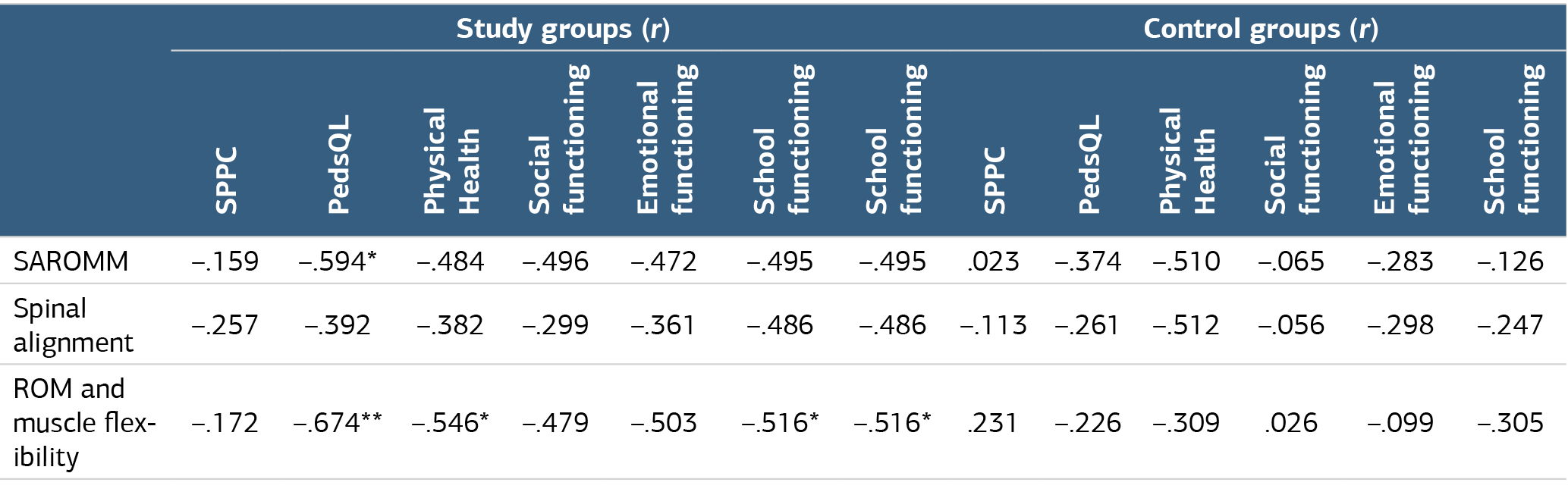
Abbreviations: *P < .05, **P <.01, r, Spearman’s Rho; SAROMM, Spinal Alignment and Range of Motion; SPPC, Self-Perception Profile for Children;PedsQL, Pediatric Quality of Life Inventory; ROM, Range of Motion
Table 3. Significance Values of Intergroup Test Scores
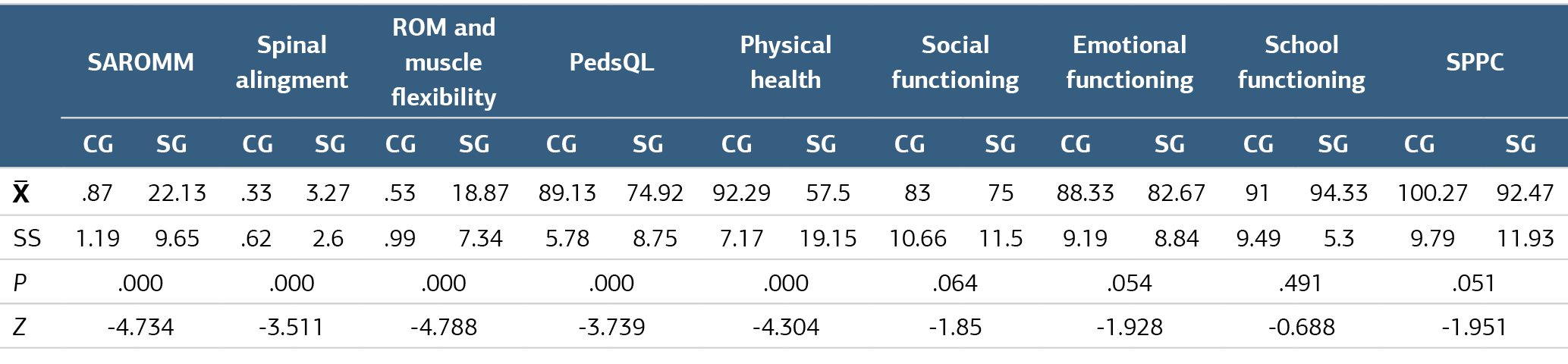
P < .05, Mann-Whitney U Test. Abbreviations: SAROMM, Spinal Alignment and Range of Motion Measurement; SPPC, Self-Perception Profile For Children; PedsQL, Pediatric Quality of Life Inventory ROM, Range of Motion; CG, Control Group; SG, Study Group
Figures
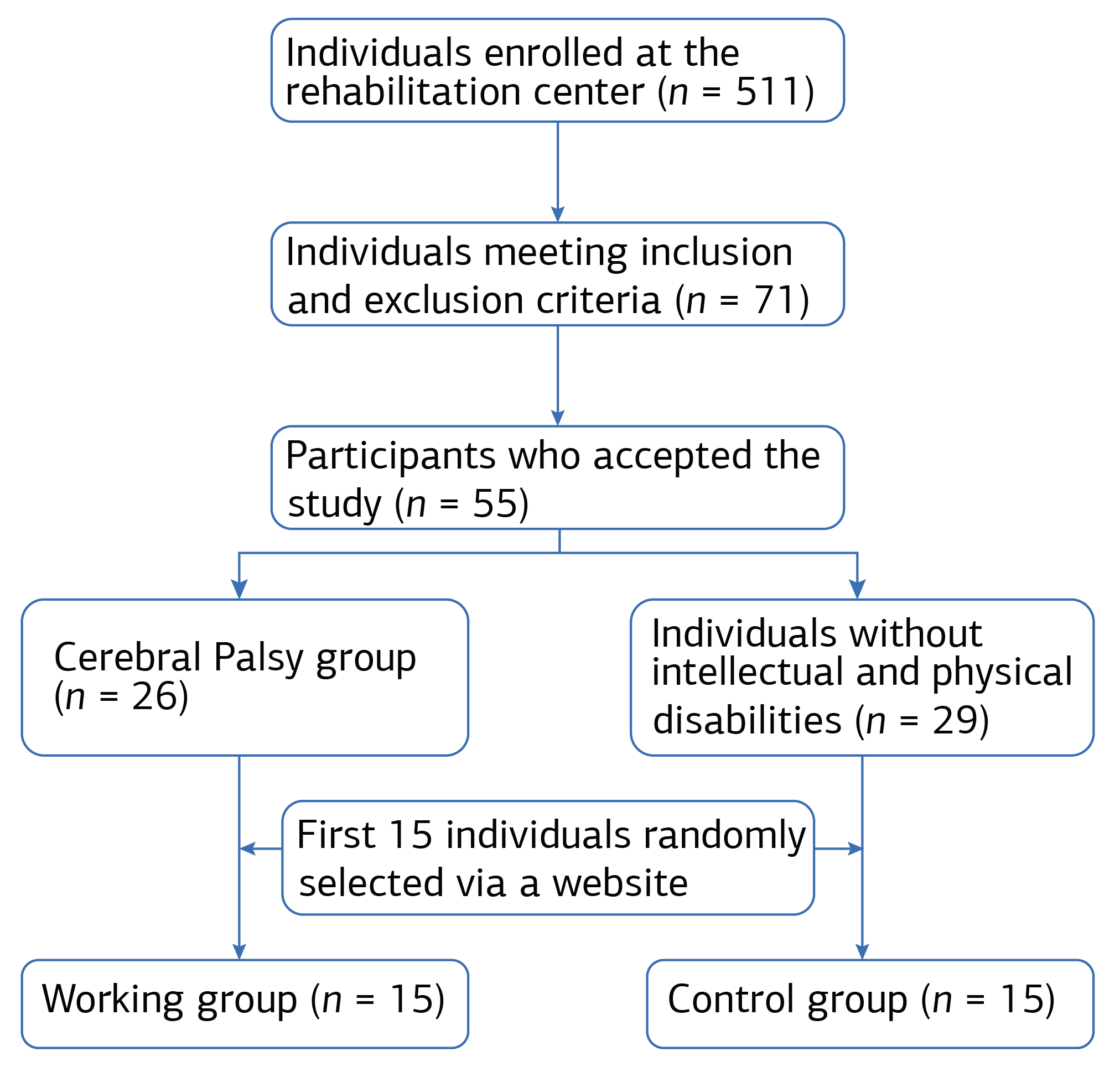
Figure 1. Flowchart of the Study
Additional Information
Publisher’s Note
Bayrakol MP remains neutral with regard to jurisdictional and institutional claims.
Rights and Permissions

This work is licensed under a Creative Commons Attribution-NonCommercial 4.0 International License (CC BY-NC 4.0). To view a copy of the license, visit https://creativecommons.org/licenses/by-nc/4.0/
About This Article
How to Cite This Article
Muhammed Kurban Şenlik, Cihan Caner Aksoy. Comparison of physical impairment, self-perception, and quality of life in individuals with cerebral palsy and typically developing peers. Ann Clin Anal Med 2026;17(9):964-968. doi:10.4328/ACAM.22899
Publication History
- Received:
- 17.09.2025
- Accepted:
- 09.03.2026
- Published Online:
- 18.03.2026
- Printed:
- 01.09.2026