
Abstract
AimThis study aimed to investigate the association between the preoperative neutrophil-to-lymphocyte ratio (NLR) and benign versus malignant thyroid pathology among patients undergoing thyroidectomy. MethodsA retrospective single-center analysis was conducted on 605 patients with thyroid pathology, including 493 with benign and 112 with malignant nodules. Demographic data, radiological and pathological nodule sizes, and preoperative NLR values were collected. Normality was assessed using the Kolmogorov-Smirnov test. Group comparisons were performed with independent samples t-test, Mann-Whitney U test, and chi-square test as appropriate. A P value < 0.05 was considered statistically significant. ResultsThe groups did not differ significantly in age or sex (P > .05). Benign nodules exhibited larger radiological (32.62 ± 15.38 mm vs. 27.20 ± 16.49 mm) and pathological dimensions (28.80 ± 15.28 mm vs. 12.08 ± 14.45 mm) compared to malignant nodules (P < .01). Lymphocyte counts were higher in malignant cases (P = .03). The NLR was significantly elevated in the benign group (2.18 ± 0.94) compared with the malignant group (1.93 ± 0.63, P < .01). Among patients with nodules <40 mm, NLR distinguished benign from malignant lesions (P = .03), whereas this discriminatory capacity was lost in nodules >40 mm (P = .13). ConclusionThe neutrophil-to-lymphocyte ratio may represent a simple, inexpensive, and readily available biomarker for the preoperative assessment of thyroid nodules, particularly in patients with nodules smaller than 40 mm. However, this association was not observed in larger nodules, highlighting the need for validation through prospective, multicenter studies.Keywords
Introduction
Thyroid nodules are among the most frequently encountered clinical issues in endocrine practice. Recent data indicate that ultrasonography detects nodules in approximately 51% of adults, far exceeding the 4%–7% detection rate via palpation alone.1 Moreover, these nodules are increasingly identified incidentally on imaging performed for unrelated reasons, with an incidence of up to 30% in asymptomatic individuals.2 While most nodules are benign, current studies estimate that 7%–15% pose a malignancy risk, emphasizing the need for effective diagnostic and management strategies.3
Papillary thyroid carcinoma (PTC) remains the most common subtype of thyroid malignancy, accounting for nearly 90% of thyroid cancer cases.4 Despite generally indolent behavior, a subset of PTC demonstrates aggressive features, including local invasion and lymph node metastases, which make surgical management more difficult and lead to an increased risk of postoperative complications, particularly hypocalcemia, underscoring the importance of early detection and stratified treatment approaches.5 Consequently, accurate diagnosis, precise risk stratification, and timely surgical intervention are essential to improve patient outcomes and optimize healthcare resource utilization.
The differentiation between benign and malignant thyroid nodules is primarily based on clinical examination, ultrasonographic features, and fine-needle aspiration biopsy (FNAB) results. However, the possibility of nondiagnostic or indeterminate cytology remains one of the main limitations of FNAB, thereby increasing the demand for novel biomarkers to improve diagnostic accuracy.6 Recent studies have also investigated whether nodule size influences diagnostic accuracy and malignant potential. In particular, a threshold of 40 mm has been discussed as nodules larger than this may show altered cytological reliability and distinct clinical behavior compared to smaller nodules.7 In recent years, the association between systemic inflammatory markers and malignancies has gained increasing attention. Among these, the neutrophil-to-lymphocyte ratio (NLR) has emerged as a simple and inexpensive indicator of systemic inflammation. It has been investigated as both a prognostic and diagnostic parameter in cancer biology, including its potential role in the differential diagnosis of thyroid malignancies.8
The NLR is a simple and cost-effective indicator of the systemic inflammatory response, characterized by an increased neutrophil count and a decreased lymphocyte count. In malignancies, tumor-microenvironment–driven inflammation can disturb immune cell balance, resulting in measurable shifts in NLR values.9 In thyroid cancer–focused studies, NLR has been explored as both a prognostic and diagnostic marker; however, while several reports suggest associations with tumor burden, nodal metastasis, or outcomes, its diagnostic accuracy for distinguishing benign from malignant thyroid nodules remains contentious, with conflicting results across recent literature.10
Reoperative thyroid surgery remains an important therapeutic option for patients with persistent or recurrent thyroid disease, particularly in the setting of malignancy; however, it is associated with a substantially higher risk of functional and anatomical complications compared with primary thyroid surgery. These increased risks highlight the critical importance of accurate preoperative risk stratification, especially regarding the likelihood of malignancy at initial presentation.11 Incorporation of preoperative NLR assessment alongside established clinical, radiological, and cytopathological parameters may improve the identification of patients at higher malignant risk. Such an approach has the potential to optimize the extent of initial surgical management and thereby reduce the need for avoidable reoperative procedures.
The objective of this study was to evaluate the association between preoperative neutrophil-to-lymphocyte ratio values and postoperative benign or malignant thyroid pathology and to determine whether this association differed according to nodule size.
Materials and Methods
Study Design and Patient Selection This study was designed as a single-center, retrospective, descriptive analysis. The medical records of patients who underwent thyroidectomy in our clinic between January 2021 and December 2024 were reviewed retrospectively using the hospital’s electronic database. Patients were included if preoperative complete blood count (CBC) results were available and a definitive postoperative histopathological diagnosis had been established. Patients with acute or chronic inflammatory diseases unrelated to the thyroid, hematologic disorders, a history of immunosuppressive therapy, or systemic infections were excluded from the study. Data Collection Demographic characteristics of the patients (age and sex), nodule size (obtained from preoperative ultrasonography reports), pathological size (derived from definitive histopathology reports), number of nodules, and type of surgical procedure performed (total thyroidectomy or lobectomy) were recorded. In the preoperative period, neutrophil and lymphocyte counts from laboratory tests performed within two weeks before surgery were retrieved, and the NLR was calculated. Grouping Patients included in the study were categorized into two main groups according to the results of postoperative histopathological examination. The benign group comprised non-malignant thyroid pathologies, including nodular goiter, Hashimoto’s thyroiditis, and adenomatous nodules. In contrast, the malignant group included papillary thyroid carcinoma, follicular carcinoma, and other rare thyroid malignancies. For additional analyses, patients were further stratified based on nodule size to evaluate its impact on the NLR; those with nodules smaller than 40 mm and those with nodules measuring 40 mm or larger were compared. This approach allowed both overall group comparisons and subgroup analyses according to nodule size. Ethical Approval This study was approved by the Ethics Committee of Malatya Turgut Ozal University (Date: 21.10.2025, Decision No: SBBA-2025-381). Statistical Analysis Data were analyzed using SPSS for Windows version 22.0 (IBM Corp., Armonk, NY, USA). The distribution of continuous variables was assessed using the Kolmogorov–Smirnov test as well as skewness and kurtosis values. Continuous variables with normal distributions were compared using the independent samples t-test, whereas those without normal distributions were analyzed using the Mann–Whitney U test. Differences between categorical variables were examined using the chi-square test. Results were expressed as mean ± standard deviation (X̅ ± SD) and median with interquartile range (IQR) for continuous variables, and as frequencies and percentages (%) for categorical variables. A P value of <0.05 was considered statistically significant. Reporting Guidelines This study was reported in accordance with the STROBE guideline.Results
A total of 605 patients were included in the study, comprising 493 (81.5%) in the benign pathology group and 112 (18.5%) in the malignant pathology group. The mean age was 48.12 ± 12.70 years (median: 48.0; IQR: 17.0) in the benign group and 48.13 ± 12.96 years (median: 48.0; IQR: 18.5) in the malignant group, with no statistically significant difference between the groups (t = 0.00; p = 1.00). Similarly, gender distribution did not differ significantly (χ² = 1.40; P = .24). In the benign group, 94 patients (19.07%) were male and 399 (80.93%) were female, whereas in the malignant group, 16 patients (14.29%) were male and 96 (85.71%) were female (Table 1). The mean nodule size was 32.62 ± 15.38 mm (median: 32.0; IQR: 20.0) in the benign group and 27.20 ± 16.49 mm (median: 22.0; IQR: 22.0) in the malignant group, with significantly larger nodules observed in the benign group (t = 3.32; P < .01). Pathological size was also significantly greater in the benign group (28.80 ± 15.28 mm; median: 30.0; IQR: 21.0) compared with the malignant group (12.08 ± 14.45 mm; median: 8.0; IQR: 12.0) (t = 10.55; P < .01). The mean neutrophil count was 4783.04 ± 1507.45 cells/µL (median: 4540.0; IQR: 1900.0) in the benign group and 4597.14 ± 1291.17 cells/µL (median: 4350.0; IQR: 1510.0) in the malignant group, with no statistically significant difference (t = 1.21; P = .23). Conversely, the lymphocyte count was significantly higher in the malignant group (2537.86 ± 708.46 cells/µL; median: 2445.0; IQR: 940.0) than in the benign group (2367.28 ± 726.85 cells/µL; median: 2320.0; IQR: 930.0) (t = –2.25; P = .03). The NLR was found to be significantly higher in the benign group (2.18 ± 0.94; median: 2.0; IQR: 1.0) compared with the malignant group (1.93 ± 0.63; median: 1.8; IQR: 0.8) (t = 2.62; P < .01) (Table 2). Among patients with a nodule size <40 mm, the mean NLR was 2.14 ± 0.87 (median: 1.96; IQR: 0.97) in the benign group and 1.93 ± 0.58 (median: 1.82; IQR: 0.80) in the malignant group, with the difference reaching statistical significance (t = 2.16; P = .03). In contrast, among patients with a nodule size ≥ 40 mm, the mean NLR was 2.29 ± 1.10 (median: 2.04; IQR: 1.07) in the benign group and 1.96 ± 0.81 (median: 1.71; IQR: 0.83) in the malignant group, and the difference was not statistically significant (z = –1.50; P = .13) (Table 3).Discussion
The role of the neutrophil-to-lymphocyte ratio (NLR) in the evaluation of thyroid nodules has been increasingly investigated in recent years, yet its diagnostic performance remains controversial. In our study, NLR values were significantly higher in the benign group compared with the malignant group. This finding contrasts with certain reports suggesting elevated NLR in malignancies and highlights the ongoing uncertainty regarding the clinical utility of this biomarker. Indeed, a recent large-scale meta-analysis concluded that although NLR demonstrated moderate diagnostic accuracy—pooled sensitivity 75% (95% CI: 65–82%) and specificity 62% (95% CI: 42–75%)—its standalone use in distinguishing benign from malignant thyroid lesions is limited and should be regarded as an adjunct rather than a definitive tool.12
A striking observation in our cohort was the significantly higher lymphocyte count in patients with malignant nodules compared with those with benign lesions. This relative lymphocytosis plausibly contributed to the lower NLR values observed in the malignant group and may partially account for discrepancies with reports describing elevated NLR in thyroid cancer. Although peripheral blood findings across studies are heterogeneous, robust lymphocytic involvement in PTC—including well-described tumor-infiltrating lymphocyte (TIL) phenotypes and the frequent coexistence of autoimmune thyroiditis—supports a biologic framework in which local immune activation can influence systemic leukocyte profiles and, by extension, NLR.13
The influence of nodule size on diagnostic accuracy has long been debated, particularly in relation to the 40 mm threshold. Some studies suggest that nodules measuring 4 cm or larger do not consistently carry a higher malignancy risk, and that the accuracy of FNAB remains comparable across different nodule sizes, indicating that surgical intervention based solely on size may not always be justified.14 Conversely, a recent systematic review found that nodules above 4 cm actually demonstrated a lower overall malignancy rate compared with smaller nodules, although heterogeneity across studies was considerable.15 Within this context, our finding that NLR discriminates benign from malignant nodules only when nodules are smaller than 40 mm, but loses this discriminatory ability at or above 40 mm, likely reflects the combined effects of size-related cytological limitations and systemic inflammatory mechanisms. These results highlight the importance of adopting a size-aware, multimodal diagnostic strategy in the preoperative evaluation of thyroid nodules.
Limitations
This study has several limitations that must be acknowledged. First, its retrospective, single-center design may limit generalizability, as local referral patterns and surgical thresholds could influence patient selection. Second, potential confounders such as subclinical infections, metabolic conditions, or medications affecting leukocyte counts were not fully controlled. Third, although papillary thyroid carcinoma constituted the majority of malignant cases, other histological subtypes were underrepresented, precluding subtype-specific analyses. Finally, the absence of long-term follow-up data prevents evaluation of the prognostic significance of NLR beyond its diagnostic role. Future prospective multicenter studies with larger and more diverse patient populations are warranted to validate these findings and clarify the clinical utility of NLR, particularly in relation to nodule size.
Conclusion
Our findings suggest that the NLR, although not suitable as a standalone diagnostic test, may serve as a simple, inexpensive, and widely accessible adjunct in the preoperative evaluation of thyroid nodules. In particular, its discriminatory capacity in nodules smaller than 40 mm could help refine clinical decision-making when cytology is indeterminate or when imaging features are equivocal. Integration of NLR with ultrasonographic risk stratification systems and cytological categories may be explored in future risk prediction models. Nevertheless, clinicians should remain cautious and interpret NLR within the broader clinical context rather than relying solely on this parameter.
Declarations
Animal and Human Rights Statement
This study involved human participants and did not include any animal experiments. All procedures were performed in accordance with the ethical standards of the institutional research committee and with the 1964 Declaration of Helsinki and its later amendments.
Informed Consent
Due to the retrospective nature of the study, the requirement for informed consent was waived by the ethics committee.
Data Availability
The datasets used and/or analyzed during the current study are not publicly available due to patient privacy reasons but are available from the corresponding author on reasonable request.
Conflict of Interest
The authors declare no conflict of interest.
Funding
None.
Author Contributions (CRediT Taxonomy)
Conceptualization: E.K.
Methodology: E.K.
Formal analysis: E.K.
Investigation: E.K., D.K.
Data curation: E.K., D.K.
Writing – original draft: E.K.
Writing – review & editing: D.K. Final approval: All authors.
AI Usage Disclosure
The authors declare that no AI-assisted technologies were used.
Acknowledgements
The authors thank the staff of Malatya Training and Research Hospital for their assistance in the collection of clinical data used in this study.
Abbreviations
CBC: Complete blood count
CI: Confidence interval
FNAB: Fine-needle aspiration biopsy
IQR: Interquartile range
NLR: Neutrophil-to-lymphocyte ratio
PTC: Papillary thyroid carcinoma
SD: Standard deviation
SPSS: Statistical package for the social sciences
STROBE: Strengthening the reporting of observational studies in epidemiology
TIL: Tumor-infiltrating lymphocyte.
References
- Zamora EA, Khare S, Cassaro S. Thyroid nodule. In: StatPearls. StatPearls Publishing; 2023. Accessed November 24, 2025. https://www.ncbi.nlm.nih.gov/books/NBK535422/
- Song Z, Wu C, Kasmirski J, et al. Incidental thyroid nodules on computed tomography: a systematic review and meta-analysis examining prevalence, follow-up, and risk of malignancy. Thyroid. 2024;34(11):1389-1400. doi:10.1089/thy.2024.0313
- Bernet VJ, Chindris AM. Update on the evaluation of thyroid nodules. J Nucl Med. 2021;62(Suppl 2):13S-19S. doi:10.2967/jnumed.120.246025
- Zhang J, Xu S. High aggressiveness of papillary thyroid cancer: from clinical evidence to regulatory cellular networks. Cell Death Discov. 2024;10(1):378. doi:10.1038/s41420-024-02157-2
- Gokdere OG, Ondes B. Effect of early intravenous calcium replacement after total thyroidectomy. Ann Med Res. 2024;31(1):35-38. doi:10.5455/annalsmedres.2023.11.301
- Han D, Min D, Xie R, et al. Molecular testing raises thyroid nodule fine needle aspiration diagnostic value. Endocr Connect. 2023;12(8):e230135. doi:10.1530/EC-23-0135
- Kang S, Kim E, Lee S, et al. Do large thyroid nodules (≥4 cm) without suspicious cytology need surgery?. Front Endocrinol (Lausanne). 2023;14:1252503. doi:10.3389/fendo.2023.1252503
- Teketelew BB, Berta DM, Chane E, et al. Diagnostic accuracy of neutrophil-to-lymphocyte and platelet-to-lymphocyte ratios in differentiating thyroid tumors: a systematic review and meta-analysis. PLoS One. 2025;20(5):e0322382. doi:10.1371/journal.pone.0322382
- Li GP, Zhang D, Li MH, et al. Association between the neutrophil-to-lymphocyte ratio and cancer in adults from NHANES 2005-2018: a cross-sectional study. Sci Rep. 2024;14(1):23678. doi:10.1038/s41598-024-75252-0
- Yildiz EO, Işcen K, Kaya F, Güney OA, Ulukent SC. Evaluation of the correlation of neutrophil/lymphocyte ratio with prognostic classification systems in papillary thyroid carcinoma patients. Medicine (Baltimore). 2024;103(5):e37210. doi:10.1097/MD.0000000000037210
- Aslan O, Şahin M, Topcu R, et al. Surgical outcomes and complications of completion thyroidectomy: a retrospective study. Sci Rep. 2025;15(1):32730. doi:10.1038/s41598-025-18227-z
- Aydin A, Goktas Aydin S, Karci AC. Linking MPV and NLR to TI-RADS: improved predictive accuracy for thyroid malignancy. Medicine (Baltimore). 2025;104(19):e42452. doi:10.1097/MD.0000000000042452
- Nam M, Yang W, Kim HS, et al. Papillary thyroid cancer immune phenotypes via tumor-infiltrating lymphocyte spatial analysis. Endocr Relat Cancer. 2023;30(9):e230110. doi:10.1530/ERC-23-0110
- Alqahtani SM, Albalawi HI, Alalawi YS, AlFattani AA, Al-Sobhi SS. The impact of nodule size on malignancy risk in indeterminate thyroid nodules. Gland Surg. 2024;13(4):470-479. doi:10.21037/gs-24-12
- Cotter A, Jinih M. Thyroid nodule size and risk of malignancy: a systematic review. Discov Oncol. 2025;16(1):1188. doi:10.1007/s12672-025-02588-y
Tables
Table 1. Comparison of categorical variables between benign and malignant pathology groups
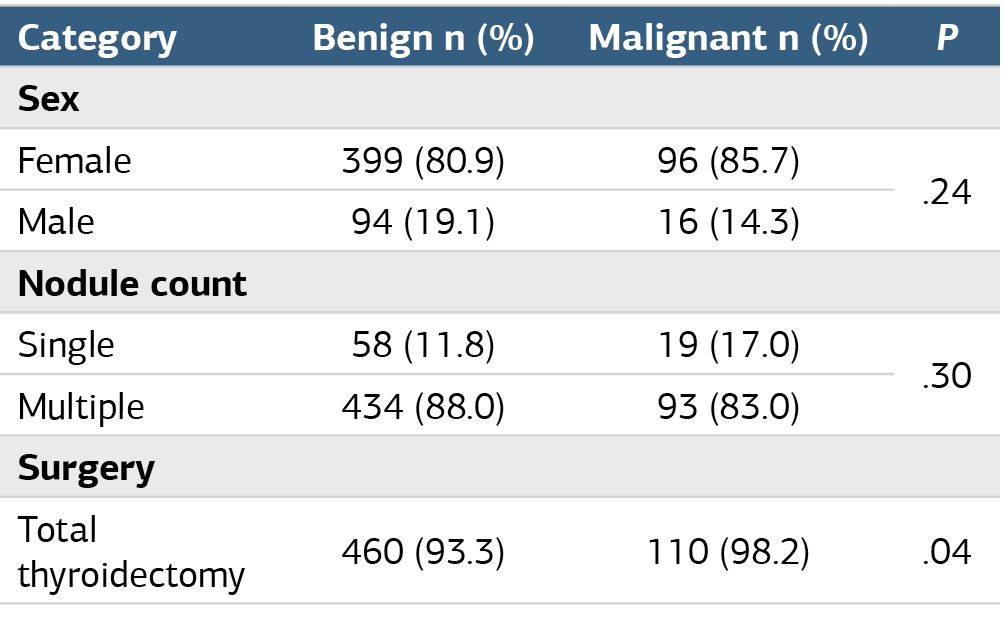
Table 2. Comparison of continuous variables between benign and malignant pathology groups (mean ± SD/median [IQR])
![Table 2. Comparison of continuous variables between benign and malignant pathology groups (mean ± SD/median [IQR])](https://acamedicine.org/archive/vol17/issue9/10.4328-ACAM.23032/table-2.png)
Table 3. Neutrophil-to-lymphocyte ratio (NLR) according to nodule size

Additional Information
Publisher’s Note
Bayrakol MP remains neutral with regard to jurisdictional and institutional claims.
Rights and Permissions

This work is licensed under a Creative Commons Attribution-NonCommercial 4.0 International License (CC BY-NC 4.0). To view a copy of the license, visit https://creativecommons.org/licenses/by-nc/4.0/
About This Article
How to Cite This Article
Erhan Kızılkaya, Denizhan Kılıç. Neutrophil-to-lymphocyte ratio in benign and malignant thyroid nodules. Ann Clin Anal Med 2026;17(9):907-910. doi:10.4328/ACAM.23032
Publication History
- Received:
- 16.12.2025
- Accepted:
- 09.03.2026
- Published Online:
- 24.03.2026
- Printed:
- 01.09.2026