
Abstract
AimGuidelines published during the COVID-19 pandemic generally recommended postponing cancer surgeries except in emergencies. However, the impact of this approach on the progression of cancer cases has not yet been clearly determined. In this study, we aimed to compare the clinical data and outcomes of colorectal cancer surgeries conducted before, during, and after the pandemic.MethodsThis retrospective cohort study included patients who underwent surgery for colorectal cancer during three distinct periods: prepandemic (February 1, 2019 - December 31, 2019), pandemic (August 1, 2020 - June 30, 2021), and post-pandemic (April 1, 2021 - August 1, 2021). Demographic data, clinical and laboratory findings, operational details, and post-discharge follow-up information were collected by reviewing patient files. The three groups were compared based on these data.ResultsA total of 79 patients were included in the study: 29 (8 females and 21 males) were operated on before the pandemic, 18 (5 females and 13 males) during the pandemic, and 30 (9 females and 21 males) after the pandemic. One patient (3.4%) in the pre-pandemic period, 11 patients (37.9%) during the pandemic period, and five patients (16.7%) after the pandemic were operated on for emergency reasons (p<0.001). When examining TNM stages, the most common stage 2 tumors were observed before the pandemic (37.93%), while stage 2 and stage 4 tumors (33.3% each) were most prevalent during the pandemic, and stage 4 tumors (36.7%) were the most common in the post-pandemic period (p=0.67). Ostomy rates were 3.4% in the pre-pandemic period, 33.3% in the pandemic period, and 13.4% in the post-pandemic period (p=0.017)ConclusionThe rise in cases needing emergency surgery and the surge in ostomy rates during the pandemic highlights the negative effects of this process on surgical treatment for colorectal cancer.
Keywords
Introduction
Coronavirus disease 2019 (COVID-19) was first identified in China in December 2019 and began to impact Turkey in March 2020. During this time, numerous guidelines have been published regarding who, when, and how to conduct surgical interventions,1-4 It has been advised to postpone non-urgent surgical procedures, and it has been reported that surgical interventions can increase morbidity and mortality rates in patients diagnosed with COVID-19.5 A meta-analysis showed that the postoperative mortality rate for COVID-19 patients was approximately 20%.6 The most significant recommendation in the guidelines for colorectal cancer is to avoid surgery in COVID-19-positive patients. Additionally, it has been recommended that surgical interventions should be reserved for emergencies, elective procedures should be deferred, and non-surgical treatment methods should be favored in cases of locally advanced rectal or metastatic colorectal cancers.3-4,7
Colorectal cancer has been identified as the cancer type with the greatest survival impact among cases of gastric, pancreatic, and colorectal malignancies that were delayed during the pandemic period.8 A meta-analysis indicated that a 12-week delay in colorectal cancer surgery negatively affected survival.9
Therefore, it is advised that surgery not be postponed for more than 6 to 12 weeks in patients with early-stage colorectal cancer who have completed neoadjuvant therapy. Some centers continued surgical treatment during the pandemic and reported no additional complications, provided that they strictly adhered to pandemic guidelines.10-11
Despite the recommendations mentioned above, research on the progression, staging, and follow-up of colorectal cancer during the pandemic is limited.
This study aims to compare the demographic, clinical, and postoperative characteristics of patients who underwent colorectal cancer surgery before, during, and after the pandemic, thereby examining the effects of the COVID-19 pandemic on colorectal cancer surgery.
Materials and Methods
Trial DesignAfter receiving approval from the Kocaeli University Faculty of Medicine Ethics Committee and obtaining written informed consent from each participant, this retrospective study was conducted in the Department of General Surgery at Kocaeli University Faculty of Medicine Hospital.Participants and Eligibility CriteriaColorectal cancer surgeries conducted at our clinic from April 1, 2019, to August 1, 2021, were reviewed retrospectively. The first COVID-19 case in Turkey was reported on March 11, 2020. Therefore, the pre-pandemic period was defined as April 1, 2019, to August 1, 2019; the pandemic period as April 1, 2020, to August 1, 2020; and the post-pandemic period as April 1, 2021, to August 1, 2021. During the pandemic, polymerase chain reaction (PCR) tests were routinely administered to patients scheduled for surgery at our center. Throughout this period, no patients diagnosed with COVID-19 were treated in our hospital or clinic. All patients included in the study were confirmed to be free of COVID-19 infection by PCR test or thoracic computed tomography. Patients with missing data were excluded.
Inclusion criteria: Individuals must be over 18 years of age and undergoing emergency or elective surgery for colorectal cancer during the specified period periods.Exclusion CriteriaIndividuals under 18 years of age, surgery for conditions unrelated to colorectal cancer, surgery for colorectal cancer conducted outside the specified dates, diagnosis of COVID-19, and incomplete data.OutcomesDemographic data, including age and gender, tumor localization, and TNM classification, were recorded for all patients. Additionally, the surgical procedures performed and whether the surgery was conducted under emergency or elective conditions were noted. This data was compared before, during, and after the COVID-19 pandemic.Ethical ApprovalThis study was approved by the Ethics Committee of Kocaeli University (Date: 16.12.2021, Decision No: KUGOKAEK-2021/22.11).Statistical AnalysisStatistical evaluation was conducted using the IBM SPSS 20.0 software package (IBM Corp., Armonk, NY, USA). The ShapiroWilk Test assessed conformity to normal distribution. Numerical variables were expressed as mean ± standard deviation and frequency (percentages).
The Monte Carlo chi-square test was employed for categorical variables to assess intergroup differences. A p-value of < 0.05 was deemed sufficient for statistical significance in two-way tests.Reporting GuidelinesThe study was reported in accordance with STROBE guideline.
Results
A total of 79 patients were included in the study. Of these, 29 (8 females and 21 males) were operated on before the pandemic, 18 (5 females and 13 males) during the pandemic, and 30 (9 females and 21 males) in the post-pandemic period (p=1). The mean age of the patients in the pre-pandemic period was 63.3 years, 65.8 years in the pandemic period, and 65 years in the post-pandemic period (p=0.75) (Table 1).
In the pre-pandemic period, one patient (3.4%), 11 patients (37.9%) during the pandemic, and five patients (16.7%) after the pandemic underwent surgery for emergency reasons (p<0.001). Analysis of the subgroups revealed that the rate of patients operated on under emergency conditions was significantly higher in the pandemic period compared to the post-pandemic period (p=0.007). No significant difference was observed between the pre-pandemic and post-pandemic periods (p=0.28) (Table 1).
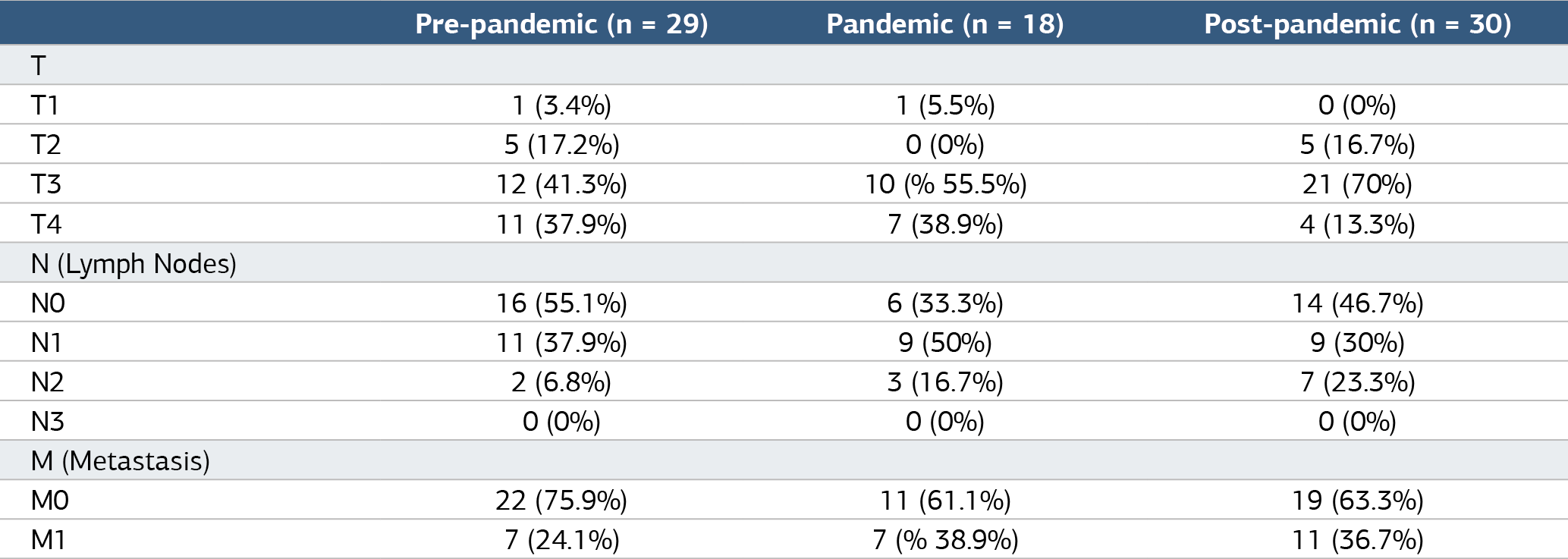
When the patients were evaluated according to TNM staging, there were six patients (20.7%) with stage 1, 11 patients (37.9%) with stage 2, 5 patients (17.2%) with stage 3, and 7 patients (24.1%) with stage 4 among the 29 patients admitted before the pandemic. In the 18 patients admitted during the pandemic period, there was one patient (5.5%) with stage 1, 6 patients (33.3%) with stage 2, 5 patients (27.8%) with stage 3, and 6 patients (33.3%) with stage 4. Of the 30 patients admitted in the post-pandemic period, there were five patients (16.7%) with stage 1, 9 patients (30%) with stage 2, 5 patients (16.7%) with stage 3, and 11 patients (36.7%) with stage 4. When TNM stages were analyzed, while the most common tumors were stage 2 (37.9%) before the pandemic, stages 2 and 4 (33.3% - 33.3%) were most common during the pandemic period, and stage 4 tumors (36.7%) were predominant in the post-pandemic period (p=0.67). When subgroups were analyzed, no significant difference was found between the groups (Table 1). All details of the TNM stages of the patients are presented in Table 2. The incidence rates of stage 1-2 tumors, which also drew our attention in our clinical approach, were examined in our study. While 17 patients (58.6%) had stage 1-2 tumors during the pre-pandemic period, 7 patients (38.9%) had stage 1-2 tumors during the pandemic, and 14 patients (46.7%) had stage 1-2 tumors after the pandemic. When analyzing the subgroups regarding the rates of stage 1-2 tumors, no significant difference was found between the groups (Table 1).
Ostomy rates were 3.4% in the pre-pandemic period, 33.3% during the pandemic, and 13.4% in the post-pandemic phase (p=0.017). When the subgroups were analyzed, it was found that ostomy procedures occurred significantly higher during the pandemic than in the pre-pandemic period (p=0.005). No significant difference was observed between the other groups.
Discussion
During the COVID-19 pandemic, which had an impact worldwide, there were many discussions about which patients should be operated on and at what appropriate time. The general approach was to cancel elective operations and control oncologic cases as much as possible with non-surgical methods such as chemotherapy or radiotherapy. Except for emergency operations, elective operations came to a halt in many centers. Many studies have examined the effects of this situation on oncologic cases.
In this study, we aimed to investigate the effect of the pandemic on colorectal cancers. Analysis of the demographic data (mean age and gender distribution) of the patients included in the study revealed no significant difference between the pandemic period and the pre-pandemic and post-pandemic periods.
In a study by Julia et al. at Oxford University Hospital in England, the comparison of colorectal cases during the pandemic and pre-pandemic periods showed that 179 colorectal cancer surgeries were performed before the pandemic, while 85 patients underwent surgery for colorectal cancer during the pandemic. A statistically significant difference was found when comparing the emergency/elective rates between these two groups, indicating an increase in the emergency rate during the pandemic period.12 Similarly, in our study, we compared the number of emergency and elective cases in both pre-pandemic and pandemic periods and found a similar result. In research by Michael Shinkwin et al. in the UK, colorectal emergency operation rates during the pandemic were compared to previous years, revealing a gradual increase in the emergency operation rate over the months of the pandemic.13 Likewise, in a multicenter study by Oscar Cano-Valderrama et al. in Spain, it was highlighted that tumor-related emergency colorectal surgeries rose during the pandemic.14 Additionally, a study conducted in our country by Hasırcı et al. reported a similar increase in the rate of emergency colorectal surgeries during the pandemic period.15 This evidence supports the rise in the emergency/elective ratio in our study during the pandemic. In a study conducted by Ju Yeon Choi et al. in Korea, it was reported that the number of advanced colorectal cancers increased significantly compared to the pre-pandemic period. Moreover, it was noted that the number of patients who underwent surgery after neoadjuvant chemotherapy decreased during the pandemic, as many patients presented with advanced and unresectable tumors.16 In our study, although a statistically significant difference did not emerge due to the limited number of patients, we observed a significant increase in the number of advanced-stage metastatic colorectal cancers compared to the pre-pandemic period. This numerical change may be attributed to the failure to implement national cancer screening programs during the pandemic. Consequently, there has been an uptick in advanced-stage cancers resulting from delayed cancer diagnoses. Additionally, the number of advancedstage cancers may have risen in the post-pandemic period due to colorectal cancer surgeries that were postponed during the pandemic. Numerous studies indicate a global decrease in endoscopic procedures and oncologic surgeries.16-17
When the patients were divided into early-stage (stage 1-2) and late-stage (stage 3-4), although there was no statistical difference between the groups, it was found that advancedstage cancers increased during the pandemic. This may be attributed to a decrease in hospital admissions and controls during this time due to the pandemic. Additionally, the increased incidence of advanced cancers in the post-pandemic period could be due to delayed hospital admissions and a near halt of endoscopic interventions for screening in most centers during the pandemic. In a multicenter retrospective study conducted in the Netherlands, Mando Filipe et al. evaluated 162 colorectal cancer patients. This study found that when comparing colorectal cancers before and during the pandemic, the incidence of earlystage cancers gradually decreased throughout that period.18 This supports the observed numerical decrease of early-stage cancers in our study during and after the pandemic.
Considering the rates of ostomy application in our study, the rates were 3.4% before the pandemic, 33.3% during the pandemic, and 13.3% after it. Some studies in the literature show that the rate of ostomy application increased significantly during the pandemic.16-17 However, some authors argued that there was no significant change in this regard. In our study, we found that the rate of ostomy application increased significantly during the pandemic, especially compared to the pre-pandemic period.18 This proportional difference in the number of ostomies may be attributed to the preference for ostomy over anastomosis in emergency and infectious conditions during the pandemic period.
Limitations
The most important limitations of the study are its retrospective nature and the small number of cases.
Conclusion
The findings of this study reveal the impact of the COVID-19 pandemic on colorectal cancer. The disruption of national cancer screening programs and the postponement of elective surgeries during the pandemic may have led to the emergence of more advanced cancer cases. Specifically, the increase in cases requiring emergency surgery and the rise in ostomy rates during the pandemic highlights the negative effects of this situation on surgical treatments. However, although no significant statistical difference was observed when comparing tumor stages, it is believed that significant results may emerge from larger groups. In conclusion, the COVID-19 pandemic disrupted diagnostic and therapeutic processes in colorectal cancer treatment, negatively affecting surgical outcomes. These findings may significantly contribute to the development of strategies for similar global health crises in the future.
Declarations
Animal and Human Rights Statement
All procedures performed in this study were in accordance with the ethical standards of the institutional and/or national research committee and with the 1964 Helsinki Declaration and its later amendments or comparable ethical standards.
Informed Consent
Written informed consent was obtained from all participants.
Data Availability
The datasets generated and/or analyzed during the current study are available from the corresponding author on reasonable request.
Conflict of Interest
The authors declare that there is no conflict of interest.
Funding
None.
Acknowledgements
None.
Abbreviations
COVID-19: coronavirus disease 2019
PCR: Polymerase chain reaction
TNM: Tumor-node-metastasis
References
- Ren X, Chen B, Hong Y, et al. The challenges in colorectal cancer management during COVID-19 epidemic. Ann Transl Med. 2020;8(7):498. doi:10.21037/atm.2020.03.158
- Bartlett DL, Howe JR, Chang G, et al. Management of cancer surgery cases during the COVID-19 pandemic: considerations. Ann Surg Oncol. 2020;27(6):1717-1720. doi:10.1245/s10434-020-08461-2
- O’Leary MP, Choong KC, Thornblade LW, Fakih MG, Fong Y, Kaiser AM. Management considerations for the surgical treatment of colorectal cancer during the global COVID-19 pandemic. Ann Surg. 2020;272(2). doi:10.1097/sla.0000000000004029
- Akyol C, Koç MA, Utkan G, Yıldız F, Kuzu MA. The COVID-19 pandemic and colorectal cancer: 5W1H—what should we do to whom, when, why, where, and how? Turk J Colorectal Dis. 2020;30(2):67-75. doi:10.4274/tjcd.galenos.2020.2020-4-11
- Doglietto F, Vezzoli M, Gheza F, et al. Factors associated with surgical mortality and complications among patients with and without coronavirus disease 2019 (COVID-19) in Italy. JAMA Surg. 2020;155(8):691-702. doi:10.1001/jamasurg.2020.2713
- Abate SM, Mantefardo B, Basu B. Postoperative mortality among surgical patients with COVID-19: a systematic review and meta-analysis. Patient Saf Surg. 2020;14:37. doi:10.1186/s13037-020-00262-6
- Nachon-Acosta A, Martinez-Mier G, Flores-Gamboa V, et al. Surgical outcomes during COVID-19 pandemic. Arch Med Res. 2021;52(4):434-442. doi:10.1016/j.arcmed.2021.01.003
- Fligor SC, Wang S, Allar BG, et al. Gastrointestinal malignancies and the COVID-19 pandemic: evidence-based triage to surgery. J Gastrointest Surg. 2020;24(10):2357-2373. doi:10.1007/s11605-020-04712-5
- Johnson BA, Waddimba AC, Ogola GO, Fleshman JW Jr, Preskitt JT. A systematic review and meta-analysis of surgery delays and survival in breast, lung, and colon cancers: implication for surgical triage during the COVID-19 pandemic. Am J Surg. 2021;222(2):311-318. doi:10.1016/j.amjsurg.2020.12.015
- Maspero M, Mazzola M, Bertoglio CL, et al. Major cancer surgery during the coronavirus pandemic: experience from a tertiary referral center and COVID-19 hub in northern Italy. Br J Surg. 2020;107(10). doi:10.1002/bjs.11892
- Wahed S, Chmelo J, Navidi M, Hayes N, Phillips AW, Immanuel A. Delivering esophago-gastric cancer care during the COVID-19 pandemic in the United Kingdom: a surgical perspective. Dis Esophagus. 2020;33(9). doi:10.1093/dote/doaa091
- Merchant J, Lindsey I, James D, et al. Maintaining standards in colorectal cancer surgery during the global pandemic: a cohort study. World J Surg. 2021;45(3):655-661. doi:10.1007/s00268-020-05928-x
- Shinkwin M, Silva L, Vogel I, et al. COVID-19 and the emergency presentation of colorectal cancer. Colorectal Dis. 2021;23(8):2014-2019. doi:10.1111/codi.15662
- Cano-Valderrama O, Morales X, Ferrigni CJ, et al. Acute care surgery during the COVID-19 pandemic in Spain: changes in volume, causes, and complications; a multicentre retrospective cohort study. Int J Surg. 2020;80:157-161. doi:10.1016/j.ijsu.2020.07.002
- Hasırcı İ, Ulutaş ME, Özden S, Arslan K. Effects of the COVID-19 pandemic on colorectal cancer surgery. J Surg Med. 2023;7(3):220-224. doi:10.28982/josam.7739
- Choi JY, Park IJ, Lee HG, et al. Impact of the COVID-19 pandemic on surgical treatment patterns for colorectal cancer in a tertiary medical facility in Korea. Cancers (Basel). 2021;13(9):2221. doi:10.3390/cancers13092221
- Filipe M, de Bock E, Geitenbeek R, et al. Impact of the COVID-19 pandemic on surgical colorectal cancer care in the Netherlands: a multicenter retrospective cohort study. J Gastrointest Surg. 2021;25(11):2948-2950. doi:10.1007/s11605-021-04936-z
- ElZanati H, Zohdy M, Samuel S, Marimuthu K. Effect of COVID-19 on stoma formation rates in elective left-sided colorectal cancer resections. Br J Surg. 2022;109(5):248. doi:10.1093/bjs/znac248.025
Tables
Table 1. Demographic and clinical characteristics of the patients
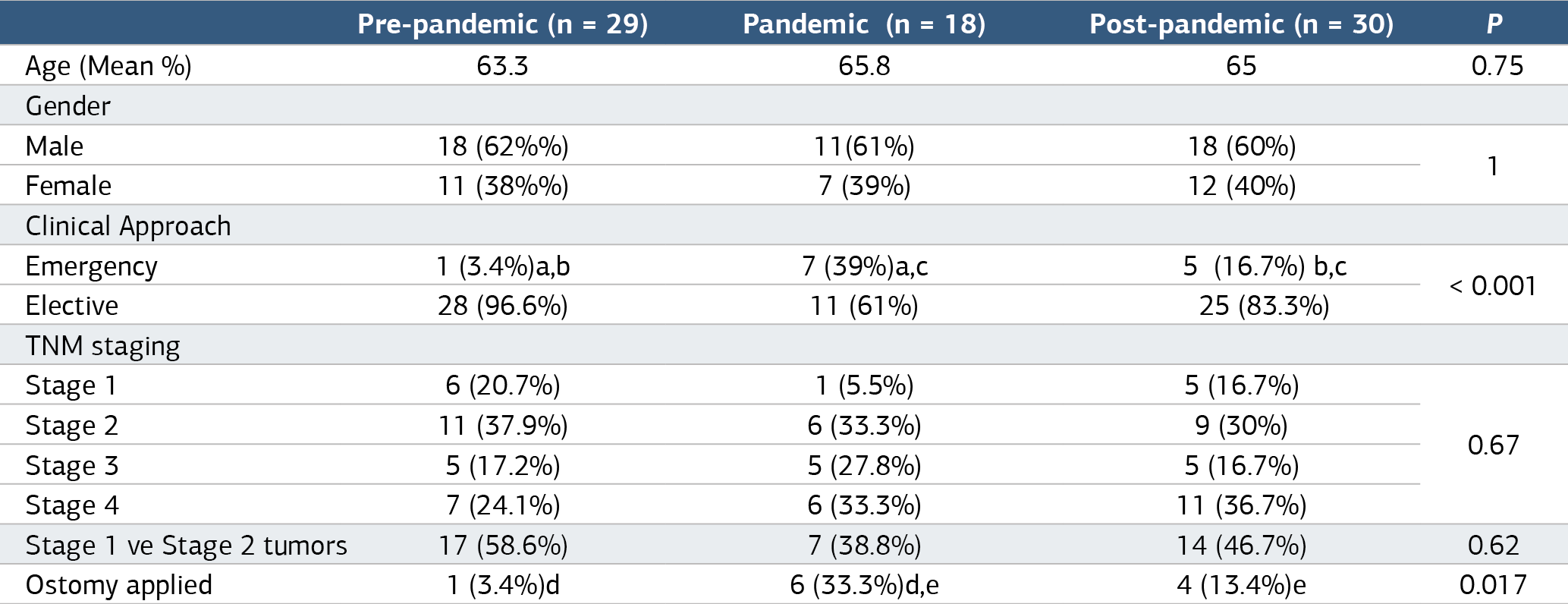
The same superscripts (a, b, c, d, e) denote a subset of categories that are statistically significantly different from each other at the p=0.05 level.
Table 2. Details of TNM stages of patients
Additional Information
Publisher’s Note
Bayrakol MP remains neutral with regard to jurisdictional and institutional claims.
Rights and Permissions

This work is licensed under a Creative Commons Attribution-NonCommercial 4.0 International License (CC BY-NC 4.0). To view a copy of the license, visit https://creativecommons.org/licenses/by-nc/4.0/
About This Article
How to Cite This Article
Enes Şahin, Haşim Köken, Abdullah Hilmi Yılmaz, Kazım Şahin, Oktay Yirmibeşoğlu, Sertaç Ata Güler, Turgay Şimşek, Nihat Zafer Utkan, Nuh Zafer Cantürk. The effect of COVID-19 pandemic period on the treatment process of colorectal cancer patients. Ann Clin Anal Med 2025;16(3):182-186. doi:10.4328/ACAM.22545
Publication History
- Received:
- 05.01.2024
- Accepted:
- 11.02.2025
- Published Online:
- 24.02.2025
- Printed:
- 01.03.2025