
Abstract
AimCivil wars cause the death of many innocent children, and penetrating thoracic firearm injury (PTFI) is a leading cause of morbidity and mortality in children in war environments. The aim of this study was to evaluate child casualties admitted to the emergency department with PTFI that occurred on the battlefield.MethodsOur study was conducted by reviewing the files of pediatric patients with PTFI under the age of 18 who were transferred from Syria to the first response hospital on the Syrian border of Turkey due to the Syrian civil war between January 2016 and December 2019.ResultsOur study included 28 (84.4%) boys and 5 (15.2%) girls. The cause of injury was a bullet in 5 cases, shrapnel in 28 cases and hemothorax (33.3%) was the most common thoracic injury. It was found that a longer time from injury to presentation to the emergency department (p=0.012, p<0.001), injury with a bullet (p=0.013, p=0.017), the presence of shock at the time of presentation (p<0.001, p=0.001) and an increase in the amount of erythrocyte suspensions given (p<0.001) significantly increased the development of complications and mortality. It was also found that mortality and morbidity were significantly higher in PTFI child casualties with low pediatric trauma score (PTS) (p<0.001).ConclusionPenetrating thoracic injuries in children are still associated with high mortality and morbidity. Rapid transfer of these patients to the hospital, and effective, multidisciplinary resuscitation and aggressive thoracotomy interventions when necessary will reduce mortality in these patients.
Keywords
Introduction
The civil war in Syria, Turkey’s neighboring country, has had a devastating impact on the lives of children, causing mortality and morbidity in large numbers. The majority of the deaths were reportedly caused by shrapnel and bullet injuries.1-2 Thoracic trauma is the second most common cause of trauma-related death in children and thoracic trauma alone is responsible for 4% of mortality.3 Although penetrating thoracic traumas caused by firearms, piercing and cutting instruments account for 10% of thoracic injuries in civilian life, the mechanisms of injury reported in children in civil wars are predominantly penetrating injuries, and in a study conducted in the Syrian civil war, 74% of children were injured due to penetrating trauma.4
In this study, we aimed to determine the factors affecting mortality and morbidity in Syrian children with penetrating thoracic firearm injury (PTFI) who were injured in the Syrian civil war and transported to Turkey.
Materials and Methods
Study DesignOur study was conducted by reviewing the files of PTFI patients who were transferred from Syria to Kilis Alaaddin Yavaşça State Hospital in Kilis due to the Syrian civil war between 15.01.2016 and 15.12.2019.Study PopulationChildren <18 years of age with PTFI who were transferred to the hospital due to the war in Syria between the specified dates were included in our study. Children with PTFI who died before arriving at the hospital, had abdominal injuries with solid and/or hollow organ injuries requiring operation, severe burns, head and/or neck injuries, and had a history of operation for any reason in Syria were excluded from the study and 33 children with PTFI were included in our study.Data CollectionThe emergency department, inpatient ward, intensive care unit, and operation notes of the hospital were examined to determine the age, gender, type of weapon causing injury, time between the time of injury and arrival to the hospital, presence of shock on admission, amount of erythrocyte transfusion given, type of treatment (conservative, tube thoracostomy, thoracotomy), solid abdominal organ injuries that did not require operation, extremity injuries, injuries due to thoracic trauma, complications and mortality were determined and a data collection form was filled for each patient. Pediatric Trauma Score (PTS) was calculated and recorded to assess the severity of trauma in injured children.Casualty Assessment and StabilizationFirst aid and resuscitation procedures were initiated as soon as the child casualties arrived at the emergency department. Children underwent a rapid and effective systemic physical examination and their vital signs were determined and recorded. After placement of a central venous catheter, mai replacement was initiated and blood samples were taken for blood group, hemoglobin, hematocrit, and routine biochemistry. PA chest, abdominal, and extremity radiographs were taken after the injured were stabilized. Computed tomography (CT) of the abdomen and chest was performed in suspicious cases. In the children with pulmonary contusion, oxygen was administered at 2 L/min and the amount of oxygen was gradually increased up to 8 L/min when necessary with effective analgesic management by avoiding excessive intravenous fluid overload.
Patients with minimal pneumothorax and/or hemothorax with stable examination findings and hemodynamics were treated conservatively. In injured children with hemothorax and/or pneumothorax affecting or thought to affect respiration, tube thoracostomy was placed through the midaxillary region under local anesthesia. In patients with hemothorax, thoracotomy was performed if the initial drainage volume from the tube thoracostomy was more than 20 ml/kg or if the blood volume from the chest tube was more than 3 ml/kg per hour in 3 consecutive hours of follow-up.
Emergency thoracotomy was performed without delay in patients with cardiac injury, cardiac tamponade, large vessel injury, and massive or chest tube sustained hemothorax on admission.
After evaluating the pulse rate and blood pressure values of the children according to age,5 the shock was diagnosed in cases with hypotension, tachycardia, capillary refill time above 2 s, or bradycardia.
Antibiotics (3rd generation cephalosporin) and tetanus prophylaxis were administered at the initial presentation. Paracetamol (10 mg/kg) was administered as an analgesic and opioids were added to the treatment if necessary.6Ethical ApprovalThis study was approved by the Ethics Committee of Aksaray University Health Sciences Scientific Research Ethics Committee (Date: 06.06.2024, Decision No: 2024/42).Statistical AnalysisData analysis was performed using IBM SPSS v.24.0 (SPSS, Inc., Chicago, Illinois, USA). The chi-square test assessed categorical data distribution, and Bonferroni correction identified groups responsible for significant differences in parameters with multiple subcategories. The Shapiro-Wilk test checked the normality of PTFI-related data. Non-normally distributed quantitative data were reported as median (IQR 25–75). The Mann-Whitney U test compared PTFI patient data, while the Spearman correlation analyzed relationships between parametric variables. Statistical significance was set at p<0.05Reporting GuidelinesThis study was reported in accordance with the STROBE guideline.
Results
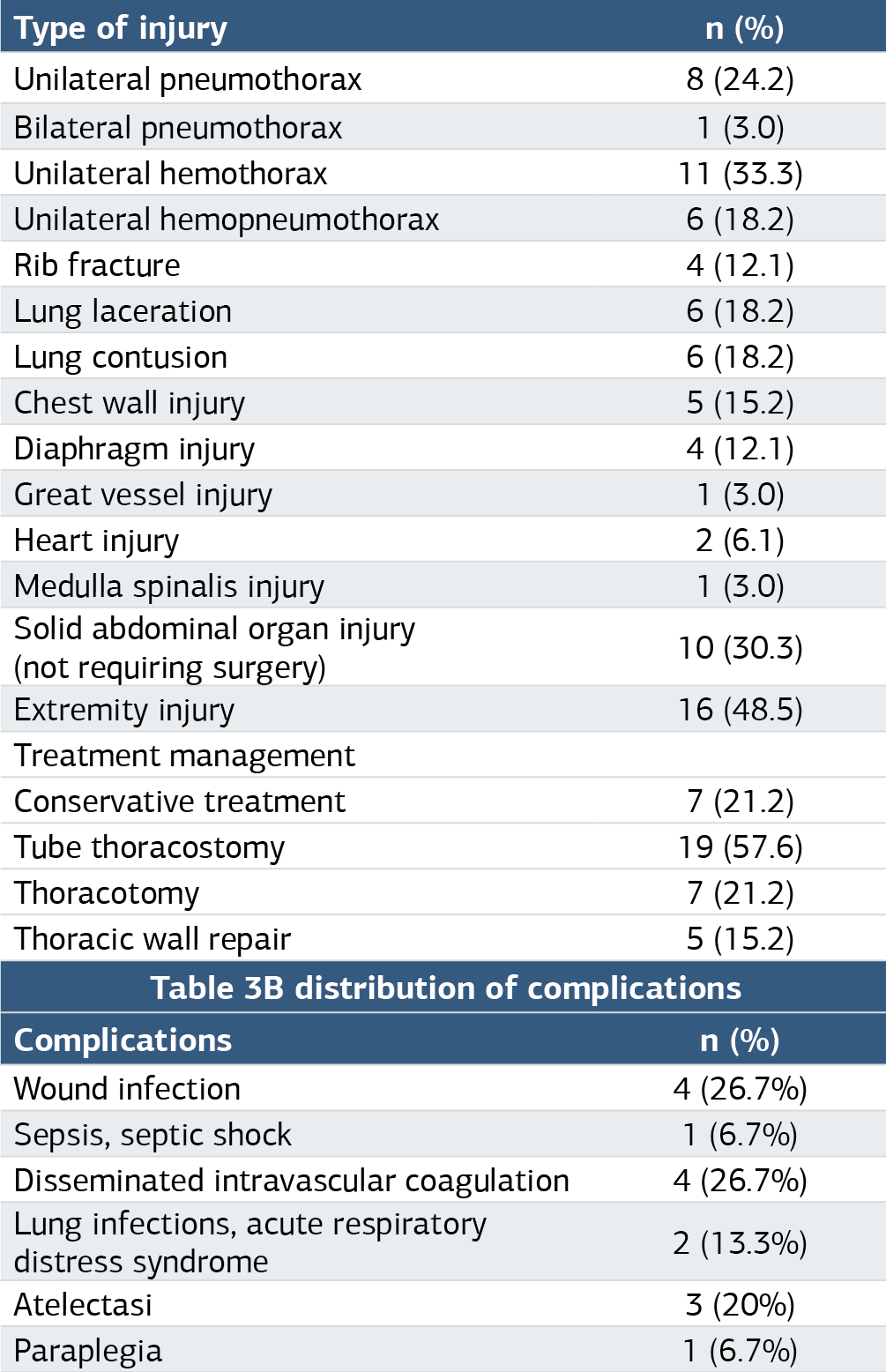
Of the injured children included in our study, 28 (84.8%) were boys and 5 (15.2%) were girls. The median value for age of the injured children was 9 (7–11), 9.5 (7–11) for boys and 9 (7–11.5) for girls. The analysis showed that age and gender had no effect on mortality and morbidity in injured children (Table 1 and Table 2). When the injuries in children were evaluated, pneumothorax in 9 (27.2%) cases and hemothorax in 11 (33.3%) cases were the most common injury types. Other injury types and associated injuries are shown in Table 3 A. Conservatively treated solid abdominal organ injuries such as liver in 6 (18.2%), spleen in 2 (6.1%), and kidney in 2 (6.1%) of the pediatric injured patients were associated with the injury. While 7 (21.2%) of the pediatric injured patients were treated conservatively, tube thoracostomy was placed in 19 (57.6%) patients, and thoracotomy was performed in 7 (21.2%) patients. In addition, chest wall repair was performed in 5 (15.2%) of patients (Table 3 A).
In our study, the median value of the time from injury to hospital admission was 65 (57.5–87.5) minutes and this time was 80 (60–140) minutes in patients with complications and 60 (55–66.25) minutes in patients without complications, while this time was 240 (120–390) minutes in deceased children and 60 (55–70) minutes in living children. When analyzed in terms of both morbidity and mortality, this duration was found to be statistically higher (p=0.012, p<0.001 respectively) (Table 1, Table 2).
Among the children, 5 (15.2%) had bullet injuries and 28 (84.8%) had shrapnel injuries. Regarding the type of firearm causing the injury, it was found that 3 (60%) of 5 patients with bullet injuries died, while 26 (92.9%) of 28 patients with fragment injuries survived. When evaluated in terms of morbidity, it was found that complications developed in 5 wounded with bullets, while complications developed in 10 (35.7%) of 28 wounded with fragments. The type of firearm causing the injury was found to have a statistically significant effect on both morbidity and mortality (p=0.013, p=0.017 respectively) (Table 1, Table 2).
The shock was detected in 9 (27.3%) children in the emergency room. While 5 (33.3%) patients with shock findings died, none of the patients without shock findings died. Complications developed in 6 (25.0%) children without shock findings, while all 9 patients with shock findings developed complications. It was observed that both mortality and morbidity were significantly higher in children admitted to the hospital with signs of shock (p=0.001, p<0.001 respectively) (Table 1, Table 2).
The median value of the mean amount of erythrocyte suspension given to injured children was found to be 1 (0–3) unit and it was observed to be 5 (5–6) units in children who died and 1 (0–2) unit in children who survived, 3 (2–5) units in children who developed complications and 0 (0–1) unit in those who did not develop complications. It was observed that the amount of erythrocytes given had a significant effect on both mortality and morbidity (p<0.001) (Table 1,2). We also observed that both mortality and morbidity were significantly higher in children who received 3 units or more of erythrocyte suspension (p<0.001) (Table 1, Table 2).
The median PTS value of injured children was 9 (5.5–10) and was 3 (2–3.5) in those who died and 9 (8–10) in those who survived, while it was 5 (3–8) in patients who developed complications and 10 (9–11) in patients who did not develop complications. PTS was found to be statistically effective in predicting both complications and mortality (p<0.001) (Table 1,2). We also found that both mortality and morbidity were significantly higher in children with PTS≤8 (p=0.013, p<0.001 respectively) (Table 1, Table 2).
In our study, diaphragm injury was found in 4 (12.1%) patients, and no statistical effect of diaphragm injury on mortality and morbidity was found (p=0.099, p=0.308 respectively) (Table 1,2). In our series, 2 (6.1%) children had a cardiac injury, and 1 (3.0%) patient had a large vessel injury and these three patients died postoperatively due to DIC. Cardiac injury was found to have a statistical effect on mortality, but not on morbidity (p=0.019, p=0.199 respectively). There was no statistically significant effect of large vessel injury on mortality and morbidity (p=0.152, p=0.455 respectively) (Table 1, Table 2).
A total of 15 patients developed complications and 5 (33.3%) of these patients died, while no patient without complications died. The development of complications had a significant effect on mortality (p=0.013) (Table 1).
In our study, 5 (15.2%) of 33 pediatric casualties died, while 15 (45.5%) children developed complications such as wound infection (n = 4, 26.7%), sepsis/septic shock (n = 1, 6.7%), DIC (n = 4, 26.7%), pulmonary infection/ARDS (n = 2, 13.3%), atelectasis (n = 3, 20.0%), paraplegia (n = 1, 6.7%).
Discussion
We found that time of admission to the hospital after injury (p<0.001, p=0.012 respectively), bullet injury (p=0.017, p=0.013 respectively), presence of shock at the time of admission (p=0.001, p<0.001 respectively), need for massive erythrocyte suspension (p<0.001), significantly increased both mortality and morbidity and presence of cardiac injury (p=0.019) increased mortality. Another result we found was that PTS was effective in predicting both morbidity and mortality in child victims with PTFI. It is reported that shrapnel injuries are the most common cause of penetrating injuries in an open war environment. In studies conducted during the Syrian civil war, 61.7% and 71.6% of PTFIs were caused by shrapnel.2,7 In our study, we observed that 84.4% of the injured children were injured by shrapnel. Studies are reporting that the time from injury to the hospital is effective, as well as studies reporting that this time is not effective.2,8-9 In a study conducted between 2007 and 2015 on the relationship between the evacuation time of US soldiers injured in Iraq and Afghanistan and survival, it was predicted that hospital admission time within 1 hour after injury, also referred to as the golden hours, and as a result, timely initiation of surgery could reduce mortality by 66.0%.10 In our study, we found that this duration had a significant effect on both mortality and morbidity (p<0.001, p=0.012 respectively). We think that the risk of developing shock or the depth of the existing shock increases as this period prolongs and this leads to an increase in mortality and morbidity. The triage process is of great importance to increase the survival rate of children exposed to trauma. It is reported that morbidity and mortality are higher in cases with PTS≤8 than in cases with PTS>8.11 In our study, we found that PTS was an important factor in predicting mortality and morbidity (p<0.001), and both morbidity and mortality were significantly increased in those with PTS≤8 (p<0.001, p=0.013 respectively). Studies have reported that the most common cause of mortality in penetrating injuries in children is shock due to hemorrhage.2,12 It has been reported that the depth and duration of shock detected in the emergency department affect mortality and morbidity and is responsible for up to 100% of deaths.13 In our case series, we found that mortality and morbidity were significantly higher in patients admitted to the emergency department with shock (p=0.001, p<0.001 respectively). Although massive erythrocyte transfusion is a life-saving method in hemorrhagic shock, it is reported as an independent predictor of multi-organ failure, systemic inflammatory response syndrome, increased infection, and mortality.14 In our study, we found that massive erythrocyte suspension transfusion increased both mortality and complication development (p<0.001). In the literature, it is reported that penetrating chest traumas are mostly treated with conservative methods and tube thoracostomy15-16 and thoracotomy is rarely required.17 In a study in which 110 cases under 16 years of age were evaluated and 42.2% of the injuries were PTFI cases caused by high-energy weapons, lung contusion was observed in 42.7% of patients, hemothorax in 34.5% and hemopneumothorax in 26.3%. In the treatment of these patients, tube thoracostomy was sufficient in 76.3%, 9.1% were conservatively observed and thoracotomy was necessary in 12.7% of the patients.18 In our series, 19 (57.6%) injured children were treated with tube thoracostomy and 7 (21.2%) children were treated conservatively. Thoracotomy was performed in 7 (21.2%) patients in total and while 3 patients underwent emergency thoracotomy, 4 patients underwent thoracotomy due to ongoing hemorrhage from the tube. In our study, hemothorax was the most common injury in 11 (33.3%) injured children, followed by pneumothorax in 9 (27.2%). One (3%) patient with unilateral pneumothorax and one (3%) patient with bilateral pneumothorax with stable physical examination findings were treated conservatively. In our series, 7 (21.2%) patients with unilateral pneumothorax, 11 (33.3%) patients with unilateral hemothorax, and 1 (3%) patient with unilateral hemopneumothorax underwent tube thoracostomy. The main indications for thoracotomy in our study were severe bleeding and continued bleeding after tube thoracostomy placement. Cardiac and great vessel injuries are injuries with a high mortality rate that often occur after penetrating injuries and thoracotomy should be performed urgently if the patient is hemodynamically unstable and cardiac or great vessel injury is suspected.19-20 In our study, two children had heart injuries and one child had major vascular injuries. These patients underwent emergency thoracotomy. These three injured children died of DIC within 6 hours after the operation. Unilateral hemopneumothorax was accompanied by lung laceration in all 4 patients who underwent thoracotomy due to persistent hemorrhage from tube thoracostomy. One of these patients died of postoperative DIC and another patient died of sepsis on day 5. The reasons for the difference in mortality incidence observed in thoracic injuries are generally reported to depend on the case population included in the study and whether or not patients who died in the emergency department were included in the study.21 In a study conducted on children with PTFI, mortality rates were reported as 11.8%22 7.9%23 and 31.0%.24 In our study, the mortality rate was 15.2%. The complication rate in our study was 45.5% and we observed that this rate was higher than those reported in the literature.7,18,23Limitations
The most important limitation of our study is the small number of cases.
Conclusion
Hemodynamic balance was seriously impaired in children with PTFI and the resulting shock increased mortality and morbidity. In addition, we observed that PTS can predict mortality and morbidity, and PTS ≤ 8, the amount of erythrocyte suspension administered ≥3 units and long transport time significantly increased mortality and morbidity in children with PTFI.
Abbreviations
ARDS: Acute respiratory distress syndrome
CT: Computed tomography
DIC: Disseminated intravascular coagulation
IQR: Interquartile range
PTFI: Penetrating thoracic firearm injury
PTS: Pediatric trauma score
SPSS: Statistical Package for the Social Sciences
References
- Iflazoglu N, Ureyen O, Oner OZ, Tusat M, Akcal MA. Complications and risk factors for mortality in penetrating abdominal firearm injuries: analysis of 120 cases. Int J Clin Exp Med. 2015;8(4):6154.
- Tuşat M, Özmen İ, Demirtaş MS, et al. Risk factors for mortality and morbidity in Syrian refugee children with penetrating abdominal firearm injuries: a 1-year experience. Ulus Travma Acil Cerrahi Derg. 2023;29(9):1051. doi:10.14744/tjtes.2023.70658
- O’Neill JA Jr. Advances in the management of pediatric trauma. Am J Surg. 2000;180(5):365-369. doi:10.1016/s0002-9610(00)00488-8
- Naaman O, Yulevich A, Sweed Y. Syria civil war pediatric casualties treated at a single medical center. J Pediatr Surg. 2020;55(3):523-529. doi:10.1016/j.jpedsurg.2019.02.022
- Kleinman ME, Chameides L, Schexnayder SM, et al. Part 14: pediatric advanced life support: 2010 American Heart Association guidelines for cardiopulmonary resuscitation and emergency cardiovascular care. Circulation. 2010;122(18 suppl 3).
- Geze S, Arslan U, Tusat M. Anaesthesia for an infant with Jarcho-Levin syndrome: case report. Rev Bras Anestesiol. 2015;65(5):414-416.
- Ulusan A, Emre Tunca I, Sanli M, Feridun Isik A. Single-center experience of war-related thoracic injuries in Syria. Curr Thorac Surg. 2023;8(2):91-95. doi:10.26663/cts.2023.0015
- Adesanya AA, da Rocha-Afodu JT, Ekanem EE, Afolabi IR. Factors affecting mortality and morbidity in patients with abdominal gunshot wounds. Injury. 2000;31(6):397-404. doi:10.1016/s0020-1383(99)00247-8
- Çelen O, Oğuz S, Doğan M. Abdominal gunshot wounds: retrospective analysis of 164 patients. Ulus Travma Acil Cerrahi Derg. 2001;7(4):258-261.
- Shackelford SA, Del Junco DJ, Mazuchowski EL, et al. The golden hour of casualty care: a rapid handoff to the surgical team is associated with improved survival in war-injured US service members. Ann Surg. 2024;279(1):1-10. doi:10.1097/sla.0000000000005787
- Jandric S. Injury severity and functional outcome following pediatric trauma in war conditions. Pediatr Rehabil. 2001;4(4):169-175. doi:10.1080/13638490210121711
- Snyder AK, Chen LE, Foglia RP, Dillon PA, Minkes RK. An analysis of pediatric gunshot wounds treated at a level I pediatric trauma center. J Trauma Acute Care Surg. 2003;54(6):1102-1106. doi:10.1097/01.ta.0000063479.92520.2e
- Britt L, Weireter LJ, Riblet JL, Asensio JA, Maull K. Priorities in the management of profound shock. Surg Clin North Am. 1996;76(4):645-660. doi:10.1016/s0039-6109(05)70474-6
- Sihler KC, Napolitano LM. Complications of massive transfusion. Chest. 2010;137(1):209-220. doi:10.1378/chest.09-0252
- Alaqeel SM, Howsawi AA, Al Namshan MK, Al Maary JO. Patterns of pediatric thoracic penetrating injuries: a single-trauma-center experience in Riyadh, Saudi Arabia. Saudi Med J. 2021;42(3):280. doi:10.15537/smj.2021.42.3.20200693
- Baseer A, Khadka P, Badshah Y, Khan MH. Epidemiology of penetrating chest injuries presenting at a tertiary care center in Peshawar: a retrospective study. Cureus. 2024;16(8). doi:10.7759/cureus.65987
- Meller JL, Little AG, Shermeta DW. Thoracic trauma in children. Pediatrics. 1984;74(5):813-819. doi:10.1542/peds.74.5.813
- Eren S, Balci AE, Ulku R, Cakir O, Eren MN. Thoracic firearm injuries in children: management and analysis of prognostic factors. Eur J Cardiothorac Surg. 2003;23(6):888-893. doi:10.1016/s1010-7940(03)00143-x
- Akça B, Tusat M. Penetrating cardiac and hepatic injury: polytrauma of a child after bombing. J Clin Anal Med. 2013;4:530-532. doi:10.4328/jcam.2612
- Sırmalı M. Penetrating chest trauma in the emergency department: analysis of 76 cases. Med J SDU. 2013;20(4):139-143.
- Madiba TE, Thomson S, Mdlalose N. Penetrating chest injuries in the firearm era. Injury. 2001;32(1):13-16. doi:10.1016/s0020-1383(00)00110-8
- Nance ML, Sing RF, Reilly PM, Templeton JM Jr, Schwab CW. Thoracic gunshot wounds in children under 17 years of age. J Pediatr Surg. 1996;31(7):931-935. doi:10.1016/s0022-3468(96)90414-5
- Oruç M, Ülkü R. Evaluation of factors affecting prognosis in penetrating thoracic injuries. Turk Gogus Kalp Damar Cerrahisi Derg. 2018;26(4):598. doi:10.5606/tgkdc.dergisi.2018.15734
- Reinhorn M, Kaufman HL, Hirsch EF, Millham FH. Penetrating thoracic trauma in a pediatric population. Ann Thorac Surg. 1996;61(5):1501-1505. doi:10.1016/0003-4975(96)00110-5
Tables
Table 1. Analysis of parameters in terms of mortality development
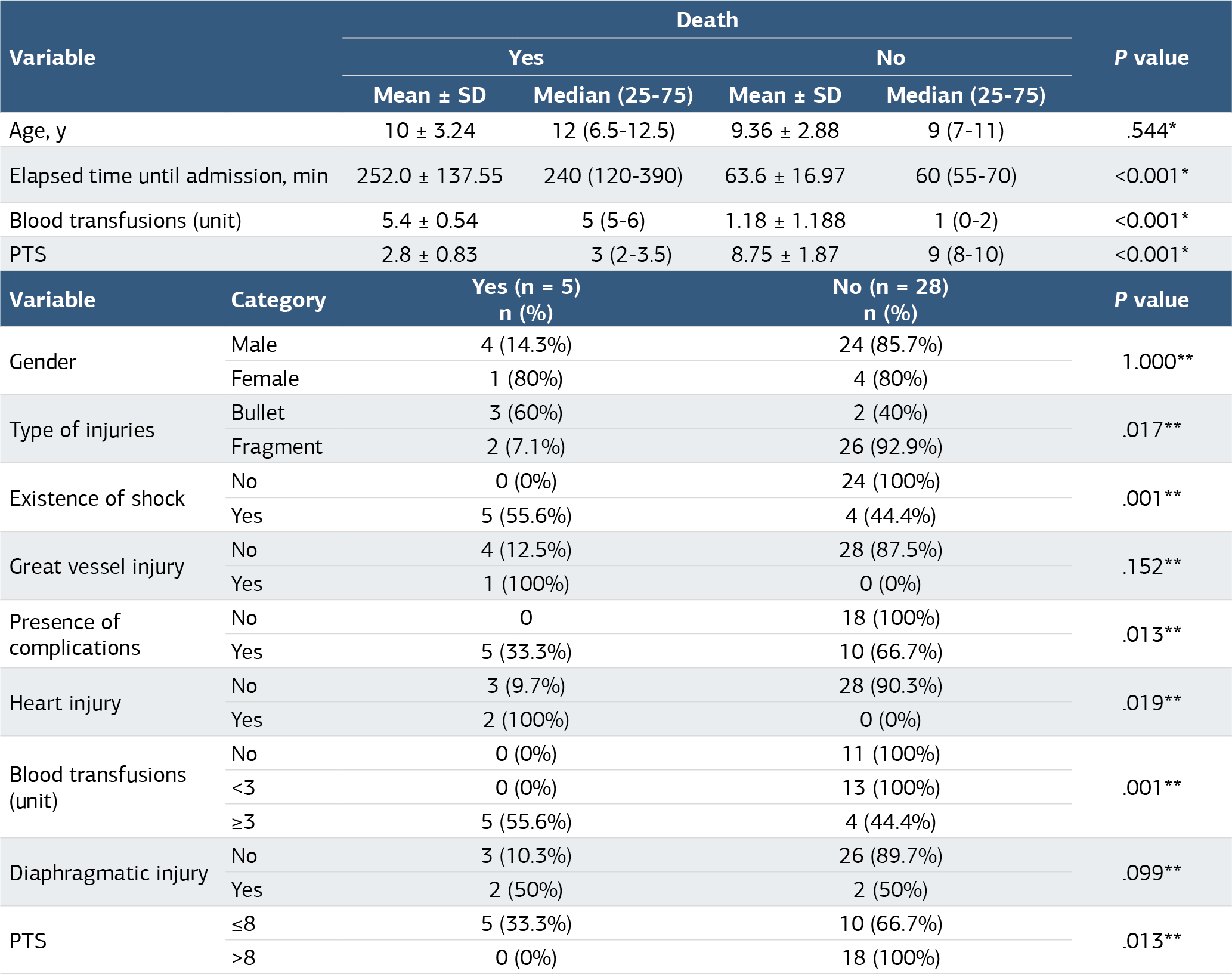
*Mann–Whitney U test; **Fisher’s exact test; M: Mean; SD: Standard deviation; MD: Median; PTS: Pediatric Trauma Score.
Table 2. Analysis of parameters for the development of complications
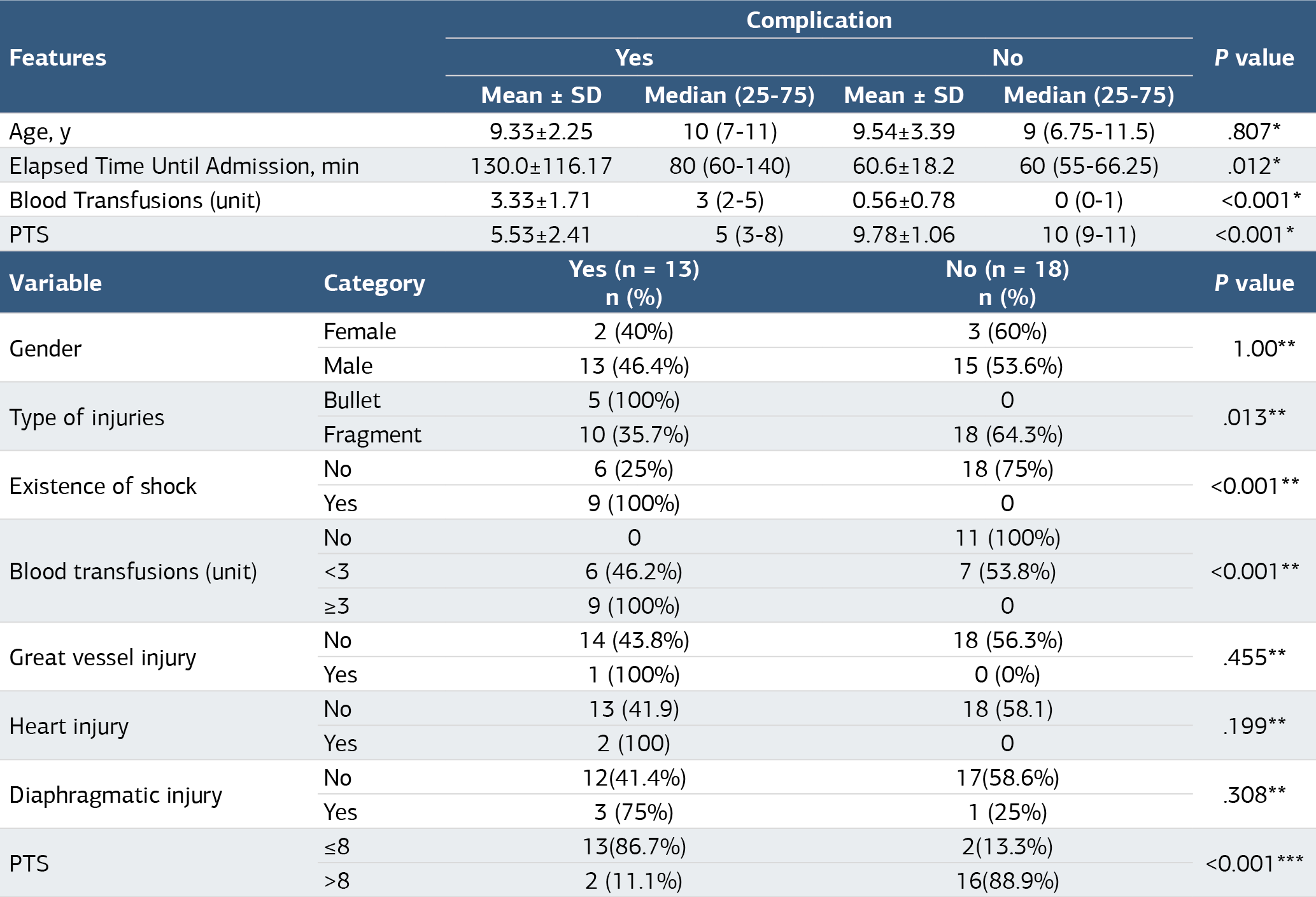
*Mann–Whitney U test; Fisher’s exact test;*Pearson chi-square test; M: Mean; SD: Standard deviation; MD: Median; PTS: Pediatric Trauma Score.
Table 3. Type of injury observed in applicants and treatment management
Additional Information
Publisher’s Note
Bayrakol MP remains neutral with regard to jurisdictional and institutional claims.
Rights and Permissions

This work is licensed under a Creative Commons Attribution-NonCommercial 4.0 International License (CC BY-NC 4.0). To view a copy of the license, visit https://creativecommons.org/licenses/by-nc/4.0/
About This Article
How to Cite This Article
Mustafa Tuşat, İsmail Özmen, Mehmet Semih Demirtaş, Aziz Yarbil, Ahmet Salih Calapoğlu, Sebahattin Memiş. Evaluation of prognosis in refugee children with high kinetic energy penetrating thoracic gunshot wounds. doi:10.4328/ACAM.22624
Publication History
- Received:
- 02.03.2025
- Accepted:
- 23.03.2025
- Published Online:
- 24.03.2025
- Printed:
- 25.03.2025