
Abstract
AimTo investigate the trauma and related symptoms experienced by Türkiye National Medical Rescue Team (UMKE) employees following earthquakes in Kahramanmaraş.MethodsTwenty-five males (78.1%) and five females (21.9%) were included in the study. A sociodemographic form and clinical data form, DSM-5 Acute Stress Symptom Severity Scale, DSM-5 Trauma Symptom Checklist, Beck Anxiety, and Beck Depression Scales were administered to UMKE employees who completed a one-week of duty in the earthquake-affected area. The assessments were conducted online during the first week and the first, third, and sixth months.ResultsUpon examining the psychiatric scale scores of the participants over time, there was a decrease in Acute Stress Symptom Severity Scale scores, DSM-5 Trauma Symptom Checklist, and Beck Depression Scale, but a statistically significant decrease was not observed (p>0.05). Among factors associated with psychiatric conditions, participants with a previous psychiatric diagnosis had higher Beck Anxiety Scale scores (p=0.05), and those who had experienced a traumatic event had higher Acute Stress Symptom Severity Scale scores (p=0.039).ConclusionThe study sheds light on the enduring psychological impact on emergency response teams, emphasizing the importance of long-term mental health support following natural disasters. Increasing awareness, proactive monitoring, and effective treatment strategies are demonstrated as essential in addressing the mental health issues faced by those actively involved in disaster relief efforts.
Keywords
Introduction
Natural disasters are major catastrophes that affect the lives of individuals and societies. Earthquakes are one of the most terrifying, devastating, and uncontrollable disasters. They are often highly destructive and lead to significant loss of life and economic damage.1 Effective emergency response and coordination of healthcare services are vital for saving lives and treating the injured during and after these disasters. Search and rescue operations, one of the top priorities following an earthquake, are carried out immediately by professional teams.2 On February 6, 2023, at 04:17 and 13:24 local time, two earthquakes with magnitudes of Mw 7.8 and Mw 7.6, centered in Pazarcık and Ekinözü in Kahramanmaraş, occurred. These earthquakes caused severe damage in Kahramanmaraş and 11 other provinces, significantly losing life.3 Healthcare workers involved in earthquake response during the early stages of disasters are exposed to horrific scenes, including corpses, severely injured individuals, and people in pain. Therefore, the teams providing this initial response are more vulnerable to professional stress compared to others.4 The Türkiye National Medical Rescue Team (UMKE) employees also encounter traumatic experiences in the aftermath of earthquake disasters and must cope with the long-term effects of these experiences. Studies have indicated that survivors are often at risk for Post-Traumatic Stress Disorder (PTSD), depression, and other psychological disorders.5 During this period, various factors that can be protective or predisposing to trauma and stress have been identified.6 However, the examination of factors associated with acute stress symptoms during the initial moments of an earthquake and the acquisition of long-term follow-up data are limited. This study aimed to follow UMKE employees who worked during the acute period following the two major earthquakes centered in Kahramanmaraş on February 6 and worked there for one week. They were followed for a period of six months to investigate trauma and related symptoms.
Materials and Methods
Type of StudyCross-sectional and follow-up study.The Population and Sample Size of the StudyThe study sample consisted of individuals aged 18-65 who volunteered to participate in the research, met the inclusion and exclusion criteria, and participated in all follow-ups among those who worked at Sakarya UMKE during the Kahramanmaraş earthquake.MeasuresSocio-demographic form and clinical data form This scale was determined based on the purpose of the study by reviewing the literature and includes inquiries about individuals’ social support, economic status, and previous psychiatric treatment.DSM-5 Acute Stress Symptom SeverityScale Published by the American Psychiatric Association, this scale is used to assess the severity of acute stress disorder symptoms in individuals aged 18 and over. The Turkish validity and reliability study was conducted by Aşçıbaşı et al. The scale consists of 7 items, each evaluating the severity of acute stress disorder experienced over the past seven days. Designed on a 5-point Likert scale, the scale ranges from 0 to 28 points, with higher scores indicating more severe acute stress symptoms. The validity and reliability of the scale were established, with a Cronbach’s Alpha of 0.95.7DSM-5 Trauma Symptom Checklist (PCL-DSM-5)PTSD Checklist, also known as the Trauma Symptom Checklist, is one of the most commonly used screening tools for assessing PTSD symptomatology. It is rated on a five-point Likert scale (0-4 points) and provides a range of scores from 0 to 80. Comprising 20 items, this self-report scale has been expanded from the previous DSM-IV version. PCL-5 corresponds to the PTSD diagnostic criteria in DSM-5, including re-experiencing (Criterion B), avoidance (Criterion C), negative alterations in cognitions and mood (Criterion D), and hyperarousal (Criterion E).8 A Turkish validity and reliability study was conducted, and a cutoff score of ≥47 was recommended for the diagnosis of PTSD, with a sensitivity of .76 and specificity of .69.9Beck Anxiety ScaleThis self-assessment scale consists of 21 items and is widely used to determine the frequency and severity of anxiety symptoms.10 Validity and reliability studies were conducted in Türkiye by Ulusoy et al.11Beck Depression ScaleThis scale measures the risk, severity, and depression change in the adult population.12 Hisli conducted the Turkish validity and reliability study, and the recommended cutoff score for the scale is 17.13Data ProcessingIn this study, the measurement tools mentioned above were administered online via Google Forms to UMKE employees who completed one week of duty in the earthquake-affected area during the acute phase and in the 1st week, 1st, 3rd, and 6th months following the earthquake. During the measurements, individuals with high psychiatric scores were contacted by phone and informed, and a recommendation was made for them to consult a psychiatric specialist.Ethical ApprovalEthical approval was obtained from the local Ethics Committee of Sakarya University (Date: 10.02.2023, Decision No: E-220599-58).Statistical AnalysisStatistical analyses were performed using SPSS version 22. Descriptive statistics (frequency and percentage) were applied for socio-demographic variables, and the chi-square test was used for categorical variables. Independent sample t-tests and one-way ANOVA were employed to compare means in groups that showed normal distribution. At the same time, the Mann-Whitney U and Kruskal-Wallis tests were used for groups that did not exhibit normal distribution. If the Mauchly’s Test of Sphericity value was less than 0.05, the Greenhouse-Geisser value was examined. If the Greenhouse-Geisser value is less than 0.750, the evaluation was made with the Greenhouse-Geisser test. A p-value of ≤0.05 was considered statistically significant.Reporting GuidelinesThis study was reported according to the STROBE guidelines.
Results
Sociodemographic Data It was determined that 78.1% of UMKE employees participating in the study were men, 21.9% were women, 56.3% were married, 6.3% were divorced, 34.4% were single, 3.1% were living separately, 9.4% were paramedics, 12.5% were emergency medical technicians, 18.8% were doctors, 12.5% were midwives and nurses, 15.6% were health officers, and 31.3% were technicians, 40.6% worked both in the Field Hospital and the debris field, 34.4% worked in the Field Hospital, 18.8% worked in the debris field, and 6.3% worked in other areas. Participants’ Psychiatric Scale Scores and Their Change Over Time Participants filled out online forms 2 weeks, 1 month, 3 months, and 6 months after going to the earthquake region, and their scale scores were compared. The graph showing the change in participants’ scale scores over time is given in Figure 1. According to the scale results, the rates of those who were determined to be in the risk group were compared. No statistically significant difference was found (Table 1). When the Acute Stress Symptom Severity Scale scores of UMKE employees were compared, it was determined that there was a decrease in the scores during the follow-up period. Still, there was no statistically significant difference between the mean scores. (Since the values did not show a normal distribution, the Friedman test was used, X2 = 4.563, p=0.207) When the PTSD Checklist Scale scores of UMKE employees were compared, it was determined that there was a decrease in the scores during the follow-up period. Still, there was no statistically significant difference between the mean scores. (The data were examined using the Repeated Measures ANOVA test. Since Mauchly’s Test of Sphericity value was 0.019 < 0.05, the Greenhouse-Geisser value was examined. Since the Greenhouse-Geisser value was 0.671 < 0.750, the evaluation was made with the Greenhouse-Geisser test. (F (2 40) = 2.101, p=0.135)) When the Beck Anxiety Scale scores of UMKE employees were compared, it was determined that the scores first decreased and then increased during the follow-up period. There was no statistically significant difference between the score averages. (Since the values did not show a normal distribution, the Friedman test was used, X2 = 0.503, p=0.918) When the Beck Depression Scale scores of UMKE employees were compared, it was determined that there was no continuous decrease in the scores during the follow-up period, and there was no statistically significant difference between the mean scores. Since the values did not show a normal distribution, the Friedman test was used (X2 = 1.485, p=0.686). Factors Associated With Participants’ Psychiatric States When the participants were divided into subgroups according to their sociodemographic characteristics and compared with the scores they received from the scales in the first evaluation, the Beck Anxiety Scale scores (U = 73.5, p=0.05) were found to be higher in those with a previous psychiatric diagnosis. Acute Stress Symptom Severity Scale scores were higher in those who experienced a traumatic event (t = -2.1, p=0.039) (Table 2). Comparing UMKE employees with a monthly income of above and below 20,000 TL showed no statistically significant difference between the groups (p>0.05). When UMKE employees were grouped and compared as those working in the debris field and those not working, no statistically significant difference was detected between the groups (p>0.05). A statistically significant decrease in the average Acute Stress Symptom Severity Scale scores was observed between the first and third evaluations and between the first and fourth evaluations. No significant difference was detected between the scale score averages in the other evaluations (p>0.05) (Table 3).Discussion
In this study, we followed UMKE employees who served in the acute period and completed their one-week duty after the two major earthquakes centered in Kahramanmaraş on February 6, 2023, to investigate their trauma and related symptoms for six months. In this study, face-to-face evaluations were not conducted to make a psychiatric diagnosis, but acute stress reaction, PTSD, anxiety, and depression screening scales were used to evaluate the mental states of the participants.
The comparison of UMKE employees in the debris field with those in other fields revealed no statistically significant difference in terms of cutoff values for acute stress response, PTSD, anxiety, and depression. In a study evaluating emergency medical technicians involved in search and rescue efforts in the Taiwan earthquake, it was shown that working hours and the population studied did not create a statistically significant difference in PTSD.14 In Chang et al.’s study, it was stated that direct rescue was not associated with psychiatric morbidity or post-traumatic morbidity in rescue workers working in the 1999 Taiwan earthquake, but contact with dead bodies was significantly associated with psychiatric and post-traumatic morbidity.15 It can be said that the fact that the participants in our study encountered similar cases in both the debris field and the field hospital and similar working conditions caused no statistical difference.
It was determined that the rate of participants above the threshold for Acute Stress reaction was 21.9% immediately two weeks after the earthquake; this decreased in subsequent evaluations. However, after six months, 17.2% of the participants still had symptoms above the cut-off value for acute stress reaction symptoms. In a study examining the effects of trauma on disaster workers, it was stated that the rate of acute stress disorder one week after the disaster was 25.6%. This situation led to depression and PTSD, and there were high rates of depression and PTSD in the third month and seventh months.16
The rate of participants above the threshold in the evaluation made with the PTSD scale was 12.5% immediately two weeks after the earthquake. At the sixth month measurement, 3.4% of the participants had scores above the cut-off value for PTSD symptoms. In a study conducted among actively working people after a major earthquake in Japan, PTSD was found to be 34.2% after three months and 12.6% after 18 months.17 In another study conducted two months after the 2003 Bingöl earthquake, the rate of PTSD in rescue workers was 25%.18 In our study, the rate of participants whose PTSD scale score was above the threshold value was lower than in the literature. This difference may be due to the long-term follow-up of employees in rescue efforts.
The rate of those with Beck anxiety scale scores above the threshold was 13.8% at six months. On the Beck depression scale, 27.6% of the participants were above the depression threshold value in the 6th month. In a study conducted two months after the Taiwan earthquake, the anxiety rate of participants was 10.8%, and the depression rate was 14.9%.19 In a study after the Bam earthquake, they found that the anxiety rate among Red Crescent employees was 7.1%, and the depression rate was 2.3%.20 In their study, Fullerton et al. identified a depression rate of 16% in the seventh month, which increased to 21.7% in the thirteenth month.16 This emphasizes the need for long-term follow-up of those involved in rescue efforts.
In the present investigation, individuals surpassing a designated threshold were proffered psychological assistance; however, none of the national medical rescue team personnel availed themselves of such support. Merely 2.3% to 18.3% of healthcare practitioners undergoing mental distress amid and after the pandemic actively pursued professional assistance.21 Analogously, a mere 6.1% of rescue workers sought psychological intervention after encounters with terrorist attacks.22 A prevailing rationale elucidated for the reluctance of health professionals contending with mental health challenges stemming from diverse origins to solicit support was articulated as a preference for autonomous problem resolution.23 This underscores a concerning trend of underutilization of available psychological support services among healthcare and rescue workers.
In this study, a notable limitation is the small number of participants, the lack of online authentication during the study process, and the inability to conduct face-to-face evaluations due to the distance of the earthquake-affected region to the research area. However, on the other hand, the strength of the study lies in the comprehensive examination of volunteers for six months, taking into account both trauma and anxiety and depression dimensions.
Limitations
The main limitations of this study were the small sample size, the lack of online authentication, and the inability to perform face-to-face evaluations.
Conclusion
This study has revealed elevated rates of psychiatric symptoms not only in the immediate acute phase following the earthquake but also in the follow-up assessments six months later. Factors associated with these symptoms include exposure to trauma, a history of previous depression, and, despite these findings, a low rate of seeking treatment. The findings underscore the need for heightened awareness and the development of action plans for both monitoring the mental well-being of disaster relief volunteers in the aftermath of earthquakes and other natural disasters and facilitating their access to effective treatment. Subsequent research efforts should be directed toward addressing these aspects.
Declarations
Animal and Human Rights Statement
All procedures performed in this study were in accordance with the ethical standards of the institutional and/or national research committee and with the 1964 Helsinki Declaration and its later amendments or compareable ethical standards.
Informed Consent
Written informed consent was obtained from all participants before enrollment in the study.
Data Availability
The datasets used and/or analyzed during the current study are not publicly available due to patient privacy reasons but are available from the corresponding author on reasonable request.
Conflict of Interest
The authors declare that there is no conflict of interest.
Funding
None.
Acknowledgements
We would like to express our sincere thanks to all those who contributed to this study. First and foremost, we would like to thank the members of the Türkiye National Medical Rescue Team (UMKE), whose unwavering dedication and tireless efforts during and after the Kahramanmaraş earthquakes made this research possible. We are also deeply grateful to Prof. Dr. Ahmet Bülent Yazıcı for his expert guidance and invaluable support throughout the study. Our thanks also go to Dr. Halise Yener for her significant contributions to the design and analysis of the research.
Abbreviations
ASSS: Acute stress symptom severity scale
BAS: Beck anxiety scale
BDS: Beck depression scale
DSM-5: Diagnostic and statistical manual of mental disorders, fifth edition
PCL-5: PTSD checklist for DSM-5
PTSD: Post-traumatic stress disorder
SPSS: Statistical package for the social sciences
TSC: Trauma symptom checklist
UMKE: Türkiye National Medical Rescue Team
References
- Kreimer A. Social and economic impacts of natural disasters. Int Geol Rev. 2001;43(5):401-405. doi:10.1080/00206810109465021
- Zhang L, Liu X, Li Y, et al. Emergency medical rescue efforts after a major earthquake: lessons from the 2008 Wenchuan earthquake. Lancet. 2012;379(9818):853-861. doi:10.1016/s0140-6736(11)61876-x
- Gokceoglu C. February 6 2023 Kahramanmaraş–Türkiye earthquakes: a general overview. Int Arch Photogramm Remote Sens Spatial Inf Sci. 2023;XLVIII-M-1-2023:417-424. doi:10.5194/isprs-archives-xlviii-m-1-2023-417-2023
- Tahernejad S, Ghaffari S, Ariza-Montes A, Wesemann U, Farahmandnia H, Sahebi A. Post-traumatic stress disorder in medical workers involved in earthquake response: a systematic review and meta-analysis. Heliyon. 2023;9(1). doi:10.1016/j.heliyon.2023.e12794
- Jahangiri K, Yousefi K, Mozafari A, Sahebi A. The prevalence of suicidal ideation after the earthquake: a systematic review and meta-analysis. Iran J Public Health. 2020;49(12):2330-2338. doi:10.18502/ijph.v49i12.4815
- Carlson EB, Palmieri PA, Field NP, Dalenberg CJ, Macia KS, Spain DA. Contributions of risk and protective factors to prediction of psychological symptoms after traumatic experiences. Compr Psychiatry. 2016;69:106-115. doi:10.1016/j.comppsych.2016.04.022
- Ascibasi K, Cokmus FP, Aydemir O; DSM Grubu. Reliability and validity of Turkish form of Severity of Acute Stress Symptoms Scale. Anatol J Psychiatry. 2017;18(suppl 2):38.
- Blevins CA, Weathers FW, Davis MT, Witte TK, Domino JL. The Posttraumatic Stress Disorder Checklist for DSM-5: development and initial psychometric evaluation. J Trauma Stress. 2015;28(6):489-498. doi:10.1002/jts.22059
- Boysan M, Guzel Ozdemir P, Ozdemir O, Selvi Y, Yilmaz E, Kaya N. Psychometric properties of the Turkish version of the PTSD Checklist for Diagnostic and Statistical Manual of Mental Disorders, Fifth Edition. Psychiatry Clin Psychopharmacol. 2017;27(3):300-310. doi:10.1080/24750573.2017.1342769
- Beck AT, Epstein N, Brown G, Steer RA. An inventory for measuring clinical anxiety: psychometric properties. J Consult Clin Psychol. 1988;56(6):893-897. doi:10.1037//0022-006x.56.6.893
- Ulusoy M, Sahin NH, Erkmen H. Turkish version of the Beck Anxiety Inventory: psychometric properties. J Cogn Psychother. 1996;12:163-172.
- Beck AT, Ward CH, Mendelson M, Mock J, Erbaugh J. An inventory for measuring depression. Arch Gen Psychiatry. 1961;4:561-571. doi:10.1001/archpsyc.1961.01710120031004
- Hisli N. A reliability and validity study of Beck Depression Inventory in a university student sample. J Psychol. 1989;7:3-13.
- Ma IC, Chang WH, Wu CL, Lin CH. Risks of post-traumatic stress disorder among emergency medical technicians who responded to the 2016 Taiwan earthquake. J Formos Med Assoc. 2020;119(9):1360-1371. doi:10.1016/j.jfma.2019.11.021
- Chang CM, Lee LC, Connor KM, Davidson JR, Jeffries K, Lai TJ. Posttraumatic distress and coping strategies among rescue workers after an earthquake. J Nerv Ment Dis. 2003;191(6):391-398. doi:10.1097/01.nmd.0000071588.73571.3d
- Fullerton CS, Ursano RJ, Wang L. Acute stress disorder, posttraumatic stress disorder, and depression in disaster or rescue workers. Am J Psychiatry. 2004;161(8):1370-1376. doi:10.1176/appi.ajp.161.8.1370
- Tainaka H, Oda H, Nakamura S, Tabuchi T, Noda T, Mito H. Workers’ stress after Hanshin-Awaji earthquake in 1995: symptoms related to stress after 18 months. Sangyo Eiseigaku Zasshi. 1998;40(6):241-249. doi:10.1539/sangyoeisei.kj00001990682
- Ozen S, Sir A. Frequency of PTSD in a group of search and rescue workers two months after 2003 Bingol earthquake in Turkey. J Nerv Ment Dis. 2004;192(8):573-575. doi:10.1097/01.nmd.0000135573.47316.67
- Liao SC, Lee MB, Lee YJ, Weng T, Shih FY, Ma MH. Association of psychological distress with psychological factors in rescue workers within two months after a major earthquake. J Formos Med Assoc. 2002;101(3):169-176.
- Hagh-Shenas H, Goodarzi MA, Dehbozorgi G, Farashbandi H. Psychological consequences of the Bam earthquake on professional and nonprofessional helpers. J Trauma Stress. 2005;18(5):477-483. doi:10.1002/jts.20055
- Huang R, Peng X, Yu S, Tian Y, Gao C. Attitudes and intentions toward seeking professional psychological help among Chinese healthcare workers during the COVID-19 pandemic. Front Psychiatry. 2023;14:1223895. doi:10.3389/fpsyt.2023.1223895
- Gjerland A, Pedersen MJ, Ekeberg Ø, Skogstad L. Sick-leave and help-seeking among rescue workers after the terror attacks in Norway, 2011. Int J Emerg Med. 2015;8(1):81. doi:10.1186/s12245-015-0081-4
- Edwards JL, Crisp DA. Seeking help for psychological distress: barriers for mental health professionals. Aust J Psychol. 2017;69:218-225. doi:10.1111/ajpy.12146
Tables
Table 1. Numbers and rates of participants who scored above the threshold on the scales

Table 2. Sociodemographic characteristics and their effects on scale scores

Table 3. Pairwise comparison of scale scores of UMKE employees
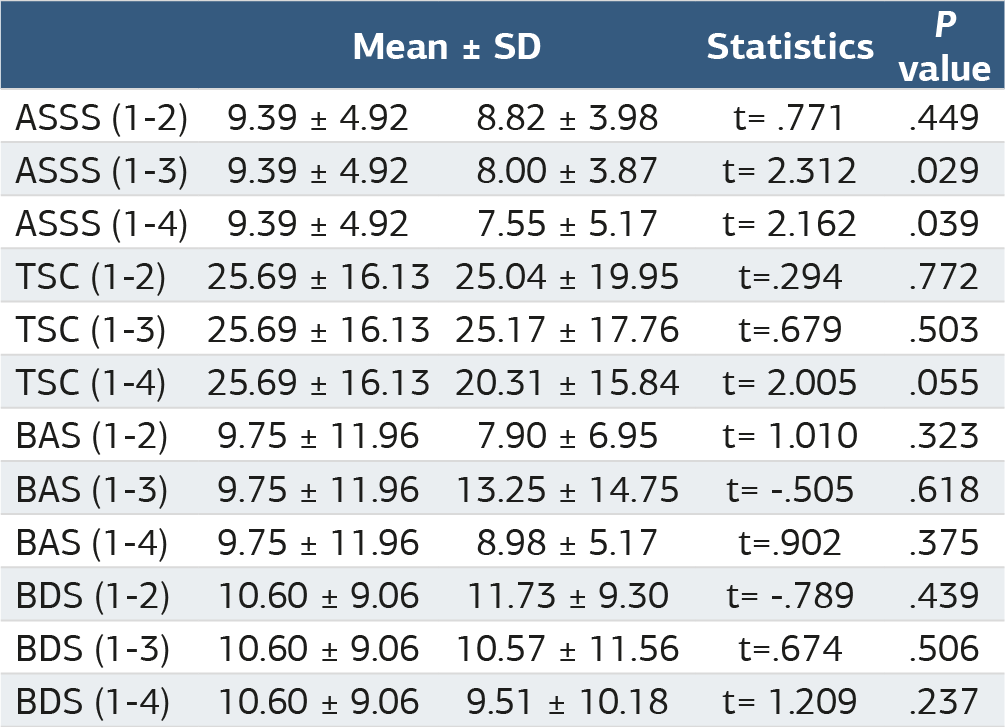
ASSS: Acute stress symptom severity scale, TSC: Trauma symptom checklist, BAS: Beck anxiety scale, BDS: Beck depression scale, 1-2: First evaluation and second evaluation, 1-3: First evaluation and third evaluation, 1-4: First evaluation and fourth evaluation.
Figures
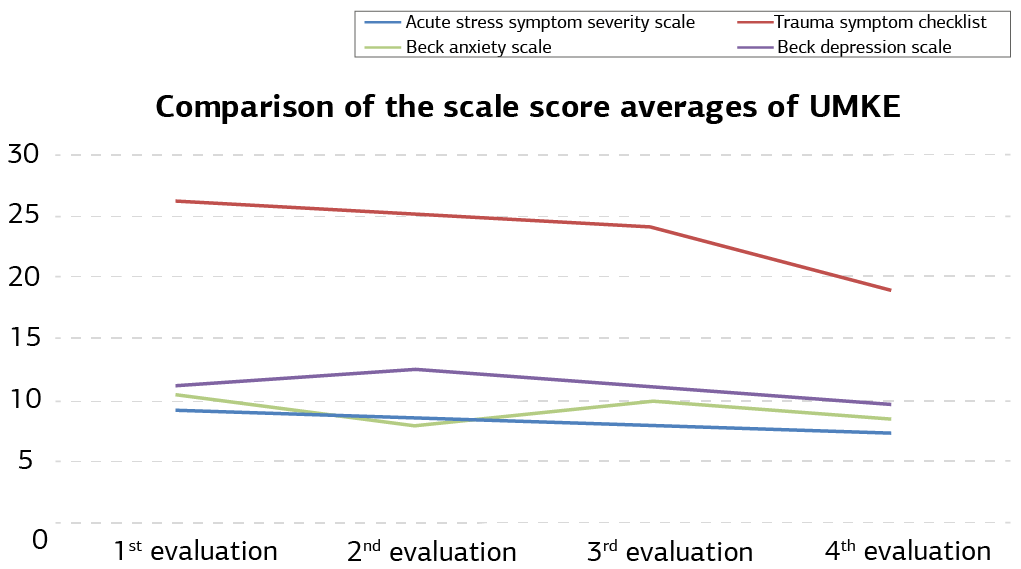
Figure 1. Changes in scale scores over time
Additional Information
Publisher’s Note
Bayrakol MP remains neutral with regard to jurisdictional and institutional claims.
Rights and Permissions

This work is licensed under a Creative Commons Attribution-NonCommercial 4.0 International License (CC BY-NC 4.0). To view a copy of the license, visit https://creativecommons.org/licenses/by-nc/4.0/
About This Article
How to Cite This Article
Erkut Etçioğlu, Yavuz Selim Oğur, Elif Merve Kurt Tunagür, Cengizhan Yener, Esra Yazıcı. Trauma and associated factors in Türkiye national medical rescue team (UMKE) employees after Kahramanmaraş earthquakes: a six-month followup study. Ann Clin Anal Med 2025;16(6):389-393. doi:10.4328/ACAM.22281
Publication History
- Received:
- 24.05.2024
- Accepted:
- 04.11.2024
- Published Online:
- 11.01.2025
- Printed:
- 01.06.2025