
Abstract
AimThis study aimed to assess the role of the single nucleotide polymorphism PD-1.5 C/T (7209C/T) in rheumatoid arthritis (RA) development and its effect on disease activity in the Egyptian population.MethodsA case-control study was done on 240 patients diagnosed with RA and 200 age-matched healthy individuals, which considered the control group. The PD-1.5 (7209 C/T) polymorphism was analyzed by RFLP-PCR.ResultsWhen comparing RA patients to controls, there was a higher incidence of 7209 TT genotype. (P < .001, OR (95% CI) =14(4-50). The 7209 T allele was highly represented in the RA group as compared to the healthy control group (P < .001, OR (95% CI) =2.1(1.5-3.2). We found that the 7209 TT genotype was linked to more remission and mild state disease activity (P = .004).ConclusionPD-1.5 TT genotype and T allele were associated with RA in Egyptians.
Keywords
Introduction
Autoimmune diseases are caused by the interaction between genetic susceptibility and environmental factors. Genetic liability to autoimmune diseases is complex and includes multiple genes that organize the functions of different immune cells.1 Human genome polymorphisms have been analyzed, and new evidence of genetic susceptibility to autoimmune diseases has been discovered.2 RA is a chronic autoimmune disorder manifested by elongated T-cell response, which evaded the normal regulatory immune mechanisms. CD4+ T cells have been suggested as the most disease-relevant cell type in rheumatoid arthritis, and multiple genes inside RA susceptibility loci are involved in the regulation and differentiation pathways of CD4+ T cells.3
The pathophysiology of RA is complicated and mainly results in chronic arthritis and may cause systemic affections in many individuals.4 As the actual cause of RA is still unclear, it is hypothesized that the dysregulation in the activation of T lymphocytes has a remarkable role in auto-reactivity by destroying immune tolerance.5
The programmed cell death 1 (PDCD1) gene, also named PD1, is situated on the chromosomal region 2q37 and expresses PD-1 protein, a 55-kDa, is a transmembrane protein and has one extra-cellular domain Ig V-like and other cytoplasmic domain of a 97-amino acid which contains two immunotyrosine motifs, one switch and another inhibitory.6
It also has a role in the induction and persistence of T cell tolerance, which prevents tissue damage caused by effector T cell responses.7 The pivotal role of PD-1 in regulating immune response is discovered by studies on gene disturbance that explain the specific genotype-phenotype for autoimmune disorders.8
The PD-1.5 gene C/T polymorphism gene at 7209 is a functional one and can affect the transcription and expression of the PD-1 protein. Genetic studies suggested that there was a link between PD-1 variants and predisposition to autoimmune disorders such as RA.9 Although the susceptibility to autoimmune disorders has been debatable, the current study aims to assess what part PD-1.5 (7209C/T) variants play in the susceptibility to RA in the Egyptian population.
Materials and Methods
240 RA patients, 196 (81.7%) females and 44 (18.3%) males, were selected for our case-control study from the rheumatology and immunology outpatient department of Mansoura University Hospital, Mansoura University, Egypt. The diagnosis of RA was based on the ACR diagnostic criteria.10 Two hundred healthy individuals, 172 (86%) females and 28 (14%) males, who have no history of autoimmune disorders and are negative for the ANA test, were considered the control group.
We collected clinical, epidemiological, and familial RA data from all participants using medical records and questionnaires. All clinical and demographic information, the disease activity score in 28 joints (DAS28), and laboratory results for CBC, ESR, CRP, RF, and anti-citrullinated protein antibodies (ACPA) were also recorded. Patients with organ failure, chronic infection, autoimmune diseases, and malignancy were not included in this study.
*Blood Sample CollectionOne ml peripheral blood sample was collected from each subject and withdrawn in an EDTA tube for fresh DNA isolation, and extracted DNA was stored at -80ºC until later use for detection of the PD-1.5 C/T polymorphism.DNA Extraction and Genotyping of PD-1.5 C/T (rs2227981) PolymorphismGenomic DNA was extracted from whole blood samples using a DNA purification kit (Qiagen GmbH, Cat. No. 51104, Hiden, Germany).11 Two sets of primers were designed for each polymorphism: forward 5-ACGGCCTGCAGGACTCAC-3 and reverse 5-AGGCAGGCACATATGTG-3. PCR program was done as follows: DNA was initially denatured for 5 min at 96˚C and then 30 cycles of denaturation for 60 sec at 95˚C, primer annealing for 60 sec at 56˚C, and primer extension for 60 sec at 72˚C. Extension was finally done for 7 min at 72˚C. The PCR product was 225bp. Digestion was done with BstUI restriction enzyme. The C allele gave 172 and 53bp bands while the T allele remained 225bp, as in Figure 1.Ethical ApprovalThis study was approved by the Ethics Committee of Mansoura University (Date: 18.05.2018, Decision No: R.18.05.188).Statistical Analysis**
The data was entered, cleaned, and analyzed using SPSS version 22 (IBM SPSS Statistics V22.0). Qualitative data were shown as numbers and percentages, whereas numerical data were shown as means and standard deviations. The Hardy-Weinberg Equilibrium was employed to examine the genotype and allele frequencies in the two groups. To compare numerical data, the t-test was used, while the Chi-square test was used for categorical data. P < .05 was considered significant at a 95% confidence interval.
Reporting GuidelinesThis study was reported in accordance with the STROBE guideline.
Results
Table 1 displays clinical and biochemical information for both RA patients and the control group. The DAS28 score, ESR, CRP, RF, and ACPA values of RA patients were highly significant, but the control group’s mean hemoglobin level was significantly higher. Regarding age, gender, and the distribution of body mass index (BMI), there was little variation between the control and patient groups.
PCR determination of PD-1.5 (7209C/T) polymorphism in RA patients showed that there was a higher frequency of 7209 TT genotype in the patient’s group when compared with the controls (P < .001, OR (95% CI)=14 (4-50). In the recessive model, the risk for the development of RA was increased in individuals with TT genotype (P < .001, OR (95% CI)=21 (6.5-71). The 7209 T allele was highly frequent in the RA group as compared to the healthy group (P < .001, OR (95% CI)=2.1 (1.5-3.2) as illustrated in Table 2.
Various genotypes and alleles of PD-1.5 polymorphism are displayed in Table 3. There was no correlation between PD-1.5 genotypes and/or alleles and all clinical and laboratory markers in RA patients.
Discussion
The average life expectancy is reduced by three to ten years due to RA, a chronic systemic inflammatory disease that mostly affects the small joints of the hands and feet. With a 60% estimated heritability, RA is a multigene illness with a significant genetic component.3 Genes involved in T-cell responses might be involved in the development of RA.12 An inhibitory receptor called PD-1 controls the immune system and inhibits the onset of autoimmune diseases.13 An increased incidence of autoimmune illnesses, including rheumatoid arthritis (RA), is strongly linked to polymorphism of the PDCD1 gene for the PD-1 protein. This finding raises the possibility that PD-1 plays a role in the pathophysiology of these diseases.8 Many researchers looked at how PD-1 gene polymorphisms affect RA vulnerability however, the results are still unclear.
When comparing the patients’ group to the controls, our research revealed a higher occurrence of the T allele and the TT genotype (P < .001 & P < .001, respectively). Our results matched Susanne S et al.14 found that the occurrence of RA in the T allele was linked to an increased vulnerability to RA, and the T allele was proven to be a significant marker of RA. Conversely, Zou et al.9 in China did not discover any link between PD-1.5 C/T polymorphism and RA among the Chinese population.
In another research, Yuming Z et al.9 reported that there is no significant association between PD-1.5 C/T polymorphism and the risk of RA. Moreover, the T allele of the PD1.5 (rs2227981)C/T polymorphism was related to the RA risk among Chinese RA patients from Taiwan but not from Hong Kong.15 An Iranian study examined the role of PD1.1 at position -538 in the promoter region of the PD-1 gene and found that this polymorphism is linked to a higher incidence of RA when compared to controls (2.9% vs. 0.7%, OR= 3.735, P = .046).16
The PD-1.5 gene is situated at exon five and is considered an equivalent variation that fails to change the amino acid sequence of the PD-1 protein. This important relationship may be attributed to this variant with other PD-1 gene polymorphisms through linkage disequilibrium; this link may affect PD-1 expression at mRNA and protein levels.17 Previous research found increased PD-1 expression in T lymphocytes18 and increased PD-1 protein levels in RA.11 This leads us to investigate whether PD-1 polymorphism may be responsible for altered PD-1 expression in RA. The blood levels of apoptotic markers were not investigated, which may have been considered a limitation of this study, as the serum levels of apoptotic markers may give a clearer idea about the role of PD-1 in the disease susceptibility and progression.
Belkhir et al.19 reported that the PD1.3 (rs11568821) in Swedish patients polymorphism showed a tendency toward association with RA; however, it was not observed in a population from southeast China or populations from southern Brazil or Japan. PD 1.5 C/T polymorphism was examined in other diseases as a previous study found an association of PD 1.5 C/T polymorphism with gastric cancer in the Iranian population.20 and other autoimmune diseases like Systemic Lupus Erythematosus (SLE) in Malaysian and Indian populations.21
The differences in the frequency of alleles and genotypes between our results and other research might be explained by the heterogeneity of RA disease, different races, different sample sizes, and the methodology by which this polymorphism was examined. Regarding the association between PD1.5 polymorphisms and the clinical and laboratory data in the RA group, we demonstrated no correlation between PD-1 genotypes and/or alleles and all clinical and laboratory markers in RA patients. Also, we found that the TT genotype was linked to more remission and mild state disease activity (P = .004). So, we can postulate the TT genotype is associated with a risk for RA but with milder disease.
Limitations
The blood levels of apoptotic markers were not investigated.
Conclusion
We concluded that the TT genotype and T allele of PD-1.5 polymorphism may increase RA susceptibility among the Egyptian population. Other polymorphisms in the programmed cell death genes should be investigated on a large scale. Study the level of PD-1 altogether with its gene polymorphism may give better explanation of the effect of PD-1 in RA.
Declarations
Animal and Human Rights Statement
All procedures performed in this study were in accordance with the ethical standards of the institutional and/or national research committee and with the 1964 Helsinki Declaration and its later amendments or comparable ethical standards.
Informed Consent
Written informed consent was obtained from all participants before enrollment in the study.
Data Availability
The datasets used and/or analyzed during the current study are not publicly available due to patient privacy reasons but are available from the corresponding author on reasonable request.
Conflict of Interest
The authors declare that there is no conflict of interest.
Funding
None.
Abbreviations
ACPA: Anti-citrullinated protein antibodies
BMI: Body mass index
CD4: Cluster of differentiation 4
CI: Confidence interval
CRP: C-reactive protein
DAS28: Disease activity score in 28 joints
DNA: Deoxyribonucleic acid
ESR: Erythrocyte sedimentation rate
OR: Odds ratio
PCR: Polymerase chain reaction
PD-1: Programmed cell death 1
PDCD1: Programmed cell death 1 gene
RA: Rheumatoid arthritis
RF: Rheumatoid factor
References
- Pisetsky DS. Pathogenesis of autoimmune disease. Nat Rev Nephrol. 2023;19(8):509-524. doi:10.1038/s41581-023-00720-1
- Kara S, Pirela-Morillo GA, Gilliam CT, Wilson GD. Identification of novel susceptibility genes associated with 7 autoimmune disorders using whole genome molecular interaction networks. J Autoimmun. 2019;97:48-58. doi:10.1016/j.jaut.2018.10.002
- Ha E, Bang SY, Lim J, et al. Genetic variants shape rheumatoid arthritis-specific transcriptomic features in CD4+ T cells through differential DNA methylation, explaining a substantial proportion of heritability. Ann Rheum Dis. 2021;80(7):876-883. doi:10.1136/annrheumdis-2020-219152
- Dedmon LE. The genetics of rheumatoid arthritis. Rheumatology (Oxford). 2020;59(10):2661-2670. doi:10.1093/rheumatology/keaa232
- Pabon-Porras MA, Molina-Rios S, Florez-Suarez JB, Coral-Alvarado PX, Mendez-Patarroyo P, Quintana-Lopez G. Rheumatoid arthritis and systemic lupus erythematosus: pathophysiological mechanisms related to the innate immune system. SAGE Open Med. 2019;7:1-24.
- Zak KM, Kitel R, Przetocka S, et al. Structure of the complex of human programmed death 1, PD-1, and its ligand PD-L1. Structure. 2015;23(12):2341-2348. doi:10.1016/j.str.2015.09.010
- Jiang Q, Yang G, Liu Q, Wang S, Cui D. Function and role of regulatory T cells in rheumatoid arthritis. Front Immunol. 2021;12:1-12. doi:10.3389/fimmu.2021.626193
- Chen RY, Zhu Y, Shen YY, et al. The role of PD-1 signaling in health and immune-related diseases. Front Immunol. 2023;14:1-13. doi:10.3389/fimmu.2023.1163633
- Zou Y, Zhang Z, Liu Y, Liu D, Xu W. Are programmed cell death 1 gene polymorphisms correlated with susceptibility to rheumatoid arthritis? A meta-analysis. Medicine (Baltimore). 2017;96(35). doi:10.1097/md.0000000000007805
- Aletaha D, Neogi T, Silman AJ, et al. 2010 rheumatoid arthritis classification criteria: an American College of Rheumatology/European League Against Rheumatism collaborative initiative. Arthritis Rheum. 2010;62(9):2569-2581. doi:10.1002/art.27584
- Wang SC, Chen YJ, Ou TT, et al. Programmed death-1 gene polymorphisms in patients with systemic lupus erythematosus in Taiwan. J Clin Immunol. 2006;26(6):506-511. doi:10.1007/s10875-006-9048-9
- Carle C, Degboe Y, Ruyssen-Witrand A, Arleevskaya MI, Clavel C, Renaudineau Y. Characteristics of the autoreactive T cells in rheumatoid arthritis according to the Immune Epitope Database. Int J Mol Sci. 2023;24(5):1-20.
- Fathi F, Sadeghi E, Lotfi N, et al. Effects of the programmed cell death 1 polymorphisms in susceptibility to systemic lupus erythematosus. Int J Immunogenet. 2020;47(1):57-64. doi:10.1111/iji.12456
- Schulz S, Zimmer P, Putz N, Jurianz E, Schaller HG, Reichert S. rs2476601 in PTPN22 gene in rheumatoid arthritis and periodontitis: a possible interface? J Transl Med. 2020;18(1):389. doi:10.1186/s12967-020-02548-w
- Lin SC, Yen JH, Tsai JJ, et al. Association of a programmed death 1 gene polymorphism with the development of rheumatoid arthritis, but not systemic lupus erythematosus. Arthritis Rheum. 2004;50(3):770-775. doi:10.1002/art.20040
- Tahoori MT, Pourfathollah AA, Akhlaghi M, Daneshmandi S, Nicknam MH, Soleimanifar N. Association of programmed cell death-1 gene polymorphisms with rheumatoid arthritis in Iranian patients. Clin Exp Rheumatol. 2011;29(5):763-767.
- Yang M, Liu Y, Zheng S, et al. Associations of PD-1 and PD-L1 gene polymorphisms with cancer risk: a meta-analysis based on 50 studies. Aging (Albany NY). 2024;16(7):6068-6097. doi:10.18632/aging.205689
- Schildberg FA, Klein SR, Freeman GJ, Sharpe AH. Coinhibitory pathways in the B7-CD28 ligand-receptor family. Immunity. 2016;44(5):955-972. doi:10.1016/j.immuni.2016.05.002
- Belkhir R, Burel SL, Dunogeant L, et al. Rheumatoid arthritis and polymyalgia rheumatica occur after immune checkpoint inhibitor treatment. Ann Rheum Dis. 2017;76:1747-1750. doi:10.1136/annrheumdis-2017-211216
- Savabkar S, Azimzadeh P, Chaleshi V, Mojarad EN, Aghdaei HA. Programmed death-1 gene polymorphism PD-1.5 C/T is associated with gastric cancer. Gastroenterol Hepatol Bed Bench. 2013;6(4):178.
- Chua KH, Lian LH, Sim XJ, Cheah TE, Lau TP. Association between PDCD1 gene polymorphisms and risk of systemic lupus erythematosus in 3 main ethnic groups of the Malaysian population. Int J Mol Sci. 2015;16(5):9794-9803. doi:10.3390/ijms16059794
Tables
Table 1. Clinical and laboratory data of RA patients and control
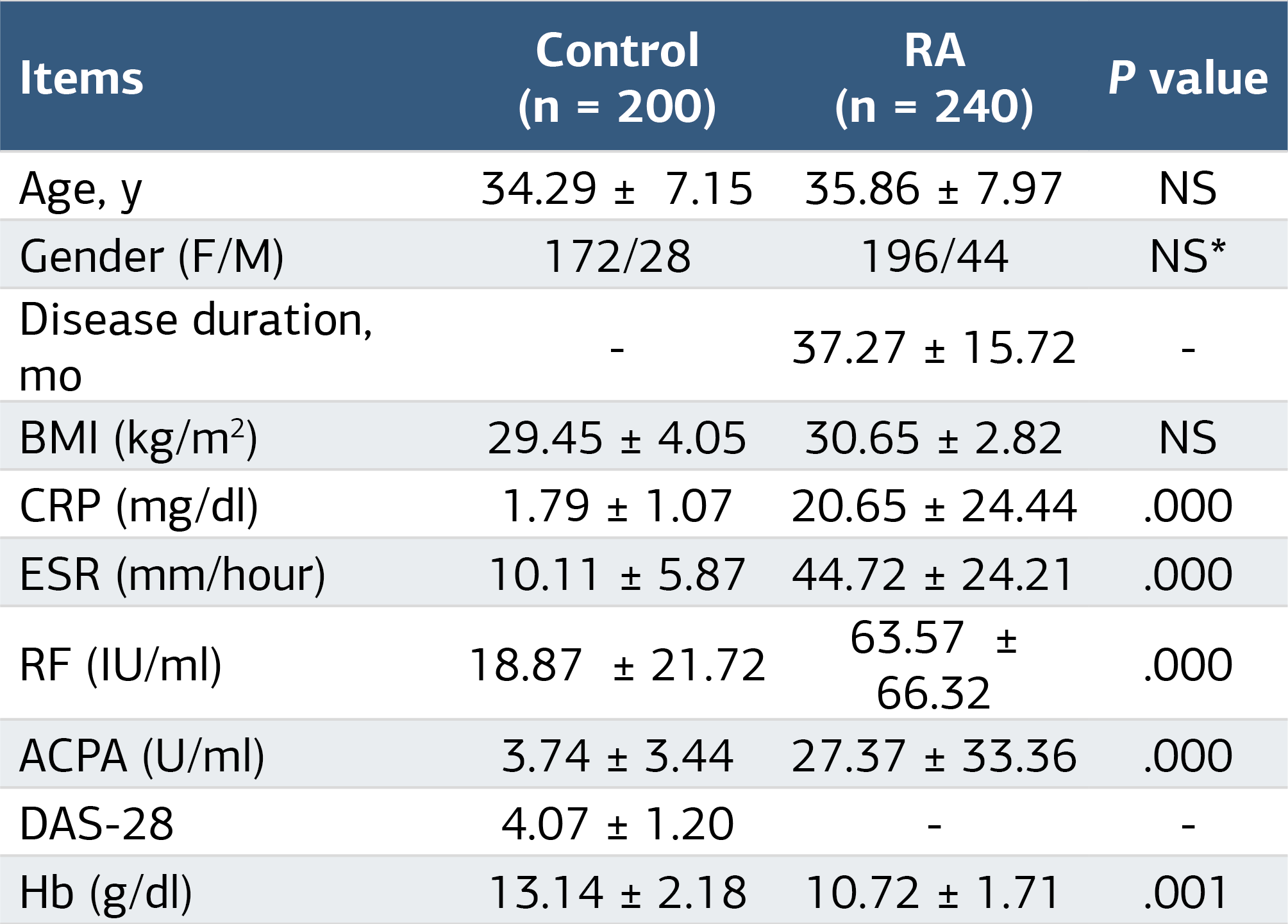
* Chi-square test, N = number, BMI = body mass index, CRP = C reactive protein, ESR = erythrocyte sedimentation rate, RF = rheumatoid factor, ACPA = anti-calcitriol protein antibodies, DAS-28 = disease activity score, and Hb = hemoglobin.
Table 2. T) in the RA patients and control group
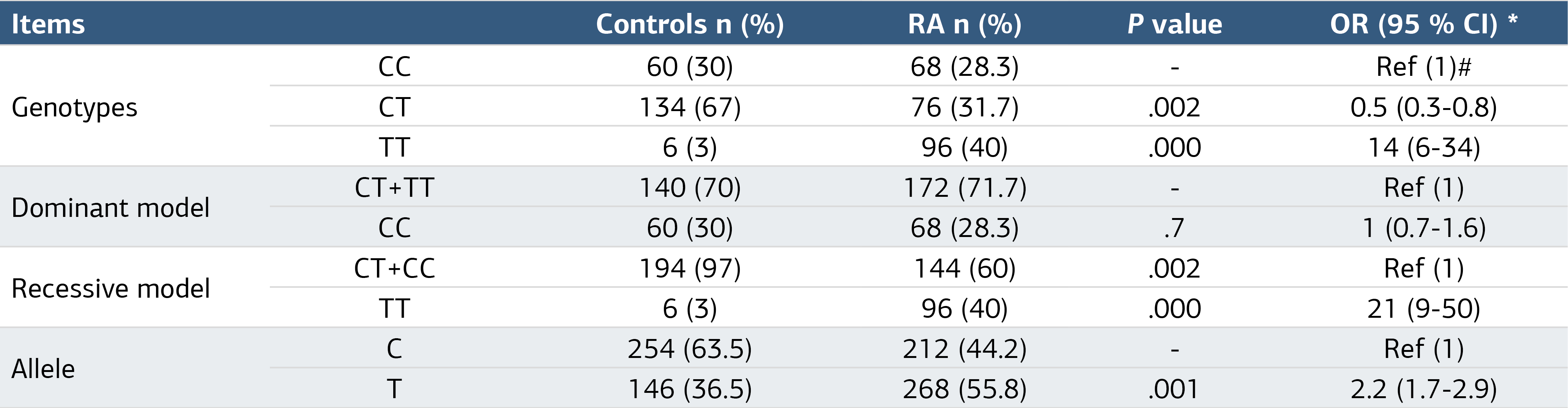
*OR 95 % CI= Odds ratio 95% confidence interval, #Ref = Reference
Table 3. Clinical and laboratory data of RA patients with various genotypes and alleles of PD-1.5
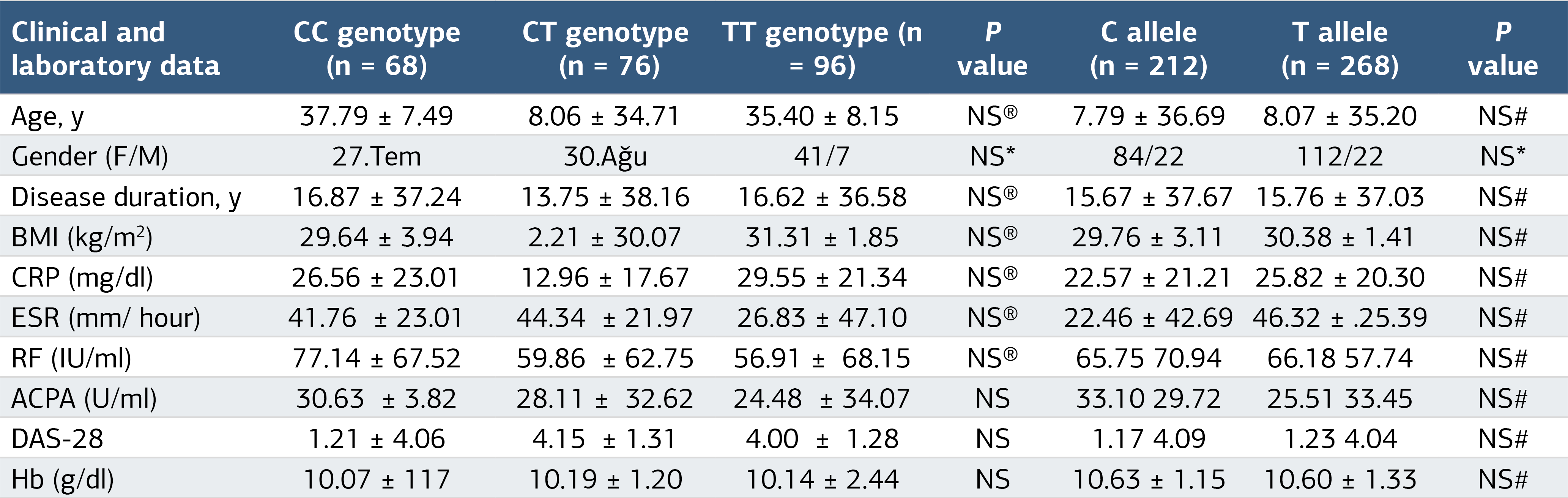
* Chi-square test, #student t-test, ®ANOVA test, CRP= C reactive protein, BMI= body mass index, ESR= erythrocyte sedimentation rate, RF= rheumatoid factor, ACPA = anticitrullinated protein antibodies, DAS-28 = disease activity score, Hb= hemoglobin
Figures
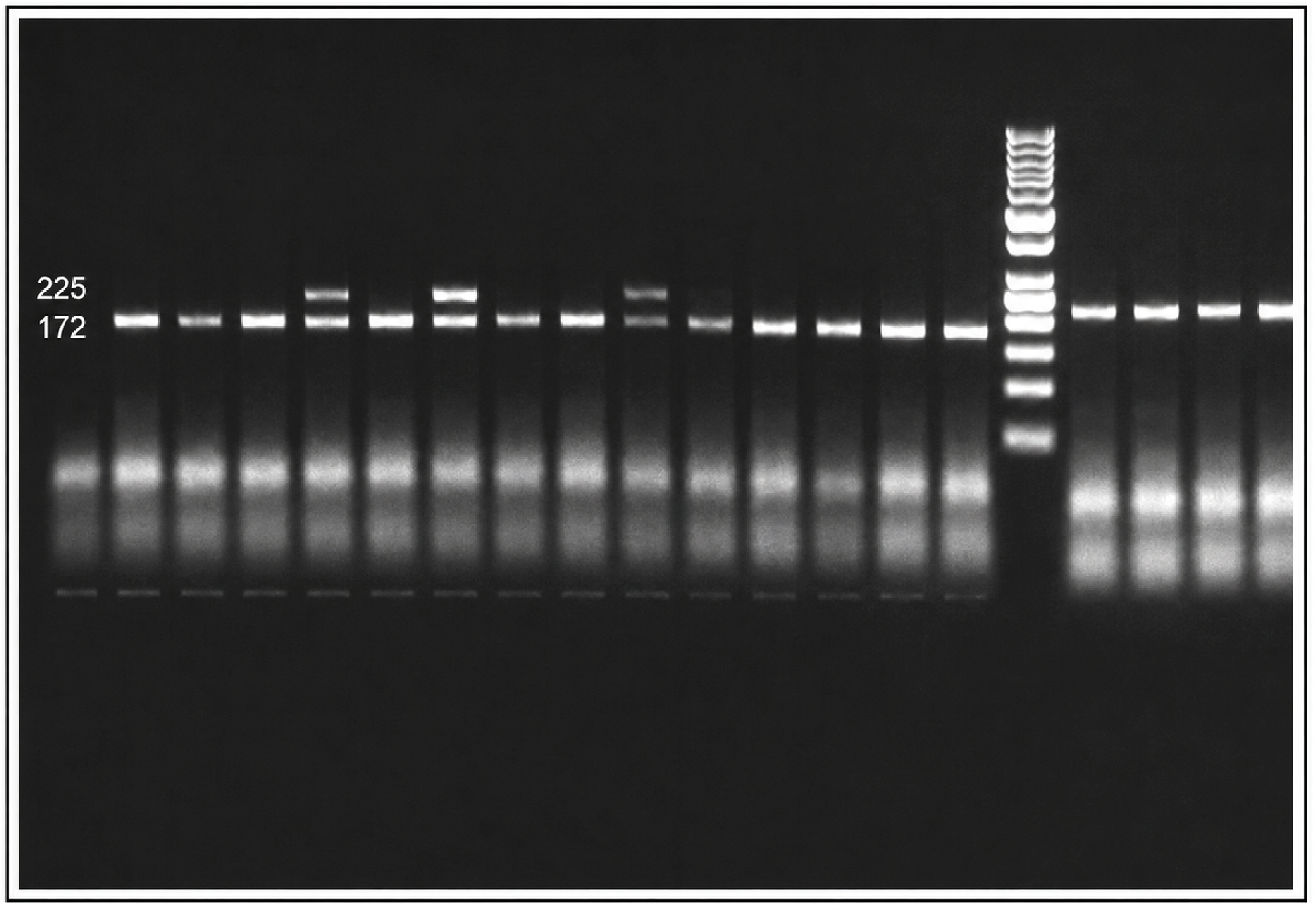
Figure 1. Enzymatic digestion of PD-1.5 (7209 C/T) gene polymorphism in different groups studied using a 50 bp size DNA ladder. T allele (225), C allele (172, 53). The 53 bp band appears faint on the gel
Additional Information
Publisher’s Note
Bayrakol MP remains neutral with regard to jurisdictional and institutional claims.
Rights and Permissions

This work is licensed under a Creative Commons Attribution-NonCommercial 4.0 International License (CC BY-NC 4.0). To view a copy of the license, visit https://creativecommons.org/licenses/by-nc/4.0/
About This Article
How to Cite This Article
Abdelnaser Badawy, Ashraf Mohamed, Mohamed M Abd El Mawgod, Ghada Awadalla, Ehsan Rizk, Emad Elmasry. Programmed cell death 1 polymorphism in patients with rheumatoid arthritis and its impact on disease activity. Ann Clin Anal Med 2025;16(Suppl 2):101-104. doi:10.4328/ACAM.22453
Publication History
- Received:
- 15.10.2024
- Accepted:
- 18.11.2024
- Published Online:
- 29.12.2024
- Printed:
- 25.05.2025