
Abstract
AimIn laparoscopic inguinal hernia surgery, the most commonly used techniques are total extraperitoneal (TEP) and transabdominal preperitoneal (TAPP) repair, yet there is still no consensus regarding their superiority over one another. This study aims to evaluate the impact of TEP and TAPP techniques on quality of life in a heterogeneous population and compare their superiority. Additionally, it seeks to compare these findings with normative data from the Turkish population.MethodsThe TEP and TAPP techniques were compared based on postoperative data and SF-36 quality-of-life questionnaire results from 184 patients. Additionally, the SF-36 questionnaire data were compared with the normative values of the Turkish population.ResultsThere was no statistically significant difference between the TEP and TAPP techniques in terms of complications and operative time. However, a significant association was found between an increase in chronic pain scores and the TAPP technique. In the quality of life analysis, the TEP technique demonstrated statistical superiority in emotional well-being, social functioning, and general health. When compared with Turkish normative values, both techniques yielded similar results in female patients, whereas the TEP technique achieved superior outcomes in male patients.ConclusionIn this study, the TEP technique was found to be superior in terms of quality of life and chronic pain. In the Turkish population, both techniques appeared to be suitable for female patients, whereas the TEP technique was shown to be more advantageous for male patients. Surgeons are advised to carefully evaluate the patient’s clinical condition and their own surgical experience when determining the most appropriate surgical technique.
Keywords
Introduction
Inguinal hernia repair remains one of the most commonly performed surgical procedures worldwide, with nearly 20 million patients undergoing surgery for inguinal hernia each year.1 Despite extensive research, there is still no consensus on the optimal surgical approach for inguinal hernia repair. Laparoscopic surgery, developed as an alternative to open repair, has gained importance with advancements in technology, leading to the adoption of new surgical techniques.2 The main advantages of laparoscopic techniques include shorter recovery time, lower recurrence rates, reduced incidence of chronic pain, and improved quality of life.3-4 Currently, the two most widely used laparoscopic techniques are total extraperitoneal (TEP) and transabdominal preperitoneal (TAPP) repair.5
Several studies have compared TEP and TAPP techniques in recent years, but the findings remain inconsistent. A randomized study found no significant differences between the two techniques in terms of complications and time to return to work.6 However, another study reported that the TEP technique was associated with a shorter hospital stay and less postoperative pain, whereas the TAPP technique resulted in a shorter operative time.7
The primary goal of inguinal hernia repair is to prevent complications such as obstruction and strangulation while reducing pain and improving patients’ quality of life. One of the most commonly used tools for assessing quality of life is the SF-36 questionnaire.8 However, studies providing a detailed comparison of the impact of different surgical techniques on quality of life are limited. Furthermore, previous studies have been criticized for the heterogeneity of their patient populations and inadequate analysis of the SF-36 subscales.
This study aims to investigate the superiority of TEP and TAPP techniques by focusing on a heterogeneous patient population treated by experienced surgeons and to conduct a detailed comparison of their impact on patients’ quality of life using the SF-36 questionnaire. Additionally, the study seeks to compare the quality-of-life findings obtained with the normative data of the Turkish population.
Materials and Methods
This retrospective study included patients diagnosed with primary unilateral and bilateral inguinal hernia who underwent TEP and TAPP inguinal hernia repair between January 2022 and January 2024 at the General Surgery Clinic of Samsun Training and Research Hospital. All patients who underwent elective inguinal hernia surgery were included, while patients with emergency, recurrent, conversion, or giant scrotal inguinal hernias, those with a history of major abdominal and pelvic surgery, high-risk patients (ASA III-IV), and those who could not be reached or did not wish to participate in the study were excluded. The patients were divided into two groups: TEP and TAPP. All patients received information about inguinal hernia repair, and informed consent was obtained. All surgical procedures were performed by two surgeons with over eight years of experience in both techniques. All procedures performed in studies involving human participants were in accordance with the ethical standards of the institutional and/or national research committee and with the 1964 Helsinki Declaration and its later amendments or comparable ethical standards.
The TEP and TAPP hernia repair techniques were performed in a standardized manner under general anesthesia using a three-port technique by two surgeons. In the TEP technique, direct access to the preperitoneal space was achieved, while in the TAPP technique, an intraperitoneal approach was used, incising the peritoneum covering the hernia sac to visualize the defect and mobilize the peritoneum. A 10 × 15 cm polypropylene mesh (Marlex) was appropriately shaped and placed in the preperitoneal space. One edge of the mesh was fixed to the Cooper’s ligament, and it was secured at three to four additional points using tacker (Auto Suture Protack).
Data on patient gender, age, inguinal hernia laterality, ASA score, type of operation performed, type of anesthesia administered, operative time, postoperative complications, and readmission rates were collected from hospital records. Patients who had undergone surgery more than 12 months prior were contacted via the hospital’s communication line by a blinded investigator for a questionnaire assessing chronic pain and quality of life. Participants were informed about the study, and informed consent was obtained. Chronic pain was defined as pain persisting for three months or longer after surgery, and patients were asked to score their pain from 0 to 9. Quality of life was assessed using the SF-36 (Turkish Version) questionnaire. The SF-36 scale consists of two main components evaluating physical and mental functions and includes parameters such as physical functioning, role limitations due to physical health, role limitations due to emotional problems, energy/vitality, mental health, social functioning, pain, and general health.Ethical ApprovalThis study was approved by the Ethics Committee of Samsun University (Date: 23.10.2024, Decision No: GOKAEK 2024/19/9).Statistical AnalysisDescriptive statistics were used to analyze the general characteristics of the study groups. Quantitative data were presented as mean and standard deviation (⁻X ± SD), while categorical data were expressed as frequency (n) and percentage (%). Relationships between categorical variables were analyzed using the Chi-Square test. Differences between SF-36 mean scores and normative values were assessed using the One-Sample t-test, while intergroup differences in independent samples were evaluated using the Independent Samples t-test. Logistic Regression Analysis was conducted to examine the relationships between variables. A p-value of <0.05 was considered statistically significant. Statistical analyses were performed using IBM SPSS Statistics version 22 (SPSS Inc., an IBM Company, Somers, NY).Reporting GuidelinesThis study was reported according to the STROBE guidelines.
Results
Between January 2022 and January 2024, a total of 271 patients aged 18–90 years underwent elective TEP and TAPP procedures for a preliminary diagnosis of inguinal hernia. A total of 38 patients were excluded from the study due to recurrent hernia, open conversion, giant hernia, high-risk status (ASA 3–4), or a history of major abdominal and pelvic surgery. Additionally, 49 patients who could not be reached for the questionnaire or who declined to participate were excluded. Consequently, the study included 184 patients (Figure 1).
Among the 184 patients, 12 were female and 172 were male.
The median age of the patients was 53.32 ± 14.60 years (range: 17–85). Of these, 113 patients underwent surgery for unilateral inguinal hernia, while 71 patients were operated on for bilateral inguinal hernia. The TEP procedure was performed in 133 patients, whereas 51 patients underwent the TAPP procedure. Postoperatively, seroma was observed in 3 patients, scrotal edema in 2 patients, and recurrence in 4 patients. In the chronic pain assessment, using a scoring scale of 0–9, the most frequently reported scores were 3 points in 15 patients, 2 points in 14 patients, and 6 points in 7 patients.
When the SF-36 subcategory scores were compared between the two surgical techniques, mental health, social functioning and general health scores were found to be significantly higher in the TEP procedure compared to the TAPP procedure. No statistically significant difference was observed between the two groups in terms of complications (p=0.898) and chronic pain (p=0.165) (Table 1).
When logistic regression analysis was performed between the two groups, a one-unit increase in chronic pain was found to increase the likelihood of the surgical procedure being the TAPP technique by 28.3% (p=0.007) (OR>1) (Table 2).
When comparing the operative durations of surgical techniques based on the side of inguinal hernia, no statistically significant difference was observed. The operative times for unilateral TEP/TAPP techniques were 72.23 ± 21.32 / 78.92 ± 33.77 minutes (p=0.269), while those for bilateral TEP/TAPP techniques were 92.08 ± 32.95 / 111.13 ± 49.77 minutes (p=0.103).
When the SF-36 scores of patients in the TEP and TAPP groups were compared with the normative values of the Turkish population, the physical functioning score, energy/vitality score, and pain score were found to be significantly higher in females in both groups, while no significant differences were observed in the other SF-36 subcategories. In males, all SF-36 scores except for role limitations due to physical health were significantly higher in the TEP group. In the TAPP group, only the physical functioning score, energy/vitality score, and pain score were significantly higher, while the other values showed no significant differences (Table 3).
Discussion
In our study, no statistically significant difference was found between the TEP and TAPP techniques in terms of complications and operative time. However, regarding chronic pain, patients who underwent the TAPP procedure had significantly higher chronic pain scores. In the quality-of-life analysis, the TEP technique was found to be statistically superior to the TAPP technique in terms of mental health, social functioning and general health. When the SF-36 scores were compared with Turkish normative values, similar results were observed in females for both groups, while in males, the TEP procedure was found to be statistically superior to the TAPP procedure.
With advancements in the last quarter-century, various laparoscopic techniques have been introduced for inguinal hernia repair. The superiority of TEP and TAPP techniques in terms of postoperative outcomes and quality of life remains controversial. Scrotal edema and hematoma are the most common complications following laparoscopic inguinal hernia repair.9 One study reported similar complication rates between the TEP and TAPP techniques,10 another study indicated a higher complication rate in the TAPP technique,5 while another study found the TEP technique to be associated with significantly more complications.11 In our study, no statistically significant difference was observed between the two techniques in terms of complications.
The incidence of chronic pain following minimally invasive inguinal hernia repair has been reported to be around 3% in the literature.12 Additionally, multiple studies with follow-up periods exceeding 12 months have found no significant difference between TEP and TAPP techniques regarding chronic pain.12-13 In our study, chronic pain scores did not show a statistically significant difference between the two groups. However, logistic regression analysis revealed that a one-unit increase in chronic pain score increased the likelihood of undergoing the TAPP procedure by 28.3% (p=0.007).
A review of the literature shows that operative times for laparoscopic inguinal hernia repair vary due to the learning curve requirement. One study reported a longer operative time for the TEP technique,5 while another found the TAPP technique to be more time-consuming.1 These differences may be attributed to variations in unilateral or bilateral inguinal hernias and studies including surgeons who had not yet completed their learning curve. In our study, no statistically significant difference was observed between the two groups in terms of operative time for unilateral and bilateral inguinal hernia repairs performed by experienced surgeons.
The impact of laparoscopic inguinal hernia repair techniques on quality of life and their relative superiority remain uncertain. One study reported no significant differences in quality of life outcomes between the two techniques.14 Myers et al.15 demonstrated significant improvements in all quality-of-life measures except for social functioning and mental health following TEP repair, concluding that the TEP technique was superior to the TAPP technique in terms of physical and mental quality-of-life assessments. Castro et al.16 found similar late postoperative quality-of-life outcomes between TEP and TAPP techniques, reporting lower scores in energy/vitality, mental health, and general health subdomains.
In our study, when SF-36 subscale analyses were compared between TEP and TAPP hernia repair patients, mental health, social functioning, and general health were significantly higher in the TEP technique, while other subdomains were similar. When SF-36 scores were compared with Turkish normative values, similar results were found in females for both groups. However, in males, the TEP technique demonstrated superiority over the TAPP technique in most subparameters.
Limitations
This study has several limitations. Its single-center, retrospective design, relatively small patient population, and short follow-up period are the primary constraints. Therefore, prospective, multicenter studies with larger patient cohorts are needed to validate the current findings.
Conclusion
In this study, the TEP technique was found to be superior to the TAPP technique in terms of quality of life and chronic pain. When compared with Turkish normative values, both techniques appeared to be suitable for female patients, while the TEP technique was found to be more advantageous for male patients. It is recommended that surgeons carefully evaluate the patient’s clinical condition and their own surgical experience when determining the most appropriate surgical technique.
Declarations
Animal and Human Rights Statement
All procedures performed in this study were in accordance with the ethical standards of the institutional and/or national research committee and with the 1964 Helsinki Declaration and its later amendments or comparable ethical standards.
Informed Consent
Informed consent was obtained from all participants.
Data Availability
The datasets used and/or analyzed during the current study are not publicly available due to patient privacy reasons but are available from the corresponding author on reasonable request.
Conflict of Interest
The authors declare that there is no conflict of interest.
Funding
None.
Abbreviations
ASA: American Society of Anesthesiologists
IBM: International Business Machines
SD: Standard deviation
SF-36: 36-Item Short Form Health Survey
SPSS: Statistical Package for the Social Sciences
TAPP: Transabdominal preperitoneal
TEP: Total extraperitoneal
References
- International guidelines for groin hernia management. Hernia. 2018;22(1):1-165. doi:10.1007/s10029-017-1668-x
- Sun L, Shen YM, Chen J. Laparoscopic versus Lichtenstein hernioplasty for inguinal hernias: a systematic review and meta-analysis of randomized controlled trials. Minim Invasive Ther Allied Technol. 2020;29(1):20-27. doi:10.1080/13645706.2019.1569534
- Perez AJ, Al-Refaie WB, Temple LK, Misih SRA, Maithel SK, Cloyd JM. Nationwide analysis of inpatient laparoscopic versus open inguinal hernia repair. J Laparoendosc Adv Surg Tech A. 2020;30(3):292-298. doi:10.1089/lap.2019.0656
- Aghayeva A, Benlice C, Bilgin IA, et al. Laparoscopic totally extraperitoneal vs robotic transabdominal preperitoneal inguinal hernia repair: assessment of short- and long-term outcomes. Int J Med Robot. 2020;16(4):e2111. doi:10.1002/rcs.2111
- Hidalgo NJ, Guillaumes S, Bachero I, et al. Bilateral inguinal hernia repair by laparoscopic totally extraperitoneal vs laparoscopic transabdominal preperitoneal. BMC Surg. 2023;23(1):270. doi:10.1186/s12893-023-02177-2
- Köckerling F, Bittner R, Jacob DA, et al. TEP versus TAPP: comparison of the perioperative outcome in 17,587 patients with a primary unilateral inguinal hernia. Surg Endosc. 2015;29:3750-3760. doi:10.1007/s00464-015-4150-9
- Vărcuș F, Duță C, Dobrescu A, Lazăr F, Papurica M, Tarta C. Laparoscopic repair of inguinal hernia: TEP versus TAPP. Chirurgia (Bucur). 2016;111:308-312.
- Ware JE Jr. SF-36 Health Survey update. Spine (Phila Pa 1976). 2000;25(24):3130-3139. doi:10.1097/00007632-200012150-00008
- Chao TC, Tung HY, Tsai CH, et al. Laparoscopic versus robotic TAPP/TEP inguinal hernia repair: a multicenter, propensity score weighted study. Hernia. 2024;28(1):199-209.
- Jaiswal RK, Pandey NK, Tolat A, et al. A prospective comparative study of laparoscopic totally extraperitoneal and laparoscopic transabdominal preperitoneal inguinal hernial repair. Cureus. 2023;15(7):e42209. doi:10.7759/cureus.42209
- Hung TY, Wu CC, Chen LS, Kang YN. Safety of two common laparoscopic inguinal herniorrhaphy approaches: an updated systematic review with meta-analysis of randomized clinical trials. Transl Androl Urol. 2020;9:2007-2021. doi:10.21037/tau-20-629
- Aiolfi A, Cavalli M, Del Ferraro S, et al. Treatment of inguinal hernia: systematic review and updated network meta-analysis of randomized controlled trials. Ann Surg. 2021;274(6):954-961. doi:10.1097/sla.0000000000004735
- Chen LS, Chen WC, Kang YN, Wu CC, Tsai LW, Liu MZ. Effects of transabdominal preperitoneal and totally extraperitoneal inguinal hernia repair: an updated systematic review and meta-analysis of randomized controlled trials. Surg Endosc. 2019;33:418-428. doi:10.1007/s00464-018-6314-x
- Andresen K, Rosenberg J. Transabdominal preperitoneal versus totally extraperitoneal laparoscopic techniques for inguinal hernia repair. Cochrane Database Syst Rev. 2024;7(7):CD004703. doi:10.1002/14651858.cd004703.pub3
- Myers E, Browne KM, Kavanagh D, Hurley M. Laparoscopic totally extraperitoneal versus Lichtenstein inguinal hernia repair: a comparison of quality-of-life outcomes. World J Surg. 2010;34:3059-3064. doi:10.1007/s00268-010-0730-y
- Castro GRA, Zilles A, Gazzola LD, Barros RB, Sadowski JA, Guetter CR. Laparoscopic inguinal hernia repair: the long-term assessment of chronic pain and quality of life. Arq Bras Cir Dig. 2022;35:e1695. doi:10.1590/0102-672020220002e1695
Tables
Table 1. Distribution of SF-36 scores, complications, and chronic pain scores by surgical type
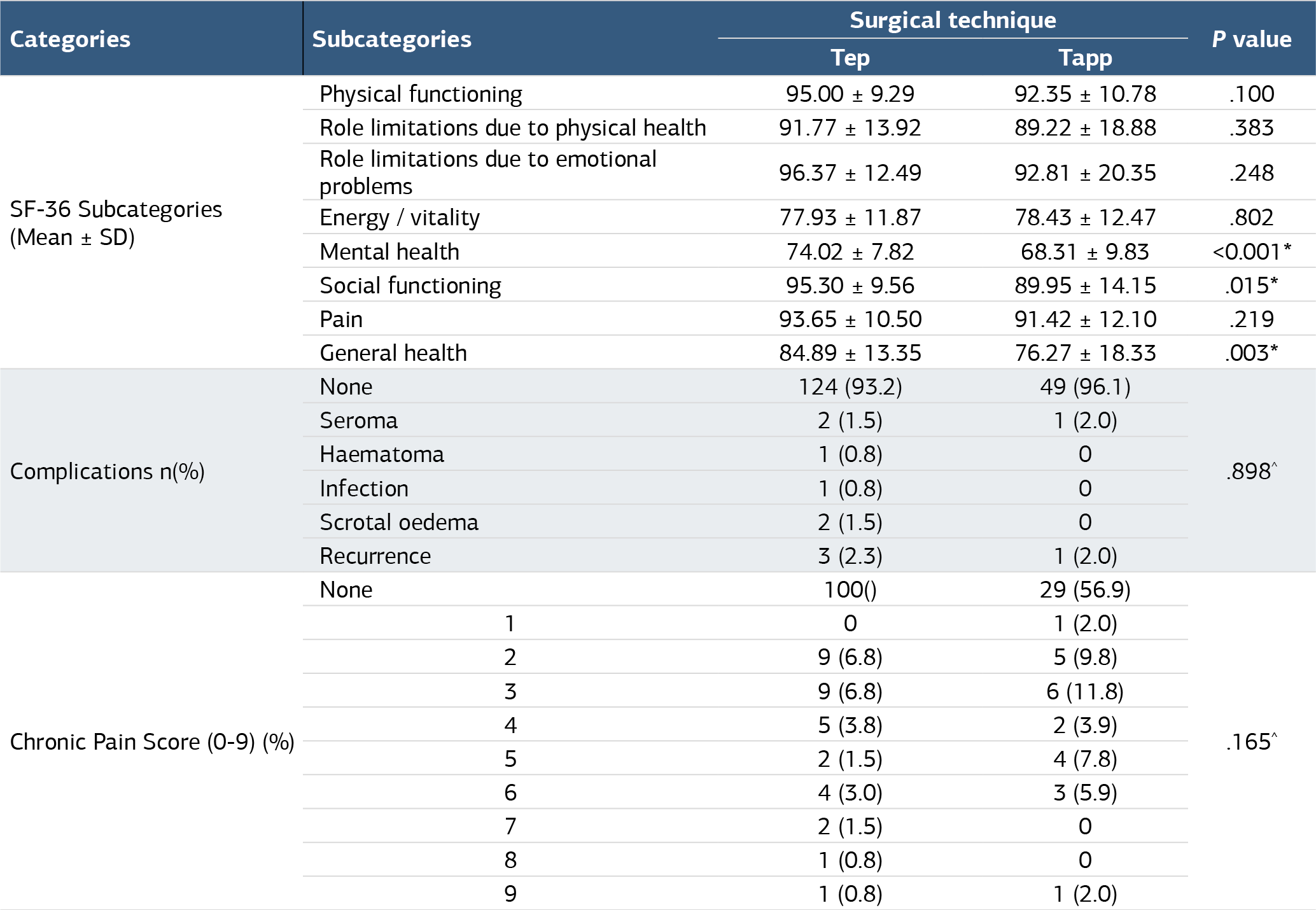
Data are presented as mean ± standard deviation (SD). p: Independent samples t-test p^: chi-square test p-value is considered significant at the 0.05 level.
Table 2. Logistic regression analysis dependent variable: surgery
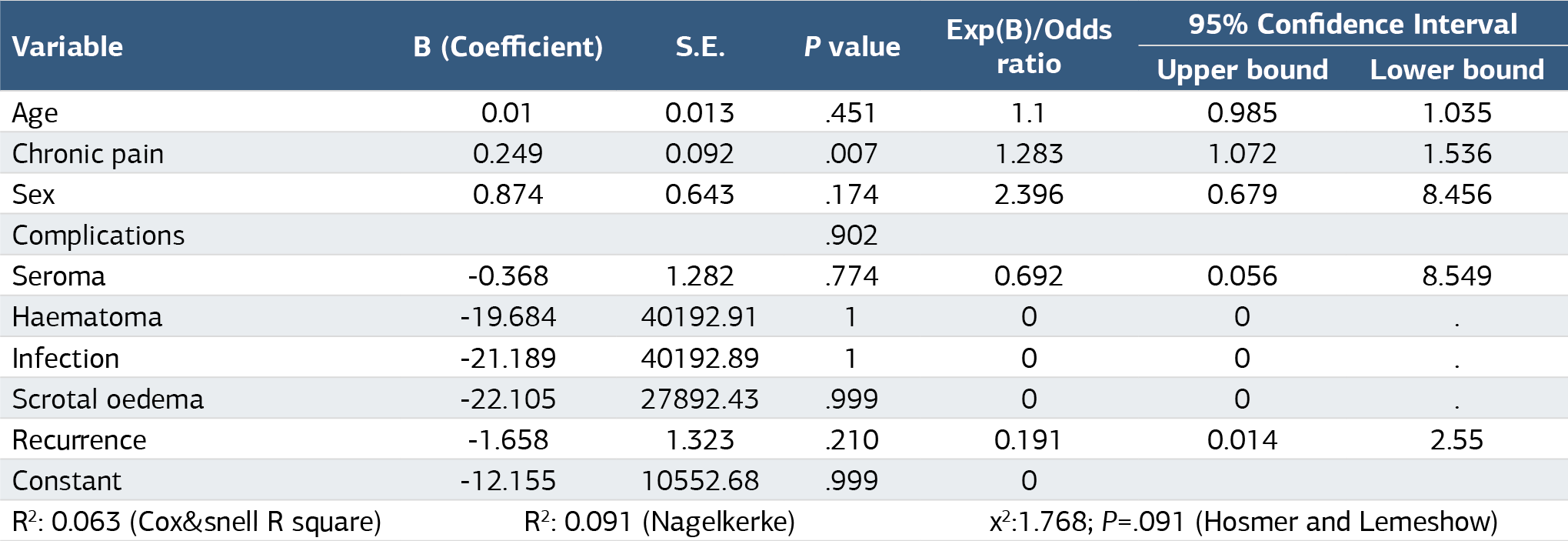
R2: 0.063 (cox&snell r square) R2: 0.091 (nagelkerke) χ2:1.768 ; p=0.091 (hosmer and lemeshow) reference category for surgery: "TEP" reference category for sex: "male" reference category for complication: "None"
Table 3. Comparison of SF-36 Scores by Type of Surgery with Turkish Population Normative Values (8)
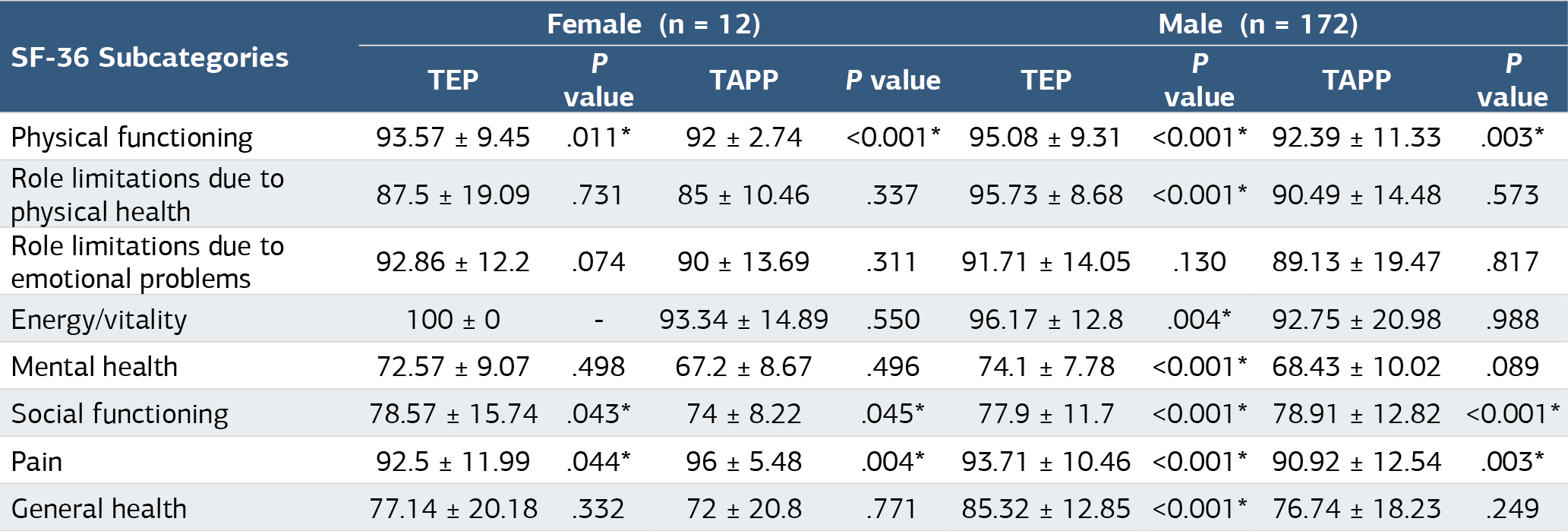
Data are presented as mean ± standard deviation (SD). p: One-sample t-test p-value is considered significant at the 0.05 level.
Figures
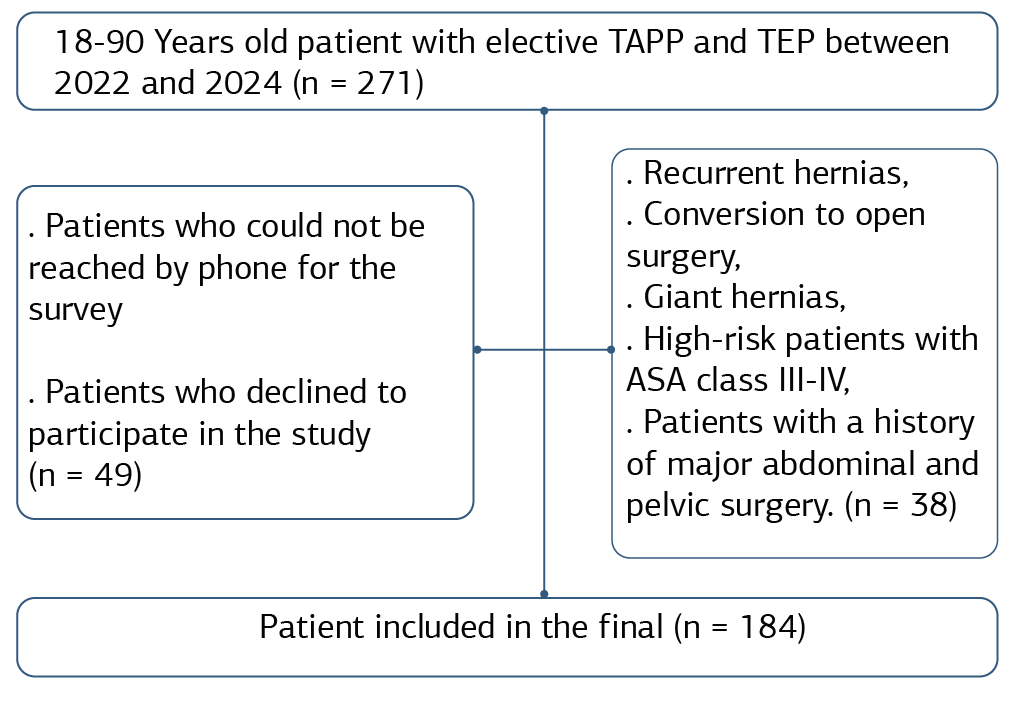
Figure 1. Table of included and excluded patients
Additional Information
Publisher’s Note
Bayrakol MP remains neutral with regard to jurisdictional and institutional claims.
Rights and Permissions

This work is licensed under a Creative Commons Attribution-NonCommercial 4.0 International License (CC BY-NC 4.0). To view a copy of the license, visit https://creativecommons.org/licenses/by-nc/4.0/
About This Article
How to Cite This Article
Mehmet Alperen Avcı, Can Akgün, Sevgi Bay. TEP versus TAPP for inguinal hernia repair: a comparative analysis of short term quality of life in the turkish population. Ann Clin Anal Med 2025;16(6):440-444. doi:10.4328/ACAM.22605
Publication History
- Received:
- 15.02.2025
- Accepted:
- 19.03.2025
- Published Online:
- 30.04.2025
- Printed:
- 01.06.2025