
Abstract
AimThis study aims to evaluate patients who underwent intra-abdominal packing due to bleeding during emergency or elective surgeries and to introduce the Easily Removable Folded Sterile Gauze Compression Method (ERFSGCM) and its clinical outcomes.MethodsPatients who applied packing for uncontrolled bleeding between 2015 and 2023 were retrospectively analyzed. Two groups were compared: traditional packing and ERFSGCM. Data included demographics, Charlson Comorbidity Index (CCI), INR levels, surgical details, trauma type, bleeding site, packing method, number of quadrants packed, blood loss and transfusions, abdominal closure technique, timing of fascia closure, recurrent bleeding, number of surgeries, postoperative complications (renal failure, ischemia, respiratory distress, wound infection), Clavien-Dindo scores, ventilation duration, ICU/hospital stay, and mortality.ResultsTwenty-nine patients were included: 25 with traditional packing and 4 with ERFSGCM. Mean age was 51.6 ± 19.2 years. No significant difference was found in demographics or CCI. Emergency surgeries accounted for 55.2%. Recurrent bleeding, number of surgeries, acute renal failure, and mortality were significantly lower in the ERFSGCM group (P < .05). All ERFSGCM patients had Clavien-Dindo scores of 2, while traditional packing patients scored above 2 (P < .001). Fascia closure was more frequent in the ERFSGCM group (P = .030).ConclusionERFSGCM may reduce the need for re-laparotomy and improve outcomes compared to traditional packing. Further studies with larger cohorts are needed to confirm its efficacy.
Keywords
Introduction
Hemorrhage remains the leading cause of preventable death in trauma patients.1-3 The pressure-packing technique, initially used during World War II, was largely abandoned due to infection and coagulopathy-related rebleeding, until Lucas and Ledgerwood’s prospective study of 637 patients reintroduced and evaluated its efficacy.4
Management of hemorrhagic trauma and postoperative coagulopathy remained uncertain until Rotondo et al. (1993) highlighted the “triad of death”—acidosis, coagulopathy, and hypothermia—prompting the adoption of damage control surgery with resuscitation. Although it was first attempted a century ago and applied during the last century, its significance was only recently recognized, with Rotondo’s study establishing it as the primary approach for major trauma. Currently, early recognition of bleeding remains a key determinant of survival.5,6 The goal of post-trauma laparotomy is to control hemorrhage from intra-abdominal organs, vascular injuries, and retroperitoneal trauma.
Routine four-quadrant packing is widely practiced for hemorrhage control.7-9 However, consensus is lacking on whether packing should target all quadrants or only the bleeding site, and the optimal abdominal closure technique after damage control surgery remains unclear.10 This study evaluates patients who underwent packing for intra-abdominal bleeding during emergency or elective surgery and introduces the Easily Removable Folded Sterile Gauze Compression Method (ERFSGCM) as a potential alternative.Traditional Packing Method1. Direct packing of the bleeding site with dry 15×40 cm gauze.
2. Additional gauze was placed adjacent to enhance tamponade.
3. Manual pressure applied for 10–15 minutes.
4. If hemostasis was inadequate, further gauze was applied to the edges; in extensive bleeding, laparotomy pads (40×40 cm) were also used.
5. The bowel was protected with a wet towel.
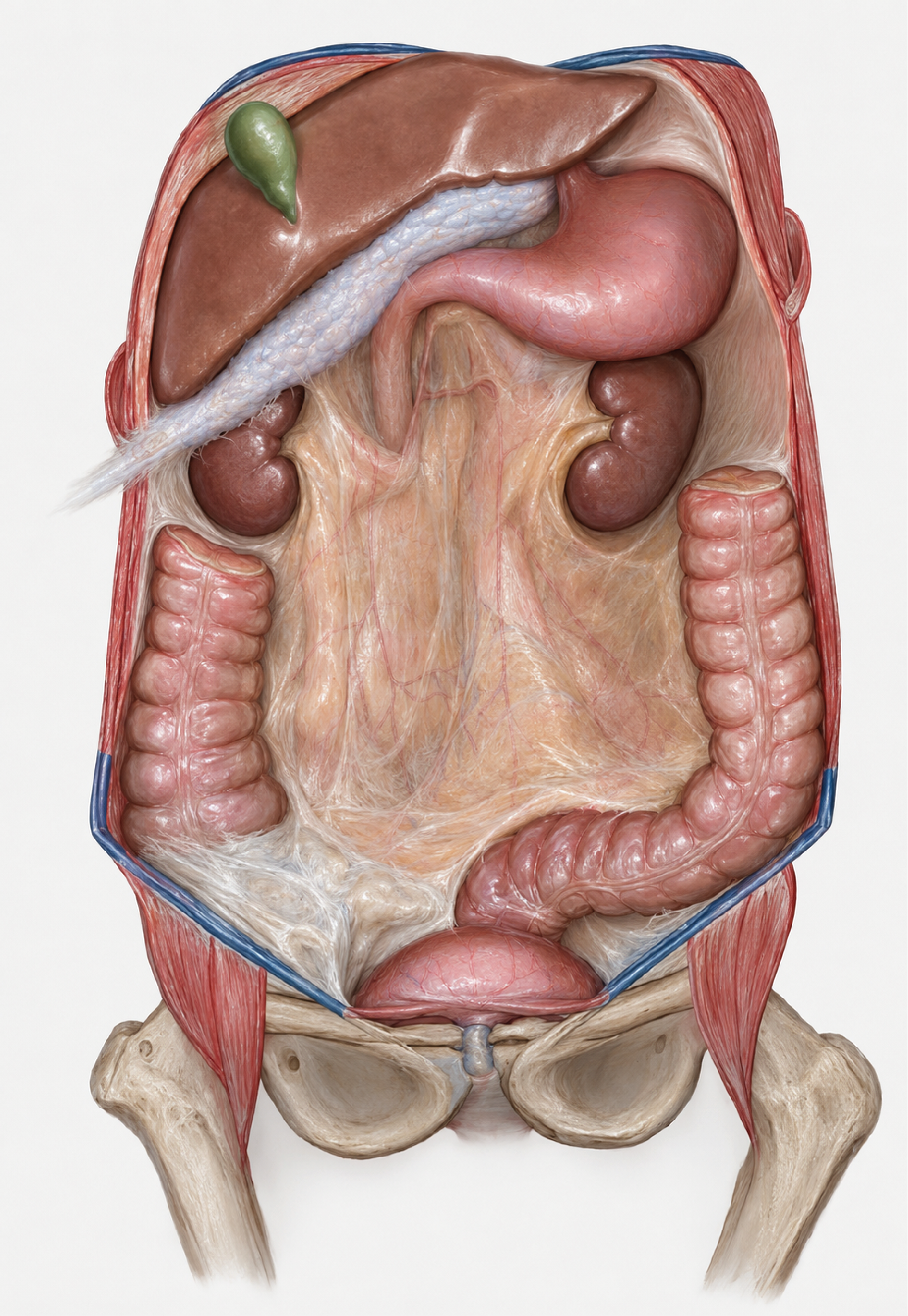
6. Temporary abdominal closure was performed with single-layer skin sutures using 1-0 material.11Easily Removable Folded Sterile Gauze Compression Method (ERFSGCM)ERFSGCM uses 30-meter sterile gauze strips instead of traditional compresses. The gauze is unfolded and folded layer by layer with forceps to achieve compression, and one end is exteriorized through a small abdominal incision. This design enables bedside removal of the packing 48 hours postoperatively, eliminating the need for re-laparotomy (Figure 1).
Materials and Methods
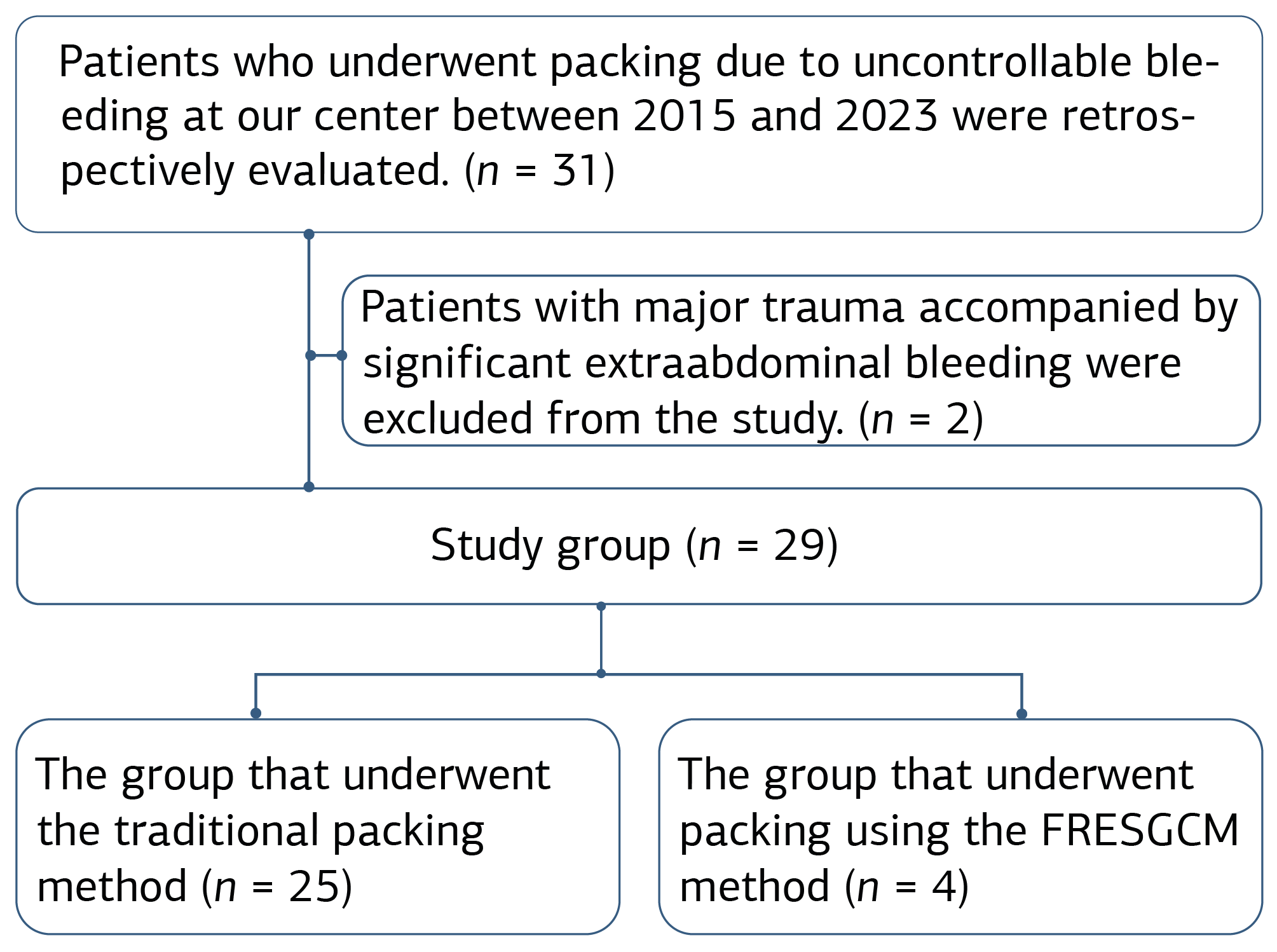
Clinical Data CollectionInclusionAll cases that underwent packing for uncontrollable bleeding at Health Sciences University Tepecik Training and Research Hospital (Izmir/Türkiye) from 2015 to 2023 were retrospectively reviewed using the hospital database (Probel HBYS v1, Izmir, Türkiye) (Figure 2).ExclusionCases with missing data in the hospital records were excluded from the study.
Patients were classified into two groups: traditional packing and ERFSGCM. Data collected included demographics, Charlson Comorbidity Index (CCI), preoperative INR, surgical indication and type, iatrogenic bleeding in elective cases, trauma type, bleeding site, packing method, number of quadrants packed, intraoperative blood loss and transfusions, abdominal closure technique, timing of final fascial closure, recurrent bleeding after unpacking, number of surgeries, postoperative complications (acute renal failure, ischemic events, respiratory distress, wound infection), Clavien-Dindo scores, duration of mechanical ventilation, ICU and hospital stay, and mortality.Ethical ApprovalThis study was approved by the Ethics Committee of Health Sciences University, Izmir Tepecik Training and Research Hospital (Date: 24.03.2024, Decision No: 2024/03-24).Statistical AnalysisStatistical analyses were performed using SPSS v.25. Normality was assessed with Kolmogorov-Smirnov and Shapiro-Wilk tests. Data were expressed as mean ± SD for normally distributed variables and as median (Q1–Q3) for non-normal variables; categorical data were presented as frequency and percentage. Group comparisons used the independent samples t-test or Mann-Whitney U test for continuous variables, and Pearson’s chi-square or Fisher’s exact test for categorical variables. Univariate analyses identified potential risk factors, followed by multivariate analyses to determine independent predictors. A P value<0.005 was considered statistically significant.
Reporting GuidelinesThis study was reported according to the STROBE guideline.
Results
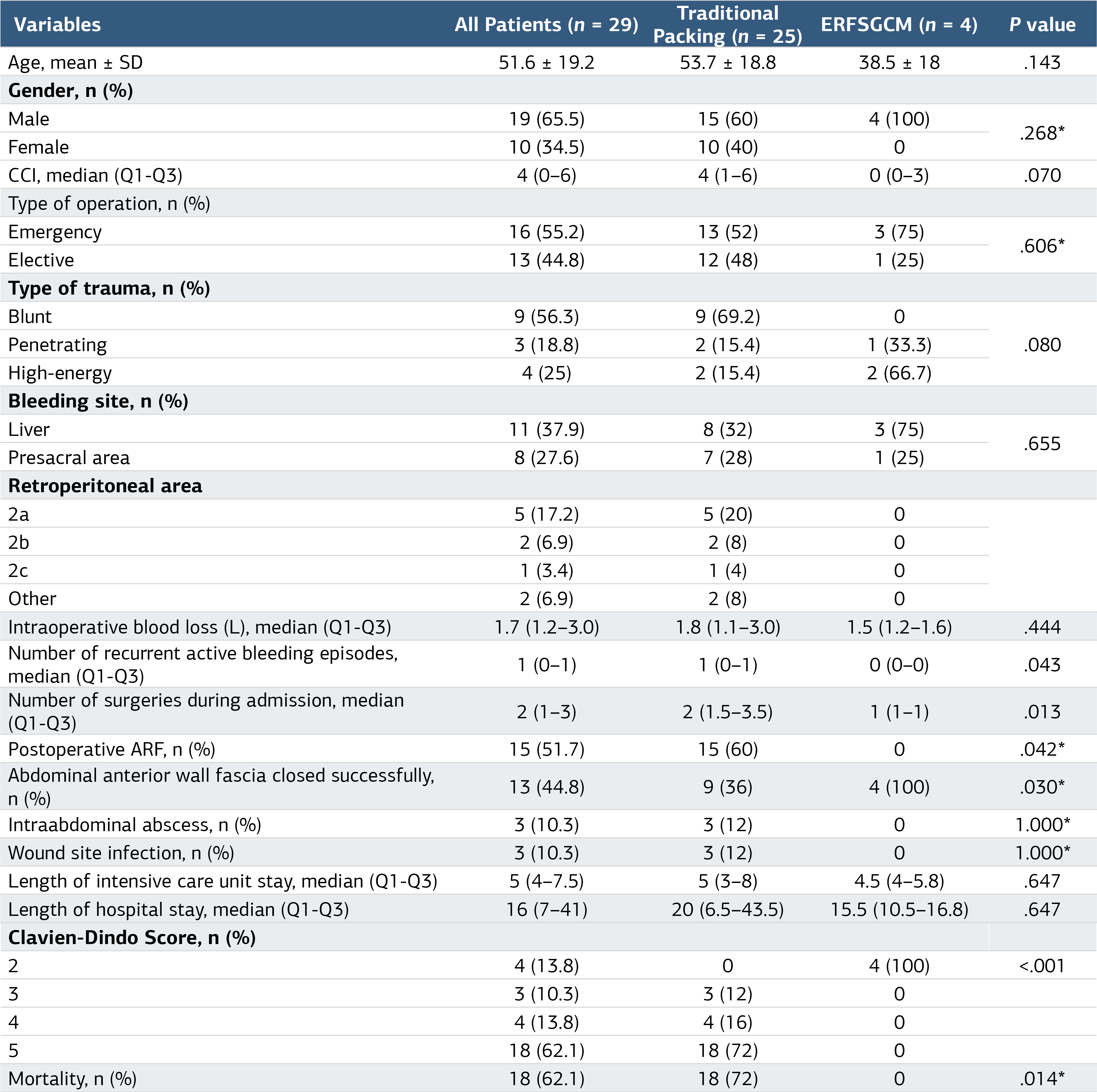
Twenty-nine patients were included: 25 underwent traditional packing and 4 applied ERFSGCM. The mean age was 51.6±19.2 years (traditional: 53.7±18.8; ERFSGCM: 38.5±18). Overall, 19 patients (65.5%) were male. In the traditional group, 15 (60%) were male and 10 (40%) female, while all ERFSGCM patients were male. No significant differences were observed between groups regarding demographic distribution (P = .143, P = .268).
The median CCI was 4 (0–6) overall, 4 (1–6) in the traditional group, and 0 (0–3) in the ERFSGCM group (P = .070). Among all surgeries, 16 (55.2%) were emergencies and 13 (44.8%) were elective. In the traditional group, 52% were emergency and 48% elective, while in the ERFSGCM group, 75% were emergency and 25% elective, with no significant difference (P = .606). All emergency surgeries involved trauma. Trauma types were blunt in 9 patients (56.3%), penetrating in 3 (18.8%), and high-energy in 4 (25%). In the traditional group, 9 (69.2%) had blunt, 2 (15.4%) penetrating, and 2 (15.4%) high-energy trauma. In the ERFSGCM group, 1 (33.3%) had penetrating and 2 (66.7%) high-energy trauma; no blunt trauma was observed. Differences in trauma distribution were not significant (P = .080).
Among elective surgeries, 10 patients (71.4%) had iatrogenic bleeding: 9 (69%) in the traditional group and 1 (100%) in the ERFSGCM group, with no significant difference (p=1.000). Bleeding sites included the liver in 11 patients (37.9%; traditional 32%, ERFSGCM 75%), the presacral area in 8 (27.6%; traditional 28%, ERFSGCM 25%), and the retroperitoneum in 8 (27.5%; all traditional, most commonly Zone 2a). No ERFSGCM patients had retroperitoneal bleeding. Differences in bleeding site distribution were not significant (P = .655).
Packing involved one quadrant in 19 patients (65.5%), two in 6 (20.7%), three in 3 (10.3%), and four in 1 (3.4%). In the traditional group, packing was applied to one quadrant in 60%, two in 24%, three in 12%, and four in 4%. All ERFSGCM patients had single-quadrant packing. No significant difference was observed (P = .486). Median preoperative INR was 1.3 (1.10–1.65) overall, 1.3 (1.08–1.62) in the traditional group, and 1.5 (1.33–1.75) in the ERFSGCM group (P = .227).
Median intraoperative blood loss (L) was 1.7 (1.2–3.0) overall, 1.8 (1.1–3.0) in the traditional group, and 1.5 (1.2–1.6) in the ERFSGCM group (P = .444). Median intraoperative red blood cell suspension replacement (units) was 4 (2.5–4.5) overall, 4 (2–5) in the traditional group, and 4 (3.3–4.0) in the ERFSGCM group. Median intraoperative fresh frozen plasma replacement (L) was 2 (2–3) overall, 2 (1.5–4.0) in the traditional group, and 2 (2–2) in the ERFSGCM group. Median total blood/blood product replacement (units) was 6 (4.5–7.5) overall, 6 (4–8) in the traditional group, and 6 (5.3–6.0) in the ERFSGCM group. No significant differences were observed (P = .879, P = .927, P = .831).
Median recurrent active bleeding episodes were 1 (0–1) overall, 1 (0–1) in the traditional group, and 0 (0–0) in the ERFSGCM group, significantly lower in the latter (P = .043). Median number of surgeries during admission was 2 (1–3) overall, 2 (1.5–3.5) in the traditional group, and 1 (1–1) in the ERFSGCM group, significantly lower in the latter (P = .013).
Initial abdominal closure methods included skin suturing in 15 patients (51.7%), a Bogota bag in 1 (3.4%), and fascia plus skin suturing in 13 (44.8%). In the traditional group, closure was achieved by skin suturing in 60%, a Bogota bag in 4%, and fascia plus skin suturing in 36%. All ERFSGCM patients underwent fascia and skin closure. Differences were not statistically significant (P = .058).
Postoperative acute renal failure was observed in 15 patients (51.7%): 15 (60%) in the traditional group, none in the ERFSGCM group, significantly less common in the latter (P = .042). Postoperative ischemic complications occurred in 5 patients (17.9%): 5 (20.8%) in the traditional group, none in the ERFSGCM group (p=1.000). Postoperative respiratory distress occurred in 11 patients (37.9%), all from the traditional group (44%), none in the ERFSGCM group (P = .268).
Anterior abdominal wall fascia was closed in 13 patients (44.8%): 9 (36%) in the traditional group and all in the ERFSGCM group, significantly higher success in the latter (P = .030). Sixteen patients (55.2%) were discharged or died with an open fascia, all from the traditional group (64%). Final fascial closure was achieved during the initial surgery in 10 patients (34.5%): 6 (24%) in the traditional group and all in the ERFSGCM group. In the traditional group, closure occurred on postoperative days 1, 5, and 7 in one patient each (4%). No significant difference was observed regarding timing (P = .066).
Postoperative intra-abdominal abscesses occurred in 3 patients (10.3%), all from the traditional group (12%), none in the ERFSGCM group (p=1.000). Wound site infections were observed in 3 patients (10.3%), all in the traditional group (12%), none in the ERFSGCM group (p=1.000).
Median mechanical ventilation was 2 days (1–4.5) overall, 2 (1–5.5) in the traditional group, and 1 (1–1) in the ERFSGCM group (P = .181). Median ICU stay was 5 days (4–7.5) overall, 5 (3–8) in the traditional group, and 4.5 (4–5.8) in the ERFSGCM group (P = .647). Median hospital stay was 16 days (7–41) overall, 20 (6.5–43.5) in the traditional group, and 15.5 (10.5–16.8) in the ERFSGCM group (P = .647).
Clavien-Dindo scores were 2 in 4 patients (13.8%), 3 in 3 (10.3%), 4 in 4 (13.8%), and 5 in 18 (72%). In the traditional group, no patient scored 2; instead, 3 (12%) scored 3, 4 (16%) scored 4, and 18 (72%) scored 5. All ERFSGCM patients had a score of 2. The difference was significant (P < .001).
Mortality occurred in 18 patients (62.1%), all from the traditional group (72%), while none was observed in the ERFSGCM group, representing a significant difference (P = .014) (Table 1)).
Discussion
Packing is a standard technique in the initial phase of damage control surgery to achieve rapid hemostasis. It is applied in massive hemorrhage when intervention time is limited, aiming to control bleeding through continuous pressure with gauze or compresses. Reported efficacy exceeds 90%.12
Although indications for packing are well defined, the optimal timing for unpacking remains uncertain. The timing of re-laparotomy is critical for outcomes, yet no gold standard exists. Most studies recommend unpacking within 24–48 hours,13 while in high-grade liver injuries, delaying beyond 48 hours may reduce rebleeding risk. However, prolonged intervals increase infection risk and may hinder successful fascial closure.14 Pommerening et al. recommended re-laparotomy within 24–48 hours, noting that delays may hinder fascial closure.15 Abikhaled et al. reported increased infection and abscess risk when packing materials remained beyond 72 hours.16 Thus, early unpacking has been emphasized, although Nicol et al. found prolonged packing was not associated with higher infection risk.17
All patients underwent unpacking at 48 hours. Wound infection and abscess occurred in three patients (12%) in the traditional group, while none were observed in the ERFSGCM group. The difference was not statistically significant (p=1.000 for both).
The primary goal of packing is hemostasis, with the absence of recurrent bleeding serving as a key success indicator.2,8,10 In our study, recurrent bleeding occurred in one patient from the traditional group, while none was observed in the ERFSGCM group. The difference was statistically significant (P = .043).
Traditional packing requires a second-look re-laparotomy for unpacking, adding physiological stress and potential complications.18 ERFSGCM eliminates this need, offering a significant advantage. In our study, the ERFSGCM group underwent fewer surgeries during hospitalization (P = .013), supporting its theoretical benefits. Moreover, ERFSGCM enables definitive fascial closure during the initial procedure, whereas multiple surgeries in the traditional method may hinder successful closure.19,20
In some patients undergoing packing, excessive tension prevents abdominal wall closure. In such cases, temporary closure techniques or planned open management methods, including negative pressure wound therapy or the Bogota bag, are commonly used.21 In the ERFSGCM group, fascial closure was achieved in all patients, whereas some in the traditional group required alternative methods. Statistical analysis showed a significant difference between groups (P = .030). In cases without fascial closure, only skin suturing or the Bogota bag technique was used.
Our findings suggest that ERFSGCM facilitates definitive fascial closure more effectively than traditional packing. Although the absence of re-laparotomy may raise concerns regarding intra-abdominal hypertension or compartment syndrome, the technique’s design allows gradual withdrawal of the folded gauze, enabling controlled decompression. This feature represents its greatest advantage over the traditional method.
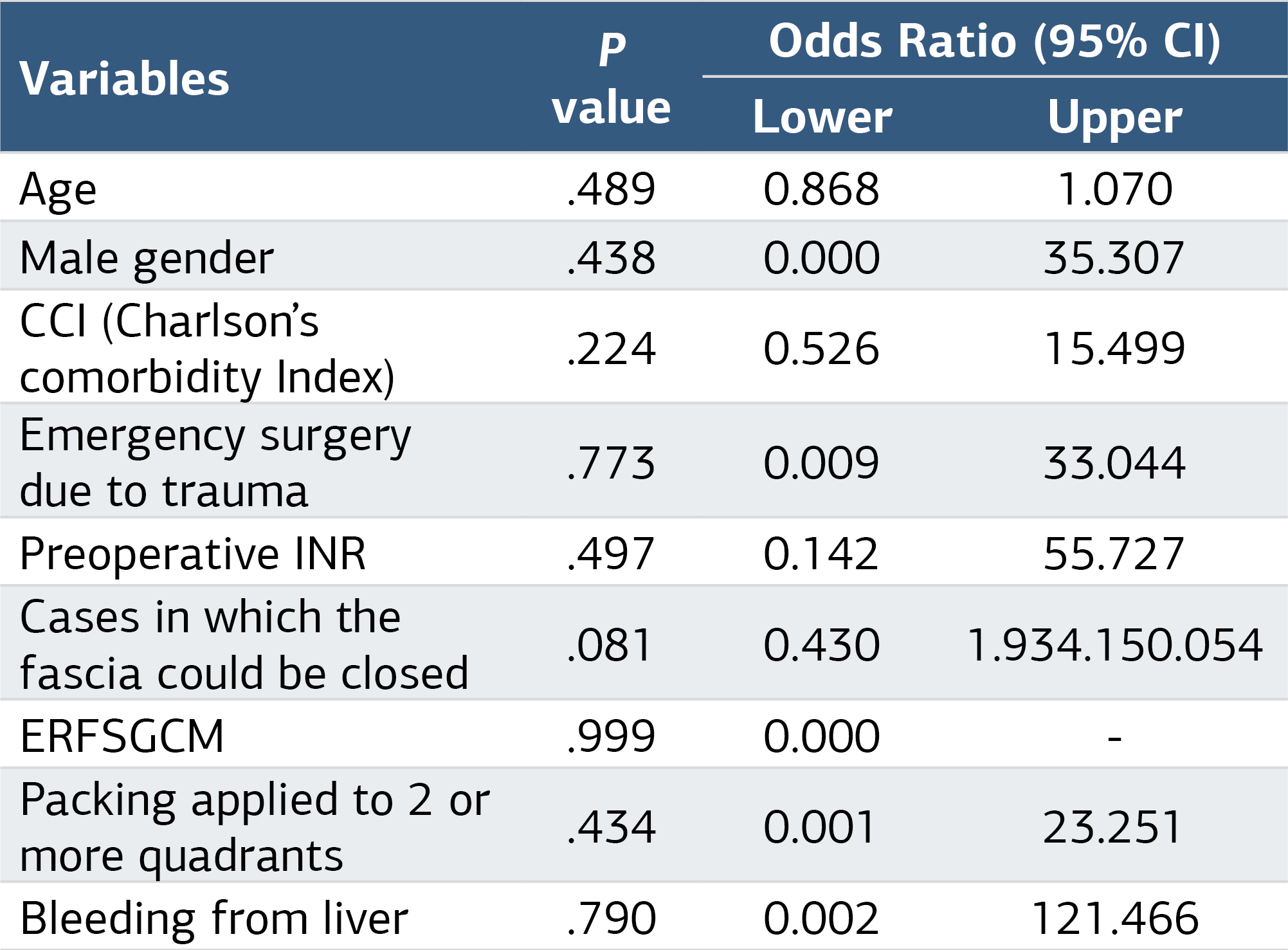
Postoperative acute renal failure was significantly less frequent in the ERFSGCM group (P = .042). Clavien-Dindo scores (P < .001) and mortality (P = .014) were also significantly lower, with ERFSGCM further associated with fewer overall complications (Table 2).
Our findings suggest that ERFSGCM is at least as safe and effective as traditional packing, with evidence of superior outcomes. By eliminating the need for re-laparotomy and reducing the number of surgeries, ERFSGCM also demonstrates greater cost-effectiveness compared to the traditional method.
Limitations
Although our hospital is not a specialized trauma center, it serves as one of the key facilities in our region for the admission and treatment of emergency trauma patients. Despite this fact, the small sample size in our study poses a limitation in terms of statistical analysis. Although the patient sample size in our study is relatively small, its pioneering nature makes it a significant contribution to the literature.
Conclusion
The use of ERFSGCM as an alternative to the traditional packing method in patients with massive intra-abdominal hemorrhage can eliminate the need for re-laparotomy for unpacking. Furthermore, based on the results of our study, ERFSGCM demonstrates a more favorable profile regarding postoperative complications and mortality compared to traditional packing. However, further studies with larger patient populations are needed to establish the superiority of the ERFSGCM.
Declarations
Animal and Human Rights Statement
All procedures performed in this study were in accordance with the ethical standards of the institutional and/or national research committee and with the 1964 Helsinki Declaration and its later amendments or comparable ethical standards.
Informed Consent
The requirement for informed consent was waived because of the retrospective design of the study.
Data Availability
The datasets used and/or analyzed during the current study are not publicly available due to patient privacy reasons but are available from the corresponding author on reasonable request.
Conflict of Interest
The authors declare that there is no conflict of interest.
Funding
None.
Abbreviations
CCI: Charlson comorbidity index
ERFSGCM: Easily removable folded sterile gauze compression method
ICU: Intensive care unit
INR: International normalized ratio
SD: Standard deviation
References
- Cannon JW. Hemorrhagic shock. N Engl J Med. 2018;378(4):370-379. doi:10.1056/nejmra1705649
- Marsden M, Carden R, Navaratne L, et al. Outcomes following trauma laparotomy for hypotensive trauma patients: a UK military and civilian perspective. J Trauma Acute Care Surg. 2018;85(3):620-625. doi:10.1097/ta.0000000000001988
- Teixeira PG, Inaba K, Hadjizacharia P, et al. Preventable or potentially preventable mortality at a mature trauma center. J Trauma. 2007;63(6):1338-1347. doi:10.1097/ta.0b013e31815078ae
- Lucas CE, Ledgerwood AM. Prospective evaluation of hemostatic techniques for liver injuries. J Trauma. 1976;16(6):442-451. doi:10.1097/00005373-197606000-00003
- Barbee RW, Reynolds PS, Ward KR. Assessing shock resuscitation strategies by oxygen debt repayment. Shock. 2010;33(2):113-122. doi:10.1097/shk.0b013e3181b8569d
- Clarke JR, Trooskin SZ, Doshi PJ, et al. Time to laparotomy for intra-abdominal bleeding from trauma does affect survival for delays up to 90 minutes. J Trauma. 2002;52(3):420-425. doi:10.1097/00005373-200203000-00002
- Klingensmith ME, Chen LE, Glasgow SC, et al. The Washington Manual of Surgery. 5th ed. Lippincott Williams & Wilkins; 2008.
- Lu CK, Marks JA. Fundamentals of exploratory laparotomy for trauma. In: Fundamentals for General Surgery. Springer Nature; 2018:275-288. doi:10.1007/978-3-319-75656-1_19
- Ahmed N, Vernick JJ. Management of liver trauma in adults. J Emerg Trauma Shock. 2011;4(1):114-119. doi:10.4103/0974-2700.76846
- Jakob DA, Liasidis P, Schellenberg M, et al. Intra-abdominal hemorrhage control: the need for routine four-quadrant packing explored. World J Surg. 2021;45(4):1014-1020. doi:10.1007/s00268-020-05906-3
- Kim JM, Kim CW, Hong SK, et al. Intra-abdominal gauze packing for uncontrolled hemorrhage in nontrauma patients. J Acute Care Surg. 2021;11(2):64-70. doi:10.17479/jacs.2021.11.2.64
- Mejia D, Warr SP, Delgado-López CA, et al. Reinterventions after damage control surgery. Colomb Med (Cali). 2021;52(2). doi:10.25100/cm.v52i2.4805
- Coccolini F, Roberts D, Ansaloni L, et al. The open abdomen in trauma and nontrauma patients: WSES guidelines. World J Emerg Surg. 2018;13:7. doi:10.1186/s13017-018-0167-4
- Kang BH, Jung K, Choi D, et al. Early relaparotomy for patients with high-grade liver injury after damage-control surgery and perihepatic packing. Surg Today. 2021;51(6):891-896. doi:10.1007/s00595-020-02178-1
- Pommerening MJ, DuBose JJ, Zielinski MD, et al. Time to first take-back operation predicts successful primary fascial closure in patients undergoing damage control laparotomy. Surgery. 2014;156(2):431-438. doi:10.1016/j.surg.2014.04.019
- Abikhaled JA, Granchi TS, Wall MJ, et al. Prolonged abdominal packing for trauma is associated with increased morbidity and mortality. Am Surg. 1997;63(12):1109-1113.
- Nicol AJ, Hommes M, Primrose R, et al. Packing for control of hemorrhage in major liver trauma. World J Surg. 2007;31(3):569-574. doi:10.1007/s00268-006-0070-0
- Finnerty CC, Mabvuure NT, Ali A, et al. The surgically induced stress response. JPEN J Parenter Enteral Nutr. 2013;37(5 suppl):21S-29S. doi:10.1177/0148607113496117
- Huang Q, Li J, Lau WY. Techniques for abdominal wall closure after damage control laparotomy: from temporary abdominal closure to early/delayed fascial closure; a review. Gastroenterol Res Pract. 2016;2016:2073260. doi:10.1155/2016/2073260
- Hu P, Uhlich R, Gleason F, et al. Impact of initial temporary abdominal closure in damage control surgery: a retrospective analysis. World J Emerg Surg. 2018;13:43. doi:10.1186/s13017-018-0204-3
- Quyn AJ, Johnston C, Hall D, et al. The open abdomen and temporary abdominal closure systems: historical evolution and systematic review. Colorectal Dis. 2012;14(8). doi:10.1111/j.1463-1318.2012.03045.x
Tables
Table 1. Statistical analysis results
*Fisher's exact test was used. abbreviations: ARF, acute renal failure; CCI, charlson’s comorbidity index; ES, erythrocyte suspension
Table 2. Multivariate analysis for mortality
Figures
Additional Information
Publisher’s Note
Bayrakol MP remains neutral with regard to jurisdictional and institutional claims.
Rights and Permissions

This work is licensed under a Creative Commons Attribution-NonCommercial 4.0 International License (CC BY-NC 4.0). To view a copy of the license, visit https://creativecommons.org/licenses/by-nc/4.0/
About This Article
How to Cite This Article
Göksever Akpınar, Batuhan Eyduran. Removable folded sterile gauze compression. Ann Clin Anal Med 2025;16(Suppl 3):196-201. doi:10.4328/ACAM.22915
Publication History
- Received:
- 25.09.2025
- Accepted:
- 23.10.2025
- Published Online:
- 25.10.2025
- Printed:
- 25.10.2025