
Abstract
AimIn neonatal clinics and intensive care units, lumbar puncture (LP) is often used to diagnose neurological, infectious, and metabolic disorders. The aim of our study was to determine the rate of LP traumatization and associated anthropometric variables, as well as to compare concurrent microbiological outcomes for traumatic and non-traumatic LP procedures.MethodsWe performed a retrospective analysis of electronic records of neonates who underwent LP over eight years in the level three neonatal intensive care unit (NICU) of a teaching hospital in Turkey. We classified a CSF material as traumatizing lumbar puncture (TLP) when the red blood cell (RBC) count exceeded 500 cells/mm3 and classified the rest as non-traumatizing lumbar puncture (nTLP).ResultsDuring the study period, 854 newborn infants underwent LP procedures and 325 (38.06%) had TLP. There was no significant difference between the TLP and nTLP groups in terms of birth weight, birth weight percentile, gestational week, and year of procedure. As postnatal age increased, the TLP rate decreased in both term and preterm patients (P = .001). When the rates of laboratory evaluation of CSF samples were compared, the rate of sending the sample to the laboratory was significantly lower in the TLP group compared to the nTLP group (P < .05). ConclusionThe TLP rate in our center is consistent with the rates found in the literature. Our findings suggest that the likelihood of TLP decreases with increasing age of the newborn. Further studies with ancillary methods such as superficial ultrasonographic imaging are needed to decrease the rate of TLP.
Keywords
Introduction
Lumbar puncture (LP) is a frequently used diagnostic and sometimes therapeutic procedure. This allows for the examination of the CSF using biochemical, cytological, and microbiological analyses of the CSF. Neonatal can undergo LP to diagnose a variety of conditions, including meningitis, subarachnoid hemorrhage, sepsis, convulsions, and neurometabolic disease.1 The evaluation of CSF for the diagnosis of meningitis, a major cause of illness and mortality, remains the most reliable technique currently available.2
If blood cultures of patients suspected of early sepsis reveal microorganisms, we recommend performing an LP and treating the condition as confirmed sepsis. The LP procedure’s success rates have not yet reached optimal levels. The literature indicates that the prevalence of TLP in neonates ranges from 40% to 50%.3 During the procedure, there is a possibility of blood and CSF mixing due to the LP needle puncturing the radicular artery or vein. In the literature, TLP is typically defined as an RBC count that is higher than 400 cells/mm³ or 1000 cells/mm³ in the CSF.4 These values indicate the point at which the visual characteristics of the CSF experience noticeable alterations on a significant level.
We aimed to determine the failure rate of the LP procedure in neonates, as well as assess the laboratory methods for bloody CSF samples and concurrent microbiological results. We noted the gender, gestational and postnatal age, birth weight, and microbiological results of the patients.
Materials and Methods
We performed a retrospective analysis of electronic medical records of newborns who received LP and CSF collection at Health Sciences University’s Dr. Sami Ulus Gynecology and Pediatrics Training and Research Hospital’s NICU from 2010 to 2018. We classified newborns delivered before 37 weeks of gestation as preterm, and those born after 37 weeks as term. We assessed the rate of traumatization by analyzing the results of the initial LP on the study group. We classified specimens as TLP if their RBC count exceeded 500 cells/mm³.
The study examined the year of the procedure, the patient’s gender, the gestational week of the procedure, the patients’ birthweight, the birthweight percentile, and the age of the LP in both the TLP and nTLP patient groups. The analysis focused on the microorganisms that developed in the CSF culture, the results of the CSF polymerase chain reaction (PCR), and the simultaneous growth in the blood culture. We analyzed the frequency of performing a control LP in the groups, following the guideline to perform the procedure within 72 hours after the initial LP.
According to the clinic’s protocol, the LP procedure must be performed with the patient in positions of lower extremity flexion and lateral decubitus. Due to a lack of recorded needle thickness in the file data, comparison was not possible. We obtain three vials containing CSF samples, each containing 1–2 ml of fluid. We perform Gram staining and bacterial culture on the CSF samples from the first tube and analyze biochemistry parameters from the sample in the second tube. We ascertain the cell count from the third tube sample and conduct other tests on samples in additional tubes.Ethical ApprovalThis study was approved by the Ethics Committee of Ankara Child Health and Diseases Hematology Oncology Training and Research Hospital (Date: 12.11.2018, Decision No: 2018-180).Statistical AnalysisThe statistical data was defined using numerical values such as number, percentage, mean, standard deviation, median, maximum, and minimum. We used the Kruskal-Wallis test to compare two groups that displayed a Gaussian distribution. We used the Mann-Whitney U test to compare two groups that displayed a non-normal distribution. We used the Student T test to compare two groups of quantitative variables. We employed the chi-square test to compare categorical variables among independent groups. We used the Spearman correlation test to determine the relationships between the variables and to assess the test’s assumptions. We used Cochran’s Q test to compare variables within the same group. IBM Corp. in Armonk, NY, USA developed the Statistical Package for the Social Sciences (SPSS) 25 software to analyze the data. We determined significance based on P values below 0.05.Reporting GuidelinesThis study was reported according to the STROBE guidelines.
Results
A total of 854 infants underwent the LP procedure, with 339 (39.69%) being female and 515 (60.31%) being male. The patients’ file notes and self-reports classified 272 (31.85%) as preterm and 582 (68.15%) as term newborns. The newborns with recorded weights ranged from 650 to 5133 grams, with an average birthweight of 2751 grams. 325 out of 854 newborns experienced TLP procedures, which accounts for 38.06% of the total. We found no significant relationship between the year of the procedure and TLP (P = .571). In 2010, the highest annual traumatization rate was 42.60%. We found no statistically significant relationship between gender (P = .775), gestational week (P = .198), birthweight (P = .564), birthweight percentile (P = .914), and TLP. We could access delivery method data for
831 (97.30%) patients. We detected 173 (43.68%) TLP and 223 (56.32%) nTLP in patients born vaginally, and 144 (33.10%) TLP and 291 (66.90%) nTLP in patients born by cesarean section. When compared to those born via cesarean section, the TLP rate was significantly lower (P = .002). We determined the mean age of LP in the term patient group to be 12.8 (1-39) days, while it was 27.6 (1-101) days in the preterm group. We observed a decline in the TLP rate as postnatal age increased in both the term and preterm patient groups (P = .001). We analyzed the biochemical parameters, cell count, and Gram staining rates of the CSF samples obtained from 325 TLP. The rates of laboratory evaluation of CSF samples of the patients are summarised in Table 1.
We compared the cell count and biochemical parameters of the CSF samples from the TLP and nTLP groups. The statistical analysis revealed that there was no significant difference in the WBC count between the two groups (P = .832). The RBC count showed a significant increase in the TLP group (TLP: average 436 cells/mm3, nTLP: average 11 cells/mm3) (P = .001). We conducted an RBC count in 11% of the total TLP CSF samples. The abundance of erythrocytes observed in the cell count report of most samples made it impossible to assess the accuracy of the data. The TLP group significantly increased the CSF protein level (P = .001) among the biochemical parameters, while the levels of glucose, chloride, and lactate did not show a significant increase (P = .759, P = .38, and P = .315, respectively).
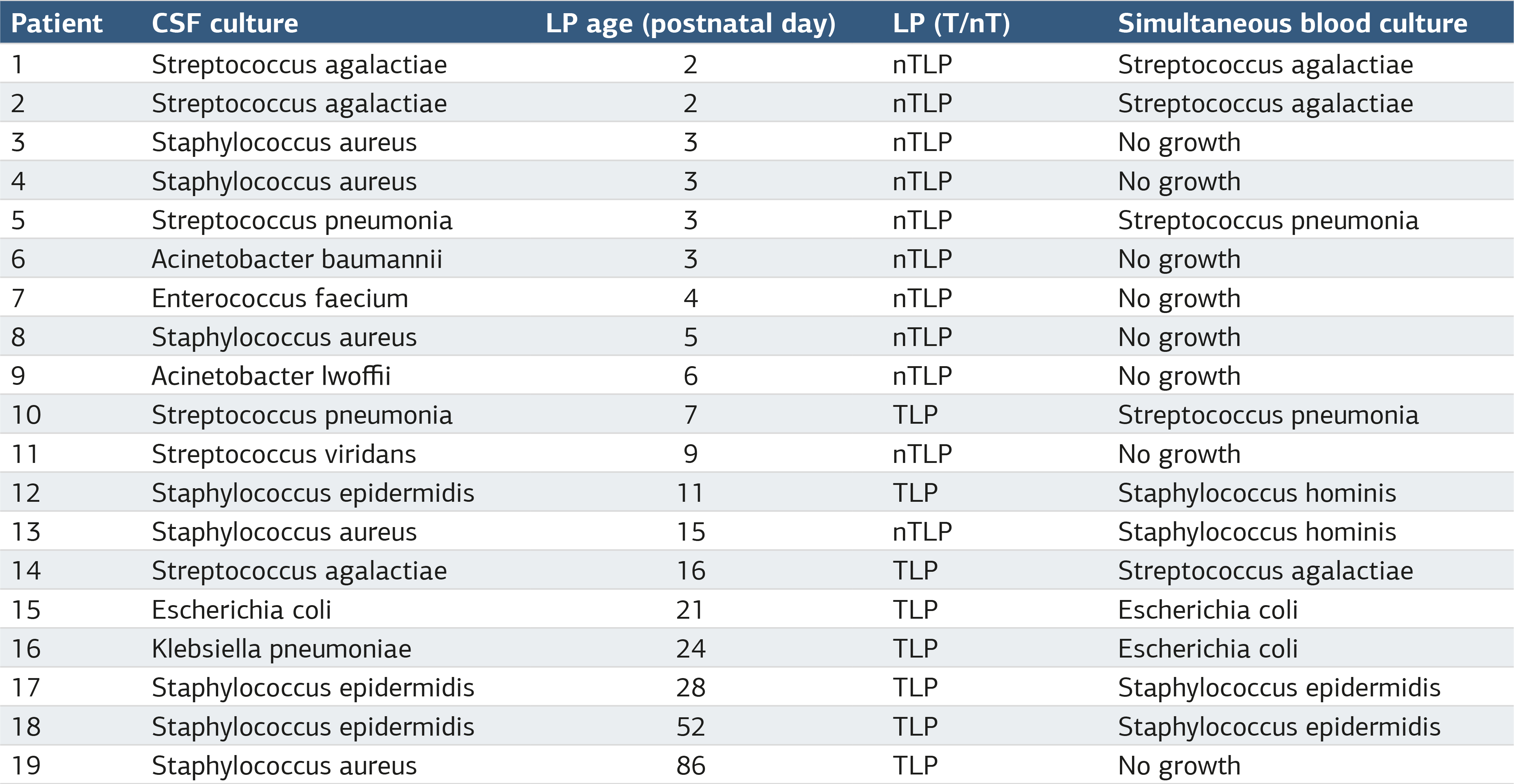
Growth of microorganisms was found in CSF cultures of 19 (2.22%) of the patients. We found that 8 (2.4%) of 325 patients with TLP and 11 (2.07%) of 529 patients with nTLP had growth in CSF cultures. The microorganisms detected in CSF cultures are summarised in Table 2. No growth was observed in 82.54% [4 of the patients whose blood cultures were sent simultaneously. Control LP was performed in 45 (5.3%) of 854 patients. There was no significant difference between the rates of control LP (24 patients (4.5%) in the nTLP group and 21 patients (6.4%) in the TLP group).
Discussion
Our study revealed that the prevalence of TLP was 38.06% in our center. This rate is within the average range reported in the literature (30–50.7%).3,4,5 In our study, no significant correlation was found between gestational week, gender, birth weight, birth weight percentile, and TLP; however, a negative correlation was found between postnatal age at LP and TLP prevalence in both term and preterm infants. In studies on the frequency of TLP in newborns in the literature, TLP was found to be higher in preterm and low birth weight newborns.4,5,6
We found that babies born by cesarean section had a lower rate of TLP compared to babies born vaginally. We did not find any study associating TLP with the type of delivery. Based on the age at LP, we hypothesized that the mode of delivery may trigger TLP. Studies have shown that cesarean section may prevent early neonatal sepsis.7 Matettore et al. made a comparison between TLP and several factors such as the age at which LP was performed, gender, the department where the procedure was performed (emergency department or NICU), and the timing of the procedure.4 They reported that the rate of TLP decreased as the age at LP application increased. In the study, they found that LP procedures performed in the emergency department had a lower TLP rate compared to the NICU. The authors attributed this increase to the fact that emergency physicians were more experienced and the patients in the emergency department were relatively healthy, whereas the infants in the NICU were low birth weight, preterm, or had other congenital disorders.
In our study, we found a significant difference in RBC count and protein level in the TLP group compared to the nTLP group. We attributed the lack of a significant difference in WBC count to the very low rate of sending CSF obtained after TLP for cell counting. A recent study has shown that the presence of any number of CSF RBCs (including <500 cells/µL) affects CSF WBC count and protein content.8
The literature has shown that the subarachnoid space plays an important role in obtaining CSF during the LP procedure and in causing the TLP procedure in neonates. Öncel et al. showed that being in a sitting position with hip flexion may increase the likelihood of a successful LP by widening the external interspinous space.9 Oulego-Erroz et al. conducted a prospective study and found that sitting in a position with hip flexion increased both the external and internal subarachnoid distance.10 However, head flexion did not cause a significant increase in interspinous distance. According to Oulego-Erroz et al., sitting with hip flexion increases both the distance between the layers of the spinal cord and the distance within the spinal cord, while head flexion does not cause a significant increase in the space between the spinous processes. This suggests that the head flexion position is a position which sick newborns and preterm infants have low tolerance and does not provide any anatomical benefit in preventing TLP.
In a study conducted by Lo et al. in 2013, subarachnoid space distances of infants in different positions (straight lateral decubitus, 45-degree tilt, and sitting) were measured and no significant difference was found between the three positions.11 Factors such as elevated CSF pressure, enlarged interspinous space, or improved landmark identification may contribute to the higher success rate of LP in the sitting or tilting position. A recent and comprehensive study found that a successful and simple LP procedure was more likely to occur when performed in the sitting position and also showed no correlation between the time taken to remove the stylet and TLP.12 Due to the retrospective nature of our study and the use of a chart review, it was not possible to evaluate patient positioning. In our center, the lateral decubitus position with hip flexion and neutral head position is commonly used.
On the other hand, the size of the LP needle is thought to be one of the most important factors that may increase the risk of TLP. In 2020, Flett et al. published a study examining the relationship between TLP and dry tap LP and the LP needle used. They found that TLP was less common when a 25G needle was used. However, the 25G group showed a higher probability of dry tap. The study found no association between gestational week, birth week percentile, practitioner experience, clinical status of the newborn, and TLP.13 Orman et al. examined the TLP rates of two neonatal patient groups who underwent LP in the lateral decubitus position using 22G and 25G spinal needles. The study data supported that 25G-tipped spinal needles caused less TLP in neonates compared to 22G-tipped spinal needles.14
Many studies in the literature show that the use of ultrasound during the LP procedure provides higher success rates compared to the conventional method.15-18 Olowoyeye et al. showed a significant increase in the incidence of nTLP in ultrasound procedures in neonates and infants.19 Gupta et al. measured the L3–L4 vertebral space of newborns using bedside ultrasound and developed a formula related to the gestational week and body weight of the infant.20 The study, which aimed to find a mathematical formula specific to gestational age and weight to predict the optimal depth of spinal needle insertion, found that spinal canal dimensions showed an increasing trend as the weight and postnatal age of infants increased.
CSF culture positivity rate was 2% in our study. The microorganisms causing early and late-onset meningitis detected in CSF cultures were similar to the literature.21-24
Limitations
Our study’s significant limitation lies in the inability to compare crucial factors like position, LP needle size, and practitioner experience due to the retrospective acquisition of information through electronic file data scanning. Furthermore, the analysis of CSF specimens precluded the inclusion of dry-tap LPs in the evaluation.
Conclusion
Although it is a frequently needed interventional procedure in neonatal intensive care clinics, both clinicians and patients’ families continue to avoid LP due to its high failure rate. After a difficult persuasion process, a failed LP procedure does not help the diagnostic process and causes stress for both the clinician and the family. Prolonged hospitalization and the use of broadspectrum antibiotics are inevitable due to unreliable CSF cell counts after TLP. It is noteworthy that our study included a significant number of patients who underwent LP over 8 years. We confirmed that the success rate of the LP procedure increased with postnatal age. We also found that the cell count rate in the CSF sample obtained by TLP was low, which hindered the diagnostic process. It seems likely that performing LP using bedside ultrasonographic imaging in neonatal intensive care units should be a common and routine procedure, which may reduce the failure rate in the future.
Declarations
Animal and Human Rights Statement
All procedures performed in this study were in accordance with the ethical standards of the institutional and/or national research committee and with the 1964 Helsinki Declaration and its later amendments or comparable ethical standards.
Informed Consent
Informed consent was not required due to the retrospective design of the study and the use of anonymized patient data.
Data Availability
The datasets used and/or analyzed during the current study are not publicly available due to patient privacy reasons but are available from the corresponding author on reasonable request.
Conflict of Interest
The authors declare that there is no conflict of interest.
Funding
None.
Abbreviations
CSF: Cerebrospinal fluid
LP: Lumbar puncture
NICU: Neonatal intensive care unit
RBC: Red blood cell
TLP: Traumatizing lumbar puncture
WBC: White blood cell
References
- Srinivasan L, Harris MC, Shah SS. Lumbar puncture in the neonate: challenges in decision making and interpretation. Semin Perinatol. 2012;36(6):445-453. doi:10.1053/j.semperi.2012.06.007
- Aleem S, Greenberg RG. When to include a lumbar puncture in the evaluation for neonatal sepsis. Neoreviews. 2019;20(3). doi:10.1542/neo.20-3-e124
- Glatstein MM, Zucker-Toledano M, Arik A, Scolnik D, Oren A, Reif S. Incidence of traumatic lumbar puncture: experience of a large, tertiary care pediatric hospital. Clin Pediatr (Phila). 2011;50(11):1005-1009. doi:10.1177/0009922811410309
- Matettore A, Kollmann TR. Traumatic neonatal lumbar punctures: experience at a large pediatric tertiary care center in Canada. Am J Perinatol. 2018;35(8):764-768. doi:10.1055/s-0037-1615794
- Sievänen H, Kari J, Eskola V, Huurre A, Soukka H, Palmu S. Incidence of traumatic lumbar punctures in adults: the impact of a patient’s first procedure. Clin Med (Lond). 2023;23(1):31-37. doi:10.7861/clinmed.2022-0169
- García-De la Rosa G, De Las Heras-Flórez S, Rodríguez-Afonso J, Carretero-Pérez M. Interpretation of white blood cell counts in the cerebrospinal fluid of neonates with traumatic lumbar puncture: a retrospective cohort study. BMC Pediatr. 2022;22(1):488. doi:10.1186/s12887-022-03548-z
- Traoré FB, Sidibé CS, Diallo EHM, et al. Prevalence and factors associated with maternal and neonatal sepsis in sub-Saharan Africa: a systematic review and meta-analysis. Front Public Health. 2024;12:1272193. doi:10.3389/fpubh.2024.1272193
- Gunti S, Nair V, Kannan Loganathan P. Reference range for cerebrospinal fluid values in neonates: 5-year retrospective study. J Matern Fetal Neonatal Med. 2022;35(26):10584-10590. doi:10.1080/14767058.2022.2139172
- Öncel S, Günlemez A, Anik Y, Alvur M. Positioning of infants in the neonatal intensive care unit for lumbar puncture as determined by bedside ultrasonography. Arch Dis Child Fetal Neonatal Ed. 2013;98(2). doi:10.1136/archdischild-2011-301475
- Oulego-Erroz I, Mora-Matilla M, Alonso-Quintela P, Rodríguez-Blanco S, Mata-Zubillaga D, de Armentia SL. Ultrasound evaluation of lumbar spine anatomy in newborn infants: implications for optimal performance of lumbar puncture. J Pediatr. 2014;165(4):862-865.e1. doi:10.1016/j.jpeds.2014.06.038
- Lo MD, Parisi MT, Brown JC, Klein EJ. Sitting or tilting position for infant lumbar puncture does not increase ultrasound measurements of lumbar subarachnoid space width. Pediatr Emerg Care. 2013;29(5):588-591. doi:10.1097/pec.0b013e31828e630d
- Marshall ASJ, Scrivens A, Bell JL, et al. Assessment of infant position and timing of stylet removal to improve lumbar puncture success in neonates. Lancet Child Adolesc Health. 2023;7(2):91-100. doi:10.1016/s2352-4642(22)00343-1
- Flett T, Athalye-Jape G, Nathan E, Patole S. Spinal needle size and traumatic neonatal lumbar puncture: an observational study. Eur J Pediatr. 2020;179(6):939-945. doi:10.1007/s00431-020-03580-0
- Orman A, Aydın H. Do spinal needle sizes affect the development of traumatic CSF in neonatal LP procedures? Children (Basel). 2023;10(3):509. doi:10.3390/children10030509
- Gorn M, Kunkov S, Crain EF. Prospective investigation of a novel ultrasound-assisted lumbar puncture technique on infants in the pediatric emergency department. Acad Emerg Med. 2017;24(1):6-12. doi:10.1111/acem.13099
- Özdamar E, Özkaya AK, Güler E, et al. Ultrasound-assisted lumbar puncture in pediatric emergency department. Pediatr Emerg Care. 2017;33(8). doi:10.1097/pec.0000000000000593
- Gottlieb M, Holladay D, Peksa GD. Ultrasound-assisted lumbar punctures: a systematic review and meta-analysis. Acad Emerg Med. 2019;26(1):85-96. doi:10.1111/acem.13558
- Kuitunen I, Renko M. Ultrasound-assisted lumbar puncture in children: a meta-analysis. Pediatrics. 2023;152(1). doi:10.1542/peds.2023-061488
- Olowoyeye A, Fadahunsi O, Okudo J, Opaneye O, Okwundu C. Ultrasound imaging versus palpation method for diagnostic lumbar puncture in neonates and infants: a systematic review and meta-analysis. BMJ Paediatr Open. 2019;3(1). doi:10.1136/bmjpo-2018-000412
- Gupta N, Venkatesh HA, Pejaver R, Garg C, Nagesh K. Determining the spinal canal depth in neonates using bedside ultrasonography. Indian Pediatr. 2023;60(11):927-930. doi:10.1007/s13312-023-3038-3
- Leazer R, Erickson N, Paulson J, et al. Epidemiology of cerebrospinal fluid cultures and time to detection in term infants. Pediatrics. 2017;139(5). doi:10.1542/peds.2016-3268
- Xu M, Hu L, Huang H, et al. Etiology and clinical features of full-term neonatal bacterial meningitis: a multicenter retrospective cohort study. Front Pediatr. 2019;7:31. doi:10.3389/fped.2019.00031
- El-Naggar W, Afifi J, McMillan D, et al. Epidemiology of meningitis in Canadian neonatal intensive care units. Pediatr Infect Dis J. 2019;38(5):476-480. doi:10.1097/inf.0000000000002247
- Zinganell A, Berek K, Bsteh G, et al. Subarachnoid hemorrhage or traumatic lumbar puncture: differentiation by cerebrospinal fluid parameters in a multivariable approach. Sci Rep. 2023;13(1):2231.
Tables
Table 1. Evaluation rates of CSF cell count, Gram stain, and biochemical parameters in TLP and nTLP sample groups
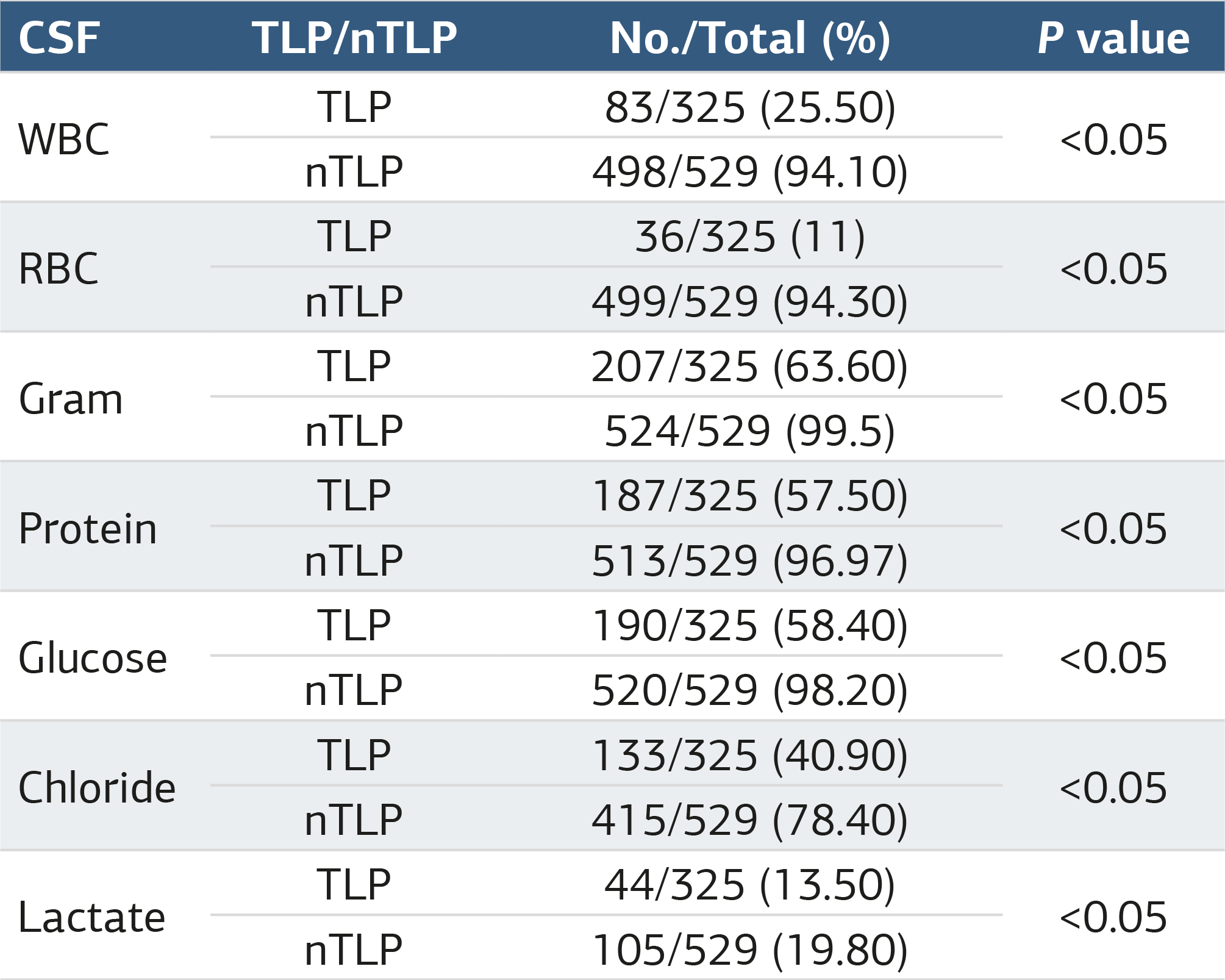
Table 2. Microorganisms detected by CSF cultures and blood cultures
Additional Information
Publisher’s Note
Bayrakol MP remains neutral with regard to jurisdictional and institutional claims.
Rights and Permissions

This work is licensed under a Creative Commons Attribution-NonCommercial 4.0 International License (CC BY-NC 4.0). To view a copy of the license, visit https://creativecommons.org/licenses/by-nc/4.0/
About This Article
How to Cite This Article
Ayşenur Engin Erdal, Ayşegül Zenciroğlu. Analysis of the frequency and etiology of traumatic lumbar punctures in a neonatal intensive care unit in Türkiye and documentation of microorganisms. Ann Clin Anal Med 2025;16(8):544-548. doi:10.4328/ACAM.22520
Publication History
- Received:
- 01.01.2025
- Accepted:
- 11.02.2025
- Published Online:
- 22.02.2025
- Printed:
- 01.08.2025