
Abstract
AimThe primary causes of acute scrotum are testicular torsion (TT) and epididymo-orchitis (EO), and the rapid and accurate differential diagnosis of these two conditions is crucial for preserving testicular function. The objective of this research is to assess the clinical value of the neutrophil-to-lymphocyte ratio (NLR), platelet-to-lymphocyte ratio (PLR), and hematological parameters in the differential diagnosis of TT and EO in pediatric patients.MethodsNinety-nine children who presented with scrotal pain and were diagnosed with either TT or EO in the pediatric emergency department of Aksaray University Training and Research Hospital between January 1, 2019, and May 25, 2025, were included in the study.ResultsIn the comparison of the groups, NLR and neutrophil counts were found to be meaningfully higher in children with TT (P = .002). For the prediction of TT, the cut-off value for NLR was determined as >3.53 with a sensitivity of 52.5% and specificity of 78% (AUC: 0.684 [0.580–0.788]), and for neutrophil count, the cut-off was >8915/mm³ with a sensitivity of 30.0% and specificity of 88.1% (AUC: 0.681 [0.577–0.785]).ConclusionNLR and neutrophil count may serve as useful markers in distinguishing TT from EO, particularly in pediatric patients where physical examination and imaging findings are inconclusive.
Keywords
Introduction
Acute scrotum is a clinical condition in childhood that typically requires urgent intervention and is characterized by sudden-onset scrotal pain, swelling, and tenderness.1 Among children presenting with these symptoms, the most common etiologies are testicular torsion (TT) and epididymo-orchitis (EO).2 Rapid and accurate differentiation of these conditions is particularly critical in the case of testicular torsion, as any delay or misdiagnosis may result in testicular loss.3
Diagnosis of TT and EO involves physical examination, laboratory testing, and imaging methods such as scrotal Doppler ultrasonography.4 In certain cases, overlapping or inconclusive clinical and radiological findings may complicate the differential diagnosis, particularly in distinguishing early-stage testicular torsion from epididymo-orchitis.5 As a result, there is a growing need to identify additional parameters that could support the diagnostic process.
In recent years, hematological parameters and derived markers recognized as indicators of inflammation have gained significance in the diagnosis and prognosis of numerous acute and chronic diseases.6,7 Markers derived from complete blood counts parameters, such as the neutrophil-to-lymphocyte ratio (NLR) and platelet-to-lymphocyte ratio (PLR), are inexpensive and easily calculable indicators thought to reflect systemic inflammation.7-10 Since neutrophil levels typically increase and lymphocyte levels decrease during acute inflammatory processes, NLR levels are generally elevated in such cases.7,11 Similarly, the inflammation-related rise in platelet counts and changes in lymphocyte levels make PLR a potential marker of inflammation as well.7,12
Although various studies in the adult population have evaluated the diagnostic value of these biomarkers in acute scrotal pathologies, research on the role of NLR and PLR in differentiating testicular torsion from epididymo-orchitis in children remains limited.13,14
This study aims to compare TT and EO cases in pediatric patients presenting with acute scrotum in terms of their NLR and PLR values and to assess the potential diagnostic utility of these hematologic markers. The ultimate goal is to contribute to early diagnosis and the establishment of appropriate management strategies.
Materials and Methods
Study DesignThe study utilizes a retrospective methodology. A total of 99 children under the age of 18 who presented with scrotal pain to the pediatric emergency department of Aksaray University Training and Research Hospital between January 1, 2019, and May 25, 2025, and were diagnosed with TT or EO, were included. Patients with chronic diseases, EO cases accompanied by appendix testis torsion, incomplete laboratory data, coexisting acute infections, or who were receiving antibiotic therapy were excluded.Data CollectionClinical data were accessed via the institution’s electronic medical record system. Children diagnosed with TT via Doppler ultrasonography were classified as Group 1, and those diagnosed with EO were classified as Group 2. For each patient, age at admission and routine hematologic markers, including leukocyte, neutrophil, lymphocyte, monocyte, and platelet counts, were recorded. NLR (neutrophil/lymphocyte ratio) and PLR (platelet/lymphocyte ratio) values were also calculated.Ethical ApprovalThis study was approved by the Ethics Committee of Aksaray University Health Sciences Scientific Research Ethics Committee (Date: 05.06.2025, Decision No: 2025/103).Statistical AnalysisStatistical analyses were performed using IBM SPSS Statistics for Windows, Version 23.0 (IBM Corp., Armonk, NY, USA). The Kolmogorov-Smirnov test was used to assess the distribution of numerical variables, and skewness and kurtosis coefficients were examined to support assumptions of normality. The Mann-Whitney U test, a non-parametric test, was used to compare two independent groups. Sensitivity and specificity values were evaluated using receiver operating characteristic (ROC) curve analysis. Descriptive statistics were reported as median (25–75 interquartile range, IQR) for non-normally distributed continuous variables. A P value of less than 0.05 was considered statistically significant in all analyses.Reporting GuidelinesThis study was reported according to the STROBE guidelines.
Results
Data from 99 patients were included in the analysis, with 40 children diagnosed with TT in Group 1 and 59 with EO in Group 2. The median (25–75 IQR) age at admission was 13.0 (12.0–15.0) years in Group 1 and 12.0 (9.0–15.0) years in Group 2, with no meaningful difference with statistical significance between the groups (P = .766) (Table 1). The median (25–75 IQR) leukocyte and lymphocyte counts were 10,575.0 (8,970.0–13,900.0)/mm³ and 2,010.0 (1,607.5–2,372.5)/mm³ in Group 1, and 9,660.0 (7,880.0–11,890.0)/mm³ and 2,330.0 (2,020.0–2,750.0)/mm³ in Group 2, respectively. No appreciable disparity was found between the two groups in terms of leukocyte and lymphocyte counts (P = .091 and P = .052, respectively). The median (25–75 IQR) neutrophil count was 7,795 (5,515–9,660)/mm³ in Group 1 and 5,920 (3,870–8,140)/mm³ in Group 2. Comparison between groups revealed a statistically significant difference in neutrophil counts (P = .002). The median (25–75 IQR) monocyte and platelet counts were 560.0 (395.0–710.0)/mm³ and 291,500 (256,000–315,750)/mm³ in Group 1, and 550.0 (450.0–680.0)/mm³ and 316,000 (267,000–346,000)/mm³ in Group 2. No statistically notable differences were found between groups in terms of monocyte and platelet counts (P = .371 and P = .092, respectively) (Table 1).
The overall median (25–75 IQR) NLR value was 2.92 (1.93–4.55). It was 3.58 (2.59–5.66) in Group 1 and 2.36 (1.68–3.46) in Group 2. A statistically meaningful distinction in NLR levels was found between the groups (P = .002). The overall median (25–75 IQR) PLR was 136.8 (102.0–180.1), and in Group 1, it was 134.8 (103.1–197.2), with no statistically notable difference observed between the groups in terms of PLR (P = .653) (Table 1).
In the ROC analysis, the cut-off value for NLR in predicting TT was determined as >3.53, with a sensitivity of 52.5% and a specificity of 78%. The corresponding AUC was 0.684 (95% CI: 0.580–0.788). For neutrophil count, the optimal cut-off value was >8915/mm³, with a sensitivity of 30.0% and a specificity of 88.1%. The AUC for neutrophil count was 0.681 (95% CI: 0.577–0.785) (Table 2) (Figure 1).
Discussion
In our study, we found that both NLR and neutrophil counts were considerably higher in children diagnosed with TT compared to those with EO (P = .002), while PLR and other hematological parameters showed no pronounced difference between the groups. In predicting TT, the NLR cut-off value was identified as >3.53 with 52.5% sensitivity and 78% specificity (AUC: 0.684 [0.580–0.788]), whereas the neutrophil count cut-off was >8915/mm³ with 30.0% sensitivity and 88.1% specificity (AUC: 0.681 [0.577–0.785]).
The two most common causes of acute scrotal pain are TT and EO.2 These conditions differ significantly in terms of treatment approaches and prognosis. While EO is typically managed with antibiotic therapy and supportive care, TT requires urgent surgical intervention.1 Therefore, timely diagnosis and the initiation of appropriate treatment are critical for patients presenting with acute scrotal pain. However, the diagnostic process for acute scrotal pathologies such as TT and EO may be hindered by nonspecific symptoms, inconsistencies between clinical and radiological findings, or inconclusive imaging results, potentially leading to delays in diagnosis and increased morbidity, particularly in time-sensitive conditions like TT.15,16 Accordingly, various recent studies have investigated the diagnostic value of supportive biomarkers for the rapid and accurate differentiation between TT and EO.17,18
Considering that TT and EO are inflammatory conditions, we examined the potential diagnostic value of NLR and PLR—markers reflecting systemic inflammation—in distinguishing between these two common causes of acute scrotum. Several studies in the literature have reported differing results in this area. In one study involving 75 pediatric patients (37 with EO and 38 with TT), NLR levels were found to be substantially higher in the TT group, while no meaningful difference in PLR levels was observed. The predictive NLR cut-off for TT was reported as >2.8 (AUC: 0.738, sensitivity: 56%, specificity: 84%).13 Another study involving 30 children with TT and 30 with EO also found significantly elevated NLR levels in the TT group, with no difference in PLR, and reported a cut-off value of >2.92 for NLR in predicting TT (AUC: 0.790, sensitivity: 51%, specificity: 87%).14 In a larger study with 187 EO and 71 TT cases, NLR was again meaningfully higher in the TT group, whereas PLR did not differ. The reported NLR cut-off for TT in this study was >3.39.19 A study of 149 adult patients with TT and EO found notably higher NLR and PLR levels in TT cases. The NLR cut-off for TT was >3.91 (AUC: 0.628, sensitivity: 62%, specificity: 62.9%).20 In our study, we similarly observed considerably higher NLR values in the TT group compared to the EO group (P = .002), with no meaningful distinction in PLR. These results are consistent with previous studies examining the role of NLR and PLR in distinguishing TT from EO in pediatric populations.
In the ROC analysis conducted in our study, we identified an NLR cut-off value of >3.53 (AUC: 0.684, sensitivity: 52%, specificity: 78%) for predicting TT. This cut-off value is higher than those reported by Sağır et al. and Arslan et al., whose studies also focused on pediatric cases. This discrepancy may be attributed to differences in inclusion criteria: both studies excluded patients presenting more than 24 hours after symptom onset, whereas our sample size was larger and more inclusive in terms of presentation time.
Systemic inflammation, as well as stress conditions such as infection or ischemia, typically leads to an increase in neutrophils and platelets, which actively participate in the regulation of inflammatory responses, and a decrease in lymphocytes.7,21,22 In a retrospective study evaluating hematological parameters in 40 adolescents with TT and 54 with EO, neutrophil counts were found to be a notable degree, elevated in the TT group, while lymphocyte and platelet counts were markedly higher in the EO group.23 Similarly, in another study including a total of 250 TT and EO cases under the age of 25, neutrophil counts were reported to be considerably higher in the TT group, while no meaningful differences were found between the groups in terms of leukocyte, platelet, lymphocyte, and monocyte counts. In the same study, the cut-off value for neutrophil count in predicting TT was reported as 5098/mm³ (AUC: 0.682, sensitivity: 70.1%, specificity: 64.7%).24 In an adult study that included a healthy control group alongside TT and EO cases, no significant differences were observed between the TT and EO groups in leukocyte, neutrophil, lymphocyte, monocyte, or platelet counts. For TT diagnosis, the neutrophil count cut-off was reported as >7437/mm³ (AUC: 0.686, sensitivity: 62.5%, specificity: 75.6%).25 Another pediatric study found that leukocyte and neutrophil levels were significantly higher in the TT group, but no significant differences were noted in platelet and lymphocyte counts.13 Conversely, in a separate pediatric study, no pronounced difference was detected between the TT and EO groups regarding leukocyte and neutrophil counts.14 In our study as well, among the hematological parameters, only neutrophil counts were found to be considerably higher in the TT group, and we determined the cut-off value for neutrophil count in predicting TT as >8915/mm³. The variations in the cut-off values reported across different studies, including ours, may stem from differences in patient age groups, inclusion criteria, and symptom duration.
Limitations
The study has limitations as it was retrospective and single-center. Data gaps and risk of selection bias may affect the results. The generalizability of the findings is limited and should be supported by further studies. Another limitation of the study is that the physical examination and ultrasonography required for the diagnosis process were performed by different physicians and radiologists. In addition, the fact that the parameters could not be compared with acute phase reactants such as C-reactive protein and the difference between the onset of symptoms and hospital admission may have affected the levels of inflammatory markers, which can be considered as the main limitations of the study.
Conclusion
The findings of our study suggest that NLR and neutrophil count may serve as useful biomarkers in differentiating TT from EO, particularly in cases where clinical distinction is challenging. These parameters, being both rapid and easily accessible, may provide supportive diagnostic value, especially in situations where physical examination and imaging findings are inconclusive.
Declarations
Animal and Human Rights Statement
All procedures performed in this study were in accordance with the ethical standards of the institutional and/or national research committee and with the 1964 Helsinki Declaration and its later amendments or comparable ethical standards.
Informed Consent
Informed consent was waived due to the retrospective design of the study and the use of anonymized patient data.
Data Availability
The datasets used and/or analyzed during the current study are not publicly available due to patient privacy reasons but are available from the corresponding author on reasonable request.
Conflict of Interest
The authors declare that there is no conflict of interest.
Funding
None.
Abbreviations
AUC: Area under the curve
CI: Confidence interval
EO: Epididymo-orchitis
IQR: Interquartile range
MD: Median
NLR: Neutrophil-to-lymphocyte ratio
PLR: Platelet-to-lymphocyte ratio
ROC: Receiver operating characteristic
TT: Testicular torsion
References
- Chanchlani R, Acharya H. Acute scrotum in children: a retrospective study of cases with review of literature. Cureus. 2023;15(3). doi:10.7759/cureus.36259
- Lee LK, Monuteaux MC, Hudgins JD, et al. Variation in the evaluation of testicular conditions across United States pediatric emergency departments. Am J Emerg Med. 2018;36(2):208-212. doi:10.1016/j.ajem.2017.07.078
- Ogbetere F. Testicular torsion: losses from missed diagnosis and delayed referral despite early presentation. Niger J Clin Pract. 2021;24(5):786-788. doi:10.4103/njcp.njcp_432_20
- Doğan M. Akut skrotal ağrı [Acute scrotal pain]. In: Taşar M, ed. Çocuk Acil Kliniğinde Sık Görülen Başvuru Semptomlarına Yaklaşım. Türkiye Klinikleri; 2022:91-95.
- Cokkinos DD, Partovi S, Rafailidis V, et al. Role and added value of contrast-enhanced ultrasound of the painful scrotum in the emergency setting. J Ultrasound. 2023;26(2):563-575. doi:10.1007/s40477-022-00764-2
- Islam MM, Satici MO, Eroglu SE. Unraveling the clinical significance and prognostic value of the neutrophil-to-lymphocyte ratio, platelet-to-lymphocyte ratio, systemic immune-inflammation index, systemic inflammation response index, and delta neutrophil index: an extensive literature review. Turk J Emerg Med. 2024;24(1):8-19. doi:10.4103/tjem.tjem_198_23
- Tuşat M, Memiş S. Evaluation of inflammatory markers and HALP score in childhood intussusceptions. Ann Clin Anal Med. 2025;16(7):530-534. doi:10.4328/acam.22763
- Cui P, Cheng T, Yan H. The value of NLR and PLR in the diagnosis of rheumatoid arthritis combined with interstitial lung disease and assessment of treatment effect: a retrospective cohort study. Int J Gen Med. 2025;18:867-880. doi:10.2147/ijgm.s509546
- Xu N, Zhang JX, Zhang JJ, et al. The prognostic value of the neutrophil-to-lymphocyte ratio and platelet-to-lymphocyte ratio in colorectal cancer and colorectal anastomotic leakage patients: a retrospective study. BMC Surg. 2025;25(1):57. doi:10.1186/s12893-024-02708-5
- Pan L, Xiao J, Fan L. The value of NLR, PLR, PCT, and DD levels in assessing the severity of hyperlipidemic acute pancreatitis. Front Med (Lausanne). 2025;12:1561255. doi:10.3389/fmed.2025.1561255
- Zahorec R. Neutrophil-to-lymphocyte ratio, past, present, and future perspectives. Bratisl Lek Listy. 2021;122(7):474-488. doi:10.4149/bll_2021_078
- Serebryanaya N, Shanin S, Fomicheva E. Blood platelets as activators and regulators of inflammatory and immune reactions, part 1: basic characteristics of platelets as inflammatory cells. Med Immunol (Russ). 2018;20(6):785-796. doi:10.15789/1563-0625-2018-6-785-796
- Sağır S. Using NLR, PLR, and ALT*WBC index to differentiate between epididymo-orchitis and testicular torsion in children: a comparative study. Med Pharm J. 2023;2(3):167-174. doi:10.55940/medphar202354
- Arslan S, Azizoglu M, Kamci TO, et al. The value of hematological inflammatory parameters in the differential diagnosis of testicular torsion and epididymo-orchitis in children. Exp Biomed Res. 2023;6(3):212. doi:10.30714/j-ebr.2023.185
- Bayne CE, Villanueva J, Davis TD, et al. Factors associated with delayed presentation and misdiagnosis of testicular torsion: a case-control study. J Pediatr. 2017;186:200-204. doi:10.1016/j.jpeds.2017.03.037
- Vasconcelos-Castro S, Soares-Oliveira M. Abdominal pain in teenagers: beware of testicular torsion. J Pediatr Surg. 2020;55(9):1933-1935. doi:10.1016/j.jpedsurg.2019.08.014
- Dias Filho AC, Rocha RS. Is it time to also use hematologic parameters for the diagnosis and prognosis of testicular torsion? Transl Androl Urol. 2022;11(10):1368.
- Keseroğlu BB, Güngörer B. Predictive role of large unstained cells and hematological data in the differential diagnosis of orchitis and testicular torsion. Mid Blac Sea J Health Sci. 2021;7(1):97-103.
- Çoşkun N, Metin M. Can the pan-immune inflammation value be used as a biomarker for differentiating epididymo-orchitis and testicular torsion in children? Medical Records. 2025;7(2):500-506. doi:10.37990/medr.1647261
- Yığman M, Ekenci BY, Durak HM. Predictive value of hematologic parameters in the differential diagnosis of testicular torsion and epididymo-orchitis. Androl Bul. 2024;26(3):167-172. doi:10.1007/s11255-024-04151-0
- Ural DA, Karakaya AE, Güler AG. Comparative analysis of the acute appendicitis management in children before and during the coronavirus disease 2019 pandemic. KSU Med J. 2023;18(1):120-125.
- Krzywinska E, Stockmann C. Hypoxia, metabolism, and immune cell function. Biomedicines. 2018;6(2):56. doi:10.3390/biomedicines6020056
- Çağlar U, Yıldız O, Ayrancı A. Predictive role of hematological parameters in testicular torsion and epididymo-orchitis in adolescents. Androl Bul. 2025;27(1):72-77. doi:10.24898/tandro.2025.34545
- Lee HY, Lim DG, Chung HS, et al. Mean platelet volume is the most valuable hematologic parameter in differentiating testicular torsion from epididymitis within the golden time. Transl Androl Urol. 2022;11(9):1282. doi:10.21037/tau-21-1112
- Benlioğlu C, Ali Ç. Comparison of hematological markers between testicular torsion and epididymo-orchitis in acute scrotum cases. New J Urol. 2021;16(3):207-214. doi:10.33719/yud.2021;16-3-857388
Tables
Table 1. omparison of age and laboratory findings of the two groups
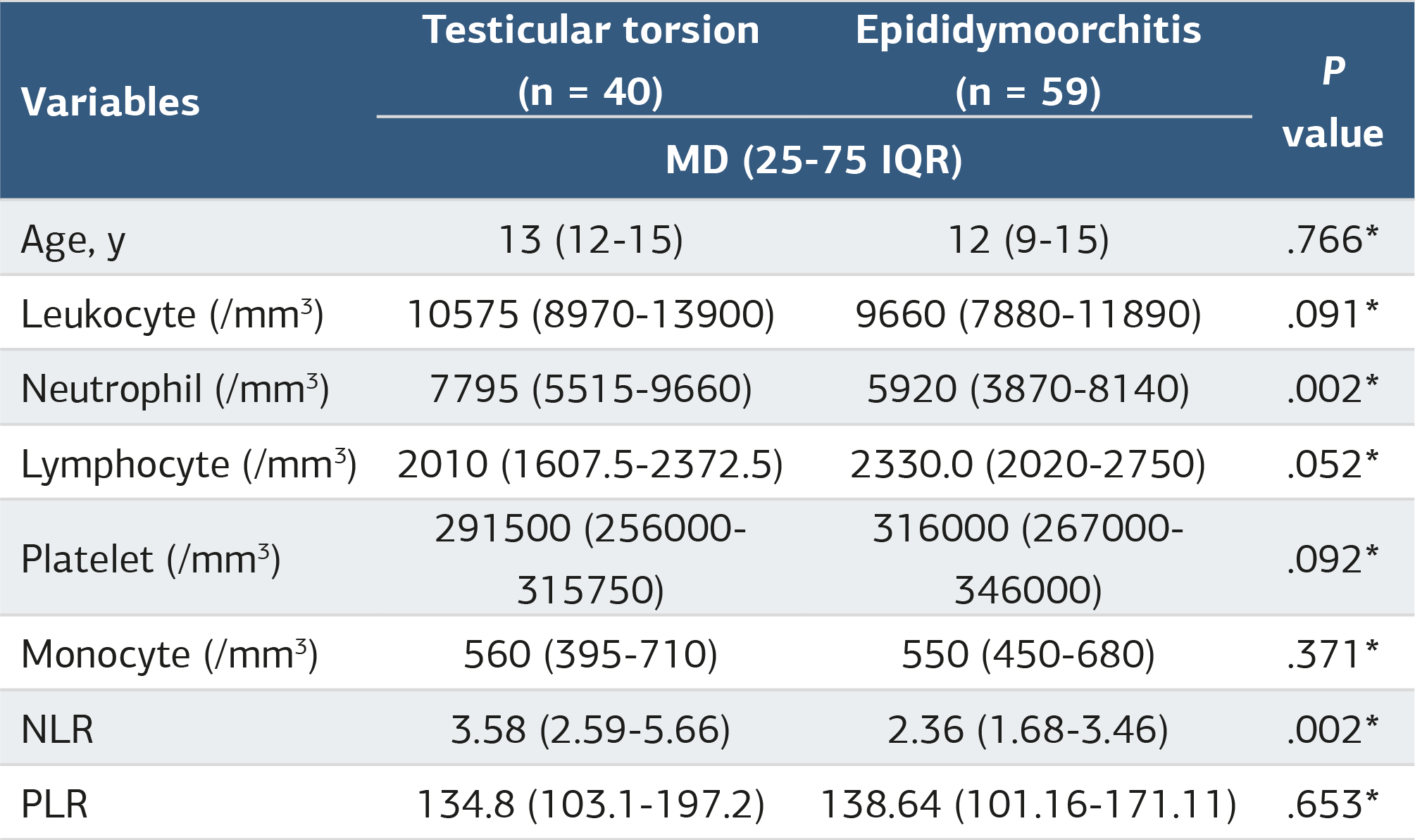
*Mann Whitney U test MD: median, IQR: Interquartile range, NLR: neutrophil–lymphocyte ratio, PLR: platelet–lymphocyte ratio.
Table 2. ROC analysis results for NLR and neutrophil count in differentiating testicular torsion from epididymo-orchitis
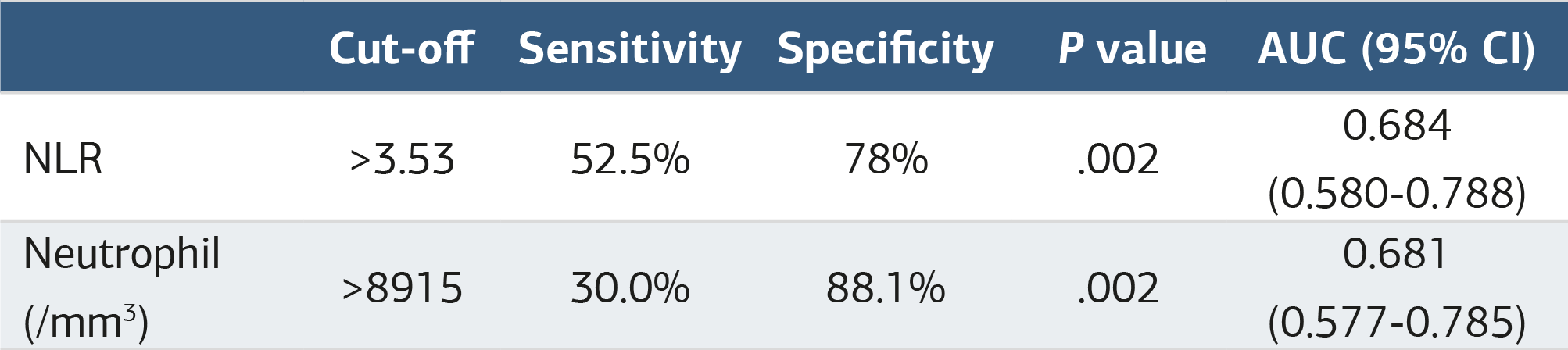
NLR: neutrophil-to-lymphocyte ratio, AUC: area under curve, CI: confidence interval.
Figures
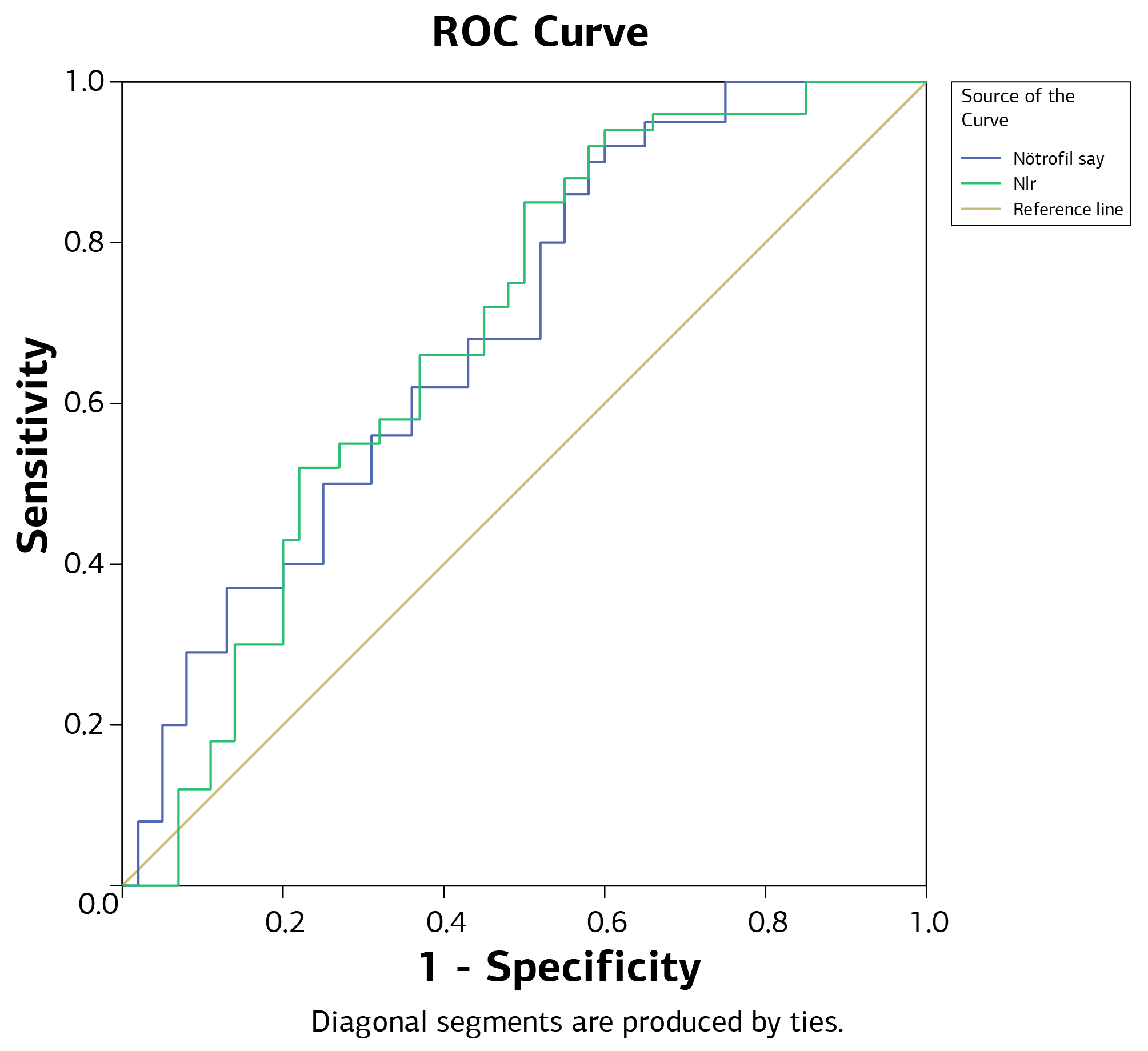
Figure 1. ROC curves showing the performance of NLR and neutrophil counts in the diagnosis of testicular torsion
Additional Information
Publisher’s Note
Bayrakol MP remains neutral with regard to jurisdictional and institutional claims.
Rights and Permissions

This work is licensed under a Creative Commons Attribution-NonCommercial 4.0 International License (CC BY-NC 4.0). To view a copy of the license, visit https://creativecommons.org/licenses/by-nc/4.0/
About This Article
How to Cite This Article
Mustafa Tuşat. The role of NLR, PLR, and hematologic parameters in the differential diagnosis of pediatric acute scrotum. Ann Clin Anal Med 2025;16(9):642-645. doi:10.4328/ACAM.22807
Publication History
- Received:
- 10.07.2025
- Accepted:
- 11.08.2025
- Published Online:
- 16.08.2025
- Printed:
- 01.09.2025