
Abstract
Aim The clinical benefits of carcinoembryonic antigen (CEA) and cancer antigen 19-9 (CA 19-9) levels for diagnosis and prognosis in colorectal cancer are controversial, and studies on this subject have reported various results. This study aimed to reveal whether the preoperative CEA and CA 19-9 levels were correlated with clinicopathological features, recurrence, and overall survival and investigate the tumor marker with more predictive characteristics. Methods An analysis was performed on the records of 142 patients who were hospitalized due to colorectal cancer and underwent surgery. The demographic, biochemical, and pathological characteristics of patients were investigated retrospectively. Results A significant difference was observed in the CRP level measured in the preoperative period. In multivariate analyses, only age (HR=1.19, 95% CI 1.05-1.34, P = .004) and recurrence (HR=20.65, 95% CI 3.14-135.62, P = .002) were found to affect overall survival. Nevertheless, CEA and CA 19-9 elevations were not predictive of overall survival. CEA and CA 19-9 elevations did not have a superiority over each other in predicting the clinicopathological pattern of the disease. Nonetheless, it was determined that the elevated CEA+CA 19-9 indicated a more aggressive pathology in terms of clinicopathological pattern. It was not found predictive of recurrence and overall survival, which are significant markers in the prognosis of the disease. Conclusion It was concluded that the preoperative serum tumor marker elevation, which was the subject of our study, should be considered in decisions related to neoadjuvant/adjuvant chemoradiotherapy (CRT) and more aggressive treatment in advanced cancer.Keywords
Introduction
Colorectal cancers rank third among the most common cancers in the world and fourth in deaths due to cancer. Colorectal cancers are most commonly localized in the rectum, and the second most common location is the sigmoid colon.1 Colorectal cancers can be treated with surgery, chemotherapy, and/or radiotherapy, and adjuvant treatment can be administered as an alternative. Various tumor markers can be used in cancer diagnosis and postoperative patient follow-up.2 Carcinoembryonic antigen (CEA) is an oncofetal tumor marker and is essential in the diagnosis process in 70% of patients. Similarly, cancer antigen 19-9 (CA 19-9) level is one of the most common tumor markers used in colorectal cancers.3,4
A relationship between elevated preoperative serum CA 19-9 levels and poor prognosis was determined depending on the stage of the disease, and this relationship may be more effective than CEA; however, the effect of CA 19-9 was found to be limited in studies proving the contrary. In addition, the 5-year survival rate was reported to be lower in patients with elevated CEA and CA 19-9.5 It is not recommended to use the preoperative tumor marker level as a screening test or for diagnostic purposes; however, it can be used to give an idea about the spread of the disease. This study aimed to reveal whether the preoperative CEA and CA 19-9 levels were correlated with clinicopathological features, recurrence, and overall survival and investigate the more predictive tumor marker.
Materials and Methods
This study investigated patients who were hospitalized and underwent surgery due to colorectal cancer between November 2016 and June 2021 in the General Surgery Clinic of University of Health Sciences Gülhane Training and Research Hospital based on their file records. Our study was approved by the decision of the University of Health Sciences Gülhane Training and Research Hospital Local Ethics Committee dated 23.09.2021 and numbered 46418926. Patients with unknown tumor marker values in the preoperative period, patients with inflammatory bowel disease such as ulcerative colitis and Crohn’s disease, patients who underwent surgery due to benign pathologies such as diverticular diseases of the colon, patients undergoing surgery under emergency conditions, and patients under the age of 18 were excluded from the study.
The study included 142 patients who met the determined criteria. Data including CEA/CA 19-9 as preoperative biomarkers, biochemical parameters, computed tomography reports, and histopathological reports (tumor diameter, histopathological features of the tumor, length of the removed intestinal segment, the distance of the tumor to the proximal and distal surgical margins, number of metastatic and reactive lymph nodes, tumor budding level, histopathological pattern of the tumor, tumor diameter, and tumor stage), recurrence, colorectal obstruction, and follow-up periods of the patients were collected retrospectively. The patients were classified into four groups according to their tumor marker levels. The study was conducted by analyzing patients in four groups where one group consisted of patients with elevated serum CEA (CA 19-9 normal), one group consisted of patients with elevated serum CA 19-9 (CEA normal), one group consisted of patients with elevated levels in both tumor markers, and the last group consisted of patients with tumor markers within normal limits. Demographic, biochemical, clinical, and entire pathological data of the patients in the four groups were examined by comparing them with each other, and the effects of tumor marker levels on the clinicopathological characteristics of the patients were investigated.Ethical ApprovalEthics Committee approval for the study was obtained.Statistical AnalysisStatistical analysis was performed using the SPSS version 22.0 software. Descriptive statistics were expressed as numbers, percentages, mean and standard deviation, and median (min-max). Whether the variables conformed to normal distribution was evaluated using visual and analytical methods. Normally distributed continuous variables were analyzed within the group using the “Student’s T-test and One Way ANOVA”, and the variables with non-normal distribution were analyzed using the “Mann-Whitney U test and Kruskal-Wallis Test”. Nominal values were compared using the “Chi-square analysis” and the “Fisher’s Exact Test”. The effect of elevated CEA and CA 19-9 on survival was tested using the “Kaplan-Meier analysis”. The variables assumed to be associated with survival after univariant analyses and clinical evaluation were evaluated by multivariant analyses using the “Cox proportional hazards model.” The regression model was expressed as Hazard Ratio (HR), a 95% confidence interval (CI). Comparisons with a P value below 0.05 were considered statistically significant in the statistical analyses of the study.Reporting GuidelineThe study was reported in accordance with the STROBE guideline.
Results
The CEA and CA19-9 groups were compared in terms of tumor-related characteristics. Significant differences were observed in terms of tumor diameter (P = .009), budding score (P = .025), lymphovascular invasion (P = .001), and number of metastatic lymph nodes (P = .006). Paired analyses concluded that patients with elevated levels of both tumor markers had a greater tumor diameter compared to patients with only elevated CA19-9 levels (P = .001), and patients with elevated CA19-9 levels had greater tumor diameter compared to patients with both tumor markers at normal levels (P = .031). In terms of elevated CEA+CA, the tumor budding score was moderate or high in 56.5% of patients with elevated CEA only, 15% of patients with elevated CA19-9 only, 36.4% of patients with both tumor markers at elevated levels, and 48.1% of patients with both tumor markers at normal levels. The rate of lymphovascular invasion was 77.3% in patients with elevated CEA+CA19-9 levels and 40.3% in patients with both tumor markers at normal levels. The number of metastatic lymph nodes in patients with elevated CEA+CA19-9 was higher compared to patients with only elevated CEA levels (P = .007), patients with only elevated CA19-9 levels (P = .002), and patients with both tumor markers at normal levels (P = .023). On the other hand, no difference was observed between the groups in terms of recurrence and mortality (Table 1). The survival period was 46.4 months for patients with only elevated CEA, 46.2 months for patients with only elevated CA19-9, 50.1 months for patients with CEA+CA19-9 elevation, and 48.2 months for patients with both tumor markers at normal levels. No difference was observed between the groups according to survival periods (Table 2). The effect of elevated CEA and CA19-9 levels on survival was evaluated using the Cox proportional hazards model. The multivariant model included factors that were associated with mortality in univariant analyses and considered clinically significant. Factors in the model were tested for collinearity. The final version of the model included age, gender, budding score, recurrence, and CEA and CA19-9 elevations (-2 log likelihood=45.418, X2=42.637, P < .001). According to the multivariant analyses, only age (HR=1.19, 95% CI 1.05-1.34, P = .004) and recurrence (HR=20.65, 95% CI 3.14-135.62, P = .002) were determined to affect survival. Nevertheless, the CEA and CA19-9 elevations did not predict survival (Table 3).Discussion
Colorectal cancers rank second in the world after lung cancer among deaths due to cancer and are the most common cancer of the gastrointestinal system.6,7 Knowing the prognostic factors affecting the course of the disease, accurate staging, and selecting the best treatment for the patient and the disease are quite important in colorectal cancers. The literature on the tumor markers used more effectively in the diagnosis and follow-up of colorectal cancer, alone or in combination, contains controversial and different outcomes. CEA is an oncofetal protein used in diagnosing colorectal cancer; however, it has been listed as an independent prognostic criterion concerning colorectal cancer in some consensus treatment guidelines.8,9 The literature also contains studies arguing that CEA is an independent variable in predicting the prognostic outcome.10,11 Chen et al. suggested including the CEA level in the staging system.12 Chronic inflammation has a significant role in the pathogenesis of colorectal cancer. It has been reported that especially patients who develop colorectal cancer have higher CRP levels, and the development of colorectal cancer increased 1.88 times in patients with a CRP level higher than 1.19 mcg/mL.13 Our study concluded that the CRP level measured in the preoperative period was significantly higher in groups with elevated CA 19-9 and CEA+CA 19-9 levels compared to the group with normal CEA+CA 19-9 levels (P = .014). In their study, Zhou et al. found that the CRP level measured in the preoperative period was higher in patients with elevated serum CEA and CA 19-9 levels compared to patients with normal serum tumor marker levels.14 We think that the preoperative CRP elevation is associated with advanced clinicopathological characteristics. According to our study data, tumor diameter (P = .009), lymphovascular invasion (P = .001), and number of metastatic lymph nodes (P = .006) were found to be significant. Our results indicated that elevation of both tumor markers led to more metastatic lymph node involvement, it was associated with larger tumor diameter and greater lymphovascular invasion, and there was no significant difference between CEA and CA 19-9. In some studies on the relationship between tumor marker elevation and tumor pathology, tumor diameter, lymphovascular invasion, and the number of metastatic lymph nodes were reported to be significantly higher in patients with elevated serum CEA and CA 19-9 levels.15-17 In their study, Lakemayer et al. recommended that only CEA be used with other screening methods to determine colorectal cancer prognosis, predict neoadjuvant chemoradiotherapy decisions, and predict and monitor chemotherapy or radiotherapy after curative resection. It was not recommended to use the CA 19-9 alone for detecting colorectal cancer prognosis, monitoring ongoing therapy, or follow-up due to its poor sensitivity.18 On the other hand, our study and the study of Lakemayer revealed that patients with elevated serum CEA levels received neoadjuvant therapy at a higher rate, and serum CEA elevation emerged as a parameter to be considered when deciding on neoadjuvant therapy. We can recommend neoadjuvant chemotherapy/CRT for patients with both tumor markers at elevated levels. In the study by Partyka et al., it was recommended to monitor the CEA level when CEA and CA 19-9 levels were used to diagnose the disease and monitor prognosis.19 In another study by Gao et al., it was demonstrated that measuring serum tumor markers in combination rather than using CEA alone had a better sensitivity in diagnosing colorectal cancer and predicting the prognosis.20 When groups with only elevated CEA or CA 19-9 levels were compared, this study showed that they were not superior to each other concerning the clinicopathological results.Limitations
The limitations of our study included the retrospective design and the lack of analysis of both tumor marker levels in all patients in the preoperative period. Moreover, most patients with rectal colorectal cancer underwent neoadjuvant CRT; however, the heterogeneity caused by the fact that most patients with colon cancer did not receive neoadjuvant CRT also affected the results of our study.
Conclusion
The elevated CEA or CA 19-9 levels do not have a significant advantage over each other in predicting the clinicopathological pattern of the disease. Nevertheless, the elevated CEA+CA 19-9 levels indicate a more aggressive pathology in terms of clinicopathological pattern. Despite all, they have no predictive effect on recurrence and overall survival in predicting the prognosis of the disease. Multicentered, multilayered, and prospective studies, including postoperative treatments, are needed to confirm the clinical significance of combining tumor markers, homogeneous stage, and tumor localization. The analysis of these markers in combination could provide significant data for clinical evaluation and patient management.
Declarations
Animal and Human Rights Statement
All procedures performed in this study were in accordance with the ethical standards of the institutional and/or national research committee and with the 1964 Helsinki Declaration and its later amendments or comparable ethical standards.
Informed Consent
The requirement for informed consent was waived by the ethics committee due to the retrospective nature of the study.
Data Availability
The datasets used and/or analyzed during the current study are not publicly available due to patient privacy reasons but are available from the corresponding author on reasonable request.
Conflict of Interest
The authors declare that there is no conflict of interest.
Funding
None.
Abbreviations
ANOVA: Analysis of variance
CEA: Carcinoembryonic antigen
CI: Confidence interval
CRP: C-reactive protein
CRT: Chemoradiotherapy
HR: Hazard ratio
MSI: Microsatellite instability
MSS: Microsatellite stable
SPSS: Statistical package for the social sciences
References
- Siegel RL, Miller KD, Jemal A. Cancer statistics, 2018. CA Cancer J Clin. 2018;68(1):7-30. doi:10.3322/caac.21442
- Yamashita K, Watanabe M. Clinical significance of tumor markers and an emerging perspective on colorectal cancer. Cancer Sci. 2009;100(2):195-199. doi:10.1111/j.1349-7006.2008.01022.x
- Goonetilleke KS, Siriwardena AK. Systematic review of carbohydrate antigen 19-9 as a biochemical marker in the diagnosis of pancreatic cancer. Eur J Surg Oncol. 2007;33(3):266-270. doi:10.1016/j.ejso.2006.10.004
- Abe S, Kawai K, Ishihara S, et al. Prognostic impact of carcinoembryonic antigen and carbohydrate antigen 19-9 in stage IV colorectal cancer patients after R0 resection. J Surg Res. 2016;205(2):384-392. doi:10.1016/j.jss.2016.06.078
- Ferlay J, Colombet M, Soerjomataram I, et al. Estimating the global cancer incidence and mortality in 2018: GLOBOCAN sources and methods. Int J Cancer. 2019;144(8):1941-1953. doi:10.1002/ijc.31937
- Murphy CC, Wallace K, Sandler RS, Baron JA. Racial disparities in incidence of young-onset colorectal cancer and patient survival. Gastroenterology. 2019;156(4):958-965. doi:10.1053/j.gastro.2018.11.060
- Siegel R, Desantis C, Jemal A. Colorectal cancer statistics, 2014. CA Cancer J Clin. 2014;64(2):104-117. doi:10.3322/caac.21220
- Locker GY, Hamilton S, Harris J, et al. ASCO 2006 update of recommendations for the use of tumor markers in gastrointestinal cancer. J Clin Oncol. 2006;24(33):5313-5327. doi:10.1200/jco.2006.08.2644
- Yu H, Son GM, Joh YG. The clinical significance of preoperative serum levels of carbohydrate antigen 19-9 in colorectal cancer. J Korean Surg Soc. 2013;84(4):231-237. doi:10.4174/jkss.2013.84.4.231
- Huh JW, Lee WY, Park YA, et al. Prognostic factors associated with primary cancer in curatively resected stage IV colorectal cancer. J Cancer Res Clin Oncol. 2014;140(3):435-441. doi:10.1007/s00432-013-1580-4
- Park IJ, Choi GS, Lim KH, Kang BM, Jun SH. Serum carcinoembryonic antigen monitoring after curative resection for colorectal cancer: clinical significance of the preoperative level. Ann Surg Oncol. 2009;16(11):3087-3093. doi:10.1245/s10434-009-0625-z
- Ning S, Wei W, Li J, et al. Clinical significance and diagnostic capacity of serum TK1, CEA, CA 19-9, and CA 72-4 levels in gastric and colorectal cancer patients. J Cancer. 2018;9(3):494-501. doi:10.7150/jca.21562
- Wu J, Cai Q, Li H, et al. Circulating C-reactive protein and colorectal cancer risk: a report from the Shanghai Men’s Health Study. Carcinogenesis. 2013;34(12):2799-2803. doi:10.1093/carcin/bgt288
- Zhou QP, Li XJ. C-reactive protein to albumin ratio in colorectal cancer: a meta-analysis of prognostic value. Dose Response. 2019;17(4):1559325819889814. doi:10.1177/1559325819889814
- Li C, Zhang D, Pang X, et al. Trajectories of perioperative serum tumor markers and colorectal cancer outcomes: a retrospective, multicenter longitudinal cohort study. EBioMedicine. 2021;74:103706. doi:10.1016/j.ebiom.2021.103706
- Argilés G, Tabernero J, Labianca R, et al. Localised colon cancer: ESMO clinical practice guidelines for diagnosis, treatment, and follow-up. Ann Oncol. 2020;31(10):1291-1305. doi:10.1016/j.annonc.2020.06.022
- Wang J, Wang X, Yu F, et al. Combined detection of preoperative serum CEA, CA19-9, and CA242 improve prognostic prediction of surgically treated colorectal cancer patients. Int J Clin Exp Pathol. 2015;8(11):14853-14863.
- Lakemeyer L, Sander S, Wittau M, Henne-Bruns D, Kornmann M, Lemke J. Diagnostic and prognostic value of CEA and CA19-9 in colorectal cancer. Diseases. 2021;9(1):21. doi:10.3390/diseases9010021
- Partyka R. Role of tumour markers in diagnosis and follow-up of colorectal cancer: potential for future research. In: Colorectal Cancer: Surgery, Diagnostics and Treatment. InTech; 2014. doi:10.5772/57514
- Gao Y, Wang J, Zhou Y, Sheng S, Qian SY, Huo X. Evaluation of serum CEA, CA19-9, CA72-4, CA125, and ferritin as diagnostic markers and factors of clinical parameters for colorectal cancer. Sci Rep. 2018;8(1):2732. doi:10.1038/s41598-018-21048-y
Tables
Table 1. Comparison of tumor-related characteristics in patients classified according to CEA and CA19-9 elevation
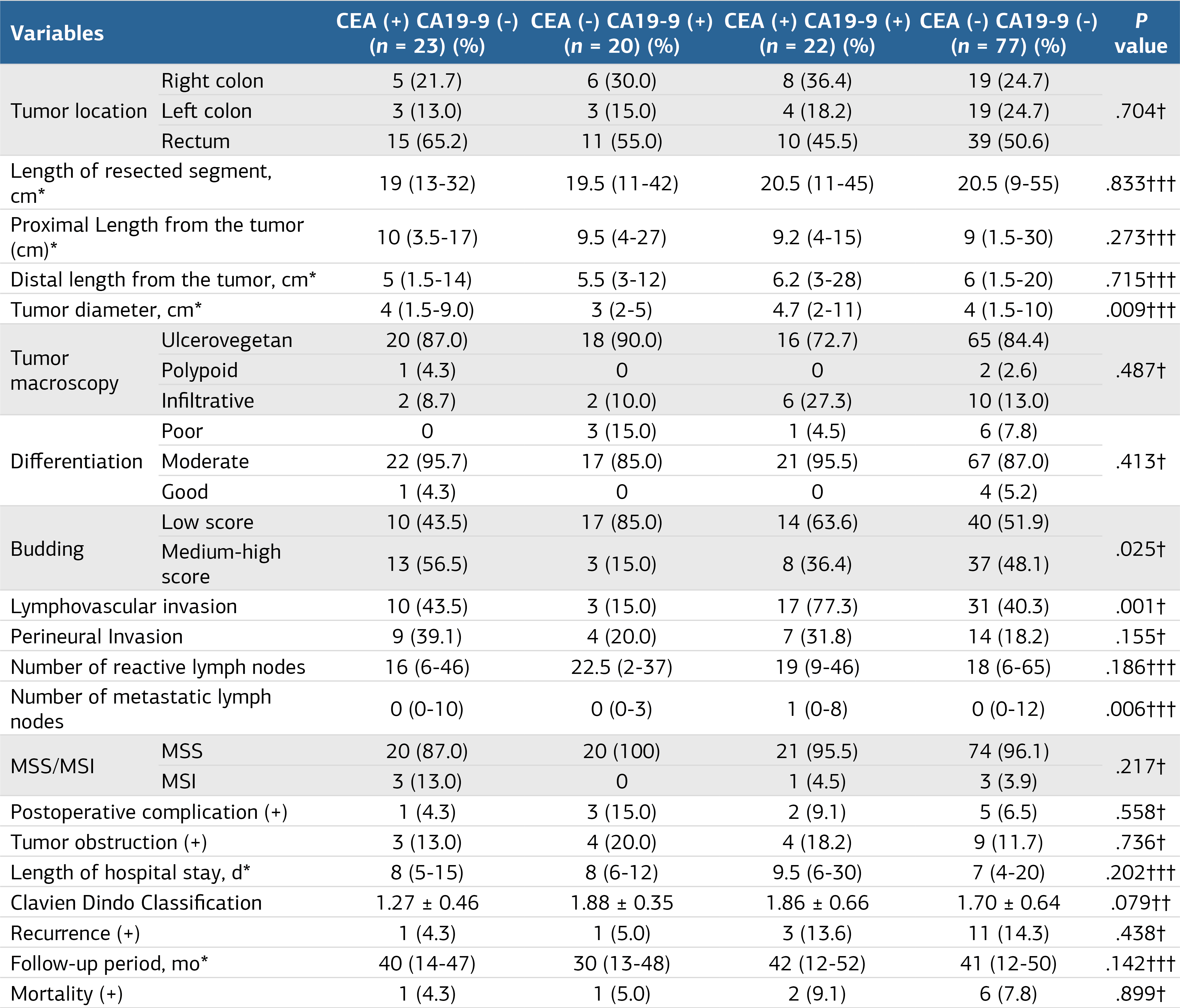
†Chi-square, ††One-Way ANOVA, †††Kruskal Wallis *Median (min-max) CEA: carcinoembryonic antigen, CA 19-9: Cancer antigen 19-9, MSS: Microsatellite stable, MSI: Microsatellite instabilityle* A P value below 0.05 was considered significant; significant values were typed in bold.
Table 2. The relationship of CEA and CA19-9 levels with survival
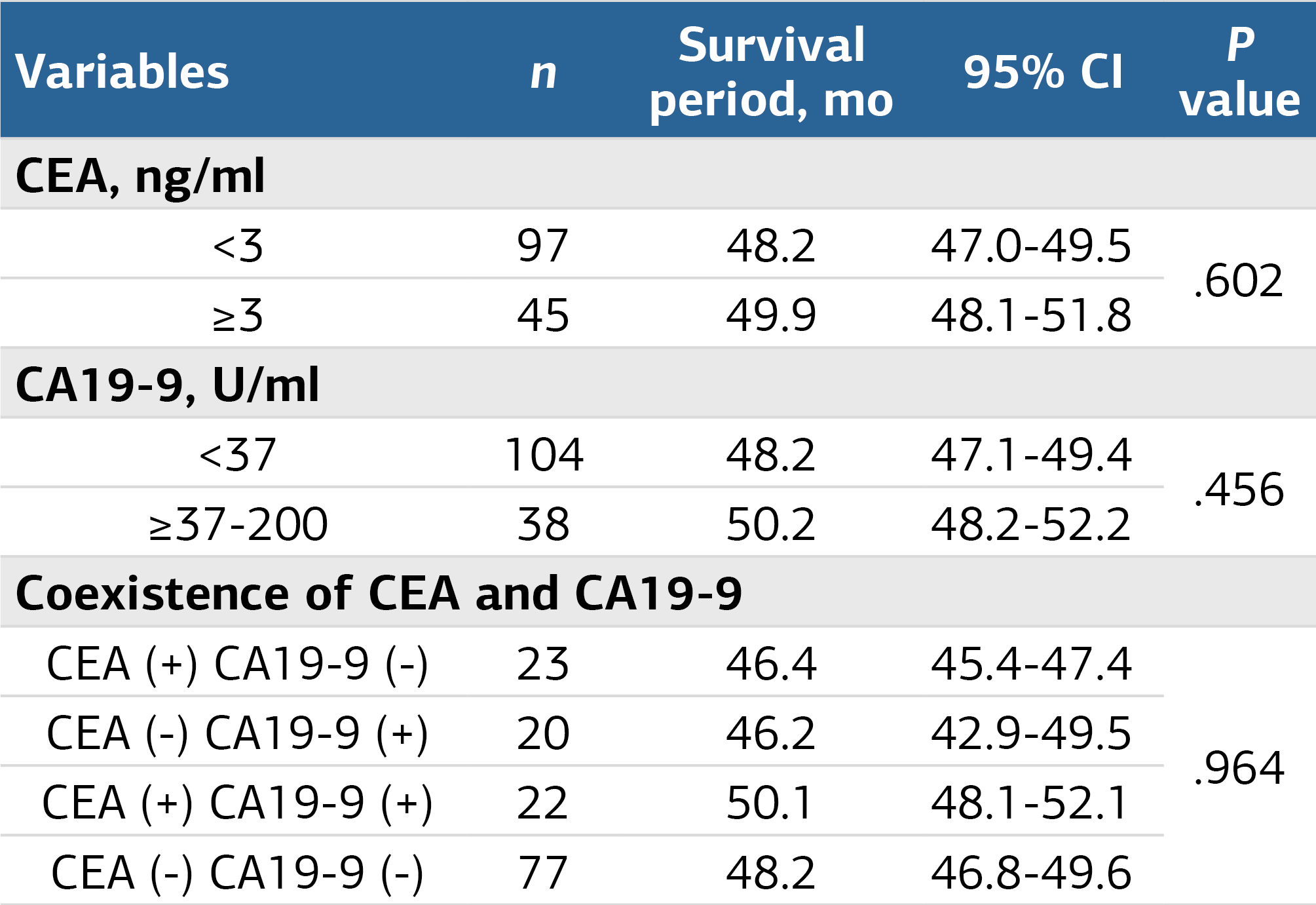
†The Kaplan-Meier Survival analysis; p- value was obtained by the log rank test. * CEA: carcinoembryonic antigen, CA 19-9: Cancer antigen 19-9 ** A P value below 0.05 was considered significant; significant values were typed in bold.
Table 3. Multivariate analysis for overall survival as the Cox proportional hazards model
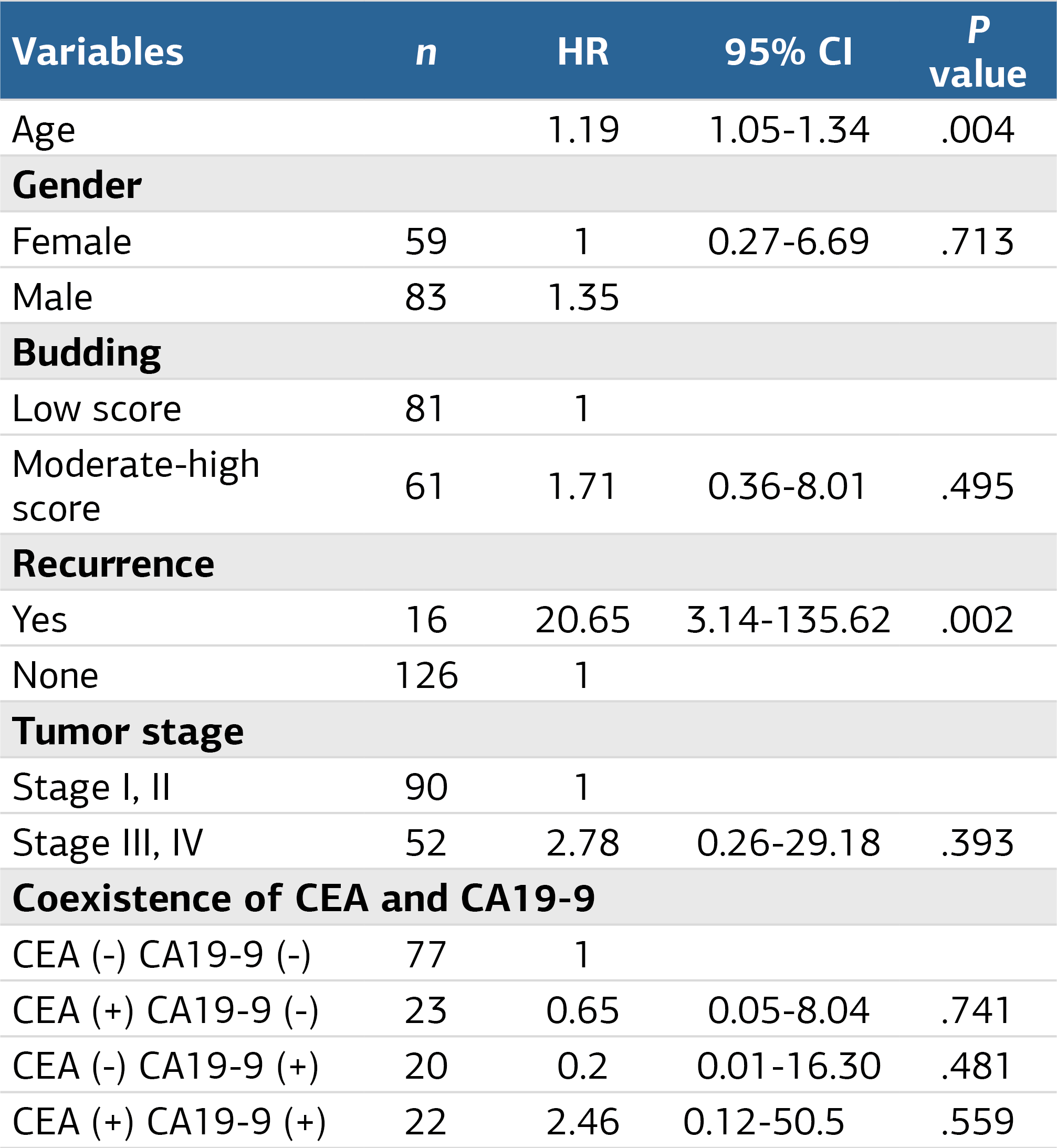
* CEA: carcinoembryonic antigen, CA 19-9: Cancer antigen 19-9 ** A P value below 0.05 was considered significant; significant values were typed in bold.
Additional Information
Publisher’s Note
Bayrakol MP remains neutral with regard to jurisdictional and institutional claims.
Rights and Permissions

This work is licensed under a Creative Commons Attribution-NonCommercial 4.0 International License (CC BY-NC 4.0). To view a copy of the license, visit https://creativecommons.org/licenses/by-nc/4.0/
About This Article
How to Cite This Article
Burak Uçaner, Rahman Şenocak. An investigation on the relationship of preoperative CEA/CA 19-9 levelswith clinicopathological features and recurrence in colorectal cancer. Ann Clin Anal Med 2024;15(1):57-61. doi:10.4328/ACAM.22010
Publication History
- Received:
- 09.10.2023
- Accepted:
- 13.11.2023
- Published Online:
- 20.11.2023
- Printed:
- 01.01.2024