
Abstract
AimThe aim of this study was to investigate the distribution of gastroenteritis agents in diarrhea patients with and without IBD using the gastrointestinal panel (GIP) test and also to evaluate its potential effect on infection control and patient prognosis by providing early diagnosis of the causative agent of gastroenteritis.MethodsOur study is a retrospective cohort analysis. A total of 266 patients with diarrhea were included in the study conducted at Gazi University, School of Medicine. Data on age, sex, UC/CD presence, stool culture, microscopic examination, and gastrointestinal pathogen PCR stool test results were collected.Results266 patients with diarrhea underwent 339 GI panel tests. Among the 266 patients studied, 13 patients were determined as IBD. 154 enteric pathogens were detected in 101 patients by GIP testing. EPEC (22.8%) was the most common pathogen in both IBD and non-IBD patients. In addition, ETEC, EAEC, C. difficile and C. parvum were found in IBD patients, and no viral pathogen was detected. No significant difference was observed in IBD subtype and gender distribution.ConclusionThis study found that patients with IBD had fewer bacterial and parasitic pathogens detected compared to those without IBD, potentially due to non-infectious causes of diarrhea and altered systemic immunity. Identifying any fecal pathogen is significant for treatment in IBD patients. PCR-based stool tests are advantageous over conventional methods in pathogen detection. This study found that patients with IBD had fewer bacterial and parasitic pathogens detected compared to those without IBD, potentially due to non-infectious causes of diarrhea and altered systemic immunity. Identifying any fecal pathogen is significant for treatment in IBD patients. PCR-based stool tests are advantageous over conventional methods in pathogen detection.
Keywords
Introduction
Inflammatory bowel diseases (IBD), including Crohn’s disease (CD) and ulcerative colitis (UC), are inflammatory conditions of the gastrointestinal system that are characterized by periods of relapse and remission. IBD has been a health problem around the world with a steadily rising prevalence. IBD includes a complicated interaction between genetic, environmental, microbial variables, and immune responses, despite the fact that the etiology is still mainly unclear.1 It is known that many bacteria, viruses, fungi and parasites play a triggering role in the pathogenesis of IBD and exacerbation of the existing disease.2 The symptoms and signs of enteric infections and IBD exacerbation are very similar. Therefore, it is very difficult to distinguish between these two conditions clinically.3
IBD patients, especially those with Clostridium difficile infection (CDI), experience higher morbidity, mortality and healthcare costs. They are at high risk for gastrointestinal infections. Detection of pathogens is crucial during IBD relapses, as gastroenteritis can lead to hospitalizations. Difficulty in distinguishing between IBD exacerbation and enteric infection delays the diagnosis and adversely affects the patient’s clinic.2 Microscopic examinations, cultures, enzyme immunoassays (EIA), and multiplex molecular tests are used to detect enteric pathogens. Stool culture can detect only a limited number of pathogens and requires long turnaround times to result. In addition, the sensitivity of immunoassays is not very high.4 Syndromic gastrointestinal (GI) panel tests can identify most pathogens in as little as one hour and have high sensitivity and specificity.2
The aim of this study was to investigate the distribution of gastroenteritis agents in patients with diarrhea with and without IBD by the GI panel test. Our secondary aim was to evaluate the potential effect on infection control and patient prognosis by providing early diagnosis.
Materials and Methods
Sample Collection We conducted a retrospective cohort analysis using data from the electronic medical record at Gazi University, School of Medicine, Medical Virology Laboratory. Individuals (18-94) who underwent stool gastrointestinal pathogen polymerase chain reaction (PCR) testing in outpatient and/or inpatient settings were included in the study during the period from June 2019 to December 2022. A total of 266 eligible patients were identified, all of whom were included in the study. Data collected included patient age, sex, presence of UC or CD, and results of stool culture, microscopic examination, and gastrointestinal pathogen PCR stool test. Enteric Pathogen Testing Fecal leukocytes, erythrocytes and parasites were investigated in direct wet mount, and the presence of parasites was investigated with trichrome and Kinyoun acid fast (KAF) stainings. Stool cultures were performed by inoculation of fresh fecal specimens on eosin methylene blue agar and incubated at 37°C for 18-24 hours for further evaluation. Multiplex Gastrointestinal Panel Stool Test We used two different brands of multiplex gastrointestinal panel tests: FilmArray Gastrointestinal Panel (BioFire Diagnostics, Salt Lake City, UT, USA) and QIAstat Gastrointestinal Panel (Qiagen, Hilden, Germany). Both assays are real-time, multiplex PCR-based platforms with integrated nucleic acid extraction. Both GI panel PCR tests can detect 22 pathogens in feces including 13 bacteria, 5 viruses, and 4 parasites including enteropathogenic E. coli (EPEC), enteroaggregative E. coli (EAEC), enterotoxigenic E. coli (ETEC), E. coli O157, Shigella/enteroinvasive E. coli (EIEC), Shiga-like toxin-producing E. coli (STEC), Salmonella, Clostridium difficile (Toxin A/B), Campylobacter (jejuni, coli, and upsaliensis), Yersinia enterocolitica, Plesiomonas shigelloides, Vibrio (parahaemolyticus, vulnificus, and cholerae), Giardia lamblia, Entamoeba histolytica, Cryptosporidium spp., Cyclospora cayetanensis, norovirus GI/GII, adenovirus (AdV F40/41), rotavirus A, astrovirus and sapovirus (I, II, IV, and V). The multiplex PCR process takes about an hour. The clinical sensitivity and specificity is 94.5% to 100% for all targets.3,5 We also evaluated the surgical data of the 13 IBD patients who underwent stool gastrointestinal panel test. Ethical Approval The study protocol was approved by the Ethics Committee of Gazi University Faculty of Medicine (approval date: February 6, 2023; approval no.: 110). Statistical Analysis Statistical analysis was performed using the Chi-square test. A value of P < .05 was considered significant in the analysis. Reporting Guidelines This study was reported in accordance with the STROBE guideline.Results
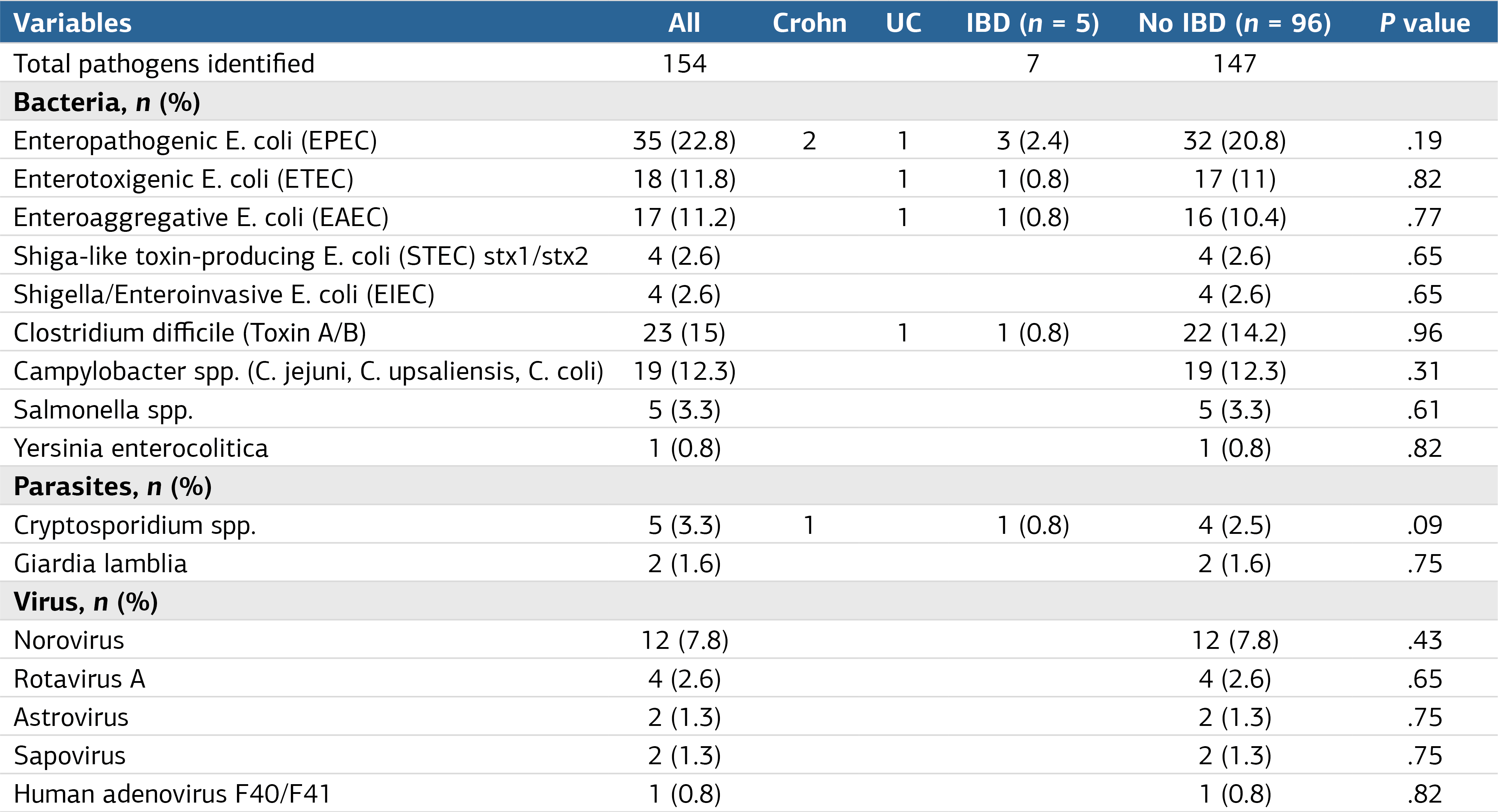
Over the data collection period, 266 patients with diarrhea underwent 339 GI panel tests. Out of the 266 patients, 126 (47.4%) were female and 140 (52.6%) were male. When analyzed by gender, there was no statistically significant difference between males and females (P > .05) (Table 1). The average age of the patients was 50 (range, 18-94) (standard deviation SD ±17.99) years. The rates of IBD patients in the 18-49 and 50-94 age groups were 8.8% and 1.4%, respectively. Pathogen positivity in IBD patients in the 18-49 age group was higher than that of the older age group. There were statistically significant differences in terms of the age groups (P = .0051) (Table 1). We identified 13 patients with IBD and 253 patients without IBD who underwent 15 and 324 GI panel tests, respectively (Table 1). One or more pathogens were found in 101 of 266 patients by GI panel test. There was no statistical difference in terms of GI panel test positivity between the groups with and without IBD (Table 1). Of the 13 IBD patients, eight of them had CD whereas five had UC. Colonoscopy was performed in all IBD patients except one of them. The number of IBD patients with positive GI panel tests is 5 and 8 had negative results (Table 2). EPEC was detected in two of Crohn’s patients, and C. parvum was detected in one. EPEC and ETEC were detected together in one patient with UC. C. difficile and EAEC were detected in one patient with a diagnosis of UC. As a result of microscopic examination of the stool of a Crohn’s patient with EPEC, no signs of infection were found. Any acid-fast parasites could be detected in the KAF stain examination of the CD patient with C. parvum. The GI panel tests of three IBD patients with leukocytes in their stools were negative (Table 2). Some of the pathogens that were found positive by GI panel tests could not be identified by conventional methods. Among patients with positive tests, 73 (60.3%) were positive for one pathogen, 24 (23.7%) were positive for two pathogens, three patients were positive for three pathogens and one patient was positive for four pathogens. A total of 154 enteric pathogens were detected in 101 patients. E. coli species (22.8%) were the most common pathogen. The E. coli strains were ETEC, EAEC, and STEC stx1/stx2. Other detected enteric pathogens included C. difficile, Campylobacter spp, Salmonella spp, Yersinia enterocolitica, Norovirus, Rotavirus, Astrovirus, Sapovirus, and Human Adenovirus F40/F41. The most common viral and parasitic pathogens overall were Norovirus GI/GII (n = 12) and Cryptosporidium spp. (n = 5), respectively (Table 3). When we evaluated test positivity according to the pathogens, there was no statistical difference in the rate of positivity in patients with and without IBD (P > .005) (Table 3). Surgical procedures were performed on 5 IBD patients with positive GI panel tests. Cutting seton was applied due to anal fistula, and segmental colonic resection was performed due to enterocutaneous fistula in one Crohn’s patient whose GI panel was positive out of 5 IBD patients. Two of 4 Crohn’s patients with negative GI panel underwent ileocecal resection due to obstruction. In one of these patients, a neuroendocrine tumor was detected in the ileum in the pathological examination of the specimen. In 4 ulcerative colitis patients with negative GI panel, cutting seton was applied in one patient due to anal fistula, palliative gastrojejunostomy was performed in one patient due to intra-abdominal Burkitt lymphoma, and total proctocolectomy and pouch ileoanal anastomosis were performed in one patient.Discussion
Inflammatory bowel diseases are progressive, chronic, inflammatory disorders of the gastrointestinal tract. Genetic predisposition, imbalance or dysbiosis in the gut microbial community and immune response against these play a role in the development of IBD. The imbalance of gut microbiota is commonly caused by enteric pathogens, and they may act as environmental triggers in IBD patients.2 So, our objective was to investigate the pathogens in the stools of patients with and without IBD by GI panel tests when they had diarrhea. When the distribution of CD and UC among males and females is examined, it is observed that both genders are affected equally.6,7 In our study, there was also no statistical difference in terms of gender in IBD and non-IBD patients (P > .05). The age distribution in IBD is thought to be bimodal. While the peak incidence of IBD occurs in people between the ages of 15 and 30, 10 to 15% of individuals aged over 65 years develop IBD creating a second peak. The incidence in the elderly decreases with increasing age.8 The disease usually begins in adolescence, and about 25% of patients with IBD are younger than 20 years old. In our study, we divided the age ranges into two groups as 18-49 and 50-94 and found that pathogen positivity was higher in the younger IBD patients aged 18-49 compared to the older age group. There were statistically significant differences in terms of the age groups (P = .0051). Symptoms in IBD patients during the exacerbation period of the disease may be indistinguishable from gastrointestinal infections. Therefore, it is a common practice to evaluate patients with IBD for the presence of infection when their symptoms aggravate in order to make the proper diagnosis and provide effective therapy.9 In the studies by Nobel et al. and Axelad et al., the rate of gastrointestinal pathogen positivity in IBD patients was found to be lower than that in patients without IBD.5,9 Such a finding may be expected because IBD is a chronic and recurrent inflammatory disease, and non-infectious diarrhea can be seen frequently in IBD patients due to its nature.9 In addition, antibiotics used in the treatment of IBD reduce the bacterial load and diversity in the gut.10 In the analysis of our patients undergoing GI panel testing, the tests detected pathogenic agents in 38.4% (5/13) and 38% (96/253) of patients with and without IBD, respectively. We thought that similar rates between two groups were probably due to the limited number of IBD patients. In our study, EPEC was the most frequent pathogen detected in both groups of patients. However, the rate of EPEC positivity was found to be higher in IBD patients than that in non-IBD patients. While EPEC positivity was 42.85% (3/7) in IBD patients, it was 21.8% (32/147) in patients without IBD. In similar studies, the rate of EPEC positivity was found to be higher in patients with IBD compared to those without IBD.5,9 In addition, it is thought that E. coli species, especially EPEC, may be a predisposing factor for the development of IBD. Therefore, patients with positive GI panel tests, especially with microorganisms such as EPEC, should be followed closely if clinical suspicion for IBD is high.11 It is observed that microbiome diversity is reduced in IBD patients compared to non-IBD patients.12 Decreased microbiome diversity in the gut predisposes to C. difficile colonization. The PCR tests only detect the presence of nucleic acid, it is difficult to distinguish between active infection and colonization with PCR testing.12 Therefore, it is recommended to perform the Toxin A/B EIA in PCR tests positive for C. difficile.13 In a study conducted with patients similar to the population of our study, C. difficile rates by GI PCR panel test were found to be 11.5% and 10.1% in IBD and non-IBD patients, respectively.9 We also detected similar positivity rates in IBD and non-IBD patients. In our study, the rate of C. difficile positivity was 14.3% (1/7) in IBD and 15% (22/147) in non-IBD. C. difficile was found in only one of our IBD patients in our study, and this patient was diagnosed with UC. In many studies conducted with the GI panel test, Norovirus was identified as the most common viral pathogen in IBD patients.3,5,14,15 It is well known that norovirus contributes to both the etiology and exacerbations of IBD. These researches indicated that mucosal immune response, particularly in CD, may be significantly modulated by norovirus and other viruses.5 In studies similar to ours, the most detected virus was also norovirus, but virus positivity rates were considerably lower in IBD patients than those in non-IBD patients.5,9 All Norovirus positivity in our study belonged to the patients without IBD. We considered that this finding was probably due to the insufficient number of IBD patients in our study. In a study by Dizdar et al., they reported infectious bowel dysfunction in patients following Giardia infection, although its association with IBD was not specifically studied.16 Some authors stated that helminths reduce the incidence of IBD.2,17 In some studies with the GI panel test, almost no parasites were detected in IBD patients.3,5,9,14,15 In our study, Cryptosporidium spp was detected in only one of 13 IBD patients. The GI panel quickly investigates the presence of a wide variety of pathogens. It can detect pathogens that are difficult to isolate and identify in stool culture. Correct interpretation of GI panel test positivity is important, and it is also necessary to distinguish colonization from infection. It should also be kept in mind that misattribution of IBD symptoms to infections may lead to delay in treatment change, unnecessary days of isolation, excessive use of antibiotics, prolonged hospitalization and/or surgery.13 GI panel test-negative results are also precious in IBD patient management. A negative GI panel test result is likely to modify IBD therapy; IBD medications are added or doses of the drugs already given are increased.5,15 While the surgical treatment of CD has progressed predominantly on the management of complications, curative surgical procedures for UC have been identified.18 In the context of UC surgery, CDI increases the required surgery in UC as well as increased postoperative complications.19 The possibility of postoperative complications in UC can be assessed with GI panel testing. The GI panel can offer useful data about the gut microbiome’s composition in addition to detecting pathogens. UC’s pathophysiology has been linked to changes in the microbiome, and studies have linked preoperative dysbiosis to less favorable surgical outcomes.20 Prior to surgery, the GI panel can detect dysbiosis and provide data on the relative abundance of different bacterial taxa, enabling tailored therapies to enhance microbiome health. However, the necessity of making a multidisciplinary decision in the surgical treatment of IBDs is the common point of all guidelines and studies.21 With future studies, we think that pathogens and microbiota will be effective in the surgical decision and the selection of surgical procedures.Limitations
This retrospective cohort study had limitations in documenting clinical symptoms consistently and assessing diarrhea severity, hindering comparisons. Further research is needed to establish a connection between pathogens and symptoms, determine their significance, and understand the impact on IBD progression. More prospective multicenter studies with larger patient populations are required.
Conclusion
This study found that patients with IBD had fewer bacterial and parasitic pathogens detected compared to those without IBD, potentially due to non-infectious causes of diarrhea and altered systemic immunity. Identifying any fecal pathogen is significant for treatment in IBD patients. PCR-based stool tests are advantageous over conventional methods in pathogen detection.
Declarations
Animal and Human Rights Statement
All procedures performed in this study were in accordance with the ethical standards of the institutional and/or national research committee and with the 1964 Helsinki Declaration and its later amendments or comparable ethical standards.
Informed Consent
Informed consent was waived due to the retrospective design of the study.
Data Availability
The datasets used and/or analyzed during the current study are not publicly available due to patient privacy reasons but are available from the corresponding author on reasonable request.
Conflict of Interest
The authors declare that there is no conflict of interest.
Funding
The authors thank the staff of the Gazi Hospital Medical Virology laboratory.
Abbreviations
CD: Crohn’s disease
CDI: Clostridium difficile infection
EAEC: Enteroaggregative Escherichia coli
EIA: Enzyme immunoassay
EIEC: Enteroinvasive Escherichia coli
EPEC: Enteropathogenic Escherichia coli
ETEC: Enterotoxigenic Escherichia coli
GI: Gastrointestinal
GIP: Gastrointestinal panel
IBD: Inflammatory bowel disease
KAF: Kinyoun acid-fast
PCR: Polymerase chain reaction
SD: Standard deviation
STEC: Shiga toxin-producing Escherichia coli
UC: Ulcerative colitis
References
- Zhang YZ, Li YY. Inflammatory bowel disease: pathogenesis. World J Gastroenterol. 2014;20(1):91-99. doi:10.3748/wjg.v20.i1.91
- Axelrad JE, Cadwell KH, Colombel JF, Shah SC. The role of gastrointestinal pathogens in inflammatory bowel disease: a systematic review. Ther Adv Gastroenterol. 2021;14:1-17. doi:10.1177/17562848211004493
- Axelrad JE, Joelson A, Nobel YR, et al. Enteric infection in relapse of inflammatory bowel disease: the utility of stool microbial PCR testing. Inflamm Bowel Dis. 2017;23(6):1034-1039. doi:10.1097/mib.0000000000001097
- Jo SJ, Kang HM, Kim JO, et al. Evaluation of the BioFire Gastrointestinal Panel to detect diarrheal pathogens in pediatric patients. Diagnostics (Basel). 2021;12(1):34. doi:10.3390/diagnostics12010034
- Axelrad JE, Joelson A, Green PHR, et al. Enteric infections are common in patients with flares of inflammatory bowel disease. Am J Gastroenterol. 2018;113(10):1530-1539. doi:10.1038/s41395-018-0211-8
- Flynn S, Eisenstein S. Inflammatory bowel disease presentation and diagnosis. Surg Clin North Am. 2019;99(6):1051-1062. doi:10.1016/j.suc.2019.08.001
- Seyedian SS, Nokhostin F, Malamir MD. A review of the diagnosis, prevention, and treatment methods of inflammatory bowel disease. J Med Life. 2019;12(2):113-122.
- Nimmons D, Limdi JK. Elderly patients and inflammatory bowel disease. World J Gastrointest Pharmacol Ther. 2016;7(1):51-65. doi:10.4292/wjgpt.v7.i1.51
- Nobel YR, Axelrad J, Lewis SK, et al. Stool PCR for gastrointestinal pathogens in patients with and without immune-mediated intestinal diseases. Dig Dis Sci. 2018;63(4):996-1002. doi:10.1007/s10620-018-4959-x
- Matsuoka K, Kobayashi T, Ueno F, et al. Evidence-based clinical practice guidelines for inflammatory bowel disease. J Gastroenterol. 2018;53(3):305-353. doi:10.1007/s00535-018-1439-1
- Varma S, Green PH, Krishnareddy S. The distribution of gastrointestinal pathogens on stool PCR prior to the development of IBD. J Clin Gastroenterol. 2022;56(1):52-57.
- Axelrad JE, Chen Z, Devlin J, Ruggles KV, Cadwell K. Pathogen-specific alterations in the gut microbiota predict outcomes in flare of inflammatory bowel disease complicated by gastrointestinal infection. Clin Transl Gastroenterol. 2023;14(2). doi:10.14309/ctg.0000000000000550
- Machiels JD, Cremers AJH, van Bergen-Verkuyten M, et al. Impact of the BioFire FilmArray Gastrointestinal Panel on patient care and infection control. PLoS One. 2020;15(2). doi:10.1371/journal.pone.0228596
- Hong S, Zaki TA, Main M, et al. Comparative evaluation of conventional stool testing and multiplex molecular panel in outpatients with relapse of inflammatory bowel disease. Inflamm Bowel Dis. 2021;27(10):1634-1640. doi:10.1093/ibd/izaa336
- Ahmad W, Nguyen NH, Boland BS, et al. Comparison of multiplex gastrointestinal pathogen panel and conventional stool testing for evaluation of diarrhea in patients with inflammatory bowel diseases. Dig Dis Sci. 2019;64(2):382-390. doi:10.1007/s10620-018-5330-y
- Dizdar V, Spiller R, Singh G, et al. Relative importance of abnormalities of CCK and 5-HT in Giardia-induced postinfectious irritable bowel syndrome and functional dyspepsia. Aliment Pharmacol Ther. 2010;31(8):883-891. doi:10.1111/j.1365-2036.2010.04251.x
- Mohammadi R, Hosseini-Safa A, Ehsani Ardakani MJ, Rostami-Nejad M. The relationship between intestinal parasites and some immune-mediated intestinal conditions. Gastroenterol Hepatol Bed Bench. 2015;8(2):123-131.
- Mege D, Garrett K, Milsom J, Sonoda T, Michelassi F. Changing trends in surgery for abdominal Crohn’s disease. Colorectal Dis. 2019;21(2):200-207. doi:10.1111/codi.14450
- Negrón ME, Rezaie A, Barkema HW, et al. Ulcerative colitis patients with Clostridium difficile are at increased risk of death, colectomy, and postoperative complications: a population-based inception cohort study. Am J Gastroenterol. 2016;111(5):691-704. doi:10.1038/ajg.2016.106
- Bálint A, Farkas K, Méhi O, et al. Functional anatomical changes in ulcerative colitis patients determine their gut microbiota composition and consequently the possible treatment outcome. Pharmaceuticals (Basel). 2020;13(11):346. doi:10.3390/ph13110346
- Pellino G, Keller DS, Sampietro GM, et al. Inflammatory bowel disease position statement of the Italian Society of Colorectal Surgery: general principles of IBD management. Tech Coloproctol. 2020;24(2):105-126. doi:10.1007/s10151-019-02145-0
Tables
Table 1. Characteristics of Patients Studying the GI Panel Test.
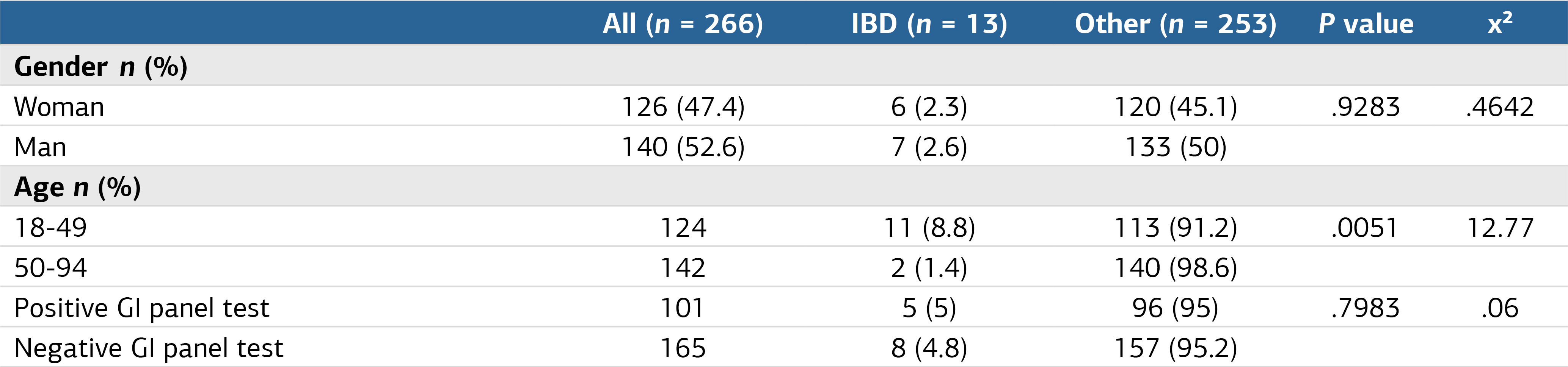
Table 2. Surgery and Colonoscopy Operations in Patients with Positive and Negative GI Panel Tests.
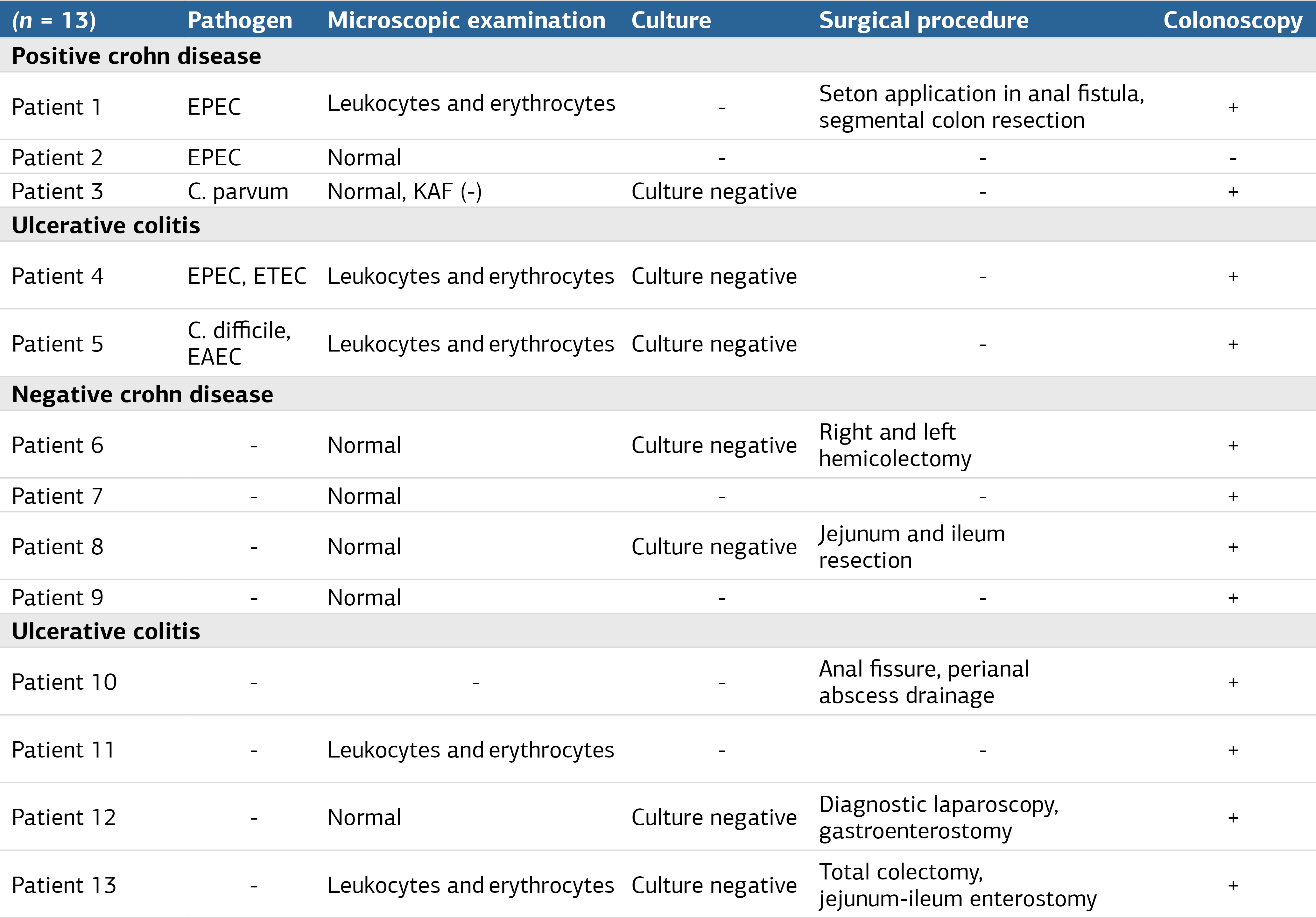
Table 3. Distrubution of pathogens in patients with IBD and without IBD.
Additional Information
Publisher’s Note
Bayrakol MP remains neutral with regard to jurisdictional and institutional claims.
Rights and Permissions

This work is licensed under a Creative Commons Attribution-NonCommercial 4.0 International License (CC BY-NC 4.0). To view a copy of the license, visit https://creativecommons.org/licenses/by-nc/4.0/
About This Article
How to Cite This Article
Sidre Erganis, Hasan Bostanci, Funda Escan, Kursat Dikmen, Cagri Buyukkasap, Mehmet Arhan, Secil Ozkan, Isil Fidan, Kayhan Caglar, Gulendam Bozdayi. Pathogen prevalence in IBD and non-IBD patients using multiplex PCR stool test. Ann Clin Anal Med 2024;15(1):66-70. doi:10.4328/ACAM.22036
Publication History
- Received:
- 04.11.2023
- Accepted:
- 04.12.2023
- Published Online:
- 09.12.2023
- Printed:
- 01.01.2024