
Abstract
AimEsophageal cancer is one of the most common malignancies causing the majority of cancer-related deaths worldwide. The aim of this study was to examine the importance of preoperative Senescence marker protein-30 (SMP30) levels in patients with esophageal cancer.MethodsMedical records of 85 patients who were diagnosed with esophageal cancer were reviewed and compared with those of the control subjects. The tumor marker was measured with Enzyme-linked immunosorbent assay (ELISA).ResultsNo statistically significant difference was found between the patient and study groups in terms of age and gender. In our study, we found that serum SMP30 levels were significantly lower in esophageal cancer patients than in healthy controls.ConclusionWe found that the adhesion of esophageal cancer cells was significantly reflected by preoperative serum levels of the studied marker, indicating the adhesive strength of cancer cells. SMP30 may be a novel strategy for clinical diagnosis of the disease.
Keywords
Introduction
Esophageal cancer is a serious and deadly cancer and is the seventh leading cause of cancer related deaths worldwide.1 Esophageal cancer remains an important cause of cancer related death and with a 6-fold increase in incidence worldwide.2 Male gender, smoking, alcohol consumption, gastroesophageal reflux disease, diet, obesity, body composition and genetics are among the risk factors. The incidence of esophageal cancer varies widely according to location from 30 to 800 cases per 100000 persons. Esophageal cancer is aggressive in nature, spreading by a various routes such as direct expansion, lymphatic spread and hematogenous metastasis.3 Five-year overall survival ranges between 15% and 25%.4,5 Although improvements have been seen in its early-stage detection, many tumors are at an advanced stage at the time of primary diagnosis.6
Conventional pathological staging of endoscopic biopsies has been regarded as the major standard for diagnosing esophageal cancer. Early diagnosis and treatment are the mainstay of the management of esophageal cancer. However, so far no novel specific molecular marker that is effective for the early diagnosis of this aggressive malignancy has been introduced. There is an urgent need for defining the molecular alterations associated with the early stages of esophageal cancer development to allow early detection, appropriate management, and prolongation of survival in this disease.
Senescence marker protein-30 (SMP30), also known as regucalcin, was discovered in 1988.7 as a calcium-binding protein. SMP30 is a cell factor involved in vitamin C synthesis and antiapoptosis. SMP30 performs an important role in the protection against apoptsosis and oxidative stress.8 It has been demonstrated that overexpression of SMP30 suppressed cell proliferation by decreasing DNA synthesis.9
In some reports, it has been shown that SMP30 is related to hepatocellular carcinoma.10,11 Different expression levels of SMP30 have been reported in various stages of breast cancer.12 SMP30 is downregulated in human breast and prostate cancers via control of cell proliferation.13 It has been reported that SMP30 inhibits tumor growth in non-small cell lung cancer by reducing HDAC4 expression.14
The present study was performed to test the hypothesis that preoperative serum levels of SMP30 may be of clinical importance in understanding the development and progression of esophageal cancer patients.
Materials and Methods
PatientsBefore the beginning, the study protocol was approved by the local Ethics Committee of Yüzüncü Yıl University Hospital (date: 18/06/2021 and decision number: 2021/07-07). This study did not require any intervention for the treatment of patients. The selected patients and their families were informed about the purpose, methods, and possible risks of the study, and all of them signed an informed consent form.
Eighty-five esophageal cancer patients were included in our study from May 2018 to May 2020, including 45 males and 40 females aged 55 to 69 years, with a mean age of 62.67±3.90 years. The control group consisted of 31 males and 19 females aged 54 to 69 years, with a mean age of 61.944.07 years.AssaysSamples were collected from the patients and the control group for the detection of SMP30. After centrifugation at 4 °C for 10 minutes, the samples were stored at -80 °C until the analysis. We used enzyme-linked immunosorbent assay (ELISA) method for sample analysis (Catalog No: MBS9428874, MyBioSource) (Detection range: 0.312 ng/mL-20 ng/mL; sensitivity: less than 0.1 ng/mL).Ethical ApprovalThis study was approved by the Ethics Committee of Yüzüncü Yıl University Hospital (Date: 18.06.2021, Decision No: 2021/07-07).Statistical AnalysisThe normality of study data was checked using the Shapiro-Wilk test and the single-sample Kolmogorov-Smirnov test, histograms, Q-Q plot, and box plot graphs. Since the variables were non-normally distributed, the continuous variables were presented as median, minimum, maximum, values and categorical variables as frequency, and percentage. The variables were compared between the two groups with the Mann-Whitney U test. Nominal variables were compared using the Chi-square test with Yates correction. The level of two-sided significance was taken as P < .05. Data analyses were performed using the NCSS 10 (2015. Kaysville, Utah, USA) software program.
Reporting GuidelinesThis study was reported in accordance with the STROBE guideline.
Results
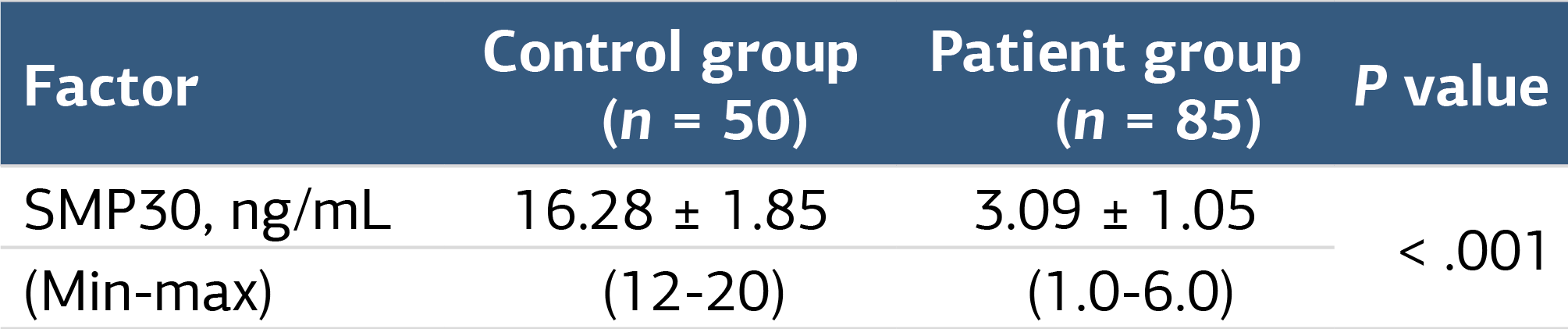
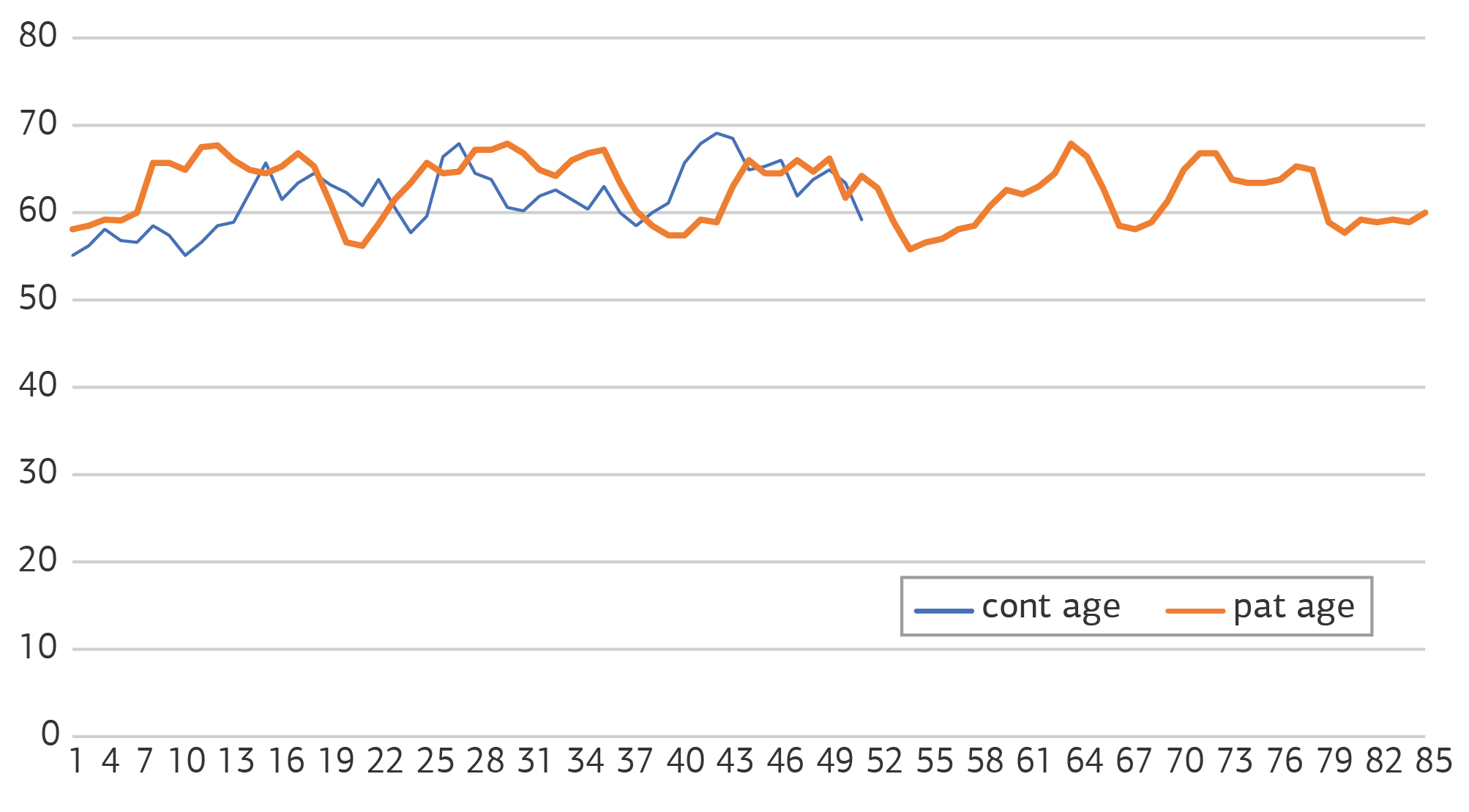
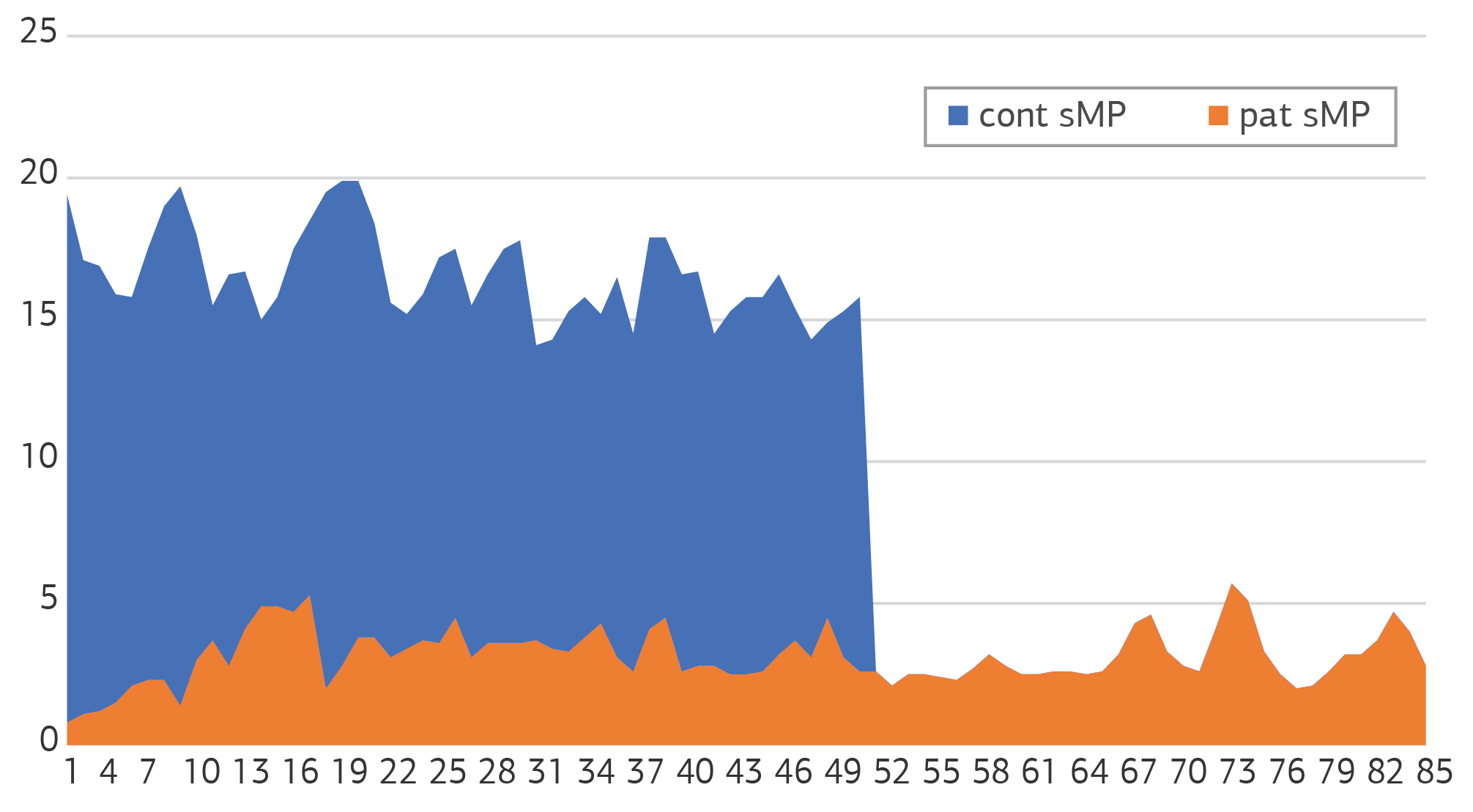
Demographic variables are shown in Table 1 and Figure 1. Accordingly, no statistically significant difference was found between the patient and control groups in terms of age and gender (P > .05). Serum SMP30 was measured in 50 healthy individuals and 85 patients with ESCC. Serum SMP30 level was significantly higher in the healthy controls than the ESCC patients, (16.28 ng/mL vs 3.09 ng/mL, respectively) (Table 2 and Figure 2).
Discussion
Esophageal cancer is an invasive cancer with a comparatively late stage at diagnosis, rapid clinical progression, and very poor survival.15 Survival rate can be as low as 10% in high-risk population, where medical facilities are less developed.16 Esophagectomy is generally the most widely accepted standard treatment for localized disease; however, the results of the procedure are disappointing due to the high recurrence rate.17,18 In a study by Lou et al. with 1147 esophageal cancer patients, the recurrence rate was 38%.19 This has prompted researchers to seek novel preoperative biomarkers for better and more efficient management of patients with esophageal cancer, improvements in survival and reduction of recurrence.
SMP30 has been shown to modulate the balance of protein tyrosine kinase phosphates, and to regulate NF-ĸB-related inflammatory activity.20 On the other hand, in human cells, SMP30 might regulate cell survival by regulating the redox state of the cell. Oxidative stress is manifested by an imbalance between the formation of pro-oxidants such as reactive oxygen species and/or reactive nitrogen species, and the production of antioxidant defenses.21 Downregulation of SMP30 is caused by an increased generation of the oxygen-reactive entity of reactive oxygen species.22
To explain the specific role of SMP30 in apoptotic crypt cells, various issues have to be investigated. There is a probability that SMP30 can protect crypt cells directly from irradiation-induced apoptosis. A decrease in the SMP30 level results in the promotion of apoptosis when epithelial cells are subjected to irradiation.
SMP30 has been studied in various publications as a marker of various cancers. Mo et al. investigated SMP30 expression in hepatocellular carcinoma. They reported that low SMP30 expression was strongly correlated with an overall survival rate of hepatocellular carcinoma patients, and that SMP30 may be useful in developing a reliable prognostic marker and hepatocellular carcinoma therapeutic target.23 Baek et al. studied the expression patterns of SMP30 in mammary tumors and concluded that SMP30 may help to establish diagnosis in human breast cancer.12 Shao et al. investigated the patterns of SMP30 in non small cell lung cancer. They stated that SMP30 inhibited proliferation of non small cell lung cancer by reducing HDAC4 expression and that SMP30 and HDAC4 may serve as novel prognostic markers and potential targets in non small cell lung cancer.14
For the first time in the literature, the present study suggested that SMP30 is responsible for tumor angiogenesis and tumor growth in esophageal cancer cells. The clinical significance of these results warrants further investigation. Serum SMP30 levels were significantly reduced in esophageal squamous cell carcinoma patients. Based on our study, SMP30 may be used as an eventual therapeutic target in the treatment of esophageal cancer. Serum SMP30 levels may be impressed by surgical treatment. Finally, numerous markers have been studied using enzyme-linked immunosorbent assay as a testing method in previous studies. The combination of different biomarkers and detection methods can be used to monitor the therapeutic outcome of different subsets of patients.
Limitations
The main limitations of this study include its relatively small sample size and being conducted in a single center. However, given that it is the first study to investigate the role of SMP30 in esophageal cancer, we believe that our findings will be guiding for further comprehensive studies.
Conclusion
The results of this study indicate that the adhesion of esophageal cancer cells was significantly reflected by preoperative serum levels of the studied marker, indicating the adhesive strength of cancer cells. SMP30 may be a novel strategy for diagnosing esophageal cancer clinically. However, further prospective observational studies are needed to draw more definitive conclusions.
Declarations
Animal and Human Rights Statement
All procedures performed in this study were in accordance with the ethical standards of the institutional and/or national research committee and with the 1964 Helsinki Declaration and its later amendments or comparable ethical standards.
Informed Consent
Written informed consent was obtained from all participants included in the study.
Data Availability
The datasets used and/or analyzed during the current study are not publicly available due to patient privacy reasons but are available from the corresponding author on reasonable request.
Conflict of Interest
The authors declare that there is no conflict of interest.
Funding
None.
Abbreviations
DNA: Deoxyribonucleic acid
ELISA: Enzyme-linked immunosorbent assay
ESCC: Esophageal squamous cell carcinoma
HDAC4: Histone deacetylase 4
NCSS: Number Cruncher Statistical System
ROS: Reactive oxygen species
SMP30: Senescence marker protein-30
STROBE: Strengthening the reporting of observational studies in epidemiology
References
- Liang J, Church JM. Lateral internal sphincterotomy for surgically recurrent chronic anal fissure. Am J Surg. 2015;210(4):715-719. doi:10.1016/j.amjsurg.2015.05.005
- Huang FL, Yu SJ. Esophageal cancer: risk factors, genetic association, and treatment. Asian J Surg. 2018;41(3):210-215. doi:10.1016/j.asjsur.2016.10.005
- Napier KJ, Scheerer M, Misra S. Esophageal cancer: a review of epidemiology, pathogenesis, staging workup, and treatment modalities. World J Gastrointest Oncol. 2014;6(5):112-120. doi:10.4251/wjgo.v6.i5.112
- Pennathur A, Gibson MK, Jobe BA, Luketich JD. Oesophageal carcinoma. Lancet. 2013;381(9864):400-412. doi:10.1016/s0140-6736(12)60643-6
- Dreikhausen L, Blank S, Sisic L, et al. Association of angiogenic factors with prognosis in esophageal cancer. BMC Cancer. 2015;15:121. doi:10.1186/s12885-015-1120-5
- Hou XF, Xu LP, Song HY, et al. ECRG2 enhances the anticancer effects of cisplatin in cisplatin-resistant esophageal cancer cells via upregulation of p53 and downregulation of PCNA. World J Gastroenterol. 2017;23(10):1796-1803. doi:10.3748/wjg.v23.i10.1796
- Yamaguchi M, Mori S, Kato S. Calcium-binding protein regucalcin is an activator of (Ca2+-Mg2+)-adenosine triphosphatase in the plasma membranes of rat liver. Chem Pharm Bull (Tokyo). 1988;36(9):3532-3539. doi:10.1248/cpb.36.3532
- Fujita T, Uchida K, Maruyama N. Purification of senescence marker protein-30 and its androgen-independent decrease with age in the rat liver. Biochim Biophys Acta. 1992;1116(2):122-128. doi:10.1016/0304-4165(92)90108-7
- Nakagawa T, Sawada N, Yamaguchi M. Overexpression of regucalcin suppresses cell proliferation of cloned normal rat kidney proximal tubular epithelial NRK52E cells. Int J Mol Med. 2005;16(4):637-643. doi:10.3892/ijmm.16.4.637
- Zhou SF, Mo FR, Bin YH, Hou GQ, Xie XX, Luo GR. Serum immunoreactivity of SMP30 and its tissues expression in hepatocellular carcinoma. Clin Biochem. 2011;44(4):331-336. doi:10.1016/j.clinbiochem.2010.10.008
- Zhang SC, Huang P, Zhao YX, et al. Soluble expression of recombinant human SMP30 for detecting serum SMP30 antibody levels in hepatocellular carcinoma patients. Asian Pac J Cancer Prev. 2013;14(4):2383-2386. doi:10.7314/apjcp.2013.14.4.2383
- Baek SM, Lee SW, Kim TU, et al. Senescence marker protein 30: a novel pan-species diagnostic marker for the histopathological diagnosis of breast cancer in humans and animals. Int J Mol Sci. 2021;22(5):2340. doi:10.3390/ijms22052340
- Scott SH, Bahnson BJ. Senescence marker protein 30: functional and structural insights to its unknown physiological function. Biomol Concepts. 2011;2(6):469-480. doi:10.1515/bmc.2011.041
- Shao C, Guo K, Xu L, et al. Senescence marker protein 30 inhibits tumor growth by reducing HDAC4 expression in non-small cell lung cancer. Transl Lung Cancer Res. 2021;10(12):4558-4573. doi:10.21037/tlcr-21-982
- Vallböhmer D, Lenz HJ. Predictive and prognostic molecular markers in outcome of esophageal cancer. Dis Esophagus. 2006;19(6):425-432. doi:10.1111/j.1442-2050.2006.00622.x
- Aghcheli K, Marjani HA, Nasrollahzadeh D, et al. Prognostic factors for esophageal squamous cell carcinoma: a population-based study in Golestan Province, Iran, a high incidence area. PLoS One. 2011;6(7). doi:10.1371/journal.pone.0022152
- Alidina A, Siddiqui T, Burney I, Jafri W, Hussain F, Ahmed M. Esophageal cancer: a review. J Pak Med Assoc. 2004;54(3):136-141.
- Ye Z, Zhao H, Zhou W, et al. Lower serum matrix metalloproteinase-9 in metastatic patients with esophageal squamous cell carcinoma after concurrent radiotherapy was significant for prognosis. Onco Targets Ther. 2020;13:12857-12866. doi:10.2147/ott.s280791
- Lou F, Sima CS, Adusumilli PS, et al. Esophageal cancer recurrence patterns and implications for surveillance. J Thorac Oncol. 2013;8(12):1558-1562. doi:10.1097/01.jto.0000437420.38972.fb
- Jung KJ, Lee EK, Kim SJ, et al. Anti-inflammatory activity of SMP30 modulates NF-κB through protein tyrosine kinase/phosphatase balance. J Mol Med (Berl). 2015;93(3):343-356. doi:10.1007/s00109-014-1219-1
- Li M, Guo K, Taketani S, Adachi Y, Ikehara S. Stem cell replacement improves expression of SMP30 in db/db mice. Int J Mol Sci. 2015;16(12):29971-29979. doi:10.3390/ijms161226217
- Maruyama N, Ishigami A, Kondo Y. Pathophysiological significance of senescence marker protein-30. Geriatr Gerontol Int. 2010;10(1):88-98. doi:10.1111/j.1447-0594.2010.00586.x
- Mo Z, Zheng S, Lv Z, et al. Senescence marker protein 30 serves as a potential prognostic indicator in hepatocellular carcinoma. Sci Rep. 2016;6:39376. doi:10.1038/srep39376
Tables
Table 1. Age and Gender of the Control Groups and Patients with ESCC
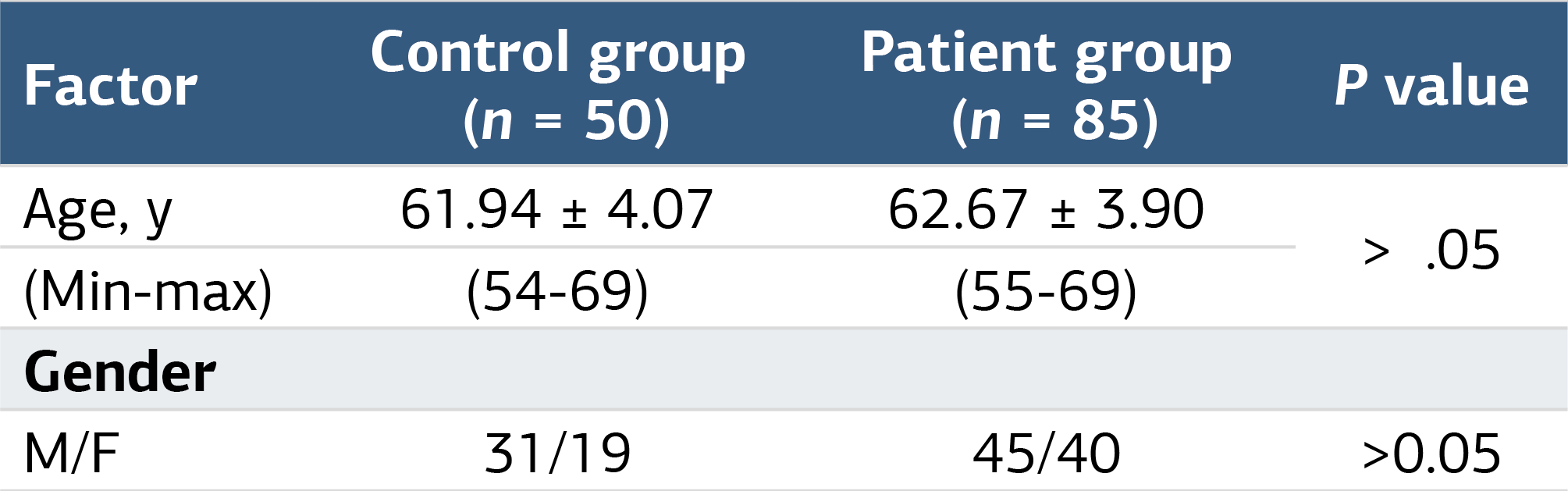
Table 2. SMP30 Levels of all Groups
Figures
Additional Information
Publisher’s Note
Bayrakol MP remains neutral with regard to jurisdictional and institutional claims.
Rights and Permissions

This work is licensed under a Creative Commons Attribution-NonCommercial 4.0 International License (CC BY-NC 4.0). To view a copy of the license, visit https://creativecommons.org/licenses/by-nc/4.0/
About This Article
How to Cite This Article
Remzi Kızıltan, Mehmet Akif Aydın, Şermin Algül, Özgur Kemik. A novel marker for esophageal cancer: senescence marker protein-30. Ann Clin Anal Med 2024;15(2):99-102. doi:10.4328/ACAM.21810
Publication History
- Received:
- 06.07.2024
- Accepted:
- 07.08.2023
- Published Online:
- 03.01.2024
- Printed:
- 01.02.2024