
Abstract
AimSuicide is a public health problem that, although not common in childhood, becomes increasingly common in adolescence. Pediatricians primarily investigate and recognize these risk factors and prevent and treat suicidal behavior by communicating with other specialties. This study aimed to determine the sociodemographic characteristics, factors leading to suicide, and suicide methods of patients who were followed up in the Pediatric Intensive Care Unit due to suicide attempts and to be able to take preventive approaches.MethodsThe study included 45 patients between the ages of 10 and 18 who attempted suicide between January 2019 and January 2022 and were admitted to the Pediatric Intensive Care Unit. In the study, the patients were retrospectively evaluated based on sociodemographic characteristics, nature of the suicide attempt, their psychopathology status chronic disease status.ResultsThe average age of 45 cases included in the study was 15.31±1.61 years. A statistically significant relationship was found between previous suicide attempts, psychiatric illness history, and psychiatry referrals. A statistically significant association was found between non-suicidal self-harm behavior and psychiatric disease history, psychopathology status, earlier referral to psychiatry, and psychiatric check-ups after a suicide attempt.ConclusionSuicide remains a serious cause of death worldwide. Not all suicides are preventable, but a systematic approach to suicide risk assessment can enable healthcare providers to identify and manage patients at risk for suicide. Considering the increasing incidence of suicide, especially in adolescence, comprehensive suicide risk assessment should be one of the pediatricians’ primary and critical duties.
Keywords
Introduction
Although suicide is not common in childhood, it appears to be an entity whose frequency increases towards adolescence. The pediatrician is involved in identifying and managing youth with suicidal behavior. The pediatrician must be able to detect the presence of warning signs for suicide/suicide attempts in children and adolescents because warning signs indicate that a suicide attempt may occur within a few hours or days and that immediate intervention is required. Risk factors that lead to suicide include psychiatric illness, previous suicide attempts, family factors, substance use, sexual and physical abuse, gender identity disorders, and bullying. Pediatricians primarily investigate and recognize these risk factors and prevent and treat suicidal behavior by communicating with other specialties. In particular, the American Academy of Pediatrics recommends annual suicide screening in adolescents during visits for acute diseases and routine check-ups.1,2 Suicide attempts can be considered a symptom of an emotional and communication problem. Suicide prevention is a highly challenging issue for healthcare professionals. It is reported that suicide victims, especially in adulthood, frequently visit their doctors before attempting suicide.3,4 Suicide attempts in adolescents have become one of the most common reasons for emergency room admission among psychiatric admissions. The study aimed to determine the sociodemographic characteristics, factors leading to suicide, and suicide methods of patients who attempted suicide in the child and adolescent age group and were followed up in the Pediatric Intensive Care Unit of our hospital to be able to take preventive approaches.
Materials and Methods
PatientsThe study included 45 patients aged 10-18 years who attempted suicide between January 2019 and January 2022 and were admitted to the Pediatric Intensive Care Unit of our hospital. The study did not include pediatric patients admitted to the Pediatric Intensive Care Unit due to accidental medication intake. Patient files were retrospectively examined according to gender, age, educational status/continuation, season in which the suicide attempt was made, and suicide attempt method, characteristics of the suicide attempt, parental relationship status/loss of a parent, number of siblings, whether there is a history of psychiatric disease in themselves or their family before, psychopathology conditions detected by the Child Mental Health and Diseases department after the attempt, chronic disease conditions, previous attempts were examined. They were examined in terms of whether they had been present, the number of prior attempts, whether there was non-suicidal self-harming behavior, the presence of stressor factors that led to suicide, psychosocial risk factors, whether they were followed up by the Department of Child Mental Health and Diseases before or after the attempt, and the relationships between these factors.Ethical ApprovalEthical approval for the study was received from Tekirdağ Namık Kemal University Faculty of Medicine Non-Interventional Clinical Research Ethics Committee (Date: 26.07.2022, Decision No: 2022.150.07.17).Statistical AnalysisNumber Cruncher Statistical System 2007 (Kaysville, Utah, USA) program was used for statistical analysis. Descriptive statistical methods (mean, standard deviation, median, frequency, percentage, minimum, maximum) were used when evaluating the study data. The suitability of quantitative data for normal distribution was tested with the Shapiro-Wilk test and graphical analysis. The Mann-Whitney U test was used to compare two groups of quantitative variables that did not show normal distribution. The Kruskal-Wallis test was used to compare three or more groups of quantitative variables that did not show a normal distribution. Fisher’s Exact test and Fisher-Freeman-Halton test were used to compare qualitative data. Statistical significance was accepted as P < .05. Reporting GuidelinesThis study was reported in accordance with the STROBE guideline.
Results
Of the cases, 13.3% (n = 6) were male and 86.7% (n = 39) were female. Their ages ranged from 10 to 18 years, averaging 15.31±1.61 years. Most cases had at least one sibling (85.7%). The status of parents being together was higher than that of being apart. The suicide attempt method was found to be 95.6% (n = 43) taking medication, 2.2% (n = 1) hanging, and 2.2% (n = 1) taking corrosive substances. It was observed to be more common in the summer months (44.5%). It was observed that most of them (95.6%) did not have an initiative plan.
The rate of cases with a psychiatric history was 24.4% (n = 11). The detection rate of psychopathological findings was 86.7% (n = 39), 61.5% (n = 24) of these cases had depressive disorder, 15.4% (n = 6) had behavioral disorder, 7.7% had borderline personality disorder (n = 3), anxiety disorder in 5.1% (n = 2), prolonged grief disorder in 5.1% (n = 2), 2.6% (n = 1) post-traumatic stress disorder and 2.6% (n = 1) were diagnosed with bipolar disorder. It was determined that 93.3% (n = 42) of the cases had a source of stress in their lives. When considering stress factors, 45.2% (n = 19) were family problems, 28.6% (n = 12) were romantic relationship problems, 11.9% (n = 5) were childhood troubles, 9.5% (n = 4) were imminent death and 4.8% (n = 2) were found to have a history of abuse (Table 1).
A statistically significant relationship was found between a history of psychiatric illness and previous suicide attempts (P = .002; P < .01). The intervention rate in the group with a history of psychiatric disease was higher than in the group without. A statistically significant relationship was also detected between previous admission to psychiatry and previous suicide attempts (P = .001; P < .01). The intervention rate in the group that applied was higher than in the group that did not (Table 2). A statistically significant relationship was found between a history of psychiatric illness and non-suicidal self-harm behavior (P = .033; P < .05). The rate of self-harm in the group with a history of psychiatric illness was higher than in the group without a history of disease. A statistically significant relationship was found between psychopathology status and non-suicidal self-harm behavior (P = .032; P < .05). The rate of self-harm in the group with psychopathological findings was higher than in the group without symptoms. A statistically significant relationship was found between previous admission to psychiatry and non-suicidal self-harm behavior (P = .001; P < .01). The rate of self-harm in the group that applied was higher than in the group that did not use (Table 3).
Discussion
Suicide attempts are more common in adolescent girls than boys. A study by Randall et al. found that the one-year prevalence of suicide attempts was twice as high in girls than in boys.5 In our study, 86.7% (n = 39) of the cases were determined to be female, and 13.3% (n = 6) were male. However, the rate of suicide is higher in adolescent boys than in girls. Public health data from the United States indicate that the suicide death rate for boys ages 10 to 19 is 7 per 100,000, and for girls is 2 per 100,000.6 Differences in suicide completion rates are associated with the method chosen. Girls choose less lethal means, such as high doses of drugs or incisions, while boys choose firearms and hanging.7 In our study, the most common method of suicide attempt was found to be taking medication, with a rate of 95.6% (n = 43). The fact that the most frequently used method is taking medication suggests that this may be due to the easy accessibility of drugs. In our study, the ages of the cases ranged between 10-18 years, and the average was determined as 15.31±1.61 years. In the study by Özdemir et al., the average age was similarly stated as 14.8±1.4 years.8 Therefore, given the increasing incidence of suicide in adolescence, the pediatrician can play a critical role in assessing the suicide risk level and identifying protective factors. When the sibling status of the cases in our study was examined, it was found that 13.3% (n = 6) did not have a sibling, while 86.7% (n = 39) had at least one sibling. The study by Eraslan et al. detected at least one sibling condition in 89.5% of the cases.9 There are also publications stating that the increase in the number of children in the family may be associated with suicide.3,10
Most adolescents who attempt or commit suicide have a psychiatric disorder, the most common being a depressive disorder. Literature data show that approximately 90% of adolescents who commit suicide suffer from a psychiatric disorder (especially mood disorder), and more than 60% of youth are depressed at the time of death.1,11 24.4% (n = 11) of the cases in our study had a history of psychiatric disease. The rate of detecting psychopathology in the patients was 86.7% (n = 39). 61.5% (n = 24) of these cases had depressive disorder, 15.4% (n = 6) had behavioral disorder, and 7.7% (n = 3) had borderline personality disorder. 5.1% (n = 2) had anxiety disorder, 5.1% (n = 2) had prolonged grief disorder, and 2.6% (n = 1) had borderline personality disorder. Post-traumatic stress disorder 2.6% (n = 1) and also bipolar disorder 2.6% (n = 1) were diagnosed. In the study by Atesci et al., 53.3% of the cases had a history of psychiatric illness, and 48% had a history of psychopharmacological treatment. In comparison, most of those who attempted suicide (46.7%) were diagnosed with depressive disorder in their psychiatric evaluation.12 Eraslan et al. found a diagnosis of depressive disorder in 42.1% of the cases in their study.10
Our study determined that 93.3% (n = 42) of the cases had a source of stress in their lives. When stress factors are examined, 45.2% (n = 19) had family problems, 28.6% (n = 12) had romantic relationship problems, 11.9% (n = 5) had childhood troubles, 9.5% (n = 4) were recent death, and 4.8% (n = 2) were found to have a history of abuse. Different studies have found that the most common cause of suicide is familial stressors.3,8 Considering that most individuals in adolescence live with their families and the importance of the family in terms of social support, the relationship between familial factors and suicide can be understood.
Suicide attempts in adolescents significantly increase the risk of suicide over many years. In our study, the rate of cases who had previously attempted suicide was 24.4% (n = 11). In total, 75.6% (n = 34) of the patients had attempted suicide once, 13.3% (n = 6) had attempted suicide twice, and 11.1% (n = 5) had attempted suicide three times. Finkelstein et al. in an extensive series cohort study, identified patients who survived their first self-poisoning episode (n>20,000) and controls without such a history (n>1 million), and follow-up data for up to 12 years were obtained. Among adolescents who experienced their first self-poisoning episode, the risk of suicide within one year was 30 times higher than in the control group. In addition, the risk of suicide after ten years of follow-up was ten times higher. The average suicide time for adolescents experiencing their first self-poisoning attack was found to be three years. Risk factors for suicide in the study included recurrent self-poisoning and male gender, as well as a history of previous psychiatric treatment. Contact with a psychiatrist the year before self-poisoning has been associated with an increased risk of suicide.13 Our study found a statistically significant relationship between a history of psychiatric disease and previous suicide attempts (P = .002; P < .01). The intervention rate was higher in the group with a history of psychiatric disorder than in the group without a history of disease. Our study found a statistically significant relationship between previous admission to psychiatry and the last suicide attempt (P = .001; P < .01). A study by Eraslan et al. showed that 52.6% of the cases had a previous psychiatric admission.9 Similarly, in our study, 53.3% (n = 24) of the patients had previously applied to the child psychiatry outpatient clinic.
A meta-analysis of 119 community studies from Asia, Australia, Europe, and North America evaluated individuals (n>230,000) and found the estimated lifetime prevalence of non-suicidal self-harm to be 17% in adolescents (10-17 years) and 17% in young adults (18-24 years) was found to be 13% and 6% in adults (≥25 years old).14 In our study, the non-suicidal self-harm rate of the cases was 42.2% (n = 19), and the average age of these cases was 15.32±1.53. Fox et al. in their study investigating non-suicidal self-injury risk factors stated that non-suicidal self-injury history and hopelessness, the most substantial risk factors, were also significant risk factors for suicidal thoughts and behaviors.15 A meta-analysis found that the previous history of non-suicidal self-injury was one of the most vital risk factors identified for future suicide attempts, and hopelessness was one of the strongest predictors of suicidal ideation and suicide death.16 Our study found a statistically significant relationship between psychopathology status and non-suicidal self-harm behavior (P = .032; P < .05). The rate of self-harm in the group with psychopathological findings was higher than in the group without symptoms. Similarly, a statistically significant relationship was found between a history of psychiatric illness, previous admission to psychiatry, and non-suicidal self-harm behavior (P = .033; P < .05). The rate of self-harm in the group with a history of psychiatric illness was higher than in the group without a history of disease. The results of the study by Kerr et al. also confirm our study.17
Limitations
This study has several limitations. Its retrospective and single-center design and relatively small sample size may limit the generalizability of the findings. In addition, the study included only patients admitted to the Pediatric Intensive Care Unit after a suicide attempt; therefore, the findings may not represent all children and adolescents who attempt suicide.
Conclusion
As a result, suicide remains a serious cause of death worldwide. Not all suicides are preventable, but a systematic approach to suicide risk assessment can enable healthcare providers to identify and manage patients at risk for suicide. Considering the increasing incidence of suicide, especially in adolescence, a comprehensive suicide risk assessment should be one of the pediatricians’ primary and critical duties.
Declarations
Animal and Human Rights Statement
All procedures performed in this study were in accordance with the ethical standards of the institutional and/or national research committee and with the 1964 Helsinki Declaration and its later amendments or comparable ethical standards.
Informed Consent
The requirement for informed consent was waived due to the retrospective nature of the study.
Data Availability
The datasets used and/or analyzed during the current study are not publicly available due to patient privacy reasons but are available from the corresponding author on reasonable request.
Conflict of Interest
The authors declare that there is no conflict of interest.
Funding
None.
Abbreviations
AAP: American Academy of Pediatrics
NCSS: Number Cruncher Statistical System
PICU: Pediatric intensive care unit
SD: Standard deviation
STROBE: Strengthening the reporting of observational studies in epidemiology
References
- Dilillo D, Mauri S, Mantegazza C, Fabiano V, Mameli C, Zuccotti GV. Suicide in pediatrics: epidemiology, risk factors, warning signs, and the pediatrician’s role in detecting them. Ital J Pediatr. 2015;41:49. doi:10.1186/s13052-015-0153-3
- Brown S, Tezanos KM, Nugent NR. Childhood maltreatment, executive function, and suicide attempts in adolescents. Child Maltreat. 2023:10775595231182047.
- Goker Z, Aktepe E. İntihar girişiminde bulunan çocuk ve ergenlerde sosyodemografik ve psikiyatrik özelliklerin değerlendirilmesi. TSK Koruyucu Hekim Bul. 2006;5(6):444-454.
- McDowell AK, Lineberry TW, Bostwick JM. Practical suicide-risk management for the busy primary care physician. Mayo Clin Proc. 2011;86(8):792-800. doi:10.4065/mcp.2011.0076
- Randall JR, Nickel NC, Colman I. Contagion from peer suicidal behavior in a representative sample of American adolescents. J Affect Disord. 2015;186:219-225. doi:10.1016/j.jad.2015.07.001
- Perou R, Bitsko RH, Blumberg SJ, et al. Mental health surveillance among children—the United States, 2005-2011. MMWR Suppl. 2013;62(Suppl 2):1-35.
- Spicer RS, Miller TR. Suicide acts in 8 states: incidence and case fatality rates by demographics and method. Am J Public Health. 2000;90(12):1885-1891. doi:10.2105/ajph.90.12.1885
- Özdemir D, Akdemir D, Çuhadaroğlu-Çetin F. Gender differences in defense mechanisms, ways of coping with stress, and sense of identity in adolescent suicide attempts. Turk J Pediatr. 2016;58(3):271-281.
- Eraslan AN, Aydın Görücü R, Öztürk M, Yılmaz A, Taşar MA. İntihar girişiminde bulunan ergenlerin sosyodemografik özelliklerinin incelenmesi ve depresyon tanısı açısından değerlendirilmesi. Tepecik Eğit Araşt Hast Dergisi. 2021;31(3):322-332.
- Arango A, Czyz EK, Magness CS, et al. Predictors of suicide coping self-efficacy among youth presenting to a psychiatric emergency department. Suicide Life Threat Behav. 2023;53(4):586-596. doi:10.1111/sltb.12966
- Gould MS, Greenberg T, Velting DM, Shaffer D. Youth suicide risk and preventive interventions: a review of the past ten years. J Am Acad Child Adolesc Psychiatry. 2003;42(4):386-405. doi:10.1097/01.chi.0000046821.95464.cf
- Çulha Ateşçi F, Kuloğlu M, Tezcan E, Yıldız M. İntihar girişimi olan bireylerde birinci ve ikinci eksen tanıları. Klinik Psikiyatri. 2002;5:22-27.
- Finkelstein Y, Macdonald EM, Hollands S, et al. Long-term outcomes following self-poisoning in adolescents: a population-based cohort study. Lancet Psychiatry. 2015;2(6):532-539. doi:10.1016/s2215-0366(15)00170-4
- Swannell SV, Martin GE, Page A, Hasking P, St John NJ. Prevalence of nonsuicidal self-injury in nonclinical samples: systematic review, meta-analysis, and meta-regression. Suicide Life Threat Behav. 2014;44(3):273-303. doi:10.1111/sltb.12070
- Fox KR, Franklin JC, Ribeiro JD, Kleiman EM, Bentley KH, Nock MK. Meta-analysis of risk factors for nonsuicidal self-injury. Clin Psychol Rev. 2015;42:156-167. doi:10.1016/j.cpr.2015.09.002
- Franklin JC, Ribeiro JD, Fox KR, et al. Risk factors for suicidal thoughts and behaviors: a meta-analysis of 50 years of research. Psychol Bull. 2017;143(2):187-232. doi:10.1037/bul0000084
- Kerr P, Muehlenkamp J. Features of psychopathology in self-injuring female college students. J Ment Health Couns. 2010;32(4):290-308. doi:10.17744/mehc.32.4.r805820715t6124q
Tables
Table 1. Distribution of Psychiatric Features
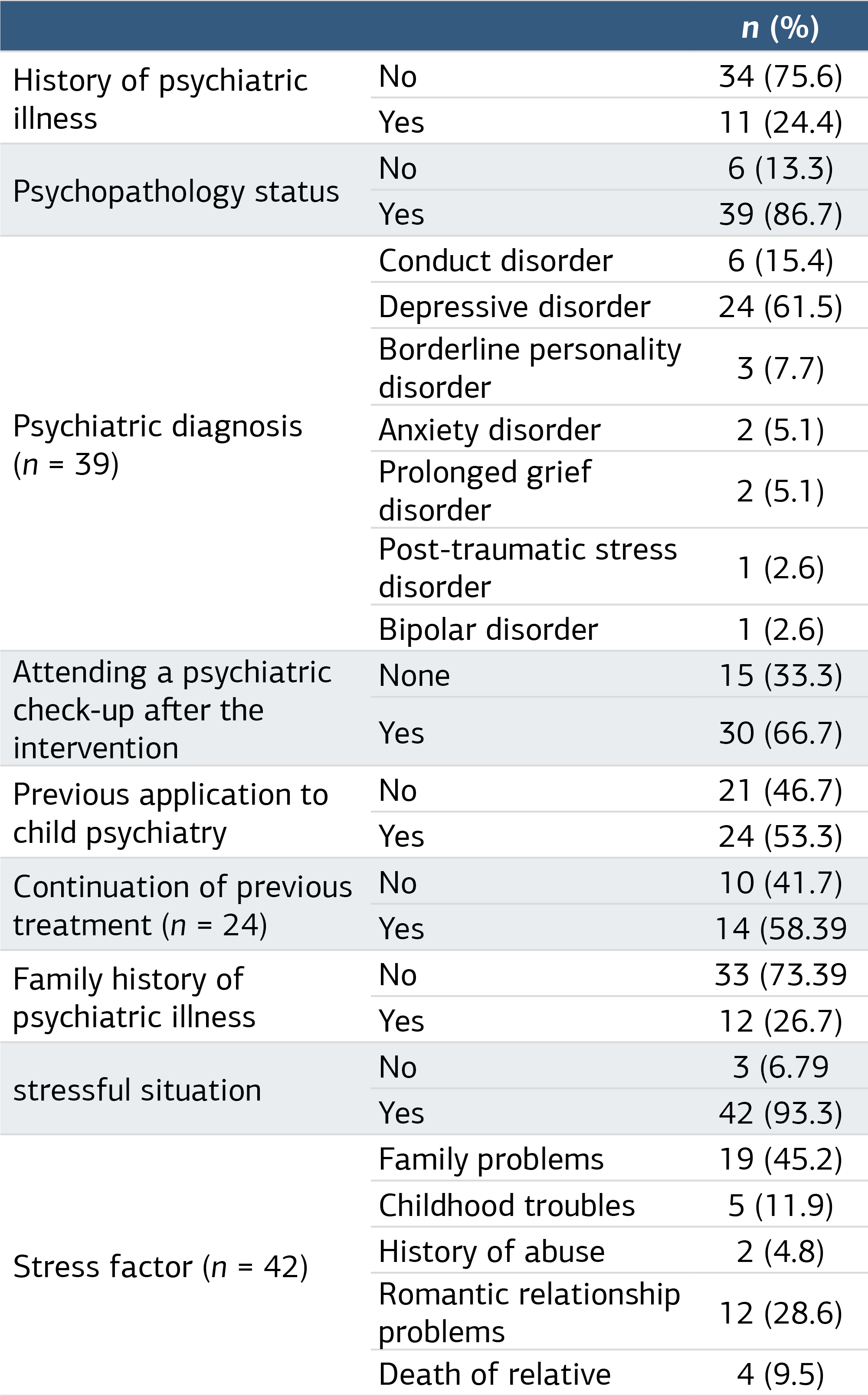
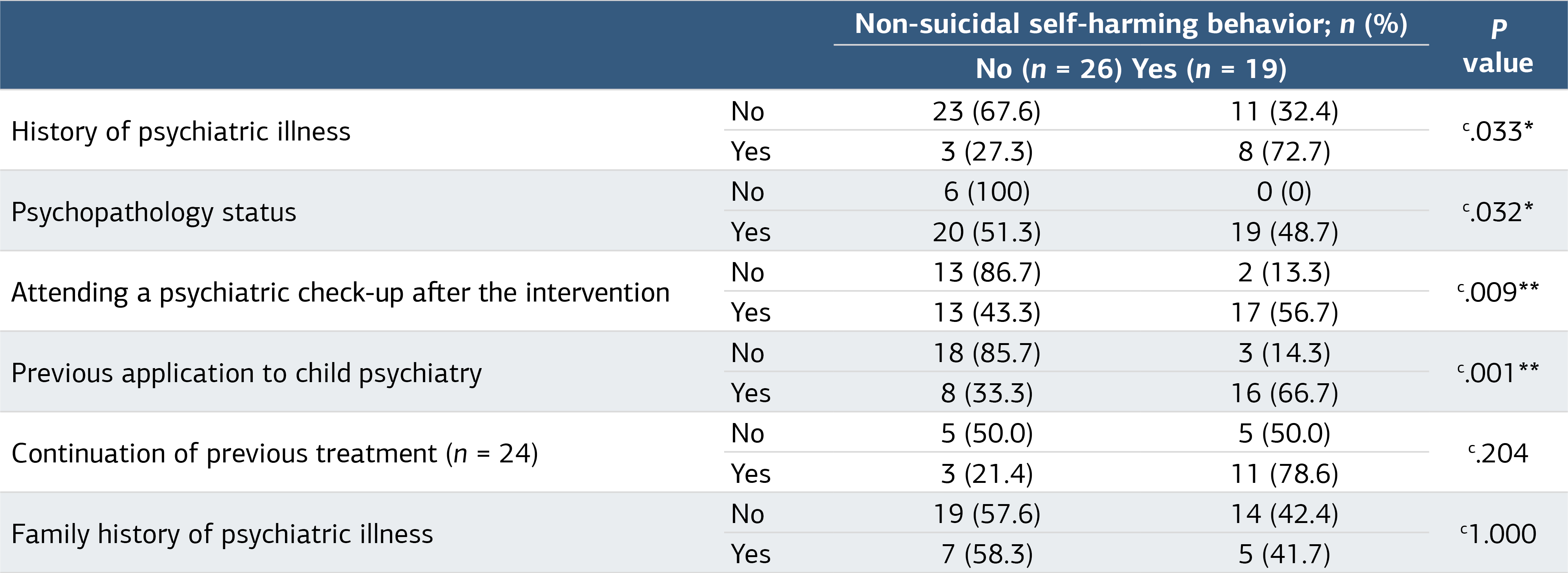
Table 3. Evaluations Regarding Non-Suicidal Self-Harm Behavior
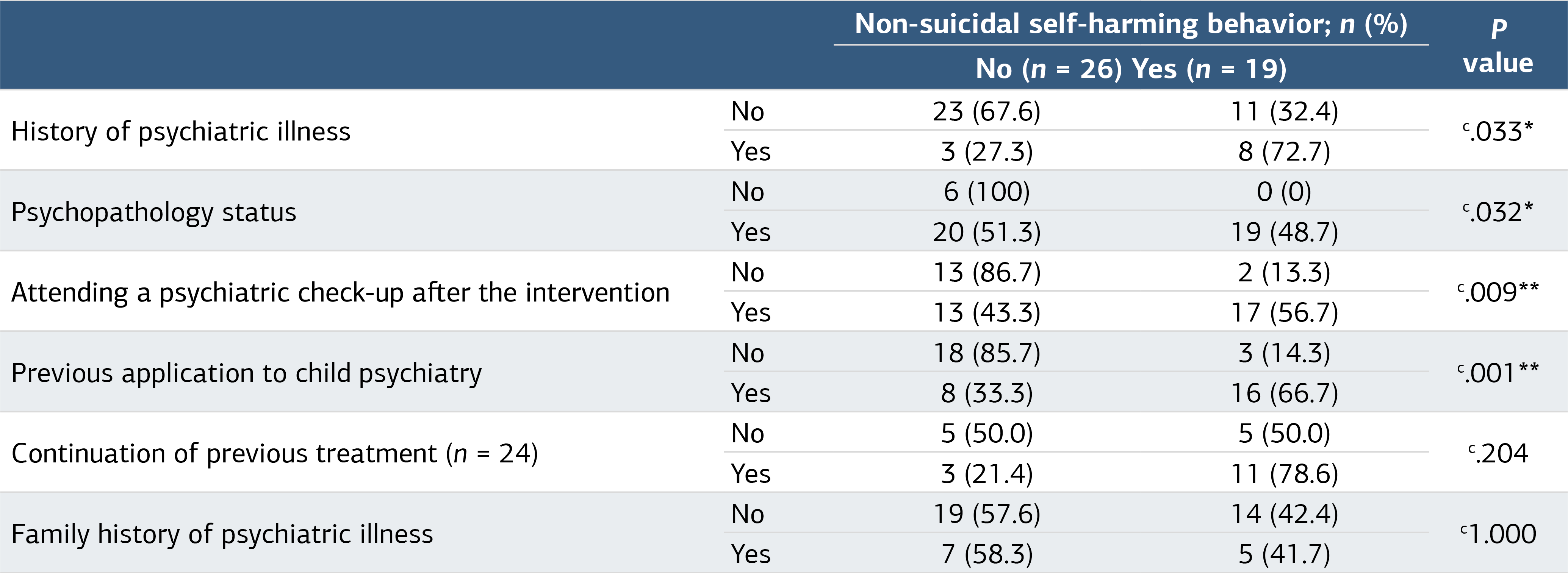
cFisher’s Exact Test; *P < .05, **P < .01
Additional Information
Publisher’s Note
Bayrakol MP remains neutral with regard to jurisdictional and institutional claims.
Rights and Permissions

This work is licensed under a Creative Commons Attribution-NonCommercial 4.0 International License (CC BY-NC 4.0). To view a copy of the license, visit https://creativecommons.org/licenses/by-nc/4.0/
About This Article
How to Cite This Article
Aslı Akın, Mustafa Törehan Aslan, Nedim Samancı. Retrospective evaluation of children and adolescents admitted to the pediatric intensive care unit due to suicide attempts. Ann Clin Anal Med 2024;15(2):103-107. doi:10.4328/ACAM.21981
Publication History
- Received:
- 27.09.2023
- Accepted:
- 31.10.2023
- Published Online:
- 29.12.2023
- Printed:
- 01.02.2024