
Abstract
AimWe aimed to compare the levels of Neuropeptide-FF and Catestatin in the sera of hypertensive and normotensive pregnant women, to determine the possible changes in hypertensive diseases of pregnancy and to examine the possible place of pregnancy in hypertensive diseases.MethodsWe used the quantitative analysis method to test the hypotheses of the research and examine the relationship between variables. Neuropeptide FF and Catestatin levels were analyzed by Enzyme Linked Immunoassay (ELISA) method. Neuropeptide-FF and Catestatin values of patient and control groups were analyzed with Mann-Whitney and Chi-square tests.ResultsA higher Catestatin value was determined in the patient group compared to the control group, and this difference was statistically significant(P < .001). Catestatin value in the patient group was 31.61 ± 12.54, and value in the control group was 48.46 ± 22.45 and the relation was statistically found significant (P < .05). The neuropeptide-FF was not statistically significant in the patient and control group compared to the control group (P = .916). Therefore, the Neuropeptide-FF value in the patient group was 134.30 ± 93.72; this value was found as 139.49 ± 96.41 in the control group, but the relation statistically was not found significant (P > .05). According to the analysis results of our study, a statistically significant difference was found for Catestatin at the 5% significance level between the patient group and the control group.ConclusionDecreased NPFF expression in the hypothalamus of hypertensive patients may lead to impaired interaction with other neurochemical systems and therefore may play a role in the pathogenesis of hypertensive disease.
Keywords
Introduction
Hypertensive diseases during pregnancy are one of the leading causes of maternal and fetal morbidity and mortality.1 This condition is reported to affect approximately 3-5% of all pregnant women.2 It is also estimated that preeclampsia and other hypertensive diseases in pregnancy are responsible for approximately 100,000 maternal deaths each year. Although some researchers have suggested that preeclampsia is caused by multiple factors including vasospasm, endothelial dysfunction, inflammation, angiogenesis defect, and oxidative stress, its pathogenesis is still poorly understood.1
Neuropeptide FF (Phe-Leu-Phe-Gln-Pro-Gln-Arg-2), found in the human central nervous system and peripheral tissues, is an important member of the RFamide peptide family that was first identified. Although it was first described to cause hyperalgesia by inhibiting the antinociceptive effects of opiates, it has important functions in the central structuring of visceral autonomic signals related to food intake, central cardiovascular responses, stress, and neuroendocrine regulation.3
Catestatin functions as a vasodilator, and the finding that plasma catestatin levels are decreased in human hereditary (essential) hypertension suggests that early defects in this peptide may predispose to the development of hypertension in the future. New data put forward by many scientists in the literature have revealed that natural variants in human catestatin alter autonomic functions and blood pressure.4
Although there are many studies on pregnancy, neuropeptides, and hypertension in the literature, the pathophysiology of hypertensive diseases in pregnancy is not fully understood. In addition, data on the possible association between neuropeptide-FF, catestatin levels in serum, and hypertensive diseases, and scientific studies examining these data are insufficient. Therefore, in this study, we aimed to compare the levels of Neuropeptide-FF and Catestatin in the serum of hypertensive and normotensive pregnant women to determine the possible changes in hypertensive diseases of pregnancy and to examine the possible role of pregnancy in hypertensive diseases.
Materials and Methods
The study was conducted on pregnant women between the ages of 19 and 42 years at Celal Bayar University Gynecology and Obstetrics Clinic after obtaining hospital and ethics committee permissions. 39 healthy pregnant women and 39 pregnant women complicated with hypertension totaling 78 pregnant women were included in the study. One tube of blood was collected from each pregnant woman who agreed to participate in the study. Gestational age was calculated according to the date of the last menstrual period and this data was confirmed by ultrasonographic records. Pregnant women who applied to our clinic were offered to participate in the study. A signed consent form was obtained from the consenting pregnant women. Pregnant volunteer women in the Gynecology and Obstetrics Clinic were included in the hypertensive group if their blood pressure was above 140/90 mmHg and in the healthy group if their blood pressure was below 140/90 mmHg.
Blood pressure (BP) measurements were based on the guidelines published by the European Society of Hypertension (ESH) and the European Society of Cardiology (ESC) in 2013. BP of each pregnant woman was measured by a standardized measurement technique and recorded in the patient files. BP was measured from the brachial artery in a sitting position, after 5 minutes of rest, with the cuff at the level of the heart. Measurements were performed by trained healthcare personnel using a sphygmomanometer with a cuff size suitable for the patient. Pregnant women with blood pressure values above 140/90 mmHg in blood pressure measurements performed at half-hour intervals during rest and calm were included in the hypertensive group; pregnant women with blood pressure values below 140/90 mmHg were included in the healthy group. 43 healthy pregnant women and 40 pregnant women complicated with hypertension were included in the study. In the control group, 4 patients were excluded because they did not meet the criteria. In the patient group, 1 patient was excluded because she did not meet the criteria. In total, 78 patients were studied. Gestational age was calculated according to the date of the last menstrual period and confirmed by ultrasonographic records.Criteria for the Patient Group- Blood pressure values above 140/90 mmHg in blood pressure measurements performed at half-hour intervals while the pregnant woman is resting and calm
- Between 19-42 years old
- Must be at least 20 weeks pregnantExclusion Criteria of the Patient Group- Pregnant women with multiple pregnancies
- Pregnant women with an intrauterine dead fetus
- Pregnant women with diabetes mellitus
- Pregnant women with identified fetal or placental abnormalities
- Women who are younger than 19 years or older than 42 years
- Pregnant women with less than 20 weeks gestation were excludedInclusion Criteria for the Control Group- Blood pressure values below 140/90 mmHg in blood pressure measurements performed at half-hour intervals while the pregnant woman is resting and calm
- Between 19-42 years old
- Must be at least 20 weeks pregnantExclusion Criteria of the Control Group- Pregnant women with multiple pregnancies
- Pregnant women with an intrauterine dead fetus
- Pregnant women with diabetes mellitus
- Pregnant women with identified fetal or placental abnormalities
- Pregnant women younger than 19 years or older than 42 years
- Blood pressure measured above 140/90
- Pregnant women with less than 20 weeks gestation were not included in the control groupBiochemical AnalysisVenous blood samples were collected from the patients in the morning on an empty stomach from the forearm into anticoagulant-free tubes. Blood samples were centrifuged at 3000 rpm at +4°C for 15 minutes and serum was separated and stored at -80°C until analysis and analyzed in a single run. Neuropeptide FF and Catestatin levels in serum samples were analyzed by Enzyme Linked Immunoassay (ELISA) method. Analyses were performed in the laboratories of Manisa Celal Bayar University Faculty of Medicine, Department of Medical Biochemistry. During the analysis, ELISA washing was performed with an automatic washing device (BioTek ELx50 BioTek Instruments Inc. Highland Park, Winooski, VT, USA) and absorbance readings were performed on an ELISA reader (BioTekEpoch, BioTek Instruments Inc. Highland Park, Winooski, VT, USA).
Neuropeptide FF levels in serum samples were determined with a commercial kit (BT LAB Human Neuropeptide FF Elisa Kit Cat.No E6978Hu, Zhejiang, China) and Catestatin levels (Mybiosource Human Catestatin (CST) Elisa Kit Cat.No MBS3800529, Southern California, San Diego, USA) commercial kits.
The reading range of the Neuropeptide FF kit was 7-1500 ng/L, the limit of detection was 3.32 ng/L and the intra-assay precision values of the kit had a correlation coefficient (CV) <8% and inter-assay precision CV <10%.
Catestatin kit has a reading range of 50-800 pg/ml, detection limit of 1 pg/ml, intra-assay CV <8% and inter-assay CV <10%.Ethical ApprovalThis study was approved by the Manisa Celal Bayar University Faculty of Medicine Ethics Committee (Date: 14.10.2019, Decision No: 153).Statistical AnalysisThe data obtained from the patients sampled in the study were subjected to statistical analysis with the help of SPSS (21.0) program. After testing the frequency analysis, a normal distribution test was performed for all variables. Since the data were not normally distributed, analysis was performed with nonparametric tests. For this purpose, Neuropeptide-FF and Catestatin values of the patient and control groups were compared with Mann-Whitney test. Hypertension was designed as dependent variable and Neuropeptide-FF and Catestatin as independent variables. In addition, Chi-square test was performed to find the power of change in age and gestational week in the control and patient groups. Cronbach’s Alpha value was calculated for the reliability of the data. Variables were expressed as mean ± standard error of the mean, categorical variables as number or %. In all statistical comparisons, p≤0.05 values were considered statistically significant.Reporting GuidelinesThis study was reported in accordance with the STROBE guideline.
Results
The distribution and percentages of the participants according to age groups and gestational weeks are given in Tables 1 and 2, respectively. Chi-Square test was applied to determine whether there was a significant difference between the patient and control groups according to age.
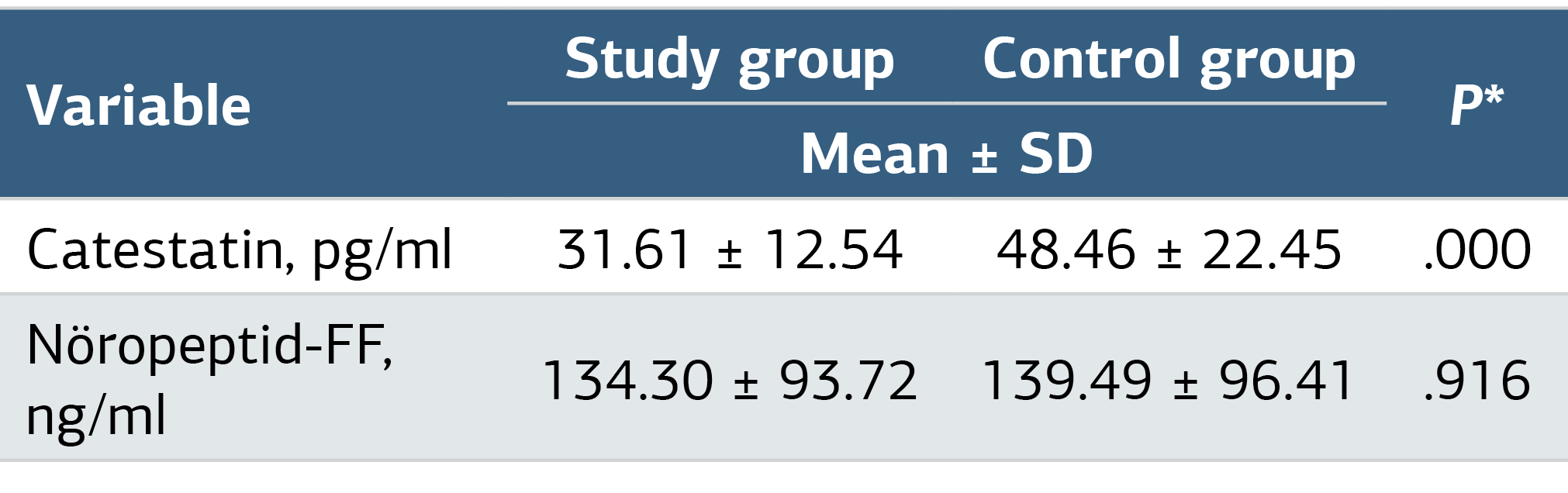
The aim of this study was to evaluate the Neuropeptide-FF and Catestatin levels of pregnant patients complicated with TA comparatively. For this purpose, Neuropeptide-FF and Catestatin levels of the patient and control groups were compared. The values obtained are shown in Table 3.
According to the results in Table 3, there is a statistically significant difference between the patient group and the control group for Catestatin at 5% significance level. A lower Catestatin value was determined in the patient group compared to the control group and this difference was statistically significant (P < .001). However, there was no statistically significant difference between the experimental and control groups for Neuropeptide-FF (P = .916). Although a lower Neuropeptide-FF value was found in the patient group compared to the control group, this difference was not statistically significant.
Discussion
In our study, we found a statistically significant difference between the mean catestatin levels in both control and patient pregnant women (P < .05). In other words, this result indicates that there is a significant difference in catestatin levels between hypertensive and normotensive groups. Thus, lower catestatin predicts enhanced pressor responses, suggesting that decreased catestatin may be a powerful mechanism for the increased risk of subsequent development of hypertension. In our study, we did not find a statistically significant difference between the means of Neuropeptide-FF (P > .05). This shows that there is no significant difference in NPFF levels between hypertensive and normotensive groups. Catestatin is a new endogenous peptide that regulates cardiac function and blood pressure.5 It has been suggested that neuropeptides, which are defined as polypeptides synthesized and secreted in neuronal cells and regulate the endocrine system, cardiovascular system, and nervous system, may contribute to the pathogenesis of hypertension.6
There are many studies in the literature that address these two variables, Neuropeptide-FF and Catestatin, separately. However, most of these studies were conducted especially on animal subjects such as cattle and rats. Because human, bovine, and rat catestatins have similar effects.7
In addition, there are studies in the literature that have examined the relationship of Neuropeptide-FF and Catestatin separately with blood pressure and hypertension. Decreased NPFF expression in the hypothalamus of hypertensive patients may be a reason for impaired interaction with other neurochemical systems and therefore may play a role in the pathogenesis of the disease. In addition, it is also thought that GABAergic input may play a role in the formation of NPFF disinhibition of parvocellular PVN neurons.6 Because intracerebroventricular injections of NPFF cause increases in arterial blood pressure.8
Jhamandas et al.9 found in an animal study that NPFF, a peptide belonging to the RF amide peptide family, significantly increased γ-aminobutyric acid (GABA)-mediated synaptic activity in magnocellular neurosecretory cells (MNCs) of the hypothalamic paraventricular nucleus (PVN). They also showed that NPFF increased the frequency of mIPSCs without affecting the amplitude or decay time constant of miniature inhibitory postsynaptic currents (mIPSCs). This suggests that the peptide has a presynaptic locus for its actions. NPFF and NPVF also decreased the frequency of GABAergic mIPSCs without affecting the amplitude or decay time constant of mIPSCs, suggesting that these peptides also have a presynaptic locus for their actions.10 In conclusion, these investigators demonstrated in their laboratory studies that NPFF injections cause a rapid dose-dependent hypertensive effect.
Ma et al.11 reported that PrRP binds the NPFF2 receptor when it increases, inhibits the receptor by competitive inhibition of the NPFF receptor, and consequently causes an increase in blood pressure. On the other hand, Laguzzi et al.12 suggested that focal injection of NPFF into the nucleus solitarius caused a decrease in blood pressure and heart rate. Goncharuk et al.6 found decreased expression of Neuropeptide FF in the hypothalamus of hypertensive individuals and reported that this may contribute to the pathogenesis of hypertension by disrupting the interaction of other neurochemical systems. These studies on NPFF contradict the results of our study. Because we did not find a significant relationship between NPFF and hypertension in our study (P > .05).
In contrast to the studies we have cited above, Asico et al.13 found that NPFFs did not have a statistically significant association with hypertension, supporting our study. This study on NPFFs overlaps with the results of our study. Because in our study, we did not find a statistically significant difference between the mean levels of Neuropeptide-FF in control and patient pregnant women (P > .05). This shows that there is no significant difference in NPFF levels between hypertensive and normotensive groups.
Mahapatra et al.6 suggested that catestatin, an endogenous peptide, is a novel regulator of cardiac function and blood pressure. Rao et al.14 concluded that catestatin induces major changes in human autonomic activity in both the parasympathetic and sympathetic systems and specifically reduces the risk of developing hypertension. Kiranmayi et al.15 also found that catestatin altered systemic blood pressure and the risk of hypertension in humans.
In another study, they found that catestatin, a bioactive peptide, was reduced in subjects with a familial predisposition for hypertension.16 They reported that decreased catestatin levels may increase the risk of hypertension. Fung et al.17 showed in their study that catestatin dilates human blood vessels in vivo, especially in women. They also suggested that catestatin may influence the complex predisposition to hypertension, especially in women, and that local infusion of exogenous catestatin in vivo caused vasodilation in healthy subjects.17 They reported that their observation that catestatin is deficient in hypertension was based on direct evidence of vasodilation and the effects of endogenous genetic variation of catestatin (specifically Gly364Ser) on autonomic physiology and BP.14 Furthermore, O’Connor et al.16 concluded that catestatin is reduced very early in the development of hypertension, even in normotensives with the disease. There are also studies concluding that catestatin levels are significantly reduced in hypertensive patients and also in normotensive individuals with a familial history of hypertension; moreover, high catecholamine levels are observed in hypertensive individuals, therefore catestatin shows a strong correlation between catecholamine and hypertension.16
Decreased catestatin is observed not only in hypertensive individuals but also in early normotensive children of hypertensive patients. This suggests that early catestatin deficiency may play a pathogenic role in the subsequent development of the disease.16 In addition, as mentioned before, there are also studies indicating that catestatin causes major changes in human autonomic activity in both the parasympathetic and sympathetic systems and reduces the risk of developing hypertension.14 These studies also support the results related to catestatin, which is a variable of our study. In other words, this result shows that there is a significant difference between hypertensive and normotensive groups in catestatin levels. Thus, lower catestatin predicts enhanced pressor responses, suggesting that decreased catestatin may be a powerful mechanism for the increased risk of later development of hypertension.
Limitations
The main limitation of this study was the limited sample size.
Conclusion
In conclusion, we think that such different results in the literature may be due to the fact that patients with preeclampsia or eclampsia have not been studied with sufficient samples in terms of parameters that may affect blood pressure levels. We believe that a more detailed study of these parameters with different samples may be useful to better understand the possible mechanism. Therefore, decreased NPFF expression in the hypothalamus of hypertensive patients may lead to impaired interaction with other neurochemical systems and therefore may play a role in the pathogenesis of hypertensive disease.
In future studies, it may be investigated whether Catestatin and Neuropeptide-FF levels are associated with blood pressure and whether Catestatin and Neuropeptide-FF levels of pregnant women who develop preeclampsia are different from those who do not.
Declarations
Animal and Human Rights Statement
All procedures performed in this study were in accordance with the ethical standards of the institutional and/or national research committee and with the 1964 Helsinki Declaration and its later amendments or comparable ethical standards.
Informed Consent
Informed consent was obtained from all participants.
Data Availability
The datasets used and/or analyzed during the current study are not publicly available due to patient privacy reasons but are available from the corresponding author on reasonable request.
Conflict of Interest
The authors declare that there is no conflict of interest.
Funding
None.
Abbreviations
BP: Blood pressure
CST: Catestatin
CV: Coefficient of variation
ELISA: Enzyme-linked immunosorbent assay
ESC: European Society of Cardiology
ESH: European Society of Hypertension
GABA: γ-Aminobutyric acid
NPFF: Neuropeptide FF
NPVF: Neuropeptide VF
PVN: Paraventricular nucleus
SPSS: Statistical Package for the Social Sciences
References
- Cunningham FG, Gant NF, Leveno KJ, Gilstrap LC III, Hauth JC, Wenstrom KD. Hypertensive disorders in pregnancy. In: Williams Obstetrics. 21st ed. McGraw-Hill; 2001:567-618.
- Cunningham F, Leveno K, Bloom S, Spong CY, Dashe J. Williams Obstetrics. 24th ed. McGraw-Hill; 2014.
- Jhamandas JH, Goncharuk V. Role of neuropeptide FF in central cardiovascular and neuroendocrine regulation. Front Endocrinol (Lausanne). 2013;4:8. doi:10.3389/fendo.2013.00008
- Biswas N, Gayen J, Mahata M, Su Y, Mahata SK, O’Connor DT. Novel peptide isomer strategy for stable inhibition of catecholamine release: application to hypertension. Hypertension. 2012;60(6):1552-1559. doi:10.1161/hypertensionaha.112.202127
- Mahapatra NR. Catestatin is a novel endogenous peptide that regulates cardiac function and blood pressure. Cardiovasc Res. 2008;80(3):330-338. doi:10.1093/cvr/cvn155
- Goncharuk VD, Buijs RM, Jhamandas JH, Swaab DF. The hypothalamic neuropeptide FF network is impaired in hypertensive patients. Brain Behav. 2014;4(4):453-467. doi:10.1002/brb3.229
- Cortez V, Santana M, Marques AP, Mota A, Rosmaninho-Salgado J, Cavadas C. Regulation of catecholamine release in human adrenal chromaffin cells by β-adrenoceptors. Neurochem Int. 2012;60(4):387-393. doi:10.1016/j.neuint.2011.12.018
- Jhamandas JH, MacTavish D. Central administration of neuropeptide FF causes activation of oxytocin paraventricular hypothalamic neurones that project to the brainstem. J Neuroendocrinol. 2003;15(1):24-32. doi:10.1046/j.1365-2826.2003.00869.x
- Jhamandas JH, MacTavish D, Harris KH. Neuropeptide FF control of magnocellular neurosecretory cells of the rat hypothalamic paraventricular nucleus. Peptides. 2006;27(5):973-979. doi:10.1016/j.peptides.2005.07.030
- Jhamandas JH, Simonin F, Bourguignon JJ, Harris KH. Neuropeptide FF and neuropeptide VF inhibit GABAergic neurotransmission in parvocellular neurons of the rat hypothalamic paraventricular nucleus. Am J Physiol Regul Integr Comp Physiol. 2007;292(1):1872-1880. doi:10.1152/ajpregu.00407.2006
- Ma L, MacTavish D, Simonin F, Bourguignon JJ, Watanabe T, Jhamandas JH. Prolactin-releasing peptide effects in the rat brain are mediated through the neuropeptide FF receptor. Eur J Neurosci. 2009;30(8):1585-1593. doi:10.1111/j.1460-9568.2009.06956.x
- Laguzzi R, Nosjean A, Mazarguil H, Allard M. Cardiovascular effects induced by the stimulation of neuropeptide FF receptors in the dorsal vagal complex: an autoradiographic and pharmacological study in the rat. Brain Res. 1996;711(1-2):193-202. doi:10.1016/0006-8993(95)01382-2
- Asico LD, Villar VAM, Bishop M, Gomes G, Mazhar M, Pedro A. NPFF receptors NPFF-R1 and NPFF-R2 in the kidney: a target for the negative control of sodium transport and blood pressure. Hypertension. 2018;72. doi:10.1161/hyp.72.suppl_1.087
- Rao F, Wen G, Gayen JR, et al. Catecholamine release-inhibitory peptide catestatin, chromogranin A 352-372: naturally occurring amino acid variant Gly364Ser causes profound changes in human autonomic activity and alters risk for hypertension. Circulation. 2007;115(17):2271-2281. doi:10.1161/circulationaha.106.628859
- Kiranmayi M, Chirasani VR, Allu PK, et al. Catestatin Gly364Ser variant alters systemic blood pressure and the risk for hypertension in human populations via endothelial nitric oxide pathway. Hypertension. 2016;68(2):334-347. doi:10.1161/hypertensionaha.116.06568
- O’Connor DT, Kailasam MT, Kennedy BP, Ziegler MG, Yanaihara N, Parmer RJ. Early decline in the catecholamine release-inhibitory peptide catestatin in humans at genetic risk of hypertension. J Hypertens. 2002;20(7):1335-1345.
- Fung MM, Salem RM, Mehtani P, et al. Direct vasoactive effects of the chromogranin A peptide catestatin in humans in vivo. Clin Exp Hypertens. 2010;32(5):278-287. doi:10.3109/10641960903265246
Tables
Table 1. Distribution of the Participants According to Age Groups
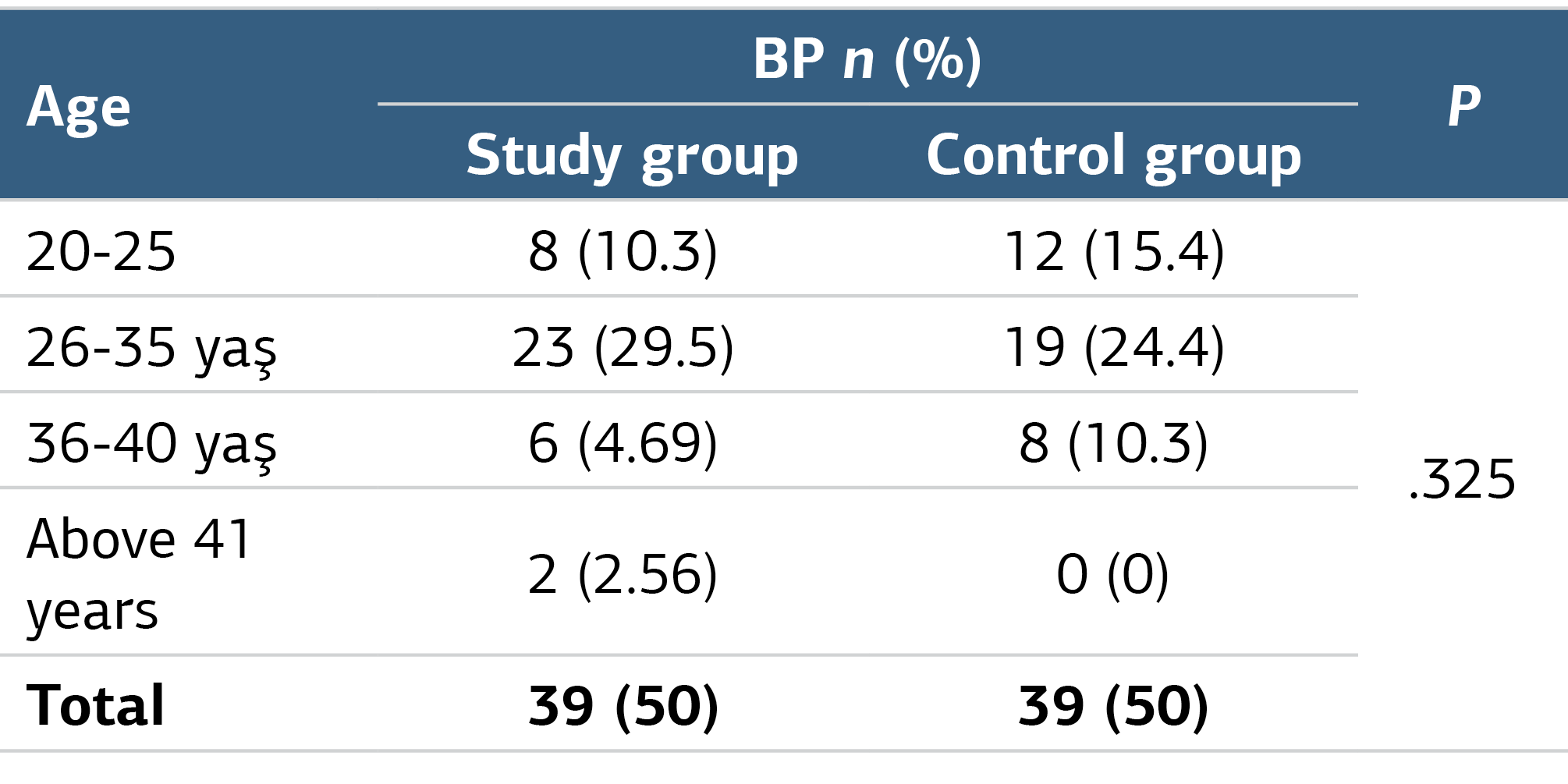
Table 2. Distribution of the Participants According to Gestational Week
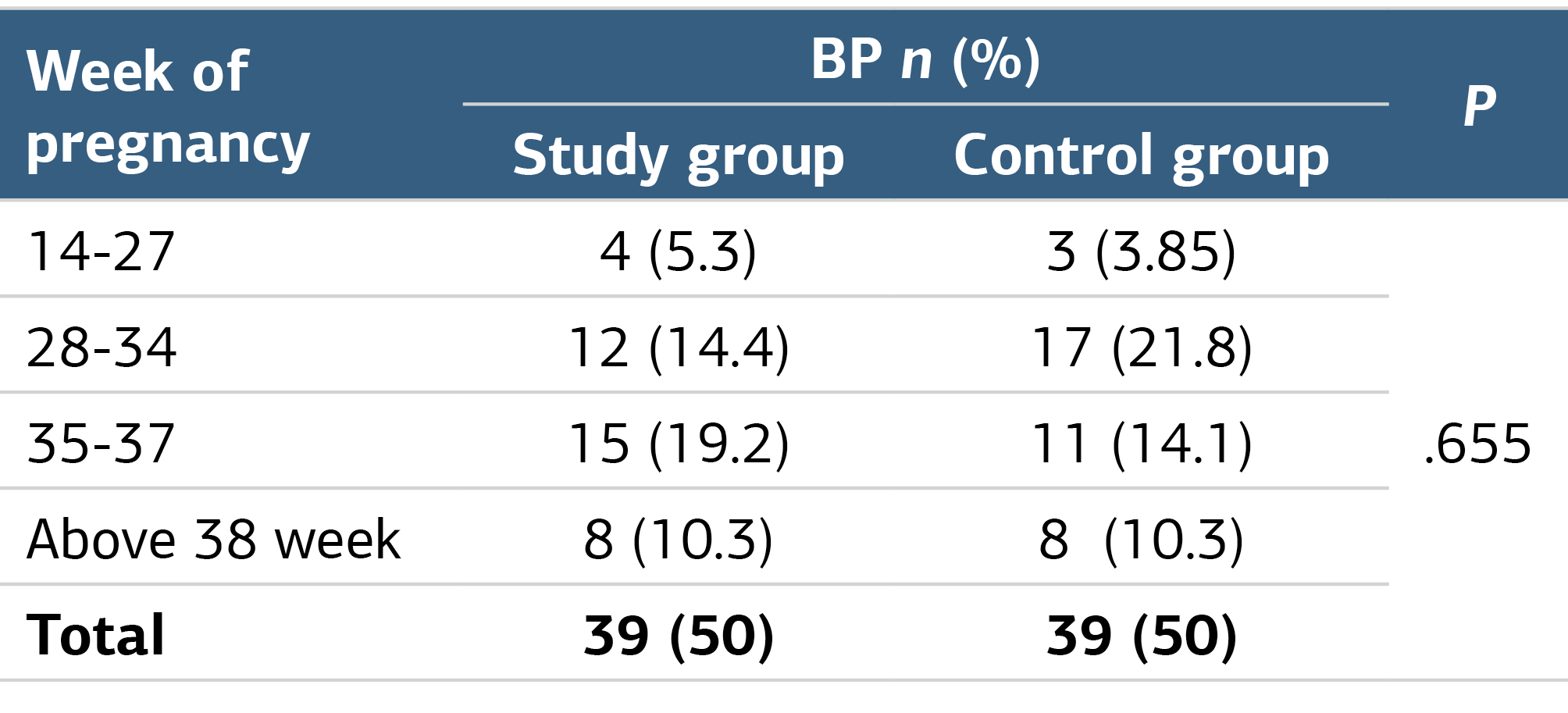
Table 3. Comparison of Mean Catestatin and Neuropeptide-FF Parameters in Patients and Control Group
Additional Information
Publisher’s Note
Bayrakol MP remains neutral with regard to jurisdictional and institutional claims.
Rights and Permissions

This work is licensed under a Creative Commons Attribution-NonCommercial 4.0 International License (CC BY-NC 4.0). To view a copy of the license, visit https://creativecommons.org/licenses/by-nc/4.0/
About This Article
How to Cite This Article
Hamdin Günsel, Semra Oruç, Fatma Taneli, Mulaim Sizer, Kenan Kırteke, Nebahat Sunar, Erhan Okuyan, Adem Yoldaş. Comparison of serum neuropeptide-ff and catestatin levels in hypertensive pregnant women. Ann Clin Anal Med 2024;15(7):495-499. doi:10.4328/ACAM.22174
Publication History
- Received:
- 08.03.2024
- Accepted:
- 06.05.2024
- Published Online:
- 28.04.2024
- Printed:
- 01.07.2024