
Abstract
AimChronic kidney disease and acute kidney injury are global healthcare problems. Renal replacement treatments, such as hemodialysis, are performed regularly in an emergency setting to treat these conditions. Predicting the outcomes of these patients can help physicians shape their treatment plan. Eosinophils have been shown to play an important role in the inflammatory response. Recent studies also show that they may play a role in endothelial function. Previous studies have shown that using the peripheral eosinophil count (EOC) could be effective in tracking the prognosis of patients receiving hemodialysis. In our study, our aim was to provide an outlook on the correlation of mortality and EOC alongside other laboratory parameters.MethodsWe analyzed the data of 823 selected patients who received emergency hemodialysis treatment in our dialysis unit between the dates 01/01/2020 and 01/04/2022. Data analysis was performed using the IBM SPSS 27.0 statistical package program.ResultsWe have found increased serum levels of lactate and potassium in addition to increased white blood cell count and neutrophil count in the mortality group. We have also found decreased levels of EOC and lymphocyte count along with decreased serum creatinine and sodium levels in the mortality group.ConclusionChronic Kidney Disease and acute kidney injury are significant causes of morbidity and mortality. While EOC can provide a limited outlook on their short-term mortality rate, more large-scale studies are needed to establish this connection.
Keywords
Introduction
Eosinophils are blood cells that play a role in innate mucosal immunity and allergic response in human biology. These cells comprise about 1-5% of all circulating leukocytes.1 Under nominal conditions, the number of peripheral eosinophils is tightly regulated by various mechanisms.2 However, it is suggested that various diseases and conditions are correlated with peripheral eosinophil count (EOC). Although the roles of eosinophils are well established in hypersensitivity reactions, allergic reactions, and asthma,3 there are also studies that report their involvement in chronic diseases such as diabetes, cardiovascular diseases, and chronic kidney disease.4,5
Chronic kidney disease (CKD) is a significant global healthcare challenge with 843 million people affected globally.6 As a result of the large number of patients and the progressive nature of the disease, CKD has emerged as one of the leading causes of mortality and morbidity, as mentioned by the Global Burden of Disease study.7 Therefore, it is important for healthcare providers to make good use of any possible biomarkers that can potentially predict disease progression or mortality.
There are several studies that report the correlation between CKD and EOC.8-10 Furthermore, in some studies, patients receiving renal replacement therapies such as hemodialysis, peritoneal dialysis, or renal transplantation are suggested to be more prone to eosinophilia.10,11 In addition to CKD, there are also studies that mention correlations between EOC and another common kidney disease worldwide, acute kidney injury.12
Acute kidney injury (AKI) is a common condition seen in 5.0-7.5% of hospitalized patients and 50-60% of critically ill patients.13 Although its pathophysiology can vary depending on the actual cause of the damage done to the kidney, the result can progress to similar outcomes as CKD. AKI patients may also need renal replacement therapies as an emergency but temporary solution before recovery.
In our study, our objective was to provide an outlook on the correlation between mortality in patients requiring emergency hemodialysis and hemogram parameters, focusing primarily on EOC.
Materials and Methods
Study Design and SettingsThis study was designed as a retrospective observational cohort study, conducted between 01.01.2020 and 01.04.2022 in a training and research hospital in the western part of Istanbul. The patients were retrospectively enrolled in the dialysis center registrations.
All authors and researchers followed the rules and guidelines presented by the Declaration of Helsinki while preparing the study protocol. As a retrospective study, we were unable to obtain the approval forms for the participating patients.Study SizeA total of 919 patients were found to have been treated with hemodialysis in our hospital unit according to the records. As this was a retrospective study, no additional form of approval was presented to the individual patients. We excluded patients under 18 years of age from the study. To eliminate possible confounders such as toxidromes, liver encephalopathy, and hypercalcemia, we excluded 16 patients who were treated with hemodialysis but were not diagnosed with AKI or CKD. After data collection and evaluation, we failed to collect mortality data for 24 patients, so we excluded these patients from the study. 56 patients were excluded from the study as their laboratory results were not complete or faulted.
After all data collection, evaluations, and exclusions were completed, a total of 823 patients were found to be eligible to participate in this study.Potential Sources of BiasAs this was a retrospective study, the physician evaluating the patient was unaware of the study. This helped to blind the primary physician, but also limited our ability to fully evaluate the patient by ourselves. We used our hospital records to minimize bias in this regard. This study was carried out in a single center; therefore, the results could be affected by the local population and conditions.Ethical ApprovalThis study was approved by the Ethics Committee of İstanbul Kanuni Sultan Süleyman Training and Research Hospital (Date: 11.05.2022, Decision No: KAEK/2022.05.98).Statistical AnalysisData analysis was performed using the IBM SPSS 27.0 statistical package program (Armonk, NY: IBM Corp.). In the study, patients were divided into two groups: those with or without mortality. Categorical data are shown as numbers and percentages, and the Pearson chi-square test was used in their analysis. In the analysis of continuous variables, the suitability of the data for normal distribution was analyzed with Kolmogorov-Smirnov and Shapiro-Wilk tests and skewness and kurtosis values. The Independent Samples t test was used for comparisons of normally distributed continuous variables, and the Mann-Whitney U test was used for data that did not fit. The statistical significance level was accepted as P = .05.Reporting GuidelinesThis study was reported in accordance with the STROBE guideline.
Results
We have included a total of 823 patients in our study. 475 (57.7%) of these patients were male, while 348 (42.3%) were female. We detected that 640 (77.8%) of our patients had a preestablished diagnosis of CKD, while the remaining 183 (22.2%) had an AKI that required emergency hemodialysis. Our data also revealed that 458 of our patients had already been treated with routine renal replacement therapy, and all of this group received hemodialysis regularly. Follow-up data has shown that out of all 823 patients treated with emergency hemodialysis, 429 (52.1%) cases resulted in mortality during the duration of our study.
We did not detect any correlation between mortality during the duration of our study and receiving emergency hemodialysis with the diagnosis of CKD or AKI. The correlation between mortality and causes of emergency hemodialysis is shown in Table 1. We detected that serum potassium levels, white blood cell count, neutrophil count, and serum lactate levels were statistically significantly elevated in the mortality group (P = .003, P = .005, P < .001, P < .001, and P < .001, respectively). Data also showed that lymphocyte, eosinophil, creatinine, and sodium levels were statistically significantly decreased in the mortality group compared to the nonmortality group (P < .001, P = .001, P < .001, and P = .009, respectively).
Our study did not find any other statistically significant correlation between other parameters and mortality (Table 2).
Discussion
In our study, we have analyzed hemogram parameters and more specifically eosinophil counts in patients who have received emergency hemodialysis. We aimed to find whether there was any correlation between mortality in hemodialysis patients and peripheral eosinophil count and hemogram parameters.
We have found a mortality rate of 52.1% in patients we treated with emergency hemodialysis, during our study. This high rate of mortality can be explained by the frailty of patients in need of emergency hemodialysis. In a study conducted by Garcia-Canton et al., short-term mortality rates of frail patients were detected as 58.5%. The same study also mentioned that chronic kidney disease is a great contributor to frailty.14
Our findings suggest that the EOC decreased statistically significantly in the mortality group. This result was also in line with the study by Kang et al., which reported that a slightly increased and decreased EOC was associated with mortality in hemodialysis patients.15 The mechanisms behind the increase and decrease in eosinophils in hemodialysis patients with mortality are still not well defined. However, in addition to their role in immunologic and allergic reactions, there are studies reporting eosinophils as markers of endothelial damage in the progression of vascular disease. This may be one of the reasons behind the change in EOC in patients on hemodialysis with mortality.16 Eosinophils also have pro-inflammatory and pro-oxidation properties and these can also cause damage to hemodialysis patients.15
Our study also found an increase in white blood cells and neutrophils along with a decrease in lymphocytes in hemodialysis patients within the mortality group. The parallel increase in white blood cells and neutrophils along with a decrease in lymphocytes suggests neutrophilic dominance in hemodialysis patients with mortality. This result can be attributed to the reduced antibacterial properties of neutrophils in hemodialysis patients. In a study by Anding et al., a decreased neutrophil killing capacity in patients was reported to be caused by hyperuremia that results in functional impairment in neutrophils from hemodialysis.17 They did not report a decrease in radical oxygen species (ROS) production, despite phagocyte ability. Another recent study conducted by Talal et al. reported that neutrophils of patients receiving hemodialysis showed a dramatic reduction in ROS production and severely impaired extracellular trap formation during an oxidative burst.18 However, both studies support that neutrophils have a decreased functionality in terms of killing power in hemodialysis patients.
Our data suggest that potassium levels were increased in patients in the mortality group. As mentioned by a study conducted by Sun et al., hyperkalemia is a major concern in hemodialysis patients, as it can cause arrhythmias and sudden death. Thus, most patients receiving regular hemodialysis have their dietary potassium intake checked according to current clinical practice.19 However, another study conducted by Yamaguchi et al. reported that the variability of serum potassium level has an impact on mortality in hemodialysis patients rather than the mean serum potassium level alone.20
We have detected a decrease in creatinine in patients in the mortality group. This result could be explained by decreased body mass and sarcopenia in critically ill patients. In a study conducted by Mae et al., it was reported that creatinine generation rate can detect sarcopenia in hemodialysis patients.21 Therefore, our findings supported the study by Harada et al., which reported that sharp decreases in creatinine over time increase the all-cause risk of mortality in hemodialysis patients.22
Our data reported a decrease in serum sodium levels in patients in the mortality group. This outcome could be supported by the fact that decreased kidney functions and malnutrition in patients who receive hemodialysis can lead to hyponatremia.23 In a study conducted by Rhee et al., hyponatremia in hemodialysis patients was reported to be associated with an increased risk of mortality.24
We found an increase in the serum lactate level in patients in the mortality group. Serum lactate levels could be increased by sepsis and hypoperfusion; however, lactate is metabolized to a lesser extent in kidneys compared to the liver. Therefore, decreased kidney function could also lead to increased lactate. Although the relationship between lactate and end-stage renal disease remains unclear as mentioned by Puskarich et al., our result could be attributed to impaired perfusion and decreased lactate clearance.25
Limitations
Our study had some limitations. As a retrospective study, we did not have the possibility to evaluate patients in real time. We had to use data records from our hemodialysis unit. This study was conducted in a single center, which also limits the potential scope of the patients.
Conclusion
Chronic kidney disease and acute kidney injury can cause significant morbidity and mortality. Predicting the short-term outcome of these patients is important in their evaluation in emergency departments. Peripheral eosinophil count has been reported as a possible biomarker for this task in multiple studies, as well as ours; however, there are more large-scale studies needed to establish this connection.
Declarations
Animal and Human Rights Statement
All procedures performed in this study were in accordance with the ethical standards of the institutional and/or national research committee and with the 1964 Helsinki Declaration and its later amendments or comparable ethical standards.
Informed Consent
Informed consent was waived due to the retrospective study.
Data Availability
The datasets used and/or analyzed during the current study are not publicly available due to patient privacy reasons but are available from the corresponding author on reasonable request.
Conflict of Interest
The authors declare that there is no conflict of interest.
Funding
None.
Abbreviations
AKI: Acute kidney injury
CKD: Chronic kidney disease
EOC: Eosinophil count
IQR: Interquartile range
ROS: Reactive oxygen species
SD: Standard deviation
SPSS: Statistical Package for the Social Sciences
References
- Klion AD, Ackerman SJ, Bochner BS. Contributions of eosinophils to human health and disease. Annu Rev Pathol. 2020;15:179-209. doi:10.1146/annurev-pathmechdis-012419-032756
- Rothenberg ME. Eosinophilia. N Engl J Med. 1998;338(22):1592-1600. doi:10.1056/nejm199805283382206
- Akuthota P, Wang HB, Spencer LA, Weller PF. Immunoregulatory roles of eosinophils: a new look at a familiar cell. Clin Exp Allergy. 2008;38(8):1254-1263. doi:10.1111/j.1365-2222.2008.03037.x
- Syeda MZ, Hong T, Zhang C, Ying S, Shen H. Eosinophils: a friend or foe in human health and diseases. Kidney Dis (Basel). 2022;9(1):26-38.
- Jackson DJ, Akuthota P, Roufosse F. Eosinophils and eosinophilic immune dysfunction in health and disease. Eur Respir Rev. 2022;31(163):210150. doi:10.1183/16000617.0150-2021
- Jager KJ, Kovesdy C, Langham R, Rosenberg M, Jha V, Zoccali C. A single number for advocacy and communication: worldwide more than 850 million individuals have kidney diseases. Nephrol Dial Transplant. 2019;34(11):1803-1805. doi:10.1093/ndt/gfz174
- GBD 2013 Mortality and Causes of Death Collaborators. Global, regional, and national age-sex specific all-cause and cause-specific mortality for 240 causes of death, 1990-2013: a systematic analysis for the Global Burden of Disease Study 2013. Lancet. 2015;385(9963):117-171. doi:10.1016/s0140-6736(14)61682-2
- Hattori K, Sakaguchi Y, Oka T, et al. Interstitial eosinophilic aggregates and kidney outcome in patients with CKD. Clin J Am Soc Nephrol. 2023;18(12):1563-1572. doi:10.2215/cjn.0000000000000277
- Kielar D, Jones AM, Wang X, et al. Association between elevated blood eosinophils and chronic kidney disease progression: analyses of a large United States electronic health records database. Int J Nephrol Renovasc Dis. 2023;16:269-280. doi:10.2147/ijnrd.s431375
- Pongdee T, Manemann SM, Decker PA, et al. Rethinking blood eosinophil counts: epidemiology, associated chronic diseases, and increased risks of cardiovascular disease. J Allergy Clin Immunol Glob. 2022;1(4):233-240. doi:10.1016/j.jacig.2022.09.001
- Yang J, Fan J, Fan L, et al. Higher eosinophils predict death-censored technique failure in peritoneal dialysis patients. Int Arch Allergy Immunol. 2020;181(10):765-773. doi:10.1159/000509085
- Gauckler P, Shin JI, Mayer G, Kronbichler A. Eosinophilia and kidney disease: more than just an incidental finding? J Clin Med. 2018;7(12):529. doi:10.3390/jcm7120529
- Yoon SY, Kim JS, Jeong KH, Kim SK. Acute kidney injury: biomarker-guided diagnosis and management. Medicina (Kaunas). 2022;58(3):340. doi:10.3390/medicina58030340
- Garcia-Canton C, Rodenas A, Lopez-Aperador C, et al. Frailty in hemodialysis and prediction of poor short-term outcome: mortality, hospitalization, and visits to hospital emergency services. Ren Fail. 2019;41(1):567-575. doi:10.1080/0886022x.2019.1628061
- Kang DH, Lee Y, Kleine CE, et al. Eosinophil count and mortality risk in incident hemodialysis patients. Nephrol Dial Transplant. 2020;35(6):1032-1042. doi:10.1093/ndt/gfz296
- Diskin CJ, Stokes TJ, Dansby LM, Radcliff L, Carter TB. The prevalence and meaning of eosinophilia in renal diseases on a nephrology consultation service. Nephrol Dial Transplant. 2011;26(8):2549-2558. doi:10.1093/ndt/gfq745
- Anding K, Gross P, Rost JM, Allgaier D, Jacobs E. The influence of uraemia and haemodialysis on neutrophil phagocytosis and antimicrobial killing. Nephrol Dial Transplant. 2003;18(10):2067-2073. doi:10.1093/ndt/gfg330
- Talal S, Mona K, Karem A, et al. Neutrophil degranulation and severely impaired extracellular trap formation at the basis of susceptibility to infections of hemodialysis patients. BMC Med. 2022;20(1):364. doi:10.1186/s12916-022-02564-1
- Sun Z, Jiao J, Lu G, et al. Overview of research progress on the association of dietary potassium intake with serum potassium and survival in hemodialysis patients: does dietary potassium restriction really benefit hemodialysis patients? Front Endocrinol (Lausanne). 2023;14:1285929. doi:10.3389/fendo.2023.1285929
- Yamaguchi K, Kitamura M, Otsuka E, et al. Association between annual variability of potassium levels and prognosis in patients undergoing hemodialysis. Clin Exp Nephrol. 2023;27(10):873-881. doi:10.1007/s10157-023-02368-4
- Mae Y, Takata T, Yamada K, et al. Creatinine generation rate can detect sarcopenia in patients with hemodialysis. Clin Exp Nephrol. 2022;26(3):272-277. doi:10.1007/s10157-021-02142-4
- Harada T, Sorimachi H, Obokata M, et al. The relationship between antecedent creatinine decreases and outcomes in patients undergoing hemodialysis. Hemodial Int. 2020;24(1):89-98. doi:10.1111/hdi.12794
- Pirklbauer M. Hemodialysis treatment in patients with severe electrolyte disorders: management of hyperkalemia and hyponatremia. Hemodial Int. 2020;24(3):282-289. doi:10.1111/hdi.12845
- Rhee CM, Ayus JC, Kalantar-Zadeh K. Hyponatremia in the dialysis population. Kidney Int Rep. 2019;4(6):769-780. doi:10.1016/j.ekir.2019.02.012
- Puskarich MA, Jones AE. Lactate levels in patients receiving hemodialysis: a confounder in the assessment of infected patients. Ann Emerg Med. 2018;71(6):743-745. doi:10.1016/j.annemergmed.2017.10.015
Tables
Table 1. Correlation Between Mortality and Emergency Hemodialysis Diagnosis
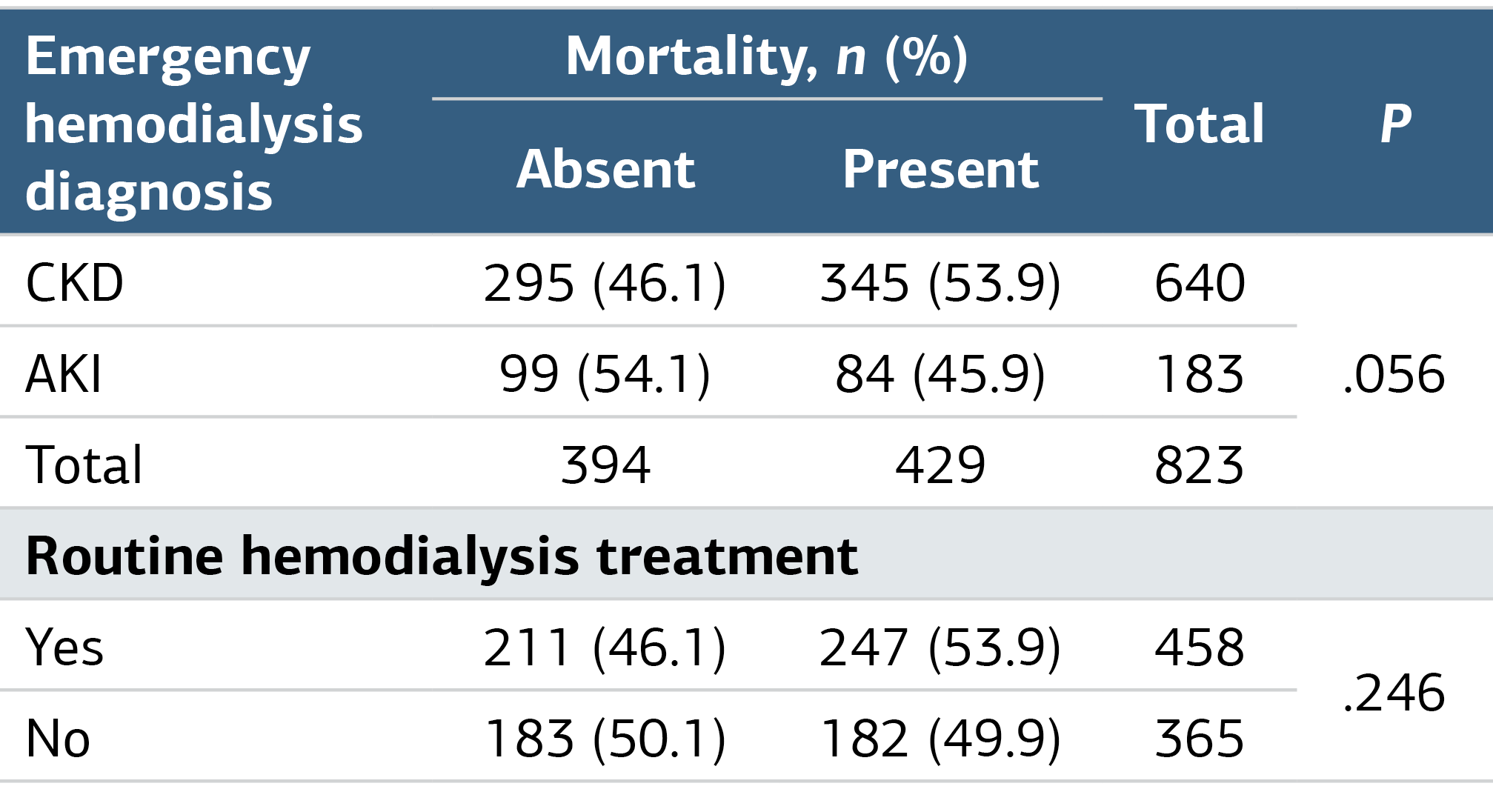
Pearson chi-square test; CKD, Chronic kidney disease; AKI, Acute kidney injury.
Table 2. Correlation Between Mortality and Laboratory Parameters
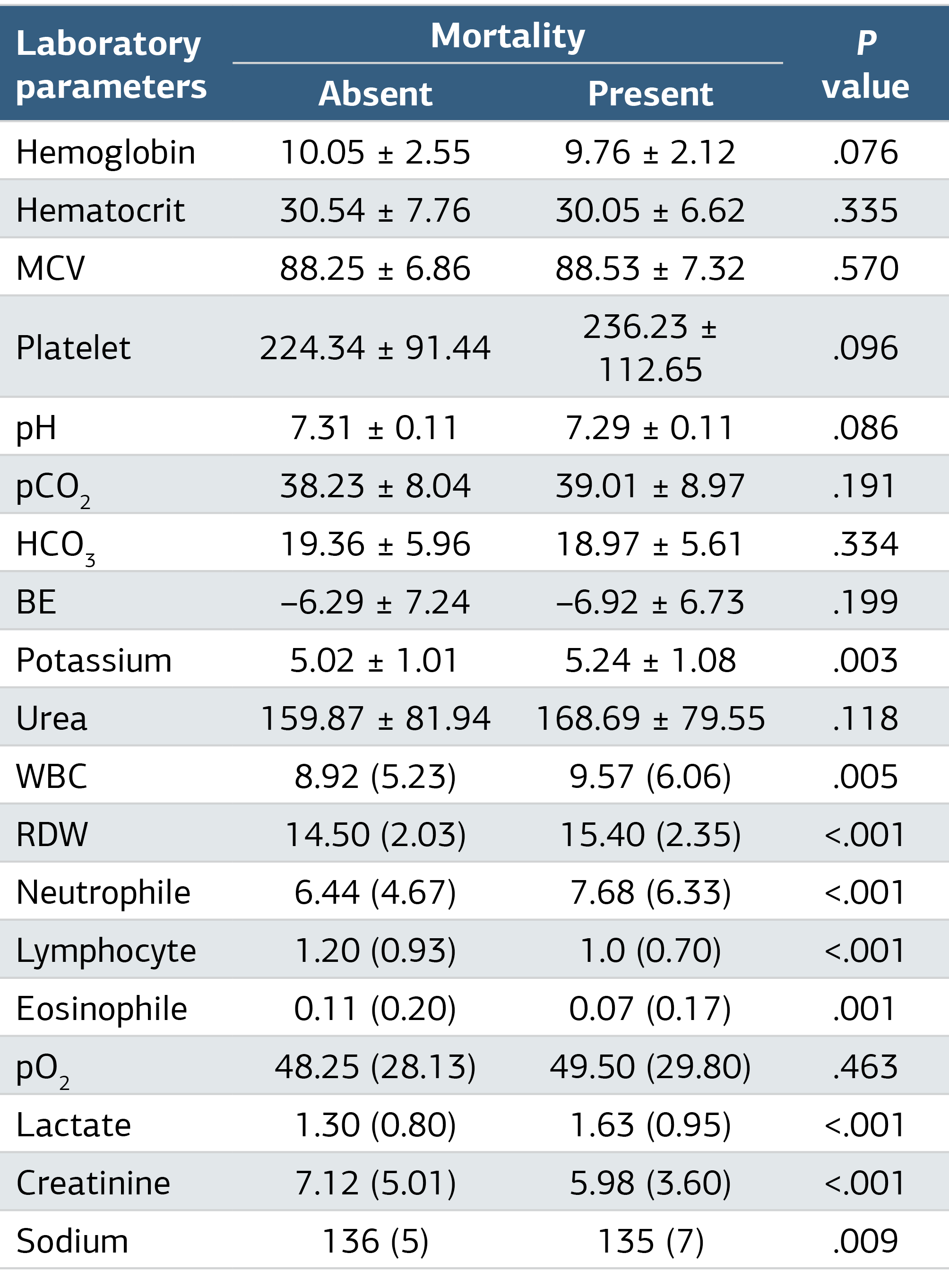
Data that fit the normal distribution are shown as mean±SD, and data that do not fit are shown as median (IQR). The independent sample t-test was used to analyze normally distributed data, and the Mann Whitney U test was used to analyze data that did not fit.
Additional Information
Publisher’s Note
Bayrakol MP remains neutral with regard to jurisdictional and institutional claims.
Rights and Permissions

This work is licensed under a Creative Commons Attribution-NonCommercial 4.0 International License (CC BY-NC 4.0). To view a copy of the license, visit https://creativecommons.org/licenses/by-nc/4.0/
About This Article
How to Cite This Article
Ramiz Yazıcı, Efe Demir Bala, Ayşe Fethiye Basa Kalafat, İsmail Enver Obuz, Abdullah Aksu, Utku Murat Kalafat, Serkan Doğan. Relationship between eosinophil count and mortality in emergency hemodialysis patients. Ann Clin Anal Med 2024;15(7):510-513. doi:10.4328/ACAM.22200
Publication History
- Received:
- 27.03.2024
- Accepted:
- 13.05.2024
- Published Online:
- 25.06.2024
- Printed:
- 01.07.2024