
Abstract
AimThe aim of this study was to retrospectively examine the changes in serum cardiac marker enzyme levels in patients who underwent total hysterectomy with laparoscopic and abdominal methods.MethodsThis retrospective study included a total of 101 patients randomized between October 2017 and February 2018 in the department of gynecology and obstetrics of a tertiary health center. Total laparoscopic hysterectomy (TLH) was performed in 48 patients (47.5%) and total abdominal hysterectomy (TAH) in 53 patients (52.5%). Demographic data were compared with cardiac marker enzymes (creatine kinase, creatine kinase MB, lactate dehydrogenase, and troponin T levels in the TLH and TAH groups evaluated preoperatively and postoperative 6th and 12th hours.ResultsIn the TLH group, troponin T level at the 12th hour was significantly higher than those measured at the other two time periods (p<0.001). Troponin T levels at 6th and 12th hours postoperatively in the TAH group were significantly higher than the baseline value (p<0.001). There was a statistically significant difference in the CK-MB level between the three time points of the TLH group (p=0.005). Baseline and 12th-hour values were significantly higher than the value measured at the 6th hour. Creatine kinase levels in the TAH and TLH groups were significantly higher at the 12th hour, 6th hour, and at baseline (p<0.001). The median creatine kinase level in the TAH group was higher than in the TLH group (p<0.001).ConclusionCardiac problems that may occur before, during, or after gynecological interventionFs in female patients may have an unusual clinical presentation. Considering the cardiac risk profile of the patient, in addition to the experience and technical possibilities of the surgeon, is important to prevent complications when the decision is made regarding the realization of hysterectomy using laparoscopic or abdominal methods.
Keywords
Introduction
Cardiovascular disease (CVD) is the leading cause of mortality worldwide and mortality due to CVD has increased remarkably in recent years. Women have a later onset of CVD than men, and estrogen has vascular protection against atherosclerosis, but coronary heart disease and CVD mortality are increased in young women aged 35 to 54 years. In addition to traditional risk factors, some clinical conditions specific to women have been shown to increase CVD risks such as preeclampsia, gestational diabetes, polycystic ovarian syndrome, early menopause, and autoimmune diseases.1-3 However, coronary artery disease (CAD) is a notable cause of death in women and may affect women at a younger age than most people realize.4 The incidence of CAD has decreased in men, whereas it has increased among women. It has been determined that with increasing age, women are at a higher risk of CAD than men of the same age.5 Postmenopausal and premenopausal women display variation in terms of symptomatology, risk factors, disease characteristics, prognosis, and recurrence rates of CVD. Nevertheless, the presumably low incidence of CVD, particularly in pre-menopausal women, may have hindered some of the critical aspects and risk factors for CVD in this particular population.6-7
Identification of prodromal symptoms is supposed to be critical for effective screening, diagnosis, and treatment of CAD.8 It may be crucial to understand and distinguish the symptoms linked with acute cardiac pathologies.7 Nevertheless, symptoms detected in younger women are atypical, and dormant cardiac ischemia patients may exhibit a more severe form of the disease.8-9 For instance, a previous publication reported that relatively young women with CAD might not suffer from chest pain.10-11 In another study, pre-menopausal women displayed rapid onset of myocardial infarction without typical angina.12 Autopsy research has demonstrated that coronary artery lesions in young women contain less calcium and dense fibrous tissue than those of men and older women.13-14 Coronary atherosclerotic plaque of young patients was comprised mainly of fatty deposits, which were extremely easy to rupture and caused acute coronary thrombosis that led to acute cardiovascular disease.15
Though patients operated with the indication of gynecologic cancer generally have favorable survival, postoperative complications may develop. Cardiac problems, among these complications, worsen the quality of life and affect morbidity and mortality significantly. In this respect, it is important to determine the preoperative, intraoperative, and postoperative risk factors for CAD, to take the necessary precautions and early intervention by early detection of CAD. In female patients, coronary artery disease has different manifestations than the usual clinical picture. Patients who undergo hysterectomy are often in their postmenopausal period, so vascular protective effect of estrogen hormone is relieved. We also performed this study to determine whether cardiac enzyme levels change dependent on laparoscopic or abdominal hysterectomy. Since there are no studies in this literature concerning this issue, we believe that our findings will be encouraging for future studies and that our findings will benefit from the perspectives of detection and elimination of possible cardiac risks in female patients.
Materials and Methods
This retrospective study was conducted in a tertiary health center in the Department of Obstetrics and Gynecology, following the approval of the local ethics committee. The mean age of the patients was 49.52 ± 8.45 years (range: 38-74). Patients were divided into two groups according to the performed surgical interventions as total laparoscopic hysterectomy (TLH) and total abdominal hysterectomy (TAH) groups. Total laparoscopic hysterectomy was performed in 48 patients (47.5%) and total abdominal hysterectomy in 53 patients (52.5%). Serum creatine kinase (CK), creatine kinase-MB (CK-MB), cardiac troponin T, and lactate dehydrogenase (LDH) levels of the patients were measured together with demographic data such as age (years) and body mass index (kg/m2). Serum levels of these enzymes were measured three times, preoperatively and at 6th and 12th hours postoperatively. None of the patients in this series had cardiogenic shock, renal failure, or rhabdomyolysis at the sampling time. All the samples for serum level measurements of CK, CK-MB, LDH, and troponin T were batch assayed by a single operator who was unaware of the patient’s diagnosis, treatment, or outcome.
The total level of plasma CK was evaluated via a standard method using a commercially available reagent kit (Boehringer, Mannheim, Germany) on a Hitachi 717 analyzer. Activity was expressed as IU/l at 37°C, and the interassay coefficient of variation for normal values was found to be 4.4%. The activity of CK-MB was also determined in each specimen with the CK-MB (NAC-activated) reagent (Boehringer, Mannheim, Germany). Analysis of CK isoenzymes was performed using electrophoresis and scanned fluorimetrically with the REP system (Helena Laboratories) as described in the relevant literature.16 Troponin T was measured with an enzyme-linked one-step sandwich immunoassay with streptavidin technology on the ES-300 immunochemical analyzer (CARDIAC T ELISA Troponin T, a kind gift of Boehringer Mannheim Corp, Indianapolis, Ind, USA). No hemolyzed or EDTA-treated samples were measured.17 Serum LDH levels were determined according to Wroblewsky et al. at the time of the diagnosis. Activity was measured at 25°C on a Beckman 25K Spectrophotometer (Beckman Instruments, Palo Alto, Calif., USA) with a recording system and expressed as mU/ml serum.Ethical ApprovalThe study was approved by the Ethics Committee of Health Sciences University Kanuni Sultan Süleyman Training and Research Hospital (Date: 24.02.2021, Decision No: 71).Statistical AnalysisSPSS 21 program (Chicago, USA) was used for data analysis. The normal distribution assumption of the variables was examined using the Kolmogorov-Smirnov test. The mean ± standard deviation when assumptions are provided for descriptive statistics, and the median [25th percentile-75th percentile] are given. In the comparison of the TLH and TAH groups, the difference between the two means was tested for significance, and the Mann-Whitney test was used when the assumptions were not met. The Friedman test was used to examine whether there was any change in three groups (beginning, 6 hours, 12 hours) in each group. Binary comparisons have been made to determine the time of the difference when there is a difference between the times. A value of p<0.05 was considered statistically significant.Reporting GuidelinesThis study was reported in accordance with the STROBE guideline.
Results
Descriptive parameters and serum CK, CK-MB, LDH, and troponin T levels recorded in both groups are comparatively presented in Table 1. There was no statistically significant difference between the TLH and TAH groups for mean age (p=0.156) and body mass indices of the patients (p=0.660). There was a statistical difference in the level of serum troponin T among three time periods (baseline, 6 and 12 hours) in the TLH group (p<0.001). The time frame that made the difference was related to the 12th hour. Troponin T levels at the 12th hour were significantly higher than in the other two time periods. There was a statistically significant difference in the level of troponin T between the three time periods in the TAH group (p<0.001). The difference was related to the 6th and 12th hours, and the troponin T levels in these time periods were significantly higher than the baseline values. There was a statistically significant difference in the CK-MB level between the three time points in the TLH group (p=0.005). The difference was related to the baseline and the 12th-hour values. The baseline and 12th-hour values were significantly higher than the value measured at the 6th hour. The level of CK in the TLH group was significantly higher than that measured at the 6th and 12th hours (p<0.001). In the TAH group, CK levels were found to be significantly higher at the 12th hour, relative to 6th hour and baseline measurements. There was a statistically significant intergroup difference in 6th-hour serum CK levels (p<0.001). The median CK level in the TAH group was higher than the TLH group. Baseline CK values did not differ between groups, while a significant intergroup difference occurred in CK variable beginning from the 6th hour. In the TLH group, LDH levels at 6th and 12th hours were higher when compared with the baseline LDH values. In the TAH group, serum LDH levels at 12th hours were higher than baseline and 6th-hour values (Figure 1).
Discussion
Gynecologic surgeries vary according to age, type of cancer, and stage of cancer. Many surgical techniques can be applied, ranging from conization and simple hysterectomy to invasive cytoreductive surgery. Adjuvant treatments and supportive treatments may be needed in advanced cancer patients after the surgery. These complications may also increase in proportion to the extent of the surgery. The proximity to the gynecological organs increases the risk of complications such as vascular injury, ureteral injury, bladder perforation, and bowel injury. The injury of organs near the surgical site may result in partial or complete organ damage and failure. Problems ranging from organ perfusion disorder due to severe blood loss to death may occur after vascular injuries. Anesthetic agents decrease urine output, glomerular filtration rate, renal blood flow, and electrolyte excretion.18 As effects of anesthesia, vasodilatatory and myocardial depressant effects of anesthetic agents, volume deficit, negative effects of mechanical ventilation on the lungs, and hypoxia may be enumerated. Hypoxemia may develop under anesthesia and factors such as some antibiotics, renal hypertrophy, non-steroidal anti-inflammatory drugs, angiotensin-2, calcium ion, myoglobin, hyperbilirubinemia, and contrast agent may worsen hypoxemia.19
Although studies with new biomarkers continue, there are a number of applicable tests that currently address different aspects of cardiac function. With increasing age, functional capacities of organs are reduced, and their ability to respond to stress is lost. While advanced age alone is an increased risk for organ dysfunction, the presence of accompanying illness will further reduce organ function and increase risk.20 Many agents used in general anesthesia (especially volatile agents) cause myocardial depression and peripheral vasodilatation, and vasoconstriction or fluid replacement is required to preserve organ perfusion. Another mechanism that increases fluid loss during general anesthesia is mechanical ventilation. During intubation, dry cold air from the anesthesia machine can cause significant fluid loss if heat-moisture filtration is not used.19 Tachycardia is a common symptom in cancer patients and can be caused by anemia, hypovolemia, infection, medications, or chemotherapy. Tachycardia due to hypovolemia before surgery may be a risk factor for cardiovascular complications. Early diagnosis and treatment of hypoperfusion and hypovolemia may, therefore, be effective in preventing possible cardiac risks.18 The more invasive the surgical procedure, the greater the complication rate and the longer the operative time.
In interventions affecting more than one organ, maintenance of the hemodynamic stability can be challenging. Gynecologic surgeries can lead to hemodynamic instability after surgeries as extensive surgical excision, such as radical hysterectomy and debulking.18 The extent of the surgical procedure to be performed also affects operative time. The prolongation of the operative time increases surgical site complications, and also causes the patient to be exposed for longer times to anesthesia and mechanical ventilation. Catabolic hormones and cytokines released by surgical stimuli, embolies, ischemia-reperfusion injury, renal ischemia, and inflammation increase the risk of long-term invasive procedures. Combined increase of catabolic hormones and cytokines may lead to an increased risk of coronary artery disease.19
Postoperative vascular trauma, leakage from dissection surfaces, blood loss, and associated transfusion requirements are among the factors that can increase cardiovascular risks. Often intraoperative vascular injuries may occur during laparoscopic surgeries, but they can also be seen in surgeries as laparotomy, and especially in cytoreductive, invasive surgeries. Cancer surgery carries a certain risk for arterial and venous injuries due to the deteriorated anatomy. During oncologic resections, iatrogenic operative major venous injuries can cause catastrophic complications with high morbidity and mortality. In this case, immediate recognition of these injuries is necessary to obtain a safe and acceptable treatment.21
Since the patient population undergoing hysterectomy is predominantly composed of elderly women, careful attention should be paid to multiorgan dysfunction. With this respect, we hope that the results of our study will also provide important clues for the care of geriatric patients and their surgical treatment. Our findings showed that during the hysterectomy significant changes in serum CK, CK-MB, LDH, and troponin T levels occur. Careful evaluation of cardiac and vascular conditions during preoperative evaluation of the patients for whom gynecologic surgery is planned carries importance.
Limitations
The major limitations of our study include the relatively small number of cases, data limited to the experience of one center, and the measured enzyme levels affected by metabolic, environmental, and genetic factors.
Conclusion
In conclusion, when the decision of hysterectomy is made by the laparoscopic or abdominal method, the cardiac risk profile of the patient should be considered in addition to the criteria such as the surgeon’s experience and technical possibilities. Cardiac problems that may occur before, during, or after gynecological interventions in female patients may present with an unusual clinical picture. Being prepared and vigilant by carefully evaluating all clinical cues in this regard may be helpful in reducing the frequency and severity of subsequent complications.
Declarations
Animal and Human Rights Statement
All procedures performed in this study were in accordance with the ethical standards of the institutional and/or national research committee and with the 1964 Helsinki Declaration and its later amendments or comparable ethical standards.
Informed Consent
The requirement for informed consent was waived due to the retrospective design of the study.
Data Availability
The datasets used and/or analyzed during the current study are not publicly available due to patient privacy reasons but are available from the corresponding author on reasonable request.
Conflict of Interest
The authors declare no conflicts of interest.
Funding
None.
Abbreviations
BMI: Body mass index
CAD: Coronary artery disease
CK: Creatine kinase
CK-MB: Creatine kinase MB
CVD: Cardiovascular disease
LDH: Lactate dehydrogenase
TAH: Total abdominal hysterectomy
TLH: Total laparoscopic hysterectomy
References
- Go AS, Mozaffarian D, Roger VL, et al. Heart disease and stroke statistics: a report from the American Heart Association. Circulation. 2014;129(3).
- Lozano R, Naghavi M, Foreman K, et al. Global and regional mortality from 235 causes of death for 20 age groups in 1990 and 2010: a systematic analysis for the Global Burden of Disease Study 2010. Lancet. 2012;380(9859):2095-2128. doi:10.1016/s0140-6736(12)61728-0
- Young L, Cho L. Unique cardiovascular risk factors in women. Heart. 2019;105(21):1656-1660. doi:10.1136/heartjnl-2018-314268
- Hayes SN, Wood SF, Mieres JH, Campbell SM, Wenger NK. Taking a giant step toward women’s heart health: finding policy solutions to unanswered research questions. Womens Health Issues. 2015;25(5):429-432. doi:10.1016/j.whi.2015.07.001
- Rodgers JL, Jones J, Bolleddu SI, et al. Cardiovascular risks associated with gender and aging. J Cardiovasc Dev Dis. 2019;6(2):19. doi:10.3390/jcdd6020019
- O’Keefe-McCarthy S, Ready L. Impact of prodromal symptoms on future adverse cardiac-related events: a systematic review. J Cardiovasc Nurs. 2016;31(1). doi:10.1097/jcn.0000000000000207
- McSweeney J, Cleves MA, Fischer EP, et al. Predicting coronary heart disease events in women: a longitudinal cohort study. J Cardiovasc Nurs. 2014;29(6):482-492. doi:10.1097/jcn.0b013e3182a409cc
- Solimene MC. Coronary heart disease in women: a challenge for the 21st century. Clinics (Sao Paulo). 2010;65(1):99-106. doi:10.1590/s1807-59322010000100015
- Canto JG, Rogers WJ, Goldberg RJ, et al. Association of age and sex with myocardial infarction symptom presentation and in-hospital mortality. JAMA. 2012;307(8):813-822. doi:10.1001/jama.2012.199
- Lichtman JH, Leifheit-Limson EC, Watanabe E, et al. Symptom recognition and healthcare experiences of young women with acute myocardial infarction. Circ Cardiovasc Qual Outcomes. 2015;8(2 suppl 1). doi:10.1161/circoutcomes.114.001612
- Khan NA, Daskalopoulou SS, Karp I, et al. Sex differences in acute coronary syndrome symptom presentation in young patients. JAMA Intern Med. 2013;173(20):1863-1871. doi:10.1001/jamainternmed.2013.10149
- Yihua L, Yun J, Dongshen Z. Coronary artery disease in premenopausal and postmenopausal women. Int Heart J. 2017;58(2):174-179. doi:10.1536/ihj.16-095
- Dollar AL, Kragel AH, Fernicola DJ, Waclawiw MA, Roberts WC. Composition of atherosclerotic plaques in coronary arteries in women less than 40 years of age with fatal coronary artery disease and implications for plaque reversibility. Am J Cardiol. 1991;67(15):1223-1227. doi:10.1016/0002-9149(91)90931-a
- Mautner SL, Lin F, Mautner GC, Roberts WC. Comparison in women versus men of composition of atherosclerotic plaques in native coronary arteries and in saphenous veins used as aortocoronary conduits. J Am Coll Cardiol. 1993;21(6):1312-1318. doi:10.1016/0735-1097(93)90302-h
- Wolfe MW, Vacek JL. Myocardial infarction in the young: angiographic features and risk factor analysis of patients with myocardial infarction at or before the age of 35 years. Chest. 1988;94(5):926-930. doi:10.1378/chest.94.5.926
- Zorn JR, Cherruau B, Abi-Rached F, et al. Evaluation of maternal plasma creatine kinase activity as a marker of abnormal early pregnancy. Hum Reprod. 1997;12(11):2534-2537. doi:10.1093/humrep/12.11.2534
- Lipshultz SE, Rifai N, Sallan SE, et al. Predictive value of cardiac troponin T in pediatric patients at risk for myocardial injury. Circulation. 1997;96(8):2641-2648. doi:10.1161/01.cir.96.8.2641
- Han AR, Kim DY, Suh DS, et al. Postoperative acute renal failure in patients with gynecologic malignancies: analysis of 10 cases and review of the literature. J Gynecol Oncol. 2009;20(1):55-59. doi:10.3802/jgo.2009.20.1.55
- Brochard L, Abroug F, Brenner M, et al. An official ATS/ERS/ESICM/SCCM/SRLF statement: prevention and management of acute renal failure in the ICU patient; an international consensus conference in intensive care medicine. Am J Respir Crit Care Med. 2010;181(10):1128-1155. doi:10.1164/rccm.200711-1664st
- Rodgers A, Walker N, Schug S, et al. Reduction of postoperative mortality and morbidity with epidural or spinal anaesthesia: results from overview of randomised trials. BMJ. 2000;321(7275):1493. doi:10.1136/bmj.321.7275.1493
- Oktar GL. Iatrogenic major venous injuries incurred during cancer surgery. Surg Today. 2007;37(5):366-369. doi:10.1007/s00595-006-3416-1
Tables
Table 1. A comparative overview of demographic parameters and serum enzyme levels in total laparoscopic hysterectomy (TLH) and total abdominal hysterectomy (TAH) during various time intervals before and after surgery
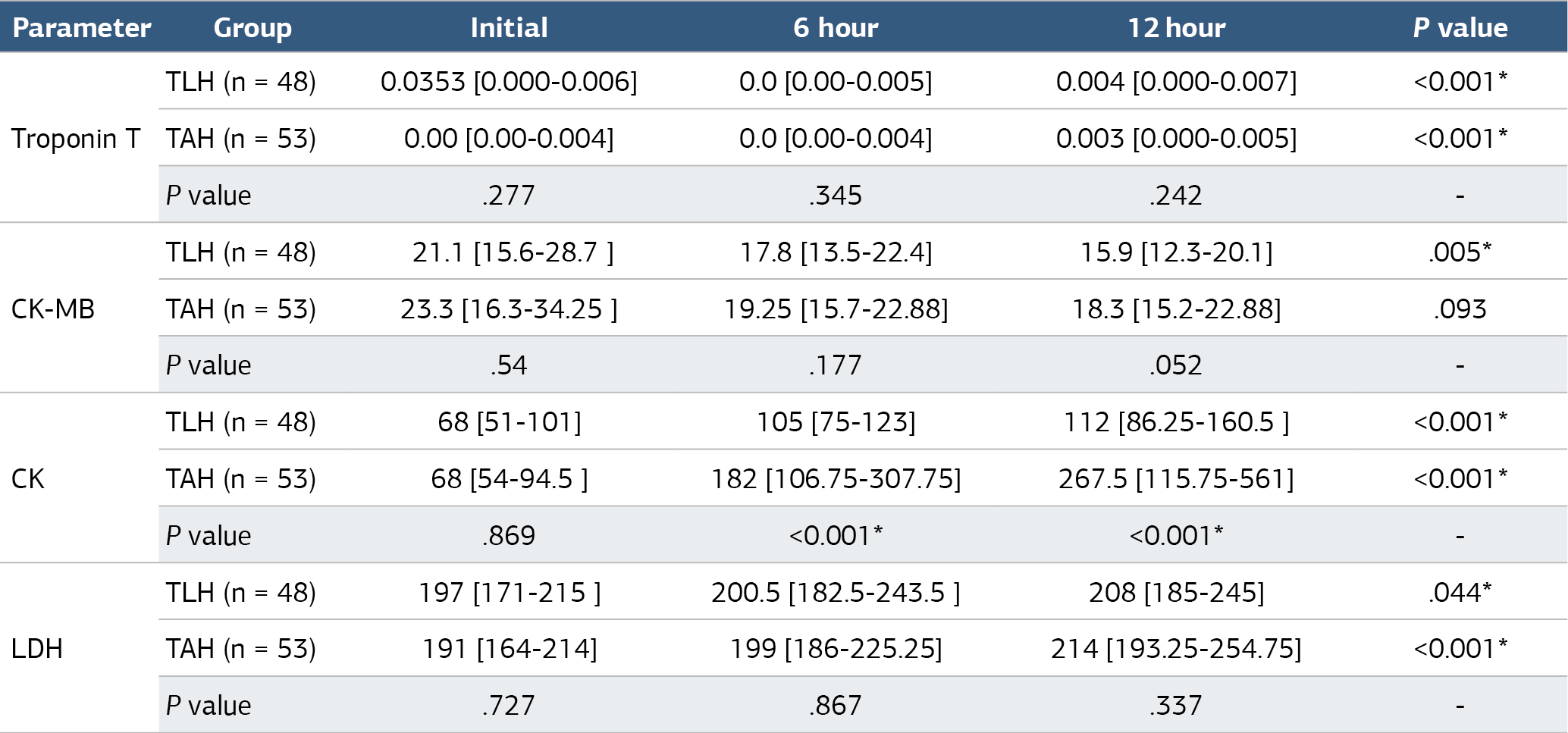
TLH: total laparoscopic hysterectomy; TAH: total abdominal hysterectomy; BMI: body-mass index; CK: creatine kinase; CK-MB: creatine kinase MB; LDH: lactate dehydrogenase; *: statistically significant)
Figures
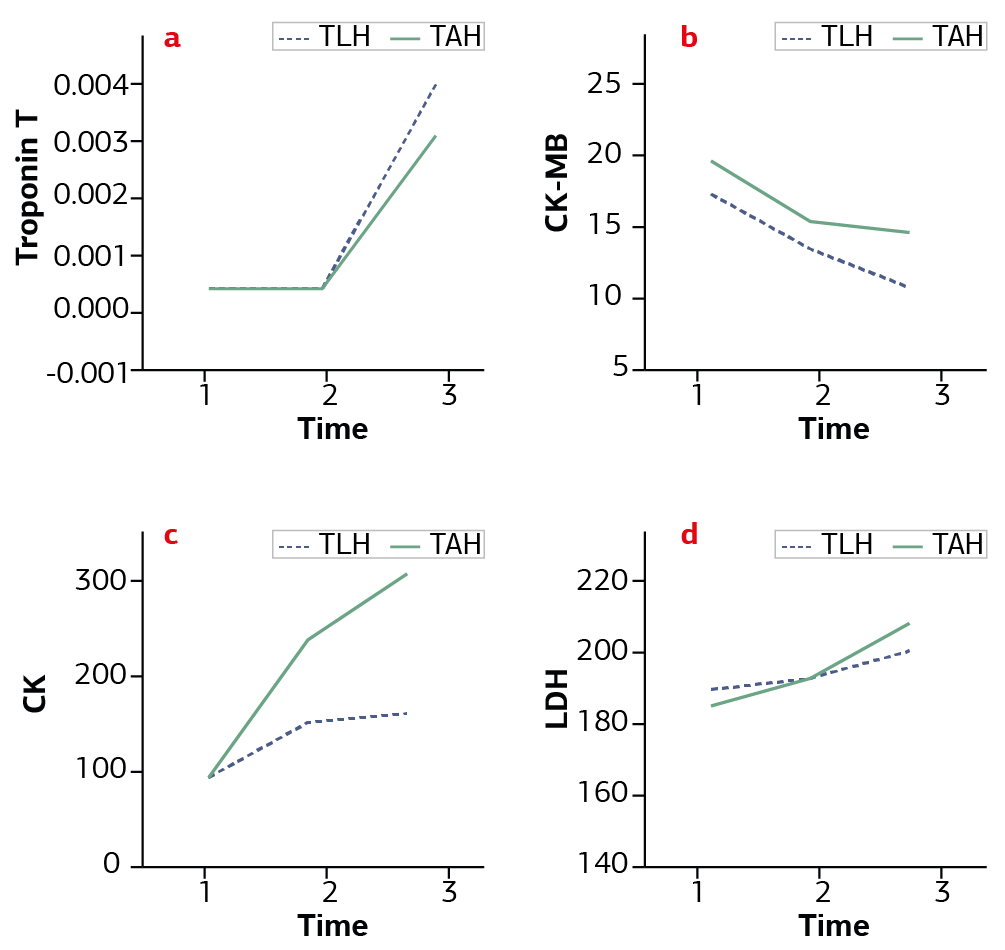
Figure 1. Serum levels of cardiac biomarkers in total abdominal hysterectomy and total laparoscopic hysterectomy groups initially, on 6th and 12th hours a) Troponin T; b) Creatine Kinase-MB; c) Creatine Kinase; d) Lactate dehydrogenase
Additional Information
Publisher’s Note
Bayrakol MP remains neutral with regard to jurisdictional and institutional claims.
Rights and Permissions

This work is licensed under a Creative Commons Attribution-NonCommercial 4.0 International License (CC BY-NC 4.0). To view a copy of the license, visit https://creativecommons.org/licenses/by-nc/4.0/
About This Article
How to Cite This Article
Nevin Aydın, Hatice Ateş, Osman Esen. Comparison of serum levels of cardiac biomarkers during hysterectomies. Ann Clin Anal Med 2025;16(Suppl 1):1-5. doi:10.4328/ACAM.21267
Publication History
- Received:
- 12.06.2022
- Accepted:
- 05.10.2022
- Published Online:
- 21.10.2022
- Printed:
- 25.03.2025