
Abstract
AimIn this study, we aimed to evaluate the postoperative analgesic efficacy and side effects of bupivacaine and levobupivacaine for dorsal penile blockage in circumcised patients.MethodsA total of 84 circumcised patients (age range: 7-11 years) were enrolled in this study. The patients were divided into two groups according to the dorsal penile block method: bupivacaine utilized Group B, levobupivacaine utilized Group L. Blocks were administered preoperatively with 1mL kg-1 of 0.25% bupivacaine and levobupivacaine. Postoperative pain scores and sedation were evaluated. Pain assessment was performed using the Wong-Baker faces Pain Scale (WBPS). The number of patients without pain within the first 6 hours, analgesia duration, time of first analgesia, and total paracetamol consumption were recorded.ResultsMean scores of WBPS were found statistically higher at the first, second and third hours in group B than in group L (P < .001,05). The results showed no statistically significant differences between groups according to the WBAS assessment at 4, 5 and 6 hours, rates of rescue analgesic requirement and also rescue paracetamol dose between the groups. ConclusionAdministration of levobupivacaine for dorsal penile blockage was found to be more efficient to provide postoperative analgesia and also to reduce postoperative analgesia utilization than bupivacaine in circumcised children under general anesthesia.
Keywords
Introduction
The number of outpatient minor surgeries due to various indications is increasing. Optimal analgesia in outpatient surgery enhances patient satisfaction, reduces the length of hospitalization, and prevents unnecessary hospital admissions.1 Postoperative pain control is essential for medical, ethical and social reasons. The operation type, pain location and severity, as well as children’s socio-cultural state, pain recognition level, emotional and behavioral development should be carefully taken into consideration when planning the optimal pain therapy. Perioperative pediatric analgesia should be provided optimally.2-6
Severe pain occurs mostly within the first 2 hours after circumcision surgery. Conventional pain control management has been commonly provided by systemic non-steroidal anti-inflammatory drugs or opioids. Recently, various pain control techniques are available such as caudal epidural block, dorsal penile block, subpubic penile block, subcutaneous ring block and pudendal nerve block, which provide perioperative pain control by adding local analgesics into the systemic analgesic drugs.4,7-11 Although it is crucial to provide adequate analgesia for a painless period after operation by long-acting local analgesics with a single dose, it has not been achieved yet in circumcision procedures.12 Levobupivacaine is the racemic enantiomer of bupivacaine, additionally, both levobupivacaine and bupivacaine have similar anesthetic and analgesic effects at the same doses.13
In the present study, we aimed to compare the postoperative analgesic effects of %0.25 bupivacaine and %0.25 levobupivacaine for dorsal penile blockage under general anesthesia in circumcised patients.
Materials and Methods
This study was performed with the Institutional Review Board protocol approval number 2013/120 at Kocaeli Derince Research and Education Hospital, Department of Burn Treatment Center. According to the American Society of Anesthesiologists (ASA) criteria, 84 ASA I and II group male children (aged 7 to 11 years) were included in this study with planning for a future circumcision procedure. This is a prospective, single-center, randomized, double-blind and controlled study. Exclusion criteria were: history of allergy to amid-type local anasthetics, history of seizures, the existence of chronic pain and history of analgesic drug utilization, presence of bleeding diathesis and an systemic disease (cardiac, renal, hepatic or respiratory).
All patients received the same anesthetic after a 6-hour fasting. To prevent anesthesia induction and surgical stress, premedication with 0.5 mg/kg oral midazolam was performed 60 minutes before the operation. Patients were monitored, and anesthesia induction was provided by intravenous bolus application of propofol 2-3 mg/kg. A laryngeal mask suitable for the age and weight of the children was placed after the induction. The anesthesia depth required for surgical intervention was provided by 50% N2O+50% O2 and 1-4% sevoflurane. Opioids, benzodiazepines and other medicines that affect central pain were not used.
The patients were divided into two groups using a sealed envelope technique, which is based on computer-generated random numbers. Bupivacaine 0.25% was prepared for Group B and 0.25% levobupivacaine was prepared for Group L preoperatively with a total volume of 1mL kg-1 by a physician who was not a participant of the present study. All the blocks and the surgical procedure were performed by a physician who even did not know what medicine was given to the patients. The blocks were performed through the dorsal penile blockage and ventral preputium infiltration via 25-gauge needles in the supine position under sterile conditions.
Before the surgical incision, the depth of analgesia was assessed by sending a mechanical stimulus with a surgical clamp to the foreskin. The adequacy of analgesia was determined as the absence of gross body movements (extension or flexion of the arms and legs, chest extension, flexion of the head, abdominal contraction) or absence of significant (±15%) change in MBP and HR.
The awakened patients were taken to the recovery room at the end of the operation. The Modified Aldrete Recovery Scores (MARS) was used to assess recovery level, scores of 9 and higher indicated the complete recovery state. Demographic data (age, weight, duration of surgery), existence of pain and pain level throughout 1-6 hours, time of first analgesia administration, and consumption of rescue analgesic (paracetamol) within the first 6 hours were documented and recorded. Postoperatively, pain and sedation scores were also assessed. The Wong-Baker faces Pain Scale (WBPS) was used to assess as a pain rating scale.
The administration of rescue analgesic (paracetamol 10mg.kg-1IV) was only applied to the children with higher WBPS 4 scores postoperatively. The time of the first analgesic order was measured. Children were observed for pain, postoperative anesthesia, and surgical complications for six hours. Follow-up patients who were comfortable, mobile, able to conceive oral fluids and able to urinate were discharged on the same day.Ethical ApprovalThis study was approved by the Institutional Review Board of Kocaeli Derince Research and Education Hospital (Date: 2013, Decision No: 2013/120).,Statistical AnalysisAll data were analyzed with SPSS (Statistical Package for the Social Sciences) software for Windows (v21.0; IBM, Armonk, NY, USA). Individual and aggregate data were summarized using descriptive statistics, including mean, standard deviations, medians (min-max), frequency distributions and percentages. Analysis of intermittent data (requirement for rescue analgesia, nausea and vomiting etc.) was compared using Pearson’s Chi-Square test. Continuous variables such as age, weight and operation duration were compared using the Student t-test. Evaluation of continuous variables obtained from measures (first analgesic time, etc.) performed using the Mann-Whitney U test. P Values <0.05 were considered statistically significant.Reporting GuidelinesThis randomized controlled trial was reported in accordance with the CONSORT guidelines.
Results
Eighty-four patients who underwent circumcision operation were enrolled in this study. The patients were divided into two groups: bupivacaine was utilized in Group B (n = 42), levobupivacaine was utilized in Group L (n = 42). There was no statistically significant difference between the groups according to age, body weight, ASA state and operation duration.
According to results of WBAS evaluation at 1, 2, 3, 4, 5 and 6 hours between the groups, mean scores of WBPS were statistically higher at 1, 2 and 3 hours in Group B than in Group L (respectively, p:0,015, p:0,009, p:0,034). Meanwhile, the results showed no statistically significant differences at 4, 5 and 6 hours between the groups (Table 1).
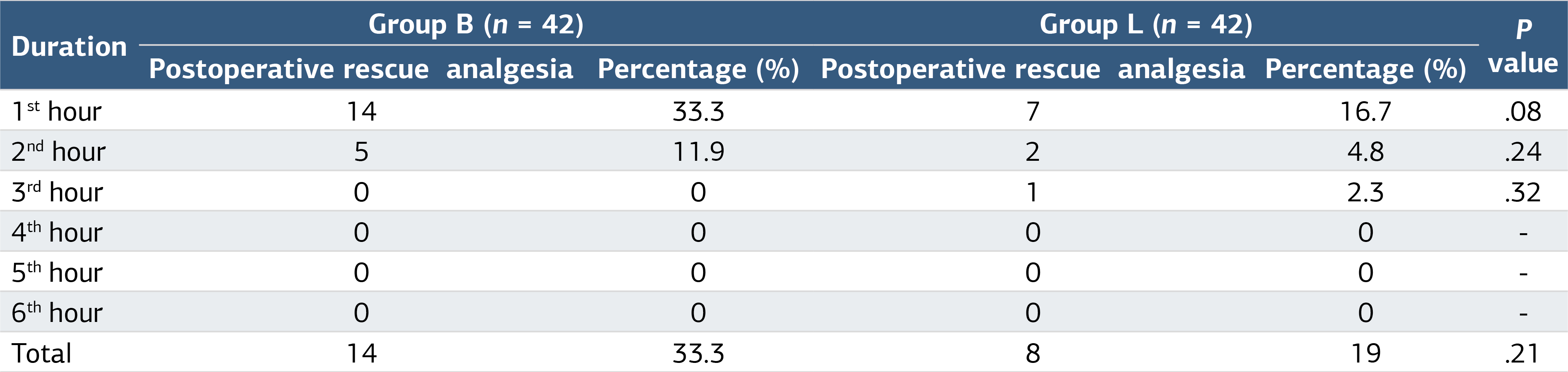
In addition, no statistically significant differences were found according to the rates of additional analgesic requirement at 1, 2, 3, 4, 5 and 6 hours between the groups (P < .05). There was also no significant difference (P = .21) between the groups according to the rate of total rescue analgesic requirement between the groups (Table 2). Similarly, there was no significant difference between the groups according to the postoperative administration of the total paracetamol dose (Figure 1).
There were no postoperative surgical complications, nausea, vomiting, headache, dizziness or itchiness observed in any of our patients. Additionally, there was no statistically significant difference found between the groups according to the rates of postoperative surgical complications (P > 0,05).
Discussion
As with all invasive procedures, pain management is also important in minor surgery. Numerous studies documented that the effect of analgesia varies according to the type of surgery, the age of the patient, and also the type and amount of local anesthetic drug.14,15 Different methods are used to assess pain in children. Children older than three years can give information about the localization, severity and quality of the pain, depending on their own developmental status. In the face scale system, which is the most frequently used method of pain measurement based on personal expression, the child has an opportunity to express his pain through the scales with different expression drawings.
Although methods such as pain thermometers, color analog scales, etc. are used in children aged 5 years and older, the face scale system is considered the most reliable one.16 In this study, the children were between the ages of 7 to 11 and were able to express their pain, therefore we used the Wong-Baker Faces Pain Scale. However, there are a considerable number of studies comparing caudal block and penile block, and comparing bupivacaine and levobupivacaine in caudal block for postoperative analgesia in circumcision operation, to our knowledge no published data are available such as a comparison of bupivacaine and levobupivacaine for dorsal penile blockage in circumcision operation. In the present study, we compared the postoperative analgesic efficiency of %0.25 bupivacaine and %0.25 levobupivacaine for dorsal penile blockage under general anesthesia in circumcised patients.
Levobupivacaine is a racemic S-(-) enantiomer of bupivacaine, which shows no definitive physicochemical differences compared to racemic bupivacaine. It has less toxic effect on the central nervous and the cardiovascular systems. Randomized double-blind studies have shown that bupivacaine and levobupivacaine both have similar anesthetic and analgesic effects when used in equal dosages. However, compared to bupivacaine levobupivacaine has a tendency to exhibit less motor blockade and a more elongated sensory block, thus creating a longer postoperative duration of analgesic impact.13,17
In a prospective randomized double-blind study Locatelli et al. have compared caudally administered 0.25% levobupivacaine, 0.25% bupivacaine and 0.25% ropivacaine with a total dosage of 1 ml/kg in an undescended testis or inguinal hernia repair, additionally with a total dosage of 0.5 ml/kg in phimosis and incisions below L3. They have reported a elongated analgesic effects of bupivacaine compared to levobupivacaine and ropivacaine.14 Kaya et al. also have used a 0.5 ml/kg total dosage of 0.25% levobupivacaine and 0.25% bupivacaine in comparison with one another for caudal administration in circumcision surgery; they reported longer periods of analgesic effects of bupivacaine than levobupivacaine, thus stating that it has provided better analgesia.18
In our study, for the first second and third hours of postoperative duration, average WBAS scores of Group B were higher than that of Group L in a statistically significant percentage (respectively, P = .015, P = .009, P < .001,034). However, in a second evaluation of WBAS scores after four hours, no statistically significant differences have been detected between the two groups (respectively, P = .43, P = .70, P < .001,32). We consider that in a dorsal penile blockage, administration of %0.25 levobupivacaine is more effective for maintaining analgesia than %0.25 bupivacaine in the first postoperative three hours. When comparing the need for rescue analgesics in the 1st, 2nd and 3rd hours consecutively for the two groups, no statistically significant differences were observed (respectively, P = .079, P = .24, P = .32). The total requirement of rescue analgesic ratios was not significantly different either (P < .001,21). After the fourth hour of postoperative duration, patients in both groups did not require any additional analgesia. As a result, we think that for the children undergoing circumcision operations under general anesthesia, administration of dorsal penile block with the use of 0.25% levobupivacaine and 0.25% bupivacaine provide the needed analgesia after the 4th hour of the postoperative process.
Bengisun et al. have compared caudal and penile levobupivacaine for circumcision operation in terms of postoperative pain management, and researchers have found that caudal block was superior to the penile levobupivacaine block, even though there was a motor block risk and a significantly prolonged time of first walk.19 Cochrane noted that penile block is an appropriate method for children with gait disturbance in his study. Although there is no motor block in the dorsal penile nerve block, it is well known that current local anesthetics have narrow therapeutic index.20 In our study, there was dorsal penile nerve block but no motor block was reported in both groups.
Matsota et al. compared levobupivacaine, intravenous fentanyl (1µg/kg) and paracetamol (30 mg/kg) for penile block in circumcised patients under general anesthesia. The better cardiovascular stability obtained intraoperatively in the group, which was administered penile block additionally provided a longer duration of analgesia postoperatively and provided better recovery levels.21 Moreover, in case of accidental intravenous injection of high doses, levobupivacaine was found to be safer than bupivacaine because patients can tolerate higher doses.22 In our study, none of our patients experienced accidental intravenous injections or postoperative nausea, vomiting, headache, dizziness and itchiness.
Limitations
This study was limited by its single-center design, small sample size, and 6-hour postoperative follow-up. Findings may not be generalizable to other age groups.
Conclusion
The administration of %0.25 levobupivacaine for dorsal penile blockage was found to be more efficient in providing postoperative analgesia and also in reducing postoperative analgesia utilization compared to %0.25 bupivacaine in circumcised children under general anesthesia.
Declarations
Animal and Human Rights Statement
All procedures performed in this study were in accordance with the ethical standards of the institutional and/or national research committee and with the 1964 Helsinki Declaration and its later amendments or comparable ethical standards.
Informed Consent
Written informed consent was obtained from the parents or legal guardians of all participants.
Data Availability
The datasets used and/or analyzed during the current study are not publicly available due to patient privacy reasons but are available from the corresponding author on reasonable request.
Conflict of Interest
The authors declare that there is no conflict of interest.
Funding
None.
Abbreviations
ASA: American society of anesthesiologists
HR: Heart rate
MARS: Modified aldrete recovery score
MBP: Mean blood pressure
SPSS: Statistical package for the social sciences
WBPS: Wong-Baker faces pain scale
References
- Weksler N, Atias I, Klein M, Rosenztsveig V, Ovadia L, Gurman GM. Is penile block better than caudal epidural for postcircumcision analgesia? J Anesth. 2005;19(1):36-39. doi:10.1007/s00540-004-0287-8
- Richman DC. Ambulatory surgery: how much testing do we need? Anesthesiol Clin. 2010;28(2):185-197. doi:10.1016/j.anclin.2010.03.001
- Bastos Netto JM, de Araújo JG Jr, de Almeida Noronha MF, Passos BR, de Bessa J Jr, Avarese Figueiredo A. Prospective randomized trial comparing dissection with Plastibell circumcision. J Pediatr Urol. 2010;6(6):572-577. doi:10.1016/j.jpurol.2010.01.005
- Sayed JA, Fathy MA. Postoperative analgesia for circumcision in children: a comparative study of caudal block versus high-dose rectal acetaminophen or EMLA cream. J Am Sci. 2012;8:512-516.
- Görgel SN, Erten Tol B. The application of a penile block before circumcision: effects on the postoperative FLACC score and analgesic requirement. Turk J Urol. 2013;39(1):39-42.
- Ozen V, Yigit D. A comparison of the postoperative analgesic effectiveness of low-dose caudal epidural block and US-guided dorsal penile nerve block with in-plane technique in circumcision. J Pediatr Urol. 2020;16(1):99-106. doi:10.1016/j.jpurol.2019.10.020
- Aksu C, Akay MA, Şen MC, Gürkan Y. Ultrasound-guided dorsal penile nerve block vs neurostimulator-guided pudendal nerve block in children undergoing hypospadias surgery: a prospective randomized double-blinded trial. Paediatr Anaesth. 2019;29(10):1046-1052. doi:10.1111/pan.13727
- Dalia E, Gahan AE. Levobupivacaine versus hyperbaric bupivacaine in spinal anesthesia for hypospadias surgery in children. Med J Cairo Univ. 2021;89:373-379.
- Karatas A, Eti EZ, Umuroglu T, Zengin SU, Gogus FY. Topical and systemic analgesia versus caudal epidural and dorsal penile nerve block in relieving pain after pediatric circumcision. Marmara Med J. 2021;34(3):292-297. doi:10.5472/marumj.1013317
- Naja Z, Al-Tannir MA, Faysal W, Daoud N, Ziade F, El-Rajab M. Comparison of pudendal block vs dorsal penile nerve block for circumcision in children: a randomized controlled study. Anaesthesia. 2011;66(9):802-807. doi:10.1111/j.1365-2044.2011.06753.x
- Joshi GP, Rawal N, Kehlet H, et al. Evidence-based management of postoperative pain in adults undergoing open inguinal hernia surgery. Br J Surg. 2012;99(2):168-185. doi:10.1002/bjs.7660
- Atan A, Tuncel A. Pain mechanisms after male genitourinary tract surgeries and treatment approaches. New J Urol. 2013;8(1):72-76.
- Kingsnorth AN, Cummings CG, Bennett DH. Local anesthesia in elective inguinal hernia repair: a randomized double-blind study comparing the efficacy of levobupivacaine with racemic bupivacaine. Eur J Surg. 2002;168(7):391-396. doi:10.1080/110241502320789069
- Locatelli B, Ingelmo P, Sonzogni V, et al. Randomized, double-blind, phase III controlled trial comparing levobupivacaine 0.25%, ropivacaine 0.25%, and bupivacaine 0.25% by the caudal route in children. Br J Anaesth. 2005;94(3):366-371. doi:10.1093/bja/aei059
- Boretsky KR. A review of regional anesthesia in infants. Paediatr Drugs. 2019;21(6):439-449. doi:10.1007/s40272-019-00360-8
- Hadjistavropoulos HD, Craig KD, Grunau RV, Johnston CC. Judging pain in newborns: facial and cry determinants. J Pediatr Psychol. 1994;19(4):485-491. doi:10.1093/jpepsy/19.4.485
- Foster RH, Markham A. Levobupivacaine: a review of its pharmacology and use as a local anaesthetic. Drugs. 2000;59(3):551-579. doi:10.2165/00003495-200059030-00013
- Kaya Z, Süren M, Arıcı S, et al. Prospective, randomized, double-blinded comparison of the effects of caudally administered levobupivacaine 0.25% and bupivacaine 0.25% on pain and motor block in children undergoing circumcision surgery. Eur Rev Med Pharmacol Sci. 2012;16(14):2014-2020.
- Kazak Bengisun Z, Ekmekci P, Haliloğlu AH. Levobupivacaine for postoperative pain management in circumcision: caudal blocks or dorsal penile nerve block. Agri. 2012;24(4):180-186. doi:10.5505/agri.2012.21931
- Cyna AM, Middleton P. Caudal epidural block versus other methods of postoperative pain relief for circumcision in boys. Cochrane Database Syst Rev. 2008;(4). doi:10.1002/14651858.cd003005.pub2
- Matsota P, Papageorgiou-Brousta M. Intraoperative and postoperative analgesia with subcutaneous ring block of the penis with levobupivacaine for circumcision in children. Eur J Pediatr Surg. 2004;14(3):198-202. doi:10.1055/s-2004-820987
- Ingelmo PM, Fumagalli R. Central blocks with levobupivacaine in children. Minerva Anestesiol. 2005;71(6):339-345.
Tables
Table 1. Comparison of Groups According to the Post-Operative Wong-Baker Faces Pain Scores
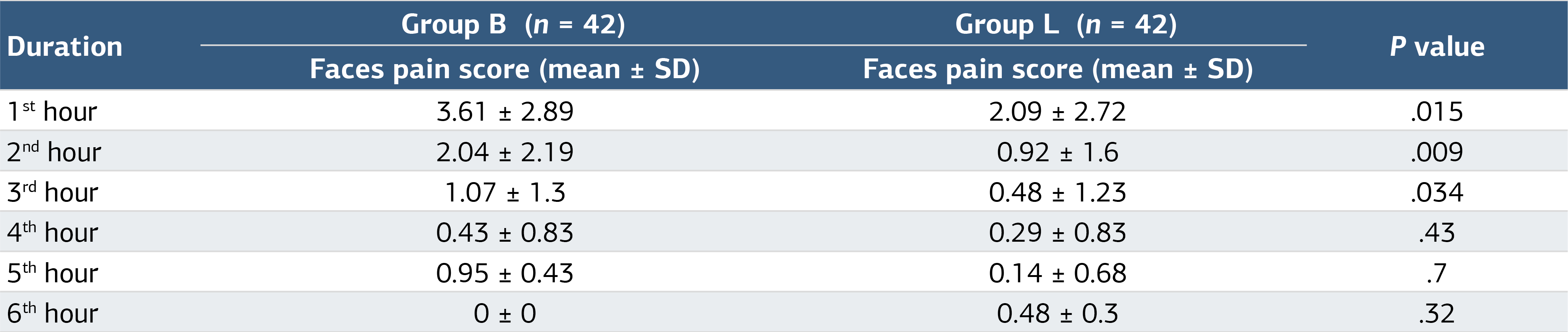
Table 2. Comparison of Rescue Analgesic Requirement Between Groups
Figures
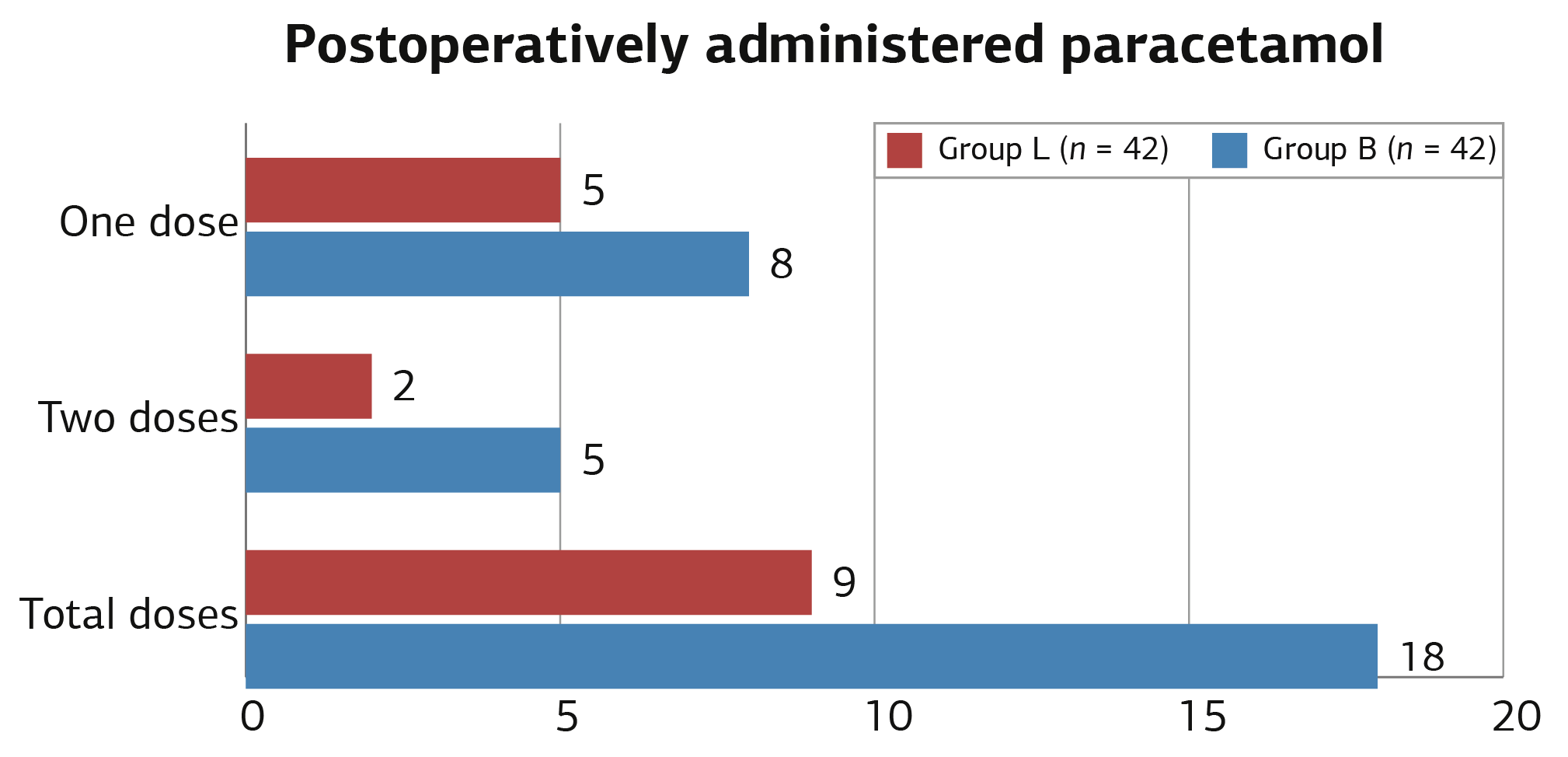
Figure 1. Total doses of postoperatively administered paracetamol between the groups
Additional Information
Publisher’s Note
Bayrakol MP remains neutral with regard to jurisdictional and institutional claims.
Rights and Permissions

This work is licensed under a Creative Commons Attribution-NonCommercial 4.0 International License (CC BY-NC 4.0). To view a copy of the license, visit https://creativecommons.org/licenses/by-nc/4.0/
About This Article
How to Cite This Article
Hayrünisa Kahraman Esen, Osman Esen, Turan Yıldız, Zekeriya İlçe. Comparison of postoperative analgesic efficacy of bupivacaine and levobupivacaine for dorsal penile block. Ann Clin Anal Med 2024;15(2):76-80. doi:10.4328/ACAM.21453
Publication History
- Received:
- 16.10.2022
- Accepted:
- 25.01.2023
- Published Online:
- 25.12.2023
- Printed:
- 01.02.2024