
Abstract
Aim In this study, we aimed to examine the effect of Bobath-based trunk training on improving trunk control in acute stroke patients. Methods A total of 81 stroke patients were randomized to the control (n = 41) or experimental group (n = 40). Then, the groups were divided into two subgroups, moderate and severe, according to disease severity using the Modified Rankin Scale (mRS). Experimental subgroups received Bobath-based trunk training 5 days a week for 1 hour a day during hospitalization. Control subgroups received a conventional physiotherapy program 5 days a week for 1 hour a day during hospitalization. Sitting ability was evaluated as independent or dependent according to sitting time. Trunk control was assessed with the Trunk Impairment Scale (TIS) and the trunk subscale of Motor Assessment Scale (MAS-T). Balance was assessed with Berg Balance Scale (BBS). Functional activity level was assessed with the motor subscale of Functional Independence Measurement (FIM-M). Comparisons between groups were made according to the severity of the disease, and the moderate subgroups were compared with each other, and the severe subgroups with each other. Results Trunk control, sitting ability and balance improved significantly more in the experimental moderate and severe subgroups than in the control subgroups according to TIS (P < .05), MAS-T (P < .05), BBS (P < .05) and FIM-M scores (P < .05). Conclusion Bobath-based trunk training improved sitting ability, trunk control, balance and functional independence in acute stroke patients regardless of initial disease severity.Keywords
Introduction
After a stroke, trunk impairment is prevalent and causes various difficulties in activities such as speaking, breathing, and lower and upper extremity functions.1 It is also one of the important indicators of recovery and is associated with length of hospital stay, balance, walking, functional mobility, and activities of daily living (ADL).2 Stroke affects trunk muscles multidirectionally, unlike extremity muscles.3 Moreover, altered trunk position sense also affects trunk control after stroke.4 Trunk exercises are used to improve trunk control in stroke patients. Previous studies5,6 demonstrated that sitting training, trunk-oriented exercises, core stabilization exercises, and balance exercises increase trunk control in subacute and chronic stroke patients.
Another method used in trunk training is the Bobath approach, which is widely used in stroke rehabilitation worldwide. Despite its widespread use, this approach appears to be utilized as an experimental or conventional method for improving trunk control in chronic stroke patients in a few studies.7-9 The extremities and trunk recovered after the stroke with a similar time course. Verheyden et al.10 investigated the recovery process in the trunk and extremities and indicated that the improvements were at the highest level in the first month. Although the first one-month acute period seems to be a very appropriate period to develop trunk control, studies on improving trunk control in this period are very limited.
Karthikbabu et al.11 examined the effects of physio ball and plinth trunk exercise regimens on trunk control in acute stroke patients and determined that trunk control increased in both groups, but training on the ball was more effective. Although Bobath is the most common stroke management approach, it has been used in very few studies, especially in the acute period. As a result of these studies, different results have been obtained regarding the effectiveness of this approach.12 In the literature, although there is no consensus on the effectiveness of the Bobath approach, it is the most used stroke treatment approach in clinics. In addition, in the acute stroke phase, the improvement of the trunk positively affects various functions in the chronic stroke phase. Therefore, our study was planned to examine the effect of Bobath-based trunk training on improving trunk control in acute stroke patients with different disease severity.
Materials and Methods
Design and Patients This study was an assessor-blinded, randomized controlled trial performed at the neurology inpatient service at Hacettepe University Hospital, Turkey. The study was approved by the local ethical committee of Hacettepe University (KA-16073) and was registered in the Clinical Trials Registry (CTR number: NCT03429855). Patient recruitment started in March 2018 and ended in October 2019. Inclusion criteria were having first stroke attack, age over 18 years, Glasgow coma scale (GCS)≥14, absence of cognitive impairment, that is, Mini-Mental State Examination >24, being within the first week after stroke onset and at stage ≥2 according to the Modified Rankin Scale (mRS). Exclusion criteria comprised recurrent strokes, other neurologic diseases, severe orthopedic problems or communication disorders that may affect the results. Patients with posterior circulation stroke were also excluded. The patients were randomly divided into the experimental and control subgroups. The randomization was performed using a random number table. To allocate patients to one of these groups, physical therapists who were blinded to the research performed assignments based on a computer-generated random number. Then, the experimental group was divided into two subgroups according to mRS. The Severe Disability subgroup (S-EG) included patients with severe deficiency (mRS score ≥4) and the Moderate Disability subgroup (M-EG) included patients with moderate deficiency (mRS score ≤3). Similarly, the control group was divided into the Severe Disability subgroup (S-CG) and the Moderate Disability subgroup (M-CG). Interventions Patients in the control group (M-CG and S-CG) received the conventional physiotherapy program, which was tailored to the individual needs of patients 5 days a week for 1 hour a day during hospitalization. The program included a range of motion exercises, general strengthening and stretching exercises, balance and gait training. In the experimental group (M-EG and S-EG), the Bobath based physical therapy program was tailored to the individual needs of patients 5 days a week for 1 hour a day during hospitalization.9 Trunk control training comprised approximately 50-60% of each session. Experienced physiotherapists took part in the identification of functional limitations and in stroke rehabilitation during the development and validation of the hypotheses. The treatment program intensively concentrated on trunk control in all directions. Treatment programs for both groups are summarized in Table 1. Outcome Measurements The patients were assessed on the first day when their medical condition was stable after hospitalization. Disease severity was assessed with mRS. The Trunk Impairment Scale (TIS) and trunk part of the Motor Assessment Scale (MAS-T) were used to determine the trunk control of all patients. The balance was evaluated using the Berg Balance Scale (BBS), functional activity level with a motor section of the Functional Independence Measurement (FIM-M) and sitting time without support was recorded. The tests were repeated on the day of discharge by the same physiotherapist who performed the initial assessment and was blinded to the groups. To evaluate sitting ability, the patients were asked to sit with back unsupported, without using hands on the edge of a bed. The thighs made full contact with the bed, the hip and knees flexed ninety degrees, the feet were hip width apart and placed flat on the floor. The arms were crossed over the chest. The head and trunk were in a midline position. The sitting time was recorded during the standard sitting position. If the position changed or patients maintained their position for more than two minutes, the test was ended. Patients who were able to maintain the standard sitting position for two minutes or more were classified as independent and others as a dependent. Trunk control was evaluated with TIS and MAS-T. TIS consists of 3 subscales: static and dynamic sitting balance and trunk coordination, scored up to 7, 10, and 6 points, respectively. The total scores range between 0 and 23 points, where a higher score indicates better trunk function. MAS-T contains rolling, lie to sit, and sitting balance. Each item is scored on a 7-point ordinal scale from 0 to 6, a higher score indicating a better performance.13 BBS is a functional balance test. It includes 14 items and all of them are scored on a 5-point ordinal scale from 0 to 4, with a maximum score of 56 points. A higher score indicates better balance ability.14 The degree of disability or dependence in daily activities was evaluated using mRS. It describes “global disability” with a focus on mobility. The mRS is an ordered scale coded from 0 (no symptoms at all) to 5 (severe disability) and 6 (death). Level 3 and lower values indicate moderate and less disability, while Levels 4 and 5 indicate severe disability.15 For this reason, these values were considered when structuring the subgroups. FIM-M was used to evaluate the ability to perform ADL. The FIM-M item scores range from 1 (total assistance required) to 7 (complete independence). A higher score indicates a greater degree of independence with regard to ADL.16 Ethical Approval Ethics Committee approval for the study was obtained. Statistical Analysis Analyzes were performed separately for subgroups. Descriptive measures were summarized as mean±standard deviation or percentage. The Chi-square test was used for categorical variables. The Shapiro-Wilk test was used to determine the distribution of variables. Wilcoxon’s signed ranks tests were used for group analyses, and the Mann-Whitney U test was used to compare different groups according to distribution. The initial disability level scores of the patients in the subgroups and any potential differences in recovery rates were considered. For this reason, severe subgroups were compared to one another, while moderate subgroups were compared to one another. All statistical analyses were performed using the SPSS v.18 with a significance level of P < .05. The sample size calculation was based on the study of Karthikbabu et al.11 (the post-hoc TIS scores of the plinth and control group) for our primary outcome and was conducted using G-power 3.1 (Heinrich Heine University, Dusseldorf, Germany). To determine the appropriate sample size, the effect size was set to 0.852 with 95% power to identify between-group differences in before-after intervention changes, with an α error of 0.05. The calculation indicated that 39 participants were required per group; 44 participants per group were recruited to allow for dropouts. Reporting GuidelinesThis study was reported in accordance with the CONSORT 2010 Statement.Results
A total of 108 patients were screened for study eligibility and 88 patients met the inclusion criteria. The patients were randomly allocated to groups. The study was completed with 81 patients. Figure 1 shows a CONSORT flowchart stating the steps of the study. In the analyzes, it was seen that the experimental and the control group were homogenous in terms of demographic and clinical characteristics (Table 2). Treatment processes of all patients were completed without any side effects. The scores of TIS, MAS-T, BBS and FIM-M increased significantly in all subgroups after interventions compared to pretreatment except for value of TIS static part for M-CG and TIS dynamic part for S-CG (P < .001 for all comparisons). Sitting ability developed in both S-EG and S-CG (respectively P < .001 and .008). In addition, the scores of TIS, MAS-T, BBS and FIM-M improved significantly in Bobath subgroups compared to control subgroups (P < .05 for all comparisons) (Table 3).Discussion
Our study showed that Bobath-based trunk training applied to stroke patients in the acute phase improves sitting ability, trunk control and balance more effectively than conventional physiotherapy regardless of the severity of the disability. Although the systematic reviews reported that the Bobath approach had no superiority over other methods used in stroke patients regaining mobility, motor control, gait, sitting and standing balance,12,17-19 our results did not support the literature findings. There may be some possible reasons for this discrepancy. Firstly, our study was intended to directly improve trunk control, while the reviews included a very limited number of studies focusing on the trunk, and secondly, the chosen by reviews trunk control measurement tools varied. Lastly, it may be due to the inclusion of patients in the acute phase in our study.
The sitting ability and trunk control were evaluated within the scope of our study. The number of patients who could sit independently increased significantly in the experimental group compared to the control group. In the literature, core stability training, which includes exercises such as bridge building, upper and lower trunk flexion, extension and rotation, and various weight bearing trainings are used to increase trunk control. These practices were also effective in improving sitting balance.1 Although the training provided to the experimental group did not follow all the principles of core stability training with a specific protocol, it seems to include similar exercise practices. Considering that the role of sensorimotor control is much more important than that of strength or endurance of the trunk muscles for balance,20 the Bobath approach may have contributed to trunk control by improving sensorimotor control as well.
Turning in the bed, evaluated by using MAS-T in our study, is one of the milestones of normal development and basic ADL. In stroke patients, turning towards the unaffected side is impaired.21 Kafri and Dickstein21 showed in their study that the relationship between the pectoralis major and the rectus femoris, external obliques is impaired due to decreased activation on the hemiplegic side in stroke patients. The treatment applied to the experimental subgroups may have contributed to the higher scores of these subgroups on MAS-T by providing the correct sensory input and adjusting the movement sequence.
In our study, it was observed that TIS scores increased in all sub-parameters and total scores in the study group. Unlike other studies conducted to improve trunk control,7,22 there was also an increase in the static balance score of the TIS. This may be due to the fact that the studies generally specified the ability to sit independently for more than 10 seconds, which is sufficient to receive a full score on the static balance section of the scale, as an inclusion criterion, and included chronic stroke patients who are likely to sit already. The inclusion of acute patients in our study may have allowed the scale to show the post-treatment change in this population.
Previous studies show that trunk training improves BBS scores.7,23 Similarly, the scale’s scores increased in our study. The increase in transfer activities and the improvement in sitting and standing activities together with the increase in sitting balance of our patients in the study group may have improved the scores.
The FIM-M scores in the study subgroups improved more than in the control subgroups in our study. Likhi et al.24 reported that the overall functional independence in acute stroke patients is most closely correlated with trunk function, followed by upper limb impairments. Considering the relationship between independence in ADL and trunk control in stroke patients, it could be said that the improvement in ADL in our study is due to the recovery in trunk control.
Limitations
The study has some limitations. There was no follow-up after discharge within the scope of the study. For this reason, it cannot be commented on how long the obtained treatment effects will last. In addition, the effect of improvement in trunk control on other functions has not been examined and since inpatients were included in the study, the level of independence of the patients in their daily living activities may not have been fully demonstrated. Therefore, FIM values should be interpreted with caution.
Conclusion
In conclusion, the Bobath approach may be a viable treatment option for the development of trunk control regardless of the disability level of the patients in the acute period after stroke. The effectiveness of the Bobath-based trunk training in the severely affected group is one of our most important study findings. Since most of the studies on practices that have been shown to be effective in the literature preferred to include individuals who have reached a good level in their studies rather than individuals with serious disabilities. In our study, on the other hand, individuals with severe effects were not excluded, and as a result of our study, satisfactory results were obtained in this group as well. Our study suggested that perhaps the Bobath approach is not as ineffective as reported by systematic reviews in regaining mobility, balance, and ADL. It may still be an appropriate approach that could be prioritized for patients with at least some disability levels. In further studies, the long-term effects of Bobath-based trunk training may be examined. In addition, the effects of improvement in trunk control on other functions may be examined.
Declarations
Animal and Human Rights Statement
All procedures performed in this study were in accordance with the ethical standards of the institutional and/or national research committee and with the 1964 Helsinki Declaration and its later amendments or comparable ethical standards.
Informed Consent
Written informed consent was obtained from all participants prior to enrollment in the study.
Data Availability
The datasets used and/or analyzed during the current study are not publicly available due to patient privacy reasons but are available from the corresponding author on reasonable request.
Conflict of Interest
The authors declare that there is no conflict of interest.
Funding
None.
Abbreviations
BBS: Berg balance scale
FIM-M: Motor functional independence measurement
GCS: Glasgow coma scale
MAS-T: Motor Assessment Scale trunk subscale
TIS: Trunk impairment scale
References
- Van Criekinge T, Truijen S, Schroder J, et al. The effectiveness of trunk training on trunk control, sitting and standing balance, and mobility post-stroke: a systematic review and meta-analysis. Clin Rehabil. 2019;33(6):992-1002. doi:10.1177/0269215519830159
- Verheyden G, Nieuwboer A, De Wit L, et al. Trunk performance after stroke: an eye-catching predictor of functional outcome. J Neurol Neurosurg Psychiatry. 2007;78(7):694-698. doi:10.1136/jnnp.2006.101642
- Carr LJ, Harrison LM, Stephens JA. Evidence for bilateral innervation of certain homologous motoneurone pools in man. J Physiol. 1994;475(2):217-227. doi:10.1113/jphysiol.1994.sp020063
- Ryerson S, Byl NN, Brown DA, Wong RA, Hidler JM. Altered trunk position sense and its relation to balance functions in people post-stroke. J Neurol Phys Ther. 2008;32(1):14-20. doi:10.1097/npt.0b013e3181660f0c
- Cabrera-Martos I, Ortiz-Rubio A, Torres-Sánchez I, López-López L, Jarrar M, Valenza MC. The effectiveness of core exercising for postural control in patients with stroke: a systematic review and meta-analysis. PM R. 2020;12(11):1157-1168.
- Souza DCB, de Sales Santos M, da Silva Ribeiro NM, Maldonado IL. Inpatient trunk exercises after recent stroke: an updated meta-analysis of randomized controlled trials. NeuroRehabilitation. 2019;44(3):369-377. doi:10.3233/nre-182585
- An S, Park D. The effects of trunk exercise on mobility, balance, and trunk control of stroke patients. J Korean Soc Phys Med. 2017;12(1):25-33. doi:10.13066/kspm.2017.12.1.25
- Lee HJ, Kang TW, Kim BR. Effects of diaphragm and deep abdominal muscle exercise on walking and balance ability in patients with hemiplegia due to stroke. J Exerc Rehabil. 2018;14(4):648. doi:10.12965/jer.1836252.126
- Kılınç M, Avcu F, Onursal O, Ayvat E, Savcun Demirci C, Aksu Yildirim S. The effects of Bobath-based trunk exercises on trunk control, functional capacity, balance, and gait: a pilot randomized controlled trial. Top Stroke Rehabil. 2016;23(1):50-58. doi:10.1179/1945511915y.0000000011
- Verheyden G, Nieuwboer A, De Wit L, et al. Time course of trunk, arm, leg, and functional recovery after ischemic stroke. Neurorehabil Neural Repair. 2008;22(2):173-179. doi:10.1177/1545968307305456
- Karthikbabu S, Nayak A, Vijayakumar K, et al. Comparison of physio ball and plinth trunk exercises regimens on trunk control and functional balance in patients with acute stroke: a pilot randomized controlled trial. Clin Rehabil. 2011;25(8):709-719. doi:10.1177/0269215510397393
- Diaz-Arribas MJ, Martin-Casas P, Cano-de-la-Cuerda R, Plaza-Manzano G. Effectiveness of the Bobath concept in the treatment of stroke: a systematic review. Disabil Rehabil. 2020;42(12):1636-1649.
- Fil Balkan A, Salci Y, Keklicek H, Cetin B, Adin RM, Armutlu K. The trunk control: which scale is the best in very acute stroke patients? Top Stroke Rehabil. 2019;26(5):359-365. doi:10.1080/10749357.2019.1607994
- Berg K, Wood-Dauphinee S, Williams JI. The Balance Scale: reliability assessment with elderly residents and patients with an acute stroke. Scand J Rehabil Med. 1995;27(1):27-36. doi:10.2340/1650197719952736
- Harrison JK, McArthur KS, Quinn TJ. Assessment scales in stroke: clinimetric and clinical considerations. Clin Interv Aging. 2013;8:201-211. doi:10.2147/cia.s32405
- Hsueh IP, Lin JH, Jeng JS, Hsieh CL. Comparison of the psychometric characteristics of the functional independence measure, 5-item Barthel index, and 10-item Barthel index in patients with stroke. J Neurol Neurosurg Psychiatry. 2002;73(2):188-190. doi:10.1136/jnnp.73.2.188
- Pathak A, Gyanpuri V, Dev P, Dhiman NR. The Bobath concept as rehabilitation in stroke patients: a systematic review. J Family Med Prim Care. 2021;10(11):3983-3990. doi:10.4103/jfmpc.jfmpc_528_21
- Kollen BJ, Lennon S, Lyons B, et al. The effectiveness of the Bobath concept in stroke rehabilitation: what is the evidence? Stroke. 2009;40(4). doi:10.1161/strokeaha.108.533828
- Scrivener K, Dorsch S, McCluskey A, et al. Bobath therapy is inferior to task-specific training and not superior to other interventions in improving lower limb activities after stroke: a systematic review. J Physiother. 2020;66(4):225-235. doi:10.1016/j.jphys.2020.09.008
- Borghuis J, Hof AL, Lemmink KA. The importance of sensory-motor control in providing core stability: implications for measurement and training. Sports Med. 2008;38(11):893-916. doi:10.2165/00007256-200838110-00002
- Kafri M, Dickstein R. Activation of selected frontal trunk and extremities muscles during rolling from supine to side lying in healthy subjects and in poststroke hemiparetic patients. NeuroRehabilitation. 2005;20(2):125-131. doi:10.3233/nre-2005-20208
- Haruyama K, Kawakami M, Otsuka T. Effect of core stability training on trunk function, standing balance, and mobility in stroke patients. Neurorehabil Neural Repair. 2017;31(3):240-249. doi:10.1177/1545968316675431
- Cabanas-Valdes R, Bagur-Calafat C, Girabent-Farres M, Caballero-Gomez FM, Hernandez-Valino M, Urrutia Cuchi G. The effect of additional core stability exercises on improving dynamic sitting balance and trunk control for subacute stroke patients: a randomized controlled trial. Clin Rehabil. 2016;30(10):1024-1033.
- Likhi M, Jidesh VV, Kanagaraj R, George JK. Does trunk, arm, or leg control correlate best with overall function in stroke subjects? Top Stroke Rehabil. 2013;20(1):62-67. doi:10.1310/tsr2001-62
Tables
Table 1. Treatment Programs for Groups
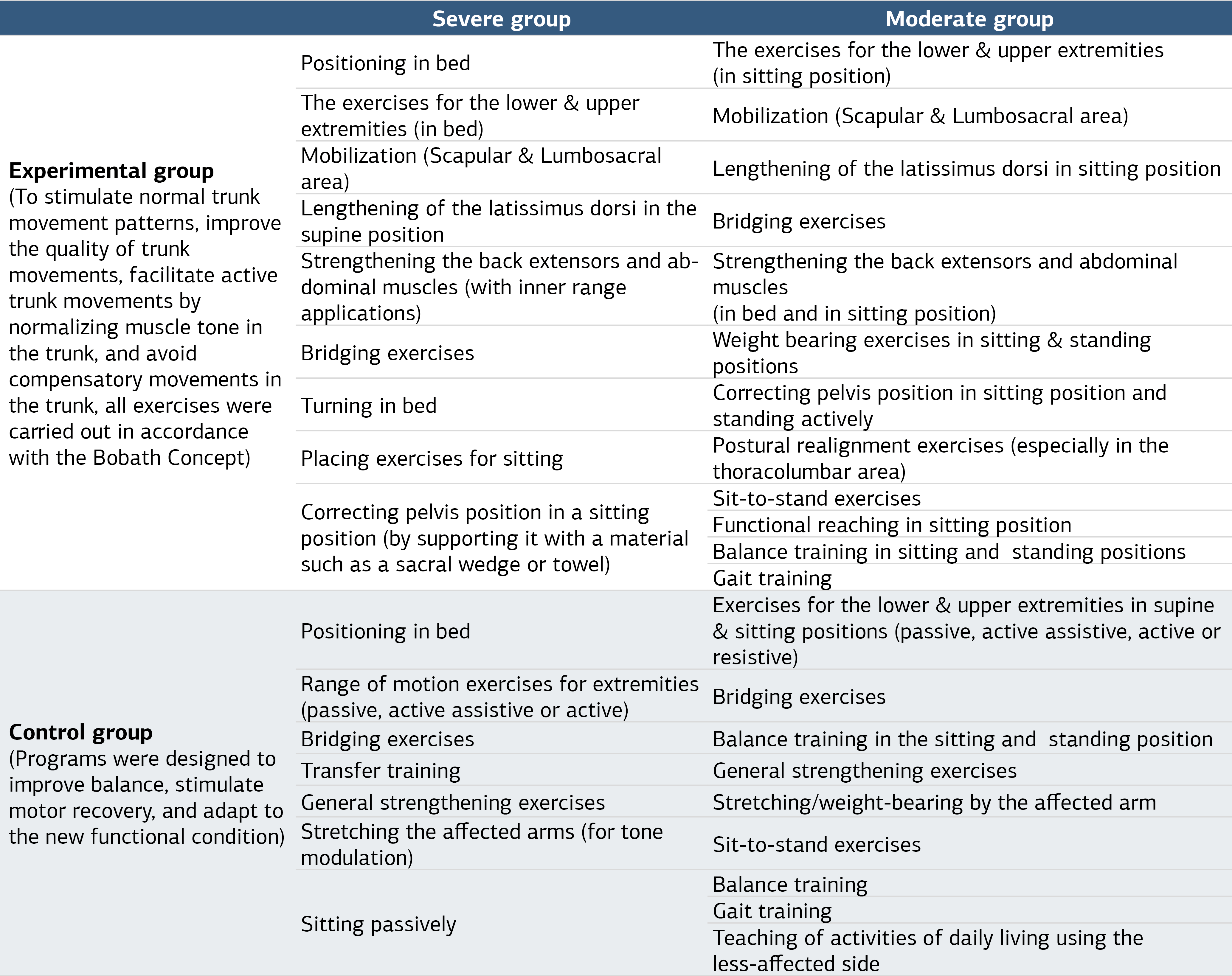
Table 2. Demographic and Clinical Features
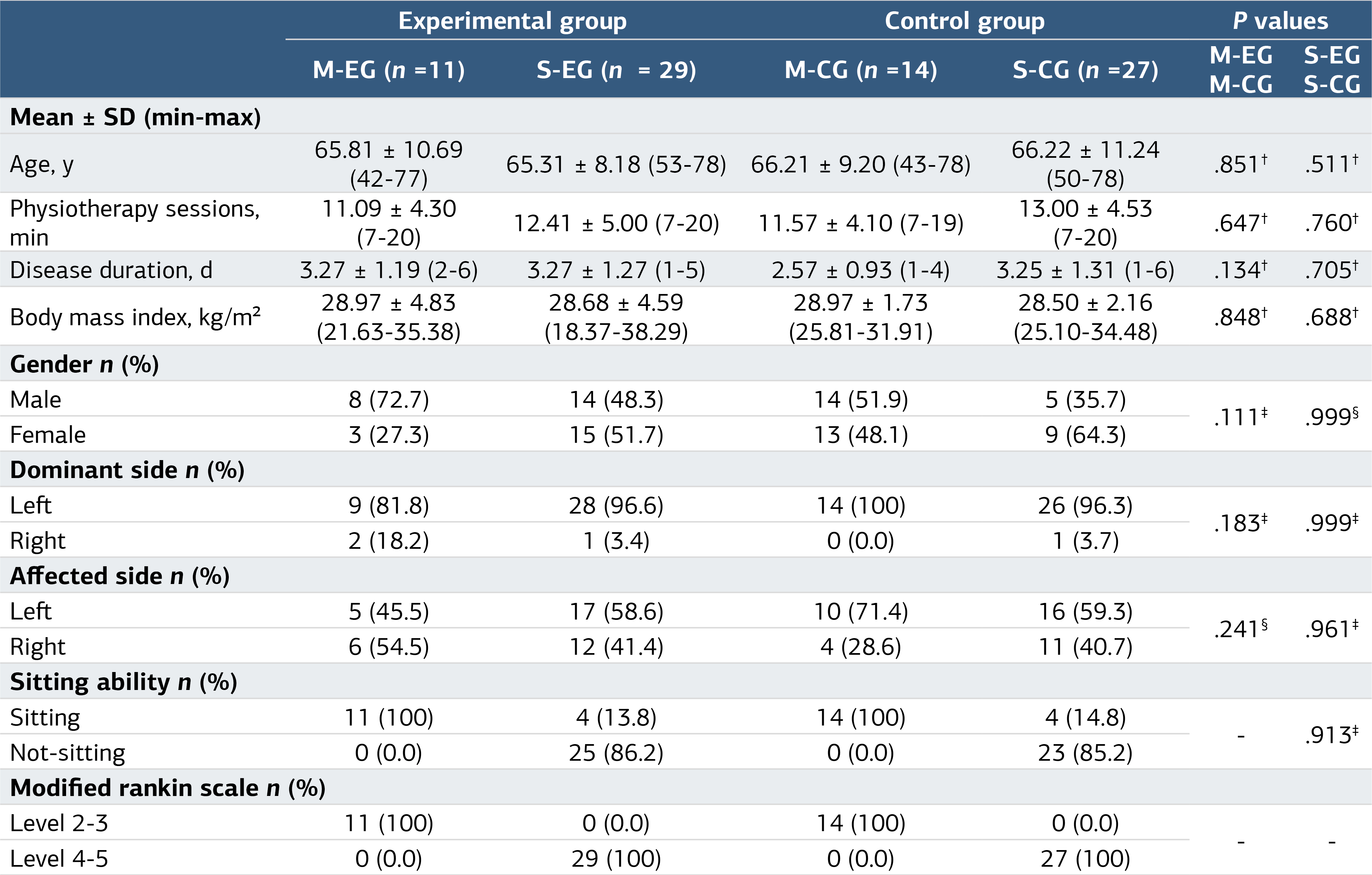
SD, standard deviation; min, minimum; max, maximum; n, sample size; bold, P < .05; M-EG, moderate experimental group; S-EG, severe experimental group;M-CG, moderate control group; S-CG, severe control group; kg, kilogram; m2, square meters; †, Mann Whitney U Test; §, Chi-square Test, ‡, Chi-square Test with Fisher ‘s Exact Test
Table 3. Comparison of the functional outcome measurements pre-and post-interventions within and between groups
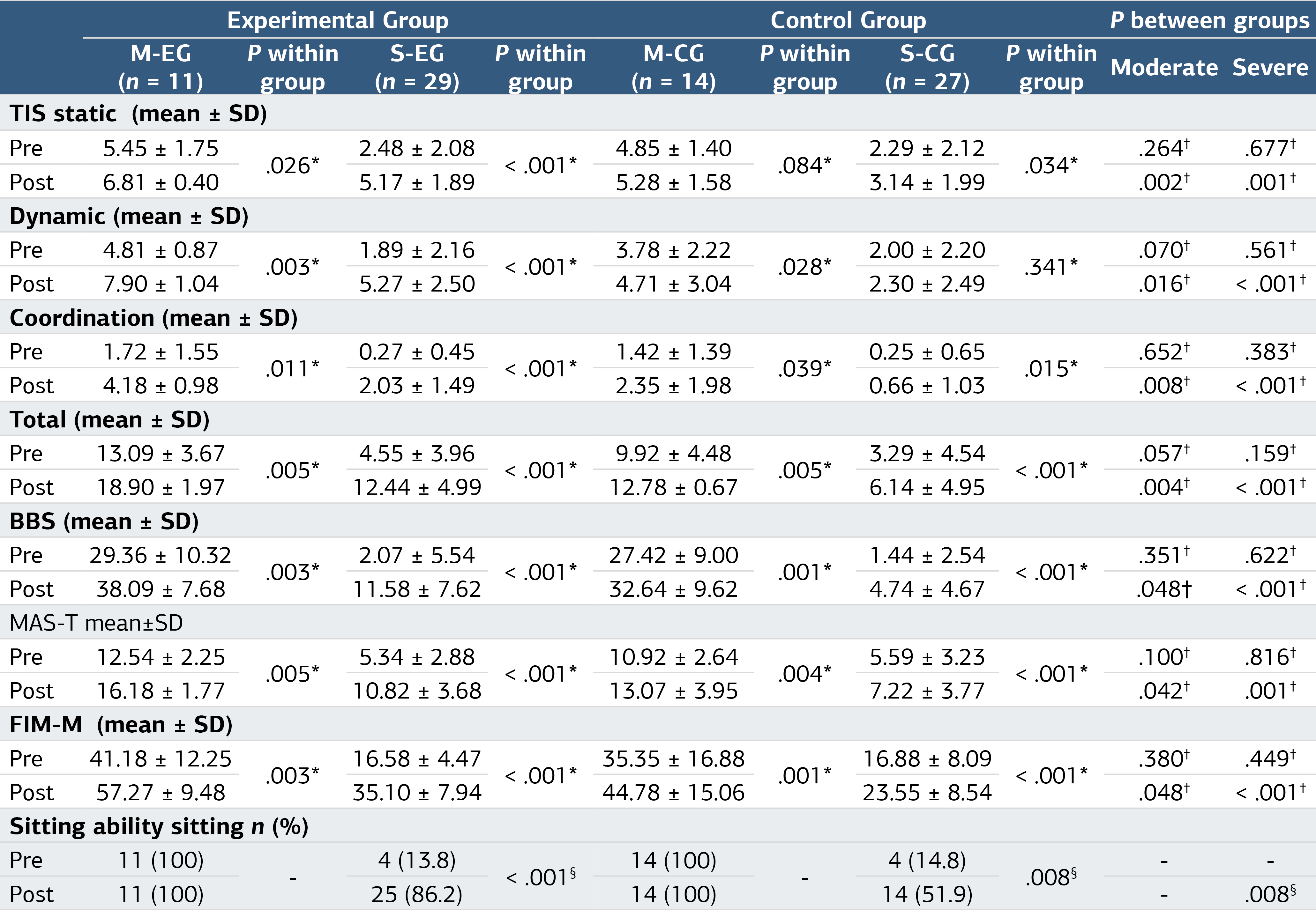
SD, standard deviation; min, minimum; max, maximum; n, sample size; bold, P < .05; M-EG, moderate experimental group; S-EG, severe experimental group;M-CG, moderate control group; S-CG, severe control group; TIS, Trunk Impairment scale; Pre, pre-intervention; Post, post-intervention; BBS, Berg Balance Scale; MAS-T, Motor Assessment scale trunk subscale; FIM-M, Functional Independence Measurement motor subscale; †, Mann Whitney U Test; §, Chi-square Test; *, Wilcoxon Sign Test
Figures
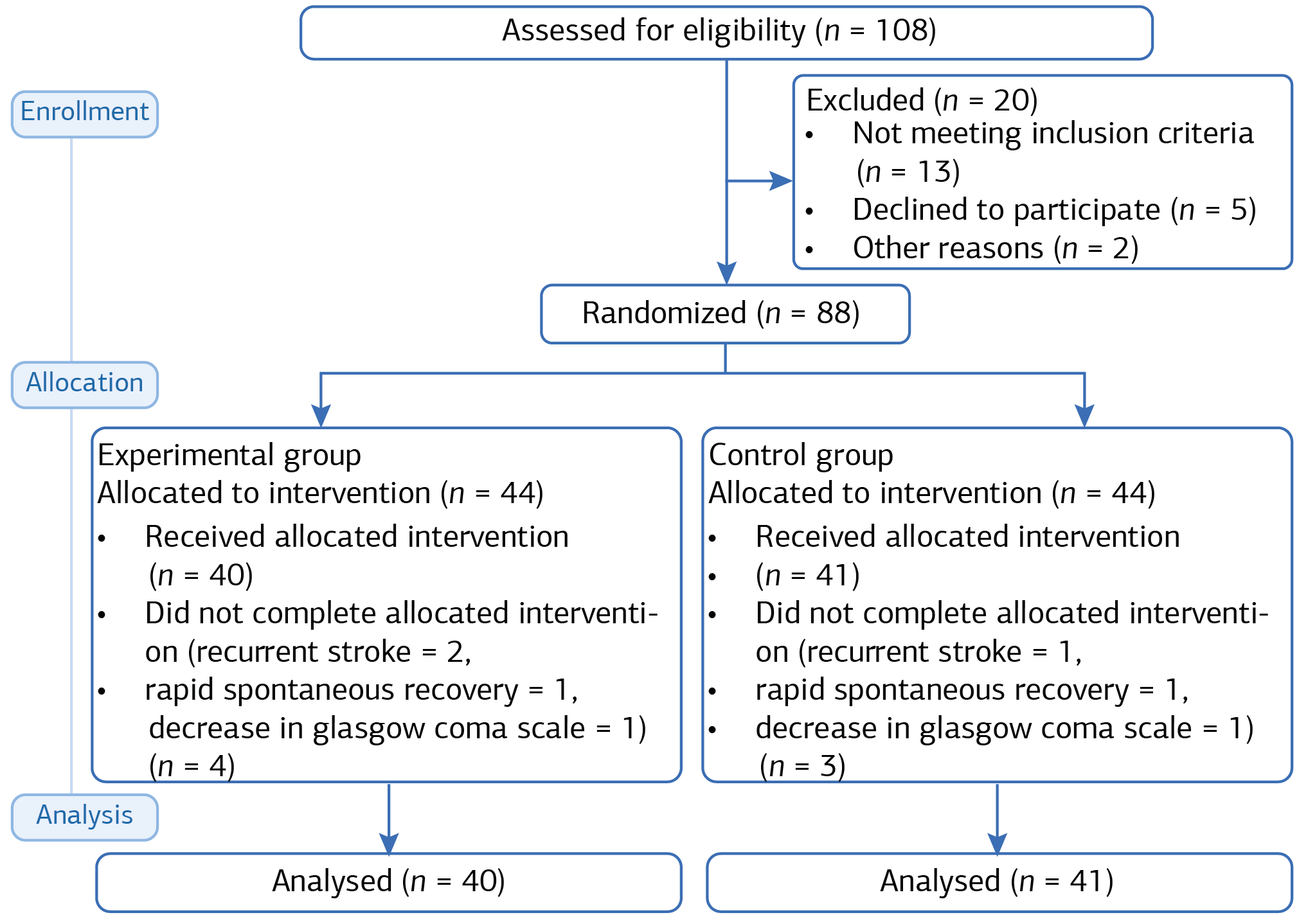
Figure 1. Flow Chart
Additional Information
Publisher’s Note
Bayrakol MP remains neutral with regard to jurisdictional and institutional claims.
Rights and Permissions

This work is licensed under a Creative Commons Attribution-NonCommercial 4.0 International License (CC BY-NC 4.0). To view a copy of the license, visit https://creativecommons.org/licenses/by-nc/4.0/
About This Article
How to Cite This Article
Ayla Fil Balkan, Ceren Saban, Yeliz Salcı, Ali Naim Ceren, Kadriye Armutlu. Does the bobath approach improve trunk control in acute stroke patients?. Ann Clin Anal Med 2024;15(1):1-6. doi:10.4328/ACAM.21484
Publication History
- Received:
- 06.11.2022
- Accepted:
- 10.12.2022
- Published Online:
- 11.12.2022
- Printed:
- 01.01.2024