
Abstract
AimThe present study aimed to determine the effects of boron-based gel on episiotomy wound healing and episiotomy pain in primiparous women.MethodsThis case-time control design, which is one of the hybrid designs included 450 primiparous women who had a normal delivery with episiotomy at Private Nisa Hospital between January 2019 and March 2020. The participants were grouped as 150 women who used the Boron-Based Gel on the postpartum episiotomy site (cases-1), 150 women who used Beta Chlorhexidine Gel (cases-2), and 150 women who refused treatment or did not use any topical gel (controls). Wound healing status was evaluated on days 2, 5-7, and 10-14 after birth along with Redness, Edema, Ecchymosis, Discharge with Approximation (REEDA) Scale, and the pain levels felt in the episiotomy area were evaluated using the Visual Analog Scale (VAS).ResultsNo statistically significant differences were detected between the three groups in terms of age and other variables (P > .05). The mean scores of VAS and REEDA on days 2, 5-7, and 10-14 after birth were significantly different in the Boron-Based Gel Group compared to Chlorhexidine Gel and control group (P < .001). ConclusionIt was found that the use of Boron-Based Gel increased episiotomy wound healing and reduced pain at significant levels.
Keywords
Introduction
An episiotomy is a surgical incision made in the bulbocavernosus muscle in the second stage of labor to facilitate labor, prevent unwanted tears, and preserve the perineal tonus.1-3 In a study that was conducted in Turkey, the rate of episiotomy was reported to be 93.3% in primiparous women and 30.2% in multipara women, and it was shown that the frequencies varied between 50.4% and 88.6% in primiparous and/or multiparous women.4
An episiotomy may cause pain on the first day in 97% of primiparous women and the first seven days in 71%.5 Episiotomy infection is one of the most serious postpartum complications occurring with fever, pain, and purulent discharge.1,6 In a systematic review, the incidence of perineal trauma wound infection related to birth was found to be between 0.1% and 23.6%.6 Many pharmacological and non-pharmacological methods (hot and cold showers, using dry heat with rays, lavender, aloe vera, chamomile, green tea, etc.) are used to accelerate the healing of the wound site in the episiotomy area.1,7-9
Boron, which is a very stable element, plays regulatory roles in the cell membrane and various enzymatic systems with its anti-inflammatory, antimicrobial, antioxidant, epithelializing, and angiogenesis-enhancing effects.10,11 Although the wound-healing effects of boron compounds were shown previously in vivo and in vitro,11 no study investigated its effectiveness on episiotomy wound healing.
The purpose of the present study was to evaluate the effectiveness of boron-based gel or chlorhexidine-based gel application on episiotomy wound healing in primiparous women who had a normal delivery.
Materials and Methods
Study DesignThe case-time control design, which is one of the hybrid designs, was used in the study. This study was conducted in Istanbul Private Nisa Hospital. To conduct the study, the Clinical Research Ethics Committee of Istanbul Medipol University approved the study.Study PopulationThe records of women who were hospitalized in the Obstetrics and Gynecology Service applying to the postpartum polyclinic between January 2019 and March 2020 were analyzed retrospectively in the study. As a general hospital protocol, some pharmacological drugs (cream, ointment, gels, etc.) that have effects on wound healing after episiotomy are prescribed/ordered. Women who used Boron-Based Gel or Chlorhexidine Gel or did not use/apply any topical gel, had a normal birth, primiparous, and registered in digital media were evaluated in the study. Four hundred and fifty patients who met the criteria were retrospectively reviewed. One hundred and fifty women who used Boron-Based Gel on the postpartum episiotomy area were named as the cases-1, 150 women who used Chlorhexidine Gel on the episiotomy area as the cases-2, and 150 women who did not use any topical gel as the control group.Inclusion CriteriaAccording to the inclusion criteria of the study, primiparous women who had spontaneous labor at 37-42 weeks, normal delivery, single fetus, mediolateral episiotomy, and second-degree perineal laceration were included in the study.Exclusion CriteriaThose who had cesarean deliveries, manual placenta removal, third and fourth-degree perineal tears, long-term (>18 hours) rupture of membrane, abnormal postpartum hemorrhage or hematoma, irregular use of gels according to instructions, or developing side effects due to gels, those who had a history of disease disabling wound healing or those who used certain drugs, chronic systemic disease, those with history of genital warts, those with symptomatic vaginitis, those using antibiotics after episiotomy, and those who had a history of perineal reconstructive surgery were not included in the study. The data were obtained retrospectively from hospital records in the present study. The REEDA and VAS Scale, which can be used and recorded in the hospital upon the request of the physician, were used in the study.The REEDA ScaleThe REEDA Scale, which indicates perineal wound healing, was developed by Davidson in 1974.12 Recovery was evaluated according to Redness, Edema, Ecchymosis, Discharge, Approximation in the perineal region with this scale. The sum of the scores obtained on the scale evaluated by giving points between 0 and 3 makes up the REEDA score. The lowest score is 0, and the highest score is 15. The highest score indicates the most serious perineal trauma.13Visual Analog ScaleThe Visual Analog Scale (VAS) was originally developed and used by Bond and Pilowsky. In the VAS, which is evaluated with a 10 cm scale, “no pain” is graded with “0” points, and “the worst pain imaginable” is rated with “10” points. High scores indicate increased pain severity.14ProceduresThe treatment ordered by the physician was applied during the postpartum hospital stay. Wound healing status was evaluated during the discharge from the hospital on days 2, 5-7, and 10-14 after birth. Mothers were called for the evaluation of weight, bilirubin, and hearing tests, and puerperal women were also invited to the obstetrics clinic for the follow-up of the episiotomy wound. For these reasons, the healing of the episiotomy wound of puerperal women who applied to the obstetrics clinic of the hospital was evaluated with the REEDA score, and the episiotomy pain was evaluated with the VAS score.
The creams, ointments, or gels recommended being applied on the episiotomy area after birth are in the form of applying these for 1 cm to the episiotomy (sutures) area after the perineal area is washed and dried under proper conditions as of the first day after birth twice a day for 10 days. This procedure was explained to the puerperal women by physicians or clinical nurses in detail.Pharmacological Drug Forms UsedAntimicrobial Boron-Based Gel and gel-containing Beta Chlorhexidine are generally used in hospital protocols.
Boron-based gel: The Boron-Based Gel is in the composition of a carbopol gel containing 2% Chlorhexidine, Sodium pentaborate pentahydrate (NaB), Poloxamer F68, and F127. NaB is an active ingredient involved in wound healing and inhibits microbial growth in scar tissue along with Chlorhexidine.15
Beta chlorhexidine: Chlorhexidine Gel contains 2% Chlorhexidine as the active ingredient and is an effective antimicrobial.Ethical ApprovalThis study was approved by the Clinical Research Ethics Committee of İstanbul Medipol University (Date: 16.04.2020, Decision No: 10840098-604.01.01-E.14176).Statistical AnalysisDescriptive statistics such as numbers (n), percentages (%), mean values, Standard Deviation (SD), median values, and Inter Quartile Range (IQR) were used in the analysis of the data. The conformity of the data to the normal distribution was tested with the Shapiro-Wilk Test. The differences between the groups were checked with the Kruskal-Wallis Test, and when significant differences were detected, Dunn’s Test was used to check the differences between the two groups. The statistical significance level was taken as P = .05. The data were analyzed with the SPSS 22.0 Statistical Package Program.Reporting GuidelinesThis study was reported in accordance with the STROBE guideline.
Results
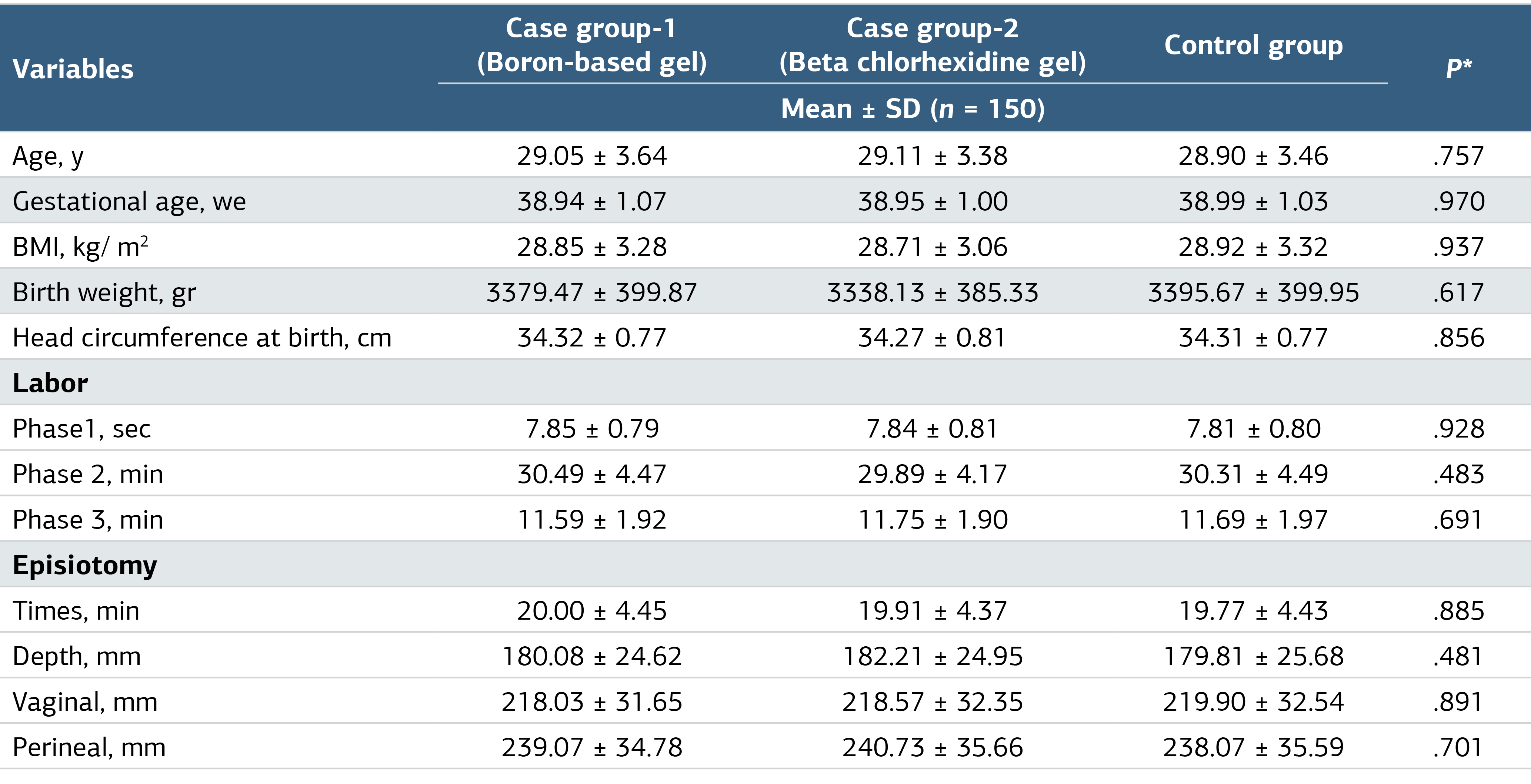
The statistical characteristics of the Boron-Based Gel, Chlorhexidine Gel, and control group are shown in Table 1. No significant differenceswere detected between the groups (P > .05).
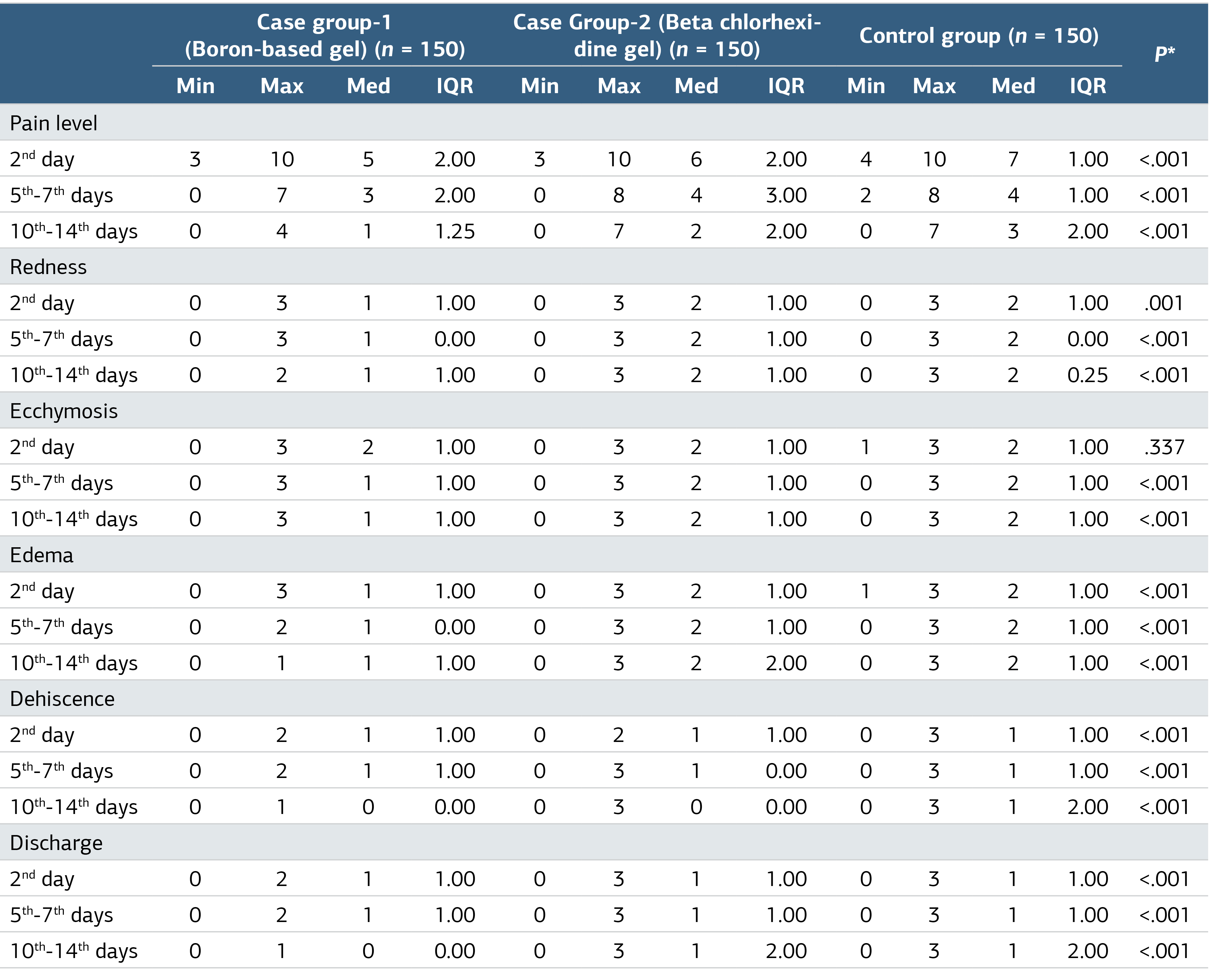
The assessment of the Boron-Based Gel Group, Chlorhexidine Gel Group, and control group in terms of REEDA score is given in Table 2. The Boron-Based Gel Group was found to be different from the Chlorhexidine Gel and control group at statistically significant levels on day 2, days 5-7 and 10 in terms of pain (P < .001).
Significant differences were determined between the groups on days 2, 5-7, and 10-14 in terms of redness (P < .01). Statistical differences were detected between the Boron-Based Gel Group and the Chlorhexidine Gel Group on day 2 (P = .003), and between the Boron-Based Gel Group and the control group (P = .005); however, no significant differences were detected between the Chlorhexidine Gel Group and the control group (P = .418). Statistical differences were detected between the Boron-Based Gel Group and Chlorhexidine Gel Group (P < .001) on days 5-7 and 10-14, and between Boron-Based Gel Group and control group (P < .001); however, no statistical differences were detected between the Chlorhexidine Gel Group and the control group (P > .05) (the results are not shown in the tables).
No statistically significant differences were detected between the groups in terms of ecchymosis on the 2nd day after birth (P = .337); however, significant differences were detected between the groups on days 5-7, and 10-14 (P < .001). Statistically significant differences were detected between the Boron-Based Gel Group and the Chlorhexidine Gel Group on days 5-7 (P < .001) and between the Boron-Based Gel Group and the control group (P = .009); however, there was a borderline significant difference was detected between the Chlorhexidine Gel Group and the control group (P = .050). Statistically significant differences were detected between the Boron-Based Gel Group and Chlorhexidine Gel Group (P < .001) on days 10-14, and the Boron-Based Gel Group and the control group (P < .001); however, no significant differences were detected between the Chlorhexidine Gel Group and the control group (P > .05) (the results are not shown in the tables).
In terms of edema, significant differences were detected between the groups on days 2, 5-7, and 10-14 after birth (P < .001). Statistically significant differences were detected between the Boron-Based Gel Group and the Chlorhexidine Gel Group on day 2 (P = .004); between the Boron-Based Gel Group and the control group (P < .001); between the Boron-Based Gel Group and the Chlorhexidine Gel Group on days 5-7 and 10-14 (P < .001); and between the Boron-Based Gel Group and the control group (P < .001). However, no significant differences were detected between the Chlorhexidine Gel Group and the control group on days 2, 5-7, and 10-14 (P > .05) (the results are not shown in the tables).
In terms of dehiscence, significant differences were detected between the groups on days 2, 5-7, and 10-14 after birth (P < .001). The Boron-Based Gel Group was different from the control group at statistically significant levels on days 2, 5-7, and 10-14 (P < .001), and the chlorhexidine Gel Group was different from the control group at statistically significant levels (P < .001). It was found that the Boron-Based Gel Group was different from the Chlorhexidine Gel Group at statistically significant levels on days 5-7 (P = .038). However, no statistical differences were detected between the Boron-Based Gel Group and the Chlorhexidine Gel Group on days 2 and 10-14 (P > .05) (the results are not shown in the tables).
In terms of the discharge status, a significant difference was found between the groups on days 2, 5-7, and 10-14 after birth (P < .001). Statistically significant differences were detected between the Boron-Based Gel Group and the Chlorhexidine Gel Group (P < .001), and between the Boron-Based Gel Group and the control group (P < .001). However, no significant differences were detected between the Chlorhexidine Gel Group and the control group on days 2, 5-7, and 10-14 (P > .05) (the results are not shown in the tables).
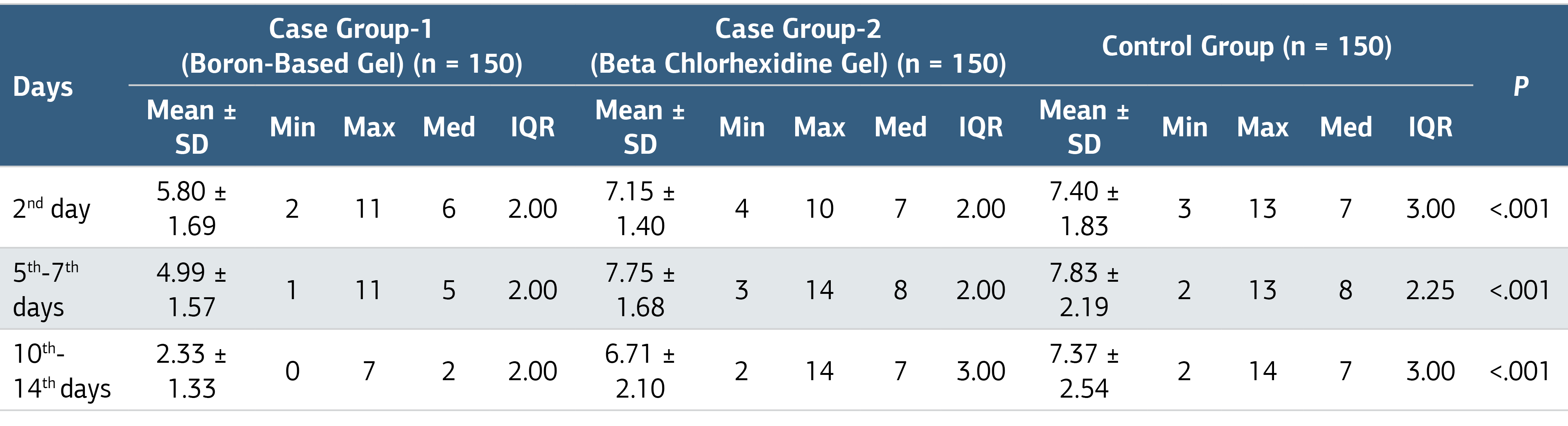
The comparison of the REEDA Scores in the Boron-Based Gel Group, Chlorhexidine Gel Group, and control group on days 2, 5-7, and 10-14 is shown in Table 3. Statistically significant differences were detected between the groups in terms of REEDA scores on the 2nd, 7th, and 10th days (P < .001). Statistically significant differences were detected between the Boron-Based Gel Group and the Chlorhexidine Gel Group on days 2, 5-7, and 10-14 (P < .001), and between the Boron-Based Gel Group and the control group (P < .001). However, no significant differences were detected between the chlorhexidine gel group and the control group on days 2, 5-7, and 10-14 (P > .05) (the results are not shown in the tables).
Discussion
The present study is the first in this field to investigate the effectiveness of Boron-Based Gel on episiotomy pain and wound healing. The NaB in the Boron-Based Gel that was used in the study is the active ingredient involved in wound healing and has antimicrobial effects together with chlorhexidine.15 According to this study, better episiotomy healing and lower levels of pain were detected in patients who used Boron-Based Gel on the episiotomy area when compared to patients who used only chlorhexidine gel and the control group.
When the participants that were included in the study were examined in terms of socio-demographic and obstetric characteristics, no significant differences were detected between the groups. These results, which show that the evaluation was made under similar conditions, were similar to the results of other studies that examined episiotomy pain and healing of the episiotomy site.9,16
When the literature was reviewed, a limited number of in vivo and in vitro studies were found on the effects of boron on wound healing.15,17,18 Fibroblasts synthesize the extracellular matrix and collagen in animal connective tissue and play a critical role in wound healing. In in vitro studies using human fibroblasts, boron was found to improve the extracellular matrix cycle by facilitating the activity of enzymes such as elastase, trypsin, collagenase, and alkaline phosphatase that are found in fibroblasts.10,19
In their animal study, Demirci et al. found that the gel form that was obtained by combining boron with some active biological polymers affected the healing of second-degree burn wounds positively in rats and showed antimicrobial activity against bacteria, yeast, and fungi.15 In another study, Boron-Based Gel was applied in radiation-induced dermatitis in rats and it was found that it alleviated dermatitis by reducing the mRNA expression levels of Bcl-2-associated X proteins.20
When human studies were examined, Blech et al. found that the wound healing was three times faster after applying a 3% boric acid solution to the wound site in 31 patients who had deep wound infection in the intensive care unit, and the wound healing was three times faster in those treated with boric acid when compared to the patients receiving traditional antiseptic, and that these patients returned to a normal care unit approximately three times faster (mean: 20 and 55 days, respectively).21 In another study, Boron-Based Gel was used in the treatment of diabetic foot ulcers, which is one of the chronic complications of diabetes and is highly resistant to treatment in case of infection, and it was shown to be effective in wound healing.22 In the study that was conducted by Aysan et al. with 47 women who had breast cancer, they investigated the curative effects of boron in dermatitis developed by radiotherapy and applied Boron-Based Gel and gel-containing Vaseline to the breast skin four times a day after the day the radiotherapy started. They found faster and better healing in the breast skin of women who used Boron-Based Gel compared to the placebo (Vaseline) group, and emphasized that this was because of the antioxidant and wound-healing effects of boron.18
In the present study, similar to the study by Aysan et al.18 according to the REEDA score results in which episiotomy wound healing and pain were evaluated, and according to VAS, it was found that the wound healing was quite good and the level of pain in the episiotomy area was quite low in participants who used the Boron-Based Gel compared to the participants in the chlorhexidine gel and control group. It can be considered that this occurred because the Boron-Based Gel has effects of accelerating episiotomy healing by increasing anti-inflammatory, antimicrobial, epithelialization, and angiogenesis properties.
Limitations
One of the limitations of the study was that all the factors that affected wound healing, such as nutritional status and physical activity levels of the subjects, could not be controlled because the study had a retrospective design. The application of scales by different people in episiotomy evaluation may have caused information bias.
Study strengths
To the best of our knowledge, this is the first study in this field conducted on the effectiveness of the Boron-Based Gel on episiotomy pain and wound-healing. No side effects were reported by the participants in the three groups.
Conclusion
It was determined in the present study that the use of Boron-Based Gel on the postpartum episiotomy site in primiparous patients accelerated episiotomy wound-healing and reduced pain. For this reason, the use of Boron-Based Gel on the episiotomy area can be an effective treatment.
Declarations
Animal and Human Rights Statement
All procedures performed in this study were in accordance with the ethical standards of the institutional and/or national research committee and with the 1964 Helsinki Declaration and its later amendments or comparable ethical standards.
Informed Consent
Informed consent was waived by the ethics committee due to the retrospective nature of the study.
Data Availability
The datasets used and/or analyzed during the current study are not publicly available due to patient privacy reasons but are available from the corresponding author on reasonable request.
Conflict of Interest
The authors declare that there is no conflict of interest.
Funding
None.
Abbreviations
IQR: Interquartile range
REEDA: Redness, edema, ecchymosis, discharge, approximation
SD: Standard deviation
SPSS: Statistical Package for the Social Sciences
STROBE: Strengthening the Reporting of Observational Studies in Epidemiology
VAS: Visual analog scale
References
- Zibanejad S, Miraj S, Kopaei MR. Healing effect of Quercus persica and Lawsonia inermis ointment on episiotomy wounds in primiparous women. J Res Med Sci. 2020;25:11. doi:10.4103/jrms.jrms_251_18
- Rasouli M, Keramat A, Khosravi A, Mohabatpour Z. Prevalence and factors associated with episiotomy in Shahroud City, northeast of Iran. Int J Womens Health Reprod Sci. 2016;4(3):125-129. doi:10.15296/ijwhr.2016.29
- Pasc A, Navolan D, Pușcașiu L, et al. A multicenter cross-sectional study of episiotomy practice in Romania. J Eval Clin Pract. 2019;25(2):306-311. doi:10.1111/jep.13062
- Karaçam Z, Ekmen H, Calişır H, Seker S. Prevalence of episiotomy in primiparas, related conditions, and effects of episiotomy on suture materials used, perineal pain, wound healing 3 weeks postpartum, in Turkey: a prospective follow-up study. Iran J Nurs Midwifery Res. 2013;18(3):237-245.
- Kütük MS, Özgün MT, Uludağ S, et al. Abondoning routine episiotomy application: Erciyes University experience. Turkiye Klinikleri J Gynecol Obst. 2013;23(3):154-159.
- Jones K, Webb S, Manresa M, Hodgetts-Morton V, Morris RK. The incidence of wound infection and dehiscence following childbirth-related perineal trauma: a systematic review of the evidence. Eur J Obstet Gynecol Reprod Biol. 2019;240:1-8. doi:10.1016/j.ejogrb.2019.05.038
- Çobanoğlu A, Şendir M. Evidence-based practices in episiotomy care. Florence Nightingale J Nurs. 2019;27(1):48-62. doi:10.26650/fnjn345977
- Eghdampour F, Jahdie F, Kheyrkhah M, et al. The impact of Aloe vera and Calendula on perineal healing after episiotomy in primiparous women: a randomized clinical trial. J Caring Sci. 2013;2(4):279-286.
- Shahrahmani H, Kariman N, Jannesari S, et al. The effect of green tea ointment on episiotomy pain and wound healing in primiparous women: a randomized, double-blind, placebo-controlled clinical trial. Phytother Res. 2018;32(3):522-530. doi:10.1002/ptr.5999
- Ince S, Kucukkurt I, Demirel HH, et al. Protective effects of boron on cyclophosphamide-induced lipid peroxidation and genotoxicity in rats. Chemosphere. 2014;108:197-204. doi:10.1016/j.chemosphere.2014.01.038
- Chebassier N, El Houssein O, Viegas I, Dréno B. In vitro induction of matrix metalloproteinase-2 and matrix metalloproteinase-9 expression in keratinocytes by boron and manganese. Exp Dermatol. 2004;13(8):484-490. doi:10.1111/j.0906-6705.2004.00197.x
- Davidson N. REEDA: evaluating postpartum healing. J Nurse Midwifery. 1974;19(2):6-8.
- Durmaz A, Buğdaycı R. Factors affecting the healing of episiotomy. Turk J Public Health. 2013;11(2):72-85.
- Eti Aslan F. The sensitivity and selectivity of the visual analog scale and the verbal rating scale in the assessment of postoperative pain. Journal of Intensive Care Nursing. 2004;8(1):1-6. doi:10.5580/1a73
- Demirci S, Doğan A, Karakuş E, et al. Boron and poloxamer F68 and F127 containing hydrogel formulation for burn wound healing. Biol Trace Elem Res. 2015;168(1):169-180. doi:10.1007/s12011-015-0338-z
- Hajhashemi M, Ghanbari Z, Movahedi M, Rafieian M, Keivani A, Hagholahi F. The effect of Achillea millefolium and Hypericum perforatum ointments on episiotomy wound healing in primiparous women. J Matern Fetal Neonatal Med. 2018;31(1):63-69. doi:10.1080/14767058.2016.1275549
- Pizzorno L. Nothing boring about boron. Integr Med (Encinitas). 2015;14(4):35-48.
- Aysan E, Idiz UO, Elmas L, Saglam EK, Akgun Z, Yucel SB. Effects of boron-based gel on radiation-induced dermatitis in breast cancer: a double-blind, placebo-controlled trial. J Invest Surg. 2017;30(3):187-192. doi:10.1080/08941939.2016.1232449
- Nzietchueng RM, Dousset B, Franck P, Benderdour M, Nabet P, Hess K. Mechanisms implicated in the effects of boron on wound healing. J Trace Elem Med Biol. 2002;16(4):239-244. doi:10.1016/s0946-672x(02)80051-7
- Akgün Z, Yucel S, Kilic U, et al. Protective effect of boron-based gel on radiation-induced dermatitis in rats. Int J Radiat Oncol Biol Phys. 2015;93:514.
- Blech MF, Martin C, Borrelly J, Hartemann P. Treatment of deep wounds with loss of tissue: value of a 3 percent boric acid solution. Presse Med. 1990;19(22):1050-1052.
- Büke Ç. Current treatment of diabetic foot infections and the effect of Dermobor. Cyprus J Med Sci. 2017;2:29-34.
Tables
Table 1. Statistical characteristics of boron-based gel, beta chlorhexidine gel and control group
*Kruskal-wallis test.
Table 2. Assessment of case and control groups in terms of variables scores (pain, redness, ecchymosis, edema, dehiscence, and discharge)
*Kruskal- wallis test.
Table 3. Comparison of REEDA scores in case and control groups on day 2, day 5-7 and day 10-14
*Kruskal- wallis test.
About This Article
How to Cite This Article
Derya Kanza Gül, Yeliz Mercan. Effect of boron-based gel on postpartum episiotomy wound healing in primiparous pregnant women. Ann Clin Anal Med 2023;14(4):326-331. doi:10.4328/ACAM.21492
Publication History
- Received:
- 12.11.2022
- Accepted:
- 05.01.2023
- Published Online:
- 11.01.2023
- Printed:
- 01.04.2023