
Abstract
AimIn this study, we aimed to evaluate 145 brucellosis cases that were followed and treated in our clinic over a period of ten years in many aspects.MethodsOne hundred and forty-five brucellosis cases followed in our clinic between January 01, 2001 and December 31, 2010 were analyzed retrospectively. Age, gender, risk factors, symptoms, findings, laboratory tests, blood cultures, serological tests, ultrasonography and magnetic resonance imaging, treatment and treatment side effects, the response of fever and pain symptoms to treatment, and relationships between the stages of the disease and laboratory values were examined.ResultsOf the 145 patients, 40% were female (n = 58) and 60% were male (n = 87); 58.6% of the patients had a history of drinking raw milk, eating fresh cheese, or dealing with animal husbandry, and 8.3% had a history of contamination in the laboratory. In 33.1%, the transmission route could not be detected. 59.3% of the patients were diagnosed with acute brucellosis (0–2 months), 32.4% were diagnosed with subacute brucellosis (2–12 months), 3.5% were diagnosed with chronic brucellosis (>12 months), 4.8% (n = 7) had a relapse. The most common symptoms were fever (64.8%), malaise (51.7%), low back pain (48.3%), arthralgia (46.2%), sweating (42.8%), while the most common findings were spondylitis (31%), hepatomegaly (15.2%), and splenomegaly (13.8%). Brucella spp. grew in 17.9% of blood cultures.ConclusionBrucella spp. may have various clinical presentations, affecting all organs. Brucellosis should also be considered in the differential diagnosis in risky groups presenting with fever, fatigue, arthralgia, spondylitis, hepatomegaly and splenomegaly.
Keywords
Introduction
Brucellosis, which is known by many other names, including undulant fever, recurrent Mediterranean fever, Cyprus fever, Maltese fever, cheese disease, is a zoonotic disease. It is endemic in the Mediterranean basin, where our country is located, in the Middle East, the Arabian Peninsula, India and Latin America.1,2 Sir David Bruce, a Scottish pathologist and microbiologist, during his military service in Malta in 1887, while examining a soldier who died of Maltese fever, noticed moving micrococci under a microscope and found that the causative agent was a bacterium. In 1897, this bacterium was named Brucella melitensis (Melita = Malta) in honor of Sir David Bruce. In the same year, Sir Almroth Edward Wright, a British bacteriologist and immunologist, developed the Wright test, which is used in the diagnosis of brucellosis.
While 500 thousand new cases are seen in the world every year, this number is thought to be 25–26 times higher.3,4 The incidence in endemic areas is 10%.5 B.melitensis, B.suis, B.canis, and B.abortus are types that are transmitted through mammals such as cattle and sheep and cause brucellosis in humans. The agents can be transmitted from animal to human or from human to human. Transmission from person to person occurs through blood and exudate, sexual contact, placenta, during childbirth and through breast milk.6,7 It can be transmitted through undercooked meat, unpasteurized milk and dairy products, through direct contact with intact skin or abrasions, mucous membranes and conjunctivae, and by inhalation in the microbiology laboratory. It can involve all systems and organs. It presents with various symptoms and findings, mainly fever, weakness, low back pain, spondylitis, hepatomegaly and splenomegaly.
Brucellosis is a zoonotic disease caused by Brucella spp., which is more common in developing countries, but is still neglected and is endemic in our country. Since it can affect all systems and organs, it has various clinical manifestations. In this study, we aimed to retrospectively analyze 145 cases of brucellosis that were observed and treated in our clinic over a period of ten years.
Materials and Methods
One hundred and forty-five adult patients with brucellosis who were followed in the Infectious Diseases and Clinical Microbiology Clinic of our hospital between January 01, 2001 and December 31, 2010 were analyzed retrospectively. The date of admission, age, gender, risk factors (raw milk and fresh cheese consumption, contact with livestock, contamination from the laboratory, undetermined), and duration of symptoms before admission were recorded. Those who applied within the first 2 months after the symptoms started were evaluated as acute brucellosis, those who applied up to one year (2–12 months) after the second month were evaluated as subacute brucellosis, those who applied after one year were evaluated as chronic brucellosis, patients who recurred with the same symptoms and signs and laboratory values within one year after the end of treatment were considered relapsed.
Admission complaints and physical examination findings, fever and pain responses of the patients, complete blood count, liver function tests, C-reactive protein (CRP), erythrocyte sedimentation rate (ESR) and microbiological examinations were recorded. Blood cultures were taken from all patients and standard tube agglutination (STA) test was performed. Blood cultures were performed using an automated BACTEC (Becton Dickinson Diagnostic Instruments, Sparks, MD) and samples were stored for at least two weeks. The diagnosis of brucellosis was confirmed by positive blood culture and/or positive STA test (≥1/160). Patients with negative results despite clinical suspicion were not included in the study. Radiologic examinations, requested according to clinical findings (ultrasonography, magnetic resonance imaging), involved organs and systems, relapse status, treatment regimens and durations, treatment-related side effects, and treatment changes were recorded.Ethical ApprovalEthics Committee approval for the study was obtained.Statistical AnalysisIn the analysis of the data, independent sample t-test, one way analysis of variance (ANOVA), Tukey-B (Post Hoc) multiple comparison and SPSS statistical program and correlation analysis were used. P value <0.05 was considered significant.Reporting GuidelinesThe study was reported in accordance with the STROBE guideline.
Results
Of the 145 patients included in the study, 58 (40%) were female and 87 (60%) were male; 20% (n = 29) of the patients were in the 14–25 age range, 17.2% (n = 25) were in the 26–40 age range, 33.1% (n = 48) were in the 41–60 age range, and 29.7% (n = 43) were over 61 years of age. 57.2% (n = 83) of the patients had a history of eating raw milk and fresh cheese, 8.3% (n = 12) had a history of laboratory contamination, 1.4% (n = 2) had a history of dealing with livestock, in 33.1% (n = 48) of the patients route of transmission could not be determined.
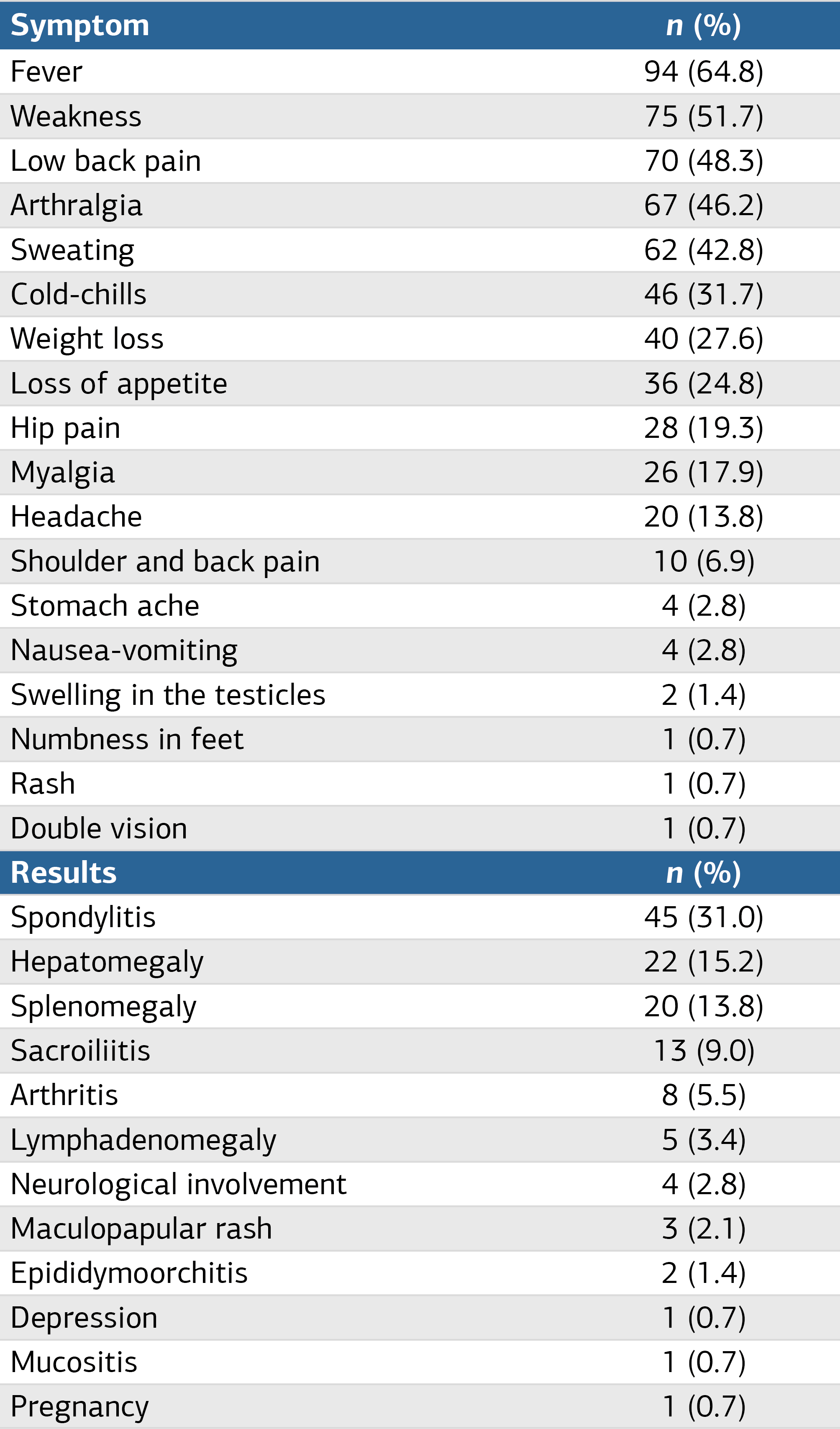
Of the patients, 59.3% (n = 86) were diagnosed with acute brucellosis, 32.4% (n = 47) with subacute brucellosis, and 3.5% (n = 5) with chronic brucellosis, and relapse was in 4.8% (n = 7). No patient died. One patient was pregnant. Admission symptoms and findings are shown in Table 1.
Brucella spp. was grown in the blood culture of 17.9% (n = 26) of the patients. All patients underwent STA test and positive (≥1/160) test results were included in the study. We did not have any patient who had growth in blood culture but a negative STA test.
In radiological examinations, vertebral involvement was seen in 31% (n = 45), sacroiliitis in 9.7% (n = 14), wrist joint involvement in 0.7% (n = 1), leptomeningeal contrast involvement in 0.7% (n = 1), and epididymo-orchitis in 1.4% (n = 2). One patient (0.7%) was diagnosed with thoracic 4–5 spondylodiscitis and one patient (0.7%) was diagnosed with lumbar-5 – sacral-1 spondylodiscitis.
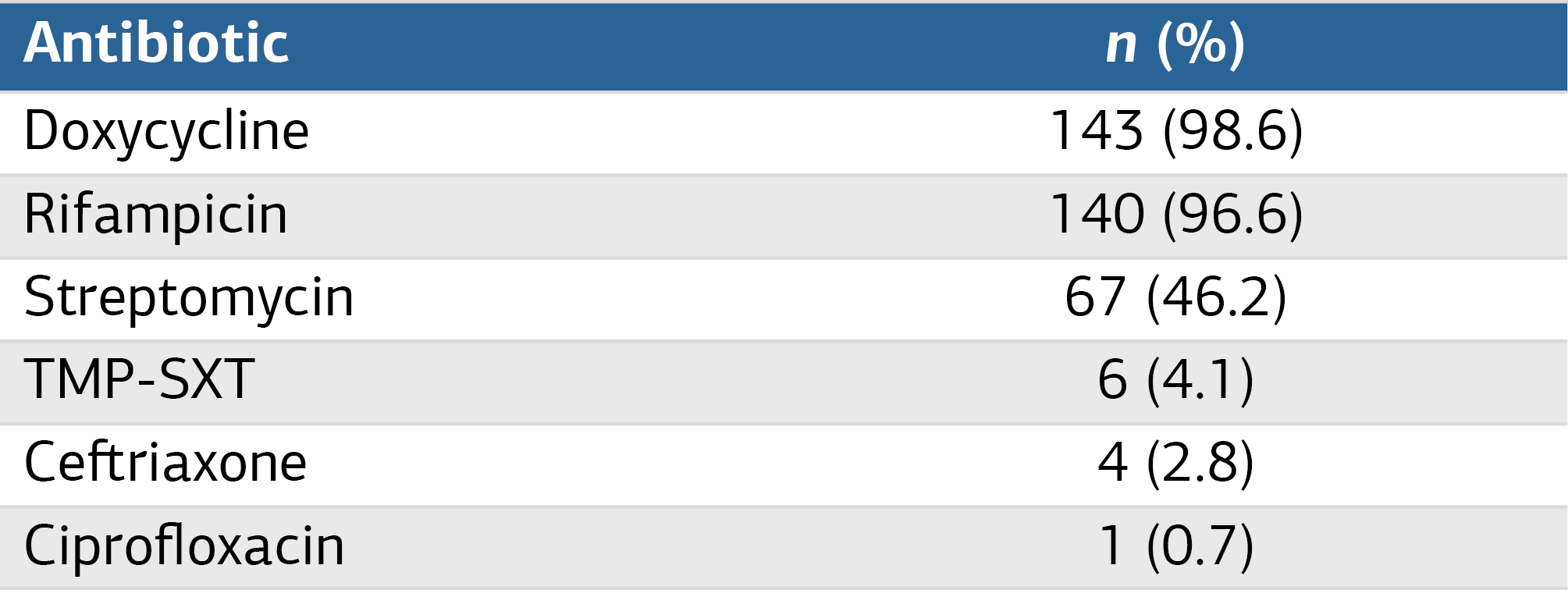
In the treatment, doxycycline 100 mg 2x1 and rifampicin 300 mg 1x2 were combined and given for at least 6 weeks. A single dose of intramuscular (IM) 1 g streptomycin was added to the treatment of patients with vertebra, joint involvement, sacroiliitis and neurological involvement for 21 days, and the treatment period was extended to 8–12 weeks. Rifampicin was combined with ceftriaxone in the pregnant patient (Table 2).
Nausea was observed in three patients receiving doxycycline treatment, and the maculopapular rash was observed in one patient receiving trimethoprim-sulfamethoxazole (TMP-SXT). Considering the fever (axillary fever <36.5) and pain (complaint) responses of the patients from the beginning of the treatment, in 90 (95.7%) of 94 patients, the fever decreased in the first week, and the fever response was more often obtained in the first four days (n = 76, 80.8%).
There were 105 patients with arthralgia, hip pain, shoulder and back pain. Pain response was obtained in 47 (44.8%) of these, within the first week and mostly on the sixth and seventh days, and in 16 (15.2%) within the second week. In 29 patients (27.6%), the pain was relieved at the end of the first two weeks, and in 13 patients (12.4%), the pain did not decrease at the end of the first two weeks and continued as it is.
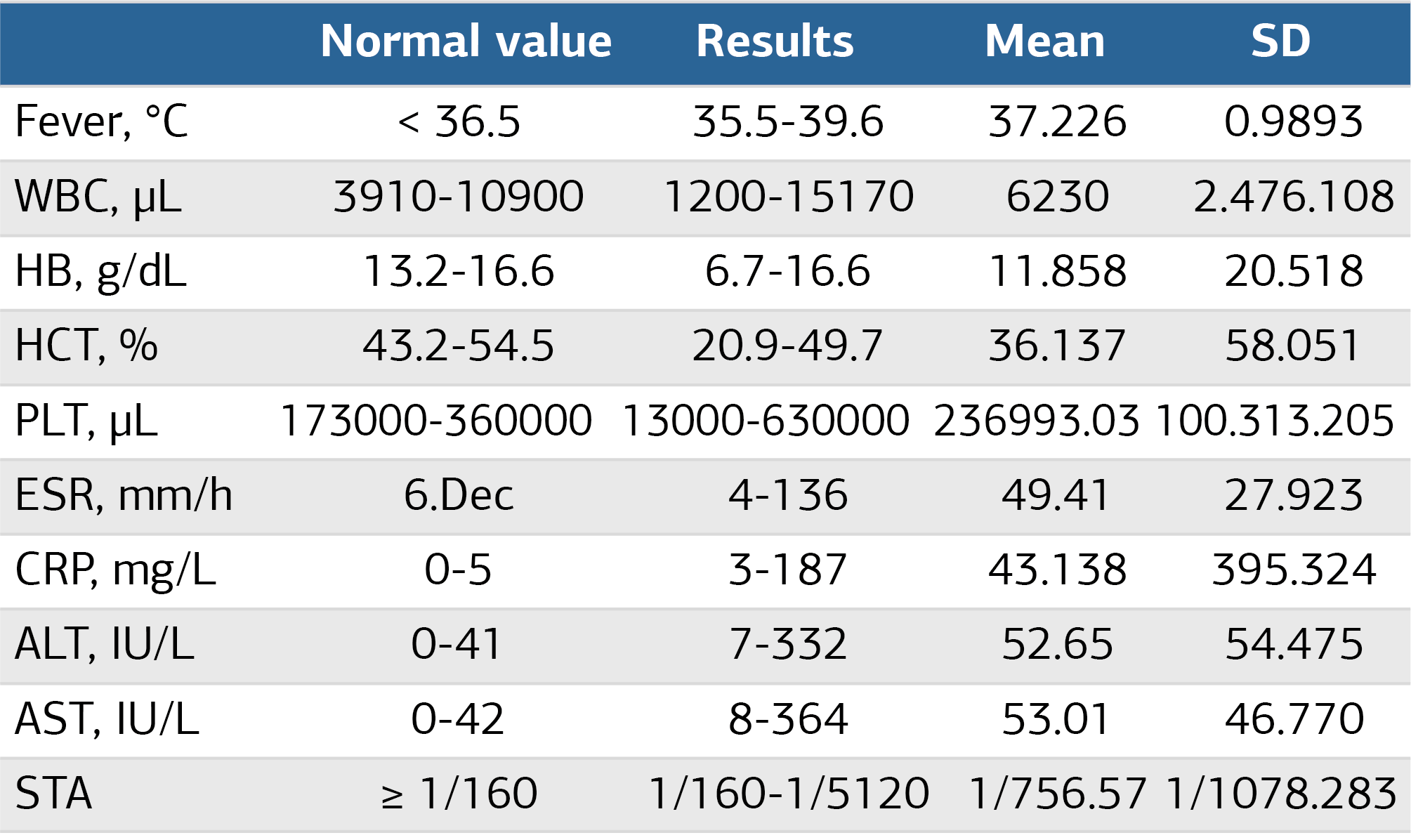
The age range of 145 patients was 14–86, with a mean of 47.28 and a standard deviation (SD) of 19.416. Fever, White blood cell (WBC), hemoglobin (HB), hematocrit (HCT), platelet (PLT), erythrocyte sedimentation rate (ESR), C-reactive protein values (CRP), alanine aminotransferase (ALT), aspartate aminotransferase (AST) and standard tube agglutination (STA) test results, means and standard deviations were recorded (Table 3).
Increased sedimentation, CRP and AST values were detected in brucellosis. Regarding the difference between genders, WBC, HB, HCT and PLT mean values were higher in men (P < .05), while there was no significant difference between the mean values of ESR, CRP, ALT, AST and STA (P > .05) (Table 3). There was no statistically significant difference between WBC, HB, HCT, PLT, CRP and ALT values regarding the differences between the stages of the disease (P > .05). ESR, AST and STA values were significantly higher in acute brucellosis (P < .05).
Discussion
Brucellosis is a zoonotic disease caused by Brucella spp. It is endemic in the Mediterranean basin, where our country is located, in the Middle East, Arabian Peninsula, India and Latin America.1,2 While 500 thousand new cases are seen in the world every year, this number is thought to be 25–26 times higher.3,4 The incidence in endemic areas is 10%.5 Although agriculture and animal husbandry are limited in our region, we have many brucellosis patients presenting with different symptoms and findings due to internal migration from other regions. It is transmitted through mammals such as cattle and sheep. Brucella spp. has a low inoculum value, ten bacteria are enough to cause the disease. Brucella spp. can be transmitted from animal to human or from human to human. It can be transmitted from person to person through blood and exudate, through sexual contact, placenta, during birth and through breast milk.6,7 It is transmitted through undercooked meat, unpasteurized milk and dairy products, and through direct contact with intact skin or abrasions, mucous membranes, and conjunctiva.1,7 It can be transmitted in the microbiology laboratory by inhaling contaminated aerosols or sniffing growth media. The incubation period of brucellosis is 7 days–10 months, with an average of 2–4 months.7 After infection, every system and organ can be involved, including the central nervous system, heart, bones and joints.7 It occurs with non-specific symptoms such as fever, sweating and joint pain.1 Brucellosis continues to be a very common and often neglected disease in developing countries.5,8
Brucellosis affects all organs and systems and has various clinical presentations; therefore, diagnostic difficulties may occur.9 58.6% (n = 85) of our 145 patients had a history of consumption of raw milk, fresh cheese, unpasteurized dairy products and contact with livestock. The rate of transmission through milk and dairy products was found to be 62.5–69%.9,10 81% of our patients were diagnosed in the autumn and winter seasons. The reason for this is that they spend their summer holidays in their hometowns and return to their places of residence with the opening of schools. Twelve patients (8.3%) were laboratory technicians and doctors working in microbiology and dealing with Brucella spp. cultures, and all of them were infected with brucellosis by inhalation. The route of transmission could not be detected in 33.1% (n = 48) of the patients, and this rate was found to be 55.2% in a study.11
In our study, the age range of the patients was 14–86 years, with an average of 47.28 years. Of the 145 patients included in our study, 59.3% (n = 86) were diagnosed in acute, 32.4% (n = 47) in subacute, and 3.5% (n = 5) chronic period; 4.8% (n = 7) were followed up due to relapse. In a study, these rates were 74.4% for acute, 18.9% for subacute, 6.7% for chronic, and no relapse was found.1 In a study conducted with pediatric patients, the relapse rate was found to be 7.4%.12 In another study, acute brucellosis was seen with a rate of 66.2%, while in another study, the rate of relapse was found to be 4.7%.11,12
The disease presents with a wide variety of clinical symptoms.13 The most common symptoms were fever, malaise and low back pain. These symptoms were followed by arthralgia, sweating, chills, weight loss, loss of appetite, hip pain, myalgia, headache, shoulder and back pain, abdominal pain, nausea-vomiting, swelling in the testicles, numbness in the feet, rash, and double vision. In a study, the most common symptoms were found to be arthralgia, fatigue, fever, sweating, and low back pain, respectively, and were the same as the first five symptoms in our study.14
High fever was present in 94 patients (64.8%). Fever response (axillary <36.5) with treatment was observed predominantly (95.7%) within the first week. The fever of 80.8% of 94 patients returned to normal in the first four days. Fever regressed in the second week in 4.3% of the patients. Of 105 patients complaining of arthralgia, hip pain, shoulder and back pain, in 44.8% of them, pain disappeared at the end of the first week, and in 15.2% at the end of the second week. In 27.6% of 105 patients, at the end of the second week, the pain was relieved but not completely gone, and in 12.4%, the pain did not even decrease at the end of the second week.
Among the findings, spondylitis, hepatomegaly and splenomegaly took the first three places, followed by sacroiliitis, arthritis, lymphadenomegaly, neurological involvement, maculopapular rash, epididymo-orchitis, depression and mucositis. One of our patients was pregnant.
Blood cultures of all patients were sent. Brucella spp. grew in the blood cultures of 26 (17.9%) patients. In two different studies, the growth rates in blood cultures were found to be 18.1% and 21%, respectively.10,15 This rate was 7.1% in pediatric patients.12 because less blood can be drawn for blood cultures from pediatric patients.
While STA positivity was 100% in all our patients, this rate was found to be between 88.2 and 99.4% in different studies.1,12 Despite clinical suspicion, we did not include STA-negative patients, thus the rate in our study was 100%.
In radiological examinations, vertebral involvement was seen in 31% (n = 45), sacroiliitis in 9.7% (n = 14), wrist joint involvement in 0.7% (n = 1), lepto-meningeal contrast involvement in 0.7% (n = 1), and epididymo-orchitis in 1.4% (n = 2). One patient (0.7%) was diagnosed with thoracic 4–5 spondylodiscitis, and one patient (0.7%) was diagnosed with lumbar-5 – sacral-1 spondylodiscitis. In a similar study, osteoarticular involvement was found to be 25.3%, in another study, it was 10%, and epididymo-orchitis was 0.9%.8,11
Doxycycline 100 mg twice a day and rifampicin 600 mg once a day were mostly used in combination therapy. Patients received treatment for at least 6 weeks. Three patients using doxycycline were switched to TMP-SXT because of nausea. For the treatment of patients with vertebra, joint involvement, sacroiliitis and neurological involvement, 1 g of streptomycin IM per day was added for three weeks. Relapses were less common in patients given streptomycin. In a study, the combination of doxycycline and streptomycin with or without rifampicin was found to be more effective in osteoarticular involvement.11 In our pregnant patient, rifampicin and ceftriaxone were combined. One patient treated with TMP-SXT developed a maculopapular rash and was switched to ciprofloxacin.
CRP, sedimentation and AST values increase significantly in brucellosis and may cause granulomatous hepatitis. When laboratory values were analyzed, WBC, HB, HCT and PLT were found to be higher in men, ESR, AST and STA values were higher in acute brucellosis, and ESR values were higher in patients over 61 years of age (P < .05). In a study, CRP and sedimentation were found to be higher in patients with brucellosis compared to the control group without brucellosis.16
Limitations
One hundred and forty-five adult patients with brucellosis who were followed in the Infectious Diseases and Clinical Microbiology Clinic of our hospital between January 01, 2001 and December 31, 2010 were analyzed retrospectively. The diagnosis of brucellosis was confirmed by positive blood culture and/or positive STA test (≥1/160). Patients with negative results despite clinical suspicion were not included in the study.
Conclusion
Risk factors for brucellosis, which is endemic in our country, are consuming raw milk and dairy products, contact with animal husbandry and laboratory exposure through aerosols. Brucellosis has different clinical presentations because it involves all organs. Brucellosis should also be considered in the differential diagnosis in risky groups presenting with fever, fatigue, arthralgia, spondylitis, hepatomegaly and splenomegaly. While the most common combination of doxycycline and rifampicin is used in the treatment, the addition of streptomycin reduces the relapse rate in patients with complications.
Declarations
Animal and Human Rights Statement
All procedures performed in this study were in accordance with the ethical standards of the institutional and/or national research committee and with the 1964 Helsinki Declaration and its later amendments or comparable ethical standards.
Informed Consent
The requirement for informed consent was waived due to the retrospective nature of the study.
Data Availability
The datasets used and/or analyzed during the current study are not publicly available due to patient privacy reasons but are available from the corresponding author on reasonable request.
Conflict of Interest
The authors declare that there is no conflict of interest.
Funding
None.
References
- Kazak E, Akalın H, Yılmaz E, et al. Brucellosis: a retrospective evaluation of 164 cases. Singapore Med J. 2016;57(11):624-629. doi:10.11622/smedj.2015163
- Şahin AR, Ateş S, Nazik S, Erdoğan A. Evaluation of hematological changes in patients with brucellosis. Kocaeli Univ Saglik Bilim Derg. 2019;5:121-124.
- Atay E, Metintaş S. Bruselloz ve ekonomik yüzü [Economic burden of brucellosis]. ESTUDAM Halk Sagligi Derg. 2018;3(3):71-84.
- O’Callaghan D. Human brucellosis: recent advances and future challenges. Infect Dis Poverty. 2020;9(1):101. doi:10.1186/s40249-020-00715-1
- Ghanbari MK, Gorji HA, Behzadifar M, Sanee N, Mehedi N, Bragazzi NL. One health approach to tackle brucellosis: a systematic review. Trop Med Health. 2020;48:86. doi:10.1186/s41182-020-00272-1
- Kanık Yüksek S, Gülhan B. Çocukluk çağında bruselloz: tek merkez deneyimi [Brucellosis in childhood: a single-center experience]. Turkiye Cocuk Hast Derg. 2019;13(6):435-441. doi:10.12956/tchd.506827
- Öncel S. Brucella infections: assessment and management. J Health Sci Kocaeli Univ. 2016;2(3):25-30.
- Tatlı Kış T, Kış M, Köse Ş. 111 bruselloz olgusunun etyoloji, klinik seyir ve komplikasyonlarının değerlendirilmesi: bir retrospektif çalışma [Evaluation of etiology, clinical course, and complications of 111 brucellosis cases: a retrospective study]. Mersin Univ Saglik Bilim Derg. 2020;13(3):339-347.
- Haykır Solay A, Kuşcu F, Tütüncü E, Dede G, Gürbüz Y. Brucellosis: difficulty of diagnosis in endemic areas. J Contemp Med. 2023;13(2):282-287.
- Köse Ş, Serin Senger S, Akkoçlu G, et al. Clinical manifestations, complications, and treatment of brucellosis: evaluation of 72 cases. Turk J Med Sci. 2014;44(2):220-223.
- Buzgan T, Karahocagil MK, Irmak H, et al. Clinical manifestations and complications in 1028 cases of brucellosis: a retrospective evaluation and review of the literature. Int J Infect Dis. 2010;14(6). doi:10.1016/j.ijid.2009.06.031
- Kara S, Aslan M, Volkan B, Özel M, Fettah A. Bruselloz tanılı 94 çocuk hastanın retrospektif olarak değerlendirilmesi [Retrospective evaluation of 94 pediatric patients with brucellosis]. Kocatepe Tip Derg. 2016;17(2):60-65. doi:10.18229/ktd.14381
- Franco MP, Mulder M, Gilman RH, Smits HL. Human brucellosis. Lancet Infect Dis. 2007;7(12):775-786. doi:10.1016/s1473-3099(07)70286-4
- Demiroğlu YZ, Turunç T, Alişkan H, Colakoğlu S, Arslan H. Bruselloz: 151 olgunun klinik, laboratuvar ve epidemiyolojik özelliklerinin retrospektif değerlendirilmesi [Brucellosis: retrospective evaluation of the clinical, laboratory, and epidemiological features of 151 cases]. Mikrobiyol Bul. 2007;41(4):517-527.
- Kurtaran B, Candevir A, Inal AS, Kömür S, Akyıldız Ö. Clinical appearance of brucellosis in adults: 14 years of experience. Turk J Med Sci. 2012;42:497-505. doi:10.3906/sag-1011-1286
- Parlak E, Alay H, Kesmez Can F, Parlak M, Koşan Z. An evaluation of mean platelet volume, sedimentation, and CRP in brucellosis patients. Turk J Clin Lab. 2019;10(4):479-483. doi:10.18663/tjcl.476643
Tables
Additional Information
Publisher’s Note
Bayrakol MP remains neutral with regard to jurisdictional and institutional claims.
Rights and Permissions

This work is licensed under a Creative Commons Attribution-NonCommercial 4.0 International License (CC BY-NC 4.0). To view a copy of the license, visit https://creativecommons.org/licenses/by-nc/4.0/
About This Article
How to Cite This Article
Bülent Kaya, Suzan Şahin. Evaluation of brucellosis cases. Ann Clin Anal Med 2024;15(1):16-20. doi:10.4328/ACAM.21779
Publication History
- Received:
- 06.06.2023
- Accepted:
- 10.07.2023
- Published Online:
- 23.11.2023
- Printed:
- 01.01.2024