
Abstract
AimThis study was planned to examine the nutritional problems of patients diagnosed with gastrointestinal tract (GIS) cancer and to evaluate the effects of professional nutritional support on the outcome of their treatment.MethodsThis study was carried out with 24 (33.3% females, 66.7% males) volunteer participants aged 18 and above, who were diagnosed with GIS cancer and planned to have concurrent chemotherapy and radiotherapy treatment (chemoradiotherapy = CRT). The participants were asked questions on socio-demographic characteristics and nutritional habits, anthropometric measurements were taken, biochemical data were recorded, Subjective Global Assessment (SGA) and Mini Nutritional Assessment (MNA) scales were applied, and nutritional training deemed necessary was given to them. The participants were re-evaluated after three months and the data were compared with the initial findings.ResultsThere was no significant difference between the pre- and post-treatment Body Mass Index (BMI). A significant difference was found between the SGA and MNA values before and after CRT (P < .001). ConclusionIn cancer patients, together with the medical treatment plan, the patient’s nutritional evaluation and providing the necessary Medical Nutrition Therapy (MNT) enable the individual to act consciously. Increasing the level of nutritional awareness makes it easier for an individual to fight the disease while increasing the effectiveness of treatment. In conclusion, it should be noted that institutions providing care to cancer patients should have a dietitian available.
Keywords
Introduction
Cancer is among the most important health problems all over the world. It is ranked as the second leading cause of death worldwide.1-3 The causes of cancer can be grouped under two headings: environmental and genetic. For example, smoking, consumed food and beverages, obesity, hormones, viruses, physical and chemical agents are some of the environmental factors.4 According to data from the International Agency for Research on Cancer in 2018, 18.1 million people were diagnosed with cancer worldwide, and it is estimated that 24 million people will have cancer in 2035.3 According to Globocan 2020 data, GIS cancers are the leading cause of cancer-related death. In 2020, 5 million new GIS cancer diagnoses caused approximately 3.5 million deaths.4 While the population of Turkey was 84,339,067 in 2020, a total of 233,834 new cancer cases were detected in the same year. Of this number, 126,335 resulted in death.5
There are five main treatment options in cancer treatment: chemotherapy, radiotherapy, surgical treatment, immunotherapy and hormone therapy. In recent years, the application of concomitant CRT has become an important practice in cancer treatment. This practice has become a standard treatment for advanced cancer types.6 Many cancer treatments affect patients’ appetite, food intake and the use/absorption of nutrients in the body. Especially in patients who have undergone gastrointestinal surgery, malabsorption of nutrients develops since swallowing and gastrointestinal motility are affected.7
The purpose of MNT in cancer patients is to prevent and treat nutritional deficiencies, reduce the side effects of treatment, prevent weight loss, support the effectiveness of cancer treatment, reduce the rate of complications and mortality, and improve quality of life.8 Personalized nutrition training has been reported to increase the patient’s food consumption and quality of life, and reduce complications related to the disease in cancer patients who cannot have enough nutrients.4,7 Therefore, this study was conducted to evaluate the effectiveness and necessity of MNT given to patients diagnosed with GIS cancer before starting CRT treatment.
Materials and Methods
The population of this prospective cohort study consisted of patients newly diagnosed with GIS cancer in Bursa Ali Osman Sönmez Oncology Hospital between 01 March 2021 and 01 June 2021. The study was carried out with a total of 24 patients, 8 females (33.3%) and 16 males (66.7%) aged 18 years and older, who were diagnosed with GIS cancer and scheduled for CRT treatment. Before the treatment, all patients were given nutritional training and their nutritional follow-ups were carried out. Patients over 85 years of age and those with metastases were not included in the study.
The same dietitian gave nutrition training to the participants individually before the treatment and conducted their nutrition follow-ups.
Socio-demographic Data Collection Form included questions about gender, age, weight, height, education level, occupation, monthly income, presence of additional disease and physical activity levels of the patients, and their BMI values were calculated and evaluated with the data obtained from this form.
Eating Habits Questionnaire Form included questions about the number of main and snack meals consumed by the patients, whether they skipped meals, what type of food they consumed between main meals, and the frequency of eating outside the home in order to evaluate the nutritional status of individuals. Furthermore, the three-day food consumption of the patients was recorded with the form created and evaluated by the same dietitian.
Anthropometric measurements of the participants were taken as per standards. The body weight (kg), height (cm), triceps skinfold thickness (TSF), mid-upper arm circumference (MUAC), and Midarm Muscle Area (MMA) measurements of the participants were taken and recorded by the researcher.
Collection of biochemical parameters: Total protein, albumin, hemoglobin, total cholesterol, HDL cholesterol (mg/dL), LDL cholesterol (mg/dL), triglycerides, C-reactive protein (CRP), CEA, CA19-9, white blood cell (WBC), SGOT, SGPT, fasting blood glucose, urea, creatinine, calcium, iron and vitamin B12 values of the patients were obtained from patient files and recorded.Scales Applied to ParticipantsThe MNA was developed by Vellas et al.9 The Turkish validity and reliability study of the scale was carried out by Sarıkaya in 2013.10
The SGD was developed by Detsky et al. to assess malnutrition status. It consists of two parts: dietary history and physical examination. In the scoring of the scale, SGD-A indicates normal nutritional status, SGD-B suspected malnutrition and SGD-C severe malnutrition.11Ethical ApprovalEthical approval for this study was obtained from the Okan University Ethics Committee (Date: 27.01.2021).Statistical AnalysisAnalysis of the data was performed with SPSS 25.0.0. Numerical variables were measured with mean ± standard deviation and lower–higher values, categorical variables were shown as numbers and percentages. “Wilcoxon signed-rank test” was used for quantitative initial and final measurement comparisons. The level of statistical significance was determined as P < .05.
Reporting GuidelinesThis study was reported in accordance with the STROBE guideline.
Results
Of the 24 study participants, 33% were female. The mean age was 60.13±11.72 years. The educational status of the participants was as follows: 45.8% were primary school graduates, while 20.8% were university graduates. The monthly incomes of 12.5% of the participants were 2500 TL or less, 45.8% had a monthly income between 2501–5000 TL, 33.3% between 5001–10000 TL, and 8.3% were 10001 TL and above. Among the participants, 45.8% did not have any chronic disease. When daily physical activity levels were examined, 54.2% of the participants were found to perform physical activity. 16.7% of the participants actively smoked and 20.8% consumed alcohol socially. A total of 70.8% of the participants had an immediate family member diagnosed with cancer. Information about the nutritional habits of the participants is as follows.
While 50% of the participants had two main meals, 50% had three main meals a day. Of these, 37.5% had one snack a day, 25% had two snacks and 8.3% had three snacks. While 25% of the participants preferred candy, chocolate and wafers as snacks, 16.7% consumed bagels, biscuits and cookies, and 12.5% consumed carbonated drinks and soda water. Ready-made food was consumed by 41.7% of the participants.
The findings regarding the comparison of the anthropometric characteristics of the participants before and after CRT are presented in Table 2. There was no statistically significant difference between the body weight and mean BMI values of the participants (P > .05). The only statistically significant difference was found between the midarm muscle circumference values of the participants before and after CRT (P = .016).
There was no statistically significant difference in the biochemical parameters of the participants before and after CRT, except for the ferritin value (P = .026).
According to the SGD, the results of the participants before CRT were 50% SGD-A, 29.2% SGD-B and 20.8% SGD-C, while after CRT, 54.2% were SGD-A, 37.5% SGD-B and 8.3% SGD-C. According to the MNA, before CRT, 12.5% of the participants had malnutrition, 45.8% were at risk of malnutrition and 41.7% were in the normal nutrition group, while after CRT, 8.3% had malnutrition, 37.5% were at risk of malnutrition and 54.2% were in the normal nutrition group. A significant difference was found between the SGD and MNA values of the participants before and after CRT (P < .001) (Table 1).
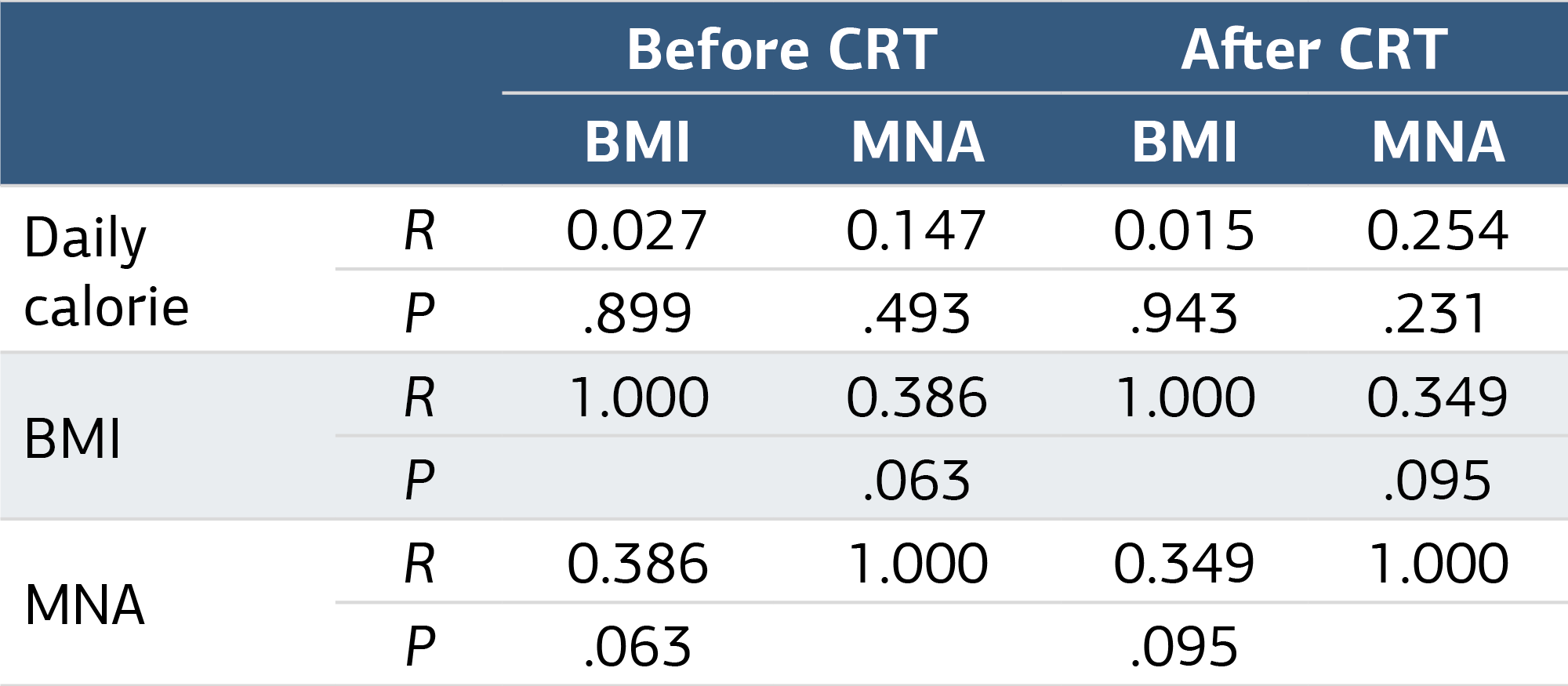
Correlation of participants’ daily calorie intakes, BMI and MNA values before and after CRT showed no significant relationship between daily calorie intake, BMI and MNA levels of the participants before and after CRT (P > .05) (Table 3).
Discussion
Malnutrition, poor nutrition and muscle loss are frequently observed in cancer patients. This condition negatively affects the clinical results of patients and leads to an increase in the length of their stay in the hospital.12 This study was planned to evaluate how nutritional status before and after CRT in individuals with GIS cancer and professional support affect the treatment.
It has been reported in some studies that the incidence of cancer in terms of gender in Turkey is higher in males than in females.13 In some studies conducted in different countries of the world, the incidence of cancer has also been reported to be higher in males compared to females.14,15 The fact that the majority of the participants in our study were male supports this literature finding. There are studies reporting that low socioeconomic14,16 and low educational status16 trigger the incidence of cancer. Our results have been in line with this information.
It is noted in the literature that patients with a family history of gastrointestinal cancer tend to be diagnosed with cancer at a younger age than those without.15 Among the participants of our study, 70.8% of them had an immediate family member who had been diagnosed with a type of cancer. Half of the participants in our study stated that they skipped a main meal daily. Similar to our study results, two different studies reported that almost half of the participants skipped one of the main meals.17 However, in our study, the daily calorie consumption and macronutrient distribution of the participants before and after CRT were similar, and no statistically significant difference was found (P > .05).
Malnutrition is closely associated with a worse prognosis and poor quality of life.18 In their study conducted with patients with head and neck cancer in our country, Demirel et al. found a significant relationship between SGD and MNA (P < .001).19
In our study, the mean MNA score of the participants before CRT was 21.38±4.30, while it was 23.42±3.67 after CRT, and a significant difference was found between the scores (P = .008). This changing situation in favour of the participants shows that individuals consume food consciously to meet their daily energy needs, despite the side effects that may develop due to CRT. This also shows us that patients care about nutritional advice about coping with the disease, and they act diligently and consciously on their own. It also indicates that they have been in compliance with the treatment. The results of our study emphasize the importance of MNT.
In the study conducted by Hong et al. with the participants who were treated for cancer, they reported finding lower TST values in male participants, and lower MUAC, MMC and MMA values in both male and female participants compared to the baseline values.20 In our study, while the MUAC value of the participants did not change, the MMC and MMA values increased (Table 2). This was believed to be due to the fact that the participants were able to continue their daily activities as a result of their compliance with MNT and feeling well during the treatment process.Biochemical Characteristics of Patients Before and After CRTMany biochemical parameters need to be evaluated before a malnutrition diagnosis can be made. It can play an important role in the diagnosis of the disease at an early stage.21 In the study by Kabata et al., the albumin value of the participants was 3.8, total protein value was 7 (4.5–7.9).22 Lee et al. found that total protein was 5.8 (4.5–7.9).23 In our study, total protein was found to be 63.95±28.19 (64–83) before CRT, while it was 64.92±10.15 after CRT.
It was proven in a meta-analysis study that a low haemoglobin value causes a poor prognosis.24 In our study, the haemoglobin value of the participants was found to be higher than the value before CRT. The CRP level of the participants was found to be high in our study. Inflammation in some tissues with the development of cancer or an increase in CRP level may be observed as the body’s immune response.24
In another study conducted with a total of 4707 patients, Huang et al. associated inflammatory markers ferritin and CRP.25 Apart from CRT, the level of iron in the blood is also affected by liver diseases and inflammation.1 There was a statistically significant difference only in the ferritin value among the biochemical parameters of the participants before and after CRT in our study (P = .026). This difference was in favour of the patients and in the direction of increase. No significant difference was observed in other data.
Limitations
The main limitations of this study were the small sample size and the single-center design, which may limit the generalizability of the findings.
Conclusion
Our study results once again revealed the importance of MNT in cancer patients. Having a nutritionist in the units providing oncology healthcare services and giving the necessary MNT to the patients would not only enable faster improvements in the health parameters of the patients but would also increase their quality of life. It would also contribute to the economy of the countries by reducing treatment costs.
Declarations
Animal and Human Rights Statement
All procedures performed in this study were in accordance with the ethical standards of the institutional and/or national research committee and with the 1964 Helsinki Declaration and its later amendments or comparable ethical standards.
Informed Consent
Written informed consent was obtained from all participants before enrollment in the study.
Data Availability
The datasets used and/or analyzed during the current study are not publicly available due to patient privacy reasons but are available from the corresponding author on reasonable request.
Conflict of Interest
The authors declare that there is no conflict of interest.
Funding
None.
Abbreviations
BMI: Body mass index
CA19-9: Carbohydrate antigen 19-9
CEA: Carcinoembryonic antigen
CRP: C-reactive protein
CRT: Chemoradiotherapy
GIS: Gastrointestinal system
HDL: High-density lipoprotein
LDL: Low-density lipoprotein
MMA: Midarm muscle area
MNA: Mini nutritional assessment
MNT: Medical nutrition therapy
MUAC: Mid-upper arm circumference
SGA: Subjective global assessment
SGOT: Serum glutamic-oxaloacetic transaminase
SGPT: Serum glutamic-pyruvic transaminase
SPSS: Statistical package for the social sciences
STROBE: Strengthening the reporting of observational studies in epidemiology
TSF: Triceps skinfold thickness
WBC: White blood cell
References
- Conti CB, Agnesi S, Scaravaglio M, et al. Early gastric cancer: update on prevention, diagnosis, and treatment. Int J Environ Res Public Health. 2023;20(3):2149. doi:10.3390/ijerph20032149
- Bray F, Ferlay J, Soerjomataram I, Siegel RL, Torre LA, Jemal A. Global cancer statistics 2018: GLOBOCAN estimates of incidence and mortality worldwide for 36 cancers in 185 countries. CA Cancer J Clin. 2018;68(6):394-424. doi:10.3322/caac.21492
- Weeden CE, Hill W, Lim EL, Grönroos E, Swanton C. Impact of risk factors on early cancer evolution. Cell. 2023;186(8):1541-1563. doi:10.1016/j.cell.2023.03.013
- Sung H, Ferlay J, Siegel RL, et al. Global cancer statistics 2020: GLOBOCAN estimates of incidence and mortality worldwide for 36 cancers in 185 countries. CA Cancer J Clin. 2021;71(3):209-249. doi:10.3322/caac.21660
- Topakta B, Karakus B, Yaksi N. Clinical and epidemiological characteristic of cancer cases reported between 2013 and 2017 in Amasya. Turk J Public Health. 2023;21(1):113-126.
- Wang Y, Shen L, Wan J, et al. Neoadjuvant chemoradiotherapy combined with immunotherapy for locally advanced rectal cancer: a new era for anal preservation. Front Immunol. 2022;13:1067036. doi:10.3389/fimmu.2022.1067036
- Li B, Shao H, Gao L, Li H, Sheng H, Zhu L. Nano-drug codelivery system of natural active ingredients and chemotherapy drugs for cancer treatment: a review. Drug Deliv. 2022;29(1):2130-2161. doi:10.1080/10717544.2022.2094498
- Arends J, Bachmann P, Baracos V, et al. ESPEN guidelines on nutrition in cancer patients. Clin Nutr. 2017;36(1):11-48. doi:10.1016/j.clnu.2016.07.015
- Vellas B, Guigoz Y, Garry PJ, et al. The Mini Nutritional Assessment and its use in grading the nutritional state of elderly patients. Nutrition. 1999;15(2):116-122. doi:10.1016/s0899-9007(98)00171-3
- Sarikaya D, Halil M, Kuyumcu ME, et al. Mini nutritional assessment test long and short form are valid screening tools in Turkish older adults. Arch Gerontol Geriatr. 2015;61(1):56-60. doi:10.1016/j.archger.2015.04.006
- Detsky AS, McLaughlin JR, Baker JP, et al. What is subjective global assessment of nutritional status? J Parenter Enteral Nutr. 1987;11(1):8-13. doi:10.1177/014860718701100108
- Castillo-Martínez L, Castro-Eguiluz D, Copca-Mendoza ET, et al. Nutritional assessment tools for the identification of malnutrition and nutritional risk associated with cancer treatment. Rev Invest Clin. 2018;70(3):121-125. doi:10.24875/ric.18002524
- Huang J, Ngai CH, Deng Y, et al. Incidence and mortality of thyroid cancer in 50 countries: a joinpoint regression analysis of global trends. Endocrine. 2023;80:355-365. doi:10.1007/s12020-022-03274-7
- Pang Y, Kartsonaki C, Guo Y, et al. Socioeconomic status in relation to risks of major gastrointestinal cancers in Chinese adults: a prospective study of 0.5 million people. Cancer Epidemiol Biomarkers Prev. 2020;29(4):823-831. doi:10.1158/1055-9965.epi-19-0585
- Chung JW, Park JJ, Lim YJ, et al. Gastrointestinal cancer risk in patients with a family history of gastrointestinal cancer. Korean J Gastroenterol. 2018;71(6):338-348. doi:10.4166/kjg.2018.71.6.338
- Kawakatsu Y, Koyanagi YN, Oze I, et al. Association between socioeconomic status and digestive tract cancers: a case-control study. Cancers (Basel). 2020;12(11):3258. doi:10.3390/cancers12113258
- Gunes-Bayir A, Kiziltan HS, Sentürk N, Mayadaglı A, Gumus M. A pilot study of self-reported physical activity and eating habits in Turkish cancer patients under chemotherapy. Nutr Cancer. 2015;67(6):906-911. doi:10.1080/01635581.2015.1053500
- Maia FCP, Silva TA, Generoso SV, Correia MITD. Malnutrition is associated with poor health-related quality of life in surgical patients with gastrointestinal cancer. Nutrition. 2020;75-76:110769. doi:10.1016/j.nut.2020.110769
- Demirel B, Atasoy BM. Comparison of 3 nutritional screening tools to predict malnutrition risk and detect distinctions between tools in cancer patients receiving radiochemotherapy. Nutr Cancer. 2018;70(6):867-873. doi:10.1080/01635581.2018.1491606
- Hong JS, Wu LH, Su L, et al. Effect of chemoradiotherapy on nutrition status of patients with nasopharyngeal cancer. Nutr Cancer. 2016;68(1):63-69. doi:10.1080/01635581.2016.1115099
- Jabłońska B, Mrowiec S. Nutritional status and its detection in patients with inflammatory bowel diseases. Nutrients. 2023;15(8):1991. doi:10.3390/nu15081991
- Kabata P, Jastrzębski T, Kąkol M, et al. Preoperative nutritional support in cancer patients with no clinical signs of malnutrition: prospective randomized controlled trial. Support Care Cancer. 2015;23(2):365-370. doi:10.1007/s00520-014-2363-4
- Lee SY, Lee YJ, Yang JH, Kim CM, Choi WS. The association between phase angle of bioelectrical impedance analysis and survival time in advanced cancer patients: preliminary study. Korean J Fam Med. 2014;35(5):251-256. doi:10.4082/kjfm.2014.35.5.251
- Huang XZ, Yang YC, Chen Y, et al. Preoperative anemia or low hemoglobin predicts poor prognosis in gastric cancer patients: a meta-analysis. Dis Markers. 2019;2019:7606128. doi:10.1155/2019/7606128
- Oztas D, Erdogan S, Benzil A, Nadar O, Erel O. A new inflammatory marker: vitamin B12. J Immunol Clin Microbiol. 2019;4(1):1-12.
Tables
Table 1. Distribution of Participants in SGD and MNA Groups Before and After CRT

Table 2. Comparison of the Anthropometric Characteristics of the Participants Before and After CRT
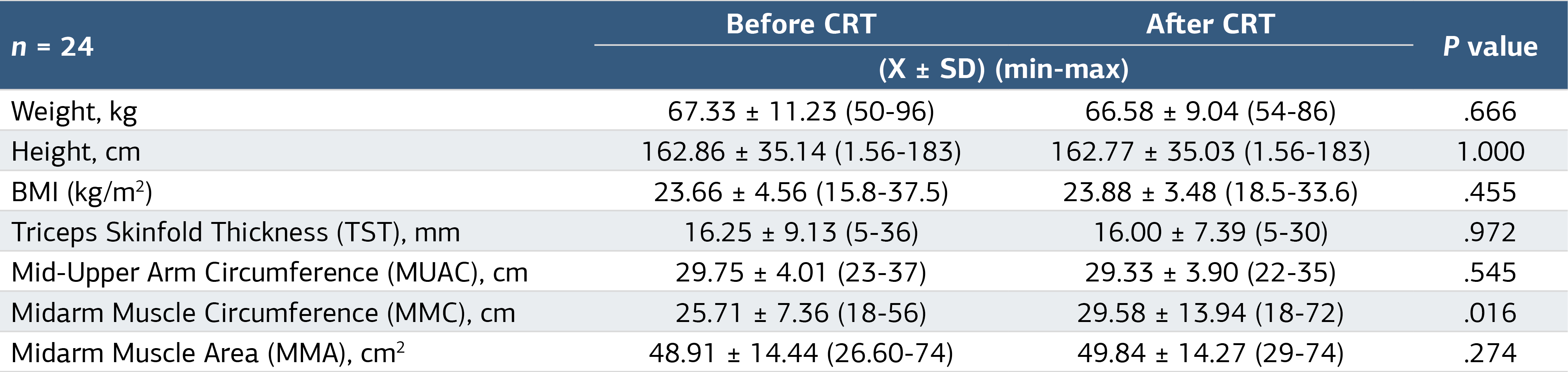
Table 3. Correlation of Participants’ Daily Calorie Intakes, BMI, and MNA Values Before and After CRT
Additional Information
Publisher’s Note
Bayrakol MP remains neutral with regard to jurisdictional and institutional claims.
Rights and Permissions

This work is licensed under a Creative Commons Attribution-NonCommercial 4.0 International License (CC BY-NC 4.0). To view a copy of the license, visit https://creativecommons.org/licenses/by-nc/4.0/
About This Article
How to Cite This Article
Nazan Son, Ezgi Atıcı. Evaluation of nutritional status of patients with gastrointestinal systemtumours receiving chemo-radiotherapy. Ann Clin Anal Med 2024;15(1):47-51. doi:10.4328/ACAM.22006
Publication History
- Received:
- 05.10.2023
- Accepted:
- 06.11.2023
- Published Online:
- 14.11.2023
- Printed:
- 01.01.2024