
Abstract
AimThe study aims to evaluate and compare balance and proprioception in dyslexic and typically developing children.MethodsThe study was carried out with 24 children diagnosed with dyslexia and 24 children with typical development between the ages of 8-16. Pediatric Berg Balance Scale (PBBS) and Tandem Walking Test (TWT) were used to evaluate balance ability. Proprioception assessment was evaluated by looking at the joint position sense with a goniometer at the specified angles for the knee and ankle.ResultsThere was a significant difference between children with typical development and dyslexia in terms of PBBS scores (P < .05). In the TWT, there was a significant difference in all arm positions with eyes closed in terms of the number of steps, while a significant difference was found in all arm positions with eyes open and closed in terms of the time spent for each step (P < .05). In terms of proprioception, a significant difference was found compared to individuals with typical development in only 10° dorsiflexion of the foot (P < .05). ConclusionIt was observed that balance skills of children with dyslexia were negatively affected compared to children with typical development, no clear inference could be made in terms of proprioception and further studies were needed.
Keywords
Introduction
Dyslexia is a subtype of specific learning disorders and is a learning disability that affects reading comprehension, correct and fluent reading, spelling and writing skills and leads to low academic achievement.1 Functions such as decoding, naming letters, and dividing words into syllables are important for reading comprehension. The phoneme, which is the basis of reading, develops by learning to translate the letters into the sounds they represent.2 It has been reported that the prevalence of dyslexia in school-aged children is 10%, and its general prevalence is between 7-17% in Turkey. Dyslexia is a developmental disorder that significantly affects the education and training system.3,4 The diagnosis of dyslexia is generally recognized during the literacy process when the child starts school.4 Genetic, neurological and environmental factors play a role in the etiology of learning disorders.5 According to functional imaging studies, It has been observed that the development of left hemisphere connections, which have a role in reading and spelling, is affected.2 and they show biochemical differentiation, especially in the left frontal and temporoparietal areas, but this differs between individuals.6 In addition, it has been shown that the size of the cerebellum may be different in dyslexic individuals, and this may affect not only motor functions but also cognitive functions.7
There are many theories about the causes of dyslexia, whose symptoms were first described in 1881. Although phonological awareness theory is the most emphasized theory, it is seen as insufficient to explain its causal relationship with dyslexia. According to this theory, in dyslexia, the relationship with sound sequences is disrupted and abilities such as sound recognition, naming letters, and separating words into syllables are affected. Temporal processing deficit theory, which expresses temporal processing disorders in both visual and auditory areas, is present in most individuals with dyslexia.8 According to this theory, the inability to sequence the letters and sounds in the word correctly may be the physiological basis underlying dyslexia.2 According to the cerebellar deficit theory, which mentions poor movement coordination and/or motor control in dyslexic children, this affects balance and motor skills.9
Frank and Levinson reported for the first time the neurological insufficiency of the balance system originating from the cerebellum in dyslexic children.10 Although the cerebellum is an important center of balance and coordination, it is also very important for cognitive functions. It achieves this function through extensive neural connections with brain regions associated with cognitive functions.7 It has been suggested that the important role of the cerebellum on the vestibular system is also affected in children with dyslexia, and that cognitive functions are affected by learning disabilities. Learning requires the coordinated integration of visual, auditory, motor and language-related areas, and these areas make rich connections with the cerebellum. In addition, the cerebellum has very important roles such as reading speed, intonation, sequencing during speech.11
Postural balance refers to the ability to control the body’s center of gravity within the support surface. Visual, vestibular and somatosensory inputs are important for postural control quality. The proprioceptive system contributes to balance by providing information about the position of parts of the body.12 In the light of this information, we aimed to evaluate balance control and proprioception, which occur with the interaction of many inputs such as visual, vestibular, somatosensory and cognitive systems, in children with dyslexia and typically developing children.
Materials and Methods
Assuming α=0.05 and 1-β (power)=0.80, the incidence of children with developmental dyslexia and dyslexia-plus syndrome in the population is 2% in the power analysis performed before the start of the study.4 it was calculated that 48 individuals, at least 24 individuals in each group, should be included in the study. Power analysis was performed using the publicly available statistical software OpenEpi, version 3 to calculate the sample size.ParticipantsOur study included children aged between 8 and 16 with dyslexia who were educated at the special education and rehabilitation centers affiliated with the Malatya Provincial Directorate of National Education, and students with typical development. Inclusion criteria for the study; Individuals who did not have vision and hearing problems, did not have a disease that would affect their general health status, and did not use any pharmacological agents were included. Demographic information (name-surname, age, gender, height, weight, BMI) of all children participating in the study was obtained.EvaluationIn our study, the Pediatric Berg Balance Scale (PBBS) and Tandem Walking Test (TWT) were used to evaluate balance ability. Necessary permission has been obtained for PBBS. The PBBS consists of 14 sections, each scored between 0-4 points, and the maximum score that can be obtained from the scale is 56.13 In the TWT, which is another balance test we used in our study, each one is performed in positions with the eyes open and closed, arms at the sides, tied at the back and cross-linked on the chest, and the tandem walking time of 10 steps is measured for each gait. In cases where the balance is disturbed and 10 steps cannot be completed, the number of steps he can walk and the duration are recorded. In the comparison of the groups, the time taken for each step was calculated in terms of time when the test was not completed. In our study, proprioception assessment was evaluated by measuring joint position sense with a goniometer. Joint position sense was measured by looking at the ability to actively repeat the previously taught joint angle for the knee and ankle. The measured angle was recorded after the participant actively repeated it. Care was taken to ensure that the measurement environment was quiet and free of distractions. The target angles for the knee joint, which were determined as 45° and 60°, were taught by repeating 2 times before the measurement of each angle value, and then the eyes of the participants were covered with an eye patch. Participants repeated their target angles three times and averaged. For the ankle, the target angles were determined as 10° plantar flexion and 10° dorsiflexion.14-16Ethical ApprovalThis study was approved by the Ethics Committee of Inonu University Health Sciences Non-Interventional Clinical Research (Date: 15.06.2021, Decision No: 2021/2077).Statistical AnalysisDescriptive statistics were presented as mean±standard deviation and frequency. The conformity of the variables to the normal distribution was examined using visual (histogram and probability graphs) and analytical methods (Kolmogorov Smirnow Test). In the statistical significance between two independent groups, independent groups T test was used for the variables that were found to be in normal distribution, and the Mann-Whitney U test was used as the statistical method for the variables that did not fit the normal distribution. Statistical significance level was accepted as P < .05. Reporting GuidelinesThis study was reported in accordance with the STROBE guideline.
Results
A total of 48 children, 24 of whom had typical development (13 boys, 11 girls), and 24 with dyslexia (10 boys, 14 girls) were evaluated within the scope of the study. While 20 of the children with typical development were right dominant and 4 were left dominant; 21 of the children with dyslexia were right dominant and 3 were left dominant. Demographic characteristics of individuals such as age, height, body weight and body mass index (BMI) are shown in the table (Table 1). When individuals were compared in terms of balance scores, a significant difference was found between children with typical development and children with dyslexia in terms of PBBS scores (P < .05). While there was a significant difference in the number of steps in the TWT in all arm positions with eyes closed, a significant difference was found in the time taken per step in all arm positions with eyes open and closed (P < .05) (Table 2). When individuals were evaluated in terms of proprioception, although proprioceptive deviation was higher in individuals with dyslexia, a significant difference was found only in 10° dorsiflexion of the foot compared to healthy individuals (P < .05) (Table 3).
Discussion
As a result of our study, which we aimed to evaluate and compare children with dyslexia and typical development in terms of balance and proprioception; It was found that balance was negatively affected in children with dyslexia, and the number of steps with eyes closed in walking differed compared to children with typical development. In addition, in terms of time, the time spent for each step was higher in children with dyslexia in both eyes open and closed conditions. In terms of proprioception, there was only a difference in the evaluation of 10° ankle dorsi flexion.
When we look at the literature, it is seen that the results of the study vary according to the use of parameters such as age, balance position, eyes open/closed condition, surface type, dual/single task condition, measurement methods and scale.17-19
There is a prevalence of balance impairment in children and adults with dyslexia. When dyslexic children and adults are compared in terms of balance, it has been stated that balance problems can be detected in approximately 50% of children with dyslexia and in approximately 20% of adults with dyslexia.4 In a study investigating the relationship of balance with age, seven years old dyslexic children and dyslexic adults were compared, and it was seen that the achilles tendon vibration ratio with cognitive task was higher in children with dyslexia.17
The cerebellum is important in the development of automated skills. Children with dyslexia have difficulties with balance while performing dual tasks or more complex tasks.18 In the study of Bucci et al. on individuals with dyslexia and typical development, the modified Stroop test was applied and the presence of postural instability was determined when the changes in the center of gravity of the individuals with dyslexia on the platform were examined during the test. In a study in which children with dyslexia were able to balance on their right or left feet for 10 seconds, balance losses were examined with the motion tracking system; it has been observed that children with dyslexia are less stable in both positions with eyes open and closed.19 It has been reported that the reason for this is that children with dyslexia due to delayed neuromotor maturation cannot use visual and vestibular inputs appropriately to maintain their balance.20
Reducing stride length during walking may be a compensatory strategy to maintain balance control. In the study where dyslexic children were compared with the control group in terms of normalized walking speed and stride length; It has been reported that children with dyslexia walk at a faster pace and with shorter steps than the control group. The reason for emphasizing the importance of tests performed by controlling walking speed in this study is that there is no difference between the groups if walking is done at the preferred speed. Because; when dyslexic individuals were instructed to walk very fast, they showed similar cadence compared to the control group, which may explain that they walked at maximum speed with a shorter stride length.21
According to our evaluation findings, in the tandem walking test; dyslexic children, preferably at walking speed, differed significantly in the number of steps with eyes closed in all arm positions compared to typically developing children. This result shows that the postural oscillations increase and they take fewer steps in the eyes closed position. When we compare the groups in terms of duration in all arm positions; It was found that the time spent for each step was higher in children with dyslexia in both eyes open and closed conditions. This shows that children with dyslexia have more postural control effort than children with typical development.
The term proprioception, which is important in regulating balance and postural control, was first defined as the position of body parts in space, the perception of joint and body movements. Therefore, proprioceptive awareness is needed to maintain body posture and produce smooth and coordinated movements.12
The joint position is one of the most reliable assessment methods for measuring proprioception. Inclinometer, goniometer and isokinetic devices can be used as evaluation methods. The joint is actively or passively brought to a certain position and the person is asked to find the target angle.12 In a study by Selfe et al., these two conditions were compared and they recommended measurement with active movement because of its similarity to functional activities.22 Active joint motion measurement was also used in our study. The reason why we chose the weightless procedure when measuring was that possible involvement of the plantar sense could cause variation in the amount of deviation in joint position sense.
In our study, when children with dyslexia were evaluated in terms of proprioception, it was observed that proprioceptive deviation was high in knee and ankle joint position sense measurements; significant difference was found compared to typically developing children in only 10° of dorsiflexion of the foot. In a study evaluating proprioception by passive movement speed of the limb, children with dyslexia showed similar values at higher speeds compared to the control group, but showed variable values when the speed slowed down.23 In another study; It has been observed that dyslexic children have higher trunk sway rates on hard and foamy surfaces with their eyes open and closed, and trunk sway is higher in the eyes closed position. It has also been found that children with dyslexia have similar step widths, significantly lower walking speeds, and significantly higher trunk sway speeds compared to healthy controls.24
It has been suggested that cerebellar activity has an effect on reading performance and arithmetic skills.9 In a study examining the relationship between balance problems and reading speed in children with and without familiare dyslexia risk; it has been reported that there is no direct connection between them, but that the comparison group outperformed the dyslexia group in terms of balance and reading speed.25
Limitations
The number of samples included in the study can be seen as a limitation of the study due to the limited number of children with dyslexia, but this limitation can be ignored because an appropriate number of individuals were included in the power analysis performed before the study started.
Conclusion
In conclusion, it was found that balance was negatively affected in children with dyslexia compared to children with typical development; It was found that the number of steps with eyes closed in walking differed from those of typically developing children. It was observed that the time spent for each step was higher in children with dyslexia in both eyes open and closed conditions. In terms of proprioception, it was seen that a clear inference could not be made and further studies were needed. Evaluation of children with dyslexia in terms of balance, walking and proprioception compared to children with typical development; We think that it is important in terms of applying appropriate physiotherapy support programs that support their development.
Declarations
Animal and Human Rights Statement
All procedures performed in this study were in accordance with the ethical standards of the institutional and/or national research committee and with the 1964 Helsinki Declaration and its later amendments or comparable ethical standards.
Informed Consent
Written informed consent was obtained from the parents or legal guardians of all participants.
Data Availability
The datasets used and/or analyzed during the current study are not publicly available due to patient privacy reasons but are available from the corresponding author on reasonable request.
Conflict of Interest
The authors declare that there is no conflict of interest.
Funding
None.
Acknowledgements
Autor Aslı Ören is a 100/2000 The Councill of Higher Education (CoHE) PhD Scholar in Physiotherapy and Rehabilitation subdivision.
Abbreviations
TWT: Tandem walking test
References
- Policy N, Silver CH, Ruff RM, et al. Learning disabilities: the need for neuropsychological evaluation. Arch Clin Neuropsychol. 2008;23(2):217-219. doi:10.1016/j.acn.2007.09.006
- Kashyap AK, Stein JC. Monetary policy when the central bank shapes financial-market sentiment. J Econ Perspect. 2023;37(1):53-75. doi:10.1257/jep.37.1.53
- Shaywitz SE, Shaywitz BA. Dyslexia (specific reading disability). Biol Psychiatry. 2005;57(11):1301-1309. doi:10.1016/j.biopsych.2005.01.043
- Bingöl A. Ankara’daki ilkokul 2. ve 4. sınıf öğrencilerinde gelişimsel disleksi oranı. Ankara Üniv Tıp Fak Mecm. 2003;56(2):67-82.
- Raymond G. Grammar and social organization: yes/no interrogatives and the structure of responding. Am Sociol Rev. 2003;68(6):939-967. doi:10.1177/000312240306800607
- Stoodley CJ. The cerebellum and neurodevelopmental disorders. Cerebellum. 2016;15(1):34-37. doi:10.1007/s12311-015-0715-3
- Schmahmann JD. The cerebellum and cognition. Neurosci Lett. 2019;688:62-75. doi:10.1016/j.neulet.2018.07.005
- Mascheretti S, Andreola C, Scaini S, Sulpizio S. Beyond genes: a systematic review of environmental risk factors in specific reading disorder. Res Dev Disabil. 2018;82:147-152. doi:10.1016/j.ridd.2018.03.005
- Irannejad S, Savage R. Is a cerebellar deficit the underlying cause of reading disabilities? Ann Dyslexia. 2012;62(1):22-52. doi:10.1007/s11881-011-0060-2
- Stock JK, Giadrossi S, Casanova M, et al. Ring1-mediated ubiquitination of H2A restrains poised RNA polymerase II at bivalent genes in mouse ES cells. Nat Cell Biol. 2007;9(12):1428-1435. doi:10.1038/ncb1663
- Stoodley CJ, Stein JF. Cerebellar function in developmental dyslexia. Cerebellum. 2013;12(2):267-276. doi:10.1007/s12311-012-0407-1
- Proske U, Gandevia SC. The proprioceptive senses: their roles in signaling body shape, body position and movement, and muscle force. Physiol Rev. 2012;92(4):1651-1697. doi:10.1152/physrev.00048.2011
- Bostan S, Erdem R, Ozturk Y, Kilic T, Yilmaz A. The effect of COVID-19 pandemic on the Turkish society. Electron J Gen Med. 2020;17(6).
- Karakaş S, Çolak TK. Patellofemoral ağrı sendromu olan hastalarda diz propriosepsiyonu, ağrı ve fonksiyonellik arasındaki ilişki. Arch Health Sci Res. 2020;7(3):225-230.
- Kılıç Ö. Diyabetik periferik nöropatisi olan tip 2 diyabetes mellituslu hastalarda ayak bileği eklem pozisyon duyusunun izokinetik dinamometre ile değerlendirilmesi. Uzmanlık tezi. Kırıkkale Üniversitesi; 2013.
- Selçuk R, Tarakçı D, Taşkıran H, Algun ZC. Özel öğrenme güçlüğü olan çocuklarda çift görev odaklı denge egzersizlerinin denge ve öğrenme üzerine etkisi. J Exerc Ther Rehabil. 2008;5(2):65-73.
- Petitjean A, Mathe E, Kato S, et al. Impact of mutant p53 functional properties on TP53 mutation patterns and tumor phenotype: lessons from recent developments in the IARC TP53 database. Hum Mutat. 2007;28(6):622-629. doi:10.1002/humu.20495
- Nicolson RI, Fawcett AJ. Development of dyslexia: the delayed neural commitment framework. Front Behav Neurosci. 2019;13:112. doi:10.3389/fnbeh.2019.00112
- Stoodley CJ, Fawcett AJ, Nicolson RI, Stein JF. Impaired balancing ability in dyslexic children. Exp Brain Res. 2005;167(3):370-380. doi:10.1007/s00221-005-0042-x
- Evenson KR, Alothman SA, Moore CC, et al. A scoping review on the impact of the COVID-19 pandemic on physical activity and sedentary behavior in Saudi Arabia. BMC Public Health. 2023;23(1):1-22.
- Sacco K, Castagnoli R, Vakkilainen S, et al. Immunopathological signatures in multisystem inflammatory syndrome in children and pediatric COVID-19. Nat Med. 2022;28(5):1050-1062. doi:10.1038/s41591-022-01724-3
- Anderson D, Atkins A, Ball C, Millar KH, Selfe C, Selfe R. Integrating multimodality into composition curricula: survey methodology and results from a CCCC research grant. Compost Stud. 2006;34(2):59-84.
- Laprevotte J, Papaxanthis C, Saltarelli S, Quercia P, Gaveau J. Movement detection thresholds reveal proprioceptive impairments in developmental dyslexia. Sci Rep. 2021;11(1):299. doi:10.1038/s41598-020-79612-4
- Çelenlioğlu AE, Şencan S, Saçaklıdır R, Öztürk EC, Gündüz OH. Cervical radiculopathy impact scale: translation, cross-cultural adaptation, reliability and validity of the Turkish version. Arch Rheumatol. 2022;37(4):574.
- Kantomaa MT, Purtsi J, Taanila AM, et al. Suspected motor problems and low preference for active play in childhood are associated with physical inactivity and low fitness in adolescence. PLoS One. 2011;6(1). doi:10.1371/journal.pone.0014554
Tables
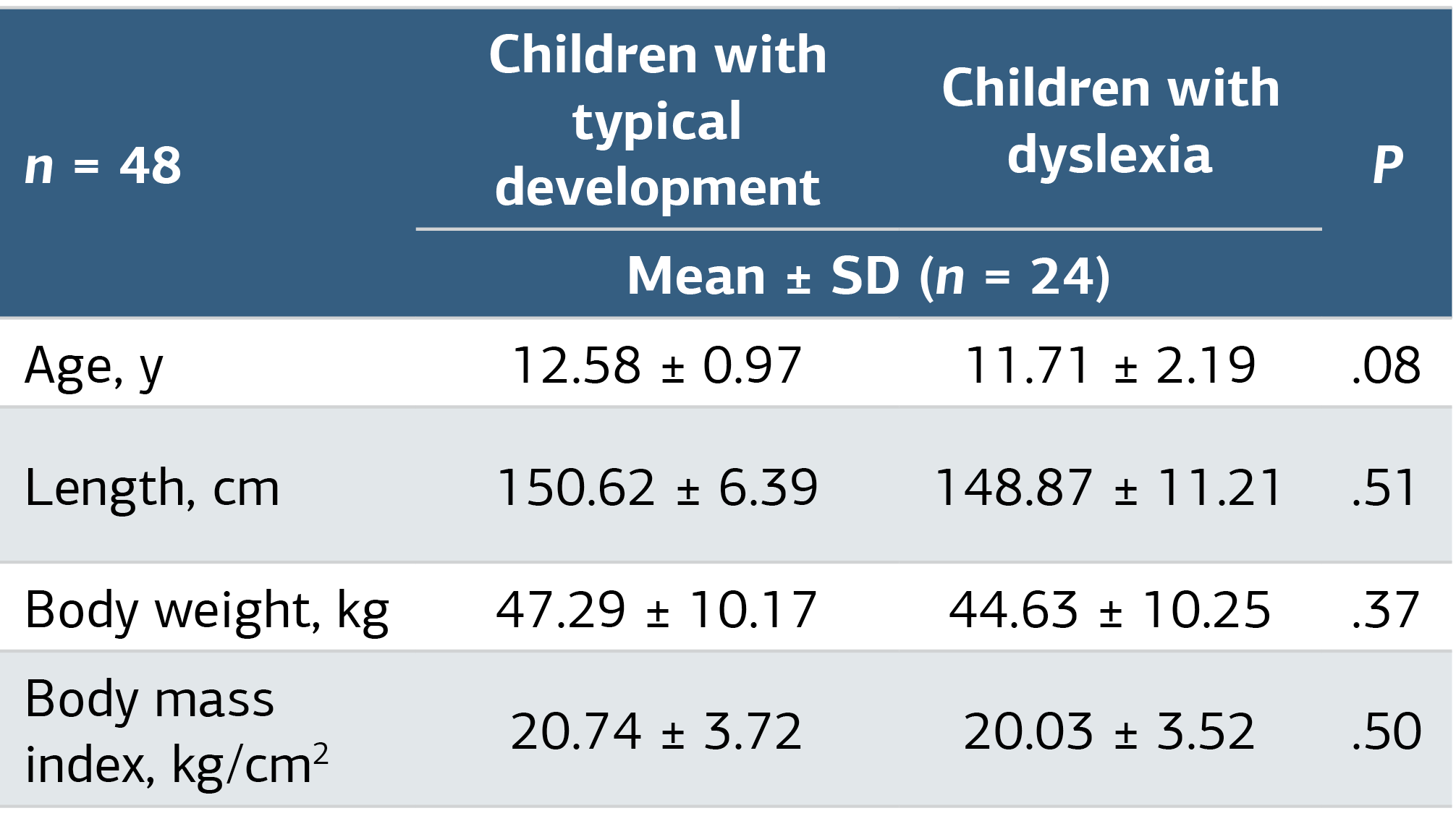
Table 2. Balance Evaluation Results of Individuals
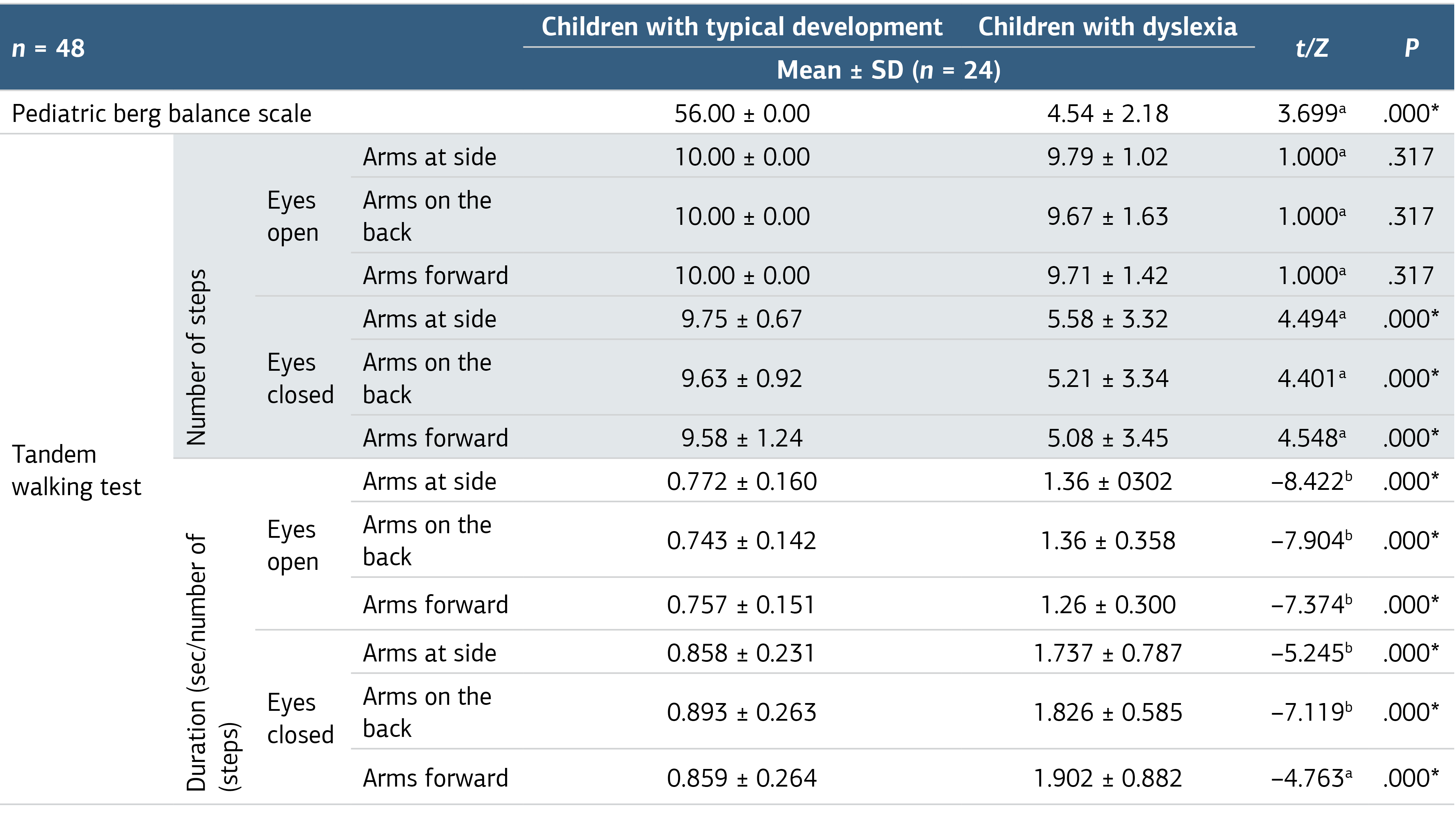
*P < .05. a mann-whitney U test(z). b independent sample t test (t).
Table 3. Proprioception Evaluation Results of Individuals

*P < .05 a mann-whitney u test b independent sample t test.
Additional Information
Publisher’s Note
Bayrakol MP remains neutral with regard to jurisdictional and institutional claims.
Rights and Permissions

This work is licensed under a Creative Commons Attribution-NonCommercial 4.0 International License (CC BY-NC 4.0). To view a copy of the license, visit https://creativecommons.org/licenses/by-nc/4.0/
About This Article
How to Cite This Article
Aslı Ören, Burcu Talu. Evaluation of balance and proprioception in dyslexic children. Ann Clin Anal Med 2024;15(4):234-238. doi:10.4328/ACAM.22022
Publication History
- Received:
- 25.10.2023
- Accepted:
- 19.02.2024
- Published Online:
- 23.02.2024
- Printed:
- 01.04.2024