
Abstract
IntroductionPatients with cerebral palsy (CP) may develop complications such as infection or repeat dislocation following orthopedic surgery and rarely, mortal complications. Case PresentationA 7-year-old male CP patient underwent an iliac and femoral osteotomy due to a hip dislocation. Following the operation, the patient was discharged with a stable condition, but was admitted to the intensive care unit 3 days later after his clinical condition deteriorated. Detailed examination showed that the patient was experiencing hypovolemic shock due to gastrointestinal bleeding and died on the 3rd day of follow-up in the intensive care unit despite all revival efforts. In countries lacking hip follow-up programs, hip dislocations may be detected at a later period in CP patients. ConclusionIt should be noted that mortal complications may potentially develop in these patients after hip surgery. We presented this case report to put emphasis on these rare but serious complications.
Keywords
Introduction
Hip problems are frequently seen in children with cerebral palsy (CP). Large scale research has shown that approximately 1 in 3 children with CP experience hip dislocation (HD).1,2 The rate of developing HD has been found to be correlated with an increase in the severity of the gross motor function classification system (GMFCS).3
In these patients, early diagnosis and treatment are crucial for a better clinical outcome and reduced dependency on surgical intervention. CP patients have a higher likelihood of experiencing complications during hip surgery.4 However, patients who have died due to post-operative complications have rarely been reported in the literature. In this article, we present a child CP patient who died due to complications arising after hip surgery.
Case Presentation
A 7-year-old GMFCS-5 male CP patient did not have proper hip follow-up due to familial reasons. 3 months prior to surgery, the family applied to a physiotherapist and were referred to an orthopedist for surgical intervention after the examination revealed a potential hip dislocation.
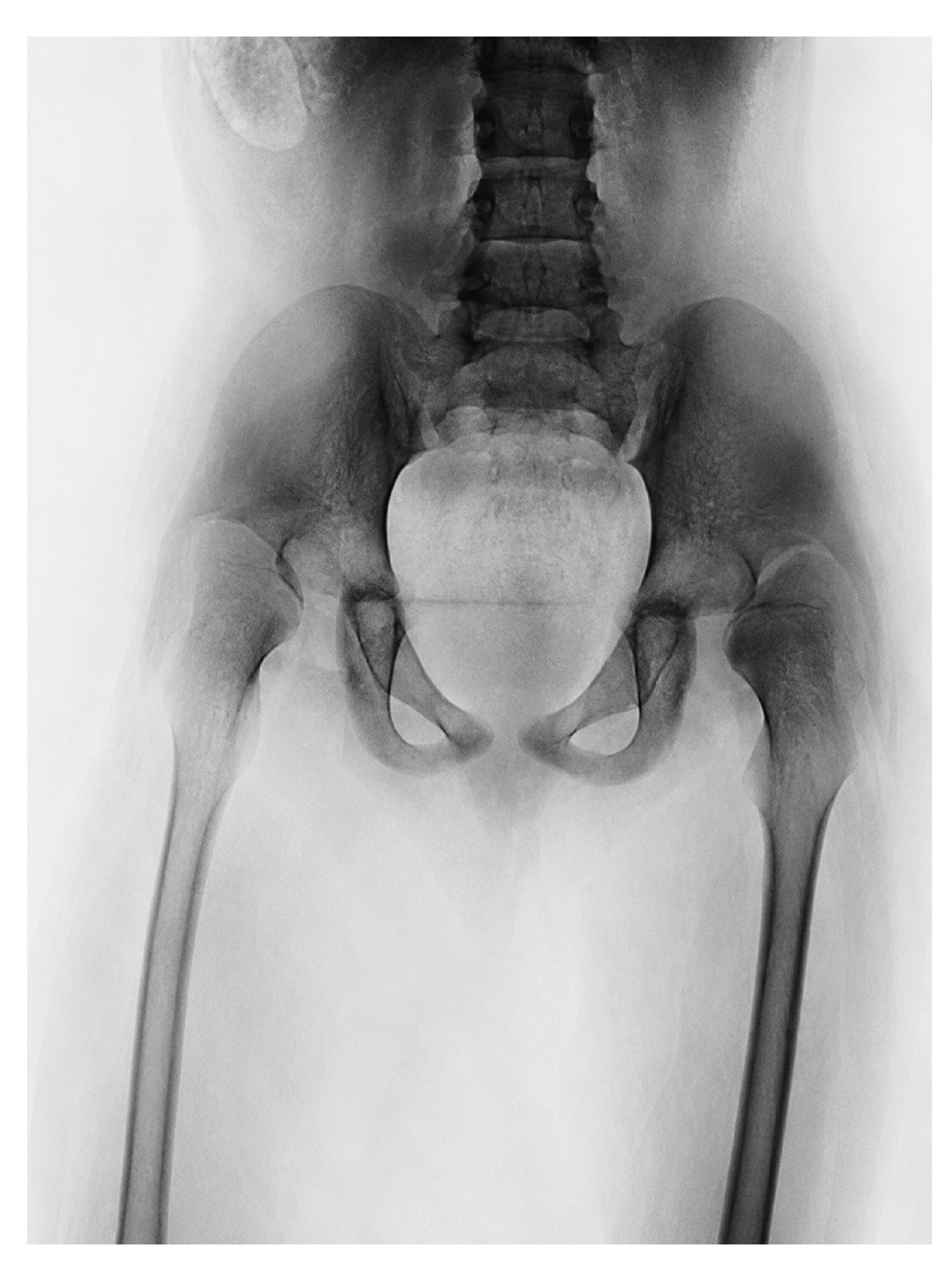
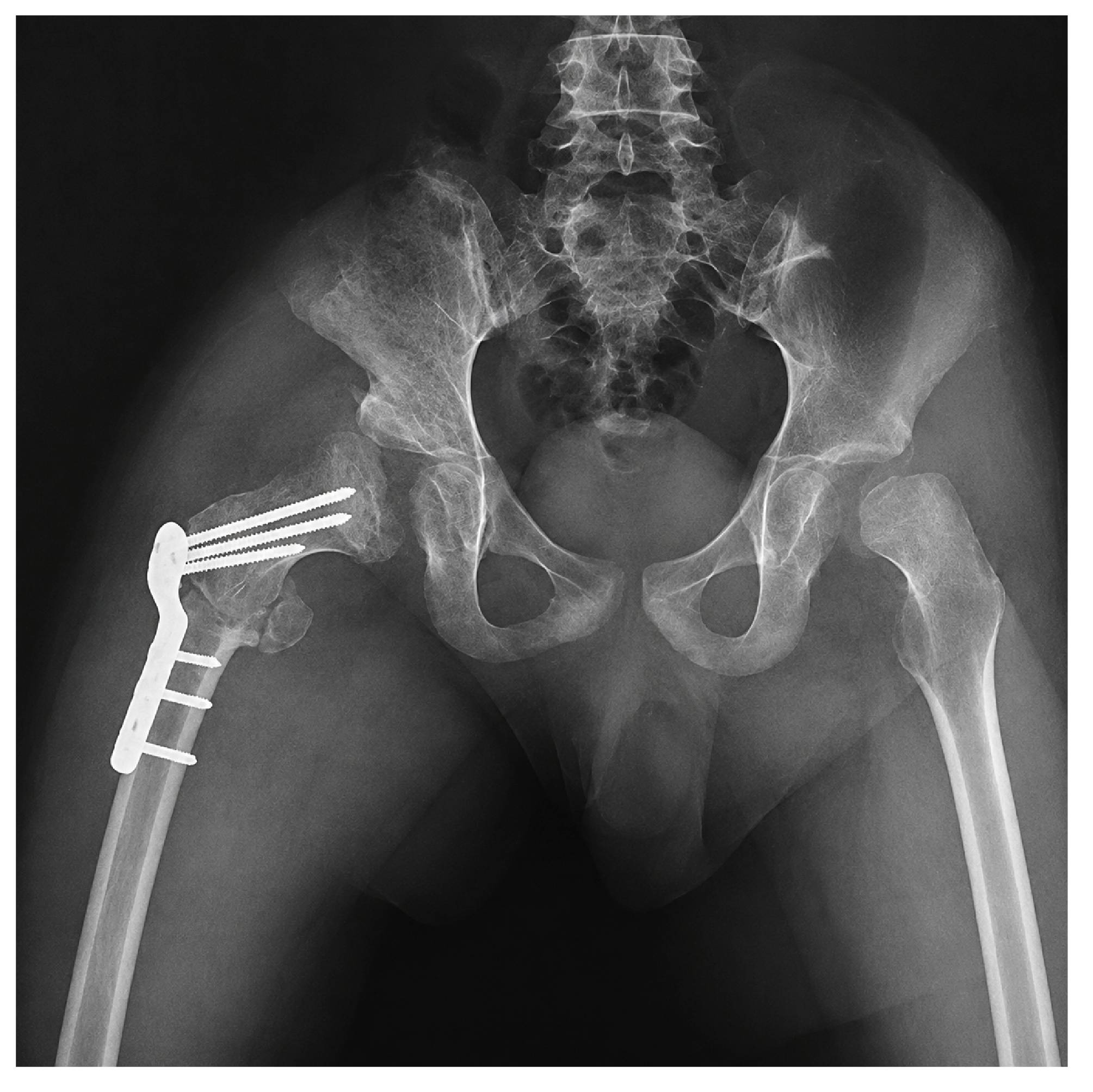
The patient had received surgical treatment in another hospital due to a bilateral hip dislocation (Figure 1). An iliac and proximal femoral derotation-varisation osteotomy was applied to the patient’s right hip (Figure 2). The patient was discharged on the post-operative 2nd day, but was transferred to our pediatric emergency service 1 day later due to clinical deterioration. Based on the evaluations, the patient was admitted to the intensive care unit with a provisional diagnosis of pulmonary embolism, gastrointestinal bleeding, and hemorrhagic shock. An endoscopy was subsequently performed, and hemorrhagic shock due to gastrointestinal system bleeding was considered. Despite all treatment efforts, the patient did not respond to cardiopulmonary resuscitation and died on the 3rd day of intensive care unit admission due to cardiac arrest.
This case report was prepared in accordance with the CARE guidelines.
Discussion
Studies have reported that CP patients who undergo surgery more commonly experience complications such as avascular necrosis of the femoral head, recurrent hip dislocation, femur fracture, aspiration pneumonia, neurological complications, and infection at the wound site.4 In the literature, a clinical trial with 79 CP patients reported that 3 died due to complications following hip surgery.5 Of these patients, 2 died on the post-operative 2nd week and 1 died 5 months later.5 however, our patient developed mortal complications on the post-operative 1st week. In a study involving CP patients who underwent orthopedic surgery, Lee and colleagues reported that 3 patients went into peri-operative cardiac arrest and were resuscitated.6
Limitations
The main limitation of this case report is that detailed information regarding the perioperative period was unavailable because the surgical procedure was performed at another hospital.
Conclusion
The early detection of hip problems in CP children will reduce dependency on surgical intervention and help prevent potential complications of surgery. In Europe, Australia and Canada, hip follow-up programs have increased the rates of early diagnosis and reduced the dependency on surgical treatment. In countries lacking routine hip follow-up programs, individuals with an increased risk of hip dislocation, especially GMFCS-5 patients, should be regularly monitored.7 Anticipating the potential complications will help in preventing or minimizing their occurrence.4,8 This article presents a post-operative CP patient who died due to gastrointestinal bleeding.
Declarations
Animal and Human Rights Statement
All procedures performed in this study were in accordance with the ethical standards of the institutional and/or national research committee and with the 1964 Helsinki Declaration and its later amendments or comparable ethical standards.
Informed Consent
Written informed consent was obtained from the patient’s parent or legal guardian for publication of this case report.
Data Availability
The datasets used and/or analyzed during the current study are not publicly available due to patient privacy reasons but are available from the corresponding author on reasonable request.
Conflict of Interest
The authors declare that there is no conflict of interest.
Funding
None.
Abbreviations
CP: Cerebral palsy
GMFCS: Gross motor function classification system
HD: Hip dislocation
References
- Westberry DE, Carson L, Shull ER, Hyer LC. Hip reconstruction in children with cerebral palsy: does magnitude of surgery influence complications and outcomes? J Pediatr Orthop B. 2023;32(5):461-469. doi:10.1097/bpb.0000000000001091
- Battisti N, Cozzaglio M, Faccioli S, et al. Prevention of hip dislocation in severe cerebral palsy (GMFCS III-IV-V): an interdisciplinary and multiprofessional care pathway for clinical best practice implementation. Eur J Phys Rehabil Med. 2023;59(6):714-723.
- Lins LAB, Watkins CJ, Shore BJ. Natural history of spastic hip disease. J Pediatr Orthop. 2019;39(6 suppl 1). doi:10.1097/bpo.0000000000001347
- DiFazio R, Vessey JA, Miller P, Van Nostrand K, Snyder B. Postoperative complications after hip surgery in patients with cerebral palsy: a retrospective matched cohort study. J Pediatr Orthop. 2016;36(1):56-62. doi:10.1097/bpo.0000000000000404
- Stasikelis PJ, Lee DD, Sullivan CM. Complications of osteotomies in severe cerebral palsy. J Pediatr Orthop. 1999;19(2):207-210. doi:10.1097/00004694-199903000-00014
- Lee SY, Sohn HM, Chung CY, et al. Perioperative complications of orthopedic surgery for lower extremity in patients with cerebral palsy. J Korean Med Sci. 2015;30(4):489-494. doi:10.3346/jkms.2015.30.4.489
- Shrader MW, Wimberly L, Thompson R. Hip surveillance in children with cerebral palsy. J Am Acad Orthop Surg. 2019;27(20):760-768. doi:10.5435/jaaos-d-18-00184
- Al-Rumaih MH, Camp MW, Narayanan UG. Current concept and management of spastic hip in children: a narrative review. Cureus. 2023;15(8):433-447. doi:10.7759/cureus.43347
Figures
Additional Information
Publisher’s Note
Bayrakol MP remains neutral with regard to jurisdictional and institutional claims.
Rights and Permissions

This work is licensed under a Creative Commons Attribution-NonCommercial 4.0 International License (CC BY-NC 4.0). To view a copy of the license, visit https://creativecommons.org/licenses/by-nc/4.0/
About This Article
How to Cite This Article
İdris Çoban, Mehmet Fethi Ceylan. Cerebral palsy patient who developed mortal complications following hipsurgery: A Case Report. Ann Clin Anal Med 2024;15(Suppl 2):67-69. doi:10.4328/ACAM.22027
Publication History
- Received:
- 27.10.2023
- Accepted:
- 29.04.2024
- Published Online:
- 08.08.2024
- Printed:
- 20.10.2024