
Abstract
AimUterine leiomyoma (UL)s are frequent benign tumors of the female genital system, and a substantial proportion of them recur following therapy. In this study, the clinical and histological characteristics that influence leiomyoma recurrence in women who have undergone surgical therapy for uterine leiomyoma were evaluated.MethodsPatients who underwent myomectomy for uterine leiomyoma at a tertiary center between 2012 and 2021 were retrospectively analyzed. Demographic characteristics of the patients, clinical results, surgical techniques, and data on leiomyoma recurrence were investigated and evaluated. Recurrence was defined as the appearance of a new leiomyoma that was 1 centimeter or larger in size at transvaginal ultrasonography, which was performed at least 6 months following myomectomy.ResultsThe study comprised 594 patients with a mean age of 36.3±5.5 (16–53) years and a mean follow-up duration of 23 (6–72) months. Recurrence was detected in 118 (19.9%) of the patients. Estimated recurrence times were found to be 70.5±2.5 months, and the 1-year period without recurrence was 96.4%. The number of patients who were reoperated due to recurrence was 48 (8%). It was determined that the recurrence rate was higher in submucosal leiomyomas and lower in subserous leiomyomas (P = .002). In addition, cellular myomas were found to have a higher risk of recurrence (P = .009). In patients who had pregnancy or delivery after myomectomy, recurrence rates were significantly lower (P < .001). Laparoscopic or laparotomic surgery was not shown to be statistically associated with recurrence (P = .326).ConclusionMyoma recurrence risk is influenced by the myoma’s location and histological characteristics. The recurrence rate appears to be similar after laparoscopic and laparotomic surgery. Follow-up in terms of recurrence risk may be guided by a careful evaluation of the clinical findings of the patients and an extensive pathological examination.
Keywords
Introduction
Uterine leiomyomas (UL) are the most prevalent benign tumors of the female reproductive tract.1 Although more than half of the women with uterine leiomyomas are asymptomatic,2 uterine leiomyomas frequently present with menorrhagia, pelvic pain, a pelvic mass, and infertility, which require treatment in many women of reproductive age.1
Medical and surgical therapy options are available, while many patients who have undergone a myomectomy have a recurrence during later follow-ups.3 Compared to surgical treatment, medical treatment is associated with a higher incidence of UL recurrence.4 Predicting the probability of recurrence risk is important for treatment choice. Surgery for symptomatic leiomyomas includes hysterectomy, myomectomy, and uterine artery embolization. The patient’s age, fertility goals, leiomyoma size and number, and risk of recurrence determine the treatment.
The association between clinical parameters such as the number and size of leiomyomas, type of surgical treatment, and parity after myomectomy and leiomyoma recurrence has been explored in the current literature. However, the effect of these factors on the risk of recurrence is not well understood. Studies on histological variables that influence recurrence are even rarer.5 Currently, gynecologists assess the risk of UL recurrence and make a subjective determination based on their own personal experience.
This study aims to analyze the clinical and histological risk factors of patients with leiomyoma recurrence during follow-up after myomectomy, as well as to identify the objective risk variables associated with recurrence.
Materials and Methods
Data of the patients who were diagnosed with uterine leiomyoma and underwent myomectomy at the Gynecology and Obstetrics Clinic of a tertiary center between 2012 and 2021 were analyzed retrospectively through the hospital registry system.
Patients’ demographic information, including age, body mass index (BMI), gravida, and parity, were recorded. Complaints at hospital admission, clinical characteristics of detected leiomyomas, including number, location, size, type of surgical procedure performed, need for medical treatment or re-surgery in the follow-up of patients after treatment, and pregnancy and delivery histories following myomectomy were recorded.
Myomectomy was performed either by laparoscopy, laparotomy, or hysteroscopy, taking into account the number, location, and size of the myomas, clinical suspicion of malignancy, and age, BMI, and desire for fertility of the patient. In laparoscopic myomectomies, especially in recent years, myomas are taken out of the abdomen in a safe-bag.
This study included typical leiomyoma, mitotic active leiomyoma, cellular leiomyoma, epithelioid leiomyoma, and leiomyomas with bizarre nuclei (atypical leiomyomas) regarding histopathological assessment. In addition, the existence of hyaline degeneration, ischemic necrosis, and myxoid alterations in myoma nodules were considered during evaluation. Recurrence was defined as the appearance of a new leiomyoma measuring 1 cm or greater on transvaginal ultrasonography after a period of at least 6 months following myomectomy.6Ethical ApprovalThis research was approved by the Baskent University Institutional Review Board (Date: 15.03.2022, Decision No: KA22/104).Statistical AnalysisData analysis was performed using the SPSS 25.0 package program. Categorical measurements were summarized using numbers and percentages, whereas continuous measurements were summarized using mean and standard deviation (median and range where appropriate). Statistical comparisons were conducted between two subgroups with and without myoma recurrence. Distributions were controlled and the Student’s t test was used for variables with a parametric distribution and the Mann-Whitney U test was used for variables with a nonparametric distribution when comparing continuous measurements. The Chi-Square or Fisher Exact test was utilized to analyze the categorical variables between the groups. All tests were considered statistically significant if P < .05.
Reporting GuidelinesThis study was reported in accordance with the STROBE guideline.
Results
In our clinic, a total of 1,462 myomectomies were performed between 2012 and 2021. Our study comprised patients who were followed a minimum of once, at least six months following myomectomy. Thus, the study included 594 patients with a mean age of 36.3±5.5 years and a mean follow-up duration of 23 (6-72) months. The study included 594 patients with a mean age of 36.3±5.5 years and a mean follow-up duration of 23 (6–72) months. There was recurrence in 118 (19.9%) of the 594 patients who were included in the study. Of those 118 patients, 48 (8%) required additional surgery to treat the recurrence, and the estimated time to recurrence was 70.5±2.5 months. There was no difference in terms of age at diagnosis, gravida, BMI, number of leiomyomas, or leiomyoma diameter between the groups with and without recurrence. The median leiomyoma diameter was 6 cm (1 to 25), and the median recurrent leiomyoma diameter was 3 cm.1-11
It was found that 11 (0.001%) of the patients underwent hysteroscopy, 374 (62.9%) underwent laparoscopy, and 202 (34%) underwent myomectomy via laparotomy. Of those who underwent laparoscopy, 63 (16.8%) utilized a safe-bag. In terms of recurrence, there was no statistically significant difference between patients undergoing laparoscopy and laparotomy; however, statistically significant recurrence was found in patients who underwent hysteroscopic myomectomy (P = .02). It was also seen that removing the leiomyoma via a safe-bag in laparoscopic surgery did not significantly affect the risk of recurrence (P = .592) (Table 1).
At the time of the initial diagnosis of patients who had recurrence, 40.3% presented with abnormal uterine bleeding, 23.5% with pelvic pain, and 16.8% with infertility symptoms. On the other hand, in the group who did not experience recurrence after surgery, 35% of patients initially presented to the gynecologist with infertility symptoms, while in 25.1% of patients, leiomyomas were identified incidentally in asymptomatic patients (P < .001).
As per location, 21 (3.5%) of patients had submucous leiomyomas, 317 (53.8%) had intramural leiomyomas, 99 (16.8%) had subserous leiomyomas, and 152 (25.8%) had mixed-type leiomyomas. The probability of recurrence for submucous fibroids was significantly higher (P = .001). Pregnancy or delivery following myomectomy were found to decrease recurrence substantially (P < .001). Although medical treatments such as GnRH (Gonadotropin releasing hormone) analogs, intrauterine devices with levonorgestrel, or oral contraceptives were utilized in 8% of patients during postoperative follow-up, no significant change in recurrence rates was identified (Table 1).
Histopathologically, 482 patients had typical leiomyomas, 49 had mitotic active leiomyomas, 3 had epithelioid leiomyomas, 51 had cellular leiomyomas, and 9 patients had leiomyomas with bizarre nuclei. Leiomyomas with hyaline degeneration were found in 48 patients, ischemic necrosis was seen in 67 patients, and myxoid differentiation in 16 patients. The incidence of recurrence of cellular leiomyomas was reported to be considerably higher (P = .009), while the existence of mitotic active leiomyoma, epithelioid differentiation, atypia, hyaline degeneration, myxoid alteration, or ischemic necrosis did not significantly affect the risk of recurrence (P > .05) (Table 2).
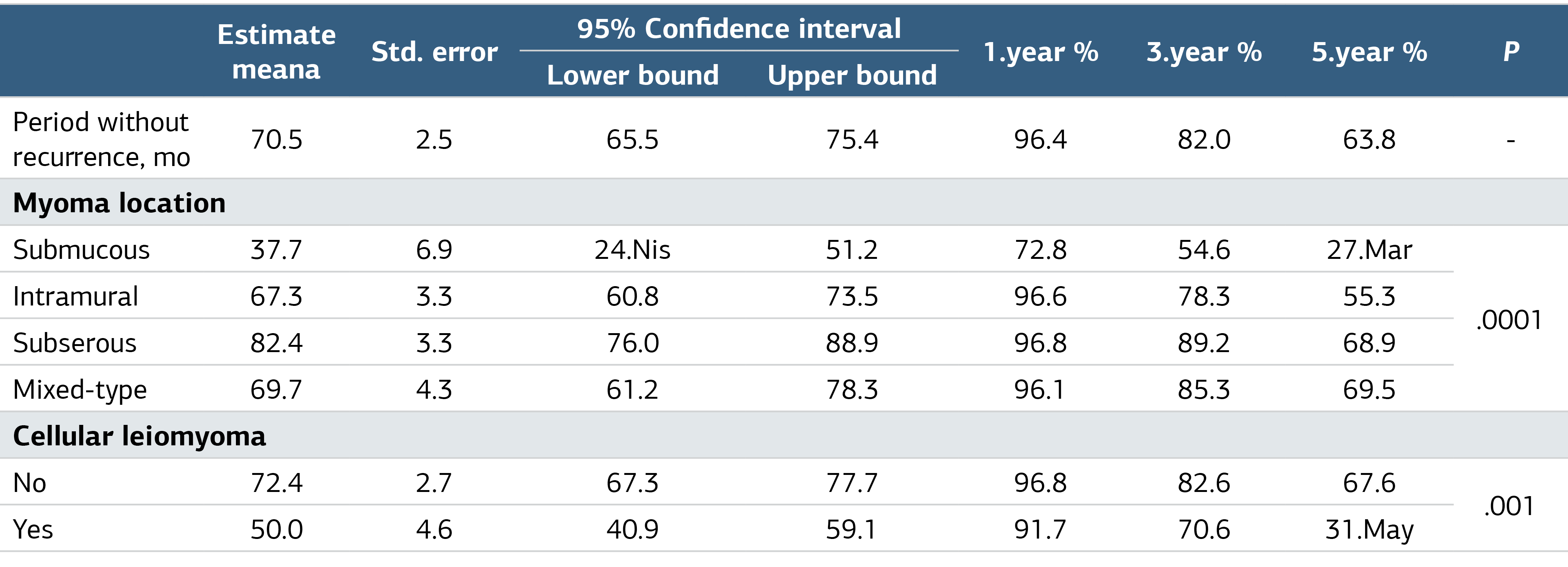
A Kaplan-Meier analysis was used to determine the recurrence time of the participants. The estimated recurrence time for the patients was 70.5±2.5 months, and a 1-year period without recurrence was seen in 96.4% of the patients. Myoma location significantly affected recurrence. The recurrence time was statistically substantially shorter in patients with submucous myoma, as indicated by the Kaplan-Meier method. The 3-year period without recurrence was determined to be 54.6% for submucous myomas, 78.3% for intramural myomas, 89.2% for subserous myomas, and 85.3% for mixed myomas. The 3-year period without recurrence for patients without cellular myoma was 82.6%, compared to 70.6% for patients having myoma with cellular characteristics (P = .001) (Table 3).
In terms of variables such as age at diagnosis, follow-up period, gravida, parity, BMI, largest myoma diameter, recurrence diameter, and recurrence time, a statistically significant difference was not found between patients who had recurred and undergone reoperation and patients who had recurred but had not undergone surgery after their initial relapse (P > .05).
Discussion
In this retrospective, single-center analysis of 594 women who underwent myomectomy at our clinic, the probability of recurrence of cellular myomas was found to be greater (P = .009), and less recurrence was reported in patients who had pregnancy or delivery following myomectomy (P < .001). In addition, a statistically significant relation between myoma location and recurrence was reported. Submucous myomas were shown to have considerably shorter recurrence periods. Recurrence was observed to be more prevalent following hysteroscopic myomectomy for submucous myomas (P = .002) Laparoscopic or laparotomic surgery was not significantly associated with recurrence (P = .326). The use of a safe-bag did not have a statistically significant effect on recurrence in laparoscopic myomectomy patients (P = .592).
Myomectomy with laparotomy was generally anticipated to have a lower recurrence rate than laparoscopic myomectomy because gynecologists could remove as much of the visible and palpable leiomyomas as possible during laparotomy.6,7 However, there are studies indicating that the incidence of UL recurrence after myomectomy is comparable between laparotomy and laparoscopy.6,8,9 In the study of Kotani et al., recurrence following laparotomy and laparoscopic myomectomy were compared, and myomectomy via laparoscopy was found to be associated with an increased risk of recurrence. A lower postoperative recurrence rate is believed to be due to less remaining fibroid mass after myomectomy through laparotomy.7 According to research published in 2019 by Ming et al., the incidence of UL recurrence was similar between laparoscopy and laparotomy in patients with ≤ 5 leiomyomas. When there were > 5 leiomyomas, the recurrence rate of myomectomy performed by laparoscopy was significantly greater. It was demonstrated that the reoperation rate of uterine leiomyomas was comparable between laparoscopy and laparotomy in women between the ages of 18 and 44 who had ≤ 3 leiomyomas.10 In our study, we found no difference in recurrence between laparotomic and laparoscopic myomectomy. On the other hand, we concluded that submucous myomas and thereby hysteroscopic myomas have a significant recurrence rate. Since submucous leiomyomas cause more symptoms, such as irregular uterine bleeding and infertility, when compared to leiomyomas at other locations, patients with submucous leiomyomas may virtually seem to have a considerably greater recurrence rate due to frequent follow-up.7
Removal of the material in a safe-bag during laparoscopic myomectomy appears to be a safe and feasible operation for lowering the danger of malignant cell and tissue spread.11 In a few retrospective investigations, it was demonstrated that during laparoscopic myomectomy, morcellation without the use of a safe-bag was associated with an elevated recurrence rate and decreased long-term survival rate in cases of malignancy.12,13 There is a large body of literature regarding the utilization of safe-bags on sarcoma extension in patients who were first diagnosed with leiomyomas but were later discovered to have leiomyosarcoma on pathology and parasitic leiomyomas.11-13 However, there is little research on local leiomyoma recurrence. In our study, it was found that removing the leiomyoma material via a safe-bag had no effect on recurrence. However, this result may be due to the small sample size. In recent years, safe-bags have been utilized in all laparoscopic myomectomies performed at our clinic in order to avoid the potential risk of cancerous spread.
According to Kotani’s study,7 the absence of pregnancy after myomectomy considerably raised the recurrence rate. Progesterone receptor modulators have been proven to diminish the size of UL and the intensity of associated symptoms.14-16 In a study, the anti-progestational steroid mifepristone 5 mg daily for three months lowered UL volume considerably.17 It has been questioned whether pregnancy-related hormonal changes have comparable effects on UL. Pregnancy or delivery following myomectomy also decreased the incidence of UL recurrence in our study sample, corroborating the findings of earlier observational studies.18,19
Cellular leiomyomas (CL) are fibroids that resemble leiomyomas and leiomyosarcomas. Taran et al. examined CL recurrence and clinical and pathological features. CLs were linked to the largest uterine mass diameter, menometrorrhagia, fewer leiomyomas, no endometriosis or adenomyosis, and a rapidly expanding leiomyoma as a surgical indication.20 In terms of recurrence rates, the results of the study by Rathmound et al analyzing the clinical and histological characteristics of cellular myomas were comparable to those reported in Taran et al’s biggest CL series to date.20,21 This is also consistent with the reports demonstrating that a uterus with a single myomatous lesion grows more rapidly than one with numerous masses.22 Additional research is required to determine whether the rapid growth phenotype is related to all single leiomyomas or only those with cellular histology abnormalities. In our study, it was found that the recurrence time of the cellular fibroids was statistically shorter. Furthermore, the rapid growth pattern of CL is demonstrated in consistency with the current literature. Although CL recurrence rates were comparable to UL recurrence rates in the report of Rothmund et al.20 our analysis revealed a higher recurrence rate for CL.
The literature indicates that abnormal uterine bleeding (AUB) is the most common indication for hysteroscopic myomectomy, with percentages ranging from 60% to 84%.23 In our study, 7 (63%) of 11 patients who underwent hysteroscopic myomectomy consulted a gynecologist for AUB and 4 (36%) for infertility, which is consistent with the literature. The success rates for hysteroscopic myomectomy described in the literature represent the myomectomy outcomes for all submucous myomas (Types 0, 1 and 2). Fibroids of type 2, which are technically more challenging to remove, are believed to have a lower success rate. Reoperation rates for hysteroscopic myomectomies range from 10% to 35%.24 This rate can approach 50% in type 2 leiomyomas.25 A second session for the total removal of the myoma is usually planned in the following months, which is not considered as a recurrence. However, even after the total removal of the myoma, the existence of new myoma nuclei may be encountered. In our study, recurrence was seen in 6 (54%) of 11 patients who had undergone hysteroscopic myomectomy, and the number of reoperations was 3, which was consistent with the literature.24,25
Limitations
The most significant limitation of this study is its retrospective design. The number of patients with submucous myomas and hysteroscopic operations in this study was apparently lower, though notable outcomes were obtained even in this group. Additionally, data from a particular institution may not be indicative of the community as a whole. Moreover, the outcome would be more generalizable if all patients who underwent myomectomy had undergone routine follow-up. A longer duration of follow-up may increase the probability of detecting a recurrence.
Conclusion
In conclusion, in this study evaluating the factors influencing UL recurrence in women who had myomectomy and were diagnosed with UL recurrence, it was found that patients with relapse were admitted to the hospital more frequently with symptoms of vaginal bleeding and pain at the initial presentation. The presentation type of the myoma was determined to be a risk factor for recurrence. This study also demonstrated that the recurrence rates following laparotomic and laparoscopic myomectomy were comparable, adding to a debate that is still unclear in the literature. The recurrence times of submucous leiomyomas and cellular leiomyomas were observed to be statistically significantly shorter. Patients who had pregnancy or delivery after myomectomy were found to have significantly lower rates of recurrence. The risk of recurrence, therefore, can be guided by a thorough evaluation of the clinical findings of the patients and an extensive pathological examination. However, prospective studies with larger populations are required for a comprehensive analysis of the clinical and histopathological factors affecting recurrence following myomectomy.
Declarations
Animal and Human Rights Statement
All procedures performed in this study were in accordance with the ethical standards of the institutional and/or national research committee and with the 1964 Helsinki Declaration and its later amendments or comparable ethical standards.
Informed Consent
Informed consent was waived due to the retrospective nature of the study.
Data Availability
The datasets used and/or analyzed during the current study are not publicly available due to patient privacy reasons but are available from the corresponding author on reasonable request.
Conflict of Interest
The authors declare that there is no conflict of interest.
Funding
None.
Abbreviations
AUB: Abnormal uterine bleeding
BMI: Body mass index
CL: Cellular leiomyoma
UL: Uterine leiomyoma
References
- Parker WH. Etiology, symptomatology, and diagnosis of uterine myomas. Fertil Steril. 2007;87(4):725-736. doi:10.1016/j.fertnstert.2007.01.093
- Divakar H. Asymptomatic uterine fibroids. Best Pract Res Clin Obstet Gynaecol. 2008;22(4):643-654. doi:10.1016/j.bpobgyn.2008.01.007
- Yoo EH, Lee PI, Huh CY, et al. Predictors of leiomyoma recurrence after laparoscopic myomectomy. J Minim Invasive Gynecol. 2007;14(6):690-697. doi:10.1016/j.jmig.2007.06.003
- Matta WH, Shaw RW, Nye M. Long-term follow-up of patients with uterine fibroids after treatment with the LHRH agonist buserelin. Br J Obstet Gynaecol. 1989;96(2):200-206. doi:10.1111/j.1471-0528.1989.tb01663.x
- Fauconnier A, Chapron C, Babaki-Fard K, Dubuisson JB. Recurrence of leiomyomata after myomectomy. Hum Reprod Update. 2000;6(6):595-602. doi:10.1093/humupd/6.6.595
- Rossetti A, Sizzi O, Soranna L, Cucinelli F, Mancuso S, Lanzone A. Long-term results of laparoscopic myomectomy: recurrence rate in comparison with abdominal myomectomy. Hum Reprod. 2001;16(4):770-774. doi:10.1093/humrep/16.4.770
- Kotani Y, Tobiume T, Fujishima R, et al. Recurrence of uterine myoma after myomectomy: open myomectomy versus laparoscopic myomectomy. J Obstet Gynaecol Res. 2018;44(2):298-302. doi:10.1111/jog.13519
- Sesti F, Capobianco F, Capozzolo T, Pietropolli A, Piccione E. Isobaric gasless laparoscopy versus minilaparotomy in uterine myomectomy: a randomized trial. Surg Endosc. 2008;22(4):917-923. doi:10.1007/s00464-007-9516-1
- Alessandri F, Lijoi D, Mistrangelo E, Ferrero S, Ragni N. Randomized study of laparoscopic versus minilaparotomic myomectomy for uterine myomas. J Minim Invasive Gynecol. 2006;13(2):92-97. doi:10.1016/j.jmig.2005.11.008
- Ming X, Ran XT, Li N, Nie D, Li ZY. Risk of recurrence of uterine leiomyomas following laparoscopic myomectomy compared with open myomectomy. Arch Gynecol Obstet. 2020;301(1):235-242. doi:10.1007/s00404-019-05399-z
- Frascà C, Degli Esposti E, Arena A, et al. Can in-bag manual morcellation represent an alternative to uncontained power morcellation in laparoscopic myomectomy? A randomized controlled trial. Gynecol Obstet Invest. 2018;83(1):52-56. doi:10.1159/000477171
- Seidman MA, Oduyebo T, Muto MG, et al. Peritoneal dissemination complicating morcellation of uterine mesenchymal neoplasms. PLoS One. 2012;7(11). doi:10.1371/journal.pone.0050058
- Oduyebo T, Rauh-Hain AJ, Meserve EE, et al. The value of re-exploration in patients with inadvertently morcellated uterine sarcoma. Gynecol Oncol. 2014;132(2):360-365. doi:10.1016/j.ygyno.2013.11.024
- Matsuo H, Kurachi O, Shimomura Y, Samoto T, Maruo T. Molecular bases for the actions of ovarian sex steroids in the regulation of proliferation and apoptosis of human uterine leiomyoma. Oncology. 1999;57(Suppl 2):49-58. doi:10.1159/000055275
- Marshall LM, Spiegelman D, Goldman MB, et al. A prospective study of reproductive factors and oral contraceptive use in relation to the risk of uterine leiomyomata. Fertil Steril. 1998;70(3):432-439. doi:10.1016/s0015-0282(98)00208-8
- Flake GP, Andersen J, Dixon D. Etiology and pathogenesis of uterine leiomyomas: a review. Environ Health Perspect. 2003;111(8):1037-1054. doi:10.1289/ehp.5787
- Engman M, Granberg S, Williams AR, Meng CX, Lalitkumar PG, Gemzell-Danielsson K. Mifepristone for treatment of uterine leiomyoma: a prospective randomized placebo controlled trial. Hum Reprod. 2009;24(8):1870-1879. doi:10.1093/humrep/dep100
- Fedele L, Parazzini F, Luchini L, Mezzopane R, Tozzi L, Villa L. Recurrence of fibroids after myomectomy: a transvaginal ultrasonographic study. Hum Reprod. 1995;10(7):1795-1796. doi:10.1093/oxfordjournals.humrep.a136176
- Candiani GB, Fedele L, Parazzini F, Villa L. Risk of recurrence after myomectomy. Br J Obstet Gynaecol. 1991;98(4):385-389. doi:10.1111/j.1471-0528.1991.tb13429.x
- Taran FA, Weaver AL, Gostout BS, Stewart EA. Understanding cellular leiomyomas: a case-control study. Am J Obstet Gynecol. 2010;203(2):109.e1-109.e6. doi:10.1016/j.ajog.2010.03.018
- Rothmund R, Kurth RR, Lukasinski NM, et al. Clinical and pathological characteristics, pathological reevaluation, and recurrence patterns of cellular leiomyomas: a retrospective study in 76 patients. Eur J Obstet Gynecol Reprod Biol. 2013;171(2):358-361. doi:10.1016/j.ejogrb.2013.10.004
- Peddada SD, Laughlin SK, Miner K, et al. Growth of uterine leiomyomata among premenopausal black and white women. Proc Natl Acad Sci U S A. 2008;105(50):19887-19892. doi:10.1073/pnas.0808188105
- Di Spiezio Sardo A, Mazzon I, Bramante S, et al. Hysteroscopic myomectomy: a comprehensive review of surgical techniques. Hum Reprod Update. 2008;14(2):101-119. doi:10.1093/humupd/dmm041
- Lefebvre G, Vilos G, Allaire C, et al. The management of uterine leiomyomas. J Obstet Gynaecol Can. 2003;25(5):396-418; quiz 419-422.
- Vercellini P, Zàina B, Yaylayan L, Pisacreta A, De Giorgi O, Crosignani PG. Hysteroscopic myomectomy: long-term effects on menstrual pattern and fertility. Obstet Gynecol. 1999;94(3):341-347. doi:10.1016/s0029-7844(99)00346-4
Tables
Table 1. Comparison of Clinical Features of Patients With and Without Myoma Recurrence
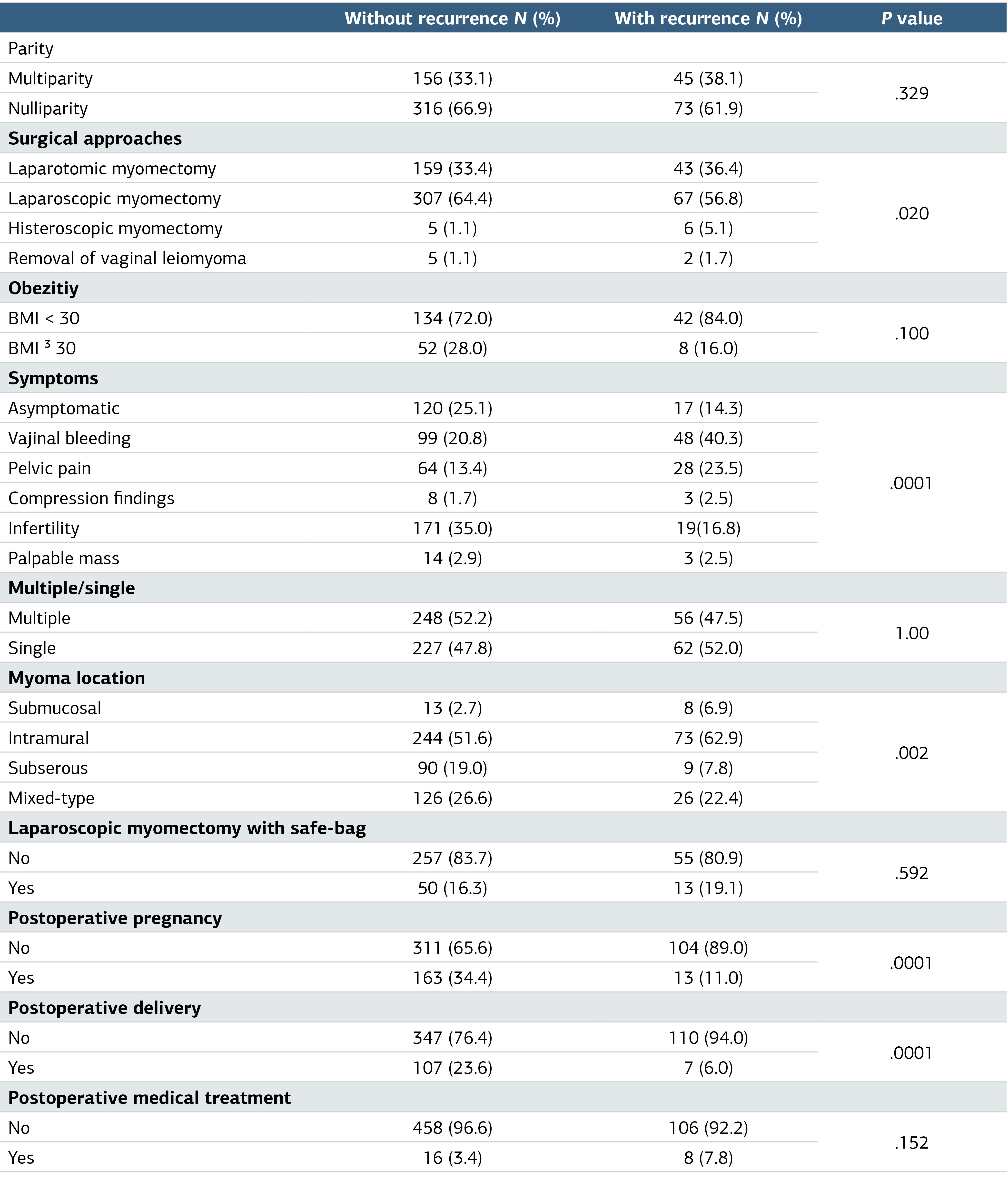
Table 2. Periods Without Recurrence According to Myoma Location and Cellular Histopathology
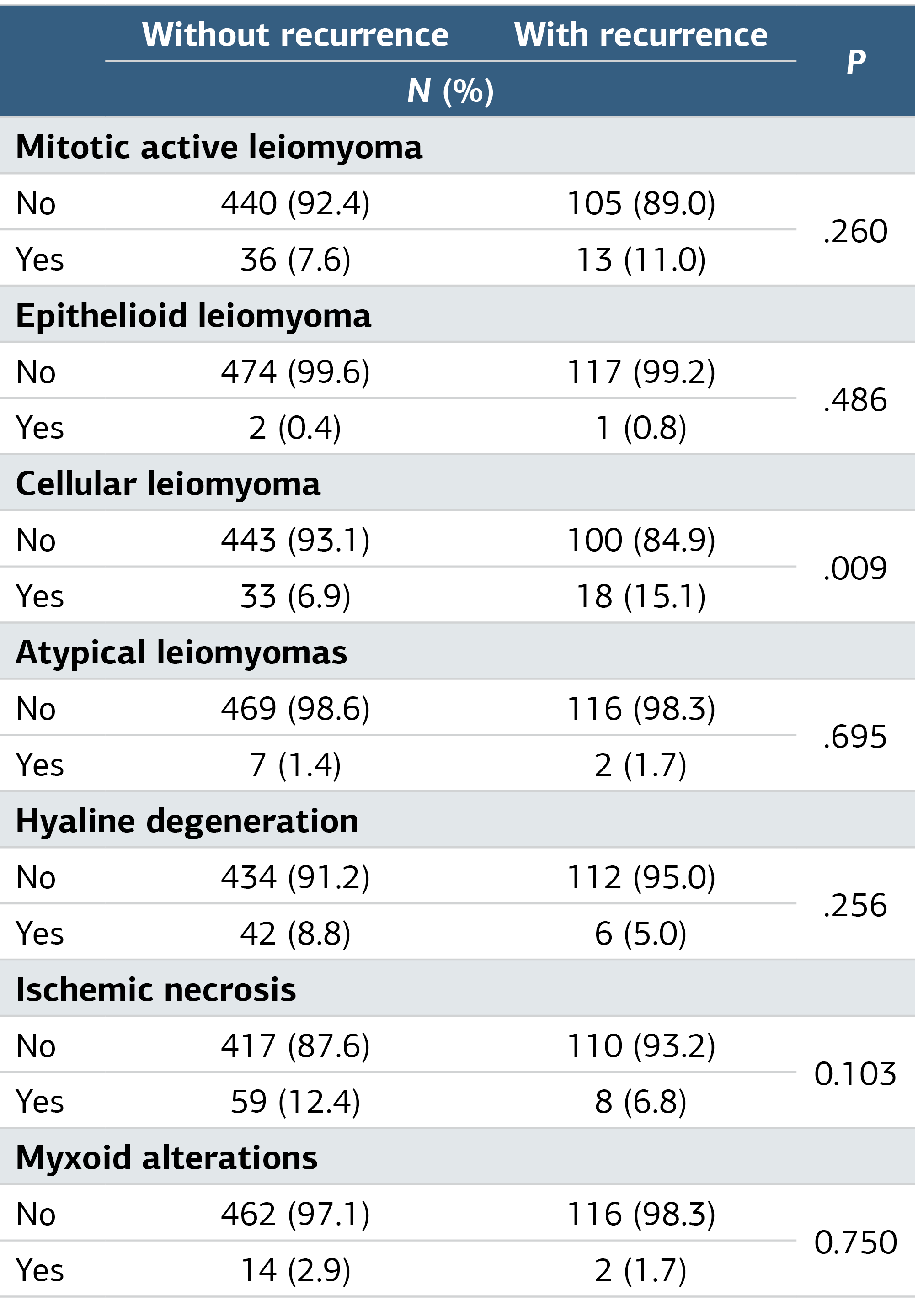
Table 3. Pathological Variables of Leiomyomas at Patients With and Without Recurrence
Additional Information
Publisher’s Note
Bayrakol MP remains neutral with regard to jurisdictional and institutional claims.
Rights and Permissions

This work is licensed under a Creative Commons Attribution-NonCommercial 4.0 International License (CC BY-NC 4.0). To view a copy of the license, visit https://creativecommons.org/licenses/by-nc/4.0/
About This Article
How to Cite This Article
Şirin Aydın, Gülşen Doğan Durdağ, Didem Alkaş Yağınç, Şafak Yılmaz Baran, Songül Alemdaroğlu, Erhan Şimşek, Filiz Aka Bolat, Hüsnü Çelik. Clinical and histological determinants of uterine leiomyoma recurrence following myomectomy. Ann Clin Anal Med 2024;15(4):260-265. doi:10.4328/ACAM.22084
Publication History
- Received:
- 25.12.2023
- Accepted:
- 29.02.2024
- Published Online:
- 14.03.2024
- Printed:
- 01.04.2024