
Abstract
AimThis study aimed to determine the relationship between depression and anxiety levels, and adaptation to disease of patients with chronic heart failure.MethodsThis descriptive and cross-sectional study was conducted with 192 patients with chronic heart failure between June-October 2021 in Türkiye. Data were collected using the Information Form, the Hospital Anxiety and Depression Scale and the Adaptation to Chronic Illness Scale.ResultsThe mean age of patients was 66.74±12.95. The mean of the Hospital Anxiety and Depression Scale and Adaptation to Chronic Illness Scale scores of patients were found as 10.55±4.41 (0-21), 11.13±4.03 (0-21) and 72.42±12.15 (25-125), respectively. A statistically significant negative relationship was determined between Hospital Anxiety and Depression Scale, and Adaptation to Chronic Illness Scale scores.ConclusionAccording to the results of the study, increasing the patients’ level of adaptation to the illness can reduce their anxiety and depression levels. For this reason, it is recommended that professionals enhance their ability to help chronic heart patients adapt to their illness in order to increase the psychological well-being of such patients.
Keywords
Introduction
Adaptation to the disease can be defined as the patient’s choosing to apply the treatment recommended by the doctor and the care plan created by the nurse.1-3 The process of adaptation to the disease may vary according to the patient’s physical, psychological, and socio-cultural characteristics, personality structure, lifestyle, duration of treatment and social support received.1,3,4 In heart failure patients; long-term treatment, frequent hospitalizations, and patients’ quality of life affect adaptation to the disease. At the same time, adaptation to the disease also affects these processes.5 It was determined that the patients’ adaptation to the treatment and care reduced their repeated hospitalizations.6,7 Personal preparation for treatments and care, explaining them in detail to the patient, and including the patient in this process increase the patient’s adaptation. In patients with heart failure, it is observed that the patient does not have sufficient information about the treatment, the treatment continues for a long time, there is little or no social support, and adaptation with the treatment doesn’t not occur with advancing age.5-8
Heart failure patients may develop symptoms of burnout, anxiety and depression. This causes difficulties in managing and maintaining the patient’s disease. Studies have shown that chronic heart failure patients experience economic difficulties,1,3,4,9,10 death anxiety is intense,11 they experience intense anger feelings,12,13 and their stress levels are high.14 In addition, it has been determined that the frequency of depression is common in heart failure patients.14,15 Also, the socio-economic level, insufficient support of family members, and the chronicity of the disease increase the depression and anxiety levels of the patients, leading to an increase in the cost of treatment.4,9,12,14,15 Sensory reactions such as anger due to depression and anxiety, non-adaptation with treatment, closure of communication, sadness, denial, and non-acceptance are common in patients.2,13-15
The positive results of treatment and care in chronic diseases are directly related to the adaptation levels of the patients.2-4 Every individual adapts to the problems in his life to a certain extent. The disease is a condition that disrupts the harmony of the individual.4 In chronic diseases, the problem of adherence to treatment causes failure in treatment.4,5,7 First of all, it is necessary to recognize psychiatric disorders such as anxiety and depression, which prevent the individual from complying with treatment, and to prepare a treatment plan in this direction.2-4,12,14 With the adaptation with the treatment, the duration of hospitalization decreases, repeated hospitalizations are prevented, the cost of treatment decreases, and the individual’s belief in the success of the treatment of the disease increases.1,3-7,10
Depression and anxiety in patients with chronic diseases such as heart failure; negatively affects the patient’s adaptation to the disease and quality of life. In addition, it adversely affects the patient’s benefit from treatment and symptom control.1,5,7,10,11 Evaluating the mental health as well as the physical health of the patient with heart failure and providing holistic care to the patient positively affect the course of the disease as well as reduce the level of depression and anxiety.4,6,11,14 For this reason, it is important for the patients to adapt to the disease and to recognize the psychiatric disorders that may affect it by the professionals. In light of this information, the aim of this study was to determine the relationship between depression and anxiety levels of patients with chronic heart failure and their adaptation to the disease.
Materials and Methods
This descriptive and cross-sectional study was conducted with patients followed up with a diagnosis of chronic heart failure in the Cardiology Clinic of a Training and Research Hospital in Türkiye. At least 192 patients were required for the sample, with 95% confidence interval, 5% error, 0.5 effect size, and 80% power analysis to represent the population. The study was conducted in 192 patients between June and October 2021. The patients participating in the study did not have any language problems or a psychiatric diagnosis. The patient’s communication problem and psychiatric status were determined both by examining the patient file and by the evaluation of the responsible doctor and nurse. Data were collected by the researcher face to face. It took approximately 30 minutes for each participant to complete the questionnaires.InstrumentsData were collected using the Information Form, the Hospital Anxiety and Depression Scale and the Adaptation to Chronic Illness Scale.
– Information Form: It included questions about the personal and the disease of the patients.
– Hospital Anxiety and Depression Scale (HAD): It was developed by Zigmond and Snaith in order to evaluate the emotional state of patients.16 Its Turkish validity and reliability were tested by Aydemir et al.17 This scale, which measures anxiety and depression levels, is a 4-point Likert scale (lowest 0, highest 3). 7 items are associated with anxiety and 7 items are associated with depression. The total score for anxiety and depression ranges from 0 to 21. A high score indicates a high level of depression and anxiety. The cut-off point in the scale was determined as 10 for anxiety and 7 for depression.17 In this study, the Cronbach Alpha were determined as 0.91 and 0.83.
– Adaptation to Chronic Illness Scale (ACIS): The scale was developed by Atik and Karatepe in order to determine the level of adaptation to disease of individuals with chronic diseases.2 The scale is a five-point Likert type and has a total of 25 items (1: disagree, 5: totally agree). It was 3 sub-dimensions. These are “Physical Adaptation (11 items)”, “Social Adaptation (7 items)” and “Psychological Adjustment (7 items)”. High scores showed that patients’ adaptation to chronic diseases is high. 8 items in the scale were reverse coded. In this study, the total Cronbach Alpha of the scale was 0.88; Cronbach’s Alpha of the sub-dimensions was determined as 0.73, 0.66 and 0.74, respectively.Ethical ApprovalThis study was approved by the Ethics Committee of Okan University (Date: 31.03.2021, Decision No: 135).Statistical AnalysisSPSS 21.0 (IBM SPSS Statistics for Windows, Version 21.0. Armonk, NY: IBM Corp.) was used in the analysis of the data. Kolmogorov-Smirnov Z test was applied to determine whether the scale scores fit the normal distribution. Spearman’s Rho correlation test was used in the analysis of the relationship between the scores between the scales. It was accepted as P < .05 in the statistical evaluation of the analyses.
Reporting GuidelinesThis study was reported in accordance with the STROBE guideline.
Results
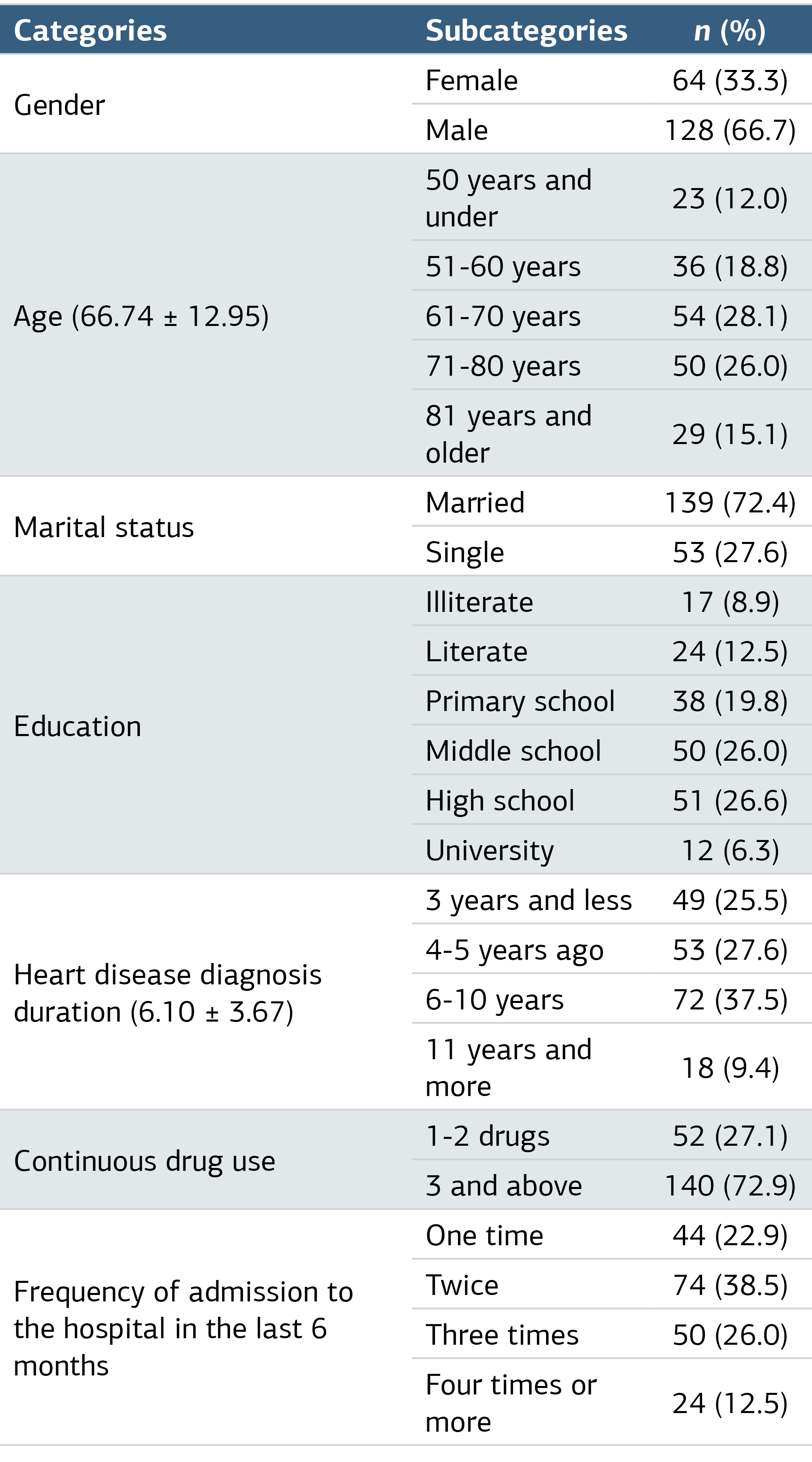
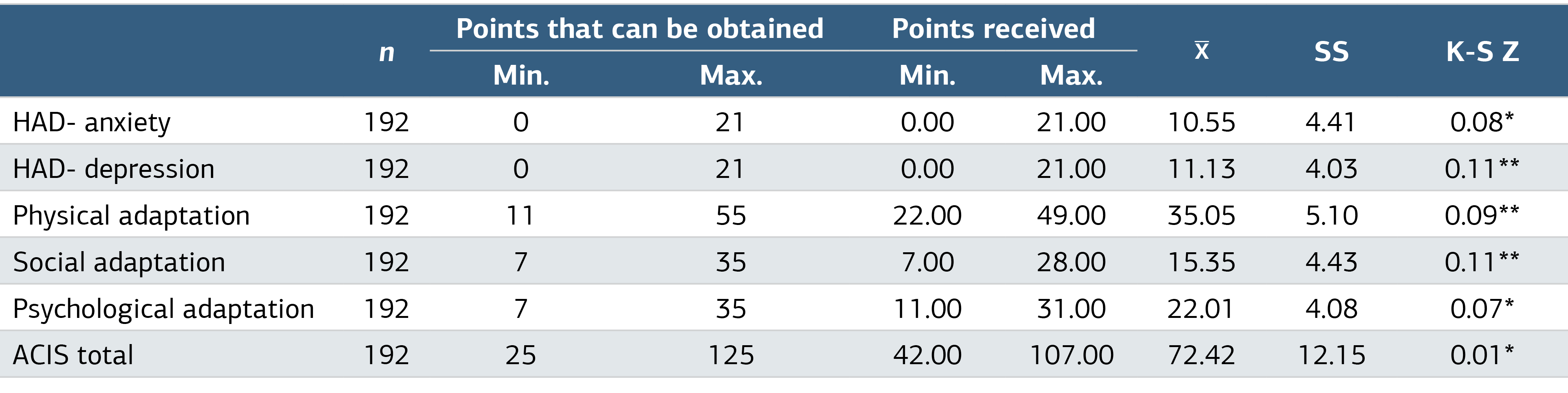
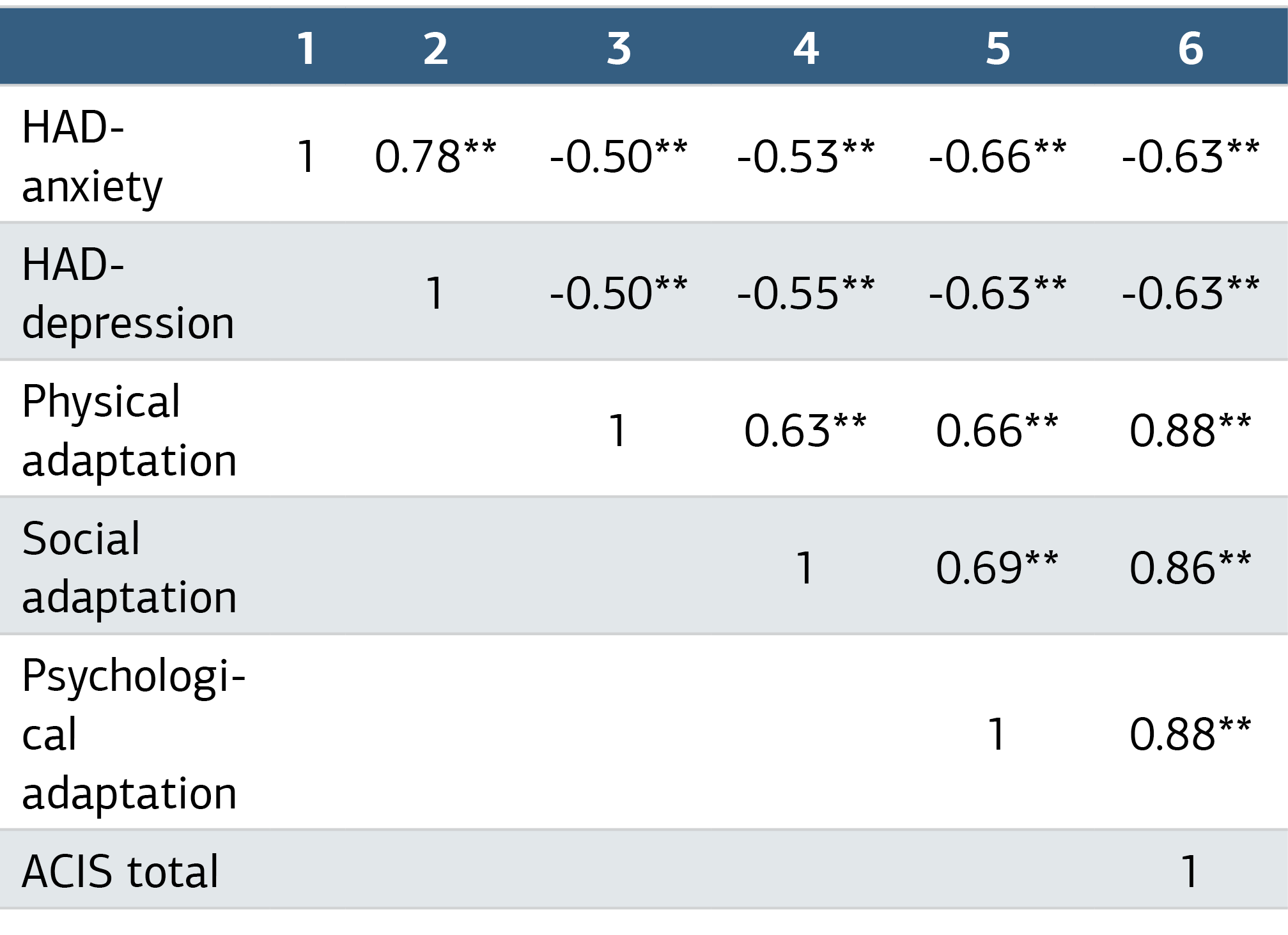
The results regarding the personal and disease characteristics of 192 patients are given in Table 1. Hospital Anxiety and Depression Scale-Anxiety scores of patients were 10.55±4.41 (10 points and below: n=101, 52.60%; 11 points and above: n=91, 47.40%) and the mean Hospital Anxiety and Depression Scale-Depression scores were 11.13±4.03 (7 points and below: n=25, 13.02%; 8 points and above: n=167, 86.98%). The mean of the Adaptation to Chronic Illness Scale scores of the patients were determined as 72.42±12.15 (Table 2). A negative and significant relationship was determined between the mean the Hospital Anxiety and Depression-Anxiety Scale scores and the Adaptation to Chronic Illness Scale total and physical Adaptation, social Adaptation, and psychological Adaptation sub-scales scores (r = -0.63; r = -0.50; r = -0.53; r = -0.66). In addition, a significant negative relationship was determined between the mean the Hospital Anxiety and Depression-Depression Scale scores and the Adaptation to Chronic Illness Scale total and physical Adaptation, social Adaptation, and psychological Adaptation sub-scales scores (r = -0.63; r = -0.50; r = -0.55; r = -0.63) (Table 3).
Discussion
Chronic heart failure is very common nowadays. Many studies are carried out to prevent this disease. In addition, efforts are made to reduce the difficulties experienced by the patient due to this disease.3 However, the difficulties experienced by the patients and the burdens caused by the disease are increasing.4-6,10 This study was conducted in order to determine the depression and anxiety levels caused by the difficulties experienced by the patients and to reveal the relationship between the patients’ adaptation to their diseases.
In this study, patients’ mean anxiety scores were 10.55±4.41 (10 points and below: n=101, 52.60%; 11 points and above: n=91, 47.40%) and depression scores were 11.13±4.03 (7 points and below: n=25, 13.02%; 8 points and above: n=167, 86.98%). These results show that it is important to address depression and anxiety in patients with chronic heart failure. Also, the mean score of the patients on the scale of adaptation to chronic illness was determined as 72.42±12.15 in the study. When the scores that can be obtained from the scale (min:25-max:125) were examined, it was evaluated that the level of adaptation to chronic illnesss of the patients was moderate. The researchers reported that more than half of heart failure patients experience anxiety, and almost all of them are at risk of depression.14,15,18 In the study in which compliance and management of heart patients were examined, it was determined that the patients experienced adaptation problems and the reasons for these problems were uncertainty regarding the recommendations and inadequate/ambiguous instructions, difficulties in symptom control, presence of other diseases, and socio-economic factors.3,5,9,10,19 The more the daily life of the individuals who suffer from the disease is affected and it hinders their plans for the future, it is a symptom that shows the worsening of the disease. These problems may cause different problems in both psychosocial and medical dimensions in the adaptation efforts of patients with chronic diseases.1-5 In studies, it has been determined that non-compliance with the disease seen in patients increases hospitalizations and causes a longer stay in the hospital.2,3,5,9,11 As a result of all these, it was found that the patients showed more psychiatric symptoms.4,18 The researchers reported that depression and anxiety disorders are common in patients with chronic heart diseases, and this negatively affects the quality of life and functional status of patients, negatively affects the survival rate by reducing the level of physical activity, and ultimately reduces the quality of life.1,3,10,18 Therefore, it is important for patients to adapt to their disease for their mental health. In our study, the fact that most of the patients scored above the depression and anxiety scale cut-off points and their compliance level was moderate shows the relationship between mental health and adjustment in patients with chronic heart failure.
In this study, a negative and significant correlation was found between the patients’ Anxiety and Depression scores and the Adaptation to Chronic Illness Scale total score (P < .05). Adaptation in heart failure affects the prognosis of the disease, quality of life, duration and frequency of hospitalization. Patients need to make continuous efforts to protect and improve their own health.5,15 This process often leads to psychiatric symptoms.1,4,13 The fact that patients with chronic heart failure have knowledge about their disease, make changes in their lifestyle according to the effects of the disease, and willingly participate and cooperate in the planned treatment and care contribute to their adaptation to the disease.1,4-7,9,10 The success of heart failure treatment increases the patient’s regular visits to the health institution, regular use of medications, recognizing and following up the symptoms associated with the disease, meeting his daily activities and care needs, and adapting to the disease.6,7 Thus, it causes the patient to be less affected by the negative effects of the disease, increase the capacity to cope with problems, and experience less anxiety and depression.4,15,18
Heart disease causes problems in marriage, work life, family life and economics in patients. This disrupts their level of adaptation.4,7,9,10 One of the most important points in ensuring adaptation is that the individual recognizes his/her own body during the illness, becomes aware of the emotions and thoughts he/she experiences, and recognizes the factors that increase his/her capacity to adapt to the illness.1-3,7,19
The fact that the results of treatment and care in chronic diseases are positive and they are less affected psychologically in this process is directly related to the compliance level of the patients.4,15 In chronic diseases, the problem of adherence to treatment causes failure in treatment.5,6,14,20 First of all, it is necessary to recognize psychiatric disorders such as anxiety and depression, which prevent the individual from complying with treatment, and to prepare a treatment plan in this direction.3,4,20 With compliance with the treatment, the duration of hospitalization decreases, repeated hospitalizations are prevented, the cost of treatment decreases, and the individual’s belief in the success of the treatment of the disease increases.2,7,9,18,20,21
Researchers have stated that adaptation to the disease has effects such as taking responsibility for oneself, being at peace with oneself while doing this, making efforts for one’s own well-being, and providing motivation for recovery.6,10 Adaptation to the disease actually supports the individual’s self-healing feelings and behaviors.2,3,7,20 As a result, as patients adapt, they may be less affected by their difficulties. Thus, as the result of this study supports, as the level of compliance with the disease increases, the depression and anxiety levels of the patients decrease. In other words, it is important to increase the adaptation of chronic heart failure patients to their diseases in order to reduce the level of depression and anxiety caused by the difficulties they experience. Thus, the individual and societal burden caused by the disease can be reduced.
In reducing the psychiatric disorders experienced by chronic heart patients, increasing their adaptation to their diseases can be easy and economical. Because, as the depression and anxiety levels of the patients increase, they can strain the health system. Patients’ quality of life may decrease. For this reason, adaptation to the disease is important in reducing the anxiety and depression levels of patients with chronic heart failure. This study presents a conclusion regarding the psychiatric symptoms experienced by these patients and the benefits of increasing their adaptive capacity in reducing these symptoms. Although the results obtained are important to draw attention to the psychiatric symptoms experienced by these patients, the data obtained from the anxiety and depression scales should be reconsidered by the psychiatrist through individual interviews. Because the results obtained from the determined anxiety and depression score scales are limited to the answers given by the patients and the duration of the questionnaire.
Limitations
Because the study was conducted with patients in a hospital, the results cannot be generalized to other patients. In addition, other psychiatric disorders of the patients that were not detected during the study could not be controlled. Therefore, physical, psychological and cultural variables that affect the results of this research are limitations.
Conclusion
According to the results of this study, to reduce depression and anxiety in patients with chronic heart failure, it may be recommended to increase their capacity to adapt to the disease.
Declarations
Animal and Human Rights Statement
All procedures performed in this study were in accordance with the ethical standards of the institutional and/or national research committee and with the 1964 Helsinki Declaration and its later amendments or comparable ethical standards.
Informed Consent
Informed consent was obtained from all participants.
Data Availability
The datasets used and/or analyzed during the current study are not publicly available due to patient privacy reasons but are available from the corresponding author on reasonable request.
Conflict of Interest
The authors declare that there is no conflict of interest.
Funding
None.
Abbreviations
ACIS: Adaptation to chronic illness scale
HAD: Hospital anxiety and depression scale
SPSS: Statistical package for the social sciences
References
- Vural Doğru B, Karadakovan A. Evaluation of the correlation between quality of life and psychosocial adaptation in elderly patients with heart failure. Turk J Cardiovasc Nurs. 2016;7(13):88-104.
- Atik D, Karatepe H. Scale development study: adaptation to chronic illness. Acta Med Mediterr. 2016;32(1):135-142.
- Atherton JJ, Sindone A, De Pasquale CG, et al. National Heart Foundation of Australia and Cardiac Society of Australia and New Zealand: guidelines for the prevention, detection and management of heart failure in Australia. Heart Lung Circ. 2018;27(10):1123-1208. doi:10.1016/j.hlc.2018.06.1042
- Aydemir T, Çetin Ş. Chronic diseases and psychosocial care. J Anatol Med Res. 2019;4(3):109-115.
- Sen HTN, Linh TTT, Trang DTK. Factors related to treatment compliance among patients with heart failure. Ramathibodi Med J. 2020;43(2):30-40.
- Kökcü ÖD, Tiryaki Ö. Investigation of independence status of self-behavior and caring needs of heart failure patients. Online Turk J Health Sci. 2020;5(2):364-374.
- Kasar KS, Erzincanlı S. Evaluation of medication compliance in patients with heart failure. Turk J Cardiovasc Nurs. 2021;12(28):94-99.
- Jankowska-Polańska B, Świątoniowska-Lonc N, Sławuta A, Krówczyńska D, Dudek K, Mazur G. Patient-reported compliance in older age patients with chronic heart failure. PLoS One. 2020;15(4). doi:10.1371/journal.pone.0231076
- Urbich M, Globe G, Pantiri K, et al. A systematic review of medical costs associated with heart failure in the USA, 2014-2020. Pharmacoeconomics. 2020;38(11):1219-1236. doi:10.1007/s40273-020-00952-0
- Zhang X, Zhao Q, Wang M, Yang M, Fan X. Fear of movement and its associated psychosocial factors in heart failure patients: a cross-sectional study. Eur J Cardiovasc Nurs. 2023;22(3):273-281. doi:10.1093/eurjcn/zvac075
- Bayrak B, Oğuz S, Karabulut Z, Çelik S, Kodak C. Determination of death anxiety in heart failure patients. Turk J Cardiovasc Nurs. 2019;10(23):97-104.
- Sevilla-Cazes J, Ahmad FS, Bowles KH, et al. Heart failure home management challenges and reasons for readmission: a qualitative study to understand the patient’s perspective. J Gen Intern Med. 2018;33(10):1700-1707. doi:10.1007/s11606-018-4542-3
- Keith F, Krantz DS, Chen R, et al. Anger, hostility, and hospitalizations in patients with heart failure. Health Psychol. 2017;36(9):829-838. doi:10.1037/hea0000519
- Celano CM, Villegas AC, Albanese AM, Gaggin HK, Huffman JC. Depression and anxiety in heart failure: a review. Harv Rev Psychiatry. 2018;26(4):175-184. doi:10.1097/hrp.0000000000000162
- AbuRuz ME. Anxiety and depression predicted quality of life among patients with heart failure. J Multidiscip Healthc. 2018;11:367-373. doi:10.2147/jmdh.s170327
- Zigmond AS, Snaith RP. The Hospital Anxiety and Depression Scale. Acta Psychiatr Scand. 1983;67(6):361-370. doi:10.1111/j.1600-0447.1983.tb09716.x
- Aydemir Ö, Güvenir T, Kuey L, Kültür S. Validity and reliability of Turkish version of Hospital Anxiety and Depression Scale. Turk Psikiyatri Derg. 1997;8(4):280-287.
- Aytap F, Özer Z. The relationship between risk of depression levels and disease management in individuals with chronic diseases and affecting factors. Turk J Fam Med Prim Care. 2021;15(2):212-222.
- Savarese G, Lund LH. Global public health burden of heart failure. Card Fail Rev. 2017;3(1):7-11. doi:10.15420/cfr.2016:25:2
- Akpınar NB, Ceran MA. Chronic diseases and rehabilitation nursing. J Adnan Menderes Univ Health Sci Fac. 2019;3(2):140-152.
- Patrick M, Miller B, Will B, Bena JF, Morrison SL, Siegmund LA. Anxiety and depression moderate the relationship between quality of life and self-care in patients with heart failure. Geriatr Nurs. 2022;44:54-59. doi:10.1016/j.gerinurse.2021.12.020
Tables
Table 1. Personal and Disease Characteristics
Additional Information
Publisher’s Note
Bayrakol MP remains neutral with regard to jurisdictional and institutional claims.
Rights and Permissions

This work is licensed under a Creative Commons Attribution-NonCommercial 4.0 International License (CC BY-NC 4.0). To view a copy of the license, visit https://creativecommons.org/licenses/by-nc/4.0/
About This Article
How to Cite This Article
Hacer Kuzey, Sevinç Mersin. The relationship between depression and anxiety levels, and adaptation tothe disease in patients with chronic heart failure. Ann Clin Anal Med 2024;15(4):282-286. doi:10.4328/ACAM.22099
Publication History
- Received:
- 07.01.2024
- Accepted:
- 29.02.2024
- Published Online:
- 14.03.2024
- Printed:
- 01.04.2024