
Abstract
AimOur study aimed to evaluate the sexual satisfaction levels and beliefs in sexual myths of Obsessive Compulsive Disorder (OCD) patients and control groups.MethodsOur study involved 40 OCD patients, 40 Anxiety Disorder (AD) patients currently in remission, and 40 healthy controls (HC). Dimensional Obsessive Compulsive Scale (DOCS), Golombok-Rust Inventory of Sexual Satisfaction (GRISS), Sexual Myths Scale (SMS), Hamilton Anxiety Rating Scale (HARS) were used as measurement tools.ResultsOur study showed that OCD patients had lower sexual satisfaction and stronger beliefs in sexual myths than controls. Female OCD patients reported dissatisfaction in satisfaction, touch, avoidance, and anorgasmia, while male OCD patients struggled with frequency, avoidance, and touch. Female patients had significant relationships between sexual myths and satisfaction, communication, and avoidance. Male patients only showed a relationship with avoidance. Disease duration was the main predictor of satisfaction, while age and education influenced sexual myths.ConclusionThese findings emphasize the need for targeted psychotherapeutic approaches for OCD patients’ sexual behaviors and beliefs.
Keywords
Introduction
Obsessive-compulsive disorder is a mental illness characterized by intrusive obsessions that cause distress and recurring behaviors or mental acts that the individual cannot control.1 OCD is considered one of the primary causes of problems in family and social relationships and a decrease in quality of life among all mental disorders.2
Sexual satisfaction is an emotional response based on an individual’s subjective evaluation and includes positive and negative experiences related to their sexual relationship.3 Sexual myths are among the factors that might lead to sexual dysfunction and decrease sexual satisfaction. These myths usually involve exaggerated, erroneous, and irrational beliefs about sexual life that the person accepts as reality. Sexual myths may cause regret and guilt, unfounded expectations, and worries about sexual life. Sexual dysfunctions might begin and persist as a result of these causes. Studies on the relationship between OCD and sexual life have shown that OCD has a significant negative impact on sexual health by decreasing the level of sexual functions and sexual satisfaction.4
The effect of sexual myths on the level of sexual satisfaction in OCD has not been extensively researched. This study aimed to evaluate the sexual satisfaction levels and beliefs of sexual myths of patients with OCD.
Materials and Methods
ParticipantsPatients who applied to Hospital of Ondokuz Mayıs University psychiatry outpatient clinic and inpatients in the psychiatry service were included in this study. The patient group consisted of 40 OCD patients, and the control groups consisted of 40 AD patients currently in remission and 40 HC. The anxiety in remission group was established to match OCD in terms of drug use and exclude drug effects. Participants were selected based on specific inclusion and exclusion criteria. For the OCD group, individuals between the ages of 18 and 65 who met the diagnostic criteria for OCD according to DSM-5 were included. Similarly, for the AD group, individuals meeting the diagnostic criteria for anxiety disorder and in remission were included. HC group consisted of individuals willing to participate in the study and engage in assessments and interviews. Exclusion criteria included various psychiatric and medical conditions, as well as cognitive impairments.Data Collection ToolsDimensional Obsessive Compulsive ScaleThe scale developed by Abramowitz.5 measures symptom clusters and symptom severity in patients with Obsessive Compulsive Disorder. Cronbach’s alpha value is 0.874 for the entire scale. It has been determined that the Turkish version of the scale is valid and reliable in Turkish society and supports the four-factor structure of the DOCS.6
Golombok-Rust Inventory of Sexual Satisfaction
The scale used to determine the quality of sexual intercourse, sexual dysfunctions and the severity of sexual problems was developed by Rust and Golombok.7 The reliability coefficient was found to be 0.94 in women and 0.87 in men. Turkish validity and reliability study was conducted by Tugrul et al.8Sexual Myths ScaleThe scale is used to determine individuals’ levels of belief in sexual myths. It was developed by Gölbaşı et al. and its validity and reliability studies were conducted.9 The Cronbach Alpha coefficient of the scale was found to be 0.91, and in the repeated reliability test study, the coefficient was found to be 0.814.Hamilton Anxiety Rating SaceThe scale was developed by Hamilton.10 This scale was prepared to determine the anxiety level and symptom distribution in individuals and to measure the change in severity. Turkish validity and reliability study was conducted by Yazıcı et al.11Ethical ApprovalThis study was approved by the Ethics Committee of Ondokuz Mayıs University (Date: 05.05.2021, Decision No: 2021/202).Statistical AnalysisThe research data were analyzed using SPSS for Windows 22.0 (SPSS Inc, Chicago, IL). Descriptive statistics, including mean, standard deviation, median, frequency distribution, and percentage, were used to summarize the data. The normality of variables was assessed through visual (histogram and probability graphs) and analytical methods (Kolmogorov-Smirnov/Shapiro-Wilk Tests). Non-parametric tests such as Mann-Whitney U Test, Kruskal-Wallis, and Chi-square tests were employed for group comparisons, while the one-way ANOVA test was used for normally distributed variables. The relationship between variables was examined using the Spearman Correlation Test. Univariate and multivariate linear regression analyses were conducted, with a retrospective elimination model employed for multivariate analyses. The statistical significance level was set at P < .05.
Reporting GuidelinesThis study was reported in accordance with the STROBE guideline.
Results
It was observed that there was no statistically significant difference between the groups in terms of age, gender, educational status, marital status, socioeconomic status, and having children. All patients in the OCD and AD were receiving psychiatric treatment. When the clinical data of the groups were compared, it was determined that there was no statistically significant difference in terms of medications used, inpatient treatment and sexual problems. It was observed that the control group received significantly higher sexual education than the OCD and AD groups (χ²=6.771 - 0.034).
In the post-hoc test, it was observed that the SMS mean score of the OCD group was statistically significantly higher than the AD and HC groups (F = 8.436, P = .001). It was observed that the total scores of the GRISS did not follow a normal distribution in the groups. When the total score was compared between the groups, it was observed that there was a significant difference between the groups, and in the post-hoc analysis, the total score of the OCD group was observed to be higher than the AD and HC groups (KW: 20,356 P = .001).
The comparisons of the SMS and GRISS total scores mean for each group revealed a significant difference between the groups. The post-hoc tests showed that the mean SMS and GRISS scores of the OCD group were significantly higher than the AD and HC groups. A comparison of SMS and GRISS total scores between groups is shown in Table 1.
The results of the correlation between SMS and GRISS in people with OCD showed a significant positive correlation between sexual myths and total score, communication, and avoidance in females and a significant positive correlation between sexual myths and avoidance in males. The correlation between SMS and GRISS in the OCD group is shown in Table 2. Univariate analyses were carried out first in the analysis used to predict sexual satisfaction and sexual myths using sociodemographic and clinical characteristics defined in the OCD group. Univariate analyses revealed that age, the duration of the illness, having completed high school or a higher education level, and having received sexual education all significantly affected sexual satisfaction. The best model was obtained at the 6th step of the analysis (F = 9.114, P = .005) performed with all variables by the backward elimination method. Only the disease duration variable remained in this model. Age, disease duration, marital status, education level, number of children, and sexual education significantly affected sexual myths, as demonstrated by univariate analyses. The best model was obtained at the 5th step of the analysis (F = 23.447, P = .001) performed with all variables by the backward elimination method. The education level and age variables remained in the model. The results of the regression analysis are shown in Table 3.
Discussion
Based on the results of our study, we comprehended that OCD group patients exhibited a significantly higher belief in sexual myths compared to both groups. According to a study, people with a higher sensation of responsibility and higher levels of perfectionism are more likely to believe in sexual myths.12 Furthermore, many studies have shown that OCD patients have a high sense of responsibility and perfectionism.13 OCD patients, known for their perfectionism, may be more prone to endorsing sexual myths.
Our study also revealed that OCD patients received less sexual education compared to HC. Previous research in the literature has consistently highlighted the role of sexual education in the formation of sexual myths, emphasizing that limited knowledge or misinformation plays a crucial role.14,15 Hence, the significant increase in belief in sexual myths among our OCD group may be associated with their limited access to sexual education, resulting in a higher belief in sexual myths.
Existing literature demonstrates a clear relationship between OCD and poorer sexual performance, increased sexual dysfunction, and limited sexual satisfaction.16 Numerous research studies have consistently shown the negative impact of OCD on sexual functions and sexual satisfaction.17-19 Our study also found that the OCD group exhibited lower levels of sexual satisfaction when compared to the control groups.
The use of drugs in OCD patients has been identified as a potential contributor to sexual dysfunction and decreased sexual satisfaction.20 However, some studies have stated that OCD patients who use drugs show worse sexual function independent of the drug effect.18 In our study, the observation that the OCD group had lower sexual satisfaction than both the anxiety group and the remission control group is significant as it suggests that impaired sexual satisfaction can be attributed to OCD itself, independent of the drug’s influence. Nevertheless, it should be noted that a portion of the decline in sexual satisfaction may be associated with sexual dysfunctions resulting from potential side effects of the medication. Another important consideration is the presence of comorbid depression, anxiety, or other physical illnesses, which can adversely affect sexual functions.4 Although these conditions were excluded from our study, impaired sexual satisfaction may arise from unidentified illnesses.
Upon reviewing the literature, no previous studies investigating the relationship between sexual myths and sexual satisfaction specifically in OCD patients were found. However, in our study, we observed a significant relationship between sexual myths and the total score of the GRISS, as well as its communication and avoidance sub-dimensions in female OCD patients. Among male OCD patients, a relationship was identified between the avoidance sub-dimension and sexual myths. In a study conducted with healthy individuals, it was revealed that higher sexual myth scores were linked to increased avoidance of sexual intercourse.21 Another study examining anxiety, sexual myths, and sexual satisfaction demonstrated that as sexual myths increased, total sexual satisfaction scores, as well as scores in sub-dimensions such as avoidance, communication, touch, satisfaction, impotence, premature ejaculation, and vaginismus, also increased.22 Our study’s findings are valuable as they highlight a higher belief in sexual myths in OCD patients compared to control groups and their detrimental impact on sexual satisfaction.
We showed a relationship between avoidance and sexual myths in both male and female OCD patients. In a study, it was revealed that OCD patients avoid sexuality.17 Studies on sexual life in OCD patients show that mental contamination negatively affects sexual life.23 It is known that OCD patients have a disgust sensitivity and it triggers avoidance of sexual life.19 It is known that an increase in belief in sexual myths can lead to patterns in sexual life, contribute to sexual dysfunctions, and restrict individuals’ expectations regarding sexual experiences. Therefore, it can be inferred that sexual myths are associated with the avoidance of sexual activities.
Correlation analysis results from our study align with findings from previous research conducted in healthy populations and patients with anxiety disorders, highlighting the link between sexual myths and sexual satisfaction.21,22 However, this relationship could not be observed in male OCD patient groups. In these groups, factors such as medication use, disease burden, and relationship problems may have had a greater impact on sexual satisfaction, overshadowing the influence of sexual myths. Nevertheless, this relationship was consistently demonstrated in all female patient groups and remains consistent with existing studies.
Our analysis revealed that the duration of the disease has a significant impact on sexual satisfaction. In OCD patients, it has been observed that sexual satisfaction tends to decrease as the duration of the disease increases. When considering other sociodemographic and clinical factors, the duration of the disease remains a significant predictor of sexual satisfaction. Longer disease duration is often associated with more severe symptom content in OCD patients.24 Additionally, a study found that as the duration of the disease increased, patients’ relationship with their environment deteriorated.14 These findings suggest that a longer disease duration may lead to increased medication use and a greater decline in sexual functioning.
Our analysis results indicated that age and education level have a significant influence on sexual myths, with an increase in age corresponding to a higher belief in sexual myths. This finding aligns with previous studies that have also shown a positive correlation between age and belief in sexual myths.22 It is recognized that sexual myths can vary with age.15 and older individuals may have been exposed to more traditional and conservative attitudes toward sexuality during their upbringing. Hence, it is likely that older individuals exhibit a more conservative attitude toward sexual experiences.
Furthermore, our study revealed higher belief levels of sexual myths among individuals with lower levels of education. Other studies have similarly found a positive association between lower educational attainment and belief in sexual myths, particularly among individuals with primary and high school education.15,25 It could be suggested that higher education levels promote critical thinking, analytical skills, and access to accurate information, leading to a decreased belief in sexual myths.
Limitations
The study has several limitations. It heavily relies on self-reported evaluations, potentially affecting the accuracy of participants’ responses about their sexual lives due to existing taboos and defensive attitudes. Only patients from an outpatient clinic were included, which might not fully represent the entire population. The inclusion of drug-using patients complicates the analysis due to variations in drug types and doses. The study lacked a standardized method for assessing sexual education and only considered education from families or schools. Moreover, the sexual satisfaction scale used was limited to evaluating heterosexual individuals with partners, excluding non-partnered and non-heterosexual patients from the analysis.
Conclusion
Based on our study findings, we observed that individuals with OCD had lower levels of sexual satisfaction and a higher prevalence of sexual myths compared to those in AD and HC groups. We also identified a negative association between belief in sexual myths and sexual satisfaction in OCD patients. Specifically, certain sub-dimensions of sexual satisfaction were negatively impacted, and sexual myths played a role in this relationship. Given these results, clinicians need to be aware that OCD patients may experience lower levels of sexual satisfaction and that there is a connection between sexual satisfaction and sexual myths.
Declarations
Animal and Human Rights Statement
All procedures performed in this study were in accordance with the ethical standards of the institutional and/or national research committee and with the 1964 Helsinki Declaration and its later amendments or comparable ethical standards.
Informed Consent
Written informed consent was obtained from all participants.
Data Availability
The datasets used and/or analyzed during the current study are not publicly available due to patient privacy reasons but are available from the corresponding author on reasonable request.
Conflict of Interest
The authors declare that there is no conflict of interest.
Funding
None.
Abbreviations
AD: Anxiety disorder
ANOVA: Analysis of variance
DOCS: Dimensional Obsessive Compulsive Scale
DSM-5: Diagnostic and Statistical Manual of Mental Disorders, Fifth Edition
GRISS: Golombok-Rust Inventory of Sexual Satisfaction
HARS: Hamilton Anxiety Rating Scale
HC: Healthy controls
OCD: Obsessive-compulsive disorder
SMS: Sexual Myths Scale
SPSS: Statistical Package for the Social Sciences
References
- American Psychiatric Association. Diagnostic and Statistical Manual of Mental Disorders. 5th ed. American Psychiatric Association; 2013:235. doi:10.1176/appi.books.9780890425596
- Coluccia A, Fagiolini A, Pozza A, Costoloni G, Bolognesi S, Goracci A. Obsessive-compulsive disorder and quality of life outcomes: protocol for a systematic review and meta-analysis of cross-sectional case-control studies. Asian J Psychiatr. 2016;22:41-52. doi:10.1016/j.ajp.2016.02.001
- Lawrance KA, Byers ES, Cohen JN. Interpersonal exchange model of sexual satisfaction questionnaire. In: Handbook of Sexuality-Related Measures. Routledge; 2020:497-503.
- Pozza A, Veale D, Marazziti D, et al. Sexual dysfunction and satisfaction in obsessive-compulsive disorder: protocol for a systematic review and meta-analysis. Syst Rev. 2020;9(1):8. doi:10.1186/s13643-019-1262-7
- Abramowitz JS, Deacon BJ, Olatunji BO, et al. Assessment of obsessive-compulsive symptom dimensions: development and evaluation of the Dimensional Obsessive-Compulsive Scale. Psychol Assess. 2010;22(1):180-198. doi:10.1037/a0018260
- Şafak Y, Say Öcal D, Özdel K, Kuru E, Örsel S. Obsesif kompülsif bozuklukta boyutsal yaklaşım: Boyutsal Obsesif Kompülsif Bozukluk Ölçeği Türkçe’nin psikometrik özellikleri [Dimensional approach in obsessive-compulsive disorder: psychometric properties of the Dimensional Obsessive-Compulsive Disorder Scale Turkish]. Turk Psikiyatri Derg. 2018;29(2):122-130.
- Rust J, Golombok S. The Golombok-Rust Inventory of Sexual Satisfaction. Br J Clin Psychol. 1985;24(pt 1):63-64. doi:10.1111/j.2044-8260.1985.tb01314.x
- Tuğrul C, Oztan N, Kabakçı E. Golombok-Rust Cinsel Doyum Ölçeği’nin standardizasyon çalışması [Standardization study of the Golombok-Rust Sexual Satisfaction Scale]. Turk Psikiyatri Derg. 1993;4(2):83-88.
- Golbası Z, Evcılı F, Eroglu K, Bırcan H. Sexual Myths Scale: development, validity, and reliability in Turkey. Sex Disabil. 2016;34(1):75-87. doi:10.1007/s11195-016-9430-3
- Hamilton M. Development of a rating scale for primary depressive illness. Br J Soc Clin Psychol. 1967;6(4):278-296. doi:10.1111/j.2044-8260.1967.tb00530.x
- Yazıcı MK, Demir B, Tanrıverdi N, Karaağaçoğlu E, Yolaç P. Hamilton Anksiyete Değerlendirme Ölçeği, değerlendiriciler arası güvenirlik ve geçerlik çalışması [Hamilton Anxiety Rating Scale, inter-rater reliability and validity study]. Turk Psikiyatri Derg. 1998;9(2):114-117.
- Kahraman S, Kaya ME, Erez İ. Examination of the relationship between perfectionism and sexual myths in adults. Cyp Turk J Psychiatry Psychol. 2021;3(3):175-182.
- Pişgin İ, Özen Şirvanlı D. Faulty appraisals and belief domains in obsessive-compulsive disorder from childhood to adulthood. Psikiyatr Guncel Yaklasimlar. 2010;2(1):117-131.
- Ejder Apay S, Nagorska M, Balci R, Sis A, Binkowska-Bury M. Student comparison of sexual myths: two-country case. Sex Disabil. 2013;31(3):249-262. doi:10.1007/s11195-013-9301-0
- Kilci S, Ozsoy S. Evlilik hazırlığı yapan çiftlerin cinsel mitlere inanma durumları ve etkileyen faktörler [Belief in sexual myths of couples preparing for marriage and affecting factors]. KASHED. 2019;5(2):1-28.
- Burri A, Spector T. Recent and lifelong sexual dysfunction in a female UK population sample: prevalence and risk factors. J Sex Med. 2011;8(9):2420-2430. doi:10.1111/j.1743-6109.2011.02341.x
- Aksoy UM, Aksoy ŞG, Maner F, Gokalp P, Yanık M. Sexual dysfunction in obsessive-compulsive disorder and panic disorder. Psychiatr Danub. 2012;24(4):381-385.
- Pozza A, Marazziti D, Mucci F, Dèttore D. Propensity to sexual response among adults with obsessive-compulsive disorder. Clin Pract Epidemiol Ment Health. 2019;15:126-133. doi:10.2174/1745017901915010126
- Pozza A, Angelo NL, Prestia D, Dèttore D. The role of disgust propensity and sensitivity on sexual excitations and inhibition in obsessive-compulsive disorder. Res Psychother. 2019;22(3):409. doi:10.4081/ripppo.2019.409
- Waldinger MD. Psychiatric disorders and sexual dysfunction. Handb Clin Neurol. 2015;130:469-489. doi:10.1016/b978-0-444-63247-0.00027-4
- Müldner-Nieckowski Ł, Sobański JA, Klasa K, Dembińska E, Rutkowski K. Medical students’ sexuality: beliefs and attitudes. Psychiatr Pol. 2012;46(5):791-805.
- Peixoto MM, Lopes J. Sexual functioning beliefs, sexual satisfaction, and sexual functioning in women: a cross-sectional mediation analysis. J Sex Med. 2023;20(2):170-176. doi:10.1093/jsxmed/qdac014
- Coughtrey AE, Shafran R, Knibbs D, Rachman SJ. Mental contamination in obsessive-compulsive disorder. J Obsessive Compuls Relat Disord. 2012;1(4):244-250. doi:10.1017/s1352465811000658
- Thakurta RG, Om Prakash S, Dhar P, Sarkar S, Ray P, Mallick AK. Prevalence and nature of sexual dysfunctions in obsessive-compulsive disorder in a tertiary medical college. East J Psychiatry. 2016;17(2):20-30.
- Zeyneloğlu S, Kısa S, Vefikuluçay Yılmaz D, Verim E. Evlilik hazırlığı yapan çiftlerin cinsellikle ilgili bilgi ve inanışları [Knowledge and beliefs about sexuality of couples preparing for marriage]. Turk Silahli Kuvvetleri Koruyucu Hekim Bul. 2013;12(3):297-306.
Tables
Table 1. Comparison of SMS and GRISS Total Scores Between Groups

F, One way-ANOVA; KW, Kruskal-Wallis; Tukey for SMS and One-way ANOVA for GRISS were used in Post Hoc tests; OCD, Obsessive compulsive Disorder; SMS, Sexual Myth Scale; GRISS, Golombok-Rust Inventory of Sexual Satisfaction.
Table 2. Correlation Analysis of SMS and GRISS in Females and Males with OCD
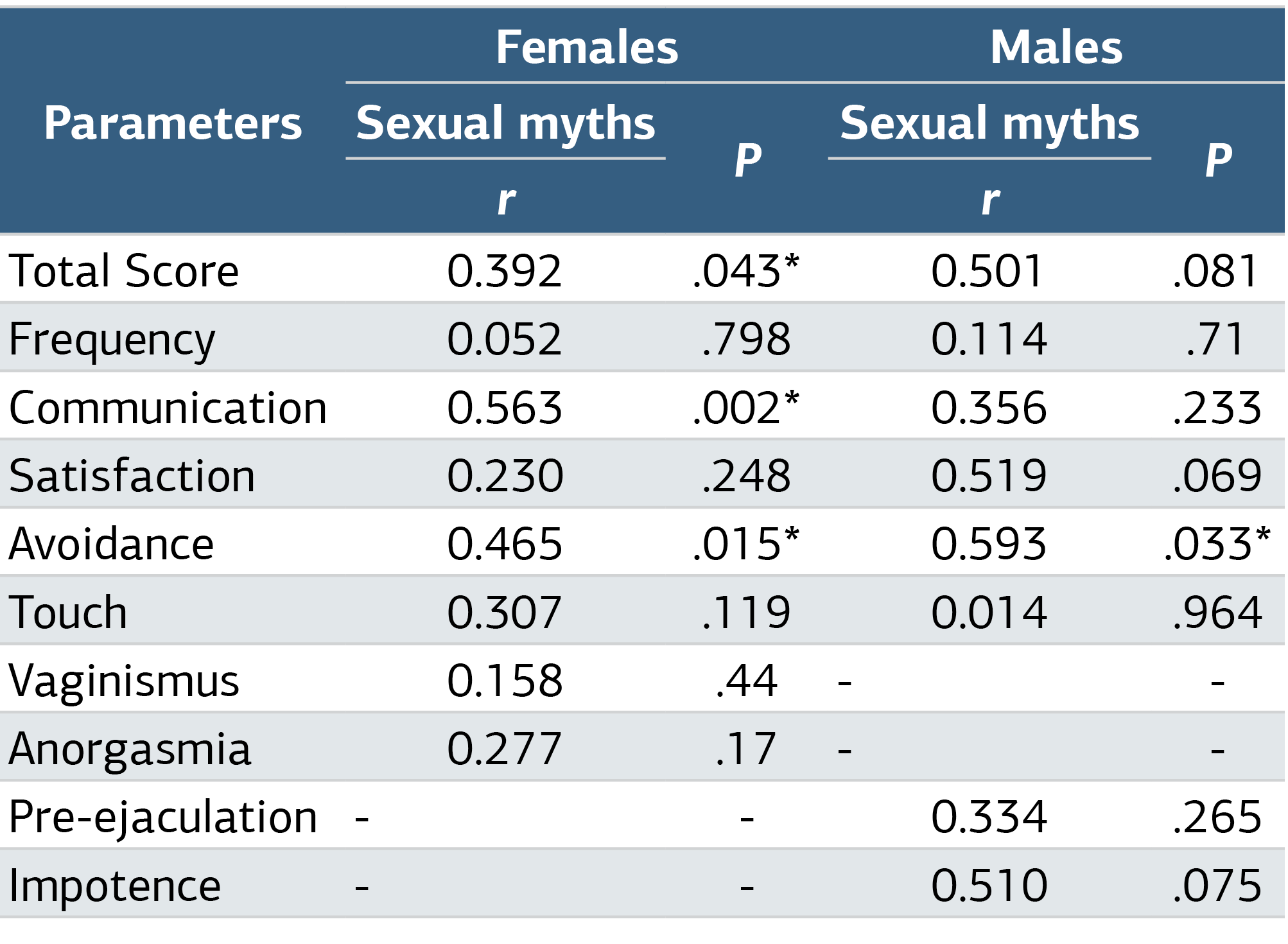
Spearman correlation analyses were used. *P < .001,05 OCD, Obsessive Compulsive Disorder; SMS, Sexual Myth Scale; GRISS, Golombok-Rust Inventory of Sexual Satisfaction.
Table 3. Linear Regression Analyses of Sociodemographic Factors Affecting Sexual Satisfaction and Sexual Myths Scores
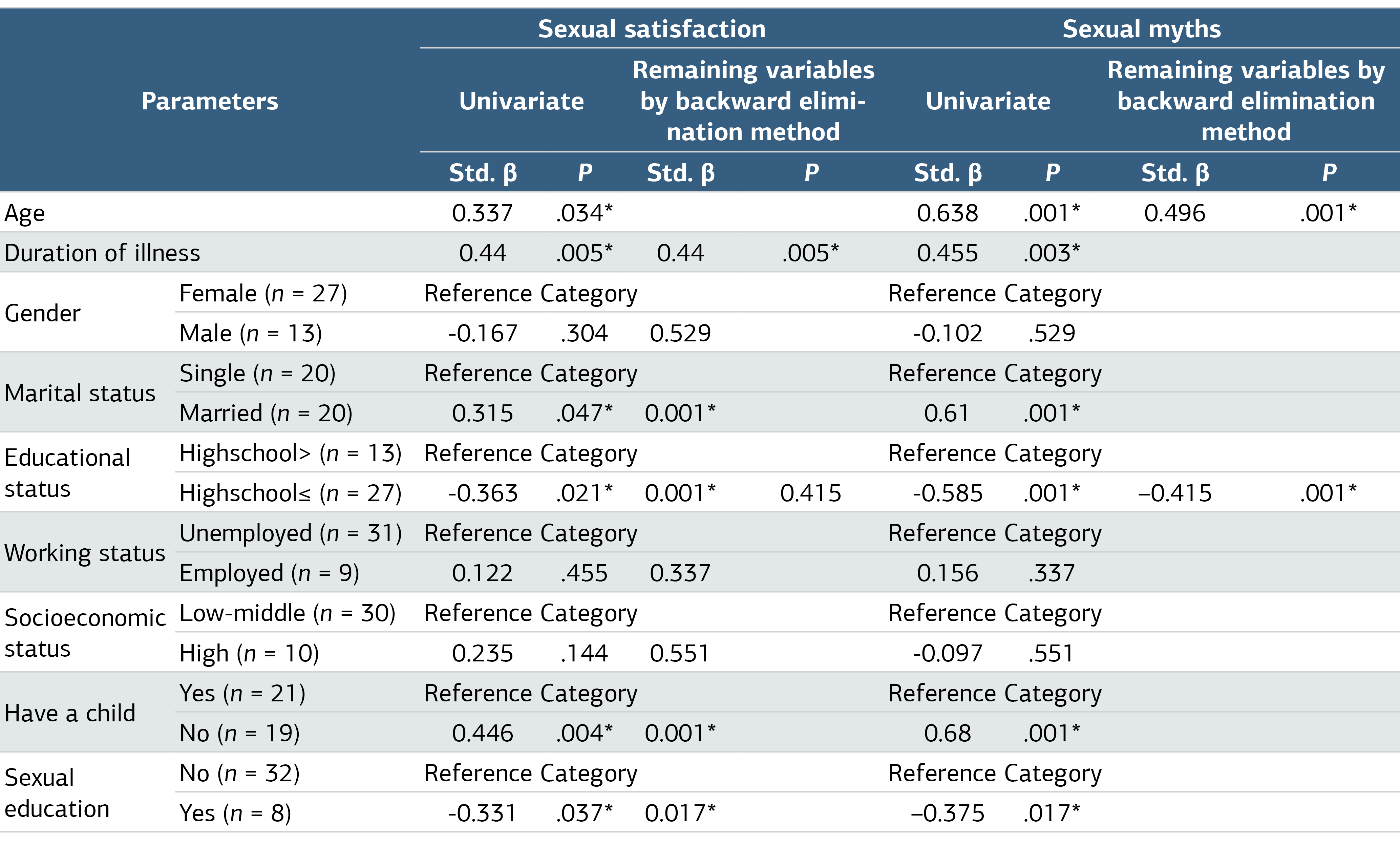
*P < .001,05, Std., Standardized.
Additional Information
Publisher’s Note
Bayrakol MP remains neutral with regard to jurisdictional and institutional claims.
Rights and Permissions

This work is licensed under a Creative Commons Attribution-NonCommercial 4.0 International License (CC BY-NC 4.0). To view a copy of the license, visit https://creativecommons.org/licenses/by-nc/4.0/
About This Article
How to Cite This Article
Feyza Yılmaz, Ömer Böke, Pelin Göksel, Ahmet Rifat Şahin, Hatice Özyıldız, Gökhan Sarısoy, Aytül Karabekiroğlu, Selçuk Özdin. Sexual satisfaction and beliefs in sexual myths in patients with obsessive compulsive disorder: a cross-sectional study. Ann Clin Anal Med 2024;15(7):458-462. doi:10.4328/ACAM.22140
Publication History
- Received:
- 09.02.2024
- Accepted:
- 02.04.2024
- Published Online:
- 05.05.2024
- Printed:
- 01.07.2024