
Abstract
AimThis study aimed to evaluate the clinical and surgical outcomes of patients undergoing ileocecal resection for Crohn’s disease and analyze their postoperative course.MethodsData from 62 patients who underwent ileocecal resection between January 2014 and February 2022 were retrospectively reviewed. Demographic characteristics, surgery duration, anastomosis configuration, stoma necessity, clinical remission, and postoperative Rutgeerts scores were evaluated.ResultsThe average age was 40.4 ± 12.8, and the average age at diagnosis was 32.0 ± 12.8. The average BMI was 21.48 ± 3.54. Males comprised 61.3% (n = 38) and females 38.7% (n = 24). The average surgery duration was 145.6 ± 61 minutes. Anastomosis was performed on 52 patients. Steroid use (>20mg/day preoperatively) correlated with higher complication rates (50% vs 12%, P < .05). Active smokers had higher postoperative complication rates. One patient experienced anastomotic leakage. The median Rutgeerts score was 0 (0-4). Recurrence was observed in 12 patients. No significant difference was found between clinical remission and Rutgeerts scores. Post-operative prophylaxis was required in 66.1% (n = 41), with 53% starting treatment within 30 days postoperatively.ConclusionIleocecal resection is an effective and safe treatment for complicated Crohn’s disease. Smoking cessation and awareness of increased postoperative complications in patients on high-dose steroids are crucial. Individualized treatment approaches yield satisfactory outcomes.
Keywords
Introduction
lower case (Crohn’s disease) is a chronic inflammatory disease that can affect any part of the gastrointestinal tract from mouth to anus, characterized by transmural inflammation and a course of disease marked by remissions and exacerbations. It often exhibits a skipping pattern of involvement. The most commonly affected areas are the terminal ileum and colon. The involvement of different regions of the gastrointestinal system and the disorders it causes in different organ systems lead to diverse clinical presentations, necessitating the personalization of treatment.1,2
Despite significant advances in the medical treatment of Crohn’s disease, surgery still plays an important role in its management. Approximately 50–60% of patients with Crohn’s disease require at least one surgical resection within the first ten years of diagnosis.3 However, surgery does not provide a definitive cure for the disease, resulting in a high rate of recurrence in many patients. Surgical indications of Crohn’s disease include both acute and chronic complications, as well as the failure of medical treatment.4
To date, various surgical techniques for different Crohn’s disease locations and behaviors have been reported, but the surgical management of Crohn’s disease remains challenging. The main difficulties include the extent of the surgery, timing, anastomosis configurations, the condition of the mesentery, the status of preoperative immunosuppressive treatment, and postoperative follow-up.5 Surgical approaches in Crohn’s disease bring about various postoperative complications, affecting the overall quality of life and leading to the inability to receive medical treatment. The frequency of postoperative complications following ileocecal resection varies between 20% and 47% in the literature.6
The clinical recurrence of the disease following ileocolic resection in Crohn’s disease is a significant and challenging problem. Despite numerous studies focusing on disease-related and patient-related factors that could affect the risk of recurrence, a high rate of recurrence is still observed. Endoscopic recurrences can be found in 70–90% of patients in the first year after surgery. Although the number of patients with clinically significant recurrence is lower, approximately 40% of patients may require reoperation within 5 years, and 55% within 10 years.7,8
In this study, we aimed to evaluate the clinical and surgical outcomes of patients who underwent ileocecal resection for Crohn’s disease at a tertiary center and to analyze their postoperative course.
Materials and Methods
Patients diagnosed histologically with Crohn’s disease and who underwent ileocecal resection were included in the study. Patients under 18 years of age and those with incomplete medical records were excluded. A dataset was created using hospital electronic medical records, gastroenterology follow-up forms, and, when necessary, telephone interviews. Our study was a single-center, retrospective study based on a database that was prospectively updated.
Patients’ demographic characteristics such as age, gender, body mass index (BMI), preoperative C-reactive protein levels, serum albumin (g/dL), and hemoglobin (g/dL) levels; surgical indications, surgery duration, anastomosis configuration, and stoma necessity including postoperative stoma necessity (in case of leakage) were evaluated. The relationship between postoperative complications, the nature of the operation, stoma status, smoking, and preoperative steroid use exceeding 20 mg/day in the last month was analyzed. Additionally, patients’ clinical remission after surgery and their Rutgeerts scores in postoperative colonoscopies were examined, and the need for prophylactic treatment was analyzed.
Early postoperative complications were defined as any surgical or other medical events occurring within 30 days post-surgery. Definitions for surgical complications were used as previously described in the literature.9Surgical TechniqueAll operations were performed under general anesthesia, either on an emergency or elective basis depending on the patient’s presentation. The choice of open or laparoscopic method was made by the surgeon. Regardless of the surgical approach, the resection was limited to the macroscopically diseased bowel segment only, with the mesentery dissected and tied close to the bowel wall. The configuration of the anastomosis was chosen based on intraoperative findings, using either double-layered side-to-side hand-sewn anastomosis or stapler anastomosis. Indications for diverting the anastomosis included chronic high-dose steroid therapy, severe intra-abdominal sepsis, and malnutrition.Follow-UpRoutine colonoscopic examinations are performed 6–12 months after surgery at our clinic. Endoscopic data were prospectively collected. Lesions in all segments, including the anastomosis site and neo-terminal ileum, were reported. The endoscopist assessed the Rutgeerts score for each patient. The choice of medical treatment and the need for prophylactic treatment in our clinic were made according to the ECCO Guidelines.10,11Ethical ApprovalThis study was approved by the Ethics Committee of Çukurova University, Faculty of Medicine (Date: 03.11.2023, Decision No: 138/27).Statistical AnalysisStatistical analyses were conducted using SPSS version 22.0. The conformity of numerical data to normal distribution was examined using the Kruskal-Wallis test. Numerical data adhering to a normal distribution were presented as mean ( ± standard deviation), while categorical variables were presented as frequency and percentage. The Chi-square test was used for the comparison of categorical variables. In the analyses, a P value of <0.05 was considered statistically significant.
Reporting GuidelinesThis study was reported in accordance with the STROBE guideline.
Results
Our study included 62 patients with an average age of 40.4 and a female gender ratio of 38%. The preoperative albumin level was 2.79 g/dL. 48% of the patients were active smokers, and 20% had used >20 mg/day of steroids in the last month. The most common indications for surgery were strictures in 18 patients, enterocutaneous fistula in 14 patients, and non-responsiveness to treatment in 14 patients. Demographic and clinical data are shown in Table 1.
The average duration of surgery was 145 minutes. Elective surgery was more common (47 vs. 15), and open surgery was performed in 38 patients compared to 24 for laparoscopic surgery. Stapler anastomosis was more frequently used (47 vs. 5). The rate of stoma creation in emergency cases was significantly higher compared to elective cases (P < .05). The most important reason for unplanned hospital readmission postoperatively was surgical site infection in 4 patients, abdominal pain in 3 patients, ileus in 1 patient, and evisceration in 1 patient. Postoperative complications were observed in 12 patients, with surgical site infection being the most common (9 patients). The rate of complications in patients who used >20 mg/day steroids in the last month preoperatively was higher compared to those who did not (50% vs. 12%, P < .05). The rate of postoperative complications was higher in active smokers compared to non-smokers (36% vs. 3%, P < .05). It was determined that 66.1% of the patients (n = 41) required post-operative prophylaxis, with 53% starting treatment within the first 30 days post-operatively, and 14% starting after the 30th day. This data is shown in Table 2.
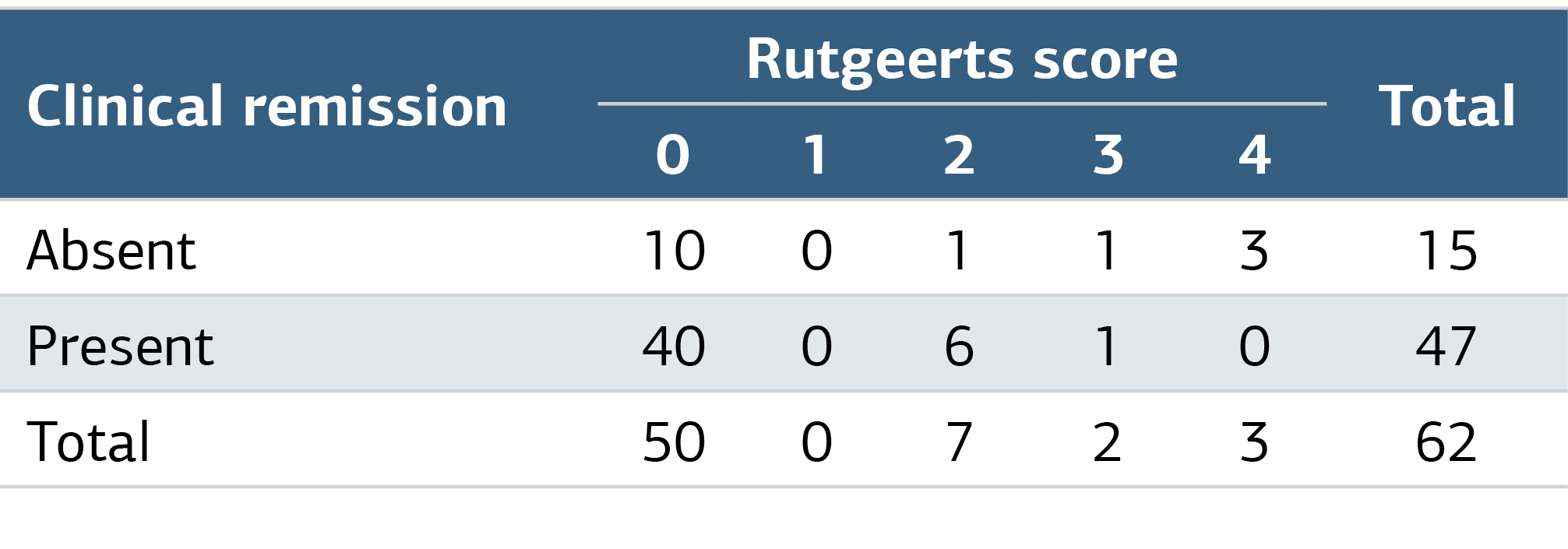
Recurrence was observed in 12 patients during postoperative ileocolonoscopies. No significant difference was found between clinical remission and Rutgeerts score in terms of risk. This is shown in Table 3 and Figure 1.
Discussion
In this study, where we presented the outcomes of patients undergoing ileocecal resection due to Crohn’s disease, we found that the most common indication for surgery was strictures, the majority of operations were elective and open, and stapler anastomosis was more frequently applied. The rate of stoma creation in emergency cases was significantly higher compared to elective cases. Surgical site infection was the most common postoperative complication. We observed that patients who used >20 mg/day steroids in the last month preoperatively had a higher rate of complications. Active smokers also had a higher rate of postoperative complications. We detected a recurrence rate of 20% in postoperative ileocolonoscopies. No significant difference was found between clinical remission and Rutgeerts score regarding risk.
One of the most concerning postoperative complications among colorectal IBD surgeons is intra-abdominal abscess leading to intra-abdominal sepsis, which is associated with anastomotic complications. Recognizing patients at higher risk for intra-abdominal sepsis is crucial and affects surgical strategy, guiding surgeons towards the creation of a stoma in patients with a higher likelihood of anastomotic leakage.12 The REMIND multicentric study investigated factors associated with early (30 days) postoperative complications following ileocecal resection. Treatment with corticosteroids in the 4 weeks before surgery was associated with an increased rate of postoperative complications (odds ratio (95% confidence interval) = 2.69 (1.15–6.29); P = .022).9 Our series also demonstrated an increased postoperative complication rate associated with the use of >20 mg steroids.
The pathophysiological mechanism behind the link between smoking and Crohn’s disease is still not fully understood. Changes in the immune system, intestinal permeability, motility, gut microbiome, and bacterial overgrowth could be factors in this complex, multifactorial interaction. The impact of smoking on the course of Crohn’s disease has been the subject of various studies.13-15 In the study by Kulaylat, A. N., et al., multivariate analysis showed that smoking status was associated with morbidity (OR 1.20, P = .003), particularly infectious (OR 1.30, P < .001) and pulmonary (OR 1.87, P < .001) complications, and readmissions (OR 1.58, P = .004).14 Furthermore, the literature has confirmed that smoking patients have a higher risk of early clinical recurrence and surgical recurrence. Also, smoking during the perioperative period is closely associated with disease recurrence within 1 year post-surgery.15 In our series, we found evidence supporting the literature that active smokers had a higher rate of complications.
In patients with Crohn’s disease, trends related to stoma formation have been changing over time. Temporary stomas are created during surgery to reduce the risk of intra-abdominal septic complications, while permanent stomas are often associated with severe perianal Crohn’s disease. The necessity of stoma formation in Crohn’s patients has been a significant source of concern.16 Especially in patients operated on in emergency status, we created stomas with the intention of preventing septic and anastomotic complications.
The Rutgeerts score (RS) was developed to predict postoperative recurrence in Crohn’s patients.17 This scoring system has been found to be closely associated with postoperative endoscopic recurrence. Patients with low-grade mucosal inflammation (i0 and i1) have a symptomatic recurrence rate of 9% within 7 years, whereas those with high-grade disease (i3 and i4) have shown nearly 100% symptomatic recurrence within a 4-year interval.18 A 2016 study in the UK found Rutgeerts i4 lesions to be a risk factor for re-operation due to anastomotic strictures.19 In our series, no significant difference was found between clinical remission and Rutgeerts score regarding risk.
Limitations
The limitations of our study include its retrospective nature and the limited number of patients, which prevented comparative analyses.
Conclusion
In conclusion, when performing ileocecal resection for Crohn’s disease, individualized treatment approaches and measures to prevent postoperative complications must be taken on a patient-by-patient basis. It is crucial to quit smoking before surgery, and it should be kept in mind that patients receiving high doses of steroids preoperatively have a higher likelihood of developing postoperative complications. Individualized treatment approaches can lead to gratifying clinical outcomes in Crohn’s disease with ileocecal resection. Multicentric prospective studies are needed to confirm these results.
Declarations
Animal and Human Rights Statement
All procedures performed in this study were in accordance with the ethical standards of the institutional and/or national research committee and with the 1964 Helsinki Declaration and its later amendments or comparable ethical standards.
Informed Consent
Informed consent was waived due to the retrospective nature of the study.
Data Availability
The datasets used and/or analyzed during the current study are not publicly available due to patient privacy reasons but are available from the corresponding author on reasonable request.
Conflict of Interest
The authors declare that there is no conflict of interest.
Funding
None.
Abbreviations
BMI: Body mass index
ECCO: European Crohn’s and Colitis Organisation
IBD: Inflammatory bowel disease
RS: Rutgeerts score
SPSS: Statistical Package for the Social Sciences
References
- Feuerstein JD, Cheifetz AS. Crohn disease: epidemiology, diagnosis, and management. Mayo Clin Proc. 2017;92(7):1088-1103. doi:10.1016/j.mayocp.2017.04.010
- Torres J, Mehandru S, Colombel JF, Peyrin-Biroulet L. Crohn’s disease. Lancet. 2017;389(10080):1741-1755. doi:10.1016/s0140-6736(16)31711-1
- Mege D, Panis Y. Unmet therapeutic needs: focus on intestinal fibrosis surgical approach: resection, strictureplasty and others. Dig Dis. 2017;35(1-2):38-44. doi:10.1159/000449081
- Birnbaum DJ, Bège T, Berdah SV. Gestione chirurgica delle malattie infiammatorie croniche dell’intestino: trattamento chirurgico della malattia di Crohn. [Surgical management of chronic inflammatory bowel diseases: surgical treatment of Crohn’s disease]. EMC Tec Chir Addom. 2015;21(2):1-13. doi:10.1016/s1283-0798(15)70637-6
- Meima-van Praag EM, Buskens CJ, Hompes R, Bemelman WA. Surgical management of Crohn’s disease: a state-of-the-art review. Int J Colorectal Dis. 2021;36(6):1133-1145.
- Bak MT, Ruiterkamp MF, van Ruler O, et al. Prehabilitation prior to intestinal resection in Crohn’s disease patients: an opinion review. World J Gastroenterol. 2022;28(22):2403-2415. doi:10.3748/wjg.v28.i22.2403
- Reynolds IS, Doogan KL, Ryan ÉJ, et al. Surgical strategies to reduce postoperative recurrence of Crohn’s disease after ileocolic resection. Front Surg. 2021;8:804137. doi:10.3389/fsurg.2021.804137
- Muñoz-Juárez M, Yamamoto T, Wolff BG, Keighley MR. Wide-lumen stapled anastomosis vs conventional end-to-end anastomosis in the treatment of Crohn’s disease. Dis Colon Rectum. 2001;44(1):20-25. doi:10.1007/bf02234814
- Fumery M, Seksik P, Auzolle C, et al. Postoperative complications after ileocecal resection in Crohn’s disease: a prospective study from the REMIND group. Am J Gastroenterol. 2017;112(2):337-345. doi:10.1038/ajg.2016.541
- Adamina M, Bonovas S, Raine T, et al. ECCO guidelines on therapeutics in Crohn’s disease: surgical treatment. J Crohns Colitis. 2020;14(2):155-168. doi:10.1093/ecco-jcc/jjz187
- Torres J, Bonovas S, Doherty G, et al. ECCO guidelines on therapeutics in Crohn’s disease: medical treatment. J Crohns Colitis. 2020;14(1):4-22. doi:10.1093/ecco-jcc/jjz180
- Gklavas A, Poulaki A, Dellaportas D, Papaconstantinou I. Risk factors for postoperative complications after elective ileocolic resection for Crohn’s disease: a retrospective study. Ann Gastroenterol. 2020;33(6):645-652. doi:10.20524/aog.2020.0533
- Bolckmans R, Kalman T, Singh S, et al. Does smoking cessation reduce surgical recurrence after primary ileocolic resection for Crohn’s disease? Dis Colon Rectum. 2020;63(2):200-206. doi:10.1097/dcr.0000000000001547
- Kulaylat AN, Hollenbeak CS, Sangster W, Stewart DB Sr. Impact of smoking on the surgical outcome of Crohn’s disease: a propensity-score matched National Surgical Quality Improvement Program analysis. Colorectal Dis. 2015;17(10):891-902. doi:10.1111/codi.12958
- Guo Z, Cao L, Guo F, et al. The presence of postoperative infectious complications is associated with the risk of early postoperative clinical recurrence of Crohn’s disease. World J Surg. 2017;41(9):2371-2377. doi:10.1007/s00268-017-4026-3
- Everhov ÅH, Kalman TD, Söderling J, et al. Probability of stoma in incident patients with Crohn’s disease in Sweden 2003-2019: a population-based study. Inflamm Bowel Dis. 2022;28(8):1160-1168. doi:10.1093/ibd/izab245
- Rutgeerts P, Geboes K, Vantrappen G. Predictability of the postoperative course of Crohn’s disease. Gastroenterology. 1990;99(4):956-963. doi:10.1016/0016-5085(90)90613-6
- Chongthammakun V, Fialho A, Fialho A, Lopez R, Shen B. Correlation of the Rutgeerts score and recurrence of Crohn’s disease in patients with end ileostomy. Gastroenterol Rep. 2017;5(4):271-276. doi:10.1093/gastro/gow043
- Ding NS, Yip WM, Choi CH, et al. Endoscopic dilatation of Crohn’s anastomotic strictures is effective in the long term, and escalation of medical therapy improves outcomes in the biologic era. J Crohns Colitis. 2016;10(10):1172-1178. doi:10.1093/ecco-jcc/jjw072
Tables
Table 1. Demographic and Clinical Data
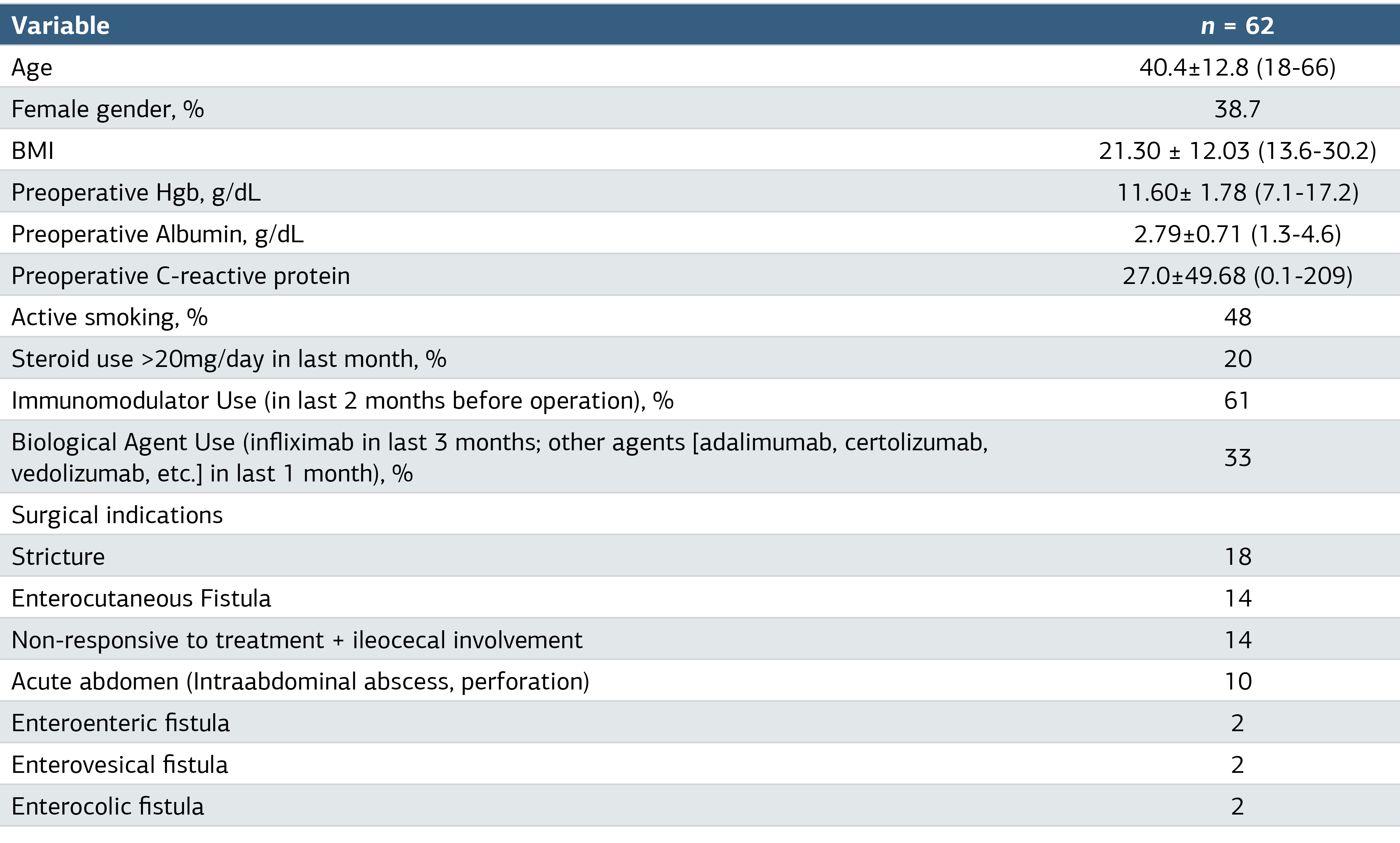
Numerical data are shown as mean ± standard deviation (minimum-maximum). Categorical variables are presented as percentages or counts.
Table 2. Perioperative Findings
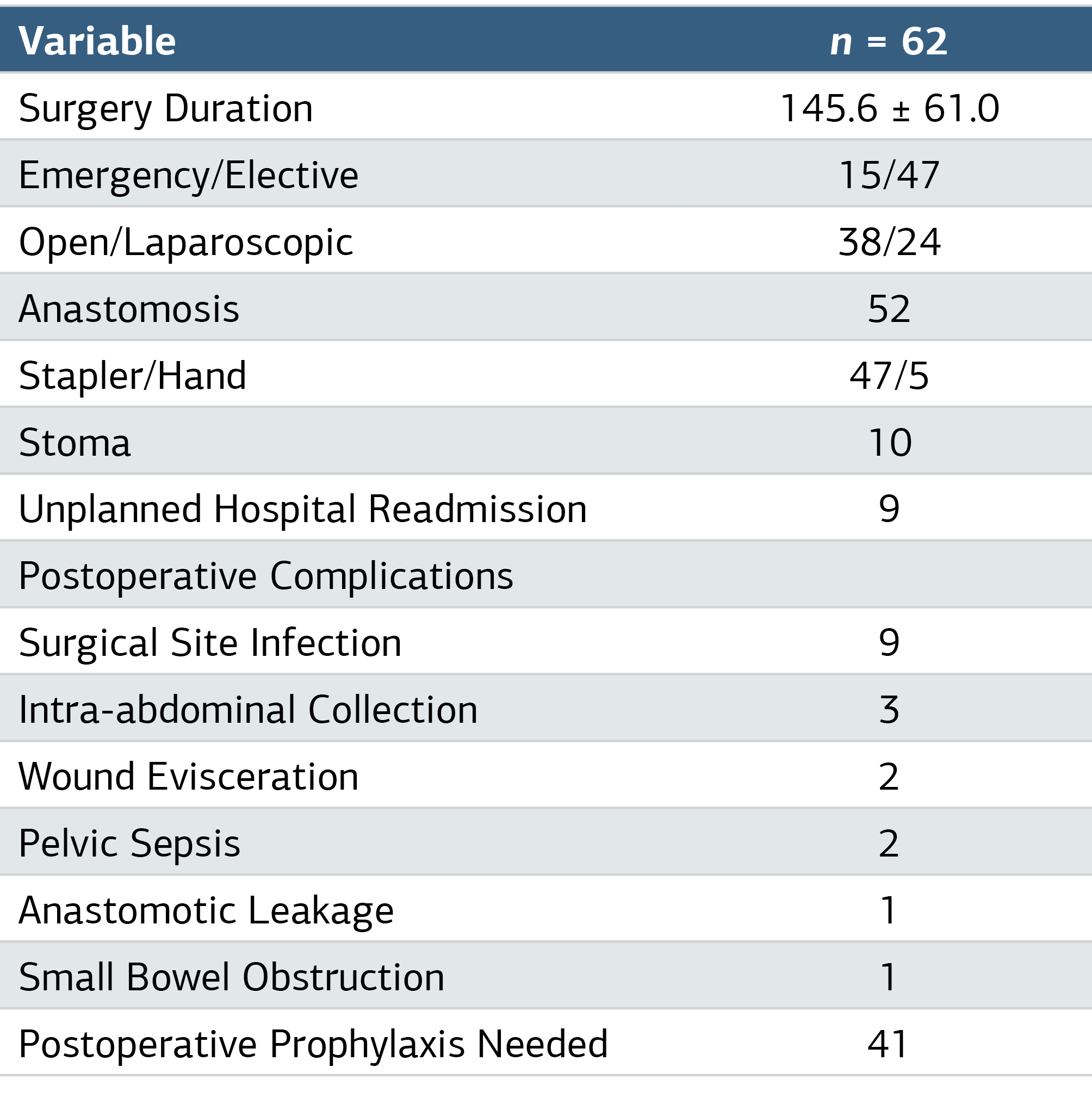
Numerical data are shown as mean ± standard deviation (minimum-maximum). Categorical variables are presented as percentages or counts.
Table 3. Postoperative Clinical Course
Figures
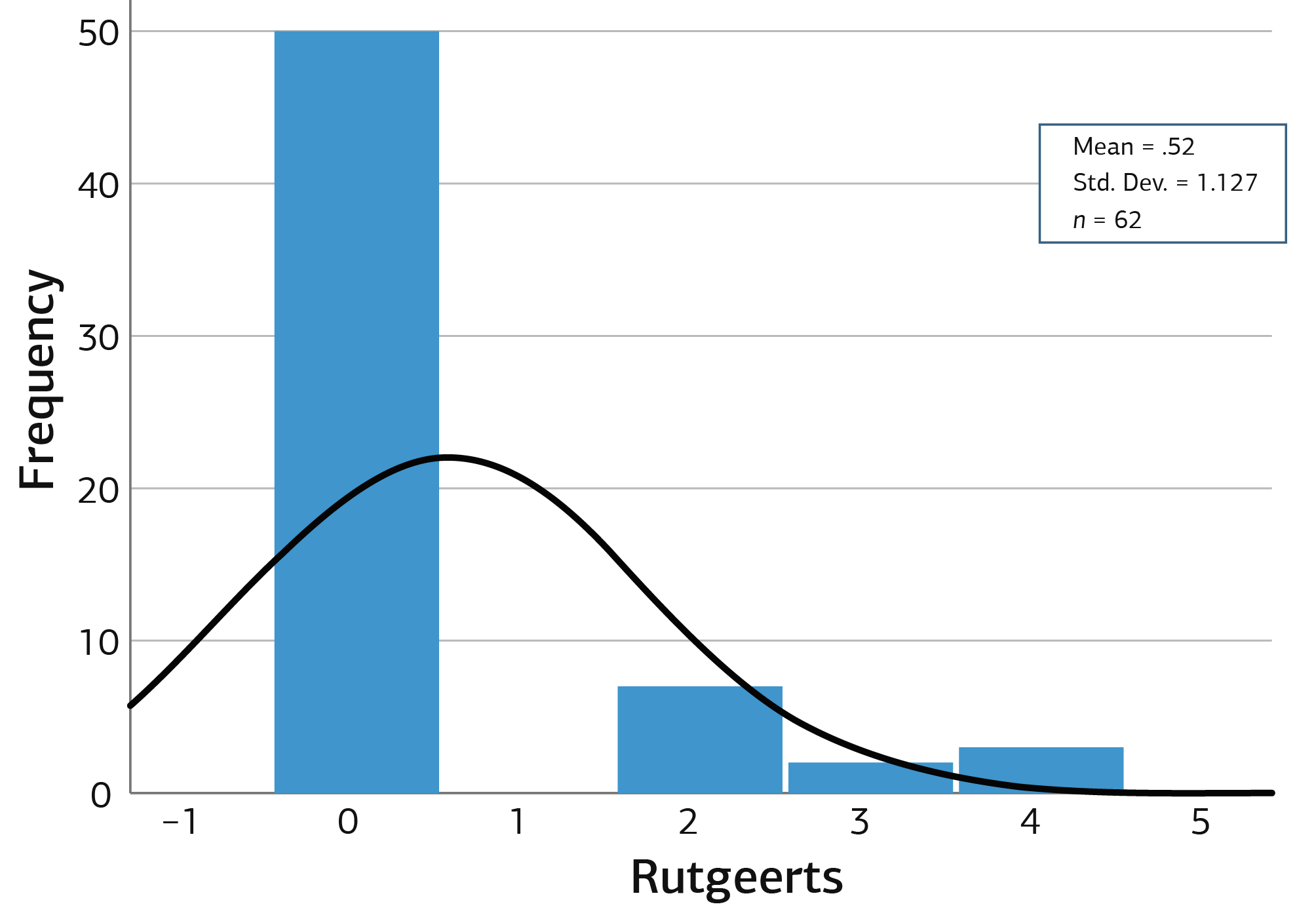
Figure 1. Postoperative Clinical Course
Additional Information
Publisher’s Note
Bayrakol MP remains neutral with regard to jurisdictional and institutional claims.
Rights and Permissions

This work is licensed under a Creative Commons Attribution-NonCommercial 4.0 International License (CC BY-NC 4.0). To view a copy of the license, visit https://creativecommons.org/licenses/by-nc/4.0/
About This Article
How to Cite This Article
Uğur Topal, Mustafa Koray Demiryürek, Burak Yavuz, İshak Aydın, Orçun Yalav, İsmail Cem Eray. Ileocecal resection in Crohn’s disease: our clinical experience. Ann Clin Anal Med 2024;15(12):850-854. doi:10.4328/ACAM.22262
Publication History
- Received:
- 13.05.2024
- Accepted:
- 02.07.2024
- Published Online:
- 16.08.2024
- Printed:
- 01.12.2024