
Abstract
Tumor necrosis factor-alpha (TNF-α) inhibitors are biological agents frequently used in many clinics, especially in rheumatology. In this article, we report a 59-year-old woman with RA who received adalimumab treatment for five years. The diagnosis and treatment of miliary tuberculosis secondary to irregular latent tuberculosis (TB) treatment with atypical symptoms will be discussed. In the literature, patients with a similar diagnosis who developed TB during treatment have also been presented. Patients at risk of latent TB who receive anti-TNF therapy should be closely monitored and the importance of prophylaxis should be emphasized.
Keywords
Introduction
With the introduction of tumor necrosis factor-alpha inhibitors (TNFAI) into clinical use, significant success has been achieved in treating many inflammatory diseases, especially rheumatoid arthritis (RA), seronegative spondyloarthropathy, and inflammatory bowel diseases. Unlike many other anti-inflammatory drugs, TNFAI acts through a targeted therapy mechanism. However, many remarkable side effects associated with these drugs are also reported. These include mycobacterial infections, especially tuberculosis (TB), other viral, fungal, or bacterial infections, infusion reactions, local reactions at the injection site, heart failure, demyelinating diseases, triggering of autoimmunity, and malignancy.1
Infliximab, a chimeric monoclonal antibody containing the murine Fab region; fully humanized monoclonal antibodies adalimumab and golimumab; certolizumab, a pegylated human Fab fragment; and etanercept, a fusion protein of the extracellular domain of Tumor necrosis factor receptor 2 (TNFR2) and the human immunoglobulin (Ig)1 Fc fragment, are TNF-α blockers approved for clinical use.2
The risk of infection is thought to be higher, especially in the first year of treatment. It has been reported that the monoclonal antibodies adalimumab and infliximab are more prone to infections than the soluble receptor etanercept.3
A meta-analysis summarizing the risk of TB associated with TNF-α blockade in thousands of patients with RA or other inflammatory diseases has shown an approximately four-fold increase in TB in those treated with TNF-α blockers compared with other treatments.4 Here, we will talk about a case of miliary TB presenting with atypical symptoms such as sore throat and hoarseness, using adalimumab, a monoclonal antibody, with a diagnosis of RA.
In this article, we will discuss a case of TB associated with anti-TNF use and review similar cases in the literature.
Materials and Methods
A 59-year-old female patient, diagnosed with seronegative RA for seven years, was started on adalimumab treatment five years previously after failing to respond to non-biologic disease-modifying anti-rheumatic drugs (DMARDs) and was in clinical remission for RA. Three years ago, after the patient’s PPD (purified protein derivative) test was 11 mm, the patient was started on isoniazid (INH). The patient used INH for three months, then took a two-month break due to coronavirus disease-2019 (COVID-19), and then continued for seven more months. The treatment was completed in 9 months.
When the patient developed complaints of sore throat and hoarseness three years after prophylaxis, acute upper respiratory tract infection was considered and antibiotic therapy was started. The patient, whose complaints did not improve, applied for a routine rheumatology check-up. In laboratory parameters: C-reactive protein 4.62 mg/L (0-5), erythrocyte sedimentation rate 53 mm/h (0-20), white blood cell count 5.02x10³/µl, platelet count 267x10³/µl, and hemoglobin 13.1 g/dl. The patient attended the Department of Otolaryngology with the current complaints.
Upon neck computed tomography (CT) showing a mass lesion measuring 26x14 mm in the oropharynx (figure 1A), a biopsy was planned with suspicion of malignancy in the oropharynx, and the biopsy result was reported as “granulomatous inflammatory event accompanied by focal ulceration.” Thorax CT was requested for the patient with the preliminary diagnosis of TB. In thorax CT, several enlarged lymph nodes were observed in the mediastinum, prevascular area, paratracheal areas, and hilar regions, with the largest subcarinal LAP measuring 20x30 mm. In evaluating the lung parenchyma areas, more prominent widespread budded tree appearances were observed in the upper lobes of both lungs (active TB?) (figure 1B/1C).
Paramediastinal atelectatic density change was observed in the anterior upper lobe of the left lung. The patient’s transbronchial biopsy result was reported as a granulomatous inflammatory event by the chest diseases department, and quadruple anti-TB treatment was started after the lavage taken from the patient also showed Mycobacterium Tuberculosis growth. The patient was commenced on isoniazid, rifampicin (RIF), ethambutol, and pyrazinamide, and since she was not stable during follow-up, dual treatment with INH and RIF was started two months later. She is currently in the ninth month of her treatment, which is planned to be completed in 12 months. All radiological imaging studies and laboratory tests of the patient were performed at our institution.
A literature search with the keywords “adalimumab,” “rheumatoid arthritis,” and “tuberculosis” yielded 67 results in PUBMED and 40 results in SCOPUS over the last 10 years. When the results were screened, there were 15 RA patients who developed tuberculosis under adalimumab (Table 1).
Results
When the results were screened, there were 15 RA patients who developed tuberculosis under adalimumab. Most of the cases were female patients. The mean age was 64 years, and the mean interval between adalimumab treatment and TB was 40.7 months. Similarly, TB was observed in our case 48 months after prophylaxis. Four miliary TB, 3 peritoneal TB, 4 pulmonary TB, 2 tongue TB, 1 brain TB, and 1 ganglionary TB were observed. As in our case, pulmonary TB is common in the literature. Seven patients had a negative TST or IGST, 3 had a positive TST or IGST, 2 did not receive prophylaxis, and 5 did not report results. Although TST or IGST was positive, miliary and atypical localized TB was observed in patients who did not receive prophylaxis. As in the literature and in our case, negative TST and IGST are insufficient to predict the development of TB.
Discussion
Rheumatoid arthritis is one of the most common chronic inflammatory diseases that can lead to bone and cartilage damage, as well as disability. TNFAI treatment has been established as an effective therapeutic strategy in patients with RA. TNF-α is a pro-inflammatory cytokine that plays a vital role in the pathogenesis of chronic immune-mediated diseases. Five TNFAIs have been approved for clinical use in rheumatology practice. These are infliximab, etanercept, adalimumab, certolizumab, and golimumab.5
TNFAI drugs are generally well tolerated; however, many potentially serious adverse effects have also been reported. Long-term use of these drugs has been associated with the risk of malignancies and serious infections such as TB.6
It is recommended to screen for latent TB infection before starting treatment in patients for whom TNFAI is planned. Although there is no gold standard test for this purpose, interferon-gamma release test (IGST) and tuberculin skin test (TST) can be used for screening purposes. If induration is ≥5 mm in TST, it is considered positive, and protective treatment is applied. It seems appropriate to screen patients for whom latent TB is not detected initially and TNFAI treatment is initiated annually for latent TB infection.7,8 Prophylaxis was started in our patient when the TST was 11 mm, and there was a disruption in her treatment due to COVID-19 infection. Therefore, her prophylaxis was negatively affected.
Cases of TB despite negative TST or IGST have been observed in the literature. Miliary or pulmonary TB is frequently seen, but atypical localisations are also noteworthy, although rare.
Limitations
The main limitation of this study is that it is based on a single case report. Although the findings are supported by a review of similar cases in the literature, they cannot be generalized.
Conclusion
In conclusion, the risk of TB is increased in patients receiving TNFAI, especially infliximab and adalimumab. As seen in the literature, pulmonary and miliary TB are frequently observed. Screening for latent TB with TST or IGST before treatment should not be neglected as it reduces the risk of TB; however, even with a negative test result, patients should be closely monitored and informed. TB infection may present with atypical symptoms such as cough, fever, sore throat, weight loss, and hoarseness. Laboratory and imaging findings in patients with atypical presentations may initially cause diagnostic confusion. Therefore, in cases where the diagnosis is suspected, tissue biopsy may be helpful in the diagnosis if necessary.
Declarations
Animal and Human Rights Statement
All procedures performed in this study were in accordance with the ethical standards of the institutional and/or national research committee and with the 1964 Helsinki Declaration and its later amendments or comparable ethical standards.
Informed Consent
Written informed consent was obtained from the patients who participated in this study.
Data Availability
The datasets used and/or analyzed during the current study are not publicly available due to patient privacy reasons but are available from the corresponding author on reasonable request.
Conflict of Interest
The authors declare that there is no conflict of interest.
Funding
None.
Abbreviations
COVID-19: Coronavirus disease 2019
CT: Computed tomography
IGST: Interferon-gamma release test
INH: Isoniazid
LAP: Lymphadenopathy
PPD: Purified protein derivative
RA: Rheumatoid arthritis
RIF: Rifampicin
TB: Tuberculosis
TNF: Tumor necrosis factor
TNFAI: Tumor necrosis factor-alpha inhibitors
TNFR2: Tumor necrosis factor receptor 2
TST: Tuberculin skin test
References
- Acar M, Sutcu M, Salman N, Somer A. The risk of tuberculosis and TNF-alpha inhibitors. J Pediatr Inf. 2017;11(2):82-86.
- Minozzi S, Bonovas S, Lytras T, et al. Risk of infections using anti-TNF agents in rheumatoid arthritis, psoriatic arthritis, and ankylosing spondylitis: a systematic review and meta-analysis. Expert Opin Drug Saf. 2016;15(suppl 1):11-34. doi:10.1080/14740338.2016.1240783
- Liao H, Zhong Z, Liu Z, Zou X. Comparison of the risk of infections in different anti-TNF agents: a meta-analysis. Int J Rheum Dis. 2017;20(2):161-168. doi:10.1111/1756-185x.12970
- Ai JW, Zhang S, Ruan QL, et al. The risk of tuberculosis in patients with rheumatoid arthritis treated with tumor necrosis factor-α antagonist: a meta-analysis of both randomized controlled trials and registry/cohort studies. J Rheumatol. 2015;42(12):2229-2237. doi:10.3899/jrheum.150057
- He B, Li Y, Luo WW, et al. The risk of adverse effects of TNF-α inhibitors in patients with rheumatoid arthritis: a network meta-analysis. Front Immunol. 2022;13:814429. doi:10.3389/fimmu.2022.814429
- Shivaji UN, Sharratt CL, Thomas T, et al. Managing the adverse events caused by anti-TNF therapy in inflammatory bowel disease. Aliment Pharmacol Ther. 2019;49(6):664-680. doi:10.1111/apt.15097
- Kaplan H, Şaş S, Şenköy E, Cengiz G, Demir H. A side effect of TNF inhibitors that should not be forgotten in the COVID-19 pandemic: pulmonary tuberculosis. J PMR Sci. 2022;25(3):386-389. doi:10.31609/jpmrs.2021-86680
- Cantini F, Lubrano E, Marchesoni A, et al. Latent tuberculosis infection detection and active tuberculosis prevention in patients receiving anti-TNF therapy: an Italian nationwide survey. Int J Rheum Dis. 2016;19(8):799-805. doi:10.1111/1756-185x.12708
- Assante LR, Barra E, Bocchino M, Zuccarini G, Ferrara G, Sanduzzi A. Tuberculosis of the tongue in a patient with rheumatoid arthritis treated with methotrexate and adalimumab. Infez Med. 2014;22(2):144-148.
- Antolín J, Azahara M, Hernández C, Blanco M, Mao L, Cigüenza R. Tuberculous peritonitis after treatment with adalimumab. Scand J Infect Dis. 2008;40(8):677-678. doi:10.1080/00365540701877320
- Yonekura CL, Oliveira RDR, Titton DC, et al. Incidência de tuberculose em pacientes com artrite reumatoide em uso de bloqueadores do TNF no Brasil: dados do Registro Brasileiro de Monitoração de Terapias Biológicas BiobadaBrasil. Rev Bras Reumatol. 2017;57:477-483. doi:10.1016/j.rbr.2017.05.003
- Tanaka T, Sekine A, Tsunoda Y, et al. Central nervous system manifestations of tuberculosis-associated immune reconstitution inflammatory syndrome during adalimumab therapy: a case report and review of the literature. Intern Med. 2015;54(7):847-851. doi:10.2169/internalmedicine.54.2828
- Ikuta K, Ota Y, Kuroki S, et al. Development of disseminated tuberculosis with intestinal involvement due to adalimumab administration despite latent tuberculosis treatment. Intern Med. 2020;59(6):849-853. doi:10.2169/internalmedicine.3295-19
- Dantes E, Tofolean DE, Fildan AP, et al. Lethal disseminated tuberculosis in patients under biological treatment: 2 clinical cases and a short review. J Int Med Res. 2018;46(7):2961-2969. doi:10.1177/0300060518771273
- Cerda OL, de Los Angeles Correa M, Granel A, et al. Tuberculin test conversion in patients with chronic inflammatory arthritis receiving biological therapy. Eur J Rheumatol. 2019;6(1):19. doi:10.5152/eurjrheum.2018.18096
- Chiesa Estomba CM, Araujo da Costa AS, Schmitz TR, Lago PV. Base of tongue tuberculosis: a case report. Iran J Otorhinolaryngol. 2015;27(80):239.
- Muñoz-Oca JE, Villarreal Morales ML, Nieves-Rodriguez A, Martínez-Bonilla L. Concomitant disseminated histoplasmosis and disseminated tuberculosis after tumor necrosis factor inhibitor treatment: a case report. BMC Infect Dis. 2017;17:1-4.
- Lee H, Park HY, Jeon K, et al. QuantiFERON-TB Gold In-Tube assay for screening arthritis patients for latent tuberculosis infection before starting anti-tumor necrosis factor treatment. PLoS One. 2015;10(3). doi:10.1371/journal.pone.0119260
- Kim YJ, Kim YG, Shim TS, et al. Safety of resuming tumour necrosis factor inhibitors in patients who developed tuberculosis as a complication of previous TNF inhibitors. Rheumatology (Oxford). 2014;53(8):1477-1481. doi:10.1093/rheumatology/keu041
Tables
Table 1. Patients who develop tuberculosis and their characteristics
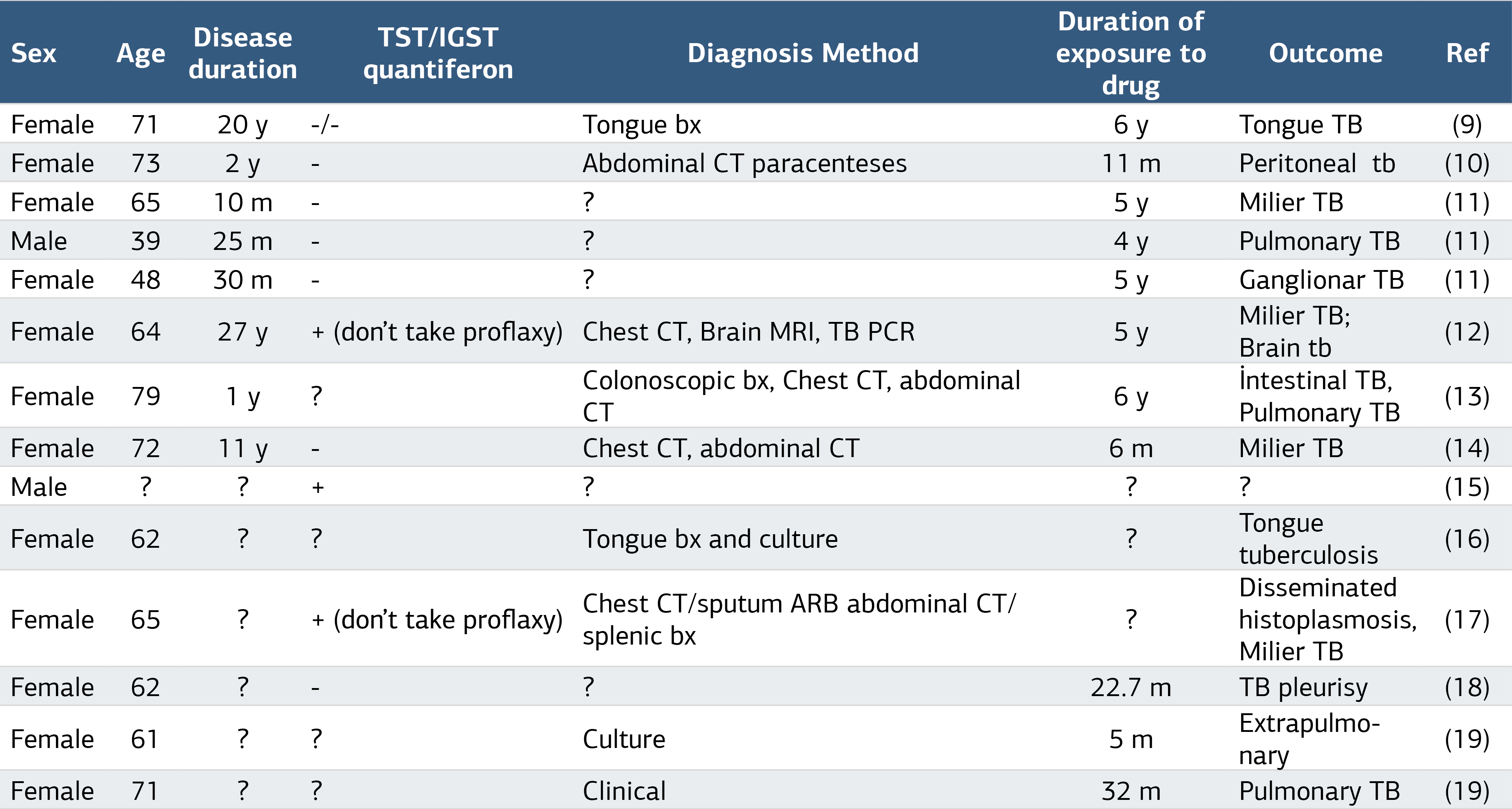
CT: Computerized tomography, MRI: Magnetic resonance imaging, PCR: Polymerase chain reaction, ARB: Acıd-resıstant bacıllus Bx: Biopsy, y: years, m: month
Figures
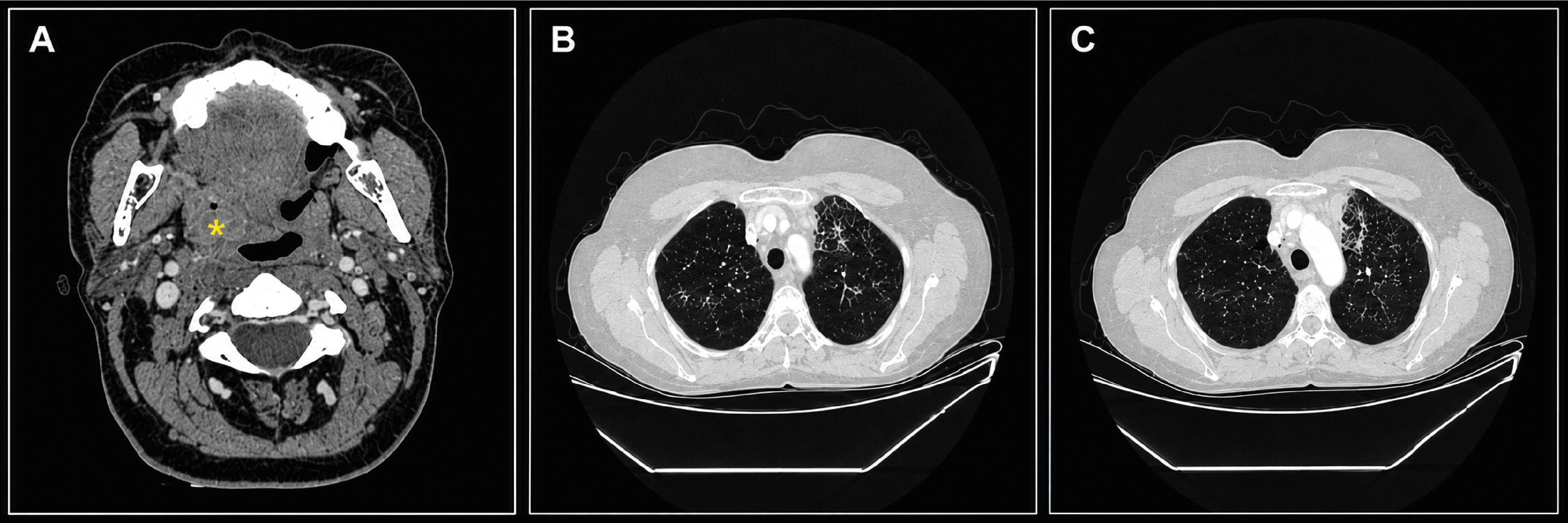
Figure 1. A: Mass lesion visible in the oropharynx on neck computed tomography (CT) FIGURE B AND C: Common tree in bud appearances in lung parenchyma regions on thorax
Additional Information
Publisher’s Note
Bayrakol MP remains neutral with regard to jurisdictional and institutional claims.
Rights and Permissions

This work is licensed under a Creative Commons Attribution-NonCommercial 4.0 International License (CC BY-NC 4.0). To view a copy of the license, visit https://creativecommons.org/licenses/by-nc/4.0/
About This Article
How to Cite This Article
Tuğba Kahraman Denizhan, Melih Kızıltepe, Hüseyin Kaplan, Emel Oğuz Kökoğlu, Celil Barlas Cengiz, Abdurrahman Soner Şenel. The miliyer tuberculosis mimirating oropharynx carcinoma in a patient using anti-TNF: review of the literature. Ann Clin Anal Med 2025;16(Suppl 2):128-131. doi:10.4328/ACAM.22312
Publication History
- Received:
- 24.06.2024
- Accepted:
- 09.09.2024
- Published Online:
- 30.12.2024
- Printed:
- 25.05.2025