
Abstract
AimIn recent years, neoadjuvant chemotherapy constitutes the basic building blocks of thetreatment scheme in the treatment of breast cancer. Randomized controlled studies in recent years have shown that neoadjuvant chemotherapy and dual anti-Her2(human epidermal growth factor receptor 2) combinations increase the pathological complete response and contribute to overall survival in Her2 positive breast cancer. The aim of this study is to compare the pathological complete response rates of patients receiving neoadjuvant chemotherapy-trastuzumab (CT) and patients receiving neoadjuvant chemotherapy-trastuzumab-pertuzumab (CTP) and present real-life data.Methods79 patients who received neoadjuvant CT and 155 patients who received CTP were included in the study. Pathological complete response rates of two independent groups were compared. Variables that predicted pathological complete response in both groups were examined.ResultsIn real life, we found that the pathological complete response rates in patients receiving neoadjuvant CTP were much higher than the rates in patients receiving neoadjuvant CT, even higher than the rates in randomized controlled studies that led to the introduction of dual blockade into the literature.ConclusionWe think that neoadjuvant chemotherapy and dual anti-Her2 therapy are the optimal treatment for Her2 positive breast cancer.
Keywords
Introduction
In women, breast cancer is the most common type of cancer and the second leading cause of death from cancer.1 Among breast cancers, 20–25% overexpress HER2 (human epidermal growth factor receptor 2) and are associated with poor prognosis if untreated.2 Signaling pathways that support cell proliferation, resistance to apoptotic signals, enhanced cell motility, and neoangiogenesis are constitutively activated as a result of HER2 gene amplification.3
In comparison to chemotherapy alone, addition of trastuzumab, a HER2‑directed humanized monoclonal antibody, dramatically increases response rate and overall survival in patients with metastatic HER2‑positive breast cancer.4 Trastuzumab inhibits ligand‑independent signaling and prevents HER2 cleavage.5 Specifically, between HER2 and HER3, ligand‑dependent signaling is inhibited by pertuzumab, which is how it produces its effects. Trastuzumab and pertuzumab have complementary modes of action because they bind to separate locations.6
In patients with localized or locally advanced HER2‑positive breast cancer, the pathological complete response rates (pCR) were increased by adding pertuzumab alongside trastuzumab as a neoadjuvant therapy.7 In the phase 2 NeoSphere study, the pCR rate was increased by adding neoadjuvant docetaxel and trastuzumab alongside pertuzumab (29% vs. 46%). Another phase 2 trial, TRYPHAENA, increased the effectiveness of trastuzumab‑docetaxel by combining it with pertuzumab. In this study, the carboplatin arm’s pCR was 51%, compared to 45% and 50% in the anthracycline arms.8 At the same time, studies have shown that pCR is associated with overall survival.9
Our study aims to compare the pathological complete response rates of neoadjuvant pertuzumab‑trastuzumab‑chemotherapy and trastuzumab‑chemotherapy, and to evaluate the correlation of real‑world data with the literature.
Materials and Methods
The patients who received neoadjuvant chemotherapy and trastuzumab in 2014–2018, and patients who received neoadjuvant pertuzumab, trastuzumab, and chemotherapy in 2018–2022 were evaluated in this retrospective study. T1–T4 and N0–N3, HER2‑positive breast cancer patients over 18 years of age were included. Patients with metastatic disease at the time of diagnosis and those who could not complete neoadjuvant four cycles of pertuzumab‑trastuzumab therapy were excluded. In the trastuzumab group, patients who could not complete the neoadjuvant 12 cycles of trastuzumab were excluded.
Pertuzumab was given at a dose of 840 mg (cycle 1), followed by 420 mg every 3 weeks. Trastuzumab was given every 3 weeks at 8 mg/kg (cycle 1), followed by 6 mg/kg in the other cycles. In the group receiving only trastuzumab, trastuzumab was given as 4 mg/kg in the first week and 2 mg/kg in the following weeks. Docetaxel was given at 75–100 mg/m² every 3 weeks. Paclitaxel was given at 80 mg/m² on days 1, 8, and 15 or 175 mg/m² every 3 weeks. Anthracycline protocol was administered to patients as Adriamycin‑cyclophosphamide (AC) or fluorouracil, epirubicin, and cyclophosphamide (FEC). The AC protocol contained 60 mg/m² Adriamycin + 600 mg/m² cyclophosphamide every 3 weeks. The FEC protocol contained fluorouracil 600 mg/m², epirubicin 90 mg/m², and cyclophosphamide 600 mg/m² intravenously every 3 weeks. Patients received trastuzumab or trastuzumab emtansine (TDM‑1) for 1 year after surgery.
Data of HER2‑positive breast cancer patients receiving neoadjuvant chemotherapy were obtained from hospital records. Demographic characteristics, treatment regimens in the neoadjuvant period, surgical information, pathology reports, last examination dates, and if applicable, date of death were recorded.
The primary endpoint was determined as pCR. The absence of invasive tumors in primary breast tissue and axilla was considered a pathological complete response. The presence of only residual ductal carcinoma in situ (DCIS) was also evaluated as pCR.
Patients were divided into two groups: those who received taxane‑pertuzumab‑trastuzumab and those who received taxane‑trastuzumab. Demographic features, clinicopathological features, and pCR of these two groups were compared. Then, both groups were divided into two subgroups as those with and without pCR, and their clinicopathological features were compared.Ethical ApprovalThis study was approved by the Ethics Committee of Dr. Abdurrahman Yurtaslan Oncology Education and Research Hospital (Date: 26.07.2023, Decision No: 2023‑07/297).Statistical AnalysisIn the descriptive statistics, continuous variables were expressed as mean ( ± standard deviation), median (range); categorical variables were presented as frequency (%). Chi‑square or Fisher’s Exact test was used to compare categorical variables of two independent groups. Independent sample t‑test was used for parametric data; Mann‑Whitney U test was used for non‑parametric data. A logistic regression model was created with variables with p<0.100, and independent factors predicting pathological complete response were identified.Reporting GuidelinesThis study was reported in accordance with the STROBE guideline.
Results
A total of 79 patients in the trastuzumab group and 155 patients in the pertuzumab‑trastuzumab group were included in the study. The median age was 49 years in both groups. While the T stage was distributed as T2–T4 in the group receiving trastuzumab, the T2 stage was predominant in the group receiving pertuzumab‑trastuzumab (p<0.001, Table 1). While axilla positivity was observed in all patients receiving trastuzumab at the time of diagnosis, 11 (7.1%) of the patients receiving pertuzumab‑trastuzumab were axilla negative at the time of diagnosis (p=0.015). Ki‑67 median was 40 in both groups. Patients receiving neoadjuvant anthracyclines predominated in both groups, and a minority of patients in both groups received dose‑dense AC (Table 1).
The median age in the all‑patient group was 49 years. When the factors predicting pathological complete response were evaluated in the all‑patient group, the estrogen receptor status was observed to be significant (p=0.046), while the progesterone receptor status (p=0.107) and T stage (p=0.087) were at the border. Estrogen receptor status was found to be significant when the logistic regression model was applied for the all‑patient group.
The median age of patients with pCR and non‑pCR was 53 vs. 47 years in the trastuzumab group (p=0.022). In the pertuzumab‑trastuzumab group, premenopausal patients were found to be significantly higher in patients with pCR than in patients with non‑pCR (53.7% vs. 36.4%, p=0.041). In the pertuzumab‑trastuzumab group, progesterone receptor positivity was lower in patients with pCR than in patients with non‑pCR (p=0.039). In the pertuzumab‑trastuzumab group, estrogen receptor status, progesterone receptor status, and menopausal status were evaluated with a logistic regression model. Progesterone receptor (95% CI 0.154–1.291, p=0.039) and menopause status (95% CI 0.210–0.866, p=0.041) were the independent predictive factors for pCR (Table 2).
When the pathological complete response rates of the patients receiving trastuzumab and the patients receiving pertuzumab‑trastuzumab were compared, pathological complete response was observed in 95 (61.2%) patients in the pertuzumab‑trastuzumab group, while it was observed in 33 (41.7%) patients in the trastuzumab group. This difference was statistically significant (p=0.002).
Discussion
In our study, pathological complete response (pCR) rates were found to be significantly higher in the group receiving dual blockade compared to the group receiving only trastuzumab. In the NeoSphere study, the pCR was reported as 45% in the group receiving pertuzumab‑trastuzumab‑docetaxel, while in our study, the pCR was 61% in this group. It was thought that the higher pCR rates in our study were due to the addition of anthracycline and cyclophosphamide in the neoadjuvant period.10
The difference between the pCR rates of patients receiving trastuzumab and those receiving pertuzumab‑trastuzumab was significant. Since the study was retrospective, the patients were not distributed at similar stages in both groups. The frequency of T4 and N3 disease was higher in the trastuzumab group. Although this difference was not statistically significant, it was thought that starting neoadjuvant therapy at a later stage might reduce the pCR and make the difference between the two groups more pronounced. The fact that patients were more advanced in the trastuzumab group reflects the shift in our treatment trend to neoadjuvant therapy after the dual blockade. Likewise, the tendency of surgeons in recent years has been to refer patients to neoadjuvant treatment at an earlier stage.
In the pertuzumab group, 53 (55.7%) of the patients with pCR were progesterone receptor positive, while 42 (44.3%) were negative. In the non‑pCR group, 40 (72.7%) patients were progesterone receptor positive and 15 (27.3%) were negative. Pathological complete response was found to be lower in progesterone receptor‑positive patients, consistent with the literature.11 It is known that the frequency of residuals after neoadjuvant therapy in triple‑positive breast cancer is higher than in the HER2‑positive hormone receptor‑negative group.12 In a study published in 2016, pCR rates were compared according to tumor subtypes. The rate of pCR in HER2 and ER/PR‑positive patients was found to be lower than in HER2‑positive and ER/PR‑negative patients.11 This is associated with a lower treatment response of the hormone receptor‑positive component.
In the all‑patient group, pCR was statistically lower in estrogen receptor‑positive patients. Pathological complete response was significantly higher in premenopausal patients in the pertuzumab group (p=0.039). In the study conducted by Silva et al., pCR was found to be high in premenopausal patients, consistent with our findings.13 However, there are also studies in the literature supporting the opposite. In a study conducted in France in 2021, pCR was seen at a lower rate in young and premenopausal HER2‑positive patients, and this was associated with low DFS.14 Similarly, in another study published in 2013, a lower rate of pCR was found in premenopausal HER2‑positive patients.15 It is also known that tumors are more aggressive in young premenopausal patients.16 The higher detection of pCR in premenopausal patients in our study may be associated with a better response of aggressive tumors to neoadjuvant chemotherapy. This result suggested that aggressive tumors may benefit more from neoadjuvant dual blockade.
Limitations
As for the limitations of our study; since it was retrospective, the clinicopathological features of the patients were not similarly distributed in the trastuzumab and pertuzumab-trastuzumab groups. Survival analyses could not be performed because the median follow-up time was short.
Conclusion
In conclusion, it is the standard combination of dual anti-Her2 and chemotherapy in neoadjuvant treatment in Her2 positive breast cancer. It has been shown in prospective studies and real-life data that it increases the pathological complete response.
Declarations
Animal and Human Rights Statement
All procedures performed in this study were in accordance with the ethical standards of the institutional and/or national research committee and with the 1964 Helsinki Declaration and its later amendments or comparable ethical standards.
Informed Consent
Informed consent was waived due to the retrospective nature of the study.
Data Availability
The datasets used and/or analyzed during the current study are not publicly available due to patient privacy reasons but are available from the corresponding author on reasonable request.
Conflict of Interest
The authors declare that there is no conflict of interest.
Funding
None.
Abbreviations
AC: Adriamycin-cyclophosphamide
CT: Chemotherapy-trastuzumab
CTP: Chemotherapy-trastuzumab-pertuzumab
DCIS: Ductal carcinoma in situ
ER: Estrogen receptor
FEC: Fluorouracil, epirubicin, and cyclophosphamide
HER2: Human epidermal growth factor receptor 2
PR: Progesterone receptor
TDM-1: Trastuzumab emtansine
References
- Siegel RL, Miller KD, Fuchs HE, Jemal A. Cancer statistics, 2021. CA Cancer J Clin. 2021;71(1):7-33. Published correction appears in: CA Cancer J Clin. 2021;71(4):359. doi:10.3322/caac.21654
- Ross JS, Slodkowska EA, Symmans WF, Pusztai L, Ravdin PM, Hortobagyi GN. The HER-2 receptor and breast cancer: ten years of targeted anti-HER-2 therapy and personalized medicine. Oncologist. 2009;14(4):320-368. doi:10.1634/theoncologist.2008-0230
- Cortazar P, Zhang L, Untch M, et al. Pathological complete response and long-term clinical benefit in breast cancer: the CTNeoBC pooled analysis. Lancet. 2014;384(9938):164-172. doi:10.1016/s0140-6736(13)62422-8
- Slamon DJ, Leyland-Jones B, Shak S, et al. Use of chemotherapy plus a monoclonal antibody against HER2 for metastatic breast cancer that overexpresses HER2. N Engl J Med. 2001;344(11):783-792. doi:10.1056/nejm200103153441101
- Junttila TT, Akita RW, Parsons K, et al. Ligand-independent HER2/HER3/PI3K complex is disrupted by trastuzumab and is effectively inhibited by the PI3K inhibitor GDC-0941. Cancer Cell. 2009;15(5):429-440. doi:10.1016/j.ccr.2009.03.020
- Nahta R, Hung MC, Esteva FJ. The HER-2-targeting antibodies trastuzumab and pertuzumab synergistically inhibit the survival of breast cancer cells. Cancer Res. 2004;64(7):2343-2346. doi:10.1158/0008-5472.can-03-3856
- González-Santiago S, Saura C, Ciruelos E, et al. Real-world effectiveness of dual HER2 blockade with pertuzumab and trastuzumab for neoadjuvant treatment of HER2-positive early breast cancer (The NEOPETRA Study). Breast Cancer Res Treat. 2020;184(2):469-479. doi:10.1007/s10549-020-05866-1
- Schneeweiss A, Chia S, Hickish T, et al. Pertuzumab plus trastuzumab in combination with standard neoadjuvant anthracycline-containing and anthracycline-free chemotherapy regimens in patients with HER2-positive early breast cancer: a randomized phase II cardiac safety study (TRYPHAENA). Ann Oncol. 2013;24(9):2278-2284. doi:10.1093/annonc/mdt182
- Gianni L, Pienkowski T, Im YH, et al. Five-year analysis of neoadjuvant pertuzumab and trastuzumab in patients with locally advanced, inflammatory, or early-stage HER2-positive breast cancer (NeoSphere): a multicentre, open-label, phase 2 randomised trial. Lancet Oncol. 2016;17(6):791-800. doi:10.1016/s1470-2045(16)00163-7
- Ates O, Oksuzoglu OB, Aktas BY, et al. Evaluation of factors predicting pathologic complete response in locally advanced HER2-positive breast cancer treated with neoadjuvant pertuzumab, trastuzumab and chemotherapy: real-life data. J BUON. 2021;26(4):1398-1404.
- Niikura N, Tomotaki A, Miyata H, et al. Changes in tumor expression of HER2 and hormone receptor status after neoadjuvant chemotherapy in 21,755 patients from the Japanese breast cancer registry. Ann Oncol. 2016;27(3):480-487. doi:10.1093/annonc/mdv611
- Bhargava R, Dabbs DJ, Beriwal S, Yildiz IA, Badve P, Soran A, et al. Semiquantitative hormone receptor level influences response to trastuzumab-containing neoadjuvant chemotherapy in HER2-positive breast cancer. Mod Pathol. 2011;24(3):367-374. doi:10.1038/modpathol.2010.209
- Silva LRD, Vargas RF, Shinzato JY, et al. Association of menopausal status, expression of progesterone receptor and Ki67 to the clinical response to neoadjuvant chemotherapy in luminal breast cancer. Rev Bras Ginecol Obstet. 2019;41(12):710-717. doi:10.1055/s-0039-3400457
- Laas E, Bresset A, Féron JG, et al. HER2-positive breast cancer patients with pretreatment axillary involvement or postmenopausal status benefit from neoadjuvant rather than adjuvant chemotherapy plus trastuzumab regimens. Cancers (Basel). 2021;13(3):370. doi:10.3390/cancers13030370
- Kim MM, Allen P, Gonzalez-Angulo AM, et al. Pathologic complete response to neoadjuvant chemotherapy with trastuzumab predicts improved survival in women with HER2-overexpressing breast cancer. Ann Oncol. 2013;24(8):1999-2004. doi:10.1093/annonc/mdt131
- Anastasiadi Z, Lianos GD, Ignatiadou E, Harissis HV, Mitsis M. Breast cancer in young women: an overview. Updates Surg. 2017;69(3):313-317.
Tables
Table 1. Comparison of Demographic and Clinicopathologic Features of the Patients Who Received or Not Received Pertuzumab as Neoadjuvant Therapy
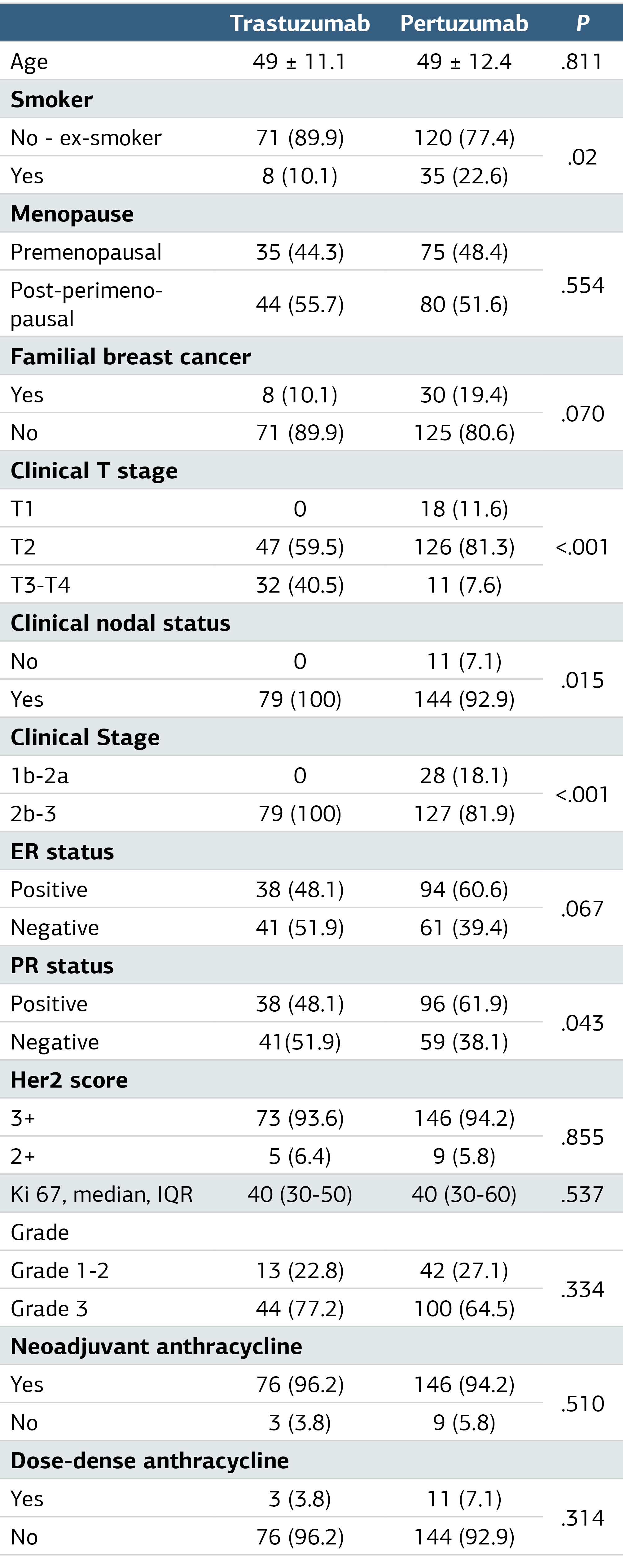
ER, Estrogen receptor; PR, Progesterone receptor.
Table 2. A Comparison of the Patients with pCR and Non-pCR According to Neoadjuvant Therapy
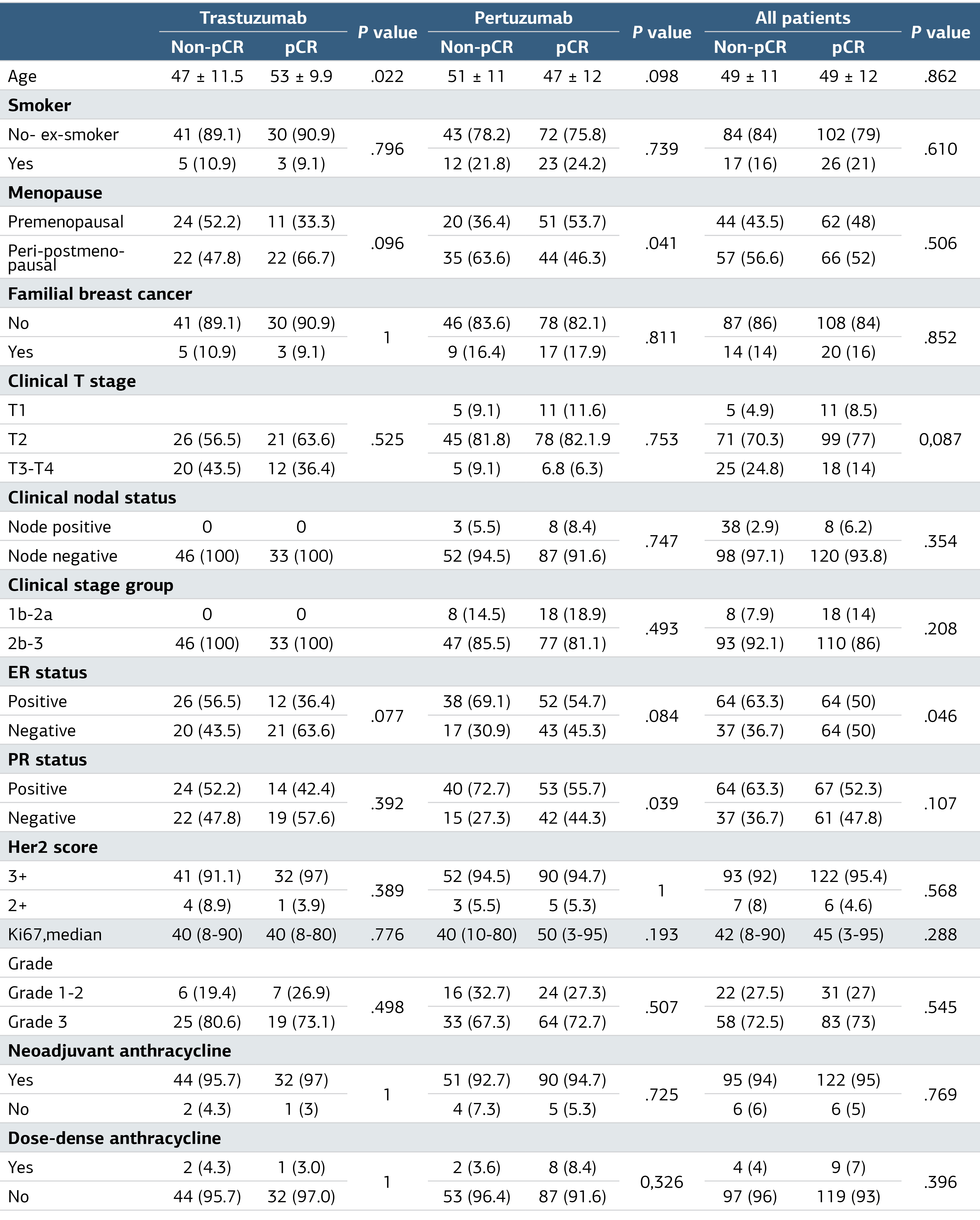
ER, Estrogen receptor; PR, Progesterone receptor.
Additional Information
Publisher’s Note
Bayrakol MP remains neutral with regard to jurisdictional and institutional claims.
Rights and Permissions

This work is licensed under a Creative Commons Attribution-NonCommercial 4.0 International License (CC BY-NC 4.0). To view a copy of the license, visit https://creativecommons.org/licenses/by-nc/4.0/
About This Article
How to Cite This Article
İlknur Deliktaş Onur, Hatice Gülgün Fırat, Elif Sertesen, Cengiz Karaçin, Öztürk Ateş. A single-center study of pertuzumab-trastuzumab chemotherapy versus trastuzumab-chemotherapy in neoadjuvant treatment of breast cancer. Ann Clin Anal Med 2024;15(11):794-798. doi:10.4328/ACAM.22331
Publication History
- Received:
- 18.07.2024
- Accepted:
- 19.08.2024
- Published Online:
- 17.09.2024
- Printed:
- 01.11.2024