
Abstract
AimIn this study, we aimed to investigate the relationship between Total IgE levels obtained during follow-up of asthma patients receiving moderate to high dose inhaled corticosteroid therapy with a pre-diagnosis of lower respiratory tract infection, and post-treatment, with infective parameters, hospitalization, and frequency of attacks.MethodsRetrospective analysis was conducted on 132 patients diagnosed with asthma, despite the use of moderate to high dose inhaled steroids, based on their medical history, pulmonary function tests, and laboratory investigations.ResultsThe frequency of Total IgE levels being 100 or higher in patients hospitalized in the last year and the frequency of decrease in Total IgE levels with a decrease in CRP levels were statistically significantly higher among the patients included in the study. In conclusion, the frequency of attacks and hospitalizations was statistically significant in patients with variable Total IgE levels.ConclusionWe observed statistically significant increase in Total IgE levels in patients followed with a preliminary diagnosis of lower respiratory tract infection. Additionally, a significant correlation was observed between elevated Total IgE levels and patients who experienced exacerbations within a year and those hospitalized due to asthma attacks. This suggests that Total IgE may be valuable both in predicting the severity of the disease and in assessing the risk of exacerbation within a year in asthma patients. Furthermore, the data in our study suggest that serum Total IgE levels may be valuable as a biomarker in patients with Asthma-COPD overlap.
Keywords
Introduction
Asthma is a heterogeneous disease characterized by chronic airway inflammation and variable airflow limitation. The clinical features, natural course, pathophysiological mechanisms, and treatment response vary among different asthma types. The best‑known endotype of asthma is Type 2 asthma, characterized by Th2 cytokines accompanying airway and peripheral blood eosinophilia.
IgE is a major immunoglobulin involved in allergic response and parasitic infections. Total and antigen‑specific IgE measurements assist in the diagnosis of allergic diseases. Although IgE levels are not specific for the diagnosis of asthma, they are a critical factor in the development of bronchial hyperreactivity in asthmatics.
In our study, we investigated the relationship between Total IgE and infectious parameters during follow‑up of asthma patients receiving medium‑ to high‑dose ICS therapy with a pre‑diagnosis of lower respiratory tract infection, as well as the relationship between Total IgE levels and asthma attacks and hospitalizations experienced in the last year.1-3
Materials and Methods
The inclusion criteria for the study were as follows: patients diagnosed with asthma who presented to the Chest Diseases Clinic of Bolu Abant Izzet Baysal University Training and Research Hospital, had symptoms despite using medium‑ to high‑dose inhaled steroids, had laboratory tests (complete blood count, CRP, Total IgE, control Total IgE) performed, and had chest X‑rays requested at the time of evaluation.
Exclusion criteria included those diagnosed with any rheumatological disease, those who received steroid treatment for any indication other than asthma, those diagnosed with any allergic disease other than asthma, those using anti‑IgE therapy, and those diagnosed with immunodeficiency.
This study is a retrospective cohort study. The study population consisted of patients who presented to the Chest Diseases Clinic of Bolu Abant Izzet Baysal University Training and Research Hospital between 01.01.2017 and 01.01.2021 and met the criteria.Ethical ApprovalThis study was approved by the Ethics Committee of Bolu Abant Izzet Baysal University (Date: 10.07.2023, Decision No: 2023/216).Statistical AnalysisCategorical variables were compared using the chi-square test or Fisher-Freeman-Halton test, as appropriate. A P value < .05 was considered statistically significant.Reporting GuidelinesThis study was reported in accordance with the STROBE guideline.
Results
The mean age of the patients included in the study was 63.53 ( ± 12.95) years. 62.12% of the participants (n = 82) were male. It was observed that 51.52% of the patients (n = 68) had a Total IgE value of 100 or higher, 75.76% (n = 100) had a CRP value of 5 mg/dL or higher, and 12.12% (n = 16) had an eosinophil count of 0.4 × 10³/µL or higher.
Radiological findings were present in 61.07% of the patients (n = 80) on Posterior‑Anterior chest X‑rays. 82.58% (n = 109) had obstructive respiratory function tests, 10.61% (n = 14) had normal results, and 4.55% (n = 6) had a restrictive pattern. It was determined that 52.27% of the patients (n = 68) were hospitalized, and 48.48% (n = 64) had asthma attacks. In 30.30% of the patients (n = 40), there was a decrease in Total IgE with a decrease in CRP levels. The percentage of patients evaluated as Asthma‑COPD Overlap (ACO) was 11.36% (n = 15).
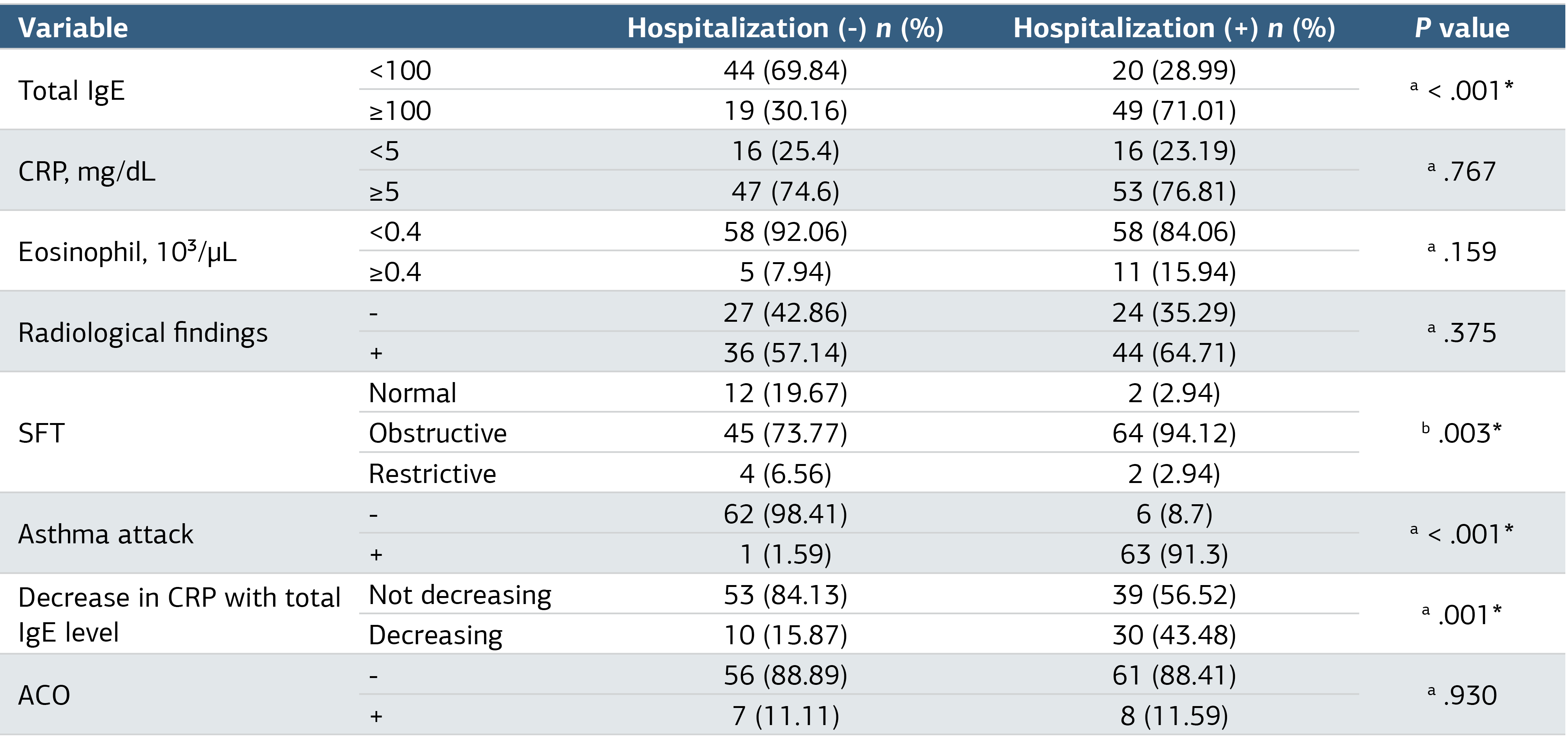
The frequency of patients with Total IgE levels ≥100 was statistically significantly higher among those with CRP levels ≥5 mg/dL (P < .01). The frequency of patients hospitalized for asthma attacks during one year, with Total IgE levels ≥100, the frequency of asthma attacks, and the frequency of a decrease in Total IgE with a decrease in CRP levels were statistically significantly higher (P < .01).
The frequency of patients hospitalized with obstructive spirometry findings was higher than those not hospitalized, while the frequency of having normal spirometry findings was lower. There was a statistically significant difference between the groups (P < .01) (Table 1).
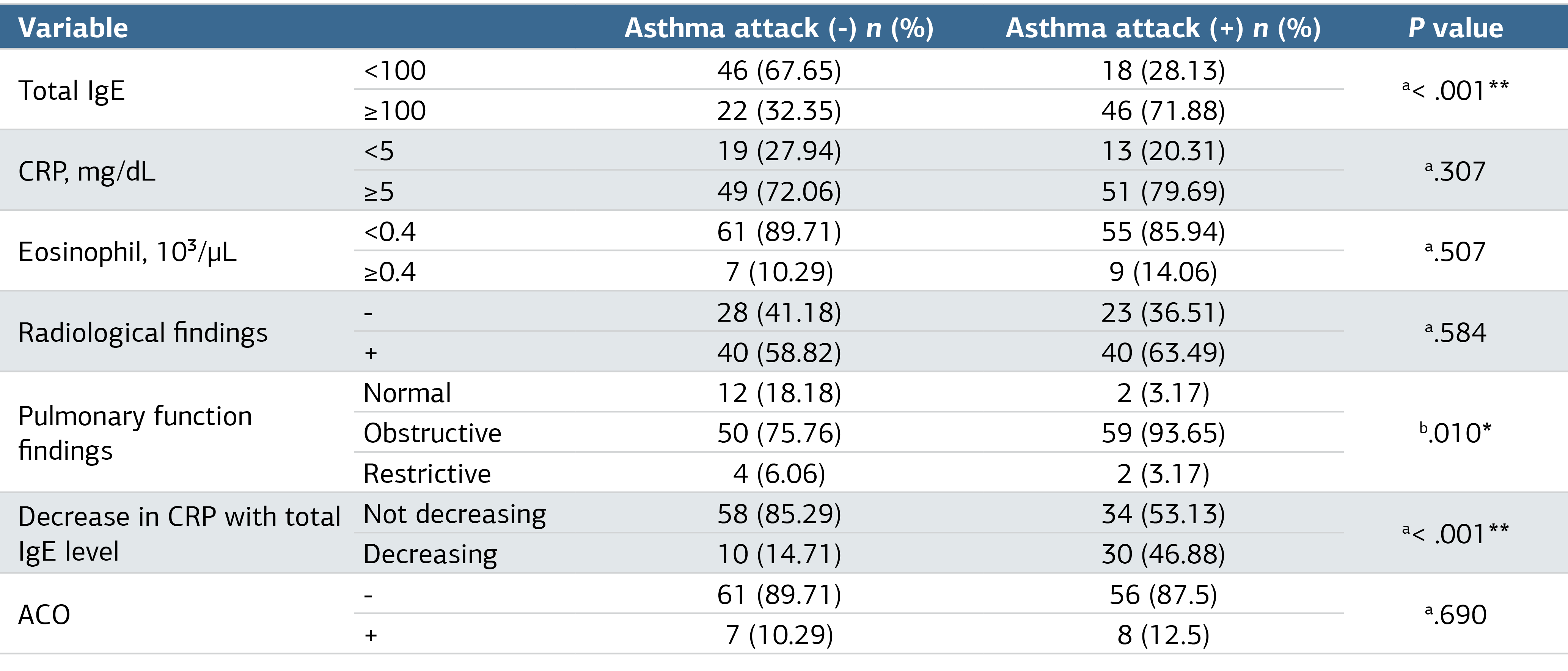
The frequency of patients experiencing attacks within the last year, with Total IgE levels ≥100, and the frequency of a decrease in Total IgE with a decrease in CRP levels were statistically significantly higher (P < .01). The frequency of patients experiencing attacks with an obstructive pattern in spirometry was higher than those without attacks, while the frequency of having a normal pattern was lower. There was a statistically significant difference between the groups (P < .01) (Table 2).
The frequency of Total IgE levels ≥100 in patients evaluated as Asthma‑COPD Overlap was statistically significantly higher than in patients not evaluated as Asthma‑COPD Overlap. The frequency of radiological findings in Posterior‑Anterior chest X‑rays of patients with CRP levels ≥5 mg/dL was statistically significantly higher compared to those with CRP levels <5 mg/dL (P < .01).
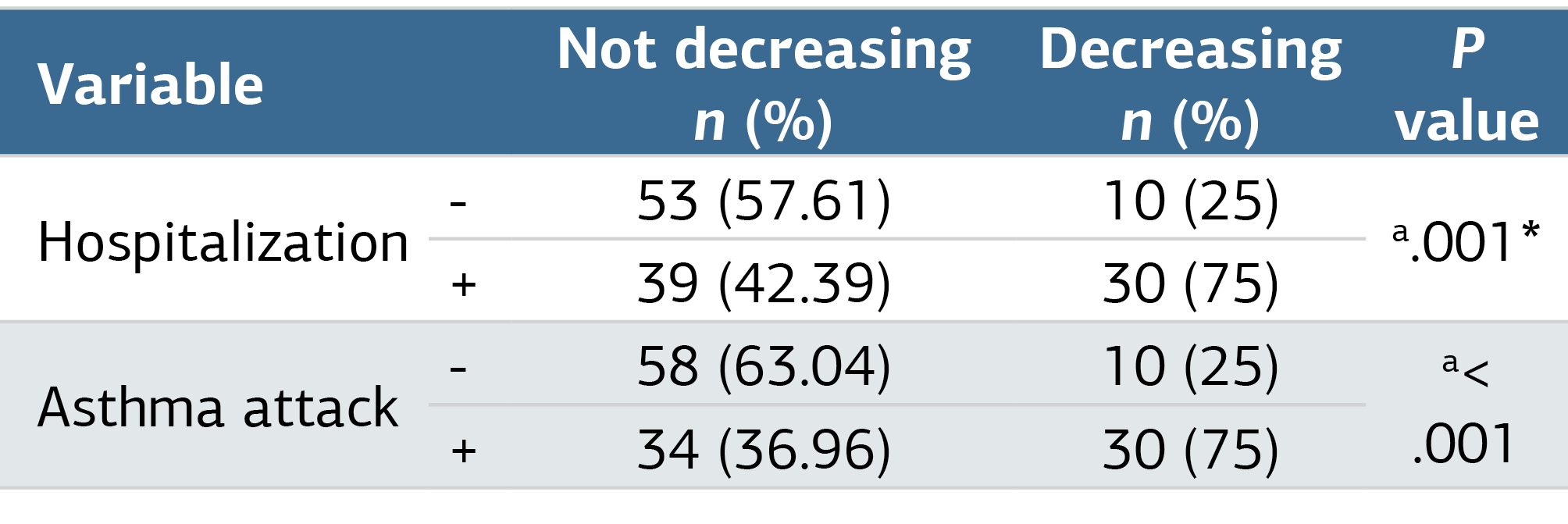
Patients with a decrease in CRP accompanied by a decrease in Total IgE were found to have a statistically significantly higher frequency of hospitalization and asthma attacks (P < .01) (Table 3).
Discussion
In our study, the symptoms, physical examination findings, and radiological evaluations of patients diagnosed with asthma and receiving medium‑ to high‑dose inhaled corticosteroid treatment were considered as a preliminary diagnosis of lower respiratory tract infection. According to the Turkish Thoracic Society Asthma guideline, asthma is reported to be more common in females compared to males in our country.4 However, in our study, the proportion of male participants was higher (62%). Additionally, the average age of asthma onset is reported to be 50 years, but the average age of our patients was 63. We believe that the distribution of gender and age in our study is related to our inclusion and exclusion criteria.
It was observed that some patients had elevated Total IgE levels. In studies conducted in the literature, serum Total IgE levels are reported to be elevated in adults with allergic asthma.5 Furthermore, elevated Total IgE levels have been associated with asthmatic patients.6
In spirometric evaluations, most patients had an obstructive pattern, though normal and restrictive patterns were also observed. This suggests that spirometry values in asthma patients can vary between obstructive and normal due to reversible airway obstruction. Restrictive spirometry findings may rarely be observed in advanced stages of the disease. A low FEV1 value under treatment (especially <60%) suggests that the patient is at risk for asthma attacks and persistent airflow limitation.
Among infective parameters, patients with CRP levels ≥5 mg/dL had elevated Total IgE levels. Patients who had attacks also had high Total IgE levels, and a decrease in Total IgE accompanied by a decrease in CRP. These results indicate that Total IgE levels may increase in relation to infections in asthma patients.
One study stated that atypical bacterial pneumonia pathogens play an important role in the pathogenesis of asthma, and concluded that *C. pneumoniae* infection can trigger IgE‑specific responses in asthmatics.7 In our study, we also observed a statistically significant elevation of Total IgE in patients followed up with a pre‑diagnosis of lower respiratory tract infection. With this result, we conclude that lower respiratory tract infections may lead to Total IgE elevation in asthma patients. However, due to not including microbiological culture evaluation, we cannot reach a conclusion associated with the pathogen.
Patients who experienced asthma attacks or were hospitalized in the last year showed a statistically significant frequency of Total IgE levels ≥100, and a frequency of decrease in Total IgE levels with a decrease in CRP. Similar evaluations have been reported in previous studies. In one study, increased Total IgE levels were found to have a negative correlation with lung function in asthma patients.8 Another study conducted in Spain reported no significant relationship between disease severity or degree of airflow limitation, but a higher percentage of patients in the severe asthma subgroup had IgE levels >400 IU/mL.5 In another study, the asthma control test score was significantly lower in patients with IgE increase or decrease compared to patients with unchanged IgE levels, and these patients experienced more acute exacerbations within one year.9 These results indicate that variable IgE levels over time are associated with poor asthma control.
In our study, a significant correlation was observed between increased Total IgE levels and patients experiencing attacks within one year. This suggests that Total IgE may be valuable both in predicting disease severity and assessing the risk of asthma attacks within one year. A similar situation was observed for patients hospitalized in the last year, and variable Total IgE levels in controls may be valuable in predicting hospitalization within one year.10
Limitations of the study include:
Inability to perform culture studies
Inability to perform procalcitonin studies
Low number of ACO patients
Limitations
The limitations of the study include the inability to perform culture studies, the inability to perform procalcitonin studies, and the low number of ACO patients.
Conclusion
Despite these limitations, the results of our study indicate that total IgE levels may be an important biomarker in asthma patients and may vary in relation to infections.
Declarations
Animal and Human Rights Statement
All procedures performed in this study were in accordance with the ethical standards of the institutional and/or national research committee and with the 1964 Helsinki Declaration and its later amendments or comparable ethical standards.
Informed Consent
Informed consent was waived due to the retrospective nature of the study.
Data Availability
The datasets used and/or analyzed during the current study are not publicly available due to patient privacy reasons but are available from the corresponding author on reasonable request.
Conflict of Interest
The authors declare that there is no conflict of interest.
Funding
None.
Abbreviations
ACO: Asthma-COPD overlap
COPD: Chronic obstructive pulmonary disease
CRP: C-reactive protein
FEV1: Forced expiratory volume in 1 second
ICS: Inhaled corticosteroid
STROBE: Strengthening the Reporting of Observational Studies in Epidemiology
References
- Gulfem EC. Asthma Diagnosis and Treatment Guide 2020 Update. Turkish Thoracic Society; 2020:38-75.
- Lambrecht BN, Hammad H. The immunology of asthma. Nat Immunol. 2015;16(1):45-56. doi:10.1038/ni.3049
- Wu LC, Zarrin AA. The production and regulation of IgE by the immune system. Nat Rev Immunol. 2014;14(4):247-259. doi:10.1038/nri3632
- Oğuz K, Metin A. The Turkish Thoracic Society, National Asthma Diagnosis and Treatment Guide. J Thorac. 2016;1(5):4-31.
- Davila I, Valero A, Entrenas LM, Valveny N, Herráez L. Relationship between serum total IgE and disease severity in patients with allergic asthma in Spain. J Investig Allergol Clin Immunol. 2015;25(2):120-127.
- Habib N, Pasha MA, Tang DD. Current understanding of asthma pathogenesis and biomarkers. Cells. 2022;11(17):2764. doi:10.3390/cells11172764
- Smith-Norowitz TA, Loeffler J, Huang Y, et al. Chlamydia pneumoniae immunoglobulin E antibody levels in patients with asthma compared with non-asthma. Heliyon. 2020;6(2). doi:10.1016/j.heliyon.2020.e03512
- Rath N, Raje N, Rosenwasser L. Immunoglobulin E as a biomarker in asthma. Immunol Allergy Clin North Am. 2018;38(4):587-597. doi:10.1016/j.iac.2018.06.007
- Tanaka A, Jinno M, Hirai K, et al. Longitudinal increase in total IgE levels in patients with adult asthma: an association with poor asthma control. Respir Res. 2014;15(1):144. doi:10.1186/s12931-014-0144-8
- Peng J, Wang M, Wu Y, Shen Y, Chen L. Clinical indicators for asthma-COPD overlap: a systematic review and meta-analysis. Int J Chron Obstruct Pulmon Dis. 2022;17:2567-2575. doi:10.2147/copd.s374079
Tables
Table 1. Comparison of Patients’ Laboratory and Disease Characteristics with Hospitalizations in the Last Year
a Ki kare test *P < .001,01 b Fisher-Freeman-Halton test.
Table 2. Comparison of Patients’ Laboratory and Disease Characteristics with Asthma Attack
a Ki kare test *P < .001,05 *P < .001,01 b Fisher-Freeman-Halton test.
Table 3. Comparison of Patients’ Hospitalization and Attack Characteristics with Decrease in CRP and Total IgE Reduction
a Ki kare test *P < .001,01.
Additional Information
Publisher’s Note
Bayrakol MP remains neutral with regard to jurisdictional and institutional claims.
Rights and Permissions

This work is licensed under a Creative Commons Attribution-NonCommercial 4.0 International License (CC BY-NC 4.0). To view a copy of the license, visit https://creativecommons.org/licenses/by-nc/4.0/
About This Article
How to Cite This Article
Orhan Kayakıran, Suat Konuk, Emine Özsarı. Relationship between inflammatory parameters and total IgE values in patients diagnosed with asthma. Ann Clin Anal Med 2024;15(11):799-802. doi:10.4328/ACAM.22345
Publication History
- Received:
- 29.07.2024
- Accepted:
- 02.09.2024
- Published Online:
- 03.10.2024
- Printed:
- 01.11.2024