
Abstract
IntroductionIn patients diagnosed with Dundar syndrome, the dysmorphic appearance of the face, muscle hypotension and kyphoscoliosis make anesthesia management important.Case PresentationPre-operative examination of patients is important in terms of accompanying diseases, necessary consultations and required examinations.ConclusionThe pre-surgical anesthesiologist should evaluate these findings in advance, which may lead to difficult mask ventilation and/or difficult intubation, and determine optimal airway management.
Keywords
Introduction
Dündar syndrome was first described in 1997 by Dundar and his colleagues.1 This syndrome is an autosomal recessive disease characterized by characteristics such as adhesion adduction of the thumb, crushed legs, kyphoscoliosis, joint instability, muscle hypotension, preferred front chamber retention, dysmorphic facial appearance.2,3 Heart, intestine, and kidney seizures can also be observed. In this case, we wanted to present preoperative evaluation of the Dundar syndrome patient and difficult airway management.
Case Presentation
A 19-year-old woman diagnosed with Dundar’s syndrome, ASAII class, was scheduled for rhinoplasty. During the preoperative examination, the patient was to have had multiple operations due to thumb-clup foot and retinal detachment due to her current illness, and had not encountered a complication. Although it was rare due to the characteristics of the syndrome, the patient was consulted with the relevant departments for the cause of the heart and kidney retention, and no additional problem was found. In the preoperative anesthesia examination, the Mallampati score was 2 for micrognathia, hand deformities and airway examination (Figure 1). The patient’s preoperative values were normal, and the patient was taken to the hospital with adequate periods of starvation. All the preparations were made, including videolaryngoscope, stylet, varied-dimensional endotracheal tubes and supraglottic airway devices (SGAs), considering it could be a difficult airway, difficult intubation before being taken to the operating room. Informed consent was obtained from the patient. The monitored patient’s peripheral saturation in room air was measured at 99%, pulse 80 bpm, and blood pressure 125/80 mmHg. After 3 minutes of 100% preoxygenization for general anesthesia induction, the patient was administered 1mg midazolam, 1mcg/kg fentanyl, 20mg arithmal, 2.5mg/kg propofol and 0.6 mg/kg rocuronium. The patient, who was unable to be injected with a Macintosh laryngoscope after an appropriate muscle relaxation period was expected, was initiated in a second trial with Mccoy and a difficult intubation bougie. Anesthesia was administered with an infusion of 40% oxygen, 60% air, sevoflurane (2 MAC) and remifentanil 0.3mcg/kg/min. After intubation, 1mg/kg methylprednisolone and 50mg pantoprazole were also administered intravenously. The patient, whose surgery duration was 1 hour and 40 minutes, was given 15mg/kg paracetamol and 1mg/kg tramadol intravenously as an analgesic and also an antiemetic just before waking up. 2mg/kg sugammadex was administered for antagonism of neuromuscular blockers. When the patient’s vital signs was stable, spontaneous breathing, and sufficient vigilance, the patient was taken to the postoperative care unit. The patient, who was followed in the recovery unit for 20 minutes, was sent to hospital room when Aldrete scored 9.Ethical ApprovalEthical approval was not required.
This case report has been prepared in accordance with the CARE guidelines.
Discussion
In patients diagnosed with Dündar syndrome, the dysmorphic appearance of the face, muscle hypotension and kyphoscoliosis make anesthesia management important. Pre-operative examination of patients is important in terms of accompanying diseases, necessary consultations and required examinations. Because Dundar’s syndrome is a very rare syndrome, there are few publications in the literature and there is no data on the administration of anesthesia. So we decided to apply general anesthesia based on the patient’s clinical condition and surgical procedure. In these patients, characteristic anomalies in the craniofascial region seen in these patients include small face and micrognathia, which affect the patient’s mask ventilation and intubation. The patient’s position may be difficult due to bone deformities, changes associated with kyphoscoliosis. The pre-surgical anesthesiologist should evaluate these findings in advance, which may lead to difficult mask ventilation and/or difficult intubation, and determine optimal airway management. Our patient had difficult intubation preparation because of narrow mouth, micrognathy, limited neck extension. In such patients with difficult airways, the success of intubation is proportional to the experience of the practising anesthesiologist. The patient is awakened by taking the necessary precautions and providing a good analgesia. Preparations must be made for a possible re-intubation, and alternative aircraft equipment must be provided.
It should not be forgotten that patients with Dündar syndrome have difficult airway, and the pre-surgical evaluation of the possible difficulties in the management of anesthesia should be complete and detailed. Alternative airway equipment must be available for difficult airway management. Preparation in patients with suspected difficult airways improves the success of intubation, while also reducing possible complications. Therefore, careful perioperative monitoring is required for the early detection and management of any possible complications that may occur in these patients.
Limitations
This report is limited by its single-case design, which restricts the generalizability of the findings.
Conclusion
The pre-surgical anesthesiologist should evaluate these findings in advance, which may lead to difficult mask ventilation and/or difficult intubation, and determine optimal airway management.
Declarations
Animal and Human Rights Statement
All procedures performed in this study were in accordance with the ethical standards of the institutional and/or national research committee and with the 1964 Helsinki Declaration and its later amendments or comparable ethical standards.
Informed Consent
Informed consent was obtained from the patient.
Data Availability
The datasets used and/or analyzed during the current study are not publicly available due to patient privacy reasons but are available from the corresponding author on reasonable request.
Conflict of Interest
The authors declare that there is no conflict of interest.
Funding
None.
Abbreviations
ASA: American Society of Anesthesiologists
SGA: Supraglottic airway device
References
- Dundar M, Demiryilmaz F, Demiryilmaz I, et al. An autosomal recessive adducted thumb-club foot syndrome observed in Turkish cousins. Clin Genet. 1997;51(1):61-64. doi:10.1111/j.1399-0004.1997.tb02417.x
- Uzak AS, Fryns JP, Dundar M. Syndromes presenting adducted thumb with/without clubfoot and Dundar syndrome. Genet Couns. 2014;25(2):159-169.
- Dündar M, Müller T, Zhang Q, et al. Loss of dermatan-4-sulfotransferase 1 function results in adducted thumb-clubfoot syndrome. Am J Hum Genet. 2009;85(6):873-882. doi:10.1016/j.ajhg.2009.11.010
Figures
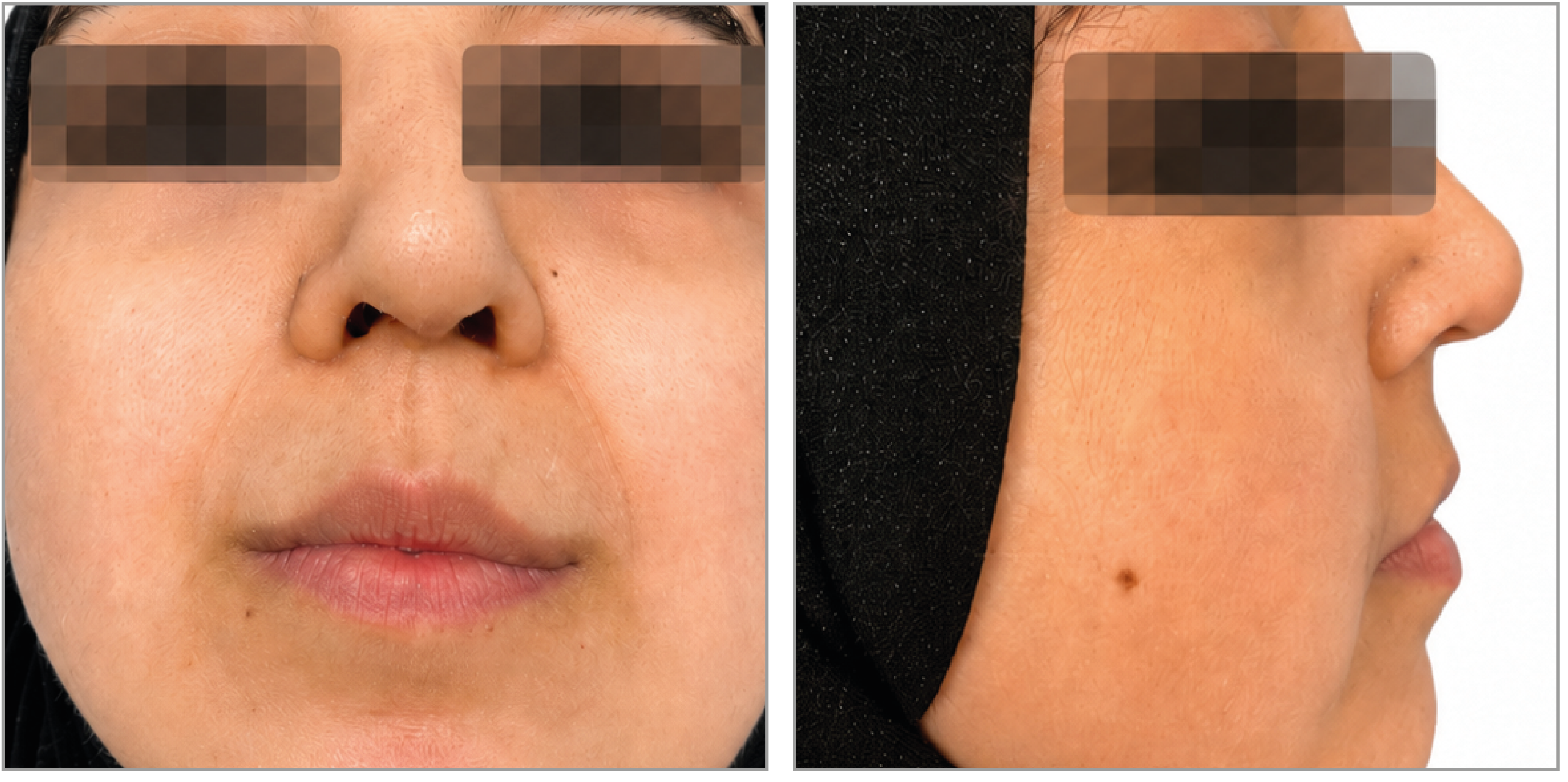
Figure 1. The patient’s front and side appearance
Additional Information
Publisher’s Note
Bayrakol MP remains neutral with regard to jurisdictional and institutional claims.
Rights and Permissions

This work is licensed under a Creative Commons Attribution-NonCommercial 4.0 International License (CC BY-NC 4.0). To view a copy of the license, visit https://creativecommons.org/licenses/by-nc/4.0/
About This Article
How to Cite This Article
Ferah Sarıca, Ali Akdoğan. Anesthesia management in patients with dundar syndrome: A Case Report. Ann Clin Anal Med 2025;16(Suppl 2):112-114. doi:10.4328/ACAM.22369
Publication History
- Received:
- 14.08.2024
- Accepted:
- 24.09.2024
- Published Online:
- 27.11.2024
- Printed:
- 25.05.2025