
Abstract
AimThe continuity of the kinetic chain, stomatognathic functions and Temporomandibular Disorders (TMD) are interrelated, but the relationship between them and core stabilization has yet to be known. To investigate the relationship between TMD, forward head posture, tongue strength, and endurance with core stabilization.MethodsThis study was conducted on university students aged 18-31. In the evaluation were used that; “Fonseca Anamnestic Index (FAI)” for TMD, “Diagnostic Criteria for Temporomandibular Disorders Examination Form” for pain-free maximum mouth opening (MMO), presence of sound in temporomandibular joint movements, and palpation parameters of the temporomandibular joint and surrounding muscles, “Craniovertebral Angle (CVA)” for forward head posture, “Iowa Oral Performance Instrument” for tongue strength and endurance, “Trunk Flexor Endurance Test and Biering Sorenson Test” for static endurance of the core muscles, and “Sit-ups Test and Modified Push-ups Test” for dynamic endurance of the core muscles.ResultsSeventy university students (mean age = 20.77 ± 2.22 years) participated in the study. There was a difference between participants with/without TMD in terms of gender, pain-free MMO, tongue endurance, CVA, and FAI (p<0.05). CVA for FAI (p=0.004), CVA, tongue endurance for the Sit-ups Test (p=0.001, p=0.044 respectively), and tongue endurance for the Modified Push-up Test (p=0.012) were statistically significant predictors.ConclusionThere was no direct relationship between TMD and core stabilization. The performance of global core muscles decreased with the increase in TMDrelated forward head posture and a decrease in tongue endurance. Evaluating individuals with TMD holistically may be necessary for successful rehabilitation.
Keywords
Introduction
Temporomandibular Disorders (TMD) is defined as a neuromuscular and musculoskeletal pathology resulting from disruption of physiological harmony in the temporomandibular joint (TMJ) and related structures and includes various clinical problems involving the stomatognathic system.1 According to the current literatüre; it is recommended to develop a broad-based evaluation protocol including objective measurements in individuals with TMD.2 In light of this suggestion, it has been reported in recent studies that tongue muscle strength decreases in individuals with TMD, and it has been emphasized that it should be included in the evaluation program.3 Moreover, it is known that cervical postural changes accompany TMD, and the forward head posture affects the position of the mandible and causes TMD.4
The continuity of the kinetic chain is essential for the biomechanically and kinesiologically correct patterns of stomatognathic functions during activities of daily living. The kinetic chain is a system that allows different body parts to coordinately generate power, accumulate and transfer force to the final connection point through muscle activity and body position. A solid core must create a stable body to ensure minimal stress in the kinetic chain, maximal power generation, and proper power transfer, hence the need for core stabilization.5 Core muscles are divided into local and global muscle groups according to their role in stabilization. The local musculature consists of deep muscles that stabilize the trunk and control the intervertebral movements of the spinal segments. The global musculature includes the larger, surface-level muscles of the trunk. Its primary role is to facilitate trunk movement and alleviate external loads experienced during daily activities by transferring these loads to the local muscles. When the muscles responsible for stabilizing the core are weak and lack endurance, it places undue stress on the passive structures of the spine, leading to pain and decreased functional performance in other areas of the body.6
There are limited studies in the literature investigating the relationship between TMD and body posture and/or core stabilization.7-11 These studies show the relationship between general body posture, postural stability, and balance with TMJ functions in TMJ pathologies or healthy individuals. However, studies have yet to be found to investigate forward head posture, tongue strength and endurance, and core muscle performance, which are part of a holistic approach to TMD. Therefore, this study examined the relationship between TMD, forward head posture, tongue strength, and endurance with core stabilization.
Materials and Methods
This cross-sectional study was conducted with Bandirma Onyedi Eylul University students between September 2022 and February 2023. Participants were invited to study with flyers and class announcements. University students aged 18 and 31 were included. Exclusion criteria included having a non-reducible disc problem, having surgery related to the spine, abdomen and/or TMD, history of trauma, history of cancer, presence of neurological issues, presence of congenital anomaly, presence of the musculoskeletal problems, presence of systemic disease, presence of facial paralysis, and receiving any treatment related to the spine and TMJ in less than six months. All participants were determined to have at least 28 permanent teeth and were evaluated using the Diagnostic Criteria for Temporomandibular Disorders (DC/TMD) and sedentary without regular exercise habits. 70 volunteer healthy university students were included in our study, taking into dropouts. According to the TMD, two groups were formed: those who scored less than 25 points on the Fonseca Anamnestic Index (FAI) and those who scored 25 points or more.Outcome MeasurementsTMD was evaluated with FAI. The questionnaire consists of ten questions about pain in TMJ, head, and joints. It includes questions about joint, head, and neck pain, pain during masticatory activity, parafunctional habits, reduced joint motion, impaired occlusion, and emotional stress. A score of 25 and above was accepted as the presence of TMD.12 The Turkish validity and reliability of the FAI have been established.13
The presence of sound in TMJ movements and palpation parameters of the TMJ and surrounding muscles were recorded using the DC/TMD Examination Form.14 The pain-free MMO was recorded using a 15 cm ruler. Joint clicks and crepitation during mouth opening and closing were recorded. In muscle palpation, pain in the temporal muscle and the masseter muscle was evaluated bilaterally.15
Forward head posture was evaluated by CVA using a goniometer. CVA was measured in degrees, such as the angle between the horizontal plane, the seventh cervical vertebra, and the ear hole.16
Tongue strength and endurance were evaluated with IOPI (Medical LLC, Redmond, WA), a clinically validated and reliable.3 The evaluation was performed from the anterior and posterior sides of the tongue. For the pressure of the anterior tongue region, the bulb was placed 10 mm anterior to the dorsum of the tongue on the anterior hard palate; for the pressure of the posterior tongue region, the bulb was placed anterior to the posterior hard palate. Participants were instructed to press the bulb as hard as possible against the tongue toward the hard palate for 2 sec. The maximum force (Pmax) was recorded as the highest value in three trials. For tongue endurance measurement, 50% of the Pmax value of the participants was calculated. At this value, they were instructed to press the bulb with their tongue in the direction of the hard palate as much as they could, and the time they could hold it was recorded using a stopwatch.17
Static endurance of the local core muscles was evaluated with The Trunk Flexors Endurance Test and the Biering Sorenson Test. The time the individuals maintained their position was recorded in seconds (sec) using a stopwatch. In the Trunk Flexors Endurance Test, the individuals were positioned with the trunk at 60°, knees and hips at 90° flexion position, and the test was terminated when the trunk flexion of 60° was disrupted. In the Biering Sorenson Test, participants were instructed to position their trunk horizontally while lying face down, ensuring that their ankles, knees, hips, and the upper edge of the iliac crest were in contact with the testing surface. Meanwhile, their knee and hip joints were fully extended. The test ended when this position was no longer maintained.18
Dynamic endurance of the global core muscles was evaluated with The Sit-ups and the Modified Push-ups Tests. The number of times the individuals could perform the movement for 30 sec was recorded. In the Sit-ups Test, individuals were asked to perform trunk flexion while supine, with knees flexed and feet stabilized. In the Modified Push-ups Test, the individuals were asked to lift the head, shoulders, and trunk off the floor with the elbows in full extension from the prone position with knees on the floor, legs flexed, trunk on the floor, elbows flexed, and next to the trunk.18Ethical ApprovalThis study was approved by the Ethics Committee of Bandirma Onyedi Eylul University Health Sciences Non-Interventional Research (Date: 11.03.2022, Decision No: 2022-18). The clinical trial number is NCT06034756. All participants who agreed to participate in the study signed the Informed Consent Form.Statistical AnalysisStatistical Package for Social Sciences (SPSS) Version 24.0 (SPSS Inc., Chicago, IL, USA) statistical program was used to analyze the data. The data obtained were presented with descriptive analyses, and categorical variables were presented as frequency (n) and percentage (%). Continuous variables were presented as mean ± standard deviation (SD) for parametric tests and median (minimum-maximum) for non-parametric tests. The conformity of the variables to normal distribution was analyzed using the Shapiro-Wilk Test. Group differences were analyzed using Mann-Whitney U, Independent Samples t, and Chi-Square tests. Pearson Correlation Analysis evaluated the relationship between the variables. The determinants of FAI, Sit-ups Test, and Modified Push-ups Test were analyzed using multiple regression analysis (Enter method). The fit of the analyzed models was tested with Durbin Watson. The standardized regression coefficient Beta (β) determined the order of importance of the determinants. The statistical significance level was considered as p<0.05.Reporting GuidelinesThe study was reported in accordance with STROBE.
Results
Ninety-four individuals were included in the study. For the reasons stated in Figure 1, 24 individuals were excluded from the study, and 70 individuals were included. The posthoc power of the study was calculated as 0.891 using the effect size (0.79) obtained from the mean ± SD of CVA between the two groups. Most of the participants included in our study were female (78.6%) university students, and the mean age of the participants was 20.77 ± 2.22 years. There was a statistically significant difference between participants <25 and >25 according to pain-free MMO, tongue endurance, CVA, and FAI (p<0.05) (Table 1). In correlations analysis, there was a correlation between pain- free MMO and Modified Push-ups Test (r = 0.239), CVA and Sit- ups Test (r = 0.371), and CVA and FAI (r = -0.345). There was a correlation between tongue endurance and the Sit-ups Test (r = 0.298) and between tongue endurance and the Modified Push-ups Test (r = 0.350) (p<0.05). There was also a correlation between FAI and tongue strength (r = -0.263) and between FAI and tongue endurance (r = -0.236) (p<0.05) (Table 2). The determinants of FAI, sit-ups test, and modified push-ups test of individuals were analyzed using multiple regression analysis. The model for the effect of TMD-related tongue strength and endurance, CVA, and pain-free MMO data on FAI was significant, with an explanatory power of 19.7%. CVA was a statistically significant predictor variable on FAI (p=0.004). The model for the effect of FAI and related factors on the sit-up test was significant, with an explanatory power of 17.1%. CVA and tongue endurance were statistically significant predictor variables on the Sit-ups Test (p=0.001, p=0.044, respectively). The model for the effect of FAI and related factors on the Modified Push-ups Test was significant, with an explanatory power of 11.2%. Tongue endurance was a statistically significant predictor variable on the Modified Push-ups Test (p=0.012) (Table 3).
Discussion
This study investigated the relationship between TMD, forward head posture, tongue strength and endurance with core stabilization. Although there was no direct relationship between TMD and core stabilization, it was found that the performance of global core muscles decreased with an increase in TMD-related forward head posture and a decrease in tongue endurance.
TMD has a multifactorial structure; current literature suggests that accompanying pains in individuals with TMD, especially spinal pain, may be due to body imbalance. TMD affects whole- body functions such as postural asymmetry, foot center of pressure, body sway, and spinal curvature.19 Our study did not find a relationship between the local core system and intervertebral movements. Still, we observed a relationship between the global core system and functional body movements. The lack of involvement of the local musculoskeletal system is thought to be because the participants were young and healthy. In a study supporting us, no statistically significant difference was found between Pilates and control groups for abdominal strength, trunk flexor endurance, and trunk extensor endurance in pre and post-measurements, and it was reported that future studies with a larger sample, including people who may be symptomatic are needed.20
Our study found that the performance of global core muscles decreased with the increase in TMD-related forward head posture. TMD-related, the most common postural abnormality is forward head posture. This posture is thought to pull the mandible backward due to tension in the suprahyoid muscles and cause TMD.4 At the same time, it has been stated that pain, headache, speech and swallowing problems, disorders in tongue motor movements, and incoordination may develop in the clinical picture due to neuro-vegetative reactions due to the anterior tilt of the head.21 In our study, we evaluated forward head posture by measuring the CVA. A CVA of less than 50° is considered an anterior tilt of the head.21 The mean CVA value of the study participants was 47.98 (5.93)°, which is lower than 50°. As stated in the literature, we can attribute this situation to individuals studying in incorrect posture or using technological devices in incorrect posture.21 In addition, our study found that TMD increased as the anterior tilt of the head increased, and CVA was a predictor variable in TMD. Additionally, CVA was a statistically significant predictor of the Sit-ups Test. It can be said that forward head posture and decreasing CVA affect the flexor core muscles that provide dynamic endurance and cause performance loss. This situation can be explained by compensation in the lower spine region due to forward head posture and low CVA values.22
Our study found that the performance of global core muscles decreased with a decrease in TMD-related tongue endurance and that tongue endurance was a statistically significant predictor of the Sit-ups Test and Modified Push-Up Test. The tongue, one of the components of the stomatognathic system, plays an important role in chewing and swallowing.23 In studies, tongue strength in a general population was determined to be 40-80 kPa, with an average of 63 kPa. The average duration of tongue endurance is 30-35 seconds.24 In our study, the mean anterior tongue strength of the individuals was 49.08 (9.84) kPa, which was within the general population but lower than the average. The mean tongue endurance values of the individuals were 23.64 (8.21) sec, which was below the average. The low tongue strength and endurance of the individuals in our study were thought to be due to most of the individuals having TMD.
Limitations
Our study had some limitations. The most important limitation was the unequal gender distribution. The second limitation is that we evaluated posture only with CVA and did not evaluate general body posture to evaluate spinal compensations. The third limitation was that there were no dentists among the authors in the study team.
Conclusion
It was found that TMD was highly prevalent in young and healthy individuals. Although there was no direct relationship between TMD and core stabilization, it was found that the performance of global core muscles decreased with an increase in TMD-related forward head posture and a decrease in tongue endurance. In the clinical evaluation of individuals diagnosed with TMD, it may be essential to evaluate forward head posture, tongue strength, endurance, and core muscles with a holistic perspective to increase rehabilitation success. In future studies, the relationship between TMD and core stabilization should be evaluated in individuals diagnosed with TMD, classified according to the research diagnostic criteria for TMD, and assessed in a broader age range. TMD should also be investigated in different study groups affected by core stabilization.
Declarations
Animal and Human Rights Statement
All procedures performed in this study were in accordance with the ethical standards of the institutional and/or national research committee and with the 1964 Helsinki Declaration and its later amendments or comparable ethical standards.
Informed Consent
Written informed consent was obtained from all participants prior to inclusion in the study.
Data Availability
The datasets used and/or analyzed during the current study are not publicly available due to patient privacy reasons but are available from the corresponding author on reasonable request.
Conflict of Interest
The authors declare that there is no conflict of interest.
Funding
None.
Abbreviations
CVA: Craniovertebral Angle
DC/TMD: Diagnostic Criteria for Temporomandibular Disorders
FAI: Fonseca Anamnestic Index
IOPI: Iowa Oral Performance Instrument
MMO: Maximum Mouth Opening
SD: Standard Deviation
TMD: Temporomandibular Disorders
TMJ: Temporomandibular Joint
References
- Minervini G, Franco R, Marrapodi MM, Fiorillo L, Cervino G, Cicciù M. Prevalence of temporomandibular disorders in children and adolescents evaluated with diagnostic criteria for temporomandibular disorders: a systematic review with meta-analysis. J Oral Rehabil. 2023;50(6):522-530. doi:10.1111/joor.13446
- Gilheaney Ó, Stassen LFA, Walshe M. The epidemiology, nature and impact of eating and swallowing problems in adults presenting with temporomandibular disorders. Cranio. 2022;40(6):476-484. doi:10.1080/08869634.2020.1781453
- Rosa RR, Bueno M da RS, Migliorucci RR, Brasolotto AG, Genaro KF, Berretin-Felix G. Tongue function and swallowing in individuals with temporomandibular disorders. J Appl Oral Sci. 2020;28:e20190355. doi:10.1590/1678-7757-2019-0355
- Tomás J, Castillo C, Villarroel G, Giner Á, Felipe N. Efecto del síndrome de cabeza adelantada en el desarrollo de trastornos temporomandibulares. Rev Cient Odontol (Lima). 2023;10(4).
- Oliver GD, Washington JK, Barfield JW, Gascon SS, Gilmer G. Quantitative analysis of proximal and distal kinetic chain musculature during dynamic exercises. J Strength Cond Res. 2018;32(6):1545-1553. doi:10.1519/jsc.0000000000002036
- de Bruin M, Coetzee D, Schall R. The relationship between core stability and athletic performance in female university athletes. S Afr J Sports Med. 2021;33(1). doi:10.17159/2078-516x/2021/v33i1a10825
- Nota A, Tecco S, Ehsani S, Padulo J, Baldini A. Postural stability in subjects with temporomandibular disorders and healthy controls: a comparative assessment. J Electromyogr Kinesiol. 2017;37:21-24. doi:10.1016/j.jelekin.2017.08.006
- Ries LGK, Bérzin F. Analysis of the postural stability in individuals with or without signs and symptoms of temporomandibular disorder. Braz Oral Res. 2008;22(4):378-383. doi:10.1590/s1806-83242008000400016
- El Zoghbi A, Halimi M, Hobeiche J, Haddad C. Effect of occlusal splints on posture balance in patients with temporomandibular joint disorder: a prospective study. J Contemp Dent Pract. 2021;22(6):615-619. doi:10.5005/jp-journals-10024-3094
- Oltramari-Navarro PV, Yoshie MT, Silva RA, et al. Influence of the presence of temporomandibular disorders on postural balance in the elderly. Codas. 2017;29(2). doi:10.1590/2317-1782/20172016070
- Perinetti G. Temporomandibular disorders do not correlate with detectable alterations in body posture. J Contemp Dent Pract. 2007;8(5):60-67. doi:10.5005/jcdp-8-5-60
- Yap AU, Zhang MJ, Lei J, Fu KY. Diagnostic accuracy of the short-form Fonseca Anamnestic Index in relation to the diagnostic criteria for temporomandibular disorders. J Prosthet Dent. 2022;128(5):977-983. doi:10.1016/j.prosdent.2021.02.016
- Kaynak BA, Taş S, Salkın Y. The accuracy and reliability of the Turkish version of the Fonseca Anamnestic Index in temporomandibular disorders. Cranio. 2023;41(1):78-83. doi:10.1080/08869634.2020.1812808
- Schiffman E, Ohrbach R, Truelove E, et al. Diagnostic criteria for temporomandibular disorders for clinical and research applications: recommendations of the International RDC/TMD Consortium Network and Orofacial Pain Special Interest Group. J Oral Facial Pain Headache. 2014;28(1):6-27. doi:10.11607/jop.1151
- Okeson JP, ed. Management of Temporomandibular Disorders and Occlusion. 8th ed. Elsevier; 2019:223-260.
- Diab AA, Moustafa IM. The efficacy of forward head correction on nerve root function and pain in cervical spondylotic radiculopathy: a randomized trial. Clin Rehabil. 2012;26(4):351-361. doi:10.1177/0269215511419536
- Solomon NP, Munson B. The effect of jaw position on measures of tongue strength and endurance. J Speech Lang Hear Res. 2004;47(3):584-594.
- Waldhelm A, Li L. Endurance tests are the most reliable core stability related measurements. J Sport Health Sci. 2012;1(2):121-128. doi:10.1016/j.jshs.2012.07.007
- Sforza C, Tartaglia GM, Solimene U, Morgun V, Kaspranskiy RR, Ferrario VF. Occlusion, sternocleidomastoid muscle activity, and body sway: a pilot study in male astronauts. Cranio. 2006;24(1):43-49. doi:10.1179/crn.2006.008
- Donahoe-Fillmore B, Hanahan NM, Mescher LM, Clapp DE, Addison NR, Weston CR. The effects of a home Pilates program on muscle performance and posture in healthy females: a pilot study. J Womens Health Phys Therap. 2007;31(2):6-11. doi:10.1097/01274882-200731020-00002
- von Piekartz H, Lüdtke K. Effect of treatment of temporomandibular disorders in patients with cervicogenic headache: a single-blind, randomized controlled study. Cranio. 2011;29(1):43-56. doi:10.1179/crn.2011.008
- Hürer C, Angın E, Tüzün EH. Effectiveness of clinical Pilates and home exercises in sagittal cervical disorientation: randomized controlled study. J Comp Eff Res. 2021;10(5):365-380. doi:10.2217/cer-2020-0186
- Youmans SR, Stierwalt JAG. Measures of tongue function related to normal swallowing. Dysphagia. 2006;21(2):102-111. doi:10.1007/s00455-006-9013-z
- Youmans SR, Youmans GL, Stierwalt JAG. Differences in tongue strength across age and gender: is there a diminished strength reserve? Dysphagia. 2009;24(1):57-65. doi:10.1007/s00455-008-9171-2
Tables
Table 1. Comparison of descriptive and clinical features of participants according to the presence of TMD
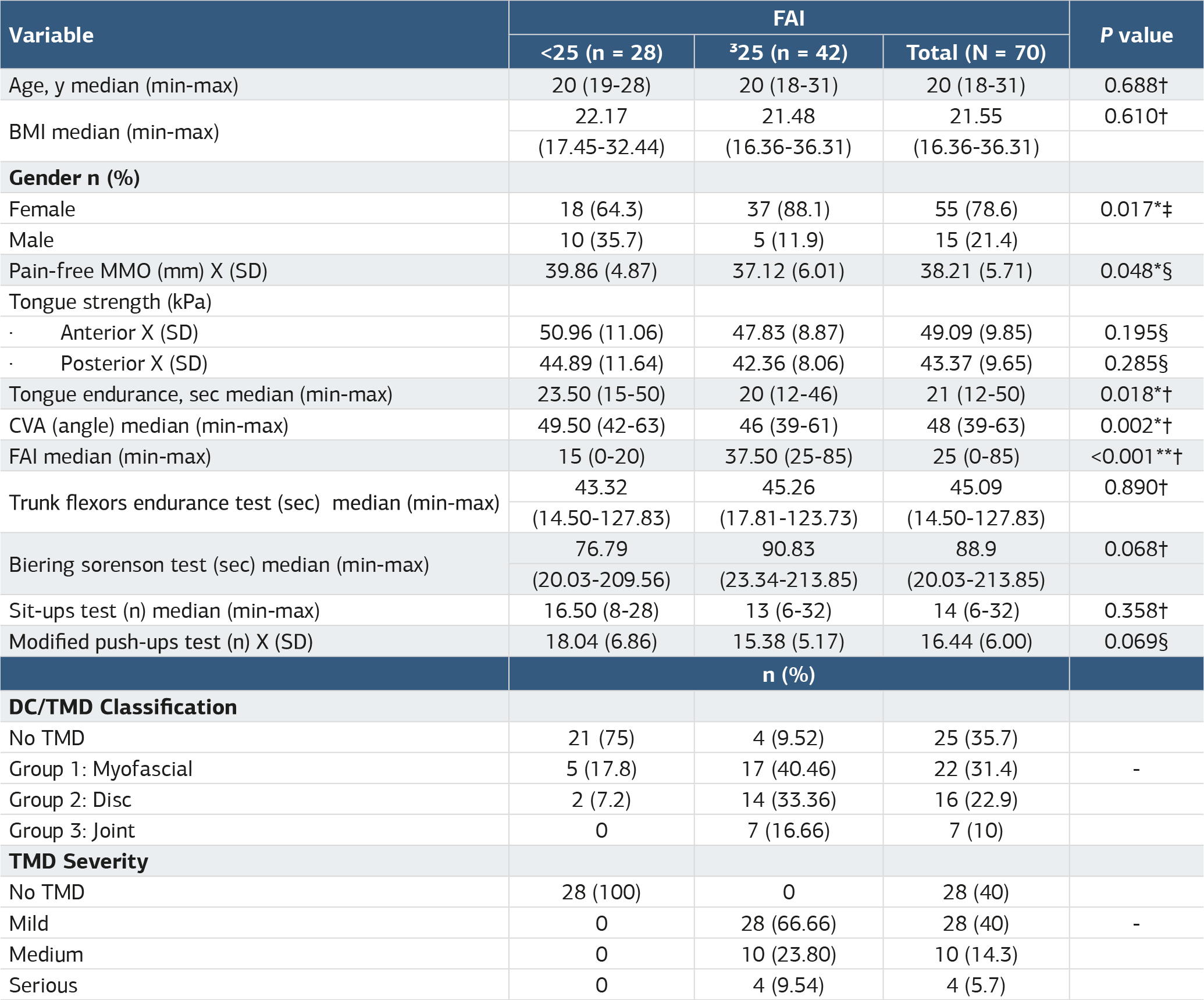
†=Mann-Whitney U Test, ‡=Chi-Square Test, §=Independent Samples T-Test, X=Mean, SD=Standard Deviation, Min: Minimum, Max: Maximum, BMI=Body Mass Index, FAI=Fonseca Anamnestic Index, MMO= Maximum Mouth Opening, CVA=Craniovertebral Angle, DC/TMD= Diagnostic Criteria for Temporomandibular Disorders, TMD= Temporomandibular Disorders, *=p
Table 2. The correlation between TMD and TMD-related factors, and core stabilization

FAI= Fonseca Anamnestic Index, MMO= Maximum Mouth Opening, CVA=Craniovertebral Angle, TMD= Temporomandibular Disorders, *=p
Table 3. The results of multiple regression analyses
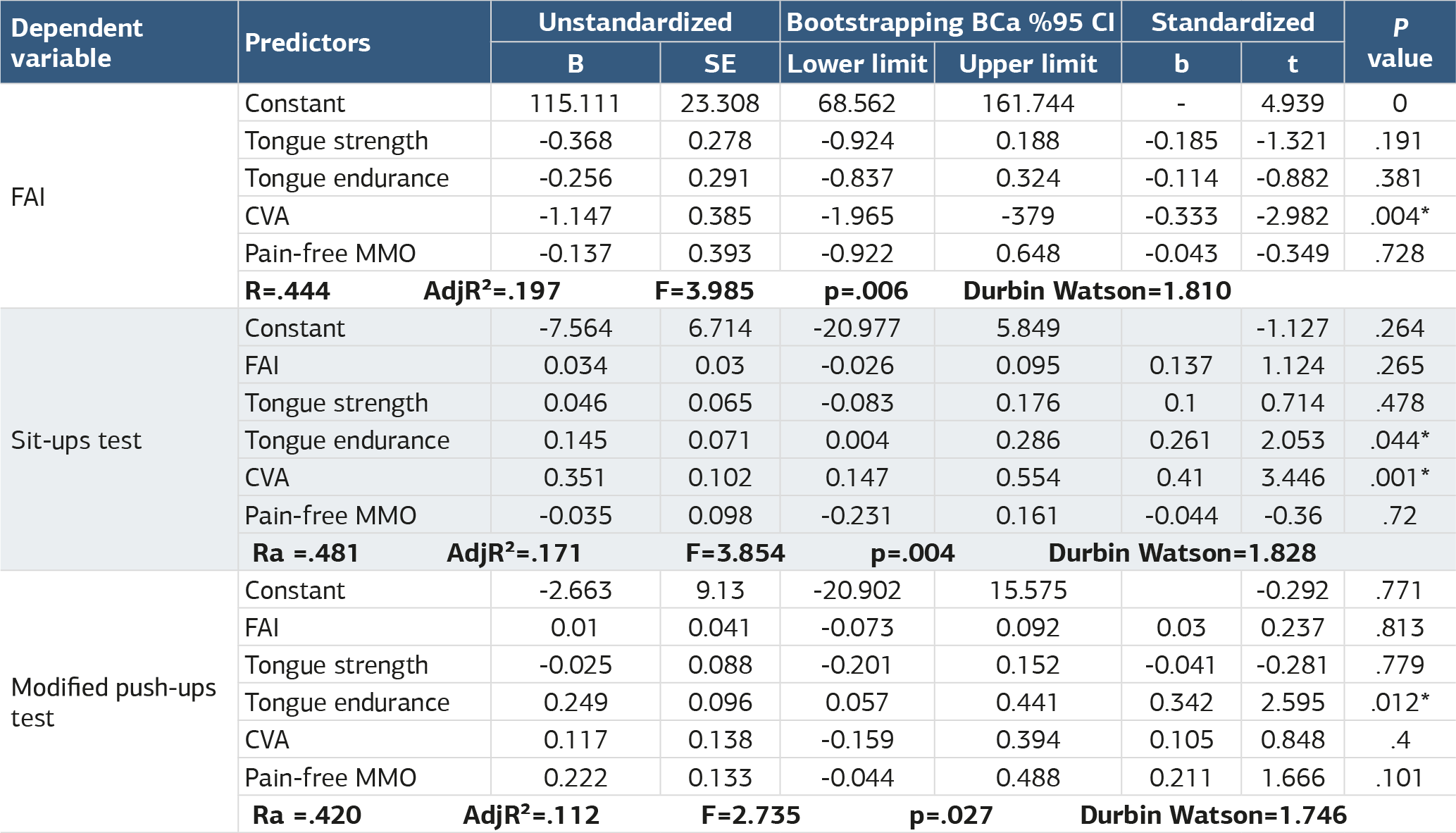
FAI= Fonseca Anamnestic Index, CVA=Craniovertebral Angle, MMO= Maximum Mouth Opening, *=p
Figures

Figure 1. The flow chart of the study
Additional Information
Publisher’s Note
Bayrakol MP remains neutral with regard to jurisdictional and institutional claims.
Rights and Permissions

This work is licensed under a Creative Commons Attribution-NonCommercial 4.0 International License (CC BY-NC 4.0). To view a copy of the license, visit https://creativecommons.org/licenses/by-nc/4.0/
About This Article
How to Cite This Article
Hazel Çelik Güzel, Şule Keçelioğlu, Burçin Akçay, Ebru Kaya Mutlu. Do temporomandibular disorders, forward head posture, tongue strengthand endurance affect core stabilization? a cross-sectional study. Ann Clin Anal Med 2025;16(1):41-46. doi:10.4328/ACAM.22381
Publication History
- Received:
- 11.08.2024
- Accepted:
- 21.10.2024
- Published Online:
- 25.11.2024
- Printed:
- 01.01.2025