
Abstract
AimThe incidence of other autoimmune diseases is higher in Type 1 Diabetes Mellitus (T1DM). Autoimmune thyroiditis and celiac disease often accompany T1DM. The aim of this study was to determine how frequently autoimmune thyroiditis and celiac disease occur at the time of diagnosis and during follow-up in T1DM pediatric patients.MethodsSixty pediatric patients were included in the study. As laboratory parameters, thyroid function tests (fT4, TSH), Anti-thyroid peroxidase antibody (a-TPO), serum thyroglobulin antibody (a-TG), tissue transglutaminase antibodies (TGA), islet cell antibody, anti insulin antibodies and HbA1c levels were evaluated.ResultsThe average diabetes duration of the patients was 3.8 ± 3.2 years and the mean HbA1c value was 9.02% ± 2.18. In the T1DM cases, 36 of the 60 patients (60%) tested positive for any of the DM antibodies. TPO antibodies were found to be positive in 18 of the 60 patients (30%). Of these 18 patients, 15 were female (83.3%) and 3 were male (16.7%). TPO antibody positivity was statistically higher in females. All patients with positive TPO antibodies were diagnosed with autoimmune thyroiditis. TG antibodies were found to be positive in 9 of the 60 patients (15%), 8 of whom were female (88.8%) and 1 was male (11.2%). Tissue transglutaminase IgA antibodies were positive in 6 of the 60 patients (10%). Three of these patients (all of whom were female) were diagnosed with celiac disease.ConclusionOur study suggested that children diagnosed with type 1 diabetes should be followed up in terms of autoimmune thyroiditis and celiac disease.
Keywords
Introduction
Diabetes mellitus is a chronic endocrine and metabolic syndrome characterized by hyperglycemia. There are two main types of diabetes mellitus. Type 1 Diabetes Mellitus (T1DM), also known as “insulin-dependent Type 1 DM”, is characterized by a lack of insulin hormone secretion from pancreatic beta cells. Type 2 DM is the type that develops insulin resistance in liver, fat and muscle tissue and has beta cell deficiency.
In cases of T1DM, the probability of developing other autoimmune diseases is high at the time of diagnosis or during follow-up. Autoimmune thyroiditis (OT) is the most common autoimmune disease accompanying T1DM, followed by celiac disease (CD).1 The prevalence of thyroid autoantibodies in T1DM patients increases with age and the duration of diabetes. Thyroid antibodies usually do not show positivity at the time of T1DM diagnosis but are seen during the course of diabetes mellitus.2 Therefore, in the diagnosis of T1DM, serological screening and thyroid function tests are recommended. It is also recommended that patients be checked every six months if a-TPO and a-TG antibodies (Ab) are positive or annually if they negative.3
The prevalence of Celiac disease is higher in children with T1DM and fluctuates between 1% and 16%.4 Although not a routine clinical practice, it has been recommended that all patients with T1DM should screened for the development of celiac disease.5
Our aim in this study was to investigate the frequency and duration of autoimmune diseases (Celiac and Thyroiditis) in our pediatric patients with Type 1 DM.
Materials and Methods
In this study conducted between March 2019 and July 2020, 60 pediatric patients (0-18 years) who had been diagnosed with T1DM at least 1 year earlier and were followed regularly (≥3 times/year) in the Pediatric Endocrinology Outpatient Clinic of Health Sciences University were retrospectively analysed from hospital automation records. Data regarding height, weight, duration of diabetes, age at diagnosis of diabetes, presence of another autoimmune disease and family history of autoimmune disease were recorded. Thyroid function tests (FT4, TSH), a-TPO antibody, a-TG antibody, tissue transglutaminase antibodies, islet cell antibodies, anti-GAD antibodies, anti-insulin antibodies and HbA1c values were included in the study as laboratory parameters. Patients with missing data were not included in the study.Ethical ApprovalThis study was approved by the Ethics Committee of Kütahya Health Science University (Date: 26.06.2020, Decision No: 2020/10-22).Statistical AnalysisThe descriptive statistics of continuous variables are given as mean ± standard deviation (SD), while the statistical values of discrete variables are given as median, frequency and percentage. Patient’s t tests are the mean of two independent groups. The analyses of the cross tables were calculated by Yates Corrected Chi-Square tests. Statistical analyses were performed with the help of SPSS 17.0 for Windows (SPSS Inc., Chicago, IL, USA). A P value below 0.05 was considered statistically significant.Reporting GuidelinesThis study was reported according to the STROBE guidelines.
Results
Of the 60 cases, 29 (48.3%) were male and 31 (51.7%) female. All of them were receiving insulin therapy. The mean age of the cases at the time of the study was 12.3 ± 3.4 years (minimum 1.5 years; maximum 17 years). As regards the age distribution of the patients: 17 cases (28.3%) were in the 0-5 age group, 21 cases (35%) in the 6-10 age group and 22 cases (36.6%) in the ≥11 age group. The mean duration of diabetes in the subjects at the time of the study was 3.8 ± 3.2 years (Table 1). The mean age at diagnosis of T1DM in the subjects was 8.5 ± 4.3 years. The mean HbA1c value of the cases was 9.02% ± 2.18%. Evaluation of the cases in relation to autoimmune DM antibodies: 36 of 60 patients were positive for some DM antibodies. In 25 (41.7%) a-GAD, in 19 (31.5%) anti-Islet Ab, and in 9 (15%) anti-insulin Ab positivity were detected. Anti-GAD and anti-Islet Ab were positive in 11 patients, anti-islet Ab and anti-insulin Ab were positive in 2 patients, all three antibodies were positive in 2 patients, and three antibodies were negative in 24 patients. Anti-GAD Ab and anti-insulin positivity were not observed together in any of the patients (Figure 1). As the cases of T1DM were evaluated in terms of the presence of autoimmune disease in the family history; there were 16 (27.7%) cases with thyroid disease in the family, 29 (48.3%) cases with DM in the family and 1 (1.7%) case with CD in the family.
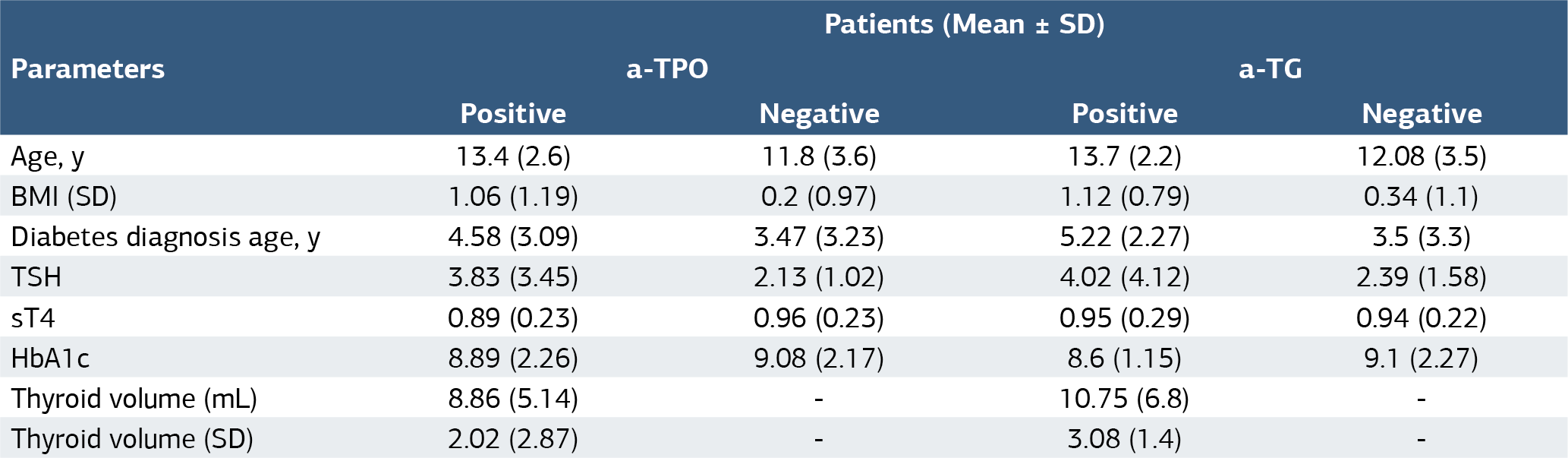
All of the a-GAD positive patients, 14 (56%) were female, while 11 (44%) were male. Of the anti-islet Ab positive patients, 8 (41%) were female, and 11 (59%) male. Of the anti-insulin Ab positive patients, 4 (44.4%) were female and 5 (55.5%) were male. TPO antibodies were positive in 18 patients (30%) above 35 IU/ml. Of these patients, 15 (83.3%) were girls and 3 (16.7%) were boys. Thus, a-TPO was positive in 15 (48.3%) of 31 female patients and 3 (10.3%) of 29 male patients. Autoimmune thyroiditis was diagnosed in 18 (100%) of 18 patients with positive a-TPO antibodies and in 8 (88.8%) of 9 patients with positive a-TG. OT was detected in 18 of the 60 patients included in the study. Accordingly, the prevalence of OT was found to be 30%. Six of these patients were hypothyroid and were using medication. This eighteen OT patients’ mean age was 13.4 years, and their T1DM diagnosis averaged 4.58 years. The mean TSH value of the patients was 4.58 uIU/ml and the mean fT4 value was 0.89 ng/dl. The mean value of HbA1c was found to be 8.89%. In 18 patients with autoimmune thyroiditis, the mean thyroid volume value was found to be 8.86 ml, and the mean thyroid volume SDS value was 2.02 according to thyroid USG (Table 2). There was a family history of DM in 11 patients (61.1%), and a family history of thyroid disease in 13 patients (72.2%). None of the patients had a family history of CD.
As regards the accompanying autoantibodies in patients diagnosed with autoimmune thyroiditis; GAD antibodies were positive in 8 patients, a-TG Ab in 8 patients, a-Islet Ab in 4 patients, a-Insulin Ab in 3 patients and a-TGA Ab positive in 2 patients (Figure 2). Anti-TG antibodies were found to be positive over 65 Iu/ml in 9 patients (15%). Of these patients, 8 (88.8%) were female and 1 (11.2%) was male. Thus, it was positive in 8 (25.8%) of 31 female patients and 1 (3.4%) of 29 male patients. Anti-TPO was also positive in 8 of the patients. A diagnosis of OT was made in 8 of 9 patients with positive a-TG. 4 patients had hypothyroidism and were using medication. The mean age of 9 patients with a-TG positivity was 13.7; the BMI SDS mean 1.12; the mean diabetes diagnosis was 5.2 years. The TSH mean value was 4.02 uIU/ml, and the fT4 mean value was 0.95 ng/dl. The mean HbA1c value was found to be 8.6%. In patients with positive a-TG, the mean thyroid volume was 10.75 ml, and the mean thyroid volume SDS was 3.08 (Table 2). Anti-TGA IgA antibodies were positive in 6 (10%) of the 60 patients; 4 of these patients were female (66.6%) and 2 were male (33.3%). 3 of 6 patients with a-TGA Ab positivity were diagnosed with CD by a small bowel biopsy by pediatric gastroenterology. All 3 patients were girls. The mean age of these 3 patients diagnosed with CD was 13.3; weight SDS mean -1.03; size SDS -0.11; BMI SDS was found to be -0.87. The mean age at T1DM diagnosis of the patients was found to be 7 years. The mean plasma IgA level was 2.1 mg/dl, and the mean HbA1c level was 9.0% (showed poor glycemic control). Both of the patients diagnosed with CD had hypothyroidism and were using medication. The mean thyroid volume SDS of these two patients was found to be 0.96. When other accompanying autoimmune antibodies of the 6 patients with celiac disease were examined; a-TPO in 2 patients, a-insulin Ab in 2 patients, a-GAD and a-Islet Ab in one patient each were positive.
Discussion
T1DM is the most common chronic endocrine autoimmune disease of childhood in which genetic predisposition, environmental factors and autoimmunity play a role. In this study, we investigated the frequency of OT and CD, which may occur at the time of diagnosis and during follow-up, and the affecting factors in patients with T1DM in our hospital. In the studies of Redondo and Singh, the gender distribution of the cases was found to be similar (51% male, 49% female), as in our study.6 In a study conducted at Istanbul University in our country, 27.9% of the cases diagnosed with T1DM were ≤5 years old, 37.2% were 6-10 years old and 34.9% were ≥10 years old.7 The age distribution of the patients in our study was found to be compatible with the literature.
The prevalence of autoimmune thyroiditis in patients with T1DM is much more common than in the general population. While the prevalence of thyroid antibody positivity in children 2-5%, there are publications 12-25% in children and adolescents with T1DM.8-9 OT is the most common autoimmune disease accompanying T1DM, and celiac disease is the second most common.10 In our study, similar to the literature, the most common autoimmune disease accompanying T1DM cases was OT with a rate of 30%; It was found that CD followed with the second frequency with the rate of 5%.
It has been shown that the most common autoimmune disease accompanying T1DM is OT. Although there are variable rates in studies, it has been reported that 12.5%-18.5% of T1DM patients were diagnosed with chronic autoimmune thyroiditis.11 There are two reports about autoimmune thyroiditis from Turkey and Italy, where a-TG antibodies have been observed in 7.9% and 7.8% children with autoimmune thyroid disease.12-13 Conversely, in patients with celiac disease, a-TPO antibody and autoimmune thyroiditis have been reported to range from 10.5%-14.6%.13-14 Also there are publications with positive a-TG antibodies in 6-7.8% of patients with autoimmune thyroiditis and positive a-TPO in 10.5-14.6% of patients with CD, and it has been stated that children with CD have three times the risk of developing thyroid autoimmunity studies are also available in the literature. İn this study a-TG and anti-GAD antibodies were present in 6.9 and 12.5 per cent subjects among cases compared to 3.5 per cent (p=0.015) and 4.3 per cent (p=0.001) in controls, respectively.15 Also studies from Turkey show that frequency of CD is 23.2%, positive anti-TPO and anti-TG antibodies are 6.9% in patients whose diabetes diagnosis age is less than 5 years. Both CD and the presence of thyroid autoantibodies were more common in girls (73.3%, 68%).16 In another single-centre study conducted in Turkey, celiac disease (4.9%) and autoimmune thyroid disease (13.7%) were found in children with type 1 diabetes.17 In our study, similar to the literature, anti-TG antibodies were found to be positive in 15% of the patients. In our study, we found that 30% of the patients with Type 1 DM had accompanying autoimmune thyroiditis. Although this rate was higher than in the literature, Hashimoto’s thyroiditis was more common in our female patients. Also in our study, we demonstrated with the high prevalence of Hashimoto’s thyroiditis (HT) in our female patients. Especially in girls with T1DM, serological screening and thyroid function test in the diagnosis of T1DM, which are the frequencies recommended by the literature, should be screened once a year if negative or every six months if a-TPO and a-TG antibodies are positive.
As expected, an increased incidence of the disease has been reported in siblings or parents of children with HT. Hashimoto’s thyroiditis was commonly found in both the probands and their relatives, especially among women. Among female diabetic probands, HT was diagnosed in 54–75% of cases depending on age, and among female relatives the frequency of HT was 22–44%. Moreover, diabetic probands with HT were significantly more likely to have a family history of thyroid disease.18 This was evaluated as similar to the literature in terms of the familial predisposition relationship with HT in our study.
The incidence of CD in childhood is known to be between 0.2% and 5.5%. In some diseases and conditions, the risk of developing CD is greater. T1DM is among the high-risk groups for the development of CD among these diseases. This rate is higher in children with T1DM and has been reported in a wide range of 1-16%.4,19 The risk of celiac disease is inversely and independently associated with age at diagnosis of diabetes, with the greatest risk in those with diabetes diagnosed before 5 years of age. The prevalence of CD in the general population is estimated to be 20 times higher than in T1DM patients. Anti-TG-IgA antibodies are positive in 4-12% of children with T1DM.20-21 When we evaluated all our cases for celiac disease, (similar to the literature) we found that 10% of our patients were diagnosed by serological positivity and 5% by biopsy. Serological screening for CD in children with T1DM is recommended annually, in the first 5 years of diabetes, and then every 2 years after T1DM diagnosis, according to ISPAD guidelines.22
IgA deficiency is seen with a frequency of 1:500 in the population. It has been reported that it is more common, especially in people with Type 1 diabetes and those with celiac disease.23 Therefore, most guidelines recommend routine measurement of total IgA to exclude IgA deficiency. The other recommended method is to first measure IgA if the initial screening test using only a-TG-A and/or EmA is negative. If the child has IgA deficiency, IgG-specific antibody tests (a-TG or EmA IgG or both) should be used for screening.24 In our clinic, we use IgA and a-TG-A together in the first screening. İn our study; Anti-TGA IgA antibodies were positive in 6 (10%) of the 60 patients; 4 of these patients were female (66.6%) and 2 were male (33.3%). 3 of 6 patients with a-TGA Ab positivity were diagnosed with CD by a small bowel biopsy by pediatric gastroenterology. All 3 patients were girls. The mean age of these 3 patients diagnosed with CD was 13.3. The mean age at T1DM diagnosis of the patients was found to be 7 years. The mean plasma IgA level was within the normal range. Both of the patients diagnosed with CD had hypothyroidism and were using medication.
İn Polish children is reported that the prevalence of at least one diabetes associated Ab was found in 87%, with the highest prevalence of 64% for zinc transporter 8 (ZnT8 Ab), islet cell autoimmunity was 34%, Thyroid Ab was 26% (42% in girls vs. 8% in boys), tTG Ab was 11% patients. In patients with a duration >10 years, 50% had at least one antibody.24 In a study conducted with adolescents and adults, it was reported that 96.7% of the patients were positive for GAD, 53.3% for islet autoantibodies, 80% for insulin autoantibodies, and 23.3% for TPOAb positive. It was determined that 16.7% of the patients were positive for both TPOAb and TGAb.25 As seen in the Polish study, although zinc antibody positivity is very common, it cannot be studied in our hospital. In our study, as expected, autoantibody positivity was found to be less than in adolescent and adult studies due to the lower median age. Therefore, our study emphasizes the importance of long-term follow-up of patients with T1DM.
Limitations
The limitation of the study is the lack of long-term follow-up to evaluate the susceptibility of patients with anti-GAD and anti-TTG antibodies to celiac disease or type-1 diabetes mellitus. Additionally, since our study was single-center, multicenter studies with larger patient numbers are needed.
Conclusion
OT recordings and CD tend to be highly elevated in T1DM patients compared to those without. Serological screening for CD in children with T1DM is recommended annually, in the first 5 years of diabetes, and then every 2 years after T1DM diagnosis. In addition, we emphasize the importance of using such autoantibodies, which we can use clinically, for screening purposes in early diagnosis. In the near future, further research should be conducted regarding these two autoimmune conditions, especially for girls with T1DM.
Declarations
Animal and Human Rights Statement
All procedures performed in this study were in accordance with the ethical standards of the institutional and/or national research committee and with the 1964 Helsinki Declaration and its later amendments or comparable ethical standards.
Informed Consent
Written informed consent was obtained from the parents or legal guardians of all participants.
Data Availability
The datasets used and/or analyzed during the current study are not publicly available due to patient privacy reasons but are available from the corresponding author on reasonable request.
Conflict of Interest
The authors declare that there is no conflict of interest.
Funding
None.
Abbreviations
CD: Celiac disease
OT: Autoimmune thyroiditis
T1DM: Type 1 diabetes mellitus
TSH: Thyroid-stimulating hormone
References
- Sud S, Marcon M, Assor E, Palmert PM, Daneman D, Mahmud FH. Celiac disease and pediatric type 1 diabetes: diagnostic and treatment dilemmas. Int J Pediatr Endocrinol. 2010;2010:161285. doi:10.1155/2010/161285
- Kordonouri O, Hartmann R, Deiss D, Wilms M, Grüters-Kieslich A. Natural course of autoimmune thyroiditis in type 1 diabetes: association with gender, age, diabetes duration, and puberty. Arch Dis Child. 2005;90(4):411-414. doi:10.1136/adc.2004.056424
- Van den Driessche A, Eenkhoorn V, Van Gaal L, De Block C. Type 1 diabetes and autoimmune polyglandular syndrome: a clinical review. Neth J Med. 2009;67(11):376-387.
- Salardi S, Volta U, Zucchini S, et al. Prevalence of celiac disease in children with type 1 diabetes mellitus increased in the mid-1990s: an 18-year longitudinal study based on anti-endomysial antibodies. J Pediatr Gastroenterol Nutr. 2008;46(5):612-614. doi:10.1097/mpg.0b013e31815d697e
- Arató A, Körner A, Veres G, Dezsöfi A, Ujpál I, Madácsy L. Frequency of coeliac disease in Hungarian children with type 1 diabetes mellitus. Eur J Pediatr. 2003;162(1):1-5. doi:10.1007/s00431-002-1103-9
- Redondo MJ, Foster NC, Libman IM, et al. Prevalence of cardiovascular risk factors in youth with type 1 diabetes and elevated body mass index. Acta Diabetol. 2016;53(2):271-277. doi:10.1007/s00592-015-0785-1
- Demir F, Günöz H, Saka N, et al. Epidemiologic features of type 1 diabetic patients between 0 and 18 years of age in Istanbul city. J Clin Res Pediatr Endocrinol. 2015;7(1):49-56. doi:10.4274/jcrpe.1694
- Hiromatsu Y, Satoh H, Amino N. Hashimoto’s thyroiditis: history and future outlook. Hormones (Athens). 2013;12(1):12-18.
- Kaloumenou L, Duntas L, Alevizaki M, Mastorakos G, Mantzou E. Thyroid volume, prevalence of subclinical hypothyroidism and autoimmunity in children and adolescents. J Greek Paediatr Soc. 2007;70(5):107-114.
- Svoren BM, Nicholas J. Diabetes mellitus in children. In: Kliegman RM, Stanton BF, St Geme JW, Schor NF, Behrman RE, eds. Nelson Textbook of Pediatrics. 20th ed. Elsevier Saunders; 2016:2760-2783.
- Akyürek N, Atabek ME, Eklioğlu BS. Long-term follow-up of patients with type 1 diabetes mellitus: a single center experience. Turk J Pediatr Dis. 2015;(4):243-247.
- Sari S, Yesilkaya E, Egritas O, Bideci A, Dalgic B. Prevalence of celiac disease in Turkish children with autoimmune thyroiditis. Dig Dis Sci. 2009;54(4):830-832. doi:10.1007/s10620-008-0437-1
- Larizza D, Calcaterra V, De Giacomo C, et al. Celiac disease in children with autoimmune thyroid disease. J Pediatr. 2001;139(5):738-740. doi:10.1067/mpd.2001.118189
- Mackay IR, Rosen FS. Tolerance and autoimmunity. N Engl J Med. 2001;344(9):655-664.
- Giuseppina O, Anna R, Annalisa Z, Laura S, Gianni B. Thyroid autoimmunity in childhood celiac disease. J Pediatr Gastroenterol Nutr. 2002;35(5):704-705.
- Kaba I, Demirbas SC, Peltek Kendirci HN. Determination of the frequency of celiac and autoimmune thyroid diseases in children and adolescents diagnosed with type 1 diabetes mellitus. Med Records. 2024;6(1):27-31. doi:10.37990/medr.1373441
- Arman Bilir Ö, Mengen E, Kocaay P, Vidinlisan S. Tip 1 diabetes mellitus’lu çocuk ve adolesan hastaların retrospektif olarak değerlendirilmesi: tek merkez deneyimi. Turk J Pediatr Dis. 2021;15:142-149. doi:10.12956/tchd.845703
- Marwaha RK, Garg MK, Tandon N, et al. Glutamic acid decarboxylase and tissue transglutaminase antibodies in patients with thyroid autoimmunity. Indian J Med Res. 2013;137(1):82-86.
- Hansen D, Brock-Jacobsen B, Lund E, et al. Clinical benefit of a gluten-free diet in type 1 diabetic children with screening-detected celiac disease: a population-based screening study with 2 years’ follow-up. Diabetes Care. 2006;29(11):2452-2456. doi:10.2337/dc06-0990
- Pham-Short A, Donaghue KC, Ambler G, Chan AK, Craig ME. Coeliac disease in type 1 diabetes from 1990 to 2009: higher incidence in young children after longer diabetes duration. Diabet Med. 2012;29(9).
- Karavanaki K, Kakleas K, Paschali E, et al. Screening for associated autoimmunity in children and adolescents with type 1 diabetes mellitus. Horm Res. 2009;71(4):201-206. doi:10.1159/000201108
- Kordonouri O, Maguire AM, Knip M, et al. ISPAD clinical consensus guidelines 2009 compendium: other associated conditions in children and adolescents with type 1 diabetes mellitus. Pediatr Diabetes. 2009;10(suppl 12):204-210. doi:10.1111/j.1399-5448.2009.00573.x
- Cataldo F, Marino V, Bottaro G, Greco P, Ventura A. Celiac disease and selective immunoglobulin A deficiency. J Pediatr. 1997;131(2):306-308. doi:10.1016/s0022-3476(97)70172-0
- Głowińska-Olszewska B, Michalak J, Łuczyński W, et al. Organ-specific autoimmunity in relation to clinical characteristics in children with long-lasting type 1 diabetes. J Pediatr Endocrinol Metab. 2016;29(6):647-656. doi:10.1515/jpem-2015-0190
- Mohamed GA, Elsayed AM. Organ-specific autoimmunity in type 1 diabetes mellitus: screening with respect to glycemic control. Int J Med Res Health Sci. 2016;5(1):140-144.
Tables
Table 1. Evaluation of epidemiological and autoimmune diseases of patients with type 1 diabetes mellitus
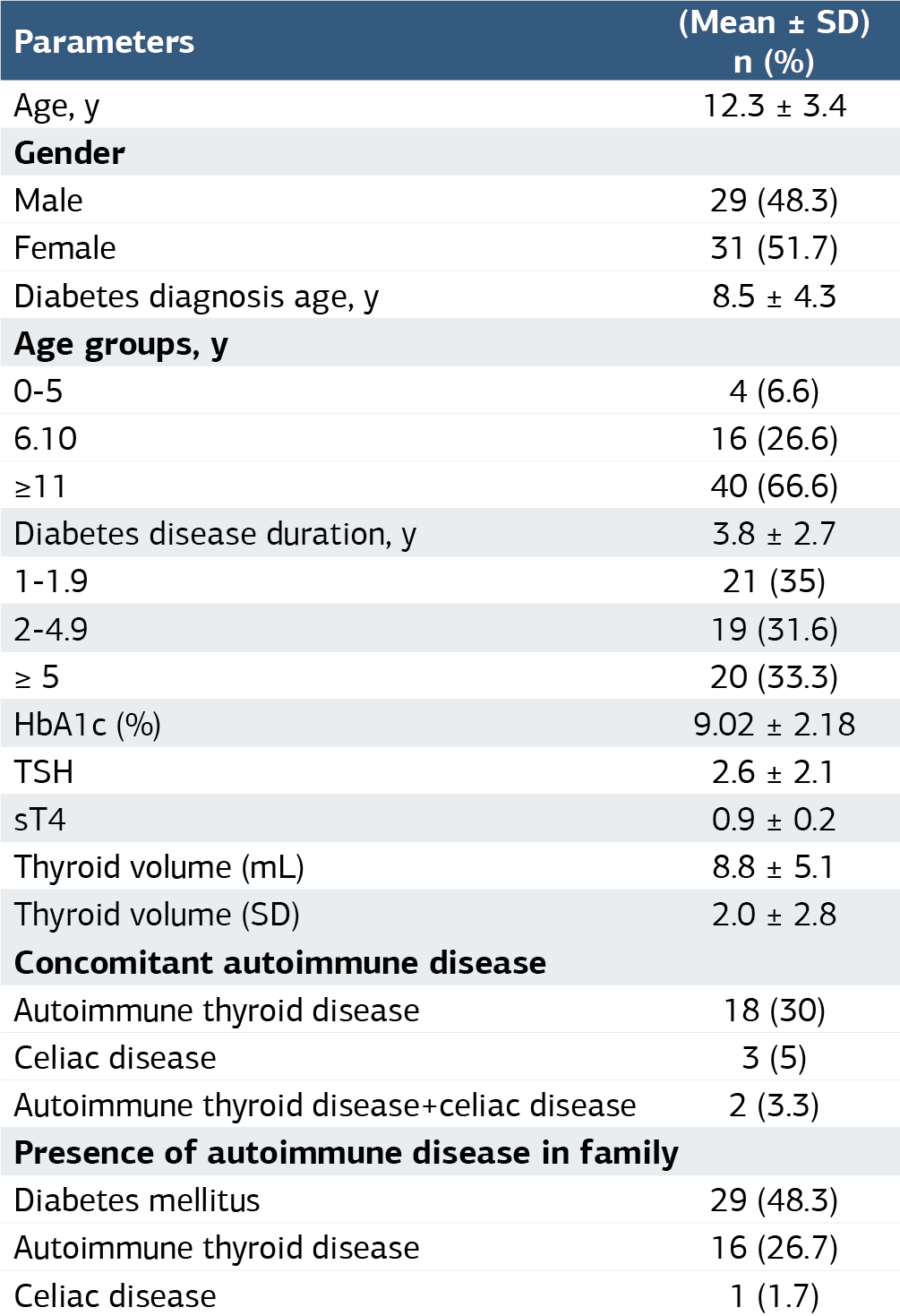
Table 2. Analysis of patients with concomitant autoantibody positivity
Figures
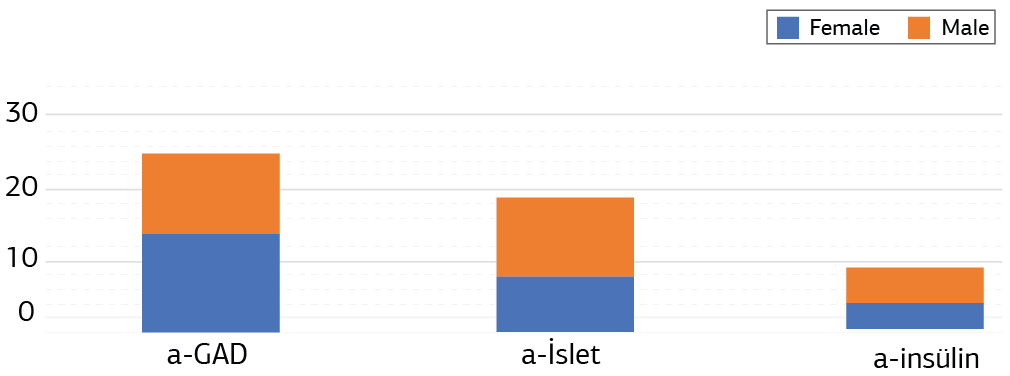
Figure 1. Distribution of DM antibodies by gender
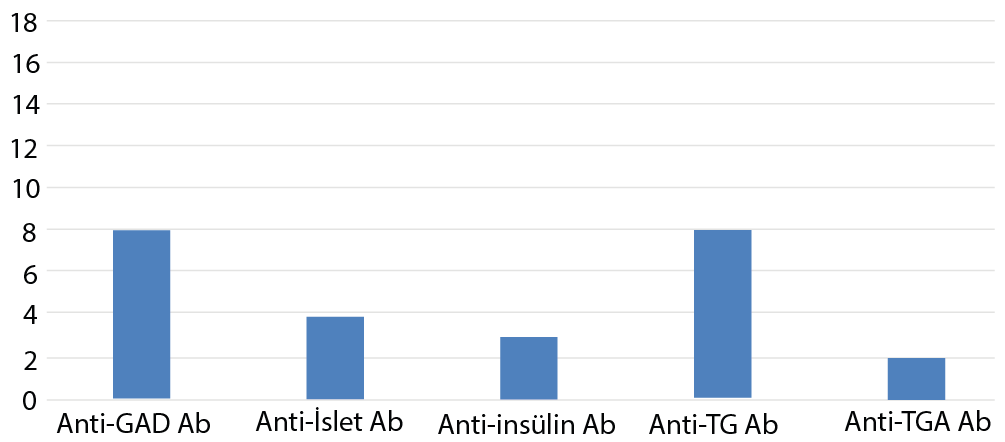
Figure 2. Evaluation of positive autoantibodies in patients with autoimmune thyroiditis
Additional Information
Publisher’s Note
Bayrakol MP remains neutral with regard to jurisdictional and institutional claims.
Rights and Permissions

This work is licensed under a Creative Commons Attribution-NonCommercial 4.0 International License (CC BY-NC 4.0). To view a copy of the license, visit https://creativecommons.org/licenses/by-nc/4.0/
About This Article
How to Cite This Article
Onur Sivas, Damla Geçkalan, Veysel Nijat Baş. Evaluation of autoimmune diseases in pediatric patients with type 1 diabetes mellitus. Ann Clin Anal Med 2025;16(6):401-405. doi:10.4328/ACAM.22396
Publication History
- Received:
- 08.09.2024
- Accepted:
- 21.10.2024
- Published Online:
- 03.01.2025
- Printed:
- 01.06.2025