
The role of general surgery in pediatric cases: need for general surgery inpatients under 18 and our clinical experiences
Need for general surgery in patients under 18
Authors
Abstract
AimPediatric surgery encompasses surgical procedures for patients under 18 years of age, but there are still patients under 18 who are followed and operated on by general surgery. The aim of this study is to provide a clear definition of when general surgery should be involved in pediatric cases and to address the limitations of current practices.
MethodsData on demographic characteristics, admission indications, treatments, treatment outcomes, and complications for patients under 18 years of age who were admitted and treated in the general surgery clinic between January 2018 and January 2023 were retrospectively reviewed.
ResultsOut of 41 cases treated in the general surgery clinic, 10 received medical treatment. Among the 31 patients who underwent surgery, 7 had head and neck surgery, 4 had laparoscopic cholecystectomy, and 2 had laparoscopic appendectomy. Additionally, seven patients had thoracic procedures, and 11 had colorectal procedures.
ConclusionOur study suggests that in the treatment of patients under 18 years of age, good physical development and the need for head and neck surgery or laparoscopy may necessitate the involvement of a general surgery clinic.
Keywords
Introduction
The Department of General Surgery is a specialty that treats surgical conditions requiring intervention through various surgical procedures for adult patients both nationally and internationally. In the past, many surgical specialties were considered subspecialties of general surgery, but over time, they have evolved into distinct departments. Pediatric surgery, previously a subspecialty of general surgery, became an independent department in 1982.1 Many diseases present different clinical and laboratory features in children compared to adults. For example, the risk of perforation in acute appendicitis increases with age in adults, while in children, the risk of perforation increases as age decreases.2 Consequently, the field of pediatric surgery has grown in importance both globally and nationally. In the early years of the Republic, many surgical procedures fell under the domain of general surgery. However, with the rise of specialization and the establishment of many surgical subspecialties as independent fields, general surgery now primarily covers procedures related to the digestive system, endocrine system, breast surgery, endoscopic interventions, laparoscopic and robotic surgery, and minor surgical interventions. Surgical procedures involving patients under 18 years of age that fall within the domains of general surgery and urology are performed by pediatric surgery. However, the legislation does not clearly define which clinical discipline should manage patients of specific age groups. Additionally, due to various reasons, the physical development of patients does not always align with chronological age standards, leading to occasional assessments where patients under 18 may be considered adults in terms of phenotypic characteristics, medication dosages, and surgical procedures.
Our hospital established the Department of Pediatric Surgery in 1990.3 It continues to provide inpatient services, operate a surgical ward, and offer intensive care, along with training for medical residents. Pediatric surgery is recognized as a distinct specialty to address the unique needs of pediatric patients. Although pediatric surgery has become a specialized field, there are still situations where general surgery plays a critical role in managing pediatric patients due to certain procedural or logistical reasons.4 Transitioning from pediatric to adult care often involves complex assessments, including physical development that may affect surgical decisions. These developmental differences can influence surgical choices. Especially in adolescents, surgical procedures may exhibit similar characteristics to those in adults.5 Occasionally, patients may be directly referred to the general surgery clinic due to factors such as a shortage of available pediatric surgical faculty, the patient’s adult-like physical phenotype despite being under 18, rare diseases in childhood, or the need for specialized surgical interventions. In such cases, patients under 18 may be admitted and treated by the general surgery clinic.
Our study aims to review the demographic data, admission indications, and treatment outcomes of patients under 18 years of age who were admitted and treated in the general surgery clinic over a 5-year period, and to compare these findings with current literature.
Materials and Methods
Demographic data, admission indications, treatments, treatment outcomes, and complications for patients under 18 years of age who were admitted and treated in the general surgery clinic from January 2018 to January 2023 were retrospectively reviewed using hospital database records.
Ethical ApprovalThis study was approved by the Ethics Committee of Necmettin Erbakan University (Date: 15.09.2023, Decision No: 2023/4524).
Statistical AnalysisDescriptive statistics were used. Continuous variables are presented as mean ± standard deviation (SD), and categorical variables as number (n) and percentage (%).
Reporting GuidelinesThis study was prepared in accordance with the STROBE guidelines.
Results
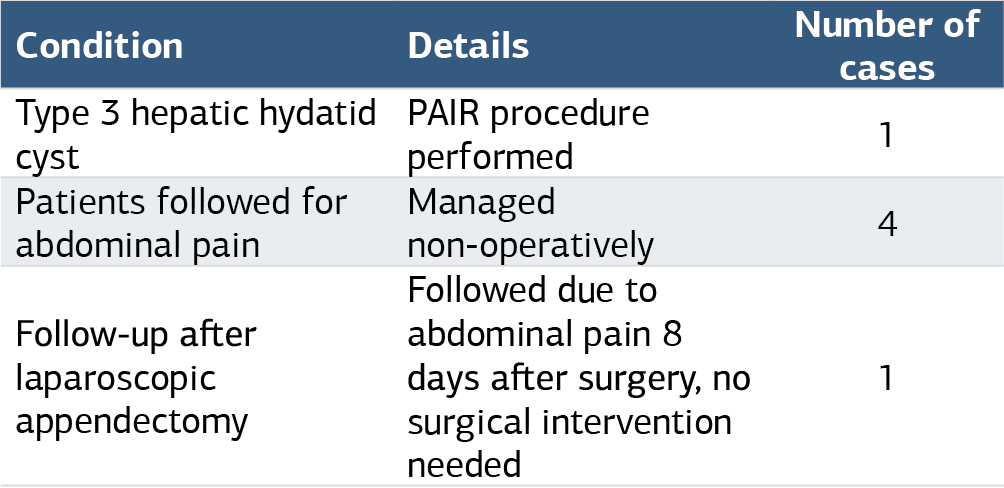
A total of 41 cases were treated in the General Surgery Clinic. The average age of the cases was 15.8 years (ranging from 9 to 17 years), with the average age for females being 17 years (ranging from 16 to 17 years) and for males being 15 years (ranging from 9 to 17 years). The gender distribution was 56% (23) male and 44% (18) female (Table 1). Of the 41 cases, 31 received surgical treatment while 10 received medical treatment (Table 2). Among the medical cases, 1 case was admitted for type 3 hepatic hydatid cyst and underwent PAIR (Puncture, Aspiration, Injection, and Reaspiration). Four cases with abdominal pain were managed non-operatively, and 1 case was admitted for abdominal pain 8 days after a laparoscopic appendectomy but was found not to require surgical intervention (Table 3).
Of the 31 cases that underwent surgical treatment, 1 case had total thyroidectomy, 1 case had left hemithyroidectomy, and 2 cases had right hemithyroidectomy due to pressure-related issues in the head and neck surgery domain. Thyroid malignancies are also common in the pediatric age group, and there are studies where pediatric patients are operated on by general surgeons.6 In our clinic, a 16-year-old female patient with papillary thyroid carcinoma underwent right hemithyroidectomy and right central neck dissection. Parathyroid adenomas causing primary hyperparathyroidism have also been described in the pediatric age group, with surgery being the only treatment.7 In our clinic, parathyroid adenoma excision was performed on one female and one male patient, both in their late teens. Since thyroid surgery is not performed in the pediatric surgery clinic, these cases were operated on by general surgery.
Genetic predisposition, age, infections, medications, parenteral nutrition, and comorbid conditions have been shown to influence the formation of gallstones in patients under 18 years of age.8 The use of laparoscopic surgery in the pediatric population has grown in recent years, particularly in acute care surgery. These patients often present to hospitals without specialty-trained pediatric surgeons, and general surgeons may need to be prepared to handle these types of cases.9 In our clinic, laparoscopic cholecystectomy was performed on 4 patients (3 females and 1 male) aged 14–17 due to cholelithiasis. Since laparoscopic hepatobiliary surgeries are not performed in the pediatric surgery clinic, these cases were operated on by general surgery. Two male patients aged 9 and 17 underwent laparoscopic appendectomy for acute appendicitis. The 9-year-old patient was referred to general surgery due to the absence of a pediatric surgical specialist, while the 17-year-old patient, who had an adult-like physical phenotype, was also managed by general surgery on the recommendation of pediatric surgery. The 17-year-old patient was readmitted on the 8th postoperative day due to abdominal pain, but after 1 day of monitoring, the patient was discharged following resolution of symptoms. A 17-year-old female patient underwent drainage for perforated appendicitis.
In the thoracic surgery domain, 5 female patients aged 16–17 underwent fibroadenoma excision from the breast. These patients presented with palpable breast masses to the general surgery clinic and were operated on by general surgery. A 15-year-old male patient underwent axillary lymph node excision. All histopathological results of these operations were benign. A 17-year-old male patient underwent lipoma excision from the scapula.
Rectal prolapse, which involves protrusion of part or all of the rectal mucosa through the anal sphincter, may require surgical treatment.10 In our clinic, two male patients aged 16 and 17 underwent the Altemeier procedure for rectal prolapse. Both patients were directly referred to the general surgery clinic with complaints of rectal prolapse and were discharged on the 3rd and 4th postoperative days without complications. Three male patients aged 16 and 17 underwent excision and Limberg flap procedure for pilonidal sinus. Two patients were discharged on the 1st postoperative day, and one on the 2nd postoperative day without complications. Two male and one female patient aged 17 underwent drainage for perianal abscess, with all patients being discharged on the same day. Pilonidal sinus cases were referred from the clinic, while perianal abscess cases were admitted through the emergency department. A 16-year-old female patient underwent total proctocolectomy with ileal J-pouch anal anastomosis and protective ileostomy due to familial adenomatous polyposis. The patient experienced no early surgical complications and was discharged on the 4th postoperative day in good health. The ileostomy was closed approximately 3 months after the initial surgery.
Discussion
In the 2024 study by Brown and Lee, the role of general surgery in pediatric diseases and the challenges encountered in managing these conditions are addressed. The study explains not only the various responsibilities undertaken by general surgeons in pediatric cases but also their strategic thinking abilities and the responsibilities they assume in managing these cases.11 The 2023 study by Zhou and Xu highlights that the role of general surgeons in pediatric surgery is increasingly expanding, with general surgeons taking on a critical role in some complex cases typically managed by pediatric surgeons.12 This finding supports what we have noted in our study, emphasizing that general surgery plays a significant role in the treatment of pediatric diseases and provides a comprehensive approach in various medical and surgical situations.
Pediatric thyroid surgery includes procedures such as total and partial thyroidectomy, and these surgeries are managed by general surgeons, with an observed increase in prevalence.13 In our study, 7 out of 31 patients underwent head and neck surgery.
Laparoscopic cholecystectomy has become a standard procedure for treating cholelithiasis in children, though its implementation can vary across centers.14 Our study found that one of the main reasons for requiring general surgery in the pediatric age group was the need for laparoscopy. Management of rectal prolapse and pilonidal disease in pediatric patients often involves surgical intervention, and when pediatric surgical resources are limited, general surgeons may perform these procedures.15 In our study, a significant portion of the general surgery need was in these areas.
Limitations
The retrospective nature of the study may introduce biases related to incomplete or inconsistent data recording. Future prospective studies could provide a more comprehensive view of the role of general surgery in pediatric cases. Over a span of 5 years, the sample size of 41 cases is relatively small, which may limit the generalizability of the findings to all general surgery practices. Larger and multicenter studies could enhance the generalizability of the results. Factors such as surgical techniques, surgeon experience, and institutional protocols can affect treatment outcomes. These confounding factors were not controlled for in this study, which may impact the interpretation of the results.
Conclusion
The integration of pediatric surgery and general surgery has become increasingly important and highlights the role of general surgeons in managing complex cases that often fall outside the scope of pediatric surgery. Although general surgery is traditionally focused on adult surgical patients, various factors may necessitate the treatment of pediatric patients by general surgery. Future research should focus on defining clear guidelines for when general surgery should be involved in pediatric cases and addressing limitations in current practices. The primary goal of our study was to determine that in the treatment of patients under 18 years of age, good physical development, the need for head and neck surgery, laparoscopy, and colorectal disease may require the involvement of the general surgery clinic.
Declarations
Animal and Human Rights Statement
All procedures performed in this study were in accordance with the ethical standards of the institutional and/or national research committee and with the 1964 Helsinki Declaration and its later amendments or comparable ethical standards.
Informed Consent
The requirement for informed consent was waived because this retrospective study used anonymized patient data.
Data Availability
The datasets used and/or analyzed during the current study are not publicly available due to patient privacy reasons but are available from the corresponding author on reasonable request.
Conflict of Interest
The authors declare that there is no conflict of interest.
Funding
None.
Abbreviations
PAIR: Puncture, aspiration, injection, and reaspiration
References
-
Ceylan İ. Development of surgery in Turks, chapter 2: an overview of the early stages of surgical specialties in Turkey. 105-119.
-
Avcı V, Demir D. Comparative analysis of laboratory and clinical characteristics of appendicitis in child and adult populations. Anadolu Klin Tip Bilimleri Derg. 2023;28(2):159-163.
-
Büyükünal C. History of pediatric surgery in Turkey. Çocuk Cerrah Derg. 2010;24(2):55-66.
-
Sweeney K. The role of general surgery in pediatric patients: a review. J Pediatr Surg. 2021;56(3):445-450.
-
Baker R. Pediatric to adult transition in surgery: an overview. Pediatr Surg Int. 2019;35(4):379-386.
-
Su Y, Cheng S, Diao C, Ma Y, Qian J, Cheng R. Surgical treatment of pediatric and adolescent papillary thyroid cancer: a retrospective study of 54 patients in a single center. J Pediatr (Rio J). 2022;98(4):425-430. doi:10.1016/j.jped.2021.11.011
-
Oh A, Lee Y, Yoo HW, Choi JH. Three pediatric patients with primary hyperparathyroidism caused by parathyroid adenoma. Ann Pediatr Endocrinol Metab. 2022;27(2):142-147. doi:10.6065/apem.2142006.003
-
Zdanowicz K, Daniluk J, Lebensztejn DM, Daniluk U. The etiology of cholelithiasis in children and adolescents: a literature review. Int J Mol Sci. 2022;23(21):13376. doi:10.3390/ijms232113376
-
Laverty RB, Gallagher ME. Role of emergency laparoscopy in pediatric patients. In: Coccolini F, Podda M, Lim RB, Chiarugi M, eds. Mini-Invasive Approach in Acute Care Surgery. Springer; 2023. doi:10.1007/978-3-031-39001-2_23
-
Rentea RM, St Peter SD. Pediatric rectal prolapse. Clin Colon Rectal Surg. 2018;31(2):108-116. doi:10.1055/s-0037-1609025
-
Brown S, Lee K. General surgical approaches to pediatric diseases: a review. Pediatr Surg Clin North Am. 2024;41(2):203-213.
-
Zhou L, Xu Y. The role of general surgeons in pediatric surgical care: a review of current practices and future directions. Pediatr Surg Int. 2023;39(5):625-634.
-
Rosenberg J. Pediatric thyroid surgery: current trends and outcomes. Thyroid. 2021;31(2):223-231.
-
Smith A. Laparoscopic cholecystectomy in pediatric patients: a review. J Laparoendosc Adv Surg Tech A. 2020;30(5):525-533.
-
Johnson C. Management of rectal prolapse and pilonidal disease in children. Pediatr Surg Int. 2023;39(1):67-76.
Tables
Table 1. Patients under 18 years old: gender, age, and treatment type
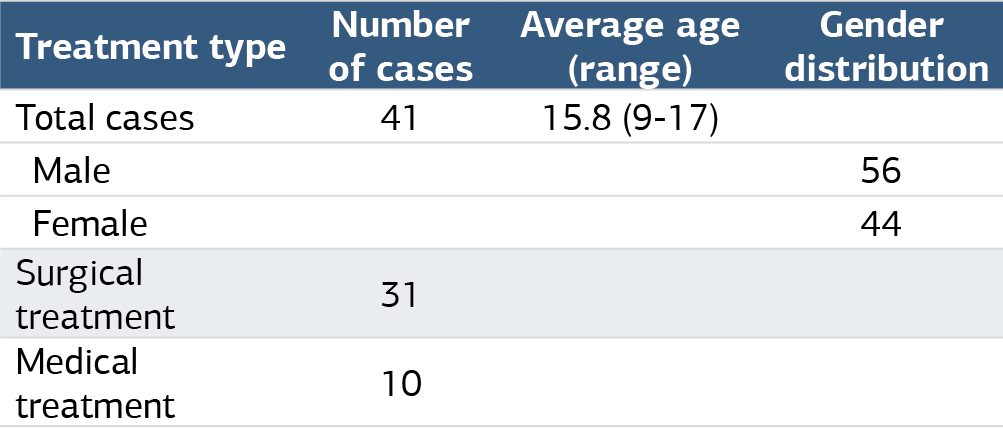
Table 2. Surgical procedures performed on patients

Table 3. Patients followed medically
Additional Information
Publisher’s Note
Bayrakol MP remains neutral with regard to jurisdictional and institutional claims.
Rights and Permissions

This work is licensed under a Creative Commons Attribution-NonCommercial 4.0 International License (CC BY-NC 4.0). To view a copy of the license, visit https://creativecommons.org/licenses/by-nc/4.0/
About This Article
How to Cite This Article
Arslan Hasan Kocamaz, Ömer Kişi, Alper Varman. The role of general surgery in pediatric cases: need for general surgery inpatients under 18 and our clinical experiences. Ann Clin Anal Med 2025;16(5):341-344. doi:10.4328/ACAM.22403
- Received:
- September 13, 2024
- Accepted:
- October 21, 2024
- Published Online:
- September 12, 2024
- Printed:
- May 1, 2025