
Are diabetes regulation and vitamin B12 levels associated with the frequency and level of anxiety in diabetic patients?
Frequency and related factors of anxiety in patients with diabetes
Authors
Abstract
AimIn our study, we aimed to evaluate the frequency of anxiety in patients with type 2 diabetes and the effect of blood glucose regulation and vitamin B12 levels on anxiety.
MethodsThe study comprised 174 patients with Type 2 DM aged 18-65 years and 62 healthy controls. The study used a questionnaire form consisting of the Sociodemographic Characteristics Form, Clinical Data Form, and Beck Anxiety Scale as a data collection tool. Mann Whitney U test, t-test for independent variables, chi-square test, and Spearman correlation test were used to analyze the data. p<0.05 was accepted as a statistical significance value.
ResultsTwo hundred thirty-six people participated in our study, 174 in the case group and 62 in the control group. The mean age of the patient group was
53.7 ± 9.0 years, and 51.1% were male. The study showed that HbA1c levels were regulated in 50.6% of diabetic patients, and vitB12 levels were adequate in 59.2%. There was no statistically significant difference between the anxiety levels and scores of Type 2 diabetic patients according to the regulation of HbA1c levels and vitB12 levels (p>0.05). The anxiety level and scores of diabetes patients were significantly higher than the control group (p<0.005).
ConclusionAnxiety is more common in patients with diabetes. Diabetes patients should be evaluated in terms of anxiety disorders that may accompany them. In addition, studies aimed at understanding the causes of anxiety in diabetic patients can determine the areas of intervention in this regard.
Keywords
Introduction
Diabetes mellitus (DM) is an important public health problem with rapidly increasing prevalence worldwide. According to 2011 estimates by the International Diabetes Federation (IDF), the number of individuals with diabetes is expected to increase from 366 million to 552 million by 2030.[Available: https://www.diabetesatlas.org] Diabetes is a chronic metabolic disease characterized by impaired carbohydrate, fat, and protein metabolism due to insulin deficiency or impaired effects of insulin.1 The goal in diabetic patients should be not only to control blood glucose levels but also to evaluate and prevent other system effects with a multidisciplinary approach to the management of the disease.
Recent studies have shown that the prevalence of psychiatric disorders is higher in patients with diabetes compared to the general population. Especially depression and anxiety are among the common comorbidities among patients with diabetes.2 There is a complex two-way interaction process between diabetes and psychiatric disorders. Hyperglycemia or hypoglycemia may contribute to the development of depression and anxiety by affecting the central nervous system, while existing psychiatric conditions may adversely affect diabetes management by complicating glycemic control.3 Again, physical complications caused by diabetes reduce the quality of life of patients, and this situation predisposes to the development of mental disorders such as depression and anxiety.4
It is known that hematological problems such as megaloblastic anemia commonly develop in vitamin B12 deficiency.5 In addition, plasma homocysteine levels increase in vitamin B12 deficiency due to deficiency of cobalamin, which is the active form.6 Various studies have reported that anxiety and depression develop by various mechanisms (oxidative stress, mitochondrial dysfunction, and especially dopaminergic neuron apoptosis).7 It is known that the frequency of vitamin B12 deficiency increases in patients with DM. Studies are showing that metformin, which is widely used especially in the treatment of diabetes, causes vitamin B12 deficiency by various mechanisms.8
In this context, it is of great importance to understand the frequency of psychiatric disorders in patients with diabetes and the causes of these disorders. This study aimed to examine the frequency of anxiety, diabetes regulation status (HbA1c level), and the relationship between vitamin B12 levels and anxiety in individuals with diabetes.
Materials and Methods
The study is a prospective case-control study conducted in Kütahya Health Sciences University Evliya Çelebi Training and Research Hospital Internal Medicine Outpatient Clinics between 01.06.2020–31.10.2020.
Inclusion CriteriaPatients aged between 18–65 years and diagnosed with Type 2 DM
Exclusion CriteriaMajor surgery within the last one year,
Those with a history of intensive care unit hospitalization,
Acute cardiac event, Stage 3–4 heart failure,
Presence of chronic inflammatory disease,
Being on antidepressant treatment,
Those who do not use metformin and have not had a vitamin B12 test in the last year,
Patients diagnosed with COVID-19 or with a history of moderate to severe COVID-19.
Control GroupPatients between the ages of 18–65 years and without a diagnosis of type 2 DM who applied to the outpatient clinic.
Research ProtocolFasting plasma glucose, HbA1c, and Vitamin B12 values, which were requested for routine control in Type 2 diabetes patients who applied to the outpatient clinic, were recorded. No non-routine investigations were ordered. Metformin is the first choice drug used in Type 2 diabetes and is used by the majority of patients with Type 2 diabetes. It is recommended in the Guideline of the Turkish Society of Endocrinology and Metabolism to check vitamin B12 in patients using metformin routinely. Patients were excluded from the study if they were not using metformin and did not have a vitamin B12 test performed in the last year.
The patient group was divided into two groups according to HbA1c level (group 1: regulated <7%, group 2: non-regulated >7%), and the groups were compared statistically. Vitamin B12 level below 200 pg/ml was recorded as low and above normal. The patient group was divided into two groups (group 1: sufficient, group 2: insufficient) according to VitB12 level, and the groups were compared statistically. The independent variables of the study were vitamin B12 level and HbA1c level. The dependent variable was the anxiety level determined by the Beck anxiety scale.
The study used a questionnaire form consisting of a Sociodemographic Characteristics Form, Clinical Data Form, and Beck Anxiety Scale as a data collection tool. Beck Anxiety Scale (BAS): It is a self-assessment scale developed by Beck et al. (1988) and used to determine the frequency of anxiety symptoms experienced by individuals. It is a 21-item Likert-type scale. Its validity and reliability in Turkey were performed by Ulusoy, Şahin, and Erkmen (1998).9 0–7 points were evaluated as minimal anxiety, 8–15 points as mild anxiety, 16–25 points as moderate anxiety, and 26–63 points as severe anxiety.
Ethical ApprovalThis study was approved by the Ethics Committee of Kütahya Health Sciences University (Date: 05.11.2020, Decision No: 2020/80-20).
Statistical AnalysesThe data were recorded and analyzed using SPSS v24 software. Descriptive data of the study were expressed as percentage, mean, median, minimum, and maximum value 28. The suitability of the variables for normal distribution was evaluated by Kolmogorov-Smirnov test. The analyses used the Mann-Whitney U test, t-test for independent variables, chi-square test, and Spearman correlation test.
Reporting GuidelinesThis study was reported in accordance with the STROBE guideline.
Results
The general characteristics of the patient and control groups in the study are given in Table 1. A total of 236 people, 174 of whom were diagnosed with type 2 diabetes mellitus in the case group and 62 in the control group, were included in the study. In the study, 51.1% (n=89) of the patient group and 54.8% of the control group were male. No significant difference was found between the groups according to gender distribution (p=0.618). At least one additional chronic disease was present in 72.4% of the case group and 45.2% of the control group. The rate of additional chronic diseases was significantly higher in patients with diabetes compared to the control group (p<0.001). VitB12 level was found to be sufficient in 59.2% (n:103) of the case group and 33.9% (n:21) of the control group. VitB12 level was significantly higher in the case group (p₌ 0.001). The participants’ mean age was statistically significantly higher in the case group (p<0.001). VitB12 level was statistically significantly higher in the control group (p=0.006). The mean LDL cholesterol values of the diabetic patients were 122.6 ± 36.7 and 124.0 ± 25.8 in the control group. There was no statistically significant difference between the mean LDL cholesterol values of the groups (p=0.821). Triglyceride levels in the case group were significantly higher than in the control group (p=0.040). According to Beck Anxiety Scale scores, 23.0% (n=40) had minimal anxiety, 35.6% (n=62) had mild anxiety, 25.3% (n=44) had moderate anxiety, and 16.1% (n=28) had severe anxiety. In the control group, 74.2% (n=46) had minimal, 19.4% (n=12) mild, 4.8% (n=3) moderate, and 1.6% (n=1) severe anxiety.
According to Beck Anxiety Scale scores, anxiety levels were found to be statistically significantly higher in the case group than in the control group (p<0.001)
The mean Beck anxiety score was 14 in the case group and 3 in the control group. Statistically, the anxiety score was significantly higher in the patient group with type 2 DM compared to the control group (p<0.001).
Table 2 shows the relationship between diabetes regulation and the Beck anxiety scale score. In the study, no statistical difference was found in terms of anxiety score in the groups separated according to HbA1c value and regulation status (p=0.908).
Table 3 shows the relationship between diabetes regulation and anxiety levels determined according to the Beck anxiety scale. Table 3: The relationship between HbA1c and vitB12 levels and Beck Anxiety Scale levels in patients with type 2 DM
The study found no statistical difference in the anxiety level in the groups separated according to HbA1c value and regulation status (p=0.416).
There was no significant difference between Beck Anxiety Scale scores (p=0.657) and anxiety levels (p=0.926) according to whether the vitamin B12 levels were sufficient or insufficient. Beck Anxiety Scale scores according to vitamin B12 levels of the patients are shown in Table 7, and Beck Anxiety Scale levels
Discussion
In our study, the frequency of anxiety in diabetic patients and the relationship between anxiety and diabetes regulation and vitamin B12 level were investigated, and a higher frequency of anxiety was found in diabetic patients compared to a healthy control group. However, no significant relationship was found between anxiety, diabetes regulation, and vitamin B12 levels. It is known that psychiatric disorders are more common in patients with diabetes than in the general population. There is data that changes in metabolic control hurt the mental health of diabetic patients. The most common psychiatric disorders associated with DM are anxiety and depression.10 In DM, the treatment of which requires continuity as in all chronic diseases, the individual’s lifestyle and compliance with treatment are of great importance in the control of the disease. Many factors specific to the disease, treatment, and individual are effective in adaptation to diabetes. In addition, the mental state and social life of the individual are also negatively affected due to the physiopathological changes that occur due to diabetes. In addition to all these, the anxiety level of the individual with diabetes increases due to reasons such as negative effects on sexual life, failure to control blood glucose, the occurrence of complications with the disease, and stress in work life, making it difficult to control the disease.11 In a large-scale study, it was found that patients with DM experienced significant levels of depression, anxiety, and stress, respectively, compared to healthy controls, and anxiety was more common than depression and stress.12 In a study conducted with 400 Type 2 diabetes patients in Turkey, anxiety symptoms were found in 21.8% and depression symptoms in 42% of the patients.13 In another study conducted in Turkey on the frequency of anxiety in patients with DM, the frequency of anxiety was found to be 38.2% in the study by Kayabaşı et al.14 In our study, it was found that 25.3% of diabetic patients had moderate anxiety and 16.1% had severe anxiety. Anxiety levels of diabetic patients were found to be significantly higher than the control group without diabetes. The findings of our study reveal that the frequency and level of anxiety in diabetic patients are higher, similar to the literature. It was thought that the rate differences between the studies may be due to the use of different methods and scales to determine and evaluate anxiety status.
Epinephrine secretion is stimulated during anxiety, which is defined as tension in which the self is felt to be under threat, and epinephrine is known to decrease the metabolic effect of insulin. In stressful situations, free fatty acids, cortisol, and blood glucose levels increase, and stress and anxiety are seen to be important factors in patients in whom plasma glucose levels cannot be regulated despite medical treatment. Therefore, anxiety is associated with inadequate glycemic control and increased medical complications in patients with diabetes.15,16 This risk has been reported to be higher in patients with younger age at diabetes onset.17 The mechanisms between stress and HbA1c include physiological, psychological, behavioral, and environmental influences. Anxiety and stress may affect the treatment and follow-up processes in many different ways other than their physiological effects on glucose regulation. Anxiety disorders, especially avoidance of insulin and blood glucose monitoring due to phobia, keeping blood glucose at a low level due to anxiety related to diabetes complications and the risk of hypoglycaemic attacks, and excessive control of blood glucose in obsessive-compulsive disorder may adversely affect patients’ self-management.15,18
In a study, anxiety level was found to be high in diabetic patients, and it was reported that anxiety was related to HbA1c level.19 In our study, no significant difference was found between HbA1c values and anxiety levels in the groups according to the state of being regulated. It was thought that this may have resulted from other factors affecting the anxiety and glucose regulation of the patients.
Vitamin B12 is an essential micronutrient required for optimal hematopoiesis in the bone marrow, neurological, and cognitive functions. Various clinical findings and diseases, including memory impairment, dementia, delirium, peripheral neuropathy, subacute combined degeneration of the spinal cord, megaloblastic anemia, and pancytopenia in deeper deficiencies may develop in its deficiency.20 Studies have shown that the prevalence of vitamin B12 deficiency varies between 5.8% and 33% in patients with type 2 DM.21,22 In our study, when vitamin B12 levels of diabetic patients were evaluated, it was found to be insufficient in 40.8%. This wide variation in the prevalence of vitamin B12 deficiency in the studies in the literature and our study can probably be explained by differences in the definitions of vitamin B12 deficiency and the accepted limit values. In studies, it has been found that B12 levels of diabetic patients were lower compared to control groups.23 This is generally explained by the fact that metformin, an agent used in the treatment of diabetes, inhibits vitamin B12 absorption in diabetic patients. Raizada et al. showed that metformin use was associated with low vitamin B12 levels.24 In our study, when vitamin B12 values of Type 2 diabetes patients and the control group were compared, it was found that vitamin B12 values of diabetes patients were statistically significantly higher. This was thought to be due to the differences in the agents used in the treatment and the duration of diabetes. In addition, since our study was conducted with patients who were being followed up in a tertiary health center, it is expected that vitamin B12 level follow-up and support are provided. It is known that 35% of patients with vitamin B12 deficiency have neuropsychiatric symptoms, and vitamin B12 deficiency causes organic psychosis with impaired brain function. The study by Baldewicz et al. showed a relationship between low vitamin B12 levels and anxiety.25 However, Saraswathy et al. reported in their study that vitamin B12 levels were not directly related to anxiety disorder, but homocysteine elevation due to vitamin B12 deficiency constituted a significantly increased risk for depression and generalized anxiety disorder.7 In our study, similar to the literature, no significant difference was found between Beck Anxiety Scale scores and anxiety levels of diabetic patients according to whether their vitamin B12 levels were sufficient or insufficient.
Limitations
Our study has some weak points. These can be said to be the low number of patients and control groups, the lack of evaluation of other metabolic parameters, and the effect of insulin use.
Conclusion
Anxiety is more common in diabetic patients. The cause of anxiety may be multifactorial and should be evaluated in this respect during follow-up, and necessary support should be given. In our study, the relationship between diabetes regulation status, vitamin B12 level, and anxiety could not be determined. There is a need for more comprehensive studies on this subject. In this way, the cause of anxiety can be clarified, and more effective follow-up and treatment can be applied.
Declarations
Animal and Human Rights Statement
All procedures performed in this study were in accordance with the ethical standards of the institutional and/or national research committee and with the 1964 Helsinki Declaration and its later amendments or comparable ethical standards.
Informed Consent
Written informed consent was obtained from all participants before enrollment in the study.
Data Availability
The datasets used and/or analyzed during the current study are not publicly available due to patient privacy reasons but are available from the corresponding author on reasonable request.
Conflict of Interest
The authors declare that there is no conflict of interest.
Funding
None.
Abbreviations
BAS: Beck anxiety scale
DM: Diabetes mellitus
HbA1c: Hemoglobin A1c
IDF: International Diabetes Federation
LDL: Low-density lipoprotein
SPSS: Statistical Package for the Social Sciences
VitB12: Vitamin B12
References
-
ElSayed NA, Aleppo G, Aroda VR, et al. Classification and diagnosis of diabetes: standards of care in diabetes—2023. Diabetes Care. 2023;46(suppl 1). doi:10.2337/dc23-ad08
-
Anderson RJ, Freedland KE, Clouse RE, Lustman PJ. The prevalence of comorbid depression in adults with diabetes: a meta-analysis. Diabetes Care. 2001;24(6):1069-1078. doi:10.2337/diacare.24.6.1069
-
Gonzalez JS, Peyrot M, McCarl LA, et al. Depression and diabetes treatment nonadherence: a meta-analysis. Diabetes Care. 2008;31(12):2398-2403. doi:10.2337/dc08-1341
-
Nathan DM, Buse JB, Davidson MB, et al. Medical management of hyperglycemia in type 2 diabetes: a consensus algorithm for the initiation and adjustment of therapy; a consensus statement of the American Diabetes Association and the European Association for the Study of Diabetes. Diabetes Care. 2009;32(1):193-203. doi:10.2337/dc08-9025
-
Yadav MK, Manoli NM, Vimalraj S, Madhunapantula SV. Unmethylated promoter DNA correlates with p53 expression and apoptotic levels only in vitamin B9 and B12 deficient megaloblastic anemia but not in non-megaloblastic anemia controls. Int J Biol Macromol. 2018;109:76-84. doi:10.1016/j.ijbiomac.2017.12.070
-
Amores-Sánchez MI, Medina MA. Methods for the determination of plasma total homocysteine: a review. Clin Chem Lab Med. 2000;38(3):199-204. doi:10.1515/cclm.2000.028
-
Saraswathy KN, Ansari SN, Kaur G, Joshi PC, Chandel S. Association of vitamin B12 mediated hyperhomocysteinemia with depression and anxiety disorder: a cross-sectional study among Bhil indigenous population of India. Clin Nutr ESPEN. 2019;30:199-203. doi:10.1016/j.clnesp.2019.01.009
-
Chapman LE, Darling AL, Brown JE. Association between metformin and vitamin B12 deficiency in patients with type 2 diabetes: a systematic review and meta-analysis. Diabetes Metab. 2016;42(5):316-327. doi:10.1016/j.diabet.2016.03.008
-
Ulusoy M, Şahin N, Erkmen H. Turkish version of the Beck Anxiety Inventory: psychometric properties. J Cogn Psychother. 1998;12:163-172.
-
Lloyd CE, Brown FJ. Depression and diabetes. Curr Womens Health Rep. 2002;2(3):188-193. doi:10.1007/s11892-002-0112-4
-
Kaymaz TT, Akdemir N. Psychosocial adjustment to disease in diabetic individuals. J Psychiatr Nurs. 2016;7(2):61-67.
-
Bener A, Al-Hamaq AO, Dafeeah EE. High prevalence of depression, anxiety, and stress symptoms among diabetes mellitus patients. Open Psychiatry J. 2011;5:5-12. doi:10.2174/1874354401105010005
-
Sönmez B. Anxiety, depression, and quality of life levels of patients with diabetes mellitus. Turk J Fam Physicians. 2013;17(3):119-124.
-
Korkut Y, Kayabaşı A, Onbaşı K. Comparison of anxiety and depression levels of type 2 diabetes patients according to treatment type. Turk J Fam Med. 2020;24(2):58-67.
-
Doherty AM. Psychiatric aspects of diabetes mellitus. BJPsych Adv. 2015;21(6):407-416. doi:10.1192/apt.bp.114.013532
-
Bickett A, Tapp H. Anxiety and diabetes: innovative approaches to management in primary care. Exp Biol Med (Maywood). 2016;241(15):1724-1731. doi:10.1177/1535370216657613
-
Abacı A, Böber E, Büyükgebiz A. Long-term monitoring of type 1 diabetes mellitus. J Curr Pediatr. 2008;6:111-119.
-
Young-Hyman D, de Groot M, Hill-Briggs F, Gonzalez JS, Hood K, Peyrot M. Psychosocial care for people with diabetes: a position statement of the American Diabetes Association. Diabetes Care. 2016;39(12):2126-2140. doi:10.2337/dc16-2053
-
Ali S, Stone MA, Peters JL, Davies MJ, Khunti K. The prevalence of comorbid depression in adults with type 2 diabetes: a systematic review and meta-analysis. Diabet Med. 2006;23(11):1165-1173. doi:10.1111/j.1464-5491.2006.01943.x
-
Pflipsen MC, Oh RC, Saguil A, Seehusen DA, Seaquist D, Topolski R. The prevalence of vitamin B12 deficiency in patients with type 2 diabetes: a cross-sectional study. J Am Board Fam Med. 2009;22(5):528-534. doi:10.3122/jabfm.2009.05.090044
-
Reinstatler L, Qi YP, Williamson RS, Garn JV, Oakley GP Jr. Association of biochemical B12 deficiency with metformin therapy and vitamin B12 supplements: the National Health and Nutrition Examination Survey, 1999-2006. Diabetes Care. 2012;35(2):327-333. doi:10.2337/dc11-1582
-
Qureshi S, Ainsworth A, Winocour P. Metformin therapy and assessment for vitamin B12 deficiency: is it necessary? Pract Diabetes. 2011;28(7):302-304. doi:10.1002/pdi.1619
-
Avcı DN, Ersoy C. Evaluation of the effects of diabetes mellitus and metformin usage on serum vitamin B12 levels in cobalamin deficient subjects. Turk J Intern Med. 2019;1(1):15-20.
-
Raizada N, Jyotsna VP, Sreenivas V, Tandon N. Serum vitamin B12 levels in type 2 diabetes patients on metformin: a cross-sectional study. Indian J Endocrinol Metab. 2017;21(3):424-428. doi:10.4103/ijem.ijem_529_16
-
Baldewicz TT, Goodkin K, Blaney NT, et al. Cobalamin level is related to self-reported and clinically rated mood and syndromal depression in bereaved HIV-1-positive and HIV-1-negative homosexual men. J Psychosom Res. 2000;48(2):177-185. doi:10.1016/s0022-3999(99)00108-7
Tables
Table 1. General characteristics and anxiety score in the groups
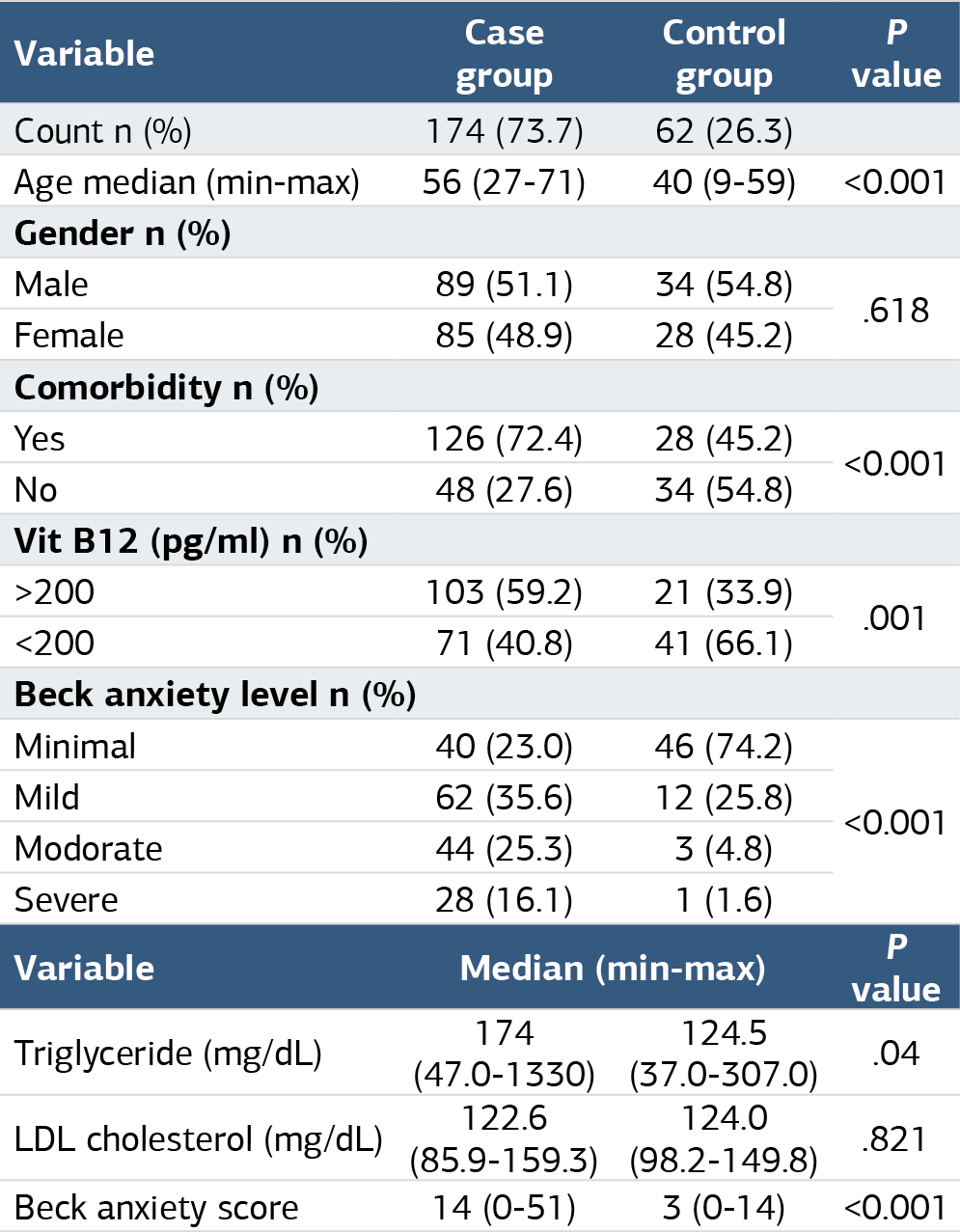
Table 2. The relationship between HbA1c and vitB12 levels and beck anxiety scale score in patients with type 2 DM

Min.: minimum, max.: maximum
Additional Information
Publisher’s Note
Bayrakol MP remains neutral with regard to jurisdictional and institutional claims.
Rights and Permissions

This work is licensed under a Creative Commons Attribution-NonCommercial 4.0 International License (CC BY-NC 4.0). To view a copy of the license, visit https://creativecommons.org/licenses/by-nc/4.0/
About This Article
How to Cite This Article
Sertaç Erarslan, Mehmet Aybars Aydin, Türkan P. Kilit. Are diabetes regulation and vitamin B12 levels associated with the frequency and level of anxiety in diabetic patients? Ann Clin Anal Med 2025;16(5):345-349. doi:10.4328/ACAM.22415
- Received:
- September 22, 2024
- Accepted:
- November 18, 2024
- Published Online:
- December 9, 2024
- Printed:
- May 1, 2025