
Abstract
AimAlthough most children with spastic diplegic cerebral palsy (SDCP) achieve independent walking levels, they are still prone to participation restrictions due to impairments in body functions, activity limitations, and child factors. This study aimed to verify a structural model of the determinants of participation of children with SDCP.MethodsA convenience sample of 40 children with SDCP (mean 9.13 standard deviation 3.2) was recruited. Body function parameters were measured using the five-times-sit-to-stand test, Timed Up and Go test, and Pediatric Balance Scale. Activity measures were Gross Motor Function Measure-88, The Gillette Functional Assessment Questionnaire 22-item skill, and the One-Minute Walk Test. Participation was measured using the Child and Adolescent Scale of Participation. A structural model of the determinants of participation was conceptualized based on the theoretical relationships available, common problems observed in spastic diplegic cerebral palsy, and the perspectives of researchers.ResultsPath analysis demonstrated that impairments in body function had a significant direct effect of 0.98 (p<0.001) on the activity construct. The activity construct had a significant direct effect on participation (β weight = 0.26; p<0.05). The child factors construct was revealed to influence the participation of children with spastic diplegic cerebral palsy significantly, with a direct effect of 0.10 (p<0.05). Finally, the proposed structural model explained 30% of the variance in the participation outcomes of children with spastic diplegic cerebral palsy.ConclusionThe participation of children with SDCP is multidimensional and requires the consideration of various factors, including physical impairments, activity limitations, and child-related factors.
Keywords
Introduction
Participation in home, school, and community life is vital for children with cerebral palsy (CP), as it reflects both individual and societal aspects of functioning and plays a pivotal role in their development and quality of life.1 It is essential for children with physical disabilities, such as those with CP, to participate in different life situations, like their typically developing peers. Participation in different life situations promotes all aspects of development, including the formation of friendships and social relationships, as well as the enhancement of intellectual, emotional, and physical well-being.2 Research indicates that children with CP, including those with spastic diplegic CP (SDCP), are more likely to experience participation restrictions than their typically developing peers.3 Participation is a multidimensional concept influenced by a range of internal and external factors, such as body functions, activity, and environmental and personal factor domains of the International Classification of Functioning, Disability, and Health (ICF). In children with SDCP, spastic walking patterns, poor functional balance, restricted lower-extremity mobility, reduced selective motor and postural control, and poor coordination have been reported to be the most significant impairments in body functions.4 Several studies have been conducted to investigate the factors that influence the participation of children with CP,2,5-6 but none have specifically focused on the determinants of participation of children with SDCP. Therefore, obtaining data on the factors influencing the participation of children with SDCP would provide valuable insights into the specific issues that need to be addressed to improve their participation outcomes. Thus, this study aimed to validate a structural model based on theoretical relationships from the existing literature to identify potential factors responsible for low participation outcomes of children with SDCP in educational, home, and social settings.
Materials and Methods
This study followed the guidelines established by the Declaration of Helsinki for conducting studies involving human participants. After providing extensive information about the study’s objectives and procedures.ParticipantsA convenience sample of 40 participants was determined using the principles of structural equation modeling (SEM), which recommends five to ten participants per estimated parameter, such as paths and covariances.6 Children who met the following criteria were included in the study: a diagnosis of SDCP according to the Surveillance of Cerebral Palsy in Europe (SCPE) criteria, an age range of 5–14 years, the ability to comprehend instructions (IQ > 0.70), the ability to walk (GMFCS I-III), and had not received BoNT-A injections in the lower extremities within the past six months. Children with uncontrolled seizures, severe comorbidities, or no clear diagnosis of SDCP were excluded from the study.AssessmentThe gross motor function was evaluated using the Gross Motor Function Measure-88 (GMFM-88). It has been suggested that GMFM-88 is a reliable tool for assessing gross motor function in children with CP.7 Lower limb functional strength was quantified using the Five-Times Sit-to-Stand Test (FTSST), which measures the ability to rise from a seated position. The FTSST measures the amount of time required for an individual to perform the tasks of standing up and sitting back down five times. It has been shown to be a reliable test for measuring functional lower-extremity strength in children with CP.8 The Timed Up and Go (TUG) test measured the dynamic balance of the study participants. The test measures the time it takes for the child to complete tasks, including standing up, walking 10 feet, turning around, and returning to the starting point, and sitting back down. TUG has been demonstrated to be a reliable and responsive test for measuring dynamic balance in children with CP.9 The Pediatric Balance Scale (PBS), a modified version of Berg’s Balance Scale, was used to assess functional balance in the context of everyday activities. The PBS has been shown to be reliable for describing the functional balance of children with CP.10 The Gillette Functional Assessment Questionnaire 22-item skill set (FAQ-22 skill set) was used to describe several locomotor activities using a five-point Likert difficulty scale. Measurement properties of the FAQ-22 questionnaire for assessing ambulatory function in children with CP have been established.11 Walking or functional ability was evaluated using the One-Minute Walk Test (1MWT). It measures the distance covered by a child during a fast 1-minute walk and has been shown to be reliable for use in children with bilateral spastic cerebral palsy, including SDCP.12 Finally, the Child and Adolescent Scale of Participation (CASP) was used to assess participation in the home, school, and community settings. The CASP demonstrates appropriate measurement properties and is effective in evaluating the participation outcomes of children with disabilities.13Conceptualizing A Structural Model of Determinants of ParticipationA conceptual model was developed based on theoretical relationships identified in published sources, common issues observed in spastic diplegia, and the perspectives of researchers in the field (Figure 1). The model aims to achieve a thorough comprehension of children’s participation by considering the various dimensions of ICF. Specifically, the proposed model includes both measurement and structural models. In the measurement model, the validity of the indicators of the latent variables (i.e., body function and activity, personal factors) that could not be directly measured was investigated. A structural model was established to predict various factors contributing to the participation of children with SDCP. A list of both the dependent and independent variables is summarized in Table 1.Ethical ApprovalThis study was approved by the Ethics Committee of Bingöl University (Date: 23.01.2024, Decision No:24/01).Statistical AnalysisRegression analysis was performed using the IBM SPSS v.25 package program, while Structural Equation Modelling (SEM) was performed with IBM AMOS (Analysis of Moment Structures version 20). SEM is an advanced statistical method that combines path and factor analysis. The proposed model of the determinants of participation by children with SDCP involves measurement and structural models. Measurement models of body function and activity and child/personal factors were confirmed using factor analysis, whereas the structural model of the direct effects of the independent variables on the dependent variables was evaluated through path analysis. In the measurement model, an acceptable factor loading or regression weight for the indicators of the construct was ≥ 0.60.14 In the structural model, the significance of a standardized path coefficient (β weight) with an α level below 0.05 was examined to determine whether a construct/independent variable had a significant impact on the dependent variable. The verification of the structural model of the determinants of participation (measurement model and direct and indirect paths) was investigated according to the goodness-of-fit indices. Goodness-of-fit indices were used to assess whether the proposed path model was an appropriate representation of the collected data. The following goodness-of-fit indices with specified acceptable values were investigated: X2/df: 3 < X2/df < 5, Root Mean Square Error of Approximation [RMSEA] < 0.08, Standardized Root Mean Residual [SRMR]: < 0.08, Comparative Fit Index [CFI]: > 0.90, Goodness of Fit Index [GFI] > 0.90, and Adjusted Goodness of Fit Index [AGFI] > 0.90.15Reporting GuidelinesThis study was reported according to the STROBE guidelines.
Results
The characteristics of the children with SDCP in this study are summarized in Table 2.Testing the Validity of Indicators of Constructs (Body Functions, Activity, and Child Factors)Confirmatory factor analysis (CFA) revealed that a decrease in lower limb functional strength and impaired dynamic and functional balance were contributors to the impairment in body functions (factor loadings/regression weights from indicator variables to body functions: 0.89 –0.97). Similarly, CFA showed that gross motor function, functional locomotor activity, and walking ability significantly contributed to activity limitations. In other words, the factor loadings and regression weights of the indicator variables for the activity construct are higher than the acceptable threshold of 0.60, with estimates ranging from 0.90 to 0.91. The measurement model of child factors revealed that only indicators of age and The Number of Years Receiving Rehabilitation Services (NYRRS) had a factor loading more than 0.60 (factor loading/regression weight from the age and NYRRS to child factor: 0.64 and 0.62, respectively). In contrast, the factor loading/regression weight from gestational age and sex indicator variables to the child factor construct was found to be less than 0.60 (factor loading/regression weight of gestational age, 0.11 and 0.24, factor loading/regression weight of gender: -0.01) (Table 1 and Figure 2).Testing the Structural Model (Direct and Indirect Effects)The results of the structural model are shown in both Figure 2 and Table 1. The results of the path analysis revealed that impairment in body functions had a significant direct effect of 0.98 (p<0.001) on activity but had no significant direct effect on participation (β weight = 0.06 and p>0.05). The activity construct had a significant direct effect on participation restriction (β weight = 0.26; p<0.05). This implies that the effect of impaired body function on participation was not immediate; rather, it was mediated by activity restrictions. The Child Factors construct was revealed to influence the participation of children with SDCP significantly, with a direct effect of 0.10 (p<0.05). The goodness-of-fit indices indicated that the proposed structural model fit the data collected from the participants (X2/df = 3.840, RMSEA = 0.067, SRMR = 0.056, CFI = 0.93, GFI = 0.92, and AGFI = 0.95). Finally, the results of the regression analysis showed that the proposed structural model explained 30% of the variation in the participation of children with SDCP (Table 3).
Discussion
This study is uniquely describes the factors that influence the participation of children with SDCP by using the SEM statistical method. In other words, the proposed structural model sought to understand the multiple factors contributing to the participation of children with SDCP in home, school, and educational settings. The structural model indicated that physical impairments and activity limitations played a significant role in the participation restrictions of children with SDCP, whereas child-related factors had a relatively low impact. This suggests that the participation of children with SDCP is complex and influenced by multiple factors, including both CP and child-related factors.
Although this research lacked a comparative design and thus did not involve a comparable group of typically developing (TD) children, previous findings have already established that children with CP are generally at risk of lower participation outcomes than their TD peers.1-2,6,16 More specifically, a previous study conducted by Calley et al.3 revealed that children with SDCP participate less in daily activities than TD children. The ICF establishes a framework for understanding the relationship between body function, activity, and participation within the context of personal and environmental factors.
As predicted, the present study revealed that decreased lower-limb muscle strength and impaired dynamic and functional balance are essential impairments in the body function of children with SDCP. This is in line with previous findings that children with SDCP often exhibit impaired trunk control.17 and weakness and spasticity in the lower extremities.18 resulting in poor dynamic balance and functional mobility.19 Additionally, trunk control is an essential component of postural control and balance reactions and plays a significant role in the development of upper and lower limb movements.20 The relationship between lower-limb muscle strength and gross motor function has also been well established.21
Consequently, impairments in body function led to activity limitations, including a reduction in gross motor functions, difficulties with functional locomotor activity, and a decrease in walking ability, as suggested by the structural model. Path analysis revealed that impairments in body function were the primary cause of activity limitation, as demonstrated by a direct effect of 0.98. This finding supports the concept of ICF, which proposes a relationship between body function, activity, and participation.22 Moreover, a direct relationship between impairment in body function and participation restrictions was not found, whereas a direct relationship between activity limitations and participation restrictions was evident. This indicates that impairment of body function had an indirect effect on participation restrictions. Therefore, it can be argued that impairments in body function result in activity limitation and subsequent participation restriction.
The measurement model of child factors indicated that both age and NYRRS were significant observed variables in explaining the construct of child factors. Importantly, the results of path analysis showed that childhood factors, including age and NYRRS, directly influenced the participation of children with SDCP. In contrast, as child factors, neither prematurity nor gender contributed to the participation of children with SDCP. It has been well documented that prematurity is closely related to deficient muscle strength, decreased muscle tone, and delayed motor function.23 In addition, the relationship between spastic diplegia and prematurity is widely recognized.24 Despite this, the results of the current study revealed that prematurity did not have a significant impact on the participation outcomes of children with SDCP. This implies that providing sufficient rehabilitation services to children with SDCP, regardless of whether they are born prematurely, may be critical for better participation outcomes.
Finally, the proposed structural model explained 30% of the variance in participation, indicating that impairments in body function, activity limitations, and factors such as age and NYRRS were significant determinants of participation in children with SDCP. Although most children with SDCP attain independent walking skills with or without walking devices, they still tend to participate less in daily activities. Therefore, to achieve better participation outcomes in children with SDCP, pediatric physical or occupational therapists should consider the determinants of participation identified in the current study.
Limitations
A limitation of the present study is that it did not consider environmental, family, or some child factors (e.g., psychological and behavioral characteristics), which are known to play a role in the participation of children with CP. This was because the researchers focused more on CP-related factors that could affect the participation of SDCP children. Thus, further understanding of the participation of children with SDCP requires including more variables related to contextual factors.
Conclusion
This article discusses the participation of children with SDCP in relation to the ICF framework, demonstrating that the participation of children with SDCP is multidimensional and influenced by multiple factors. Children’s participation is influenced by impairments in body function, activity limitations, and child factors. The measurement model of impairments in body function indicated that deficient lower-limb muscle strength and poor dynamic and functional balance are the principal impairments in body functions in children with SDCP. The structural model indicated that impairments in body function had a direct effect on activity capacity and a subsequent indirect effect on participation outcome. This suggests that the activity capacity mediates the effects of impairments in body function on participation. Furthermore, child factors, such as age and NYRRS, were found to influence the participation of children with SDCP. Finally, the proposed structural model demonstrated that impairments in body function, activity capacity, and child factors predicted the participation of children with SDCP. Therefore, targeted rehabilitation programs that address impairments in body function and activity limitations are essential to enhance the participation of children with SDCP in various life settings.
Declarations
Animal and Human Rights Statement
All procedures performed in this study were in accordance with the ethical standards of the institutional and/or national research committee and with the 1964 Helsinki Declaration and its later amendments or comparable ethical standards.
Informed Consent
Written informed consent was obtained from both participating children and their primary caregivers.
Data Availability
The datasets used and/or analyzed during the current study are not publicly available due to patient privacy reasons but are available from the corresponding author on reasonable request.
Conflict of Interest
The authors declare that there is no conflict of interest.
Funding
None.
Abbreviations
AGFI: Adjusted goodness of fit index
AMOS: Analysis of Moment Structures
CASP: Child and Adolescent Scale of Participation
CFI: Comparative fit index
CP: Cerebral palsy
FAQ: Functional Assessment Questionnaire
FTSST: Five-times-sit-to-stand test
GMFCS: Gross Motor Function Classification System
GMFM: Gross Motor Function Measure
ICF: International Classification of Functioning, Disability, and Health
NYRRS: Number of years receiving rehabilitation services
PBS: Pediatric Balance Scale
RMSEA: Root mean square error of approximation
SDCP: Spastic diplegic cerebral palsy
SEM: Structural equation modelling
SPSS: Statistical Package for the Social Sciences
SRMR: Standardized root mean residual
TUG: Timed Up and Go
References
- Arakelyan S, Maciver D, Rush R, O’Hare A, Forsyth K. Community-based participation of children with and without disabilities. Dev Med Child Neurol. 2020;62(4):445-453. doi:10.1111/dmcn.14402
- Abu-Dahab SMN, Alheresh RA, Malkawi SH, Saleh M, Wong J. Participation patterns and determinants of participation of young children with cerebral palsy. Aust Occup Ther J. 2021;68(3):195-204.
- Calley A, Williams S, Reid S, et al. Comparison of activity, participation and quality of life in children with and without spastic diplegia cerebral palsy. Disabil Rehabil. 2012;34(15):1306-1310. doi:10.3109/09638288.2011.641662
- Carriero A, Zavatsky A, Stebbins J, Theologis T, Shefelbine SJ. Determination of gait patterns in children with spastic diplegic cerebral palsy using principal components. Gait Posture. 2009;29(1):71-75. doi:10.1016/j.gaitpost.2008.06.011
- Chiarello LA, Bartlett DJ, Palisano RJ, et al. Determinants of participation in family and recreational activities of young children with cerebral palsy. Disabil Rehabil. 2016;38(25):2455-2468. doi:10.3109/09638288.2016.1138548
- Palisano RJ, Chiarello LA, Orlin M, et al. Determinants of intensity of participation in leisure and recreational activities by children with cerebral palsy. Dev Med Child Neurol. 2011;53(2):142-149. doi:10.1111/j.1469-8749.2010.03819.x
- Ataç T, Özal C, Kerem Günel M. Reliability and validity of the Turkish version of the Gross Motor Function Measure-88 and -66 in children with cerebral palsy. Children (Basel). 2024;11(9):1076. doi:10.3390/children11091076
- Kumban W, Amatachaya S, Emasithi A, Siritaratiwat W. Five-times-sit-to-stand test in children with cerebral palsy: reliability and concurrent validity. NeuroRehabilitation. 2013;32(1):9-15. doi:10.3233/nre-130818
- Carey H, Martin K, Combs-Miller S, Heathcock JC. Reliability and responsiveness of the Timed Up and Go Test in children with cerebral palsy. Pediatr Phys Ther. 2016;28(4):401-408. doi:10.1097/pep.0000000000000301
- Chen CL, Shen IH, Chen CY, Wu CY, Liu WY, Chung CY. Validity, responsiveness, minimal detectable change, and minimal clinically important change of Pediatric Balance Scale in children with cerebral palsy. Res Dev Disabil. 2013;34(3):916-922. doi:10.1016/j.ridd.2012.11.006
- Gorton GE, Stout JL, Bagley AM, Bevans K, Novacheck TF, Tucker CA. Gillette Functional Assessment Questionnaire 22-item skill set: factor and Rasch analyses. Dev Med Child Neurol. 2011;53(3):250-255.
- McDowell BC, Humphreys L, Kerr C, Stevenson M. Test-retest reliability of a 1-minute walk test in children with bilateral spastic cerebral palsy. Gait Posture. 2009;29(2):267-269. doi:10.1016/j.gaitpost.2008.09.010
- Bedell GM. Developing a follow-up survey focused on participation of children and youth with acquired brain injuries after discharge from inpatient rehabilitation. NeuroRehabilitation. 2004;19(3):191-205. doi:10.3233/nre-2004-19303
- Bingol H, Gunel MK, Asena Sel S, Burc E, Fidan H. Validity and reliability of the Turkish version of the KIDSCREEN-27 for individuals with cerebral palsy. Percept Mot Skills. 2023;130(1):317-339. doi:10.1177/00315125221136947
- Gürbüz S, Şahin F. Sosyal Bilimlerde Araştırma Yöntemleri. Seçkin Yayıncılık; 2014:271.
- Ramstad K, Jahnsen R, Skjeldal OH, Diseth TH. Parent-reported participation in children with cerebral palsy: the contribution of recurrent musculoskeletal pain and child mental health problems. Dev Med Child Neurol. 2012;54(9):829-835. doi:10.1111/j.1469-8749.2012.04341.x
- Heyrman L, Desloovere K, Molenaers G, et al. Clinical characteristics of impaired trunk control in children with spastic cerebral palsy. Res Dev Disabil. 2013;34(1):327-334. doi:10.1016/j.ridd.2012.08.015
- Reid SL, Pitcher CA, Williams SA, et al. Does muscle size matter? The relationship between muscle size and strength in children with cerebral palsy. Disabil Rehabil. 2015;37(7):579-584. doi:10.3109/09638288.2014.935492
- Panibatla S, Kumar V, Narayan A. Relationship between trunk control and balance in children with spastic cerebral palsy: a cross-sectional study. J Clin Diagn Res. 2017;11(9):5-8. doi:10.7860/jcdr/2017/28388.10649
- Söke F, Ataoğlu NEE, Öztekin MF, et al. Impaired trunk control and its relationship with balance, functional mobility, and disease severity in patients with cervical dystonia. Turk J Med Sci. 2023;53(1):405-412.
- Damiano DL, Arnold AS, Steele KM, Delp SL. Can strength training predictably improve gait kinematics? A pilot study on the effects of hip and knee extensor strengthening on lower-extremity alignment in cerebral palsy. Phys Ther. 2010;90(2):269-279. doi:10.2522/ptj.20090062
- Wright FV, Rosenbaum PL, Goldsmith CH, Law M, Fehlings DL. How do changes in body functions and structures, activity, and participation relate in children with cerebral palsy? Dev Med Child Neurol. 2008;50(4):283-289. doi:10.1111/j.1469-8749.2008.02037.x
- Dusing SC, Kyvelidou A, Mercer VS, Stergiou N. Infants born preterm exhibit different patterns of center-of-pressure movement than infants born at full term. Phys Ther. 2009;89(12):1354-1362. doi:10.2522/ptj.20080361
- Huntsman R, Lemire E, Norton J, Dzus A, Blakley P, Hasal S. The differential diagnosis of spastic diplegia. Arch Dis Child. 2015;100(5):500-504. doi:10.1136/archdischild-2014-307443
Tables
Table 1. Measurement model of the body function and activity and personal factors
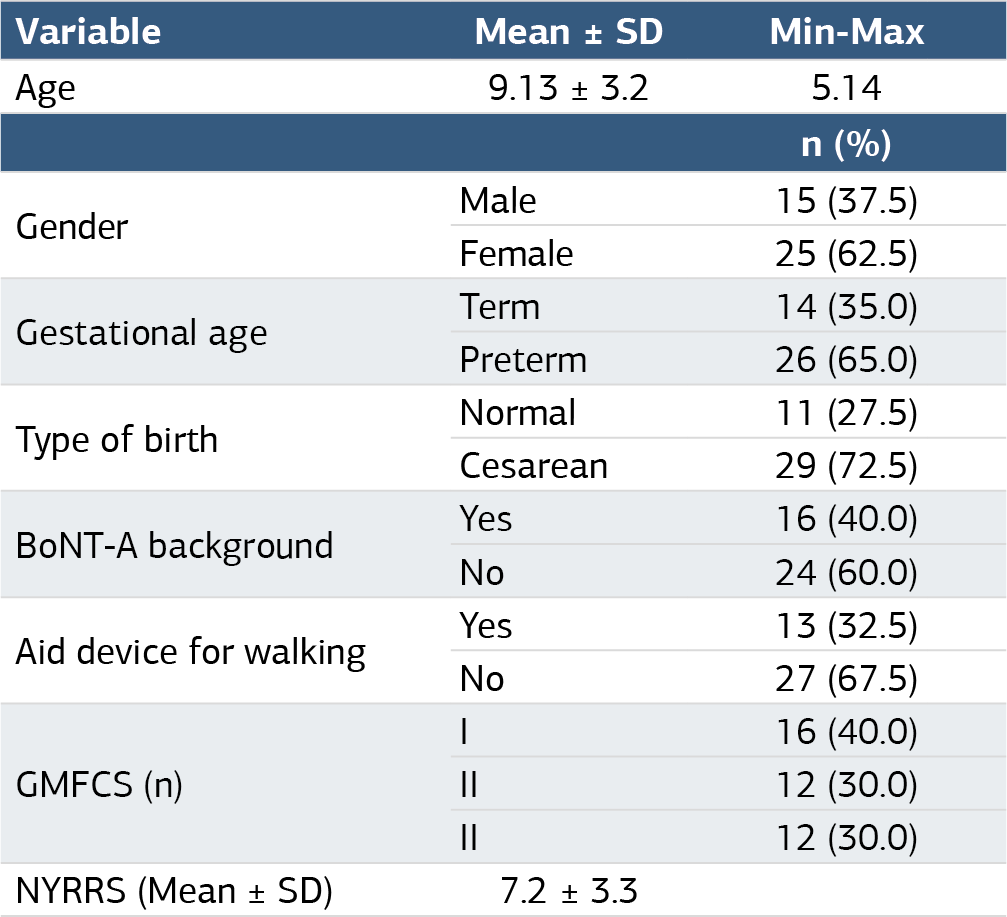
NYRRS, Number of years receiving rehabilitation services; CASP, Child and adolescents scale of participation.
Table 2. Characteristics of participants in the study
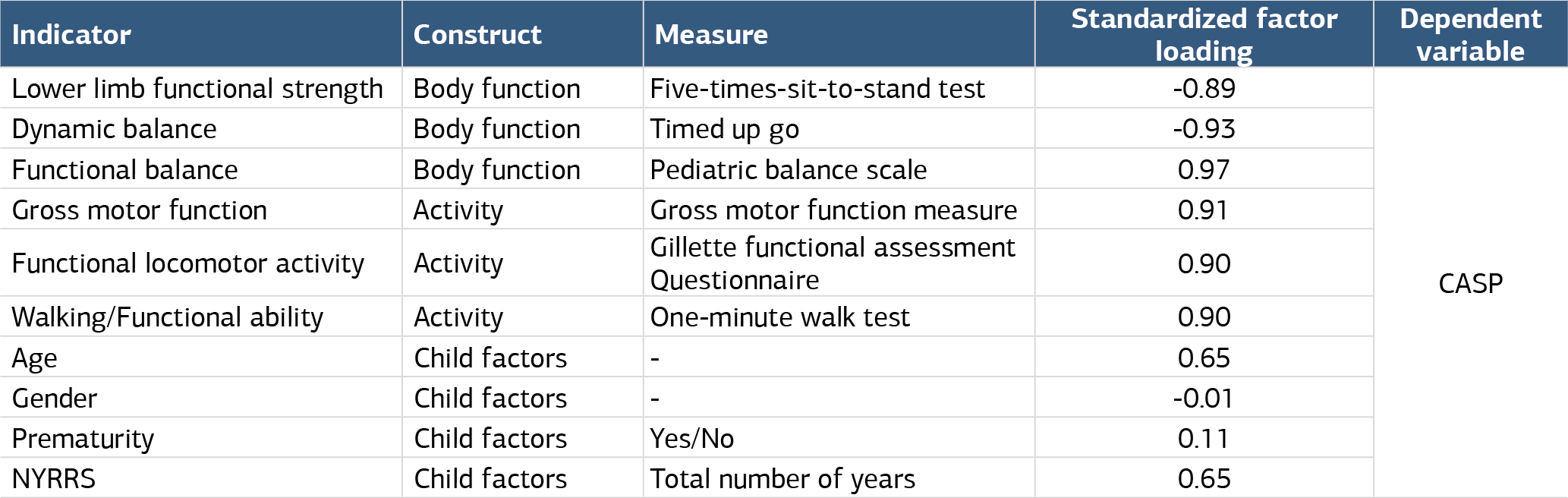
BoNT-A, Botulinum toxin type-A; NYRRS, Number of years receiving rehabilitation services; GMFCS, Gross motor function classification system.
Table 3. Multiple regression analysis for predicting participation of children with diplegic cerebral palsy
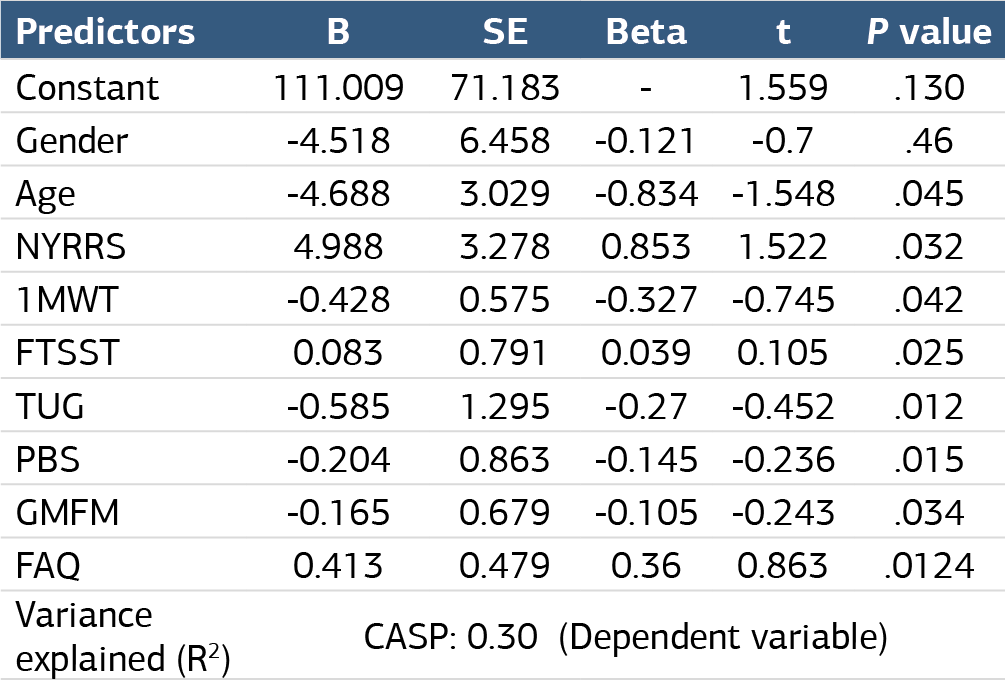
SE, Standard error; NYRRS; Number of years receiving rehabilitation; 1 MWT, One-minute walk test; FTSST, Five-times-sit-to-stand test; TUG, Timed up and go; PBS, Pediatric balance scale; GMFM, Gross motor function measure; FAQ, Gillette functional assessment questionnaire.
Figures
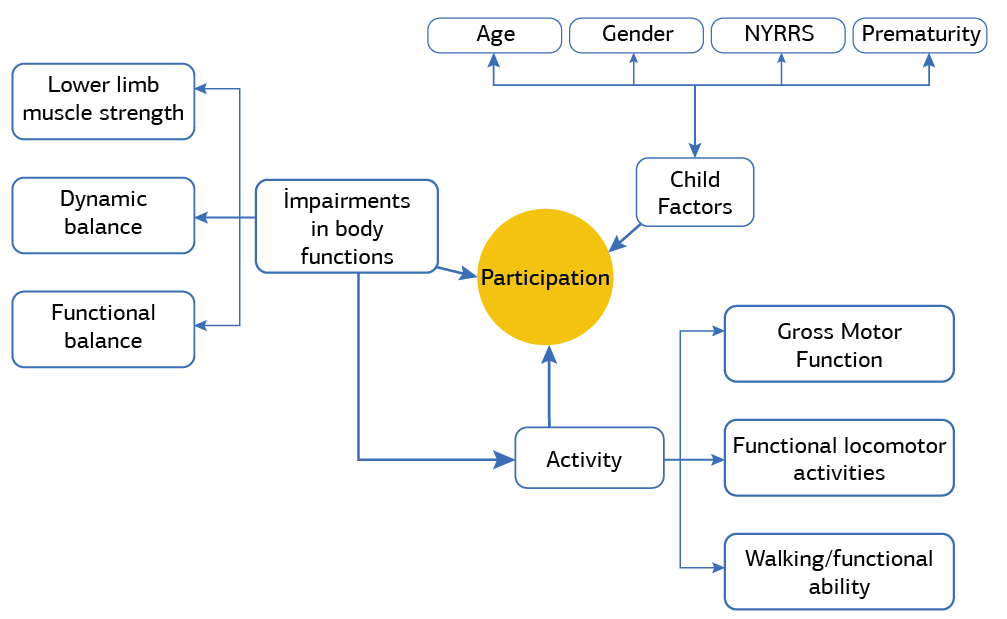
Figure 1. A proposed path model of determinants of participation by children with spastic diplegic cerebral palsy
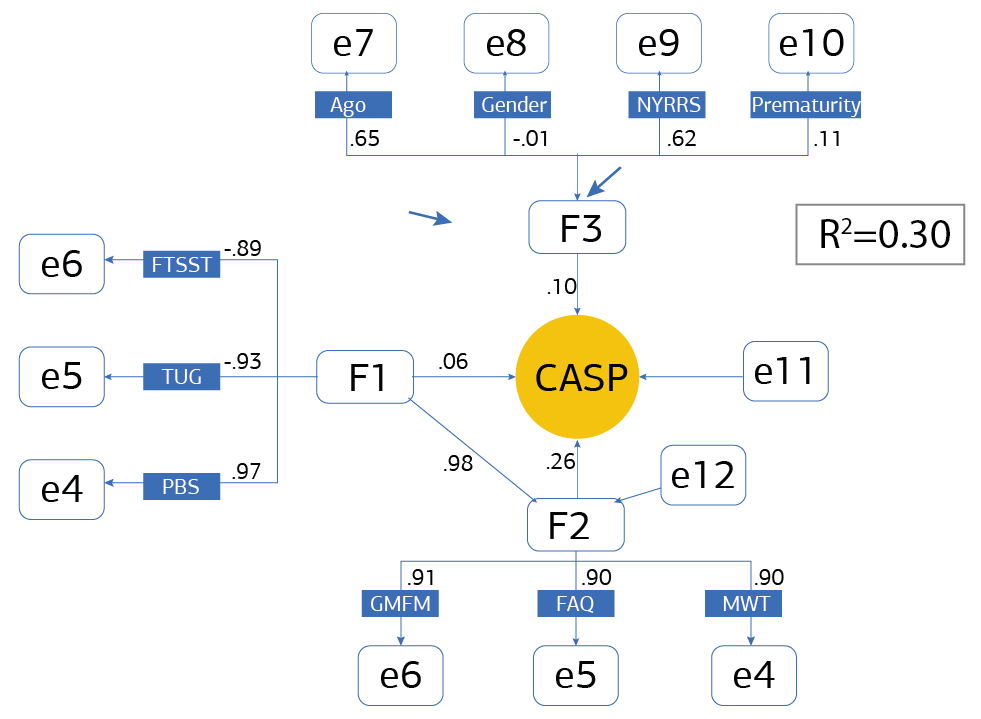
Figure 2. Results of path model (p
Additional Information
Publisher’s Note
Bayrakol MP remains neutral with regard to jurisdictional and institutional claims.
Rights and Permissions

This work is licensed under a Creative Commons Attribution-NonCommercial 4.0 International License (CC BY-NC 4.0). To view a copy of the license, visit https://creativecommons.org/licenses/by-nc/4.0/
About This Article
How to Cite This Article
Hasan Bingöl, Dilan Demirtaş Karaoba. Determinants of participation of children with diplegic cerebral palsy in educational, home, and social settings. Ann Clin Anal Med 2025;16(6):410-414. doi:10.4328/ACAM.22444
Publication History
- Received:
- 08.10.2024
- Accepted:
- 24.12.2024
- Published Online:
- 10.01.2025
- Printed:
- 01.06.2025