
Abstract
AimDiabetic ocular complications, especially diabetic retinopathy (DR), are a major cause that leads to irreversible blindness. Awareness of diabetes and its ocular complications may help in preventing vision loss.
This study evaluates the awareness of people (diabetics and non-diabetics) about the complications of diabetes in the eye, especially the retina.MethodsThis study is a questionnaire-based cross-sectional study. Data was collected through an online self-administered questionnaire. The target people from 16 years to 75years in both males and females The duration of the study from May 2024 to September 2024
The comparisons between the awareness about diabetic retinopathy and the association of awareness about diabetic retinopathy and educational level were analyzed using SPSS 24.0 version software.ResultsThe study included 153 individuals. The age range of participants was 16–75, and the most dominant age group was those with an age range of 46–55 (35.7%).
The ratio of male to female was 58.8:41.2, regarding education, the most dominant group was those who had a university education, 80 (52.3%), then higher education level 46 (30.1). Most of the participants, 127 (83%) non-diabetic and 26 (17%) diagnosed with Diabetes mellitus. Of most of the participants, 141(80 males and 61 females), 92.2% of participants reported that diabetes affects the retina, and 87(45 males and 42 females) 56.9% agreed with the relation between diabetic retinopathy and blindness. 121(67 males and 54 females) 79.1% of participants reported that the control of blood glucose level can prevent diabetic retinopathy
There was high awareness among the participants, diabetic and non-diabetic, regarding diabetic retinopathy (DR), but annual check-ups were done in less than half of the patients. Improvement is required for scheduling annual eye examinations for the early detection of diabetic retinopathy (DR).ConclusionThe results of this study showed a high level of self-report awareness regarding the association between DM and retinopathy. These results are in harmony with other local and international studies. All these studies found that the awareness regarding the association between DM and retinopathy is high among the people of higher education. This is due to the spread of social media, which has led to increased awareness among many people.
The strength of this study included patients of all ages from 16 to 75, and Most of the participants have a university education or higher.
Keywords
Introduction
Diabetes mellitus (DM) is a chronic metabolic disorder characterized by high glucose levels and the body’s inability to produce or use insulin, which leads to multiple microvasculopathic abnormalities of the eye, leading to diabetic retinopathy (DR).1
Diabetic retinopathy (DR) is one of the major causes of visual disability, leading to irreversible blindness among adults. The pathogenesis of the disease emerges as neuroretinopathy and vascular changes in the retinal blood vessels because of a breakdown of the blood-retinal barrier and obliteration of the retinal capillaries.2 Many systematic reviews of 59 population-based studies estimated the worldwide prevalence of diabetic retinopathy (DR) to be 35%.3
Diabetic retinopathy (DR) is one of the common complications of Diabetes mellitus (DM). The duration of DM is a significant factor in developing DR. The longer the duration of DM, the higher the risk for DR. It affects about 1/5th of diabetic patients with a duration of disease from 10 to 15 years.4 According to studies from different areas in Saudi Arabia, the prevalence of diabetic retinopathy was found to be 28%-36% among diabetic patients.5-6
Studies in The Kingdom of Saudi Arabia (KSA) indicate a significant increase in the prevalence and incidence rates of type 1 diabetes mellitus, mainly among children and adolescents.7
According to many studies estimated that diabetes mellitus is a common disease in Saudi Arabia about 23%-32% of its adult population suffers from the disease. Understanding the level of public awareness of diabetes and its affection on the retina helps the decision maker to plan a future program that increases the level of knowledge in diagnosis, complications, and management among patients. The level of awareness and knowledge about diabetes is a crucial part of the early diagnosis, management, and prevention of potential visual impairment.8
Materials and Methods
This study is a questionnaire-based, cross-sectional study of diabetic and non-diabetic individuals. Data was collected through an online self-administered questionnaire (Table 1). The target people were from 16-75 years old, both sexes (male and female). The duration of the study is from May 2024 to September 2024.Ethical ApprovalThis study was approved by the Ethics Committee of Northern Border University (Date: 19.05.2024, Decision No: 24/54/H). (Local Committee of Bioethics HAP-09-A-043)Statistical AnalysisThe comparisons between the awareness about diabetic retinopathy and the association of awareness about diabetic retinopathy and educational level were analyzed using SPSS 24.0 version software.Reporting GuidelinesThis study was reported in accordance with the STROBE guideline.
Results
The present study included 153 individuals. The age range of participants was 16–75, and the most dominant age group was those with an age range of 46–55 (35.7%).
The ratio of males to females was 58.8:41.2, regarding education, the most dominant group was those who had a university education, 80 (52,3%), then higher education level above university education, 46 (30.1). Most of the participants 127 (83%) non-diabetic and 26 (17%) diagnosed with DM. Of most of the participants, 141(80 male and 61female), 92.2% of participant reported that diabetes affects the retina (Table 2, Figure 1)
Regarding the relation between diabetic retinopathy and blindness, 87 (45male and 42 female) 56.9% were aware of the relation between diabetic retinopathy and blindness (Figure 2) Of the participant, 121(67 male and 54 female), 79.1%of participants reported that the control of blood glucose levels can prevent diabetic retinopathy Figure 3.
The main source of information about diabetes mellitus and diabetic retinopathy was reported to be doctors (43.1%), followed by social media (22.2%).
The participants’ responses to awareness are as follows There were 141 (92.2%) who were aware that diabetes mellitus could affect the retina, whereas 121 (79.1%) were aware that control of blood sugar reduces the risk of DR, and 79 (51,6) believed that the diabetic retinopathy can treatable disease and 87(56.9%) patients were aware that DR could lead to blindness. 79 (51.6%) reported that the examination of the eye in diabetic patients every 6 months, and the reason for not having an eye examination is a lack of knowledge about the disease in 66 (43.1%). The main source of information about diabetes mellitus and DR was reported to be by doctors (43.1%), followed by social media (22.2%).
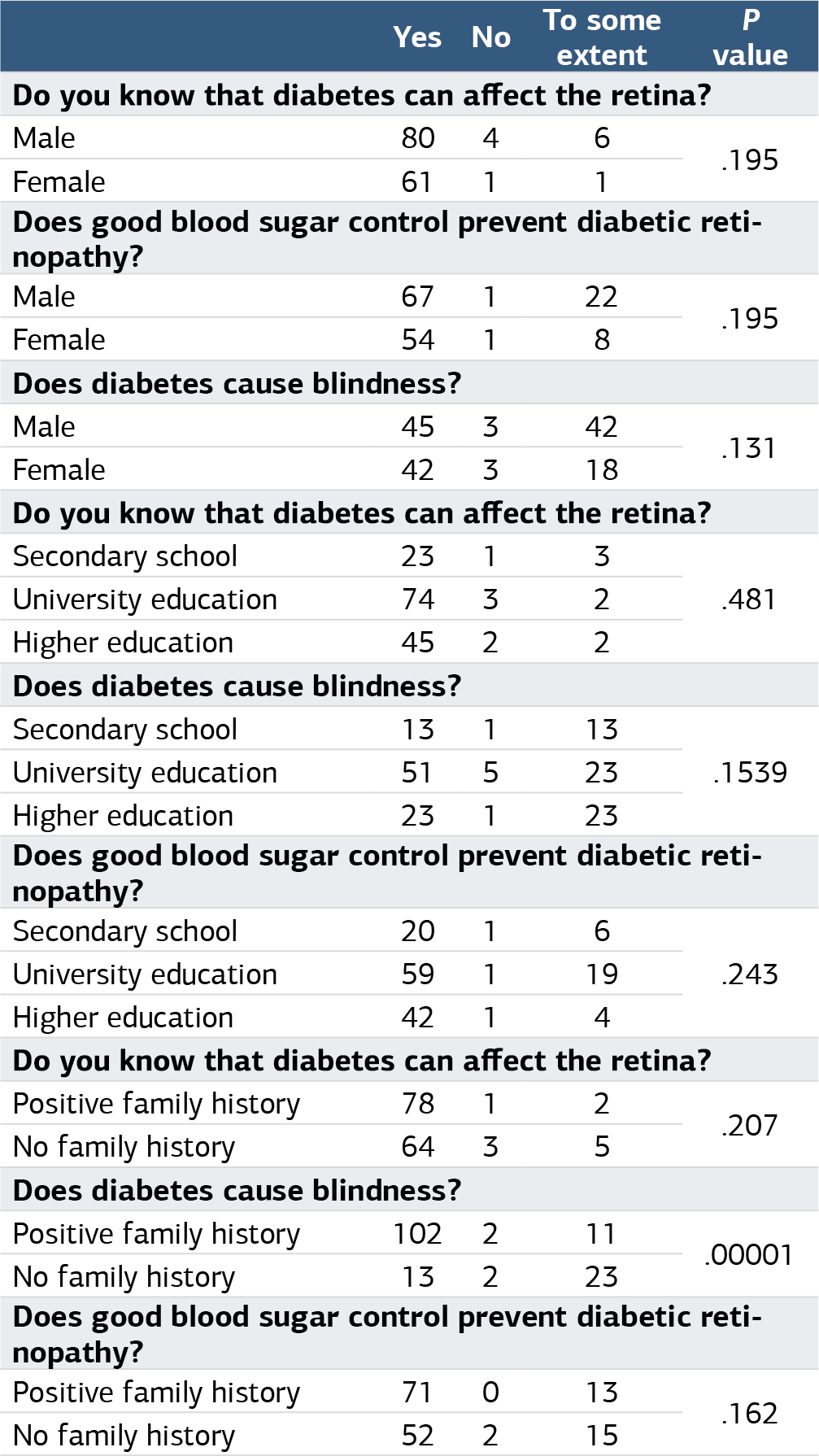
The awareness that (diabetes mellitus can cause diabetic retinopathy, that control of diabetes mellitus reduces the risk of diabetic retinopathy, and that diabetic retinopathy can lead to blindness) was compared with different demographic variables as male and female participants and with the different levels of education by using the Chi-square test (Table 3).
No significant association between the sex and the awareness that diabetes mellitus can cause diabetic retinopathy, that control of diabetes mellitus reduces the risk of diabetic retinopathy, and that diabetic retinopathy can lead to blindness (P-value 0.195,0.195 and 0.131, respectively) also No significant difference There between the university educational level and the higher education.
By the comparison between the association between the family history and the awareness that DM can cause retinopathy, that control of DM reduces the risk of DR, and that DR can lead to blindness, there was no significant association between the family history and the awareness that the DM can cause the retinopathy (p-value 0.207) and that that control of DM reduces the risk of diabetic retinopathy (P-value 0.162) while there was a significant association between the family history and the awareness that diabetes can cause the blindness (p-value is <0.00001).
By the comparison between the association between the family history and the awareness that DM can cause retinopathy, that control of DM reduces the risk of DR, and that DR can lead to blindness, there was no significant association between the family history and the awareness that the DM can cause the retinopathy (p-value 0.207) and that that control of DM reduces the risk of diabetic retinopathy (P-value 0.162) while there was a significant association between the family history and the awareness that diabetes can cause the blindness (p-value is <0.00001).
Discussion
The study aimed to assess the level of non-diabetic and diabetic patients’ awareness in the Northern Border Governorate, KSA. Diabetes mellitus is a common cause of Diabetic retinopathy, which is one of the causes of visual impairment and blindness, and the awareness of the population of the complications of diabetes plays an important role in the prevention of diabetic retinopathy.2
This study found that the awareness among the diabetic and non-diabetic participants is high regarding Diabetic Retinopathy, with (91.7%) being aware that DM can affect the retina. 57% are aware that DR can lead to blindness. 88.3 of the patients were also aware that control of blood sugar may reduce the risk for DR.
The results of this study showed a high level of self-reported awareness regarding the association between DM and retinopathy, this result is in harmony with other international and local studies.9-13 All these studies found that the awareness regarding the association between DM and retinopathy is high between the peoples of higher education whereas one study showed the lowest awareness from the rural area in India.14 This is due to the spread of social media, which has led to increased awareness among many people.
Some studies concluded that WhatsApp was the social media most used in Saudi Arabia by the participants to communicate and obtain information about diabetes, and social media was useful in improving education, awareness, and communication among people with diabetes.15
By comparing the present study with the other studies in different regions of Saudi Arabia, we found that in this study, the awareness of participants by diabetic retinopathy was 91.5% among the participants in the Northern Border region, KSA and 42% of them got their information from the doctors. Whereas studies from different areas in Saudi Arabia reported different levels of knowledge about diabetic retinopathy in Hail, Taif, and Jeddah, and studies from King Abdul Aziz University Hospital, Jeddah, there were 75.62%, 64%, 82.6%, and 61%, respectively, who had awareness.10-11,16-17 In a recent study in Madinah, Saudi Arabia, among 240 patients who participated, less than half of the patients had a fair level of knowledge (47.1%) and a good level of knowledge (42.1%) about diabetic retinopathy.18
The results of the studies all over the world showed the level of awareness of diabetic retinopathy high in India 50%, USA 52%, and Oman 75%.12,19-20 The awareness was higher in Myanmar, 86%, and Nigeria, 84.3%.21-22
The variation in the level of awareness between different studies and this study was due to the variation in the level of education of each population in our study. All participants had a high level of education, and the percentage of education among the participants was high: 17% secondary, 30% university education, 53% higher than university education. Higher awareness was significantly associated with a higher level of education.12 In a Saudi study, such a correlation between awareness and education was reported, in this study, a significant association between educational level (in this study, 43.5% of participants have higher education level) and awareness about DM and retinopathy. This was similar to the studies from Jordan9 and Malaysia, both of which showed that higher educational people had better awareness than those with low educational levels.
In this study, there were 79% of participants awarded the control of blood sugar-preventing retinopathy. In a similar study, (70.8%) of patients reported good levels of blood glucose control the DR.23 Other studies concluded poor diabetic control among diabetes mellitus type 2 patients, which resulted in a high rate of complications.24
The main source of information about DM and DR (59.4%) from their doctors, followed by social media (20.3%) and their family (11.3) and friends (9.7); this is similar to the findings from the two studies from Jordan and Malaysia.9,25
In our study, (54%) of patients reported a family history of diabetes; this percentage was less than that in other studies conducted in Madinah (92%).19 And studies in Riyadh, Saudi Arabia, in which 70% and 79.8% of patients had a family history of diabetes.24
The strength of this study included patients of all ages from 16 to 75, and most of the participants have a university education or higher.
Limitations
The present study has some limitations. Because the study was shown only in one Saudi Arabian region, the generalization of the results is limited. Additionally, the non-probability sampling method may be subjected to selection bias. The information regarding diabetic retinopathy awareness was gathered via self-reported responses to questionnaire items rather than from medical records, so the participant may have over-reported.
Conclusion
The study found a high level of awareness of diabetic retinopathy among the participants, and there was an association between the level of education and awareness. Also, medical doctors are the main source of information.
Declarations
Animal and Human Rights Statement
All procedures performed in this study were in accordance with the ethical standards of the institutional and/or national research committee and with the 1964 Helsinki Declaration and its later amendments or comparable ethical standards.
Informed Consent
Electronic informed consent was obtained from all participants before they completed the online questionnaire.
Data Availability
The datasets used and/or analyzed during the current study are not publicly available due to patient privacy reasons but are available from the corresponding author on reasonable request.
Conflict of Interest
The authors declare that there is no conflict of interest.
Funding
None.
Abbreviations
DM: Diabetes mellitus
DR: Diabetic retinopathy
KSA: Kingdom of Saudi Arabia
SPSS: Statistical Package for the Social Sciences
References
- Smith LL, Burnet SP, McNeil JD. Musculoskeletal manifestations of diabetes mellitus. Br J Sports Med. 2003;37(1):30-35. doi:10.1136/bjsm.37.1.30
- American Diabetes Association. Diagnosis and classification of diabetes mellitus. Diabetes Care. 2011;34(suppl 1). doi:10.2337/dc11-s062
- Teo ZL, Tham YC, Yu M, et al. The global prevalence of diabetic retinopathy and projection of burden through 2045: systematic review and meta-analysis. Ophthalmology. 2021;128(11):1580-1591. doi:10.1016/j.ophtha.2021.04.027
- Voigt M, Schmidt S, Lehmann T, et al. Prevalence and progression rate of diabetic retinopathy in type 2 diabetes patients in correlation with the duration of diabetes. Exp Clin Endocrinol Diabetes. 2018;126(9):570-576. doi:10.1055/s-0043-120570
- Hajar S, Hazmi AA, Wasli M, Mousa A, Rabiu M. Prevalence and causes of blindness and diabetic retinopathy in Southern Saudi Arabia. Saudi Med J. 2015;36(4):449-455. doi:10.15537/smj.2015.4.10371
- Ahmed RA, Khalil SN, Al-Qahtani MAA. Diabetic retinopathy and the associated risk factors in diabetes type 2 patients in Abha, Saudi Arabia. J Family Community Med. 2016;23(1):18-24. doi:10.4103/2230-8229.172225
- Habeb AM, Al-Magamsi MS, Halabi S, Eid IM, Shalaby S, Bakoush O. High incidence of childhood type 1 diabetes in Al-Madinah, North West Saudi Arabia, 2004-2009. Pediatr Diabetes. 2011;12(8):676-681. doi:10.1111/j.1399-5448.2011.00765.x
- Alqurashi KA, Aljabri KS, Bokhari SA. Prevalence of diabetes mellitus in a Saudi community. Ann Saudi Med. 2011;31(1):19-23. doi:10.4103/0256-4947.75773
- Bakkar MM, Haddad MF, Gammoh YS. Awareness of diabetic retinopathy among patients with type 2 diabetes mellitus in Jordan. Diabetes Metab Syndr Obes. 2017;10:435-441. doi:10.2147/dmso.s140841
- Al Zarea BK. Knowledge, attitude, and practice of diabetic retinopathy amongst the diabetic patients of AlJouf and Hail Province of Saudi Arabia. J Clin Diagn Res. 2016;10(5). doi:10.7860/jcdr/2016/19568.7862
- Alzahrani SH, Bakarman MA, Alqahtani SM, et al. Awareness of diabetic retinopathy among people with diabetes in Jeddah, Saudi Arabia. Ther Adv Endocrinol Metab. 2018;9(4):103-112. doi:10.1177/2042018818758621
- Khandekar R, Harby SA, Harthy HA, Lawatti JA. Knowledge, attitude, and practice regarding eye complications and care among Omani persons with diabetes: a cross-sectional study. Oman J Ophthalmol. 2010;3(2):60-65. doi:10.4103/0974-620x.64228
- Cetin EN, Zencir M, Fenkci S, Akin F, Yildirim C. Assessment of awareness of diabetic retinopathy and utilization of eye care services among Turkish diabetic patients. Prim Care Diabetes. 2013;7(4):297-302.
- Balasubramaniyan N, Ganesh Kumar S, Ramesh Babu K, Subitha L. Awareness and practices on eye effects among people with diabetes in rural Tamil Nadu, India. Afr Health Sci. 2016;16(1):210-217. doi:10.4314/ahs.v16i1.28
- Alzahrani A, Alanzi T. Social media use by people with diabetes in Saudi Arabia: a survey about purposes, benefits, and risks. Diabetes Metab Syndr Obes. 2019;12:2363-2372. doi:10.2147/dmso.s208141
- Almalki NR, Almalki TM, Alswat K. Diabetics retinopathy knowledge and awareness assessment among the type 2 diabetics. Open Access Maced J Med Sci. 2018;6(3):574-577. doi:10.3889/oamjms.2018.121
- Alasiri RA, Bafaraj AG. Awareness of diabetic retinopathy among diabetic patients in King Abdulaziz University Hospital, Jeddah, Saudi Arabia. Ann Int Med Dent Res. 2016;2:42-45. doi:10.21276/aimdr.2016.2.6.me10
- Albadrani MS, Alrehaili AM, Alahmadi SH, et al. Awareness of diabetic retinopathy among patients with type 2 diabetes mellitus in primary healthcare centers in Madinah, Saudi Arabia: a cross-sectional study. Cureus. 2023;15(11). doi:10.7759/cureus.49718
- Namperumalsamy P, Kim R, Kaliaperumal K, Sekar A, Karthika A, Nirmalan PK. A pilot study on awareness of diabetic retinopathy among nonmedical persons in South India: the challenge for eye care programmes in the region. Indian J Ophthalmol. 2004;52(3):247-251.
- Muñoz B, O’Leary M, Fonseca-Becker F, et al. Knowledge of diabetic eye disease and vision care guidelines among Hispanic individuals in Baltimore with and without diabetes. Arch Ophthalmol. 2008;126(7):968-974. doi:10.1001/archopht.126.7.968
- Muecke JS, Newland HS, Ryan P, et al. Awareness of diabetic eye disease among general practitioners and diabetic patients in Yangon, Myanmar. Clin Exp Ophthalmol. 2008;36(3):265-273. doi:10.1111/j.1442-9071.2008.01724.x
- Mohammed I, Waziri AM. Awareness of diabetic retinopathy amongst diabetic patients at the Murtala Mohammed Hospital, Kano, Nigeria. Niger Med J. 2009;50:38-41.
- Amir AH, Jadoon MZ, Zeb S, Sabir S. Awareness of diabetic retinopathy amongst known diabetics. J Postgrad Med Inst. 2007;21:10-15.
- AlHargan MH, AlBaker KM, AlFadhel AA, et al. Awareness, knowledge, and practices related to diabetic retinopathy among diabetic patients in primary healthcare centers at Riyadh, Saudi Arabia. J Family Med Prim Care. 2019;8(2):373-377. doi:10.4103/jfmpc.jfmpc_422_18
- Tajunisah I, Wong P, Tan L, Rokiah P, Reddy S. Awareness of eye complications and prevalence of retinopathy in the first visit to eye clinic among type 2 diabetic patients. Int J Ophthalmol. 2011;4(5):519-524.
Tables
Table 1. The Questionnaire

Table 2. Diabetes participant’s awareness about diabetic retinopathy (n = 153)
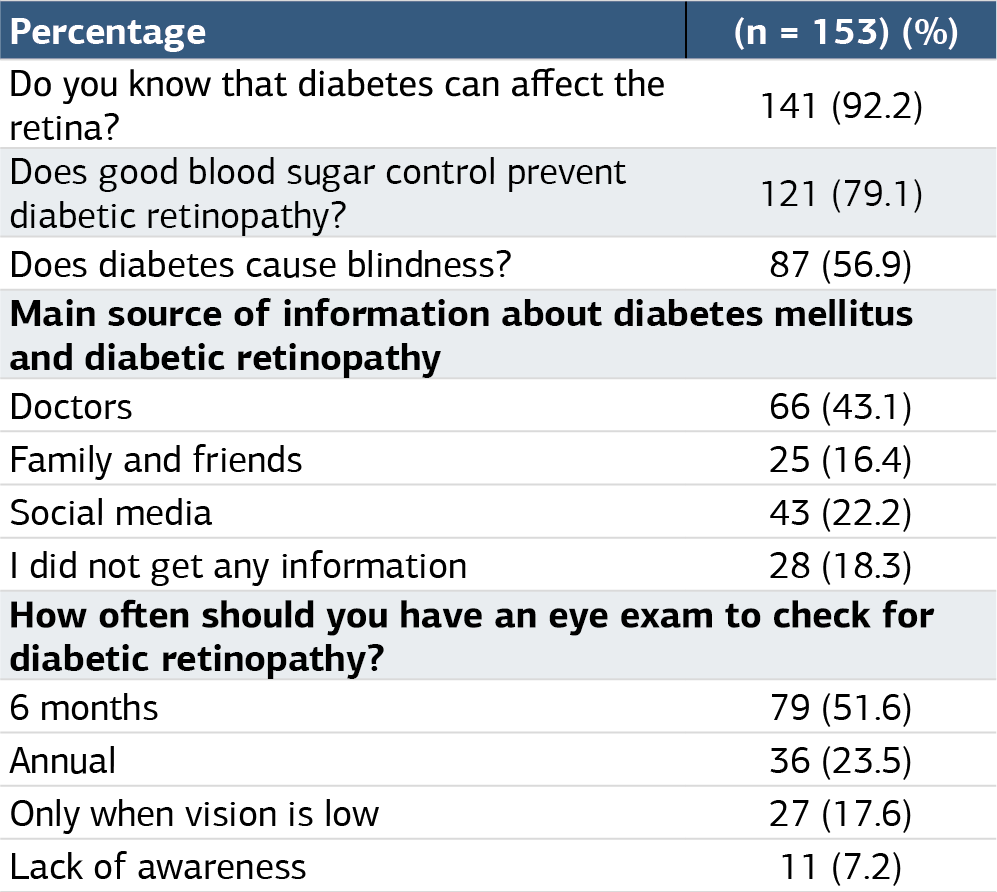
Table 3. Association between sex of the participants and awareness of diabetic retinopathy (DR) &Association between the educational level of the participants and awareness of diabetic retinopathy (DR) & The family history of the participant and awareness of diabetic retinopathy
Figures
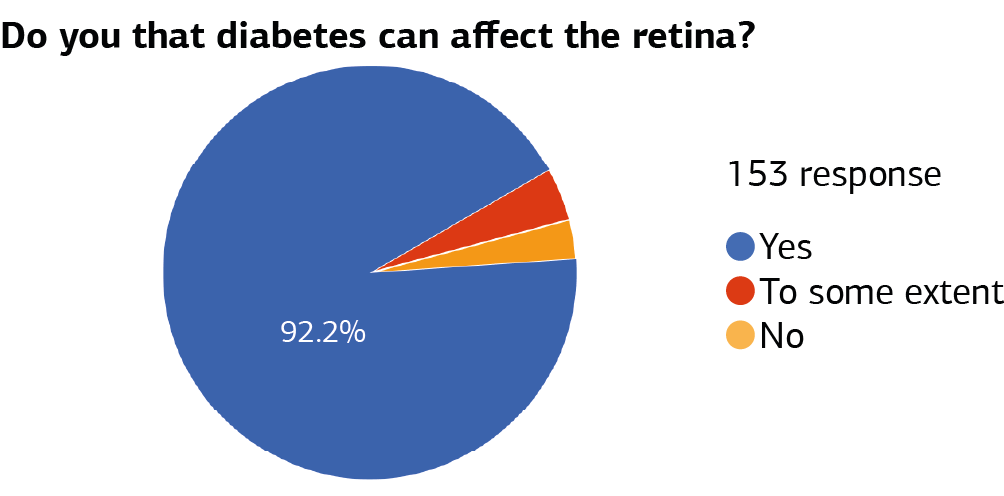
Figure 1. The responses to the question: Do you know that diabetes can affect the retina?

Figure 2. The responses to the question: Does diabetes causes blindness?

Figure 3. The responses to the question: Does good blood sugar control prevent diabetic retinopathy?
Additional Information
Publisher’s Note
Bayrakol MP remains neutral with regard to jurisdictional and institutional claims.
Rights and Permissions

This work is licensed under a Creative Commons Attribution-NonCommercial 4.0 International License (CC BY-NC 4.0). To view a copy of the license, visit https://creativecommons.org/licenses/by-nc/4.0/
About This Article
How to Cite This Article
Mohammed M. Mosaed, Ahmed M S Hegazy, Maha Mahmoud Abdul-latif, Saad H Elshafey, Amgad N. Elsawy, Mohammed M.Ismail, Randa Faiz Alenzi, Samiah Nasser Aljohani. The extent of awareness and knowledge of people in the Northern Border Region of Saudi Arabia about the effect of diabetes mellitus on the retina. Ann Clin Anal Med 2025;16(5):364-368. doi:10.4328/ACAM.22463
Publication History
- Received:
- 17.10.2024
- Accepted:
- 25.11.2024
- Published Online:
- 05.12.2024
- Printed:
- 01.05.2025