
Evaluation of patients applying to the emergency department for 3 years: a city hospital example
Three-year ED admissions
Authors
Abstract
AimThis study seeks to gather data that can aid in the organization of emergency departments to address overcrowding, specifically during the time of patient arrival (time and day). Additionally, it aims to contribute to the existing body of knowledge on the overall patterns of emergency department visits and demographic factors that could be useful in mitigating overcrowding in emergency department.
MethodsThe study was conducted as a cross-sectional retrospective study. The study examined the data of patients who were admitted to the Emergency Department within 3 years, starting from the day the hospital began its operations, using hospital automation. The study assessed variables including age, gender, day and hour of admission, type of admission, and triage codes.
ResultsThere were 1.251.717 patient admissions to the emergency department in the determined date range. Of the patients admitted to the emergency department, 11,8% were admitted by ambulance, and 72,9% were examined with a green area code. There was a positive and highly statistically significant correlation between the number of years of emergency department admissions (p<0.05 rs = 0.994).
ConclusionNecessary arrangements should be made to increase capacity and quality during peak times of the emergency department. The resulting data reveal important results in order to identify the busier times of the emergency department.
Keywords
Introduction
Emergency departments (EDs) are critical hospital units that operate continuously, 24/7, and (available at: https://www.resmigazete.gov.tr/eskiler/2022/09/20220913-5.htm) handle a substantial volume of cases. Emergency departments are skilled and efficient facilities that concurrently offer inpatient services and vital patient care alongside outpatient services. The substantial volume of applications, the necessity to identify and prioritize emergency patients, the requirement for prompt service delivery, the demand for continuous operation, and the need for swift diagnosis and treatment services complicate the operation of the Emergency Department. In addition, the variable structure of the ED complicates personnel planning and needs ongoing new arrangements.1,2,3
The public is aware of the congested and intricate conditions of emergency departments at numerous hospitals across our nation.4 Numerous factors, including the quality of service rendered by emergency departments (EDs), accessibility of this service, the expedited operations of EDs relative to other units, the perception of EDs as venues for applications beyond standard working hours, and the provision of outpatient clinic services without prior appointments, significantly contribute to the elevated rate of applications to EDs. These characteristics can result in a rise in the frequency of unsuitable applications to the emergency department, a decline in service quality, a deceleration of operations, and, consequently, the emergence of a congested and disorderly atmosphere.5,6
Examining the factors contributing to admissions in the Emergency Department, the demographic characteristics of admitted patients, and the timing of admissions is crucial for alleviating ED congestion and for effective service and personnel planning. Furthermore, these findings may inform policies about the improper utilization of EDs. This study aims to assist in the planning of emergency department services and to enhance the existing literature.
The objective of this study was to evaluate the demographic and temporal characteristics of emergency department admissions over a three-year period and to provide data to support emergency department planning.
Materials and Methods
The study was designed as a retrospective cross-sectional analysis. No sample calculation was conducted for the study, and all patient records admitted to the Emergency Department between three years from August 31, 2020, the facility’s inception date, were retrieved via hospital automation. The demographic features of the patients, their method of hospital arrival, presenting problems, diagnoses, time of presentation to the emergency department, and the proportion of green field patients were collected.
Ethical ApprovalThis study was approved by the Ethics Committee of Health Sciences University Scientific Research (Date: 07.04.2023, Decision No: 7/28).
Statistical AnalysisThe data acquired from the investigation were transferred to a computer system and evaluated. In the presentation of the data, frequency data were represented as numerical values and percentages in descriptive analyses, whilst median, first quartile, and third quartile values were utilized for ordinal variables. The correlation among years, gender, and admission frequency was assessed using Spearman’s correlation (rs) analysis. The statistical significance level was established at p<0.05 for all tests.
Reporting GuidelinesThis study was reported in accordance with the STROBE guidelines.
Results
There were 1,251,717 patient applications to the Emergency Department during the specified calendar span. In 2020, there were 133,457 applications (10.7%), in 2021, 295,169 applications (23.6%), in 2022, 591,741 applications (47.3%), and in the first three months of 2023, 231,350 applications (18.5%). A strong and statistically significant connection was identified between emergency department admissions and years (p<0.05, rs = 0.994).
49.3% (560,351) of patients aged 18 years and older were male, while 50.7% (577,081) were female (Table 1). Of the individuals admitted via ambulance, 52.2% were male. Among 114,283 patients under 18 years of age assessed for trauma, 63% (71,975) were male. The patients’ age range was identified as a minimum of 0 and a maximum of 140, with a median of 34 and first and third quartile values of 23 and 49, respectively. The 140-year-old patient was of Afghan nationality, with the next oldest age being 134. Additionally, 9.1% of the patients were under 18 years old and had experienced trauma. It was established that 400.338 patients (32%) who presented to the ED had a singular application to the ED, whereas the remainder had multiple applications.
Foreign nationals constituted 6.4% of the applications, with Syria (5.3%) and Afghanistan (0.7%) being the predominant nationalities among patients. 9.6% of the patients were either outpatients or ambulance patients from outside the province. Among ambulance admissions, 9.6% were patients identified as part of the Syrian population.
Among the patients admitted to the emergency department, 11.8% arrived by ambulance, and 72.9% were assessed under a green area code. 2.4% of patients were admitted solely for dressing, whereas 4% were admitted for parenteral delivery of prescription medications. Of the case types, 3.4% were forensic cases, 1.3% were road accidents, and 0.8% were occupational accidents. The forensic case rate was 21.5% among individuals admitted via ambulance.
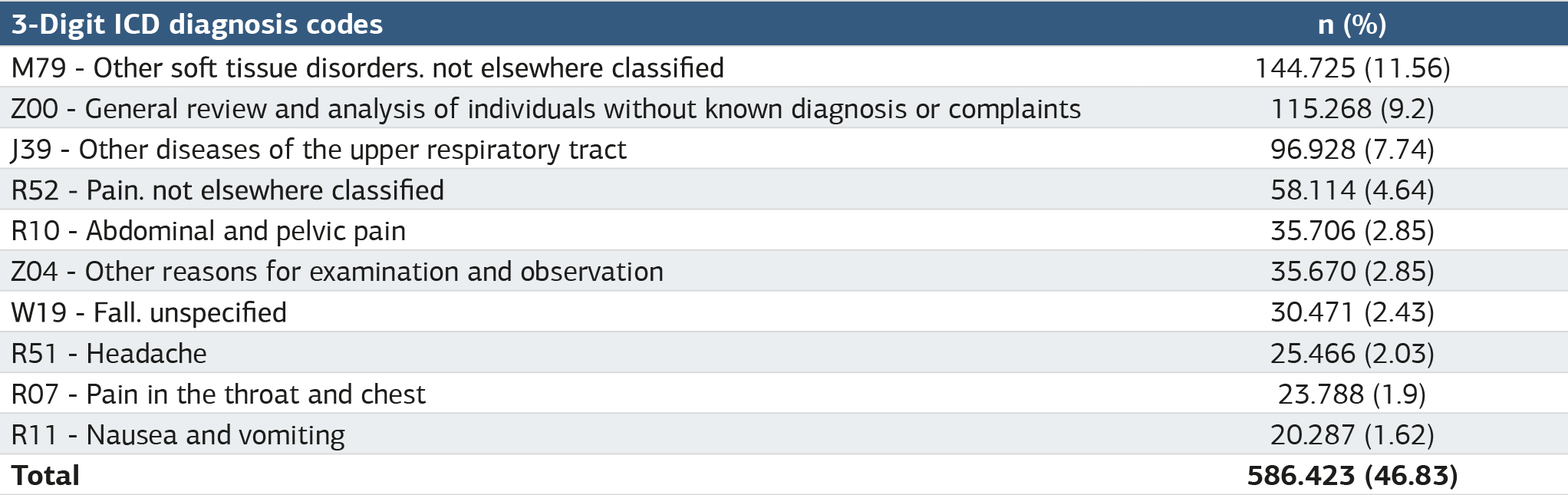
It was found that the three most frequently entered diagnoses were M79.9-Soft tissue disorder, unspecified with 6.30%, Z00.0-General medical examination with 5.89%, and J39.9-Upper respiratory tract disease, unspecified with 5.83% (Table 2).
The volume of applications to AS significantly increased following Saturdays, peaking on Mondays with 15% of total applications. Subsequently, the number of applications declined, reaching its nadir on Thursdays at 13.9% (Figure 1). The application hours were found to be nearly identical throughout the week, with the biggest volume of applications occurring on Monday and Friday, each accounting for 14.6%.
Upon categorizing the presentation times of the Emergency Department (ED) into the intervals 00:00-06:59, 07:00-12:59, 13:00-17:59, and 18:00-23:59 (Figure 2), it was observed that 38.22% of ED visits occurred between 18:00-23:59, 31.96% between 13:00-17:59, 19.20% between 07:00-12:59, and 10.62% between 00:00-06:59. A significantly significant association was identified between the hours of presentation and the frequency of presentation (p<0.05, rs = 0.992).
The predominant time of application was identified as 13:00-17:59, accounting for 33.4%, while the second most prevalent period was 18:00-23:59, including 32.5%.
M79.9-Soft tissue condition, not elsewhere categorized, was the most commonly diagnosed 4-digit ICD code at 6.3%, while M79-Other soft tissue disorders, not elsewhere defined, was the most frequently diagnosed 3-digit ICD code at 11.56%. Table 2 presents the initial ten 3-digit ICD diagnostic codes.
Discussion
The population of the province where the research was conducted in 2022 is reported to be 2,296,347 (available at: https://nvi.gov.tr/istatistikler). Since the inauguration of the City Hospital, almost fifty percent of the provincial population has utilized the Adult Emergency Department. The statistical tests indicate that this number has increased in direct proportion to the years. Numerous research in worldwide literature has documented the congestion of emergency departments and the high volume of patient presentations. Investigating the causes of excessive Emergency Department utilization is crucial, and implementing solutions is necessary to prevent the escalation of overcrowding as a cyclical issue.6,7,8
Despite variations among foreign national patients across provinces, the predominance of Syrian patients, followed by Afghan patients, in our study indicates that emergency department admission rates may serve as a preliminary indicator of the foreign national demographic within the provincial population.9 In 2023, the population of Syrian nationals in the province where the study was done was recorded as 119,108 (available at: https://www.goc.gov.tr/raporlar). The total of applicants possessing Syrian nationality is 66,455, exhibiting an application rate of 55.8%. The cumulative application rate, based on the province population (available at: https://nvi.gov.tr/istatistikler), is 54.5%. The application rates for ED among Syrian nationals are comparable to the province-wide rates for AS applications. The literature lacks comparable data on this topic, necessitating more investigation.10,11
This study demonstrated no impact of gender on the frequency of adult patient presentations in the emergency department. Nevertheless, despite their proximity in percentage, the female gender was shown to be more prevalent. In the literature, admission rates for males and females are typically comparable, akin to our findings.1,12,13 The proportion of male patient applications was greater among those under 18 years of age. Considering that only patients under 18 years old are admitted to the adult emergency department for trauma, the findings align with national and international literature demonstrating a higher prevalence of trauma occurrences among males in this age group.3,13
In this study, the total forensic case admission rate of 5.5% was found to be similar to the literature,14,15 which is between 4.2% and 7.01%. Factors such as proximity to the courts, designation as the forensic hospital, location on an intercity thoroughfare, and traffic accident applications were considered to contribute to these disparities.16
The predominant category of ED applications consisted of green area applications. Despite varying data on the distribution of ED area codes in the literature, admissions to green areas are typically elevated. This scenario, a rationale for implementing a triage system in the emergency department, may hinder the assessment and identification of urgent cases, impede operational efficiency, and exacerbate crowding in the emergency department, creating a vicious cycle.2,17 The system may require future evaluation about the implementation of green spaces and outpatient clinic services.
Understanding the peak days and hours of Emergency Departments is crucial for staff and service planning. Augmenting human resources, medical equipment, and material requirements during specific times of the day while reallocating capacity enhancements to these periods will mitigate emergency department congestion and enhance service quality. Our study detected an increase in ED admissions after working hours and during holidays, consistent with national literature. The elevated volume of ED applications, particularly throughout the evening and early night hours, indicates that augmenting personnel, medical equipment, and supplies during these times may be warranted.12 The similarity in the number of ambulance requests across the days of the week may be attributed to an inadequate supply of ambulances relative to demand. Moreover, while it may be inferred that patients have attained a specific benchmark regarding ambulance transport to hospitals or that a particular cohort of patients derives advantages from ambulance services, additional research is necessary to assess calls to 112.
The most often diagnosed conditions in patients admitted to the emergency department are crucial for emergency department and hospital planning. This issue shall be considered in the running of the Emergency Department, including the necessity for specialized areas, service conditions, equipment, and medication planning for these patients. In the national literature, some studies highlight soft tissue diagnoses akin to our research, as well as studies that emphasize alternative diagnoses. Regional disparities and the period of study were believed to influence this condition.1,2,3,18
Limitations
Since the research was a retrospective study, it was conducted on the data in the patient files.
Conclusion
Consequently, the attributes of ED applications are crucial for effective ED planning. The study’s findings indicate a significant concentration of patients beginning Saturday, with Monday being the peak day. Most patients are categorized under the green area code, and soft tissue disorders are the predominant diagnosis. These insights will aid in identifying frequently encountered diseases and inform emergency department planning regarding human resources, medical supplies, and equipment requirements.
Declarations
Animal and Human Rights Statement
All procedures performed in this study were in accordance with the ethical standards of the institutional and/or national research committee and with the 1964 Helsinki Declaration and its later amendments or comparable ethical standards.
Informed Consent
The requirement for informed consent was waived due to the retrospective design of the study.
Data Availability
The datasets used and/or analyzed during the current study are not publicly available due to patient privacy reasons but are available from the corresponding author on reasonable request.
Conflict of Interest
The authors declare that there is no conflict of interest.
Funding
None.
Abbreviations
ED: Emergency department
ICD: International Classification of Diseases
References
-
Kılıçaslan İ, Bozan H, Oktay C, Göksu E. Türkiye’de acil servise başvuran hastaların demografik özellikleri [Demographic properties of patients presenting to the emergency department in Turkey]. Turk J Emerg Med. 2005;5(1):5-13.
-
Çevik C, Tekir Ö. Acil servis başvurularının tanı kodları, triyaj ve sosyodemografik açıdan değerlendirilmesi [Emergency service admission evaluation of diagnosis codes, triage and socio-demographic]. Balikesir Health Sci J. 2014;3(2):102-107. doi:10.5505/bsbd.2014.26349
-
Çınar Sert P, Durak VA, Özdemir F, Armağan E. Acil servise başvuran hasta özelliklerine göre uygun acil servis tasarımının belirlenmesi [Determination of the appropriate emergency department design according to patient characteristics]. J Uludag Univ Med Fac. 2017;43(1):17-21.
-
Acar YA, Çevik E, Uyguner C, Çınar O. Ulusal gazetelerdeki acil servis haberlerinin içerik analizi [Turkish media portrayal analysis of emergency health services]. Turk J Emerg Med. 2013;13(4):166-170. doi:10.5505/1304.7361.2013.54926
-
Şimşek P, Gürsoy A. Acil servislerin acil sorunu: uygunsuz kullanım [Urgent problem of emergency departments: inappropriate use]. J Anatol Nurs Health Sci. 2015;18(4):312-317. doi:10.17049/ahsbd.21660
-
Savioli G, Ceresa IF, Gri N, et al. Emergency department overcrowding: understanding the factors to find corresponding solutions. J Pers Med. 2022;12(2):279. doi:10.3390/jpm12020279
-
Karacay P. Acil servis kalabalığı ve çözüm önerileri [Emergency department crowding and possible solutions]. J Educ Res Nurs. 2010;7(2):20-25.
-
Sartini M, Carbone A, Demartini A, et al. Overcrowding in emergency department: causes, consequences, and solutions; a narrative review. Healthcare (Basel). 2022;10(9):2-13. doi:10.3390/healthcare10091625
-
Yüksel A. Erişkin acil servise başvuran hasta profili, tanı kodları ile triaj yönünden değerlendirilmesi [Evaluation of patient profile presenting to emergency department in terms of diagnostic codes and triage]. Anatolian J Emerg Med. 2020;3(2):37-41.
-
Yurtseven A, Özcan G, Saz EU. Çocuk acil servise başvuran Suriyeli hastalarla Türk hastaların karşılaştırılması: Ege Üniversitesi deneyimi [Comparison of Syrian patients and Turkish patients who admitted to the pediatric emergency department: experience of Ege University]. J Pediatr Emerg Intensive Care Med. 2015;2(3):133-136. doi:10.5505/cayb.2015.02986
-
Gamzızkan Z, Önmez A. Bir üniversite hastanesine başvuran göçmen ve mülteci hastaların değerlendirilmesi [Evaluation of immigrant and refugee patients applying to a university hospital]. Sakarya Med J. 2021;11(1):122-128.
-
Sert ET, Mutlu H, Kokulu K, Yeşildağ K, Sarıtaş A. Acil servisimize başvuran hastaların 5 yıllık analizi [5-year analysis of patients admitted to our emergency department]. Med J Mugla Sitki Kocman Univ. 2021;8(1):1-4. doi:10.47572/muskutd.794039
-
Türkdoğan KA, Kapcı M, Akpınar O, et al. Bir devlet hastanesi acil servisi demografik özellikleri: 2011 yılı meta analizi [Demographic characteristics of patients at a state hospital emergency service: meta-analysis of 2011]. J Clin Exp Invest. 2013;4(3):274-278. doi:10.5799/ahinjs.01.2013.03.0283
-
Türkçüer İ, Gözlükaya A, Serinken M, Özen M, Aydın B. Adli olguların acil servise başvuru zamanları [Application times of forensic cases to emergency department]. Eurasian J Emerg Med. 2010;9(2):89-92. doi:10.4170/jaem.2010.04696
-
Yemenici S, Sayhan MB, Salt Ö, Yılmaz A. Acil serviste düzenlenen adli raporların değerlendirilmesi. J Harran Univ Med Fac. 2017;14(3):179-186.
-
Küçük E, Günel C. Acil serviste değerlendirilen adli olguların demografik özellikleri [Demographic characteristics of forensic investigation in emergency service]. Sakarya Med J. 2016;6(2):100-105. doi:10.5505/sakaryamedj.2016.38243
-
Öner Şimşek D. Triaj sistemlerine genel bakış ve Türkiye’de acil servis başvurularını etkileyen faktörlerin lojistik regresyon ile belirlenmesi [General overview of triage scales and determination of factors affecting emergency service applications in Turkey by logistic regression]. Sosyal Güvence Derg. 2018;(13):84-115.
-
Edirne T, Edirne Y, Atmaca B, Keskin S. Yüzüncü Yıl Üniversitesi Tıp Fakültesi acil servis hastalarının özellikleri [Patient characteristics at the emergency department, Medical School of Yuzuncu Yil University]. Van Med J. 2008;15(4):107-111.
Figures
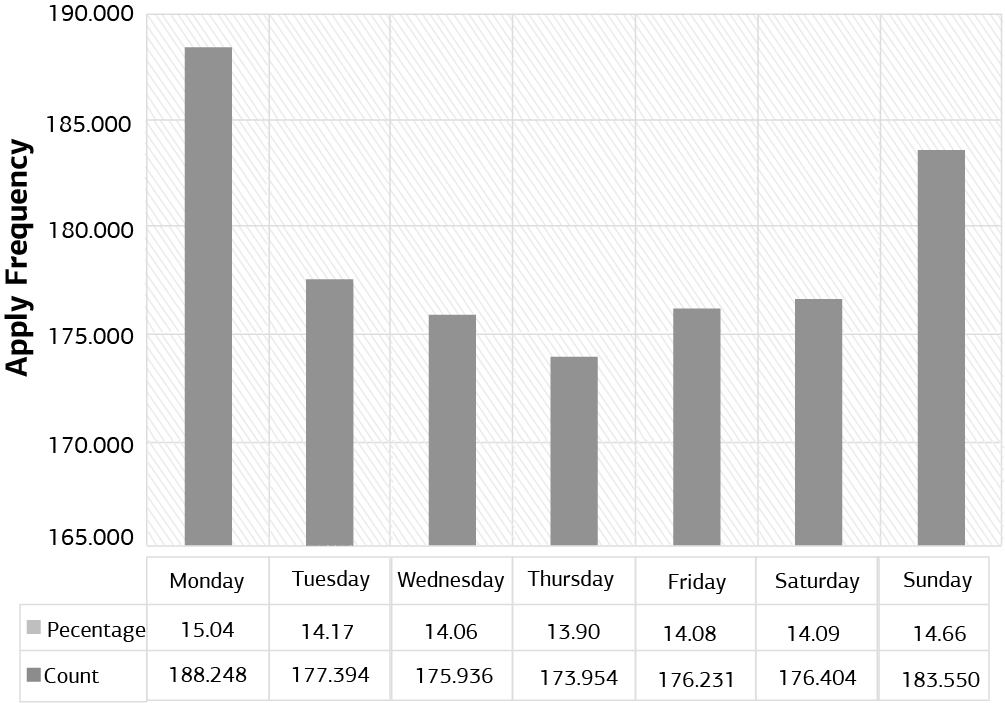
Figure 1. Frequency of emergency department admissions by days of the week

Figure 2. Percentage distribution of emergency department admission frequency by time of day according to years
Tables
Table 1. Number of emergency department admissions by age range and gender
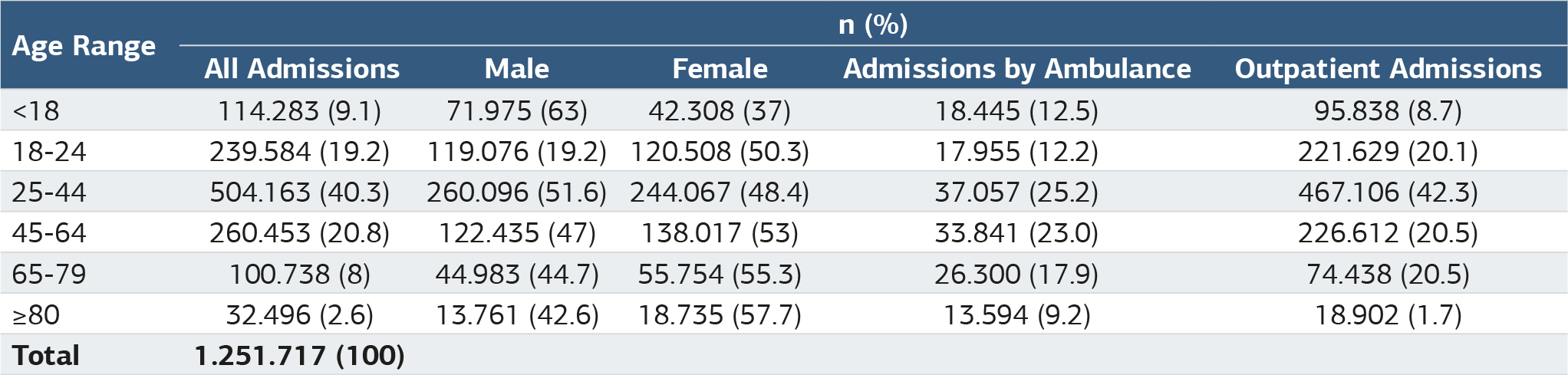
Table 2. Ranking of the frequency of diagnoses of patients presenting to the emergency department according to 3-digit ICD diagnosis codes
Additional Information
Publisher’s Note
Bayrakol MP remains neutral with regard to jurisdictional and institutional claims.
Rights and Permissions

This work is licensed under a Creative Commons Attribution-NonCommercial 4.0 International License (CC BY-NC 4.0). To view a copy of the license, visit https://creativecommons.org/licenses/by-nc/4.0/
About This Article
How to Cite This Article
Fatih Cemal Tekin, Ramazan Köylü, Berke Yıldırım. Evaluation of patients applying to the emergency department for 3 years: a city hospital example. Ann Clin Anal Med 2025;16(5):373-377. doi:10.4328/ACAM.22465
- Received:
- October 18, 2024
- Accepted:
- December 2, 2024
- Published Online:
- December 26, 2024
- Printed:
- May 1, 2025