
Abstract
AimTopical psoralen plus ultraviolet-A therapy (PUVA) is one of the commonly used treatment modalities in dermatology for palmoplantar dermatoses. Topical PUVA therapy is frequently preferred especially in palmoplantar dermatoses as it has fewer side effects than oral PUVA treatment. Our study aimed to evaluate the effectiveness of PUVA treatment in palmoplantar dermatoses.MethodsThe study included 91 patients who received topical PUVA treatment in our hospital between 2010 and 2022. Patients were treated with topical PUVA therapy for 2-3 sessions per week and their treatment responses were evaluated. Descriptive statistics were expressed as number, percentage, median, and minimum-maximum, where appropriate. The chi-square test was used to evaluate categorical data.ResultsThe treatment response of the palmoplantar pustulosis group was found to be significantly higher compared to the palmoplantar psoriasis and eczema group. Transient erythema was observed as the most common side effect.ConclusionTopical PUVA therapy is a reliable and safe treatment method in palmoplantar dermatoses, especially in palmoplantar pustulosis patients.
Keywords
Introduction
Topical psoralen plus ultraviolet A (PUVA) therapy is a widely used treatment option in dermatologic diseases. Psoralen substances absorb ultraviolet radiation and cause changes in DNA functions by photochemical reaction.1-2-3 Although its mechanism of action is not fully known, it is thought that PUVA inhibits keratinocyte proliferation and causes immunosuppression by inhibiting cytokine and chemokine release.4-5-6 Topical PUVA therapy is frequently preferred especially in palmoplantar dermatoses as it has fewer side effects than oral PUVA treatment. Treatment indications include psoriasis, eczema, mycosis fungoides, pustular dermatoses, and vitiligo.7 Hyperkeratotic and dyshidrotic eczema, palmoplantar psoriasis, and palmoplantar pustular dermatoses are among the dermatological diseases in which topical PUVA therapy is most frequently used.8-9 In the literature, the studies on the efficacy of topical PUVA therapy are limited in number. The present study aimed to evaluate the demographic data and treatment responses of patients who received topical PUVA therapy.
Materials and Methods
This retrospective study included 190 patients who received topical PUVA therapy between 2010 and 2022 in the dermatology department of our faculty. A total of 91 patients with complete follow-up information were included in the study. Patients who discontinued the treatment and those who did not come to regular follow-ups were excluded. All patients continued topical PUVA therapy for 2 or 3 sessions per week. The patients received a dose of UVA for 20-30 minutes after the application of topical 0.1% 8-methoxy psoralen gel to the affected area. Demographic characteristics and treatment responses of the patients were retrieved from the patient’s medical charts. The treatment responses of the patients were assessed by the percentage of regression of the lesions and were classified as follows: 1) moderate response (MR) indicating a percentage of regression between 25% and 75% (including 25%), 2) satisfactory response (SR) indicating a percentage of regression above 75% (including 75%).Ethical ApprovalThis study was approved by the Ethics Committee of İstanbul University Cerrahpasa (Date: 10.10.2023, No: 805817).Statistical AnalysisThe IBM SPSS Statistics for Windows Version 25.0 (IBM Corp., Armonk, NY, USA) was used for statistical analysis. Descriptive statistics were expressed as number, percentage, median, and minimum-maximum, where appropriate. The chi-square test was used to evaluate categorical data. A p-value of less than 0.05 was accepted as significant.Reporting GuidelinesThis study was reported in accordance with the STROBE guideline.
Results
A total of 91 patients (56% male) with a median age of 47 years (range, 27 to 74 years) were included. The demographic characteristics of the patients participating in the study are shown in Table 1. Of the patients, 53 (58.2%) were diagnosed with chronic palmoplantar eczema, 24 (26.4%) were diagnosed with palmoplantar psoriasis, and 14 (15.4%) were diagnosed with palmoplantar pustulosis. Thirty-eight (41.8%) patients had Fitzpatrick type 2 skin type, while 53 (58.2%) patients had Fitzpatrick type 3 skin type. The accompanying chronic diseases of the patients are presented in Table 2. The median number of phototherapy sessions was 25 (range, 20-35). All patients in the study responded to the treatment at rates ranging from 40 to 90%. While the treatment response of 33 (36.3%) patients was moderate, the response was satisfactory in 58 (63.7%) patients. The treatment responses of the patients according to the diagnosis are summarized in Table 3. Clinical photographs of some patients before and after phototherapy are shown in Figure 1 and Figure 2. The treatment response of the palmoplantar pustulosis group was found to be significantly higher than that of the palmoplantar psoriasis and eczema groups (p=0.048). As local side effects of PUVA therapy, transient erythema and/or pruritus in the treatment area were observed in 51 patients. Transient erythema, the most common side effect of PUVA therapy, was recorded in 30 patients. Regarding systemic side effects, only one patient complained of nausea during the treatment.
Discussion
Topical PUVA is a frequently preferred phototherapy especially in localized dermatoses due to its ease of application. The efficacy of topical PUVA has been evaluated in a limited number of studies. It has been evaluated as a safe treatment method when applied with appropriate doses. In a study performed by Carrascosa et al.10 topical PUVA treatment was given to 48 patients with a diagnosis of palmoplantar psoriasis. At the end of the study, 63% of the patients who received only topical PUVA had a good response to treatment. The most common adverse event in that study was transient erythema, occurring in only 18% of the patients.10 Similarly, in our study, 58% of the patients with palmoplantar psoriasis had a satisfactory response to the treatment, and the most common side effect was transient erythema. In another study conducted in patients with palmoplantar psoriasis, similar to our results, the effectiveness of topical PUVA therapy was 65%.11
In the study by Grundman-Kollmann et al.12 topical PUVA therapy was compared with bath-PUVA therapy in patients with palmoplantar psoriasis and palmoplantar eczema. While the response to topical PUVA treatment was 50% in patients with palmoplantar psoriasis, it was 75% in the palmoplantar eczema group. In that study, no severe side effect was reported with topical PUVA therapy except mild transient erythema.12 In our study, the mean response to topical PUVA therapy of the patients was 69.5% and 69.6% in patients with palmoplantar psoriasis and chronic palmoplantar eczema, respectively.
In another study, topical PUVA therapy was applied to 22 patients with a diagnosis of palmoplantar pustulosis and palmoplantar psoriasis.13 While the treatment response was evaluated as good in half of the patients, complete or almost complete regression of the lesions was observed in only 4 patients after 12 weeks of follow-up.13 In that study, similar to the findings of our study, the most common side effect was reported as transient erythema.13
In another study of 27 patients with a diagnosis of palmoplantar pustulosis, topical PUVA was compared with placebo, and although regression was observed in the lesions in patients receiving topical PUVA, no significant difference was observed compared to placebo.8 In our study, treatment response was satisfactory (75% and above) in 92% of patients with palmoplantar pustulosis, and the treatment response was significantly higher compared to palmoplantar psoriasis and chronic eczema patients. In a study conducted by Riad et al.14 three sessions of topical PUVA therapy per week were applied to patients with a diagnosis of palmoplantar pustulosis for an average of 13 weeks. At the end of the treatment, a percent regression of 75% or more was observed in 46.7% of the patients.14
In another study, topical PUVA was given to patients with the diagnosis of palmoplantar psoriasis, palmoplantar pustulosis, and chronic palmoplantar eczema. In the patients with palmoplantar psoriasis, a regression of 50% or more was observed in 64% of the patients with palmoplantar psoriasis and in 65% of patients with chronic palmoplantar eczema. However, the regression percentage was less than 50% in all patients with palmoplantar pustulosis.15 Unlike these studies, in the present study, a satisfactory response to topical PUVA in the patients with palmoplantar pustulosis was 92%, and the response was significantly higher than that in other palmoplantar dermatoses.
Limitations
The present study has also some limitations which can be considered as its retrospective study design and lack of clinical photographs of the patients; on the other hand, including a large series of patients is the strength of the study.
Conclusion
In the present study, topical PUVA was shown to be an effective treatment option in patients with palmoplantar eczema, palmoplantar psoriasis, and pustulosis, particularly being more effective in patients with palmoplantar pustulosis as compared with the findings of the previous studies.
Abbreviations
PUVA: Psoralen plus ultraviolet A
UVA: Ultraviolet A
References
- Barros NM, Sbroglio LL, Buffara MO, Baka JLCES, Pessoa AS, Azulay-Abulafia L. Phototherapy. An Bras Dermatol. 2021;96(4):397-407. doi:10.1016/j.abd.2021.03.001
- Stern RS. Psoralen and ultraviolet A light therapy for psoriasis. N Engl J Med. 2007;357(7):682-690. doi:10.1056/nejmct072317
- Morison WL. Psoralen ultraviolet A therapy in 2004. Photodermatol Photoimmunol Photomed. 2004;20(6):315-320. doi:10.1111/j.1600-0781.2004.00125.x
- Buerger C, Malisiewicz B, Eiser A, Hardt K, Boehncke WH. Mammalian target of rapamycin and its downstream signalling components are activated in psoriatic skin. Br J Dermatol. 2013;169(1):156-159. doi:10.1111/bjd.12271
- Sethi G, Sodhi A. Role of p38 mitogen-activated protein kinase and caspases in UV-B-induced apoptosis of murine peritoneal macrophages. Photochem Photobiol. 2004;79(1):48-55.
- Liszewski W, Naym DG, Biskup E, Gniadecki R. Psoralen with ultraviolet A-induced apoptosis of cutaneous lymphoma cell lines are augmented by type I interferons via the JAK1-STAT1 pathway. Photodermatol Photoimmunol Photomed. 2017;33(3):164-171. doi:10.1111/phpp.12302
- Hawk JLM, Le Grice P. The efficacy of localized PUVA therapy for chronic hand and foot dermatoses. Clin Exp Dermatol. 1994;19(6):479-482. doi:10.1111/j.1365-2230.1994.tb01251.x
- Layton AM, Sheehan-Dare R, Cunliffe WJ. A double-blind, placebo-controlled trial of topical PUVA in persistent palmoplantar pustulosis. Br J Dermatol. 1991;124(6):581-584. doi:10.1111/j.1365-2133.1991.tb04955.x
- Pathak MA, Fitzpatrick TB. The evolution of photochemotherapy with psoralens and UVA: 2000 BC to 1992 AD. J Photochem Photobiol B. 1992;14(1-2):3-22. doi:10.1016/1011-1344(92)85080-e
- Carrascosa JM, Plana A, Ferrándiz C. Effectiveness and safety of psoralen-UVA topical therapy in palmoplantar psoriasis: a report on 48 patients. Actas Dermosifiliogr. 2013;104(5):418-425. doi:10.1016/j.adengl.2013.04.005
- Neumann NJ, Mahnke N, Korpusik D, Stege H, Ruzicka T. Treatment of palmoplantar psoriasis with monochromatic excimer light (308 nm) versus cream PUVA. Acta Derm Venereol. 2006;86(1):22-24. doi:10.2340/00015555-0002
- Grundmann-Kollmann M, Behrens S, Peter RU, Kerscher M. Treatment of severe recalcitrant dermatoses of the palms and soles with PUVA-bath versus PUVA-cream therapy. Photodermatol Photoimmunol Photomed. 1999;15(2):87-89.
- Wilkinson JD, Ralfs IG, Harper JI, Black MM. Topical methoxsalen photochemotherapy in the treatment of palmoplantar pustulosis and psoriasis. Acta Derm Venereol Suppl (Stockh). 1979;59(85):193-198.
- Riad K, Felix P, Dorit S, Gregory K, Nadim K, Henri T. The use of topical PUVA for palmoplantar dermatoses. J Dermatolog Treat. 2006;17(5):304-307. doi:10.1080/09546630600866442
- De Rie MA, Van Eendenburg JP, Versnick AC, Stolk LM, Bos JD, Westerhof W. A new psoralen-containing gel for topical PUVA therapy: development and treatment results in patients with palmoplantar and plaque-type psoriasis, and hyperkeratotic eczema. Br J Dermatol. 1995;132(6):964-969.
Tables
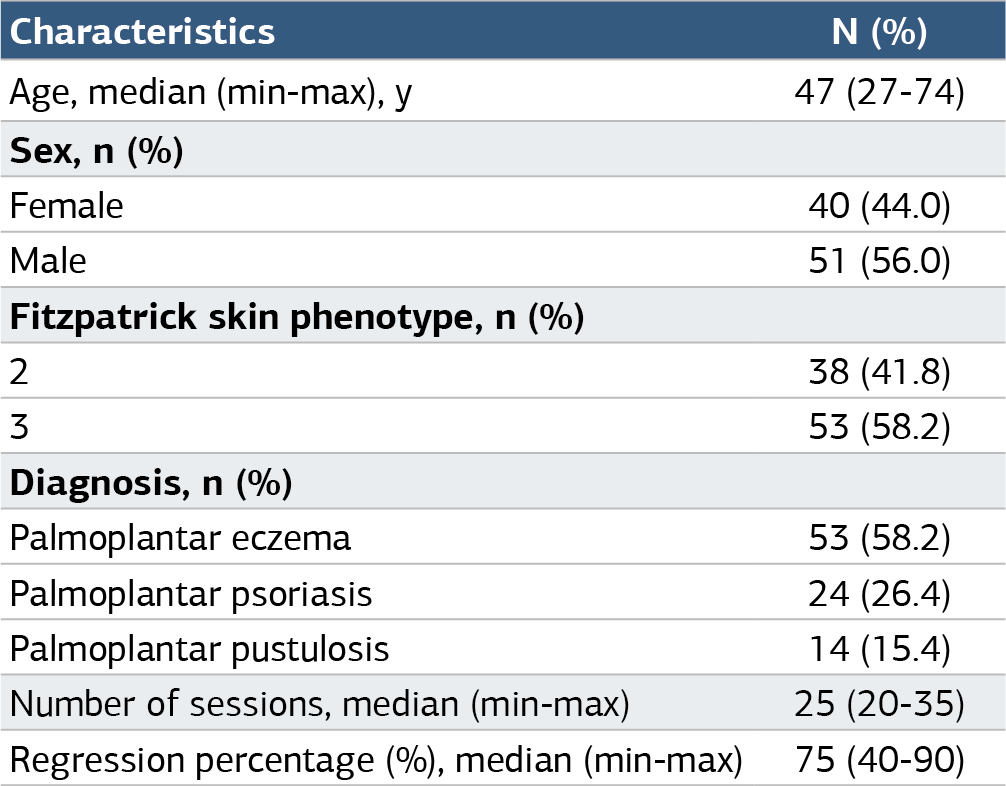
Table 2. Comorbidities of patients
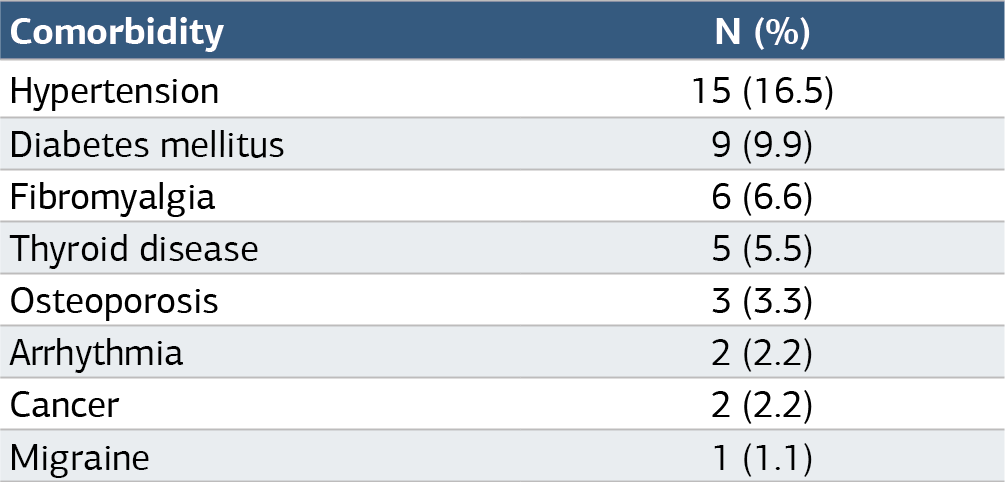
Table 3. reatment responses of the patients according to the diagnosis
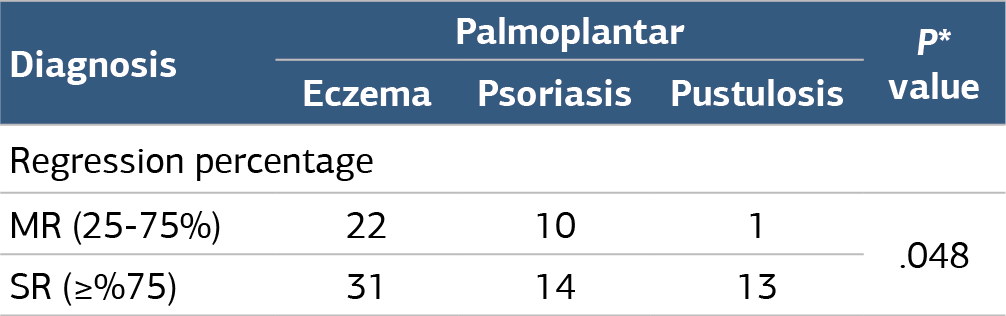
MR, moderate response; SR, satisfactory response; *Pearson chi-square.
Figures
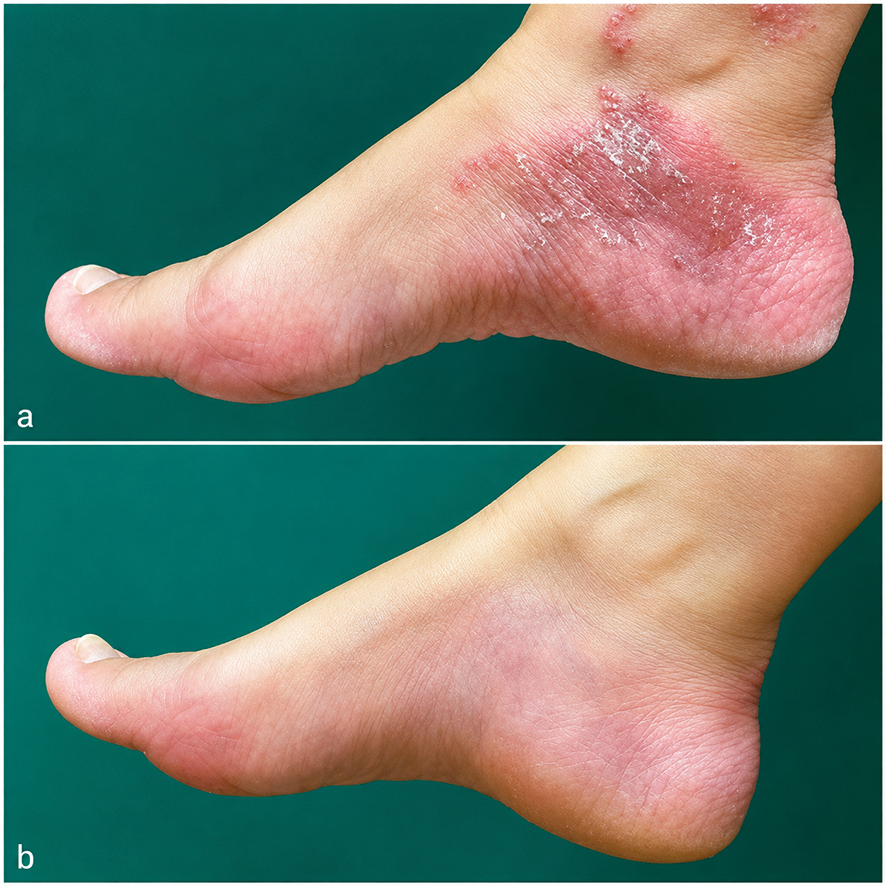
Figure 1. a. Palmoplantar pustular psoriasis patient before topical PUVA treatment b. Same patient after 25 session of topical PUVA with %70 regression of lesions
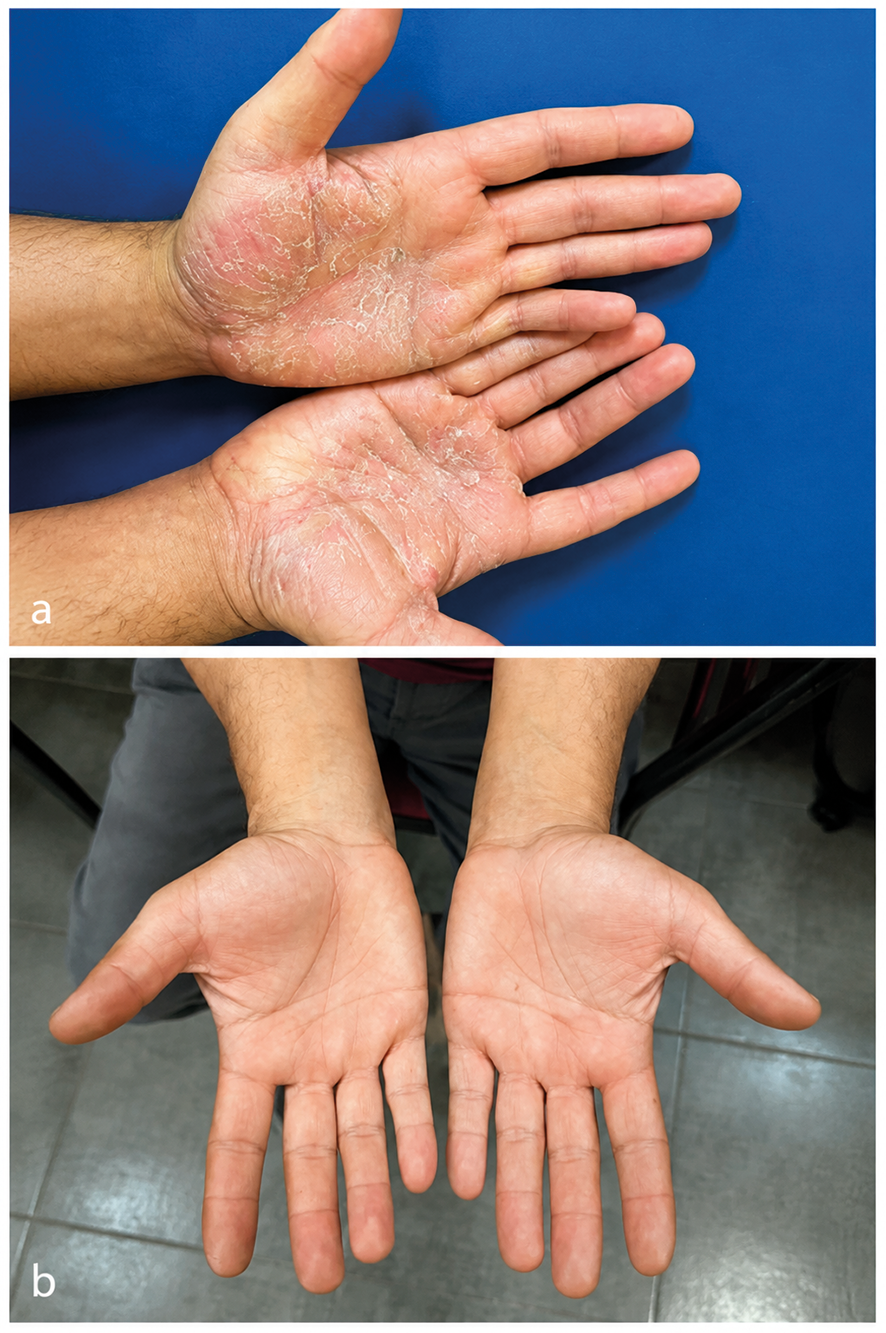
Figure 2. a.Palmar pustulosis patient before topical PUVA treatment. b. Same patient after 30 session of topical PUVA with almost complete regression of lesion
Additional Information
Publisher’s Note
Bayrakol MP remains neutral with regard to jurisdictional and institutional claims.
Rights and Permissions

This work is licensed under a Creative Commons Attribution-NonCommercial 4.0 International License (CC BY-NC 4.0). To view a copy of the license, visit https://creativecommons.org/licenses/by-nc/4.0/
About This Article
How to Cite This Article
Zeynep Altan Ferhatoğlu, Sera Nur Yücesoy. Topical psoralen plus ultraviolet-A therapy might be considered a current option for palmoplantar dermatoses, especially pustulosis. doi:10.4328/ACAM.22522
Publication History
- Received:
- 14.12.2024
- Accepted:
- 23.01.2025
- Published Online:
- 26.02.2025
- Printed:
- 25.03.2025