
A retrospective evaluation of patients visiting a family medicine center
Evaluation of primary care patients
Authors
Abstract
AimPrimary healthcare services form the foundation of health systems due to their potential to address most individuals’ health issues. This study evaluates the demographic characteristics, reasons for admission, and diagnoses of patients visiting a family medicine center.
MethodsThis study has a retrospective and descriptive design. The medical records of 1012 patients who visited a family medicine center between December 1, 2024, and December 31, 2024, were reviewed. Data were analyzed using the SPSS 25.0 program.
ResultsAmong the patients, 59% were female, and 41% were male, with a mean age of 49.7 ± 24.1 years. The most common reasons for admission were prescription refills (58.2%), respiratory tract infections (12.7%), and chronic disease follow-ups (7.8%). The most frequent diagnoses were acute nasopharyngitis (24.3%), essential hypertension (15.8%), and diabetes mellitus (5.1%).
ConclusionThis study provides valuable insights into understanding patient profiles in primary healthcare and contributes to family medicine specialty training.
Keywords
Introduction
Primary healthcare services are the cornerstone of healthcare systems as they serve as individuals’ first point of contact. These services encompass preventive, therapeutic, and rehabilitative practices. According to the World Organization of Family Doctors (WONCA), family medicine is a primary healthcare discipline that serves as the initial medical contact point within the healthcare system. It provides personal and continuous healthcare to individuals, families, and a registered population, regardless of age, gender, or disease.1 Family physicians deliver holistic, comprehensive, and coordinated care, employing unique consultation processes and problemsolving skills to address the needs of individuals, families, and communities.
Effective primary healthcare operations in modern health systems contribute to sustainability by reducing the burden on advanced healthcare services.2 The World Health Organization (WHO) identifies primary healthcare as the most effective way to meet a community’s health needs. The 1978 Alma Ata Conference emphasized the importance of primary healthcare, promoting the goal of “Health for All”.3
In Turkey, the family medicine system implemented since 2005 reflects this approach and aims to enhance accessibility and improve individual and community health. As the initial level of healthcare delivery, family medicine centers can address most health issues. Studies indicate that approximately 80% of health problems can be resolved at the primary care level when effectively implemented.4
Analyzing the demographic characteristics, reasons for admission, and diagnoses of patients visiting family medicine centers is crucial to improving healthcare quality and developing educational programs. Identifying patient profiles in family medicine centers can also guide health policy development and healthcare worker training. This study aims to reveal patient profiles in primary healthcare to address deficiencies in the field and improve healthcare standards.
Materials and Methods
This study has a retrospective and descriptive design. The medical records of 1062 patients who visited a family medicine center between December 1, 2024, and December 31, 2024, were reviewed using the family medicine information management system. Fifty patients with incomplete records were excluded, and the study was completed with 1012 participants.
Data on participants’ age, gender, chronic disease diagnoses, reasons for admission, complaints, symptoms, and prescription statuses were evaluated. Diagnoses were coded using the International Classification of Diseases, 10th Revision, Clinical Modification (ICD-10-CM).
Ethical ApprovalThis study was approved by the Ethics Committee of KTO Karatay University (Date: 30.12.2024, Decision No: 100449).
Statistical AnalysisStatistical analyses were conducted using the SPSS 25.0 program. Descriptive statistics (mean, standard deviation, percentage distributions) were calculated, and the Chi-square test was applied for categorical variables. A p-value of <0.05 was considered statistically significant.
Reporting GuidelinesThe study was reported in accordance with STROBE guideline.
Results
The age, gender distribution, and chronic disease diagnoses of the patients are presented in Table 1. Among the 1012 patients in the study, 59% were female and 41% were male, with a mean age of 49.7 ± 24.1 years (Table 1). The youngest patient was 4 months old, while the oldest was 96. Among chronic disease diagnoses, 13.1% of patients were diagnosed with hypertension, 5.1% with diabetes mellitus, 2.2% with coronary artery disease, and 5% with dyslipidemia. When the reasons for admission were analyzed, 58.2% of patients visited for prescription refills, 12.7% for respiratory complaints, 7.8% for chronic disease follow-ups, and 5.7% for blood tests. Other reasons included 4% for reports (e.g., driver’s licenses, mental competence, hunting firearm permits, workplace applications, medication reports, military fitness reports, etc.), 0.2% for trauma, 1.3% for consultation, 0.8% for dermatological issues, 1% for joint and muscle pain, 1.4% for routine child health check-ups, 1.7% for urinary system complaints, 0.9% for pregnancy follow-ups, 0.8% for gastrointestinal system complaints, 0.4% for dental and gum issues, and 3.2% for other complaints (Table 2).
Discussion
This study observed that the admission rate of female patients (59%) was higher than that of male patients. This finding is supported by numerous studies in the literature, which indicate that women have higher access rates to healthcare services.
Similar findings have been reported in studies on primary healthcare services, highlighting that women are more likely to monitor their health closely and seek medical care more frequently.2,5,6,7,8 This can be associated with societal roles that lead women to adopt a more active attitude toward healthrelated matters.9 This suggests that collaborating more with women could be beneficial when designing projects to improve health literacy and raise awareness about health issues in the community.
The fact that 58.2% of patients visited for prescription refills emphasizes the importance of regular monitoring and treatment of chronic diseases in primary healthcare.10 Every patient visiting for a prescription refill also undergoes a general health evaluation, addressing topics such as proper and consistent medication use, side effects, allergies, or difficulties in medication management. In the study by Kara et al., the rate of prescriptions was 47%, while in the study by Aboulghate et al., it was 97.1%, making up the majority of visits.6,9 This variation may be influenced by the high prevalence of chronic diseases among participants or the timing of the study during seasons with a higher incidence of illnesses, such as winter. Although this study included December clinic visits, the rate of prescriptions was lower compared to similar studies. This difference could be due to the recently implemented chronic disease screening and follow-up platform in primary healthcare in Turkey. This system requires family physicians to conduct periodic screenings and follow-ups for patients registered in their units and maintain records.
Respiratory complaints ranked second (12.7%) and can be explained by these infections’ prevalence and frequent occurrence in primary healthcare. Similar studies also report respiratory tract infections as one of the most common complaints, ranking first or second.9,11,12 In this study, chronic disease follow-ups ranked third among reasons for admission (7.8%), underscoring the importance of long-term care services provided in primary healthcare.13 With recent healthcare reforms in Turkey, many chronic disease screenings and follow-ups are now conducted in primary care.
Acute upper respiratory tract infections (19.7%) were the most frequently recorded when the diagnoses were examined. Upper respiratory tract infections such as acute nasopharyngitis are among the most common diseases encountered in primary healthcare. They are globally recognized as some of the most frequent diagnoses in primary care.14 Among chronic disease diagnoses, diabetes and hypertension ranked first and second, respectively, as seen in similar studies.5 In this study, essential hypertension ranked second (15.8%), and diabetes ranked third (5.1%), highlighting the significant burden of chronic diseases in the community and their importance in primary healthcare.9 Similar studies have also reported hypertension as one of the top two diagnoses.9,11,12 Hypertension is a priority among chronic diseases because it is preventable and manageable.15
Limitations
The limitations of the study include its short duration of only one month, the variation in disease profiles according to summer and winter seasons, and the fact that it was conducted within the population of a single-family medicine unit.
Conclusion
In this study, the age, gender distribution, reasons for admission, and diagnoses of patients visiting a family medicine center were analyzed. Including patients and disease groups ranging from 0 to 96 years old within the scope of family medicine demonstrates that it provides comprehensive and inclusive healthcare services for public health. The fact that the most frequent diagnoses recorded were respiratory infections, hypertension, and diabetes indicates the critical role of family medicine in managing infections and chronic diseases. Strengthening primary healthcare services further will benefit public health.
Declarations
Animal and Human Rights Statement
All procedures performed in this study were in accordance with the ethical standards of the institutional and/or national research committee and with the 1964 Helsinki Declaration and its later amendments or comparable ethical standards.
Informed Consent
Informed consent was waived due to the retrospective nature of the study.
Data Availability
The datasets used and/or analyzed during the current study are not publicly available due to patient privacy reasons but are available from the corresponding author on reasonable request.
Conflict of Interest
The authors declare that there is no conflict of interest.
Funding
None.
Abbreviations
ICD-10-CM: International classification of diseases, 10th revision, clinical modification
SPSS: Statistical package for the social sciences
STROBE: Strengthening the reporting of observational studies in epidemiology
WHO: World Health Organization
WONCA: World Organization of Family Doctors
References
-
Altuntaş M. The role of patient education level and family medicine practice in the diagnosis of arterial hypertension. Selcuk Med J. 2019;35(1):31-36.
-
Xavier PB, Silva ÍDS, Dantas THDM, Patient satisfaction and digital health in primary health care: a scoping review protocol. Front Public Health. 2024;12:1357688. doi:10.3389/fpubh.2024.1357688
-
Yılmaz M, Mayda AS, Yüksel C, Bir aile hekimliği merkezi’ne başvuran hastalara konulan tanılar [Diagnoses of patients referred to a family medicine centre]. J DU Health Sci Inst. 2012;2(3):7-13.
-
Levine DM, Syrowatka A, Salmasian H, The safety of outpatient health care: review of electronic health records. Ann Intern Med. 2024;177:738-748. doi:10.7326/m23-2063
-
Parkerson GR Jr, Harrell FE Jr, Hammond WE, Wang XQ. Characteristics of adult primary care patients as predictors of future health services charges. Med Care. 2001;39(11):1170-1181. doi:10.1097/00005650-200111000-00004
-
Aboulghate A, Abel G, Lyratzopoulos G, Abdelmohsen A, Hamed AR, Roland M. Patterns of disease presentation and management in Egyptian primary care: findings from a survey of 2458 primary care patient consultation. BMC Fam Pract. 2013;14:1-9.
-
Prazeres F, Santiago L. Prevalence of multimorbidity in the adult population attending primary care in Portugal: a cross-sectional study. BMJ Open. 2015;5(9). doi:10.1136/bmjopen-2015-009287
-
Toçi E, Burazen G, Kamberi H, Jerliu N, Sorensen K, Brand H. Socio-economic correlates of functional health literacy among patients of primary health care in Kosovo. Public Health. 2014;128(9):842-848. doi:10.1016/j.puhe.2014.06.009
-
Kara İH, Türker Y, Hakan L, Baltacı D. Investigation of demographic features and symptoms at admission of patients who apply to a family health center in city center of Düzce: preliminary study. Duzce Med J. 2015;17(3):115-119.
-
Beasley JW, Hankey TH, Erickson R, Stange KC, Mundt M, Elliott M. How many problems do family physicians manage at each encounter? Ann Fam Med. 2004;2(5):405-410. doi:10.1370/afm.94
-
Şensoy N, Başak O, Gemalmaz A. Family medicine practice and patient profile at Umurlu Family Medicine Center: to what extent does it meet the needs of family medicine field training? Kocatepe Med J. 2009;10:49-56.
-
Ünalan PC, Uzuner A, Çifçili S, Akman M, Apaydın ÇK. Families receiving healthcare services from Marmara University Faculty of Medicine Family Medicine Clinic. Marmara Med J. 2009;22(2):90-96.
-
Starfield B, Shi L, Macinko J. Contribution of primary care to health systems and health. Milbank Q. 2005;83(3):457-502. doi:10.1111/j.1468-0009.2005.00409.x
-
Bodenheimer T, Pham HH. Primary care: current problems and proposed solutions. Health Aff (Millwood). 2010;29(5):799-805. doi:10.1377/hlthaff.2010.0026
-
Yeksan M, Ecirli Ş, Telli HH, Investigation of hypertension prevalence in Konya and its surrounding region. Selcuk Med J. 2001;7(2):177-182.
Tables
Table 1. Demographic characteristics and diagnosis of patients (n = 1012)
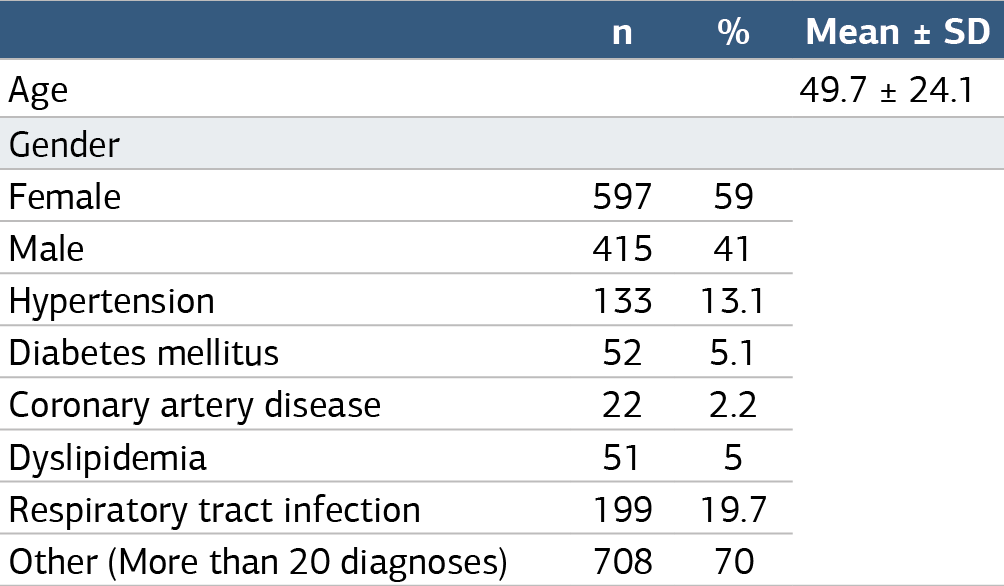
Table 2. Reasons for patients’ admission to the clinic (n = 1012)

Additional Information
Publisher’s Note
Bayrakol MP remains neutral with regard to jurisdictional and institutional claims.
Rights and Permissions

This work is licensed under a Creative Commons Attribution-NonCommercial 4.0 International License (CC BY-NC 4.0). To view a copy of the license, visit https://creativecommons.org/licenses/by-nc/4.0/
About This Article
How to Cite This Article
Hayriye Şentürk, Hümeyra Yaka. A retrospective evaluation of patients visiting a family medicine center. Ann Clin Anal Med 2025;16(3):193-196. doi:10.4328/ACAM.22559
- Received:
- January 13, 2025
- Accepted:
- February 10, 2025
- Published Online:
- February 10, 2025
- Printed:
- March 1, 2025