
Abstract
AimGastroenteritis, an inflammation of the stomach and small intestine, presents with symptoms such as diarrhea, abdominal pain, nausea, and vomiting. Salmonella Enteritidis, a significant bacterial pathogen commonly transmitted via poultry and eggs, can cause severe complications, particularly in immunocompromised individuals. Rapid diagnosis is crucial in emergency settings, highlighting the need for effective diagnostic tools. This study investigates the utility of the Systemic Immune-Inflammation Index in diagnosing SE infections.MethodsThis retrospective study, conducted in the emergency department of an urban hospital from May 1 to June 1, 2024, included 29 adult patients with acute gastroenteritis. Data on demographics, clinical parameters, and laboratory test results were analyzed. SE-positive and SE-negative patients were compared regarding systemic inflammation markers and clinical features. Statistical analyses using SPSS version 26.0 assessed the diagnostic value of SIII and other parameters through ROC curve analysis.ResultsSE was identified in 12 of the 29 patients. SE-positive individuals showed significantly higher levels of platelets, C-reactive protein, creatinine, and SIII compared to SE-negative patients (P < .05). Specifically, SIII with a cutoff of 1209.17 had 100% sensitivity and 41.2% specificity (P = .042). CRP with a cutoff of 27.50 showed 83.3% sensitivity and 64.7% specificity (P = .010). NLR analysis was not statistically significant. Additionally, creatinine levels were notably higher in SE-positive patients.ConclusionSIII appears to be a valuable diagnostic parameter for SE in emergency department gastroenteritis cases. It may aid in rapid decision-making for suspected SE infections. Further multicenter studies are necessary to confirm and generalize these findings.
Keywords
Introduction
Gastroenteritis is a common condition characterized by inflammation of the gastrointestinal tract, affecting the stomach and small intestine. It typically presents with sudden onset of diarrhea, abdominal pain, nausea, and vomiting. It is often triggered by viral infections (e.g., rotavirus, norovirus), bacterial pathogens (e.g., Escherichia coli, Salmonella spp.), or parasites (Giardia lamblia, Cryptosporidium spp.). Gastroenteritis is a widespread cause of morbidity and mortality among children and adults globally, and can lead to serious health issues, particularly in developing countries.1,2
While gastroenteritis cases in developed countries are generally self-limiting and mild, they can have severe consequences in individuals with weakened immune systems or in communities with limited access to healthcare. The treatment of gastroenteritis is usually symptomatic, focusing on maintaining fluid and electrolyte balance. However, severe cases may require antibiotic or antiviral therapy.3,4
Salmonella Enteritidis (SE) is one of the most common bacterial species causing acute gastroenteritis worldwide. A Gram-negative bacterium, SE is primarily found in poultry and eggs and is transmitted to humans typically through the consumption of these foods. The bacterium colonizes the intestinal mucosa, leading to infection and gastroenteritis symptoms such as diarrhea, abdominal pain, fever, and nausea.5,6
SE infections constitute a significant public health concern in both developed and developing countries. The spread of infection has become a major issue, particularly in areas with poor hygiene standards. Furthermore, inadequate controls in food production and processing can lead to outbreaks. The development of antibiotic resistance also complicates treatment, potentially leading to more severe outcomes.5-7 Enhancing food safety measures plays a crucial role in preventing the spread of SE.7,8
The Systemic Immune-Inflammation Index (SIII) is a novel systemic inflammation prognostic marker associated with the outcomes of many chronic/acute inflammatory diseases, as well as malignancies.9,10 The ease of calculation, low cost, and reliance solely on a complete blood count, without subjective findings, suggest that SIII may also be useful in the diagnosis of gastroenteritis caused by SE.
In our study, we investigated the utility of the systemic immune-inflammation index in detecting SE in patients presenting with acute gastroenteritis to the emergency department.
Materials and Methods
Study DesignOur study was conducted in the emergency department of a city hospital that serves as a training and research hospital. Necessary permissions were obtained before starting the study, and the study commenced thereafter. This study is a single-center, retrospective, observational study. The study was carried out between May 1, 2024, and June 1, 2024.Study Setting and PopulationPatients presenting to our hospital’s emergency department with symptoms of nausea, vomiting, abdominal pain, and diarrhea, and meeting the inclusion criteria, were included in the study. The ICD-10 diagnosis code A09 (acute infectious diarrhea and gastroenteritis) was used in the hospital automation system to identify the patients.
The participants in the study were adult patients diagnosed with acute gastroenteritis. The cause of infection was confirmed through stool cultures. Patients were excluded from the study if they had other pathologies causing abdominal pain, incomplete treatments, stool cultures showing mixed or contaminated microbial agents, or missing data.
Demographic data (age and gender), clinical data, and laboratory test results (leukocytes (WBC), neutrophils, lymphocytes, platelets, urea, creatinine, alanine aminotransferase (ALT), aspartate aminotransferase (AST), C-reactive protein (CRP), stool direct microscopy, and stool culture) for the included patients were obtained from the hospital automation system and patient files. Using these laboratory parameters, the NLR and SIII values were calculated.Microbiologic ExaminationStool samples from patients were inoculated on Hecto Enteric (HE) agar and Salmonella Shigella (SS) agar media. After incubation at 37°C for 16-24 hours, suspicious colonies were identified using matrix-assisted laser desorption/ionization mass spectrometry (MALDI-TOF MS) (EXS 2600, Zybio, China). Upon identifying Salmonella spp. at the genus level, Salmonella antiserum (Difco, BD, USA) was used to identify the species level.Ethical ApprovalThis study was approved by the Ethics Committee of Başakşehir Çam and Sakura City Hospital (Date: 22.06.2023, Decision No: 281).Statistical AnalysisData were analyzed using SPSS Statistics Software version 26.0. Descriptive statistics including frequency, percentage, mean, standard deviation, median, minimum, and maximum were used to present the data. The normality of the data distribution was assessed using the Kolmogorov-Smirnov Test. In univariate analysis, continuous variables showing normal distribution were expressed as Mean ± SD and compared using the T-Test. The Pearson Chi-Square Test was employed for the analysis of categorical variables. Fisher’s Exact Test was used when the number of categorical variables was less than five. The T-Test was utilized for comparing two independent numerical data sets. Diagnostic accuracy was evaluated using Receiver Operating Characteristic (ROC) curve analysis. Optimal cutoff values were determined, and sensitivity and specificity values were calculated for parameters with an Area Under the Curve (AUC) greater than 0.600.
A significance level of P < .05 was considered.
Reporting GuidelinesThis study was reported according to the STROBE guidelines.
Results
A total of 29 enteritis cases were included in our study. These patients were evaluated, and symptomatic treatments were initiated. Stool cultures were obtained from all cases before starting treatment. Of these, 12 cases tested positive for SE, while the remaining 17 cases tested negative for SE.
Among the 29 patients included in the study, 2 (6.9%) were female and 27 (93.1%) were male. The average age of the patients was 31.00 ± 12.57 years. The vital signs upon admission showed an average systolic blood pressure of 115.10 ± 17.48 mmHg, average diastolic blood pressure of 69.48 ± 14.76 mmHg, average pulse rate of 97.97±18.90 beats per minute, average oxygen saturation of 98.31 ± 1.07%, and an average body temperature of 36.73 ± 0.70°C.
When grouped by SE positivity, the average age was similar between the SE-positive and SE-negative groups (29.17 ± 12.71 vs. 32.29 ± 12.69; P = .519). No significant relationship was found between SE positivity and gender. Comparison of vital signs by SE positivity revealed no significant differences in any of the parameters between the two groups.
Laboratory test results of SE-positive and SE-negative groups were compared, showing that the mean values of Platelet Count (PLT), C-Reactive Protein (CRP), creatinine, and SIII were significantly higher in the SE-positive group compared to the SE-negative group (P = .004, P = .034, P < .001, and P = .033, respectively). However, no statistically significant differences were found in the mean values of White Blood Cell Count (WBC), neutrophils, lymphocytes, urea, alanine aminotransferase (ALT), aspartate aminotransferase (AST), and Neutrophil-to-Lymphocyte Ratio (NLR) (Table 1).
ROC curve analysis to determine the diagnostic value of SIII, NLR, and CRP showed that a cutoff value of 1209.17 for SIII had a sensitivity of 100% and a specificity of 41.2% (AUC: 0.725; 95% CI: 0.541-0.910; P = .042). Similarly, a cutoff value of 27.50 for CRP had a sensitivity of 83.3% and a specificity of 64.7% (AUC: 0.784; 95% CI: 0.618-0.950; P = .010). ROC analysis for NLR did not show statistical significance (Table 2 and Figure 1).
Discussion
SE is a significant gastrointestinal pathogen that presents diagnostic challenges in emergency departments. Patients typically present with non-specific symptoms, including abdominal pain, diarrhea, fever, and vomiting, which complicates clinical differentiation from other gastrointestinal infections. Diagnosis of Salmonella infection is usually confirmed through stool cultures; however, the results of these tests can take several days, which conflicts with the need for rapid decision-making in an emergency setting. Rapid and accurate diagnosis is particularly important in risk groups such as immunocompromised patients, the elderly, and young children, as infections in these groups can lead to more severe complications. Additionally, with increasing concerns about antibiotic resistance, sensitivity testing is crucial for selecting appropriate treatment. Therefore, emergency physicians need to be aware of existing diagnostic methods and their limitations to expedite diagnostic processes and initiate appropriate treatment when SE infection is suspected.11,12 Considering that some diagnostic tests in emergency departments may require extended time to yield results, emergency physicians may use supportive parameters to strengthen preliminary diagnoses and initiate early treatment if necessary. In our study, we found that SIII and CRP levels were significantly elevated in patients who presented to the emergency department and were diagnosed with SE. Furthermore, ROC Curve analysis showed that a cutoff value of 1209.17 for SIII had a sensitivity of 100% and a specificity of 41.2% (AUC: 0.725; 95% CI: 0.541-0.910; P = .042). In this context, we determined SIII to be a significant parameter in supporting the diagnosis of SE.
Treatment of Salmonella infections is typically symptomatic. These infections often resolve spontaneously, and therapeutic treatment may not be required. However, in immunocompromised or elderly patients, Salmonella infections can lead to a wide range of outcomes, including severe complications and even mortality. In a case report by Sundbom et al., myocarditis was identified in a patient with gastroenteritis despite symptomatic treatment, and SE positivity was subsequently detected.13 Katsenos et al. reported a case of meningitis following Salmonella infection in an immunosuppressed patient with AIDS, who unfortunately died on the 8th day of the illness despite treatment.14 Similarly, Vidal et al. presented a case of liver abscess following SE infection in a patient with HIV.15 Arda et al. reported a case of prosthetic infection associated with SE.16 Tsugawa et al. described infective endocarditis following SE infection in a patient undergoing hemodialysis for chronic kidney disease.17 Gönen et al. reported prosthetic valve endocarditis following SE infection.18 These literature reports indicate that while SE infections can resolve with symptomatic treatment, they can also lead to life-threatening infectious complications across various systems. Therefore, especially in emergency departments, where gastroenteritis cases frequently present, SE should be considered or identified, and initiating treatment in immunosuppressed or patients with a history of chronic illness can be life-saving.
SE is frequently transmitted through food and is known to cause outbreaks, particularly in settings with poor hygiene. A study by Pijnacker et al. reported SE positivity among individuals eating at food establishments using eggs from Poland, leading to outbreaks in European countries.19 Rounds et al. found SE in cases associated with frozen chicken products in Minnesota, which resulted in an outbreak.20 Hedican et al. reported a cluster of gastroenteritis cases following sandwich consumption at a restaurant in the United States, with SE positivity detected.21 As demonstrated in the literature, SE-related infections can range from simple gastroenteritis to outbreaks and even serious infections leading to mortality in immunosuppressed individuals.
In our study, we also observed that creatinine levels were significantly higher in cases with SE infection compared to SE-negative cases. This suggests that in cases of gastroenteritis, elevated creatinine levels may indicate the need for proper fluid replacement therapy and that identifying the etiological agent could be beneficial. Besides elevated SIII and CRP, elevated creatinine might also be considered a supportive finding for SE diagnosis in our study.
Limitations
Our study has several limitations. The primary limitation of our study is its single-center design and small sample size. We attribute the small sample size to the fact that diagnosis codes given to patients presenting to the emergency department depend on the physician’s preliminary diagnosis, which may vary and affect the number of patients included. Another limitation is the retrospective nature of the study. However, we believe that these limitations did not significantly impact our results.
Conclusion
In patients presenting with gastroenteritis in the emergency department, outcomes can range from mild symptoms to mortality, depending on the clinical condition and medical history (such as chronic illnesses, immunosuppression, comorbid infections, etc.). Identifying the causative agent is essential, but this process is often delayed in emergency settings. Therefore, we believe that SIII is an important parameter for supporting diagnosis in these patients in the emergency department. However, to generalize our results, multi-center studies are needed.
Declarations
Animal and Human Rights Statement
All procedures performed in this study were in accordance with the ethical standards of the institutional and/or national research committee and with the 1964 Helsinki Declaration and its later amendments or comparable ethical standards.
Informed Consent
Informed consent was not required due to the retrospective design of the study and the use of anonymized patient data.
Data Availability
The datasets used and/or analyzed during the current study are not publicly available due to patient privacy reasons but are available from the corresponding author on reasonable request.
Conflict of Interest
The authors declare that there is no conflict of interest.
Funding
None.
Abbreviations
ALT: Alanine aminotransferase
AST: Aspartate aminotransferase
AUC: Area under the curve
CRP: C-reactive protein
NLR: Neutrophil-to-lymphocyte ratio
ROC: Receiver operating characteristic
SE: Salmonella enteritidis
SIII: Systemic immune-inflammation index
WBC: White blood cell
References
- Black RE, Cousens S, Johnson HL, et al. Global, regional, and national causes of child mortality in 2008: a systematic analysis. Lancet. 2010;375(9730):1969-1987. doi:10.1016/s0140-6736(10)60549-1
- Walker CLF, Rudan I, Liu L, et al. Global burden of childhood pneumonia and diarrhoea. Lancet. 2013;381(9875):1405-1416. doi:10.1016/s0140-6736(13)60222-6
- Kosek M, Bern C, Guerrant RL. The global burden of diarrhoeal disease, as estimated from studies published between 1992 and 2000. Bull World Health Organ. 2003;81(3):197-204.
- GBD 2016 Lower Respiratory Infections Collaborators. Estimates of the global, regional, and national morbidity, mortality, and aetiologies of lower respiratory infections in 195 countries, 1990-2016: a systematic analysis for the Global Burden of Disease Study 2016. Lancet Infect Dis. 2018;18(11):1191-1210.
- European Food Safety Authority; European Centre for Disease Prevention and Control. The European Union One Health 2019 Zoonoses Report. EFSA J. 2021;19(2). doi:10.2903/j.efsa.2021.6406
- Eng SK, Pusparajah P, Ab Mutalib NS, Ser HL, Chan KG, Lee LH. Salmonella: a review on pathogenesis, epidemiology, and antibiotic resistance. Front Life Sci. 2015;8(3):284-293. doi:10.1080/21553769.2015.1051243
- Scallan E, Hoekstra RM, Angulo FJ, et al. Foodborne illness acquired in the United States—major pathogens. Emerg Infect Dis. 2011;17(1):7-15. doi:10.3201/eid1701.p11101
- Kirk MD, Pires SM, Black RE, et al. World Health Organization estimates of the global and regional disease burden of 22 foodborne bacterial, protozoal, and viral diseases, 2010: a data synthesis. PLoS Med. 2015;12(12). doi:10.1371/journal.pmed.1001921
- Altuğ E, Kılavuz H, Çakir A, Şener K, Güven R, Korkut S. Diagnostic value of systemic immune inflammation index in acute appendicitis and complicated appendicitis in pregnant patients. Langenbecks Arch Surg. 2024;409:222. doi:10.1007/s00423-024-03420-x
- Telafarlı MA, Yeni M. The diagnostic value of the systemic immune-inflammatory index in acute appendicitis cases in the emergency department. Langenbecks Arch Surg. 2023;408(1):136. doi:10.1007/s00423-023-02871-y
- Ao TT, Feasey NA, Gordon MA, Keddy KH, Angulo FJ, Crump JA. Global burden of invasive nontyphoidal Salmonella disease, 2010. Emerg Infect Dis. 2015;21(6):941-949. doi:10.3201/eid2106.140999
- Chiu CH, Su LH, Chu C. Salmonella enterica serotype Choleraesuis: epidemiology, pathogenesis, clinical disease, and treatment. Clin Microbiol Rev. 2004;17(2):311-322. doi:10.1128/cmr.17.2.311-322.2004
- Sundbom P, Suutari AM, Abdulhadi K, Broda W, Csegedi M. Salmonella enteritidis causing myocarditis in a previously healthy 22-year-old male. Oxf Med Case Rep. 2018;2018(12):106. doi:10.1093/omcr/omy106
- Katsenos C, Anastasopoulos N, Patrani M, Mandragos C. Salmonella enteritidis meningitis in a first-time diagnosed AIDS patient: case report. Cases J. 2008;1(1):5. doi:10.1186/1757-1626-1-5
- Vidal JE, da Silva PR, Schiavon Nogueira R, Bonasser Filho F, Hernandez AV. Liver abscess due to Salmonella enteritidis in a returned traveler with HIV infection: case report and review of the literature. Rev Inst Med Trop Sao Paulo. 2003;45(2):115-117. doi:10.1590/s0036-46652003000200014
- Arda B, Sipahi OR, Yamazhan T, Emircan I, Aksu K, Ulusoy S. Salmonella enteritidis related prosthetic joint infection. West Indian Med J. 2006;55(6):454-455. doi:10.1590/s0043-31442006000600018
- Tsugawa Y, Futatsuyama M, Furukawa K, et al. Infective endocarditis caused by Salmonella enteritidis in a dialysis patient: a case report and literature review. BMC Infect Dis. 2009;9:161. doi:10.1186/1471-2334-9-161
- Gönen C, Topeli A, Cetinkaya YS. Prosthetic valve endocarditis caused by Salmonella enteritidis. Scand J Infect Dis. 2004;36(1):72-75. doi:10.1080/00365540310016178
- Pijnacker R, Dallman TJ, Tijsma ASL, et al. An international outbreak of Salmonella enterica serotype Enteritidis linked to eggs from Poland: a microbiological and epidemiological study. Lancet Infect Dis. 2019;19(7):778-786. doi:10.1016/s1473-3099(19)30047-7
- Rounds JM, Taylor AJ, Eikmeier D, et al. Prospective Salmonella Enteritidis surveillance and outbreak detection using whole genome sequencing, Minnesota, 2015-2017. Epidemiol Infect. 2020;148. doi:10.1017/s0950268820001272
- Hedican E, Hooker C, Jenkins T, et al. Restaurant Salmonella Enteritidis outbreak associated with an asymptomatic infected food worker. J Food Prot. 2009;72(11):2332-2336. doi:10.4315/0362-028x-72.11.2332
Tables
Table 1. Comparison of Demographic and Clinical Data Between SE Positive (+) and Negative (-) Case Groups
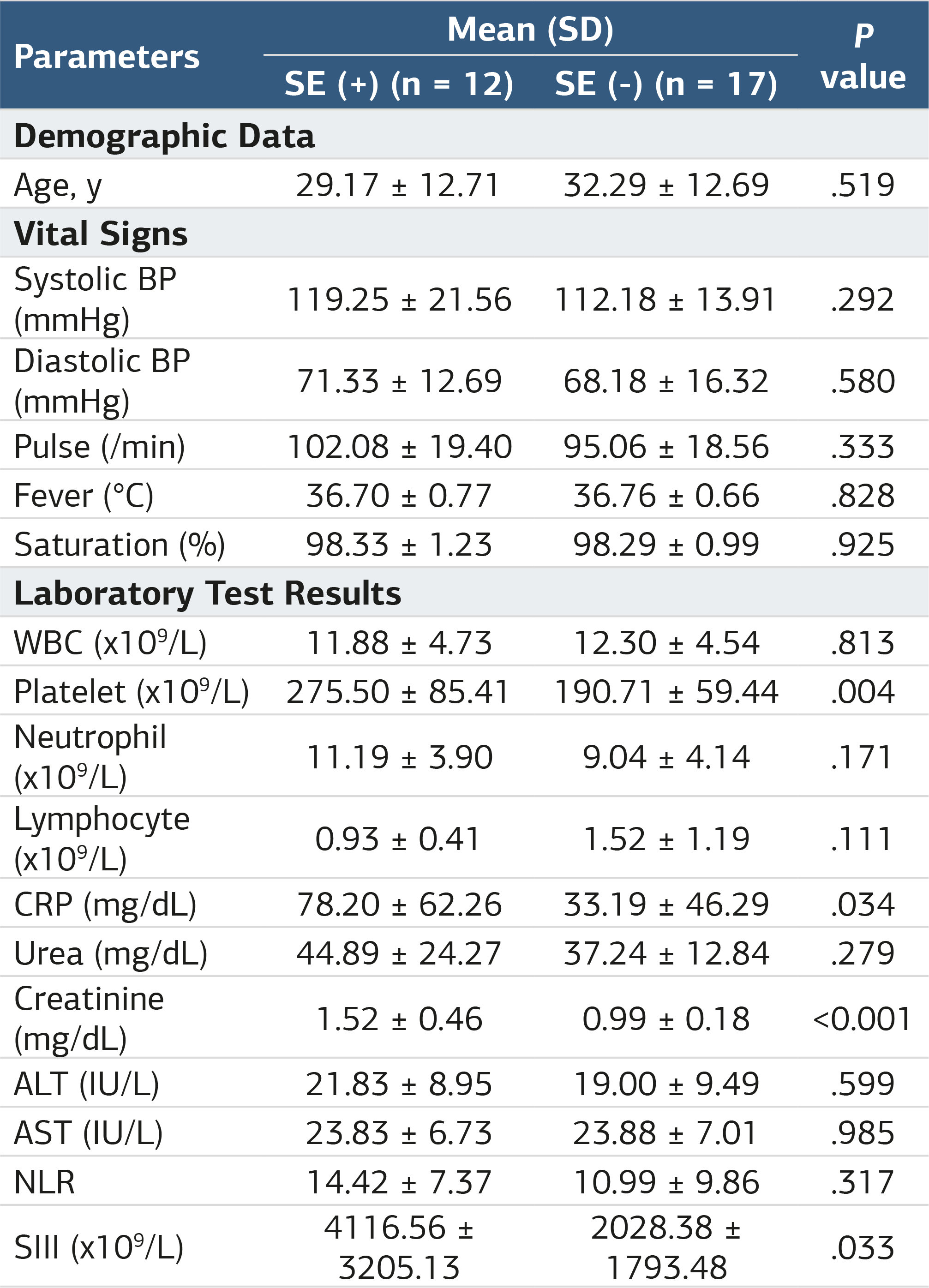
CRP: C-Reactive Protein; ALT: Alanine Aminotransferase; AST: Aspartate Aminotransferase; NLR: Neutrophil-to-Lymphocyte Ratio; SIII: Systemic Immune Inflammatory Index; SD: Standard Deviation
Table 2. ROC Analysis Results in Diagnosis of Laboratory Parameters

CRP: C-Reactive Protein; NLR: Neutrophil-to-Lymphocyte Ratio; SIII: Systemic Immune Inflammatory Index
Figures
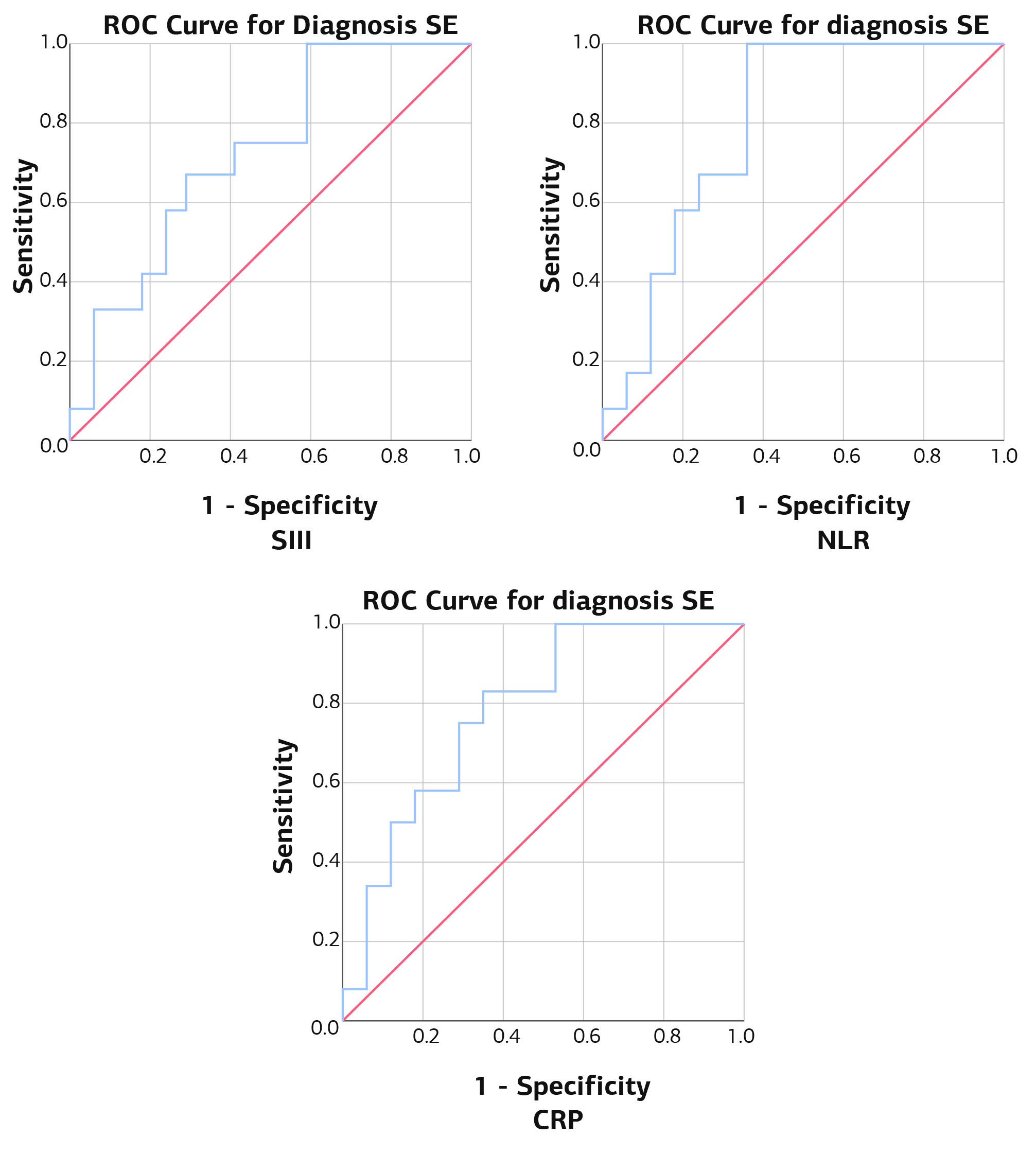
Figure 1. ROC Analysis of SIII, NLR, and CRP in the Diagnosis of SE
Additional Information
Publisher’s Note
Bayrakol MP remains neutral with regard to jurisdictional and institutional claims.
Rights and Permissions

This work is licensed under a Creative Commons Attribution-NonCommercial 4.0 International License (CC BY-NC 4.0). To view a copy of the license, visit https://creativecommons.org/licenses/by-nc/4.0/
About This Article
How to Cite This Article
Gökhan Eyüpoğlu, Ertuğrul Altuğ, Adem Çakır, Kemal Şener, Halil Ölmez, Selda Kömeç, Ramazan Güven. Evaluation of laboratory parameters in patients with acute gastroenteritis caused by salmonella enteritidis. Ann Clin Anal Med 2025;16(8):559-563. doi:10.4328/ACAM.22575
Publication History
- Received:
- 20.01.2025
- Accepted:
- 24.02.2025
- Published Online:
- 06.03.2025
- Printed:
- 01.08.2025