
Impact of mobile phone use during pregnancy on fetal development and birth defects: a review
Mobile phone impact on pregnancy
Authors
Abstract
Mobile phones are integral to modern life, but their potential health impacts, particularly on vulnerable groups such as pregnant women, have raised scientific concerns. The electromagnetic radiation (EMR) emitted by mobile phones is linked to biological effects, including oxidative stress, DNA damage, and cellular disruption, prompting intriguing questions about its influence on fetal development. Research highlights both direct and indirect effects of mobile phone use during pregnancy. Direct effects involve EMR’s potential to interfere with cellular processes that may impact fetal growth. Indirect effects, meanwhile, stem from behavioral changes associated with phone usage, such as increased sedentary habits and disrupted sleep patterns, which can also affect maternal and fetal health. The advent of advanced technologies like 5G adds complexity to these concerns. While 5G networks provide faster connectivity, they operate at higher frequencies, raising new questions about potential health risks. However, disentangling direct effects of EMR from confounding factors like lifestyle and environmental variables remains challenging, requiring further investigation.
This review consolidates current evidence on mobile phone usage during pregnancy, focusing on its direct biological effects, behavioral consequences, and emerging risks linked to new technologies. Although conclusive findings are still limited, existing research emphasizes the need for caution. Pregnant women and healthcare providers should stay informed about ongoing studies to make prudent decisions about mobile phone use. Continued long-term research is essential to clarify the interaction between EMR exposure and maternal-fetal health, ensuring a better understanding of its potential risks.
Keywords
Introduction
Mobile phone usage has become unescapable, with an estimated over 8.6 billion global subscriptions as of 2024.1 According to the International Telecommunication Union (ITU), there were more than 8.58 billion mobile subscriptions in use worldwide in 2022, compared to a global population of 7.95 billion halfway through the year.2 Pregnant women, who are harboring a developing human with rapidly dividing cellular population, rely on mobile phones for communication, information, and daily activities in this age of electronic evolution. However, the unique physiological changes during pregnancy and the rapidly occurring cell division are very sensitive to their environmental influences. This sensitivity of developing tissues, organs and ultimately the fetus, raises questions about potential health risks associated with mobile phone use. Mobile phones are known to emit electromagnetic radiation (EMR). This radiation is non-ionizing and operates primarily in the radiofrequency (RF) spectrum. Although it is less energetic than ionizing radiation, non-ionizing EMR has been reported to be associated with subtle biological changes. World Health Organization (WHO) has categorized RF-EMR as “possibly carcinogenic to humans,” yet its impact on fetal development remains to be explored and evaluated further (Figure 1).3
Materials and Methods
Study DesignThis review was conducted to synthesize current evidence on the potential impact of mobile phone usage during pregnancy on fetal development and congenital disorders developed during the pregnancy or thereafter. The authors followed a systematic narrative review approach, covering both qualitative and quantitative data from peer-reviewed articles, reports, and up to a decade old experimental studies.
Data SourcesA comprehensive search of literature was performed using the following electronic databases:
• Web of Science
• Scopus
• Google Scholar
• PubMed/MEDLINE
• Cochrane Library
Additionally, reports from international organizations, such as the World Health Organization (WHO), the International Commission on Non-Ionizing Radiation Protection (ICNIRP), and the National Toxicology Program (NTP), were included to ensure coverage of relevant guidelines with consensus statements.
Search PlanThe literature search was conducted using specific keywords, including:
• “mobile phone radiation and pregnancy”
• “electromagnetic fields (EMFs) and fetal development”
• “prenatal exposure to radiofrequency (RF) radiation”
• “mobile phone use and congenital disorders”
• “5G technology and pregnancy outcomes”
Boolean operators were applied to refine searches. Articles published between 2015 and 2024 were prioritized to ensure the inclusion of the most recent and relevant data.
Inclusion and Exclusion Criteria
Inclusion Criteria:
1. Articles published in peer-reviewed journals.
2. Studies conducted on humans or animals examining the effects of RF-EMR exposure during pregnancy.
3. Systematic reviews, meta-analyses, experimental studies, and cohort studies relevant to fetal development, congenital anomalies, or maternal outcomes.
4. Publications in the English language.
Exclusion Criteria:
1. Non-peer-reviewed articles or opinion pieces.
2. Studies that did not specifically address mobile phone usage
or RF-EMR exposure.
3. Articles published before 2015, unless highly cited.
Data ExtractionEach study was analyzed for the following data:
• Author(s) and year of publication.
• Study population and design (e.g., human, animal, in vitro).
• Key findings related to pregnancy outcomes or fetal health.
• Exposure parameters (e.g., RF-EMR frequency, duration).
• Statistical significance of results and identified confounders.
Quality AssessmentThe quality of included studies was assessed using:
• The Newcastle-Ottawa Scale (NOS) for cohort studies.
• SYRCLE’s Risk of Bias tool for animal studies.
• PRISMA guidelines for systematic reviews and meta-analyses. Discrepancies in quality ratings were resolved through discussion among the authors, ensuring rigor and reliability for the write-up.
Ethical ApprovalThis review relied solely on publicly available data. No primary data collection was conducted for this review. All included studies adhered to ethical research standards.
Statistical AnalysisNo statistical analysis was performed, as this study is a narrative review of previously published literature.
Reporting GuidelinesNot applicable.
Discussion
The biological effects of EMR depend on factors such as frequency, duration of exposure, and proximity to the source. Mobile phones emit RF-EMR at frequencies ranging from 450 MHz to 6 GHz for 4G and older networks, and up to 100 GHz for 5G technologies. Increased phone usage during pregnancy can expose to prolonged exposure.4 A primary concern related to RF-EMR exposure is the generation of ‘Reactive Oxygen Species’ (ROS), which can lead to oxidative stress. This stress is capable of disrupting cellular homeostasis, and may damage cellular components such as DNA, lipids, and proteins. Recent studies have confirmed that prolonged EMR exposure increases oxidative stress markers in animal models and human cell lines.5,6 It has been reported in literature that EMR exposure is linked to genetic changes, via alterations in DNA methylation and histone modification. These changes can disrupt critical gene expression patterns for fetal development.7 Such modifications could have long-term implications, including predisposition to developmental disorders or chronic diseases. (Figure 2) At the cellular level, EMR exposure has been associated with changes in calcium signaling, mitochondrial dysfunction, and DNA strand breaks.8 These effects are particularly concerning during embryogenesis, which is a period characterized by rapid division of cells, their migration to destined regions of the body and then their differentiation. Epidemiological evidence has pointed out that EMR exposure may alter the outcome of pregnancy. Studies investigating the relationship between mobile phone use during pregnancy and adverse outcomes have found some interesting patterns;
• Low Birth Weight (LBW): Placental insufficiency mediated LBW due to excessive EMR exposure has been cited in studies.9
• Preterm Birth: Studies such as Megha et al. (2022) have found correlations, although weak, between high phone usage and preterm delivery, reporting that confounding factors like maternal stress compound and complicate these findings. 10
• Congenital Anomalies: In a large-scale Danish cohort study it was highlighted that subtle developmental changes in children were reported, who were exposed prenatally, but found no strong evidence linked maternal mobile phone use to congenital anomalies.11
• Maternal phone usage has been associated with behavioral and cognitive outcomes in offspring. Sudan et al. (2020) found an increased risk of ‘Attention-Deficit Hyperactivity Disorder’ (ADHD)-like behaviors in children whose mothers reported frequent phone use during pregnancy.12 Another study linked prolonged prenatal phone exposure to delayed language acquisition, potentially mediated by EMR-induced neural changes.13 Insights from experimental animal models have provided controlled conditions to study EMR effects and found that oxidative stress and neurotoxicity are interrelated. Othman et al. reported that rodents exposed to RF-EMR during pregnancy exhibited increased oxidative stress and disrupted neurodevelopment in offspring.5,6
EMR exposure during critical periods of organogenesis has been reported to be associated with reduced fetal weight and structural abnormalities in rodents.14 In vitro research has complemented these epidemiological and animal studies. Direct cellular responses to EMR have been studied and found that Stem cell models exposed to RF- EMR showed altered differentiation pathways and increased DNA damage.15 Another study reported that cell cultures demonstrated increased mitochondrial dysfunction and apoptotic activity following prolonged EMR exposure.16
Psychosomatic effects of EMR have also been reported in the literature. Use of mobile phones, particularly at night, has been linked to poor maternal sleep. The blue light emitted by screens suppresses melatonin production, disrupting circadian rhythms. Poor sleep during pregnancy is a known risk factor for complications such as preeclampsia and preterm birth.17 It has also been deduced that frequent phone use increases maternal stress and anxiety and these are independently associated with adverse pregnancy outcomes. Social media overuse and constant notifications contribute to stress, potentially affecting fetal growth.18
Screen time often displaces physical activity, exacerbating risks such as gestational diabetes and excessive weight gain. These factors are linked to fetal macrosomia and increased cesarean delivery rates.19 More recent rollout of 5G technology has introduced higher frequencies and broader bandwidths.20 While 5G signals penetrate tissues less deeply than lower-frequency waves, their higher energy density raises new concerns about long-term exposure effects.21
Preliminary studies suggest that chronic low-level exposure to millimeter waves may influence skin and superficial tissues, but implications for pregnancy remain unclear.22 It has been reported, based on bird studies, that exposure to electromagnetic frequency affects the role of the immune system also.23
Suggested Precautionary Measures for Pregnant WomenGiven the uncertainties surrounding mobile phone use during pregnancy, adopting precautionary measures is prudent and some are suggested below;
1. Limit Usage: Pregnant women should minimize phone use, particularly for non-essential activities.24
2. Use Hands-Free Devices: Keeping phones away from the abdomen reduces EMR exposure.25
3. Avoid Nighttime Use: Establishing screen-free periods before sleep can improve maternal health.26
4. Monitor Updates: Stay informed about evolving research and guidelines on EMR safety.
5. Clothing: Some companies have been found to make EMR safe clothing. These clothes may be worn by the ladies during pregnancy. But again, cost and availability are bound to limit their use.
Future Research DirectionsTo address current gaps in knowledge, there is a need for future researchers to:
• Conduct longitudinal studies to examine long-term developmental outcomes in children exposed to EMR prenatally. The college, university, and in some instances school girls these days are using mobile phones excessively due to the use/abuse of social media storm. These girls can make an important pool for such studies.27
• Investigate the effects of real-world usage patterns, including simultaneous exposure to multiple devices.
• Explore potential interactions between EMR and environmental toxins during pregnancy.
• Evaluate the impact of new technologies, such as wearable devices and smart home systems, on maternal and fetal health.
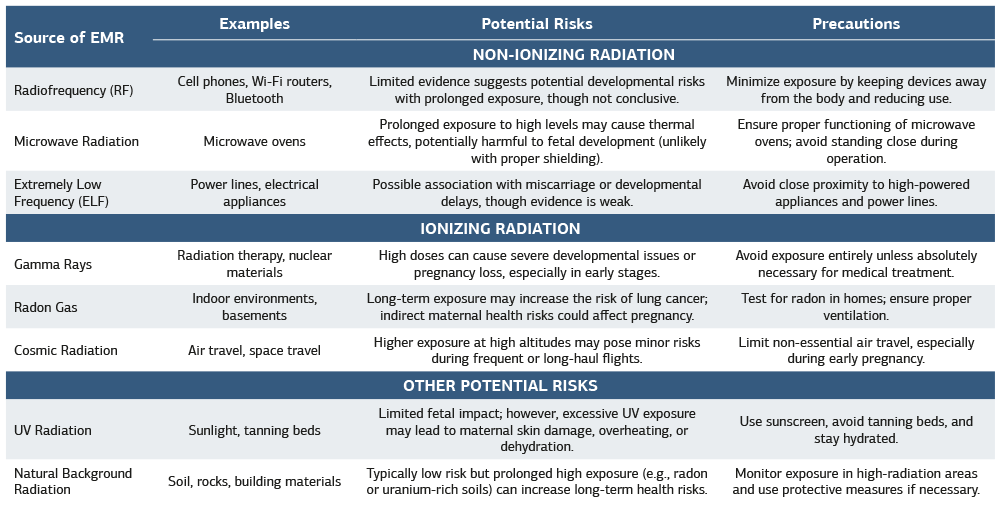
• The role of the multi-billion-dollar mobile industry to suppress any real issues shall also be explored by independent world bodies concerned with human and humane health care (Table 1).Table 1 lists the different, types, sources, hazards and precautions for Emr exposure.
Limitations
While this review article provides a comprehensive analysis of the existing literature on the titled topic, it is not without limitations. First, the selection of studies may be subject to publication bias, as research with significant findings is more likely to be published. Second, the scope of this review is limited to studies published over a specific period, which may exclude relevant research from other sources. Third, due to the narrative nature of this review, there is a lack of systematic quantitative analysis, such as meta-analysis, to statistically assess the findings. Table 1 lists different types, sources, hazards and precautions of EMR.
Conclusion
While definitive evidence linking mobile phone use during pregnancy to congenital disorders is limited due to deficiency of human model studies, still the potential for both direct biological effects and indirect behavioral impacts cannot be dismissed. Pregnant women are encouraged to adopt simple precautionary measures, such as reducing phone usage and avoiding prolonged exposure, while researchers need to continue to study this complex issue. With mobile technology advancing rapidly, it is essential to balance its benefits with a commitment to safeguarding maternal and fetal health. Mobile phone and communication companies shall be encouraged or bound to conduct research or promote or conduct research in the hazardous uses of ever increasing mobile usage.
Declarations
Ethics Declarations
Not applicable. This article is a review of previously published studies and did not involve experiments on humans or animals.
Animal and Human Rights Statement
All procedures performed in this study were in accordance with the ethical standards of the institutional and/or national research committee and with the 1964 Helsinki Declaration and its later amendments or comparable ethical standards.
Informed Consent
Not applicable. This review article did not involve human participants or identifiable personal data
Data Availability
Not applicable. This article is based solely on previously published literature and does not contain new datasets.
Conflict of Interest
The authors declare that there is no conflict of interest.
Funding
The authors extend their appreciation to the Deanship of Scientific Research at Northern Border University, Arar, KSA for funding this research work
through the project number “NBU-FFR-2025-848-01”.
Author Contributions (CRediT Taxonomy)
Conceptualization: W.A.C., A.M.S.H.
Methodology: W.A.C., N.B., D.S.K.
Investigation: S.E.S., M.B., A.N., M.M.M.
Data curation: H.M., M.M.
Writing – original draft: W.A.C., A.M.S.H.
Writing – review & editing: N.B., D.S.K., S.E.S.
Supervision: W.A.C.
Scientific Responsibility Statement
The authors declare that they are responsible for the article’s scientific content, including study design, data collection, analysis and interpretation, writing,
and some of the main line, or all of the preparation and scientific review of the contents, and approval of the final version of the article.
Abbreviations
ADHD: Attention-Deficit Hyperactivity Disorder
EMF: Electromagnetic Field
EMFs: Electromagnetic Fields
EMR: Electromagnetic Radiation
ELF: Extremely Low Frequency
ICNIRP: International Commission on Non-Ionizing Radiation Protection
LBW: Low Birth Weight
NOS: Newcastle-Ottawa Scale
NTP: National Toxicology Program
RF: Radiofrequency
RF-EMR: Radiofrequency Electromagnetic Radiation
ROS: Reactive Oxygen Species
WHO: World Health Organization
References
-
Statista. Number of mobile subscriptions worldwide from 2000 to 2024. Accessed March 21, 2026. https://www.statista.com/topics/779/mobile-internet
-
World Economic Forum. Charted: There are more phones than people in the world. Published April 2023. Accessed March 21, 2026. https://www.weforum.org/stories/2023/04/charted-there-are-more-phones-than-people-in-the-world/
-
World Health Organization. Electromagnetic fields and public health: mobile phones. Accessed March 21, 2026. https://www.who.int/teams/environment-climate-change-and-health/radiation-and-health/non-ionizing/emf
-
Peixoto MS, da Silva Junior FC, de Oliveira Galvão MF, Roubicek DA, de Oliveira Alves N, Batistuzzo de Medeiros SR. Oxidative stress, mutagenic effects, and cell death induced by retene. Chemosphere. 2019;5(123):518-527. doi: 10.1016/j.chemosphere.2019.05.123
-
Yang J, Li Q, Han D, Liao C, Wang P, Gao J, et al. Radiation-induced impairment of optic nerve axonal transport in tree shrews and rats monitored by longitudinal manganese-enhanced MRI. Neurotoxicology. 2020;77:145-154. doi: 10.1016/j.neuro.2020.01.008
-
Pall ML. Wi-Fi is an important threat to human health. Environ Res. 2018; 164:405-416. doi: 10.1016/j.envres.2018.01.035
-
Cordelli E, Ardoino L, Benassi B, Consales C, Eleuteri P, Marino C, et al. Effects of radiofrequency electromagnetic Field (RF-EMF) exposure on pregnancy and birth outcomes: A systematic review of experimental studies on non-human mammals. Environ Int. 2023;180:108178. doi: 10.1016/j.envint.2023.108178
-
Kim JH, Sohn UD, Kim HG, Kim HR. Exposure to 835 MHz RF-EMF decreases the expression of calcium channels, inhibits apoptosis, but induces autophagy in the mouse hippocampus. Korean J Physiol Pharmacol. 2018;22(3):277-289. doi: 10.4196/kjpp.2018.22.3.277
-
Hocking B. Maternal cell phone use and behavioral problems in children. Epidemiology. 2009;20(2):312. doi: 10.1097/EDE.0b013e318188754d
-
American College of Obstetricians and Gynecologists. Physical activity and exercise during pregnancy and the postpartum period. Published April 2020. Accessed March 21, 2026. https://www.acog.org/clinical/clinical-guidance/committee-opinion/articles/2020/04/physical-activity-and-exercise-during-pregnancy-and-the-postpartum-period
-
Mainprize JG, Yaffe MJ, Chawla T, Glanc P. Effects of ionizing radiation exposure during pregnancy. Abdom Radiol. 2023;48(5):1564-1578. doi: 10.1007/s00261-023-03861
-
Divan HA, Kheifets L, Obel C, Olsen J. Prenatal and postnatal exposure to cell phone use and behavioral problems in children. Epidemiology. 2008;19(4):523-529. doi: 10.1097/EDE.0b013e318175dd47
-
Kim D, Yadav D, Song M. An updated review on animal models to study attention-deficit hyperactivity disorder. Transl Psychiatry. 2024;14(1):187. doi: 10.1038/s41398-024-02893-0
-
Jangid P, Rai U, Sharma RS, Singh R. The role of non-ionizing electromagnetic radiation on female fertility: A review. Int J Environ Health Res. 2023;33(4):35873. doi: 10.1080/09603123.2022.2030676
-
Stefi AL, Margaritis LH, Skouroliakou AS, Vassilacopoulou D. Mobile phone electromagnetic radiation affects Amyloid Precursor Protein and α-synuclein metabolism in SH-SY5Y cells. Pathophysiology. 2019;26(3-4):203-212. doi: 10.1016/j.pathophys.2019.02.004
-
Bua L, Tibaldi E, Falcioni L, Lauriola M, De Angelis L, Gnudi F, et al. Results of lifespan exposure to continuous and intermittent extremely low frequency electromagnetic fields (ELFEMF) administered alone to Sprague Dawley rats. Environ Res. 2018;164:271-279. doi: 10.1016/j.envres.2018.02.036
-
Nakahara K, Michikawa T, Morokuma S, Ogawa M, Kato K, Sanefuji M, et al. Association of maternal sleep before and during pregnancy with sleep and developmental problems in 1-year-old infants. Sci Rep.2021;11(1):11834. doi: 10.1038/s41598-021-91271-7
-
Izci-Balserak B, Keenan BT, Corbitt C, Staley B, Perlis M, Pien GW. Changes in Sleep Characteristics and Breathing Parameters During Sleep in Early and Late Pregnancy. J Clin Sleep Med. 2018;14(7):1161-1168. doi: 10.5664/jcsm.7216
-
American College of Obstetricians and Gynecologists. Exercise during pregnancy. Accessed March 21, 2026. https://www.acog.org/womens-health/faqs/exercise-during-pregnancy
-
Ramakrishnan M, Athikary KG. Health effects of fifth-generation technologies. Int J Env Health Eng 2023;12:3.
-
National Cancer Institute. Electromagnetic fields and cancer. Accessed March 21, 2026. https://www.cancer.gov/about-cancer/causes-prevention/risk/radiation/electromagnetic-fields-fact-sheet
-
Toraño EG, García MG, Fernández-Morera JL, Niño-García P, Fernández AF. The Impact of External Factors on the Epigenome: In Utero and over Lifetime. Biomed Res Int. 2016;2016:2568635. doi: 10.1155/2016/2568635
-
Lin JC. Carcinogenesis from chronic exposure to radio-frequency radiation. Front Public Health. 2022;10:1042478. doi: 10.3389/fpubh.2022.1042478
-
National Toxicology Program. Toxicology and carcinogenesis studies in Sprague Dawley (Hsd: Sprague Dawley SD) rats exposed to whole-body radio frequency radiation at a frequency (900 MHz) and modulations (GSM and CDMA) used by cell phones. Natl Toxicol Program Tech Rep Ser. 2018;(595):595. doi: 10.22427/NTP-TR-595
-
Salameh M, Zeitoun-Ghandour S, Sabra L, Daher A, Khalil M, Joumaa WH. Impact of GSM-EMW exposure on the markers of oxidative stress in fetal rat liver. Sci Rep. 2023;13(1):17806. doi: 10.1038/s41598-023-44814-
-
Kesari KK, Agarwal A, Henkel R. Radiations and male fertility. Reprod Biol Endocrinol. 2018;16(1):118. doi: 10.1186/s12958-018-0431-1
-
Mumtaz S, Rana JN, Choi EH, Han I. Microwave Radiation and the Brain: Mechanisms, Current Status, and Future Prospects. Int J Mol Sci. 2022;23(16):9288. doi: 10.3390/ijms23169288
Figures
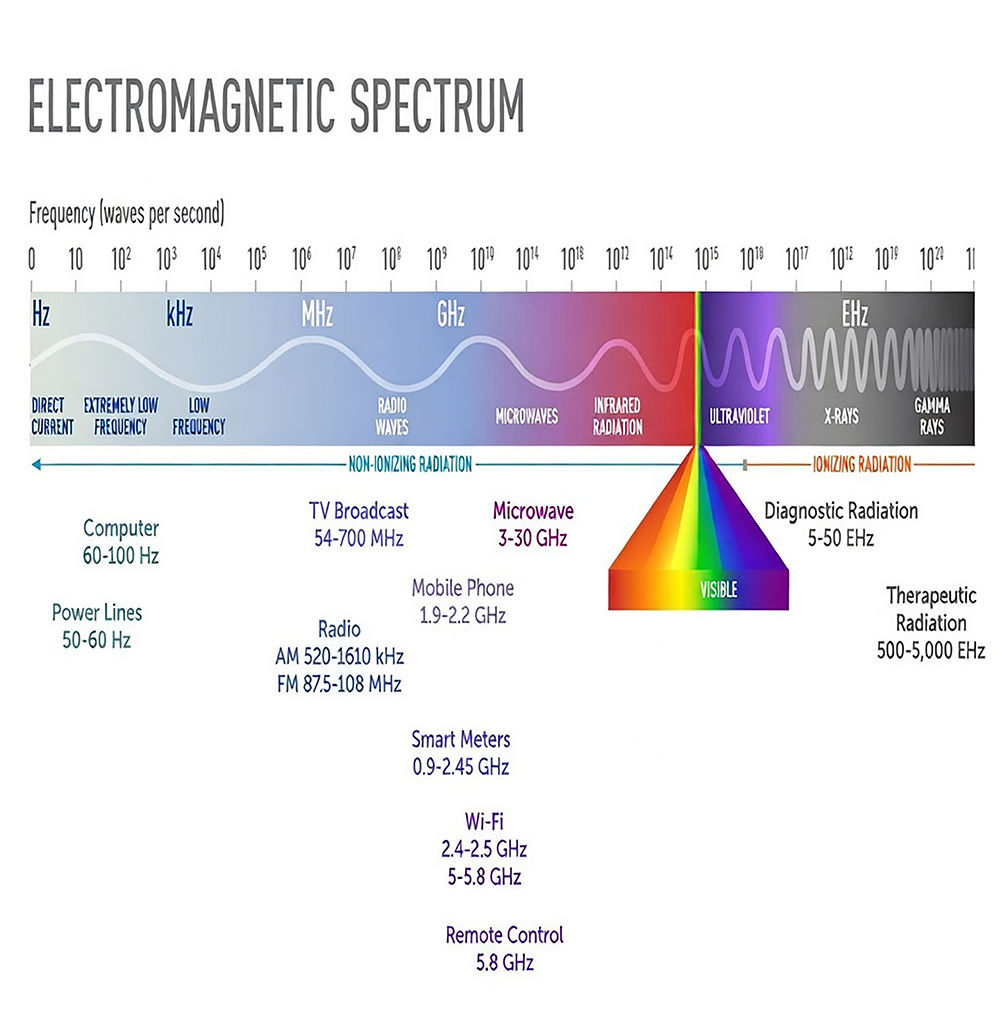
Figure 1. Electromagnetic spectrum: A wavelength-based chart showing the spectrum of non-ionizing and ionizing radiation along with their routine daily life sources of exposure [20]
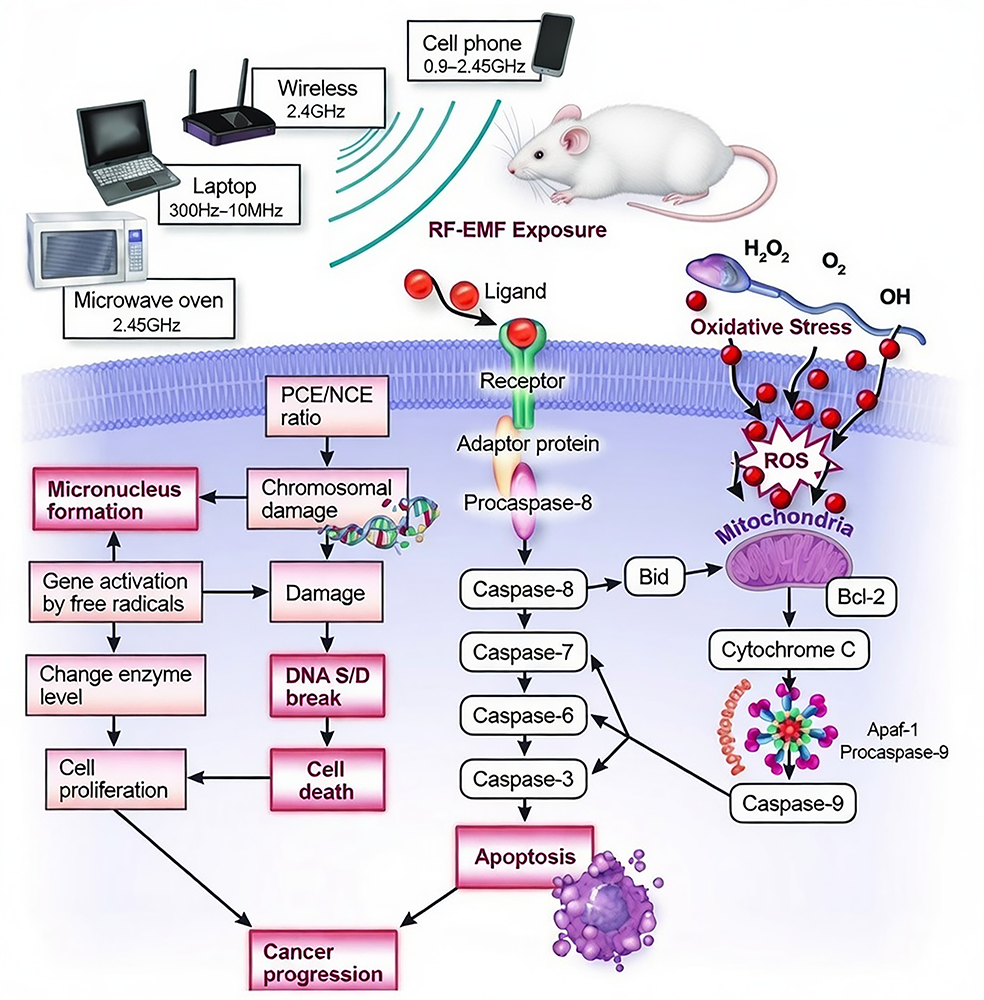
Figure 2. A diagrammatic schema of cancer progression after exposure to EMR, highlighting the cascade of contributing cellular changes [21,22] (Available from https://creativecommons.org/ licenses/by/4.0/)
Tables
Table 1. Lists different types, sources, hazards and precautions of EMR
Additional Information
Publisher’s Note
Bayrakol MP remains neutral with regard to jurisdictional and institutional claims.
Rights and Permissions

This work is licensed under a Creative Commons Attribution-NonCommercial 4.0 International License (CC BY-NC 4.0). To view a copy of the license, visit https://creativecommons.org/licenses/by-nc/4.0/
About This Article
How to Cite This Article
Wajid Ali Chatha, Ahmed M S Hegazy, Nagla Bayoumy, Durre Sameen Khan, Saad El Shafey, Marwa Badawy, Amgad Niazi, Mohammad M. Mosaed, Hamza Mohamad, Muhammad Mustafa, Hanan ElGendy, Abdul Rehman Alyan. Impact of mobile phone use during pregnancy on fetal development and birth defects: a review. Ann Clin Anal Med 2026;17(Suppl 2):S206-210. doi: 10.4328/ACAM.22598
- Received:
- February 8, 2025
- Accepted:
- March 10, 2025
- Published Online:
- April 23, 2025
- Printed:
- March 20, 2026