
Abstract
AimHereditary angioedema (HAE) is a rare disorder characterized by swelling that significantly impacts patients’ quality of life. This study aims to assess the prevalence of psychological distress, including depression, anxiety, and stress.MethodsA cross-sectional study was conducted with validated psychological assessment tools, including the Beck Depression Inventory (BDI), Patient Health Questionnaire-9 (PHQ-9), Perceived Stress Scale-10 (PSS-10), and Generalized Anxiety Disorder-7 (GAD-7). Angioedema severity and disease control were evaluated using questionnaires: the Angioedema Activity Score (AAS) and the Angioedema Control Test (AECT).ResultsA total of 18 patients completed all questionnaires. The median age was 33 years (IQR:27.7–37.2), with a predominantly female population (77.7%). Disease control was poor in 76.4% of patients (AECT median:8, IQR:5.5–10). The median AAS score was 49.5 (IQR:17–76). Psychological assessments revealed a high burden of distress, with 50% of patients exceeding the BDI treatment threshold (median:16, IQR:10.7–22.7) and scoring within the moderate-to-severe depression range on the PHQ-9 (median:9.5, IQR:7.5–16). Moderate stress (PSS-10 median:20, IQR:15.7–25) was reported by 88.8% of participants, while 38.9% exhibited moderate-to-severe anxiety (GAD-7 median:8, IQR:4–10.5). No significant correlations were observed between disease control (AECT, AAS) and psychological distress measures (BDI, PHQ-9, PSS-10, GAD-7).ConclusionOur findings emphasize the substantial psychological burden of HAE, with a significant proportion of patients experiencing depression, anxiety, and stress. Beyond clinical severity, attack-related uncertainty and chronic disease burden likely contribute to this distress. Future research with larger, longitudinal cohorts is essential to better delineate the complex interplay between HAE and mental health.
Keywords
Introduction
Hereditary angioedema (HAE) is a rare genetic disorder characterized by episodic swelling in cutaneous and subcutaneous tissues, often affecting the gastrointestinal tract and airway, with potentially life-threatening consequences such as asphyxia. The underlying mechanism involves increased bradykinin levels, leading to heightened vascular permeability and subsequent tissue edema. HAE is most commonly associated with mutations in the SERPING1 gene, resulting in a quantitative or functional deficiency of C1-esterase inhibitor (C1-INH). Other genetic variants, including mutations in factor XII, angiopoietin-1, plasminogen, kininogen 1, myoferlin, heparan sulfate-glucosamine 3-O-sulfotransferase 6, carboxypeptidase N, and disabled homolog 2-interacting protein, are linked to HAE with normal C1-INH levels. The estimated prevalence of HAE due to C1-INH deficiency is approximately 1 in 50,000 individuals.1
HAE manifests with considerable heterogeneity in severity, frequency, and anatomical distribution of attacks, imposing substantial physical, psychological, and socioeconomic burdens on affected individuals. The unpredictability of attacks, coupled with potential delays in diagnosis and challenges in accessing effective treatment, contributes to heightened emotional distress. Given these concerns, international guidelines emphasize achieving complete disease control to improve patients’ quality of life.2 Long-term prophylaxis (LTP), with C1-INH replacement therapy and other new drugs, remains a cornerstone of disease management; however, due to cost considerations, it is only reimbursed during pregnancy in certain healthcare systems.
Patient-reported outcome measures (PROMs) provide valuable insight into the psychosocial impact of HAE without requiring direct physician assessment. Previous studies indicate a high prevalence of anxiety and depression among HAE patients, which may be exacerbated by the uncertainty surrounding attack occurrence and treatment accessibility. Psychological distress may also act as a precipitating factor for angioedema episodes, perpetuating a cycle of increased disease burden and deteriorating mental health. Furthermore, HAE has been associated with significant lifestyle modifications, including avoidance of travel, reduced participation in social activities, and concerns regarding family planning due to the hereditary nature of the disease. This study aims to assess the burden of depression, anxiety, and stress and to provide clinicians with an accurate picture of the most current knowledge that surrounds the role that emotions, stress, and psychological factors play in the experience of patients with C1-INH–HAE.
Materials and Methods
This cross-sectional study included 18 patients diagnosed with HAE. Eligibility criteria required participants to be at least 18 years old, have a physician-confirmed diagnosis of HAE, and be literate. Patients with any chronic comorbidities other than HAE were excluded. The survey collected demographic and clinical data, including age, gender, comorbid conditions, psychiatric history, and current medication use.
Anxiety, depression, and perceived stress status of patients were evaluated using the validated Beck Depression Inventory (BDI), Patient Health Questionnaire-9 (PHQ-9), Perceived Stress Scale-10 (PSS-10), and Generalized Anxiety Disorder-7 (GAD-7).3-6 Disease activity and control were evaluated using the Angioedema Activity Score (AAS) and Angioedema Control Test (AECT).7-8
The BDI, a 21-item scale, assesses depressive symptoms over the past week, with total scores ranging from 0 to 63. It is categorized as minimal (0–9), mild (10–16), moderate (17–29), and severe (30–63) depression. The BDI established a cut-off score of 17 for clinical depression that needs treatment.
The PHQ-9, a 9-item questionnaire, evaluates depressive symptoms based on frequency, scoring each item from 0 (not at all) to 3 (nearly every day). The total score classifies depression severity as minimal (1–4), mild (5–9), moderate (10–14), moderately severe (15–19), or severe (20–27).
Perceived stress was measured using the PSS-10, which assesses the extent to which individuals perceive situations in their lives as stressful. Each item is rated on a 5-point Likert scale, with a total score ranging from 0 to 40, where higher scores indicate greater perceived stress.
Anxiety was assessed using the GAD-7, a seven-item scale measuring generalized anxiety disorders over the past four weeks. Each item is scored from 0 to 3, with total scores categorized as mild (0–5), moderate (6–10), and severe (≥11) anxiety. A cutoff point >15 is indicative of severe anxiety symptoms.6-24
Disease activity and control were evaluated using the Angioedema Activity Score (AAS) and the Angioedema Control Test (AECT). The AAS ranges from 0 to 420 over a 28-day period and quantifies attack frequency and severity, with higher scores indicating greater disease activity. The AECT, a 4-item questionnaire assessing symptom frequency, impact, and disease control, is scored from 0 to 16, with a threshold of ≤10 indicating poor disease control.Ethical ApprovalThis study was approved by the Ethics Committee of Marmara University (Date: 04.11.2022, Decision No: 1472).Statistical AnalysisData were analyzed using SPSS (IBM SPSS Statistics, Version 22.0) and GraphPad Prism 8 (GraphPad Software Inc., San Diego, California, USA). Normality was assessed using the Shapiro-Wilk test. Continuous variables were analyzed using Mann-Whitney U and Kruskal-Wallis tests, while categorical variables were compared using the Chi-square or Fisher’s exact test. Correlations were examined using Spearman’s correlation coefficient. A p-value <0.05 was considered statistically significant.Reporting GuidelinesThis study was reported in accordance with the STROBE guideline.
Results
A total of 18 patients were enrolled and completed all questionnaires. The median age of participants was 33 years (interquartile range [IQR]:27.7-37.2), with a female predominance (77.7%). The majority (83.3%) were classified as HAE type 1, while one patient was diagnosed with HAE type 3. The median diagnostic delay was 9.5 years (IQR:3.7-16.7). All patients were prescribed icatibant for on-demand treatment, with a median annual usage of 36 doses (IQR:11-96). Three patients were receiving danazol as LTP in addition to on-demand treatment. Details of the patient’s demographics are shown in Table 1. The median AECT score was 8 (IQR:5.5-10), with 76.4% of patients scoring below the threshold of 10, indicating poor disease control. The median AAS score was 49.5 (IQR:17-76), with four patients exhibiting higher scores suggestive of increased disease activity. Notably, two patients receiving LTP had an AAS score of zero.
The psychological assessment revealed substantial distress among patients. Figure 1 depicts the scores of BDI, PHQ-9, PSS-10, and GAD-7. The median BDI score was 16 (IQR:10.7-22.7), with half of the cohort exceeding the treatment threshold of 17. The PHQ-9 median score was 9.5 (IQR:7.5-16), with 50% of patients scoring within the moderate-to-severe depression range. The median PSS-10 score was 20 (IQR:15.7-25), with 88.8% of patients reporting moderate stress. The median GAD-7 score was 8 (IQR:4-10.5), with 7 patients (38.9%) exhibiting moderate-to-severe anxiety. Figure 2 A-D show the scores of BDI, PHQ-9, PSS-10, and GAD-7.
There was no significant correlation between ACT and AAS scores and the Beck Depression Inventory, PHQ-9, PSS-10, and GAD-7. No significant correlations were found between the Beck Depression Inventory, PHQ-9, PSS-10, and GAD-7 scores and age, gender, annual attack frequency, age at diagnosis, age at symptom onset, and other parameters. Furthermore, based on cut-off values, the depression and anxiety scales were categorized into two groups (mild and moderate-severe); however, no significant differences were observed in attack frequency, gender, or age (including symptom onset, diagnosis, and current age).
Discussion
This study revealed that 50% of patients with HAE exhibited depressive symptoms, while the majority reported moderate levels of perceived stress. Furthermore, moderate to severe anxiety was identified in 38.9% of the cohort. These findings emphasize the significant psychological burden associated with HAE, with a considerable proportion of patients experiencing depression, anxiety, and stress. Our findings revealed a prolonged diagnostic delay, consistent with previously published reports. Notably, elderly patients exhibited longer diagnostic delays, with durations extending up to 22.9 to 38.5 years.9 This delay may contribute to heightened psychological distress due to the prolonged period of uncertainty and mismanagement before a definitive diagnosis is established.DepressionThis study demonstrated that half of patients with HAE had depressive symptoms, highlighting the substantial psychological burden associated with the disease. The high prevalence of moderate-to-severe depression aligns with previous research emphasizing the profound mental health impact of chronic and unpredictable conditions such as HAE. The unpredictability of attacks, coupled with concerns regarding treatment accessibility, likely exacerbates psychological distress and negatively affects quality of life. Fouché et al. reported severe depressive symptoms in all 26 participants examined in their study,10 while Bygum et al. found depressive symptoms in 42% of participants,11 suggesting that depression is a prevalent comorbidity in HAE that warrants clinical attention. Neuroimmunological studies suggest that kinin receptors may influence depressive behavior, as B1-kinin receptor antagonists significantly reduce depressive behaviors in mice.12 It is plausible that lifelong recurrent HAE attacks, accompanied by psychosocial stress, fear, and physical pain, could contribute to B1-receptor upregulation, potentially influencing depressive behavior patterns.AnxietyAnxiety disorders are highly prevalent among patients with chronic illnesses and are frequently reported in individuals with HAE.13 Among HAE patients (N = 1,214; 73% female), the prevalence of anxiety was significantly higher than in controls (OR,2.05; 95% CI,1.83–2.31), with increased prevalence in females compared to males (OR,1.61; 95% CI,1.23–2.11) and in elderly individuals compared to pediatric patients (OR,4.62; 95% CI,1.63–12.67).14 HAE patients also exhibited higher prevalence rates of generalized anxiety, posttraumatic stress, and panic disorders. The unpredictability of HAE attacks, fear of asphyxiation, difficulties in accessing treatment, and the potential impact on social and professional life may collectively contribute to anxiety. Moreover, anxiety may significantly affect disease management, potentially influencing treatment adherence and overall well-being. This observation suggests a potentially vicious cycle in which anxiety related to recurrent attacks further exacerbates the disease burden.15-16 C1-INH HAE not only causes substantial short-term disability associated with its attacks, but it may also cause patients to live in persistent anxiety between episodes. The disease’s unpredictable nature could directly impact patients’ choices in everyday life. It may cause individuals to avoid traveling, specific hobbies, or social opportunities, or it may cause them to experience anxiety about having children or may cause other social and/or relationship impairments.17StressZotter et al. reported that emotional stress is the most frequently cited trigger for HAE attacks.18 The majority of our cohort (88%) reported moderate levels of perceived stress, with 64% of HAE patients exhibiting stress scores above those of the standard population.19-20 Notably, stress levels in this cohort exceeded those of individuals with other chronic diseases. Stress was identified as a primary trigger of HAE attacks, reinforcing the bidirectional relationship between psychological distress and disease activity. This stress could lead to a vicious cycle in which anxiety over continuing attacks could trigger further episodes. The long-term psychological impact of HAE extends beyond the patients themselves, affecting caregivers’ quality of life as well. Given the hereditary nature of HAE and the likelihood that affected individuals have relatives who succumbed to asphyxiation due to laryngeal swelling, patients may live in constant fear of worsening attacks and respiratory failure.21-23 Estimates suggest that patients with C1-INH–HAE lose between 20 and 100 days of social activities annually.24 The disease’s unpredictable nature may profoundly impact daily life, leading individuals to avoid traveling, engaging in specific hobbies, or participating in social activities and work productivity. Concerns regarding family planning and long-term social or relational impairments have also been reported. Interestingly, we did not observe significant correlations between disease activity (AAS), disease control (AECT), and psychological scores. This suggests that mental health outcomes may be influenced by factors beyond clinical severity, including individual coping mechanisms, social support, and healthcare accessibility. Previous research has highlighted the role of cognitive-behavioral therapy and stress management techniques in reducing attack frequency and improving patient-reported outcomes. Given the strong association between psychological stress and HAE exacerbations, integrating mental health support into routine disease management may yield substantial benefits.
Limitations
This study has several limitations. First, the small sample size and cross-sectional design preclude causal inferences. Additionally, the psychological assessments relied on self-reported questionnaires without psychiatric evaluation. However, these validated instruments are widely recommended for preliminary screening purposes. Future longitudinal studies with larger cohorts are warranted to further elucidate the interplay between HAE severity, psychological distress, and treatment strategies.
Conclusion
HAE imposes a substantial psychological burden, with high rates of depression, anxiety, and stress among affected individuals. Our findings underscore the necessity of comprehensive disease management strategies that integrate both physical and mental health support. Future research should investigate the long-term benefits of targeted psychological interventions in improving patient well-being and disease control. Additionally, further exploration into the neuroimmunological mechanisms underlying HAE-related psychological distress may provide new therapeutic insights. Given the study’s limitations, including a small sample size and reliance on self-reported measures, future research with larger, longitudinal cohorts is essential to better delineate the complex interplay between HAE and mental health.
Declarations
Animal and Human Rights Statement
All procedures performed in this study were in accordance with the ethical standards of the institutional and/or national research committee and with the 1964 Helsinki Declaration and its later amendments or comparable ethical standards.
Informed Consent
Informed consent was obtained from all participants prior to enrollment in the study.
Data Availability
The datasets used and/or analyzed during the current study are not publicly available due to patient privacy reasons but are available from the corresponding author on reasonable request.
Conflict of Interest
The authors declare that there is no conflict of interest.
Funding
None.
Abbreviations
AAS: Angioedema activity score
AECT: Angioedema control test
BDI: Beck depression inventory
C1-INH: C1-esterase inhibitor
GAD-7: Generalized anxiety disorder-7
HAE: Hereditary angioedema
IQR: Interquartile range
LTP: Long-term prophylaxis
PHQ-9: Patient health questionnaire-9
PSS-10: Perceived stress scale-10
SPSS: Statistical Package for the Social Sciences
STROBE: Strengthening the Reporting of Observational Studies in Epidemiology
References
- Bowen T, Cicardi M, Bork K, et al. Hereditary angioedema: a current state-of-the-art review, VII: Canadian Hungarian 2007 International Consensus Algorithm for the Diagnosis, Therapy, and Management of Hereditary Angioedema. Ann Allergy Asthma Immunol. 2008;100(1 suppl 2).
- Maurer M, Magerl M, Betschel S, et al. The international WAO/EAACI guideline for the management of hereditary angioedema: the 2021 revision and update. World Allergy Organ J. 2022;15(3):100627. doi:10.1016/j.waojou.2022.100627
- Kapci EG, Uslu R, Turkcapar H, Karaoğlan A. Beck Depression Inventory II: evaluation of the psychometric properties and cut-off points in a Turkish adult population. Depress Anxiety. 2008;25(10). doi:10.1002/da.20371
- Sari YE, Kokoglu B, Balcioglu H, Bilge U, Colak E, Unluoglu I. Turkish reliability of the Patient Health Questionnaire-9. Biomed Res. 2016;27(special issue).
- Eskin M, Harlak H, Demirkıran F, Dereboy Ç. Algılanan Stres Ölçeğinin Türkçeye uyarlanması: güvenirlik ve geçerlik analizi. New Symp J. 2013;51(3):132-140.
- Konkan R, Enormanci Ö, Güçlü O, Aydin E, Sungur MZ. Yaygın Anksiyete Bozukluğu-7 testi Türkçe uyarlaması, geçerlik ve güvenirliği. Noro Psikiyatr Ars. 2013;50(1):53-58. doi:10.4274/npa.y6308
- Can PK, Degirmentepe EN, Etikan P, et al. Assessment of disease activity and quality of life in patients with recurrent bradykinin-mediated versus mast cell-mediated angioedema. World Allergy Organ J. 2021;14(7):100554. doi:10.1016/j.waojou.2021.100554
- Weller K, Donoso T, Magerl M, et al. Development of the Angioedema Control Test: a patient-reported outcome measure that assesses disease control in patients with recurrent angioedema. Allergy. 2020;75(5):1165-1177. doi:10.1111/all.14144
- Magerl M, Gothe H, Krupka S, Lachmann A, Ohlmeier C. A Germany-wide survey study on the patient journey of patients with hereditary angioedema. Orphanet J Rare Dis. 2020;15(1):221. doi:10.1186/s13023-020-01506-5
- Fouche AS, Saunders EF, Craig T. Depression and anxiety in patients with hereditary angioedema. Ann Allergy Asthma Immunol. 2014;112(4):371-375. doi:10.1016/j.anai.2013.05.028
- Bygum A, Aygören-Pürsün E, Caballero T, Beusterien K, Gholizadeh S, Musingarimi P. The hereditary angioedema burden of illness study in Europe: background and methodology. BMC Dermatol. 2012;12:1-9.
- Viana AF, Maciel IS, Dornelles FN, et al. Kinin B1 receptors mediate depression-like behavior response in stressed mice treated with systemic E coli lipopolysaccharide. J Neuroinflammation. 2010;7:1-12.
- Rosa A, Franco R, Miranda M, et al. The role of anxiety in patients with hereditary angioedema during oral treatment: a narrative review. Front Oral Health. 2023;4:1257703. doi:10.3389/froh.2023.1257703
- Gao YY, Ng S, Al-Shaikhly T, Craig T. Suicide, depression, and anxiety disorders among hereditary angioedema patients. J Allergy Clin Immunol. 2023;151(2). doi:10.1016/j.jaci.2022.12.649
- Banerji A, Davis KH, Brown TM, et al. Patient-reported burden of hereditary angioedema: findings from a patient survey in the United States. Ann Allergy Asthma Immunol. 2020;124(6):600-607. doi:10.1016/j.anai.2020.02.018
- Longhurst H, Bygum A. The humanistic, societal, and pharmaco-economic burden of angioedema. Clin Rev Allergy Immunol. 2016;51(2):230-239. doi:10.1007/s12016-016-8575-2
- Savarese L, Mormile I, Bova M, et al. Psychology and hereditary angioedema: a systematic review. Allergy Asthma Proc. 2021;42(1). doi:10.2500/aap.2021.42.200073
- Zotter Z, Csuka D, Szabó E, et al. The influence of trigger factors on hereditary angioedema due to C1-inhibitor deficiency. Orphanet J Rare Dis. 2014;9:44. doi:10.1186/1750-1172-9-44
- Freda MF, Savarese L, Bova M, et al. Stress and psychological factors in the variable clinical phenotype of hereditary angioedema in children: a pilot study. Pediatr Allergy Immunol Pulmonol. 2016;29(1):6-12. doi:10.1089/ped.2015.0557
- Toscani M, Riedl M. Meeting the challenges and burdens associated with hereditary angioedema. Manag Care. 2011;20(9):44-51.
- Bork K, Hardt J, Schicketanz KH, Ressel N. Clinical studies of sudden upper airway obstruction in patients with hereditary angioedema due to C1 esterase inhibitor deficiency. Arch Intern Med. 2003;163(10):1229-1235. doi:10.1001/archinte.163.10.1229
- Bygum A, Aygören-Pürsün E, Beusterien K, et al. Burden of illness in hereditary angioedema: a conceptual model. Acta Derm Venereol. 2015;95(6):706-710. doi:10.2340/00015555-2014
- Huang SW. Results of an online survey of patients with hereditary angioedema. Allergy Asthma Proc. 2004;25(2):127-131.
- Banerji A. The burden of illness in patients with hereditary angioedema. Ann Allergy Asthma Immunol. 2013;111(5):329-336. doi:10.1016/j.anai.2013.08.019
Tables
Table 1. Demographics and clinical features of HAE patients (n:18)
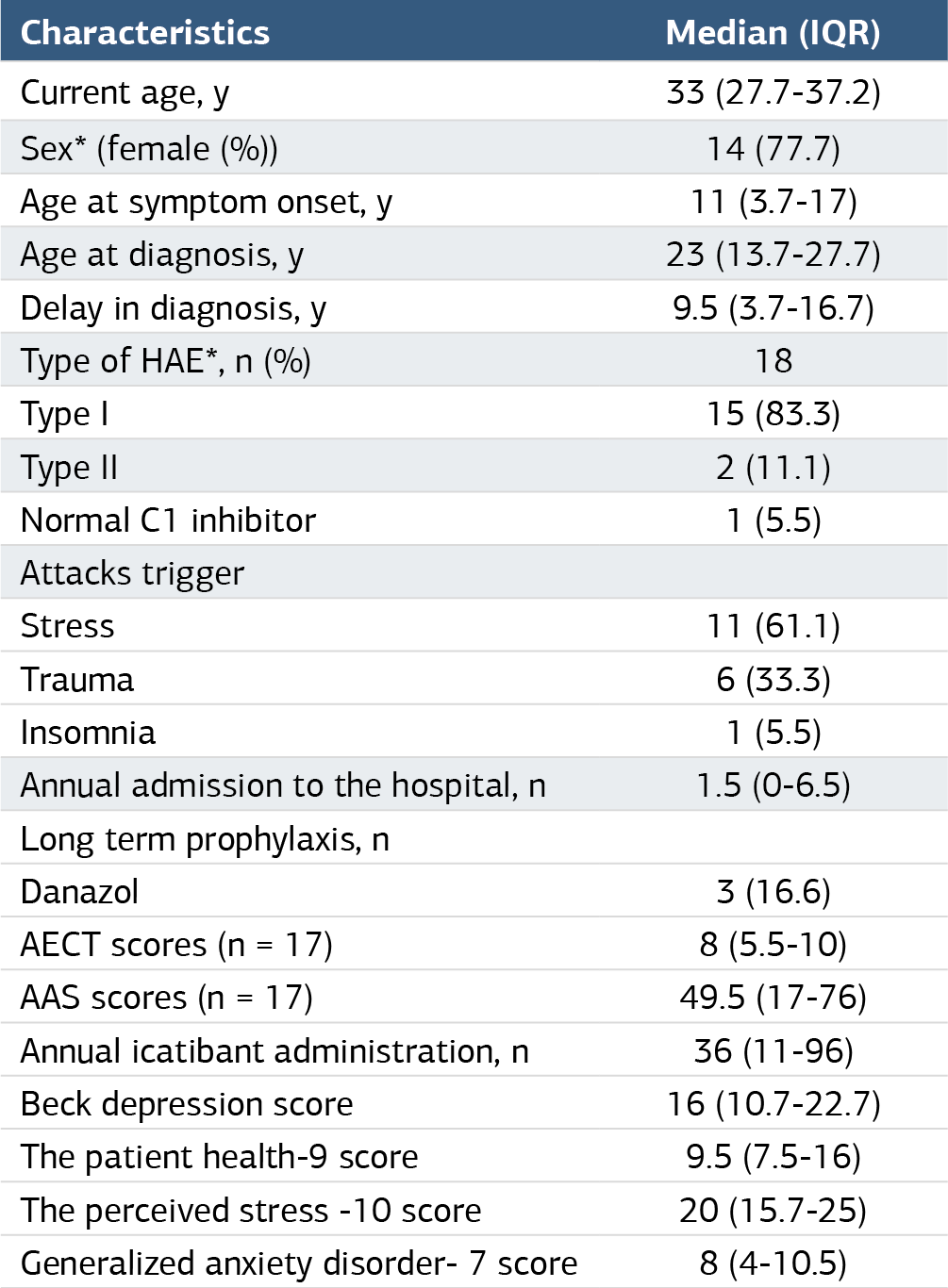
*Data indicated as frequency in number and percentage HAE: Hereditary angioedema, AECT: Angioedema Control Test, AAS: Angioedema Activity Score,
Figures
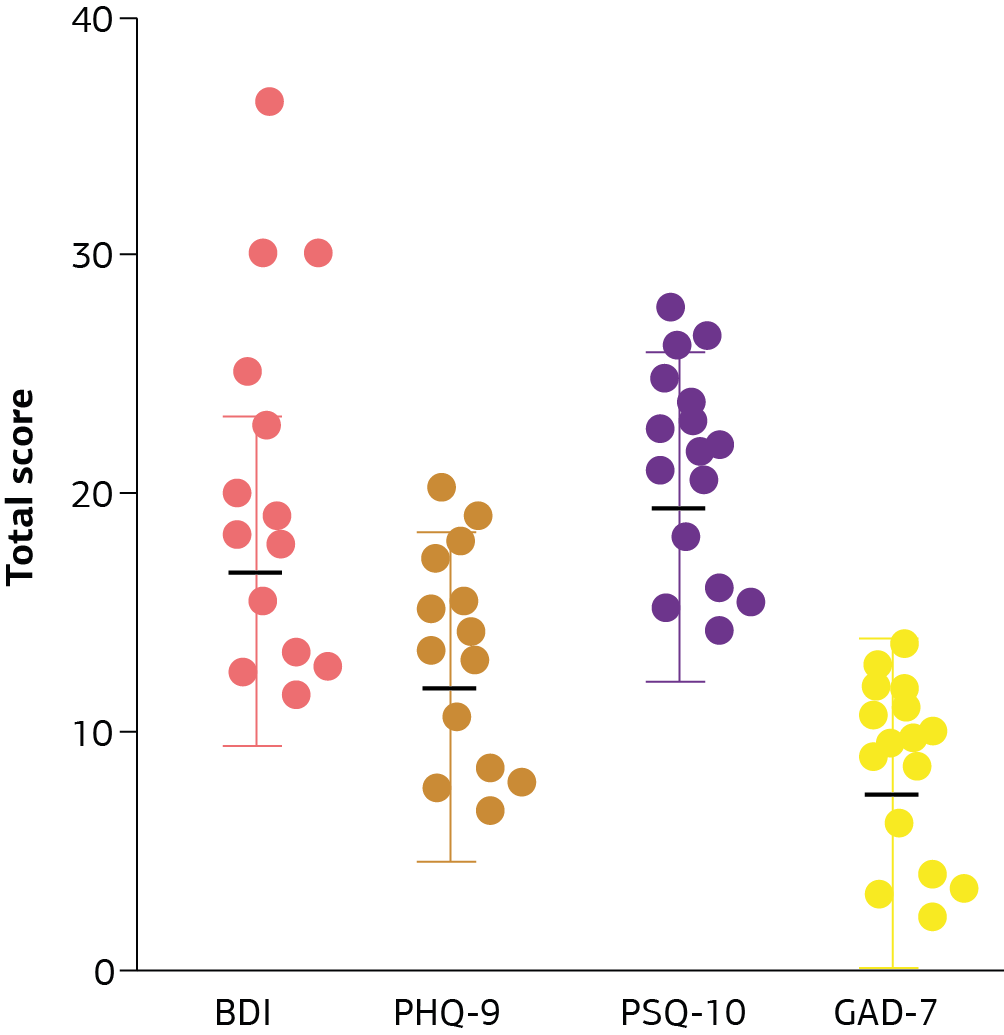
Figure 1. Psychological distress scores in hereditary angioedema: assessment via BDI, PHQ-9, PSS-10, and GAD7 questionnaires. BDI: The beck depression inventory, PHQ9: Patient health questionnaire-9, PSS-10: Perceived stress scale-10, GAD-10: Generalized anxiety disorder-7
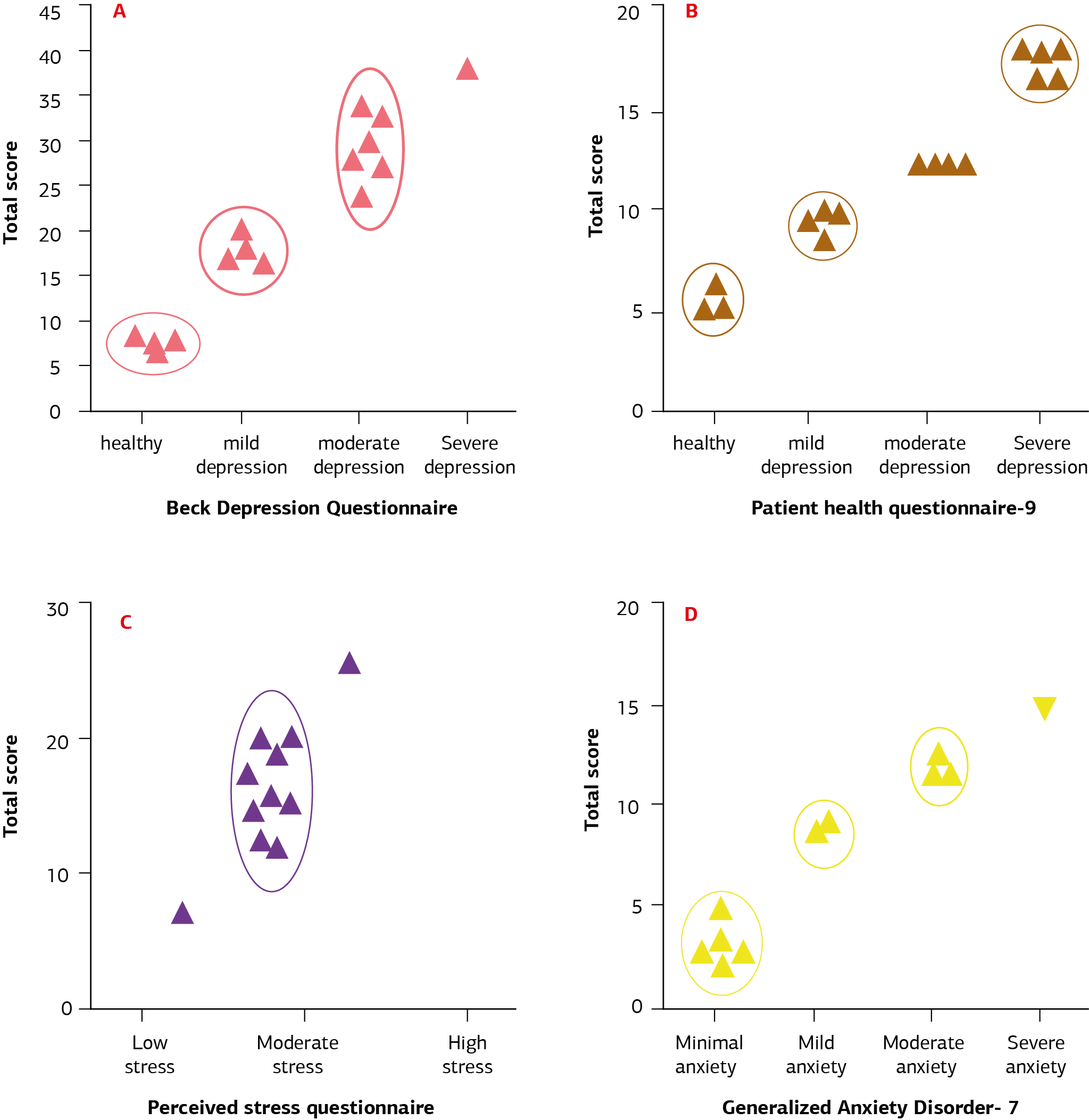
Figure 2. A-D. Assessment of psychological Burden in hereditary angioedema: Insights from BDI, PHQ-9, PSS-10, and GAD7 Scores. BDI: The Beck Depression Inventory, PHQ-9: Patient Health Questionnaire-9, PSS-10: Perceived Stress Scale-10, GAD-10: Generalized Anxiety Disorder-7
Additional Information
Publisher’s Note
Bayrakol MP remains neutral with regard to jurisdictional and institutional claims.
Rights and Permissions

This work is licensed under a Creative Commons Attribution-NonCommercial 4.0 International License (CC BY-NC 4.0). To view a copy of the license, visit https://creativecommons.org/licenses/by-nc/4.0/
About This Article
How to Cite This Article
Esra Karabiber. Psychological burden in hereditary angioedema: an evaluation ofdepression, anxiety, and perceived stress. Ann Clin Anal Med 2025;16(Suppl 1):42-46. doi:10.4328/ACAM.22612
Publication History
- Received:
- 19.02.2025
- Accepted:
- 23.03.2025
- Published Online:
- 24.03.2025
- Printed:
- 25.03.2025