
Abstract
AimThe aim of the present study was to evaluate the results of treatment with the methotrexate folinic acid (MTX FA) protocol in adolescents and young adults with low risk gestational trophoblastic neoplasm (LR GTN), and to identify the factors that determine resistance to MTX FA treatment.MethodsTo meet this aim, 42 patients who were adolescents or young adults with LR GTN, and who received MTX FA as first-line therapy, were included in the present study. The scores for the patients were determined according to the Modified World Health Organization (WHO) Prognostic Scoring System, as adopted by International Federation of Gynecologists and Obstetrics (FIGO).ResultsThe median age of the patients was found to be 21 years. Nine of the patients (21.4%) were adolescents, whereas 33 (78.6%) were young adults. MTX FA chemotherapy was used as the primary treatment in the entire cohort, and 27 (64.3%) of the patients received the standard protocol, whereas 15 (35.7%) patients received the watchful waiting protocol. A complete response to MTX FA was achieved in 29 (69%) of the 42 patients. Due to chemotherapy resistance, seven patients received single-agent treatment, while six required multi-agent chemotherapy following MTX FA. As a result of the therapy, the pretreatment value of human chorionic gonadotropin (β hCG) was found to be significantly associated with the response to the single-agent MTX FA treatment.ConclusionIn conclusion, the present study has demonstrated that the MTX FA protocol may be utilized as a first-line single-agent chemotherapy protocol for LR GTN in adolescent and young adult patients.
Keywords
Introduction
Gestational trophoblastic neoplasm (GTN) is a malignant form of trophoblastic disease. It usually develops following the emergence of a complete or partial hydatidiform mole, although it can also develop following an abortion/ectopic pregnancy or term pregnancy.1-2
A scoring system has been devised by the International Federation of Gynecologists and Obstetrics (FIGO) and the World Health Organization (WHO) in order to plan the treatment of GTN.3-4 According to this scoring system, those who score ≤6 are defined as ‘low-risk GTN’ (LR GTN), whereas those who score ≥7 are defined as high-risk GTN. LR GTN is a rare, but curable condition that is usually treated with single-agent chemotherapy protocols. The most commonly used drugs in this treatment are methotrexate (MTX) or actinomycin D (Act D).5 MTX is an effective, well-tolerated, and cost-effective agent that can be co-administered with folinic acid (FA) to avoid the side effects that are associated with MTX. A 100% survival rate for patients with LR GTN can be achieved by.6
The response rate of first-line therapy represents an important endpoint since patients who develop resistance to first-line therapy require further treatment options; these options include sequential single-agent chemotherapy, multi-agent chemotherapy, or surgery.7 Patients who develop resistance to MTX FA chemotherapy may be moved to Act D therapy when their β human chorionic gonadotropin (β hCG) concentrations are ≤1,000 International Units (IU)/l, or to multidrug chemotherapy when the concentrations are >1,000 IU/l, and these treatments effectively result in the cure of almost all patients.8
Maternal age has been reported to be an important risk factor for molar pregnancy. The risk of developing a hydatidiform mole is 4–10 times higher in women <16 and >40 years of age.9 Therefore, GTN occurs more commonly at the start and endpoints of a woman’s reproductive age (i.e., in adolescents and women >40 years of age).10-11 Approximately 20% of patients with gestational trophoblastic disease (GTD) are adolescents,12 however, information regarding GTN in adolescents and young adults remains scarce.
This multicenter study aimed to evaluate the results of treatment with the MTX FA protocol in adolescents and young adults with LR GTN. Furthermore, we aimed to identify the factors that determine resistance to MTX FA treatment.
Materials and Methods
The present study was designed retrospectively. Adolescent and young adult patients with LR GTN who were admitted to three tertiary centers between 1993 and 2021 were enrolled. The age definitions were 10–19 years for adolescents, and 20–24 years for young adults. Patients’ ages, FIGO scores, serum β hCG values before chemotherapy, tumor sizes, tumor ages, presence of theca lutein cyst, presence and location of metastasis, antecedent pregnancy information, and type of MTX treatment protocol and responses were obtained from the patient’s files. Patients with a FIGO risk score ≤6, and who received MTX as first-line therapy, were included in the study. Tumor age was defined as the time between the last pregnancy and the diagnosis of GTN (in months).
Before scoring, patients were evaluated for their clinical history and after having received a physical examination, in addition to the performance of pelvic ultrasonography, chest X-ray, serum β hCG level, complete blood count, and kidney and liver function tests. Computed tomography (CT) was performed in cases when the scan of the lungs, upon performing chest X-ray analysis, was positive. Brain magnetic resonance imaging (MRI) was performed on patients with symptoms suggestive of brain metastasis. The scores of the patients were determined according to the Modified WHO Prognostic Scoring System as adapted by FIGO 2000.4
Patients were treated with either a standard protocol or a watchful waiting protocol. The treatment regimen was selected in random order by either a senior gynecological oncologist or a medical oncologist at each center, without applying any specific selection criteria. However, the standard protocol treatment was used more frequently, whereas the watchful waiting treatment protocol was randomly applied. In the standard protocol, 1 mg/kg intramuscular (IM) MTX was administered consecutively on days 1, 3, 5, and 7, with 0.1 mg/kg IM FA being administered on days 2, 4, 6, and 8, and the β hCG levels were monitored. In a watchful waiting protocol, the same 8-day IM MTX FA regimen was administered to the patients in one go, and patients with decreased β hCG values were followed as long as the β hCG concentration was lowered to a normal level. Subsequently, an additional one or two cycles of MTX FA were administered in both protocols.
β hCG levels were monitored weekly during treatment, and a successful response to the treatment was determined by detecting decreases in β hCG levels. In cases where the patient was found to have negative β hCG values (<5 mIU/ml) for 3 consecutive weeks, the patient was diagnosed as being in complete remission. Resistant or progressive disease was defined as: i) an increase in two consecutive β hCG levels; or ii) the β hCG level having reached a plateau in three consecutive measurements during 2 weeks; or iii) detection of a new metastasis.3,13 MTX-resistant patients received either a 5-day Act D regimen (where 12 μg/kg Act D was administered intravenously for 5 days every 2 weeks) or multi-agent chemotherapy as second-line therapy. The decision on which regimen to switch to was made by the gynecological oncology council. While making this decision, the patient’s β hCG level was taken into consideration. Generally speaking, if the β hCG level was ≤100 IU/l, Act D was given, whereas if it was >100 IU/l, multi-agent chemotherapy was given.Ethical ApprovalThis study was approved by the Ethics Committee of Ankara Bilkent City Hospital (Date: 24.07.2024, Decision No: 24/397).Statistical AnalysisIn terms of statistical analysis of the data, the Chi-square test and Fisher’s exact test were used to examine the association between responsiveness to MTX treatment and each clinical variable in a univariate analysis. Continuous variables were analyzed using an ANOVA table test. Statistical Package for the Social Sciences (SPSS) for Windows version 22.0 (IBM Corp.) was used to perform the statistical analyses. P<0.05 was considered to indicate a statistically significant difference.
Reporting GuidelinesThis study was reported in accordance with the STROBE guideline.
Results
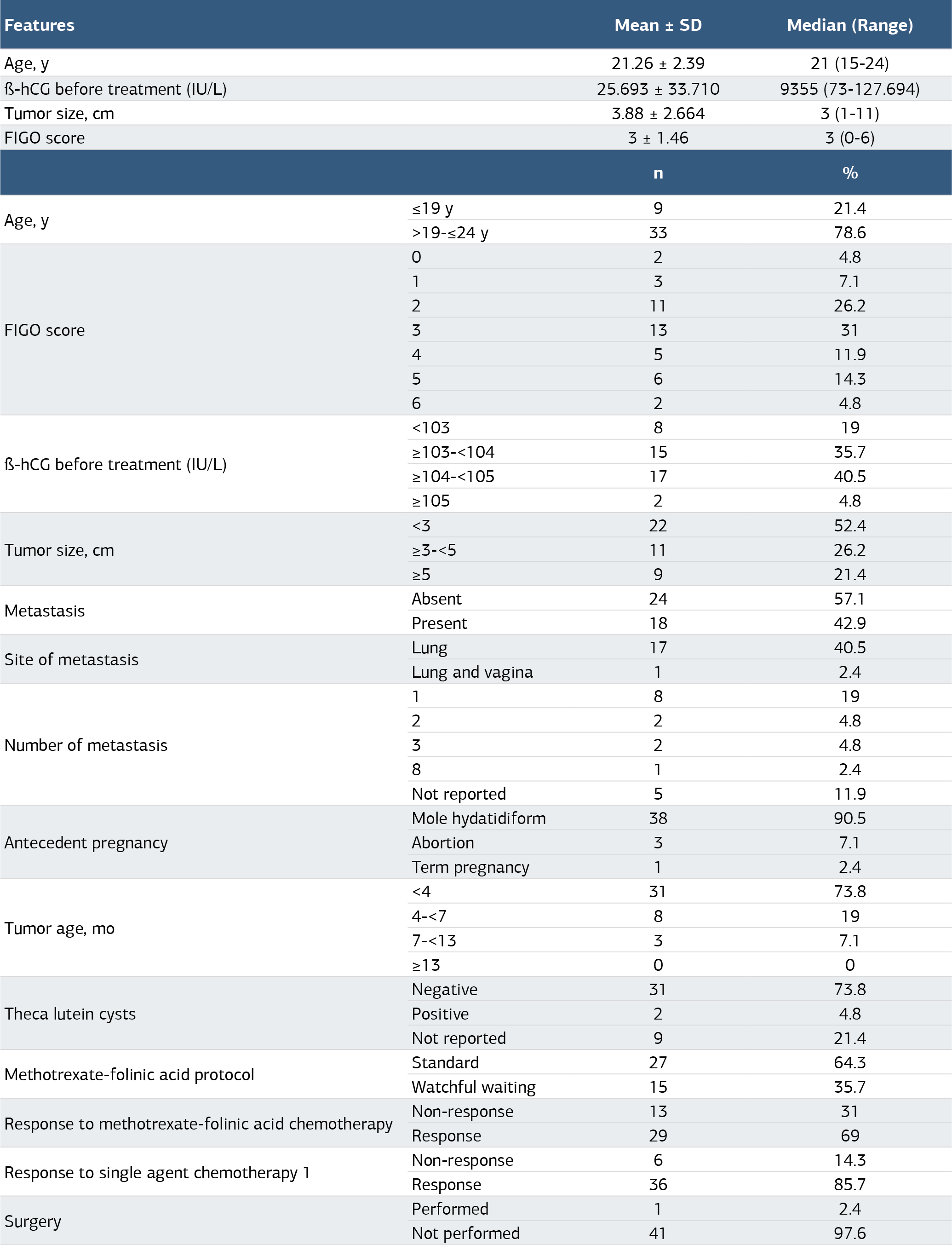
A total of 42 patients were recruited for the present study. The median age of the patients was 21 years (range:15–24 years). Nine (21.4%) patients were adolescents, whereas 33 (78.6%) were young adults. All patients included in the study had complaints of abnormal bleeding following antecedent pregnancy (mole hydatidiform, abortion, or term pregnancy), and all patients were diagnosed with GTN after the clinician’s having determined a plateauing of, or an increase in, the β hCG level during their follow up. The median value of the FIGO score was 3 (range:0–6). Before the treatment, the median value for β hCG was 9,355 IU/l (range:73–127,694 IU/l) and the median tumor size was 3.0 cm (range:1.0–11.0 cm). The majority of the patients had a history of hydatidiform mole (90.5%) as their antecedent pregnancy and a tumor age of <4 months (73.8%). Metastases were detected in 18 (42.9%) of the patients; 17 of the metastases were in the lung only, whereas, for one patient, it was located in both the lung and vagina (Table 1).
MTX FA chemotherapy was used as the primary treatment in the entire cohort. Twenty-seven (64.3%) of the patients received the standard protocol, whereas 15 (35.7%) of them received the watchful waiting protocol (Table 2). During medical treatment, one patient required surgery due to excessive bleeding, and underwent a hysterectomy.
A complete response to MTX FA was achieved in 29 (69%) of the 42 patients. Due to chemotherapy resistance, seven patients received single-agent treatment, and six patients were given multi-agent chemotherapy following MTX FA; all patients had a clinically complete response after receiving Act D or multi-agent chemotherapy (Table 2).
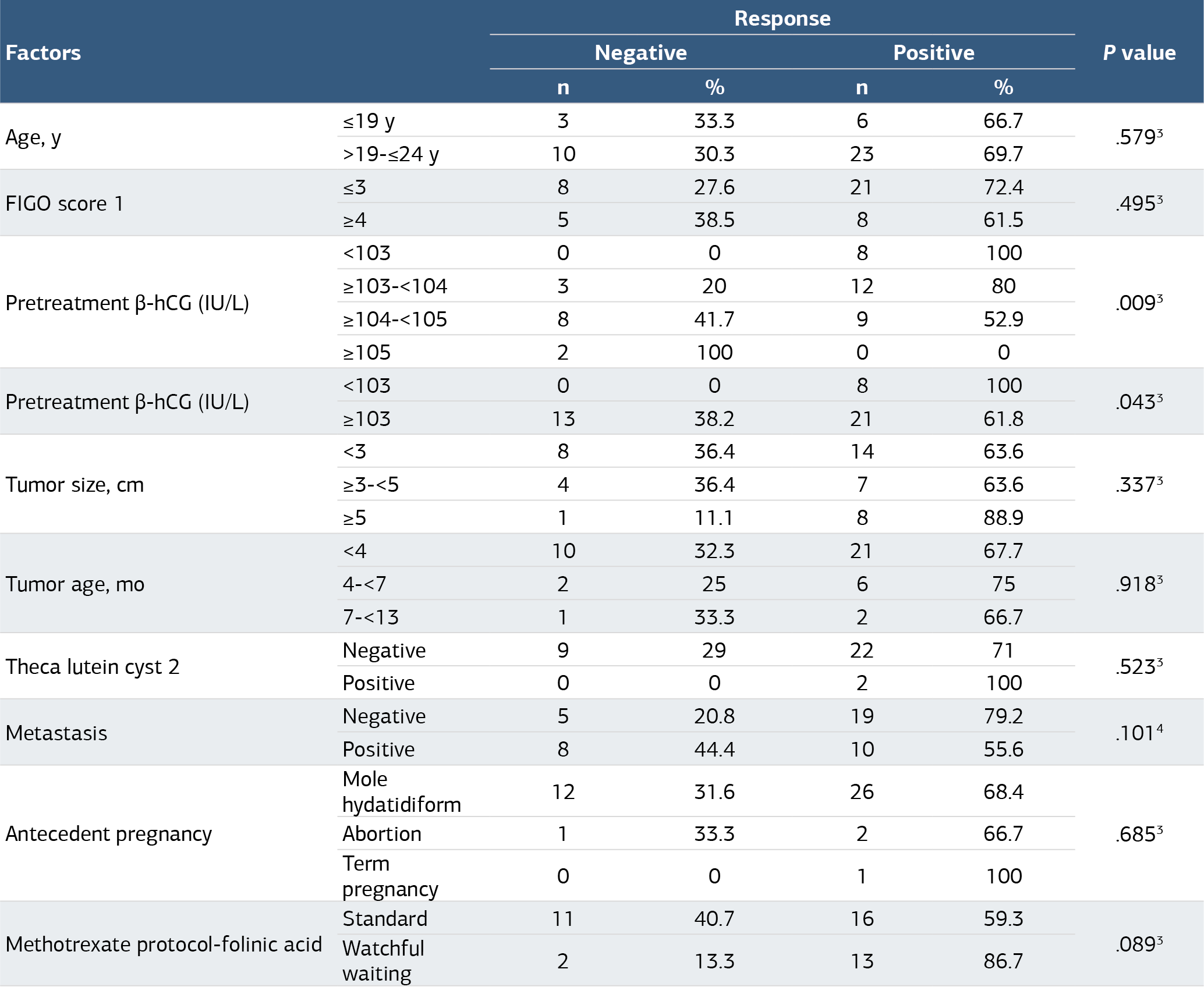
The pretreatment β hCG value was found to be significantly associated with the response to the single-agent MTX FA treatment. Patients with a pretreatment β hCG value of <103 IU/l had a 100% MTX FA response rate, whereas those with a β hCG value of ≥103 IU/l had a 61.8% response rate (p=0.043) (Table 1). No significant effects of age, FIGO score, tumor size, tumor age, theca lutein cyst, metastasis, antecedent pregnancy, or MTX FA protocol were identified with respect to the treatment response (Table 4). Patients with a FIGO score of 0–1 showed no resistance to MTX FA chemotherapy, whereas those with a score of 5–6 had 50% resistance.
The characteristics of those 13 patients who did not respond to MTX FA treatment are presented in Table 3. All of these patients were aged 18 years or older. Before the treatment, the median β hCG value was found to be 39,921 IU/l and the tumor size was 2.8 cm. Antecedent pregnancy was mole hydatidiform in 12 patients, and abortion in one patient. Due to chemotherapy resistance, seven patients were administered Act D treatment, whereas six patients were treated with multi-agent etoposide, MTX, actinomycin D/cyclophosphamide, and vincristine (EMA/CO) chemotherapy protocol following the MTX FA therapy.
Discussion
LR GTN is a rare, but highly chemosensitive disease that can be effectively treated at a rate approaching 100% with chemotherapy.6,14 Several chemotherapeutic regimens are in current use; however, the choice of regimen used is usually specifically handled by the medical specialists concerned, and it is difficult to compare the advantages and risks of each regimen. MTX and Act D are the most commonly used therapies in first-line treatment.15 MTX is generally preferred as the first-line chemotherapy due to its effectiveness, safety, and toxicity profiles, and the fact that it is both well tolerated and cost-effective.16 MTX has been used in a variety of regimens with FA to protect the patient from MTX-associated toxicity.17
In the present study, a complete response was achieved in 69% of the patients (adolescents and young adults) with LR GTN using first-line MTX FA. Due to MTX FA resistance, seven and six patients were administered single-agent Act D or multi-agent EMA/CO chemotherapy as an alternative to a single-agent regimen, respectively. Additionally, it was demonstrated that the overall cure rate with single-agent or multi-agent protocols was 100% in adolescents and young adults with LR GTN. Resistance to first-line, single-agent MTX FA was significantly associated with a higher pretreatment β hCG level. We were able to demonstrate that the success of the therapy was not affected by FIGO score, age, tumor size, tumor age, theca lutein cyst, metastasis, antecedent pregnancy, or the MTX FA protocol.
Phianpiset et al.18 reported that a complete response was achieved in 63 (55.8%) of 113 patients with LR GTN (mean age:31.5 ± 7.9 years) who were initially treated with MTX FA (50 mg MTX administered IM on days 1, 3, 5 and 7, and 15 mg FA IM on days 2, 4, 6 and 8) for 8 days every 14 days. Similarly to our study, a significant correlation was found between the pretreatment high β hCG value and treatment resistance, and there was no response to first-line MTX FA treatment in the group with a β hCG value (≥100.000). In their study, Chapman Davis et al.19 reported on 358 people with LR GTN (age range:12–51 years) who were treated with MTX daily for 5 days per treatment course, which was repeated every 14 days as the first-line therapy. Failure of MTX treatment was found to be associated with metastatic disease, a high FIGO score, a pathological choriocarcinoma diagnosis, and a high β hCG level before treatment.
In the presented study, patients who developed resistance to MTX FA chemotherapy were switched either to treatment with Act D when the β hCG concentration was ≤100 IU/l, or to multidrug chemotherapy when the concentration was >100 IU/l. However, a recent study showed that increasing the hCG cut-off value from ≤100 to ≤1,000 IU/l in terms of patient selection for Act D following MTX FA resistance resulted in the protection of more women with GTN from the toxicity of EMA/CO without compromising the 100% survival outcomes.8
To the best of our knowledge, this is the third largest GTN study to have been performed, involving 42 adolescents and young adults. In the largest study examining the results of adolescent GTN, those from 285 adolescent patients with complete hydatidiform mole were examined by.20 GTN was found to have developed in 59 patients. Anemia, pre-eclampsia, a uterine size larger than it ought to have been for the gestational age, and theca lutein cysts >6 cm were associated with the development of post-complete hydatidiform mole GTN among adolescents in South America. In the study performed by Rauh Hain et al.21 50 adolescent patients with GTN were examined, and no differences were observed between adolescents and adult women concerning the rate of LR GTN, GTN stage, and frequency of resistance to initial chemotherapeutic treatment. A study by Chapman et al.22 on molar pregnancies in adolescents featured three patients with GTN. One patient received three cycles of MTX, followed by two cycles of Act D; another received one cycle of MTX FA; and the third received one cycle of MTX and Act D in combination, and a complete response was observed in all these patients. Uberti et al.12 reported that 18 of 22 (81.8%) patients with GTN under the age of 19 had LR GTN. In their study, patients with LR GTN received sequential single-agent chemotherapy, with either MTX FA or Act D as the initial agent. However, neither the treatment response nor the affecting factors were reported.
Limitations
The first major contribution of our study is that this, to the best of our knowledge, is the largest GTN study to have provided information on adolescents and young adults. This age group is underrepresented in the scientific literature. Therefore, we expect that this research will stimulate further investigation in this field. The second major contribution of the study is that the centers participating in the study were referral centers and gynecological tumor tertiary centers replete with extensive expertise, to which many of the patients were directed. Consequently, the findings obtained in our study may potentially reflect the most accurate results of patients with LR GTN in the adolescent and young adult age groups. By contrast, the main limitations of this study were its retrospective design and the randomization process concerning determining the first-line treatment protocol. The other major limitation was its limited number of participants, which gave rise to issues regarding the extent to which the findings may be applied to a larger population. Nevertheless, documenting the GTN variation, which has a low incidence rate23 but is relatively more common in younger people24 will have a significant effect on the current academic literature. In addition, the long-term outcomes, recurrence rates, and post-treatment fertility results of our cohort were not attainable, as the centers where the study was conducted were reference centers, and the long-term follow-ups were carried out in the patients’ local facilities.
Conclusion
In conclusion, the present study has shown that the first-line treatment of LR GTN in adolescent and young adult patients with an MTX FA protocol was an effective regimen, resulting in a 69% complete response rate. All patients had a clinical complete response after receiving second-line treatment with Act D or multi-agent chemotherapy. However, future studies are required with larger sample sizes, and with the potential exploration of multicenter collaborations, to validate and strengthen the current findings.
Declarations
Animal and Human Rights Statement
All procedures performed in this study were in accordance with the ethical standards of the institutional and/or national research committee and with the 1964 Helsinki Declaration and its later amendments or comparable ethical standards.
Informed Consent
Informed consent was waived by the Ethics Committee due to the retrospective nature of the study.
Data Availability
The datasets used and/or analyzed during the current study are not publicly available due to patient privacy reasons but are available from the corresponding author on reasonable request.
Conflict of Interest
The authors declare that there is no conflict of interest.
Funding
None.
Abbreviations
FA: Folinic acid
FIGO: International Federation of Gynecology and Obstetrics
GTN: Gestational trophoblastic neoplasia
MTX: Methotrexate
WHO: World Health Organization
References
- Mangili G, Lorusso D, Brown J, et al. Trophoblastic disease review for diagnosis and management: a joint report from the International Society for the Study of Trophoblastic Disease, European Organisation for the Treatment of Trophoblastic Disease, and the Gynecologic Cancer InterGroup. Int J Gynecol Cancer. 2014;24(suppl 3). doi:10.1097/igc.0000000000000294
- Hertig AT. Tumors of the female sex organs. Part 1. Hydatidiform mole and choriocarcinoma. Atlas Tumor Pathol. 1956;9:16-18.
- Kohorn EI. Negotiating a staging and risk factor scoring system for gestational trophoblastic neoplasia: a progress report. J Reprod Med. 2002;47(6):445-450.
- FIGO Oncology Committee. FIGO staging for gestational trophoblastic neoplasia 2000. Int J Gynaecol Obstet. 2002;77(3):285-287. doi:10.1016/s0020-7292(02)00063-2
- Mousavi AS, Zamani A, Khorasanizadeh F, Gilani MM, Zendehdel K. Resistance to single-agent chemotherapy and its risk factors in low-risk gestational trophoblastic neoplasms. J Obstet Gynaecol Res. 2015;41(5):776-783. doi:10.1111/jog.12613
- Lurain JR. Pharmacotherapy of gestational trophoblastic disease. Expert Opin Pharmacother. 2003;4(11):2005-2017. doi:10.1517/14656566.4.11.2005
- Winter MC. Treatment of low-risk gestational trophoblastic neoplasia. Best Pract Res Clin Obstet Gynaecol. 2021;74:67-80. doi:10.1016/j.bpobgyn.2021.01.006
- Cortés-Charry R, Hennah L, Froeling F, et al. Increasing the human chorionic gonadotrophin cut-off to ≤1000 IU/L for starting actinomycin D in post-molar gestational trophoblastic neoplasia developing resistance to methotrexate spares more women multi-agent chemotherapy. ESMO Open. 2021;6(3):100110. doi:10.1016/j.esmoop.2021.100110
- Sebire N, Foskett M, Fisher R, Rees H, Seckl M, Newlands E. Risk of partial and complete hydatidiform molar pregnancy in relation to maternal age. BJOG. 2002;109(1):99-102. doi:10.1111/j.1471-0528.2002.t01-1-01037.x
- Cunningham FG, MacDonald PC, Gant NF, Leveno KJ, Gilstrap LC, Hawkins GDV, et al. Pregnancy at the extremes of reproductive life. In: Williams Obstetrics. 20th ed. Appleton & Lange; 1997:569-578.
- Palmer J. Advances in the epidemiology of gestational trophoblastic disease. J Reprod Med. 1994;39(3):155-162.
- Uberti EH, Diestel M, Guimarães F, Goloubkova T, Rosa M, DeNápoli G. Gestational trophoblastic disease: one more risk in adolescent pregnancy. Acta Obstet Gynecol Scand. 2002;81(4):356-363. doi:10.1034/j.1600-0412.2002.810415.x
- Golfier F, Labrousse C, Frappart L, et al. Evaluation of treatment relating to gestational trophoblastic tumor registered to the French Trophoblastic Disease Reference Center in Lyon from 1999 to 2005. Gynecol Obstet Fertil. 2007;35(3):205-215.
- Roberts JP, Lurain JR. Treatment of low-risk metastatic gestational trophoblastic tumors with single-agent chemotherapy. Am J Obstet Gynecol. 1996;174(6):1917-1924. doi:10.1016/s0002-9378(96)70229-6
- Ngan HY, Seckl MJ, Berkowitz RS, et al. Update on the diagnosis and management of gestational trophoblastic disease. Int J Gynaecol Obstet. 2018;143(suppl 2):79-85. doi:10.1002/ijgo.12615
- Garrett AP, Garner EO, Goldstein DP, Berkowitz RS. Methotrexate infusion and folinic acid as primary therapy for nonmetastatic and low-risk metastatic gestational trophoblastic tumors: 15 years of experience. J Reprod Med. 2002;47(5):355-362.
- Foulmann K, Guastalla JP, Caminet N, et al. What is the best protocol of single-agent methotrexate chemotherapy in nonmetastatic or low-risk metastatic gestational trophoblastic tumors? A review of the evidence. Gynecol Oncol. 2006;102(1):103-110. doi:10.1016/j.ygyno.2006.02.038
- Phianpiset R, Ruengkhachorn I, Kuljarusnont S, Jareemit N, Udompunturak S. Predictive factors associated with resistance to initial methotrexate treatment in women with low-risk gestational trophoblastic neoplasia. Asia Pac J Clin Oncol. 2022;18(5). doi:10.1111/ajco.13774
- Chapman-Davis E, Hoekstra AV, Rademaker AW, Schink JC, Lurain JR. Treatment of nonmetastatic and metastatic low-risk gestational trophoblastic neoplasia: factors associated with resistance to single-agent methotrexate chemotherapy. Gynecol Oncol. 2012;125(3):572-575. doi:10.1016/j.ygyno.2012.03.039
- Soares RR, Maestá I, Colón J, et al. Complete molar pregnancy in adolescents from North and South America: clinical presentation and risk of gestational trophoblastic neoplasia. Gynecol Oncol. 2016;142(3):496-500. doi:10.1016/j.ygyno.2016.07.002
- Rauh-Hain JA, Growdon WB, Braga A, Goldstein DP, Berkowitz RS. Gestational trophoblastic neoplasia in adolescents. J Reprod Med. 2012;57(5-6):237-242.
- Chapman GW, Thompson HC, Edwards JA. Patterns of molar pregnancy in adolescents. Gynecol Oncol. 1988;30(2):196-200. doi:10.1016/0090-8258(88)90024-8
- Lurain JR. Gestational trophoblastic disease I: epidemiology, pathology, clinical presentation and diagnosis of gestational trophoblastic disease, and management of hydatidiform mole. Am J Obstet Gynecol. 2010;203(6):531-539. doi:10.1016/j.ajog.2010.06.073
- Lurain JR. Hydatidiform mole: recognition and management. Contemp OB GYN. 2019;64(3):12-17.
Tables
Table 1. Factors related to the response to methotrexate-folinic acid treatment
1: Median value 2: 33 patients 3: fisher’s exact test was performed 4: x square test was performed.
Table 2. General characteristics of patients
1: Single-agent chemotherapy: Methotrexate-folinic acid (n:29) and Methotrexate-folinic acid followed by Actinomycin-D (n:7).
Table 3. General characteristics, the prognostic factors, and treatment regimens of resistant cases
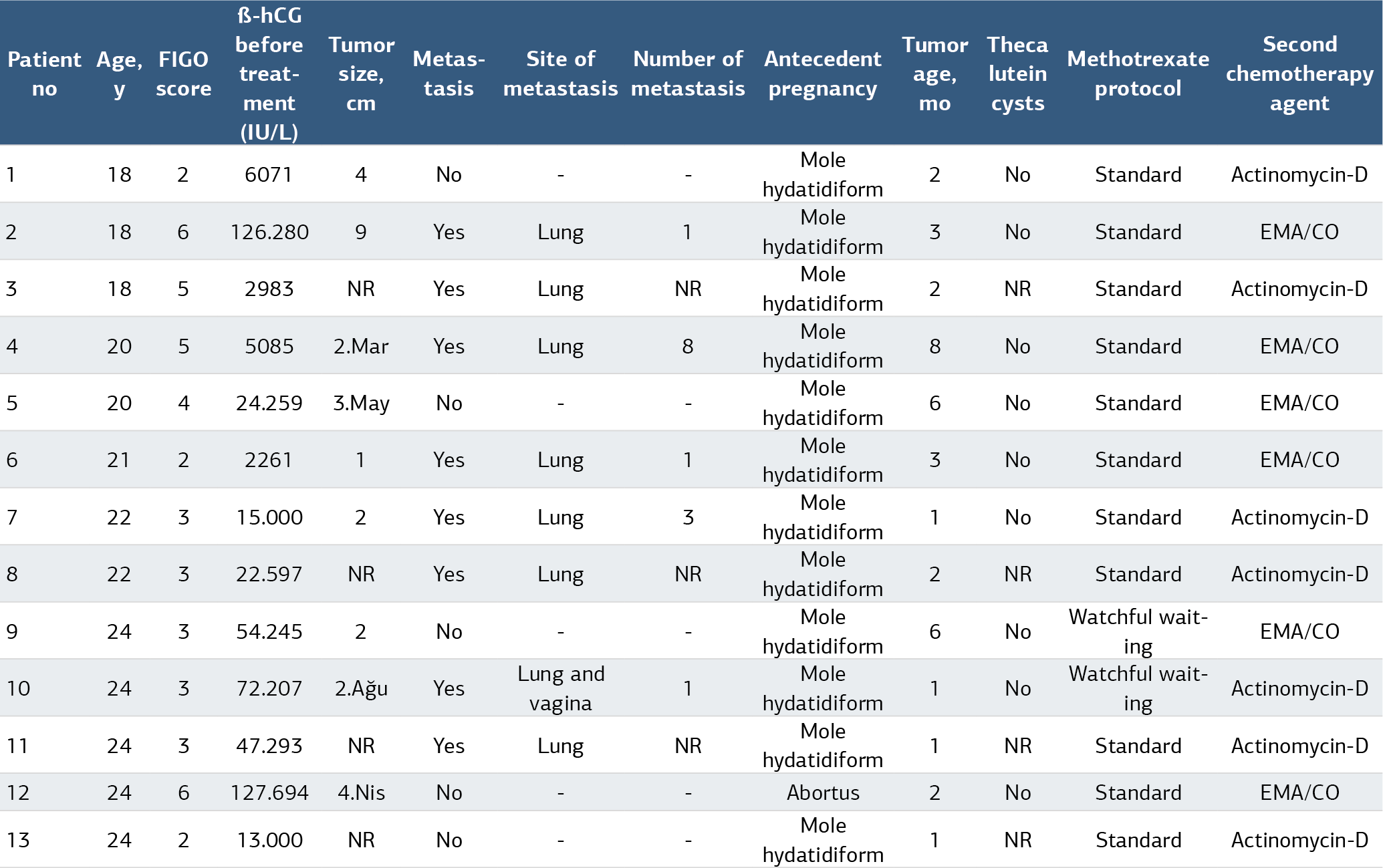
NR: Not Reported EMA/CO: Etoposide, Methotrexate, Actinomycin-D, Cyclophosphamide, Vincristine.
Additional Information
Publisher’s Note
Bayrakol MP remains neutral with regard to jurisdictional and institutional claims.
Rights and Permissions

This work is licensed under a Creative Commons Attribution-NonCommercial 4.0 International License (CC BY-NC 4.0). To view a copy of the license, visit https://creativecommons.org/licenses/by-nc/4.0/
About This Article
How to Cite This Article
Okan Aytekin, Alev Esercan, Okan Oktar, Fatih Kilic, Burak Ersak, Mehmet Unsal, Abdurrahman Alp Tokalioglu, Fatih Celik, Caner Cakir, Osman Turkmen, Gunsu Kimyon Comert, Vakkas Korkmaz, Ozlem Moraloglu Tekin, Yaprak Engin Ustun, Taner Turan. Low-risk gestational trophoblastic neoplasia in adolescent and young adult patients who were treated with single-agent methotrexate: a multicentricstudy. Ann Clin Anal Med 2025;16(Suppl 1):52-57. doi:10.4328/ACAM.22623
Publication History
- Received:
- 02.03.2025
- Accepted:
- 23.03.2025
- Published Online:
- 24.03.2025
- Printed:
- 25.03.2025