
Abstract
AimAtrial fibrillation (AF) is a supraventricular tachyarrhythmia characterized by uncontrolled atrial electrical activity. Hyperuricemia is a metabolic disease caused by an imbalance in purine metabolism and the production and excretion of uric acid. Although some studies report a significant association between hyperuricemia and AF, few studies have examined this relationship in the elderly population. This study aimed to investigate the relationship between hyperuricemia and atrial fibrillation in elderly individuals and to compare the other risk factors and mortality status in people of the same age group without AF.MethodsThe study included patients over the age of 65 who had not been previously diagnosed with hypertension, non-alcoholic fatty liver disease, clinical/subclinical hyperthyroidism, or heart failure and had not used antihypertensive medications, along with a control group of the same number of individuals without these conditions.ResultsPatients with AF had higher uric acid levels. Unlike previous studies, this study conducted in an elderly population found that women had a higher prevalence of AF compared to men. It was also identified that predisposition to inflammation is an independent risk factor for the development of AF. In the very elderly group (over 85 years), the mortality rate was higher, and GFR was lower in patients with AF.ConclusionIn the normotensive elderly population, individuals with hyperuricemia had a significantly higher risk of AF. Hyperuricemia may be a marker of AF in normotensive elderly individuals. Moreover, closer monitoring for AF is recommended in elderly women, during infections, or in cases of renal failure.
Keywords
Introduction
Atrial fibrillation (AF) is a supraventricular tachyarrhythmia characterized by uncontrolled atrial electrical activity. Its average global prevalence is 2–4%.1 AF is the most common arrhythmia among patients with various cardiovascular comorbidities and becomes more frequent with age.2
By 2050, the number of people aged 65 and older is expected to double to 1.5 billion, while the number of individuals aged 80 and older is projected to triple to 0.4 billion.3 In the European Union, the number of elderly AF patients aged 65 and older is expected to increase by 89% by 2060. Very elderly AF patients aged 80 and older represented 51.2% of the total AF population in 2016, expected to rise to 65.2% by 2060.4
Known risk factors for AF include advanced age, male sex, smoking, hypertension, heart failure, diabetes, obesity, valvular heart disease, myocardial infarction, and cardiac surgery.5
Hyperuricemia (HUA) is a metabolic disease caused by an imbalance in purine metabolism and the production and excretion of uric acid. Several studies have reported a significant association between hyperuricemia and AF.6,7
However, limited research has explored the association between elevated uric acid levels (hyperuricemia) and AF in older adults, where AF is known to be more prevalent.
In this context, the purpose of this research was to examine the relationship between HUA and AF in elderly individuals and compare other risk factors and mortality status in individuals of the same age group without AF.
Materials and Methods
Patient Selection Patients registered in the Turkish Ministry of Health data screening system between 2022 and 2023 were retrospectively reviewed. The study included patients over 65 years of age who had not been previously diagnosed with hypertension or heart failure and had not used antihypertensive medications. Research has previously established an association between non-alcoholic fatty liver disease (NAFLD) and both a higher occurrence of AF and elevated uric acid levels.8 Therefore, patients diagnosed with NAFLD or hyperthyroidism from one year before four years after the diagnosis date were excluded based on ICD codes. The age of individuals when they were first diagnosed with AF and their blood test results at that time were recorded. Of these patients, the ones who died within the following 4 years were recorded to determine the mortality rates. A total of 500 patients who received a first-time diagnosis of AF were included in the study. A comparison group consisting of 500 participants of the same age group without a chronic disease diagnosis was also recorded. Blood test results and mortality data for the control group over the same four-year period were analysed. Determination of Hyperuricemia Uric acid levels higher than 7.0 mg/dL in men and 6.0 mg/dL in women were considered indicative of hyperuricemia.9 Detection of Atrial Fibrillation Patients with an ICD code of AF in the database of the Turkish Ministry of Health’s national database and in whom this diagnosis was made for the first time were identified. The date of first diagnosis was reviewed. Patients with this diagnosis at least 3 episodes since this date were included in the study. Clinical and Laboratory Characteristics of Patients Laboratory data obtained at the time of diagnosis in patients with AF and the control group were recorded from the system. Age, gender, uric acid, glucose, creatinine, total cholesterol, low-density lipoprotein cholesterol (LDL), c-reactive protein (CRP), estimated glomerular filtration rate (eGFR), and mortality status were analysed at the time of diagnosis in both AF patients and the healthy group. Ethical Approval This study was approved by the Ethics Committee of Turkish Ministry of Health (Date: 10.08.2023, Decision No: 953413442-020). Statistical Analysis The data were determined using IBM SPSS 26 (IBM Corp., Released 2019). The Kolmogorov-Smirnov test was used to assess the normality of the distribution. The Mann-Whitney U test was employed for comparing quantitative variables that did not follow a normal distribution between groups. Pearson’s chi-square test was used to compare categorical variables between groups, and multiple comparisons were evaluated with the Bonferroni-corrected Z test. Factors affecting AF within age groups were analysed with multivariate logistic regression analysis. Factors influencing AF were examined using logistic regression analysis. The results of the analyses were presented as median (minimum-maximum) for quantitative variables and as frequency (percentage) for categorical variables. The significance level was set at “P < .05”. Reporting Guidelines This study was reported according to the STROBE guidelines.Results
Our study included 500 elderly participants with AF and 500 with normal sinus rhythm (NSR). Among the elderly participants, the mean age of those with AF was 75.35, while the mean age of those with NSR was 73.14. Women constituted 35.2% of the AF group, whereas 53% of the NSR group were women. When elderly participants in the AF group were further divided based on the presence of hyperuricemia, 179 patients (35.8%) were found to have hyperuricemia. While 47% of the participants with NSR were male, 64.8% of the AF group were male. Comparison of Patients with and without Atrial Fibrillation There is a statistically relevant difference between the uric acid values of the patients according to the groups (P < .001). The median uric acid value of patients in normal sinus rhythm is 5, while AF patients had a higher median uric acid value of 6. Our study results showed that in individuals with AF, as opposed to those with normal sinus rhythm (NSR), AF increased with advancing age (P < .001). A significant difference was observed in the diagnosis age distributions between the groups (P < .001). The median age at diagnosis was 72 for the NSR group and 74 for the AF group. A significant difference was observed between the age at diagnosis distributions of the patients between the groups (P < .001). This difference was determined between the proportions of patients aged 65-74 years and patients aged 85 years and over. While 66% of patients with normal sinus rhythm were between 65-74 years of age, this rate was 55.2% in AF patients. While 5.6% of patients in normal sinus rhythm were 85 years and older, this rate was 15.2% in AF patients. Statistically significant variations were also observed in gender distribution between the two groups (P < .001). While 47% of patients with normal sinus rhythm were male, 64.8% of AF patients were male. Furthermore, uric acid, CRP, and mortality rates were higher, and GFR was lower in the AF group (Table 1). Comparison of Hyperuricemia Presence in Patients with Atrial Fibrillation No differences were detected in the ages of patients with and without hyperuricemia. A statistically significant relationship was found between gender and hyperuricemia status (P < .001). The ratio of women with hyperuricemia was 46%, compared to 30.2% in men. In the hyperuricemia group, creatinine and CRP levels were statistically higher, while eGFR levels were statistically decreased. No differences in mortality were observed between normal and elevated uric acid levels in patients with AF (Table 2) Factors Affecting Atrial Fibrillation Factors affecting AF were examined using univariate and multivariate logistic regression models. In the univariate analysis, patients aged 85 and above were at a higher risk of AF compared to those aged 65–74 (OR: 3.245, P < .001). Women had a higher risk of AF compared to men (OR: 0.482, P < .001). As UA and CRP levels increased, the risk of AF also increased (OR: 1.855, P < .001; OR: 1.004, P = .037). Conversely, as GFR, LDL, and total cholesterol levels increased, the risk of developing AF decreased (OR: 0.865, P < .001; OR: 0.996, P = .018; OR: 0.993, P < .001). In the multivariate logistic regression analysis, patients aged 85 and above had a significantly higher risk of AF (OR: 2.753, P = .018). As GFR and total cholesterol levels increased, the risk of AF decreased (OR: 0.889, P < .001; OR: 0.991, P = .002). However, as CRP levels increased, the risk of AF increased (OR: 1.007, P = .048). The model generated from the multivariate analysis correctly classified 70% of cases (Table 3).Discussion
Main FindingsOur study revealed several key findings. Uric acid levels were higher in patients with AF. Unlike previous studies, this study conducted in an elderly population found that women had a higher prevalence of AF compared to men. It was also identified that predisposition to Inflammation acts as an independent contributor to AF development. In the very elderly group (over 85 years), the mortality rate was higher, and GFR was lower in patients with AF. Finally, our study demonstrated an inverse relationship between high cholesterol levels and the development of AF.Hyperuricemia and AFSimilar studies have indicated that hyperuricemia increases risk due to its association with inflammation, fibrosis progression, apoptosis activation, calcium homeostasis impairment, and immune regulation.10 A key mechanism underlying the detrimental cellular effects of uric acid is the heightened activity of xanthine oxidoreductase (XOR), a critical enzyme in UA metabolism. XOR contributes to the generation of reactive oxygen species (ROS), a process further amplified by elevated nicotinamide adenine dinucleotide phosphate oxidase (NADPH) activity.11 Taufiq et al. found that uric acid triggers electrical remodelling by altering action potential repolarization and reducing action potential duration. This effect is mediated by the upregulation of Kv1.5 protein, a key player in the electrophysiological function of atrial myocytes.12 In our study, hyperuricemia was markedly significantly higher in AF patients than in individuals with normal uric acid levels. Cross-sectional studies conducted have reported a positive association between hyperuricemia and AF prevalence. Furthermore, population-based prospective cohort studies have shown that hyperuricemia is associated with a higher risk of AF.13Age and Atrial FibrillationAccording to the 50-year follow-up of the Framingham Heart Study, advancing age is the most significant risk factor for the development of AF.14 Large-scale European studies also report a significant increase in AF incidence in men after age 50 and in women after age 60.15 The “Consensus of the French Society of Geriatrics and Gerontology and the French Society of Cardiology,” which analysed AF prevalence classified by age and gender across studies published between 1991 and 2011, indicates that 70% of AF patients are over 75 years old, suggesting that this arrhythmia predominantly affects the elderly. Aging is associated with the continuously increasing prevalence and incidence of AF.16 Similarly, in our study, individuals in the NSR group were younger compared to those with AF, and advancing age was identified as an independent risk factor for AF.Gender and Atrial FibrillationIn a study of 1,544 patients (821 men and 723 women) with newly diagnosed AF, Schnabel et al. found that women with AF were older, had a higher rate of hypertension medication prescriptions, and exhibited a poorer blood pressure profile.16 European Observational Research Program on Atrial Fibrillation (EORP-AF) corroborated recent reports stating that Women tended to be older, exhibited more symptoms, and were more frequently affected by non-ischemic heart failure. EORP-AF also noted that women were prescribed fewer antiarrhythmic treatments, primarily involving rate-controlling medications, although they were more symptomatic than men. Furthermore, women had a higher overall risk of stroke and had a higher rate of oral anticoagulation use (95.3% vs. 76.2%).17 Although the incidence of AF is typically lower in women, studies indicate that in populations over 75, the gender distribution of AF becomes similar due to women’s longer life expectancy. Benjamin et al. reported that 55% of AF patients are women. Although SUA is higher in men than in women before menopause, it also increases in women after menopause. Considering that the incidence of AF increases with age in both groups, the fact that SUA increases with age in women can be attributed to the higher incidence of AF in older women compared to men.18 In our study, which included elderly patients, the percentage of women with AF was higher.Inflammation and Atrial FibrillationStudies found that CRP significantly enhances inward L-type calcium (Ca²⁺) currents in atrial myocard cells. This suggests that the primary mechanism by which CRP promotes AF is through increased calcium currents, rather than affecting pro-collagen gene expression in atrial fibroblasts or altering other ionic currents. Highlighted the crucial role of inflammation in AF development and progression.19 CRP can act as an indicator of inflammatory states that potentially promote the ongoing persistence of AF through structural and/or electrical changes in the atrial tissue. Inflammatory pathways could form the basis for AF treatments, highlighting the necessity for randomized trials involving anti-inflammatory drugs and/or other medications that reduce CRP levels.20 Similarly, in our study, CRP levels were found to be higher in patients with AF, consistent with the studies. Both univariate and multivariate analyses revealed that as CRP levels increased, the risk of AF also rose.Renal Function and Atrial FibrillationThe presence of cardiovascular disease, as well as traditional cardiovascular risk factors such as smoking, hypertension, dyslipidaemia, and diabetes, is more prevalent in individuals with impaired kidney function. Other factors linked to kidney dysfunction, such as elevated inflammatory signalling molecules, elevated oxidative stress, and impaired endothelial function, disturbances in calcium-phosphate balance, proteinuria, and high uric acid levels, also contribute to accelerated atherosclerosis and cardiovascular risk.21 Both renal dysfunction and AF are associated with elevated levels of asymmetric dimethylarginine (ADMA), a potent endogenous nitric oxide synthase inhibitor. ADMA is a recognized risk factor for oxidative stress, impaired vascular function, and heart failure, as well as a strong predictor of poor cardiovascular prognosis and increased mortality. Moreover, AF has been demonstrated to impact renal function through various mechanisms, such as the downregulation of renal neutral endopeptidase expression and the activation of pro-fibrotic cascade. These factors may explain the observed changes in renal function.22 In our study, patients with AF had lower GFR levels compared to the NSR group, and regression analysis identified reduced GFR as an independent risk factor for AF.Mortality and Atrial FibrillationAF is a major contributor to mortality due to stroke and cardiovascular disorders, and it is independently associated with a 1.5- to 2-fold increase in the risk of all-cause mortality, stroke, and heart failure-related morbidity. In our study, the mortality rate was significantly greater in AF patients compared to individuals in the NSR group.
Limitations
Among the limitations of our study, there were limitations in the physical examination and evaluation of additional diseases of the patients because our study was a cross-sectional study.
Scientific Responsibility Statement: The authors declare that they are responsible for the article’s scientific content, including study design, data collection, analysis and interpretation, writing, some of the main lines, or all of the preparation and scientific review of the contents and approval of the final version of the article.
Animal and Human Rights Statement: All procedures performed in this study were in accordance with the ethical standards of the institutional and/or national research committee and with the 1964 Helsinki Declaration and its later amendments or comparable ethical standards.
Conclusion
Studies have confirmed that hyperuricemia is independently related to the incidence of AF. A key factor in uric acid elevation is the heightened activity of xanthine oxidoreductase (XOR), a critical enzyme in uric acid metabolism. XOR drives the production of reactive oxygen species (ROS), a process further amplified by increased nicotinamide adenine dinucleotide phosphate oxidase (NADPH) activity. Reduction of oxidative stress through inhibition of xanthine oxidase using allopurinol or another similar drug, of NADPH-oxidase using apocynin, or the use of N-acetylcysteine, might be beneficial. Hyperuricemia may be a marker of AF in normotensive elderly individuals. The mortality rate was significantly greater in AF patients compared to individuals in the NSR group. We would like to emphasize the importance of rhythm control and medication use in elderly patients with AF.
Declarations
Animal and Human Rights Statement
All procedures performed in this study were in accordance with the ethical standards of the institutional and/or national research committee and with the 1964 Helsinki Declaration and its later amendments or comparable ethical standards.
Informed Consent
Informed consent was not required due to the retrospective design of the study and the use of anonymized patient data.
Data Availability
The datasets used and/or analyzed during the current study are not publicly available due to patient privacy reasons but are available from the corresponding author on reasonable request.
Conflict of Interest
The authors declare that there is no conflict of interest.
Funding
None.
Abbreviations
AF: Atrial fibrillation
CRP: C-reactive protein
GFR: Glomerular filtration rate
HUA: Hyperuricemia
LDL-C: Low-density lipoprotein cholesterol
NAFLD: Non-alcoholic fatty liver disease
NSR: Normal sinus rhythm
OR: Odds ratio
UA: Uric acid
References
- Lippi G, Sanchis-Gomar F, Cervellin G. Global epidemiology of atrial fibrillation: an increasing epidemic and public health challenge. Int J Stroke. 2021;16(2):217-221. doi:10.1177/1747493019897870
- Sagris M, Vardas EP, Theofilis P, Antonopoulos AS, Oikonomou E, Tousoulis D. Atrial fibrillation: pathogenesis, predisposing factors, and genetics. Int J Mol Sci. 2021;23(1):6. doi:10.3390/ijms23010006
- Lloyd-Jones DM, Wang TJ, Leip EP, et al. Lifetime risk for development of atrial fibrillation: the Framingham Heart Study. Circulation. 2004;110(9):1042-1046. doi:10.1161/01.cir.0000140263.20897.42
- Di Carlo A, Bellino L, Consoli D, et al. National Research Program: Progetto FAI. La Fibrillazione Atriale in Italia. Prevalence of atrial fibrillation in the Italian population from 2020 to 2060 for Italy and the European Union: the FAI Project. Europace. 2019;21(10):1468-1475. doi:10.1093/europace/euz141
- Bizhanov KA, Abzaliyev KB, Baimbetov AK, Sarsenbayeva AB, Lyan E. Atrial fibrillation: epidemiology, pathophysiology, and clinical complications. J Cardiovasc Electrophysiol. 2023;34(1):153-165. doi:10.1111/jce.15759
- Gao Z, Shi H, Xu W, et al. Hyperuricemia increases the risk of atrial fibrillation: a systematic review and meta-analysis. Int J Endocrinol. 2022;2022:8172639. doi:10.1155/2022/8172639
- Deng Y, Li Q, Zhou F, et al. Hyperuricemia and gout are associated with the risk of atrial fibrillation: an updated meta-analysis. Rev Cardiovasc Med. 2022;23(5):178. doi:10.31083/j.rcm2305178
- Targher G, Valbusa F, Bonapace S, et al. Nonalcoholic fatty liver disease is associated with an increased incidence of atrial fibrillation in patients with type 2 diabetes. PLoS One. 2013;8(2). doi:10.1371/journal.pone.0057183
- Zhu Y, Pandya BJ, Choi HK. Prevalence of gout and hyperuricemia in the US general population: the National Health and Nutrition Examination Survey 2007-2008. Arthritis Rheum. 2011;63(10):3136-3141. doi:10.1002/art.30520
- Deng Y, Liu F, Yang X, Xia Y. The key role of uric acid in oxidative stress, inflammation, fibrosis, apoptosis, and immunity in the pathogenesis of atrial fibrillation. Front Cardiovasc Med. 2021;8:641136. doi:10.3389/fcvm.2021.641136
- Liu N, Xu H, Sun Q, et al. The role of oxidative stress in hyperuricemia and xanthine oxidoreductase inhibitors. Oxid Med Cell Longev. 2021;2021:1470380. doi:10.1155/2021/1470380
- Taufiq F, Maharani N, Li P, et al. Uric acid-induced enhancements of Kv1.5 protein expression and channel activity via the Akt-HSF1-Hsp70 pathway in HL-1 atrial myocytes. Circ J. 2019;83(4):718-726. doi:10.1253/circj.cj-18-1088
- Nyrnes A, Toft I, Njølstad I, et al. Uric acid is associated with future atrial fibrillation: an 11-year follow-up of 6308 men and women—the Tromso Study. Europace. 2014;16(3):320-326. doi:10.1093/europace/eut260
- Schnabel RB, Yin X, Gona P, et al. 50-year trends in atrial fibrillation prevalence, incidence, risk factors, and mortality in the Framingham Heart Study: a cohort study. Lancet. 2015;386(9989):154-162. doi:10.1016/s0140-6736(14)61774-8
- Magnussen C, Niiranen TJ, Ojeda FM, et al; BiomarCaRE Consortium. Sex differences and similarities in atrial fibrillation epidemiology, risk factors, and mortality in community cohorts: results from the BiomarCaRE Consortium. Circulation. 2017;136(17):1588-1597. doi:10.1161/circulationaha.117.028981
- Kodani E, Kaneko T, Fujii H, et al. Prevalence and incidence of atrial fibrillation in the general population based on National Health Insurance Special Health Checkups: TAMA MED Project-AF. Circ J. 2019;83(3):524-531. doi:10.1253/circj.cj-18-1038
- Lip GY, Laroche C, Boriani G, et al. Sex-related differences in presentation, treatment, and outcome of patients with atrial fibrillation in Europe: a report from the Euro Observational Research Programme Pilot Survey on atrial fibrillation. Europace. 2015;17(1):24-31. doi:10.1093/europace/euu155
- Benjamin EJ, Virani SS, Callaway CW, et al. Heart disease and stroke statistics—2018 update: a report from the American Heart Association. Circulation. 2018;137(12).
- Meyre PB, Sticherling C, Spies F, et al. C-reactive protein for prediction of atrial fibrillation recurrence after catheter ablation. BMC Cardiovasc Disord. 2020;20(1):427. doi:10.1186/s12872-020-01711-x
- Rafaqat S, Rafaqat S, Ijaz H. The role of biochemical cardiac markers in atrial fibrillation. J Innov Card Rhythm Manag. 2023;14(10):5611-5621. doi:10.19102/icrm.2023.14101
- Wang Y, Yang Y, He F. Insights into concomitant atrial fibrillation and chronic kidney disease. Rev Cardiovasc Med. 2022;23(3):105. doi:10.31083/j.rcm2303105
- Bukowska A, Lendeckel U, Krohn A, et al. Atrial fibrillation downregulates renal neutral endopeptidase expression and induces profibrotic pathways in the kidney. Europace. 2008;10(10):1212-1217. doi:10.1093/europace/eun206
Tables
Table 1. Comparison of laboratory and clinical features of patients with atrial fibrillation and normal sinus rhythm
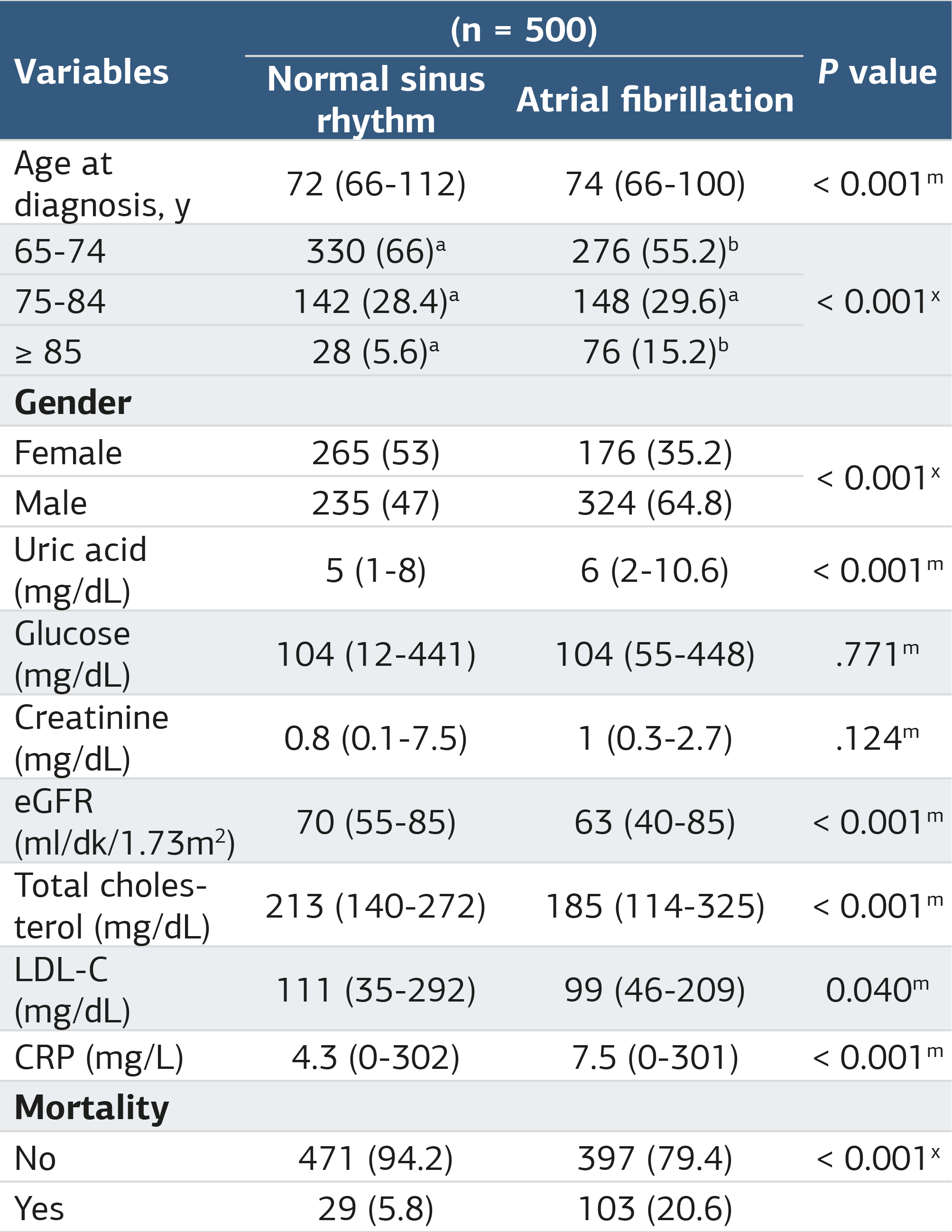
m: Mann-Whitney U test, x: Pearson chi-square test, a-b: There is no difference between groups with the same letter (Z test with Bonferroni correction), median (min.-max.), n (%) Abbreviations: DM, diabetes mellitus; eGFR, estimated glomerular filtration rate; LDL-C, low-density lipoprotein cholesterol; CRP, C-reactive protein
Table 2. Comparison of the characteristics of patients in the AF group with and without hyperuricemia
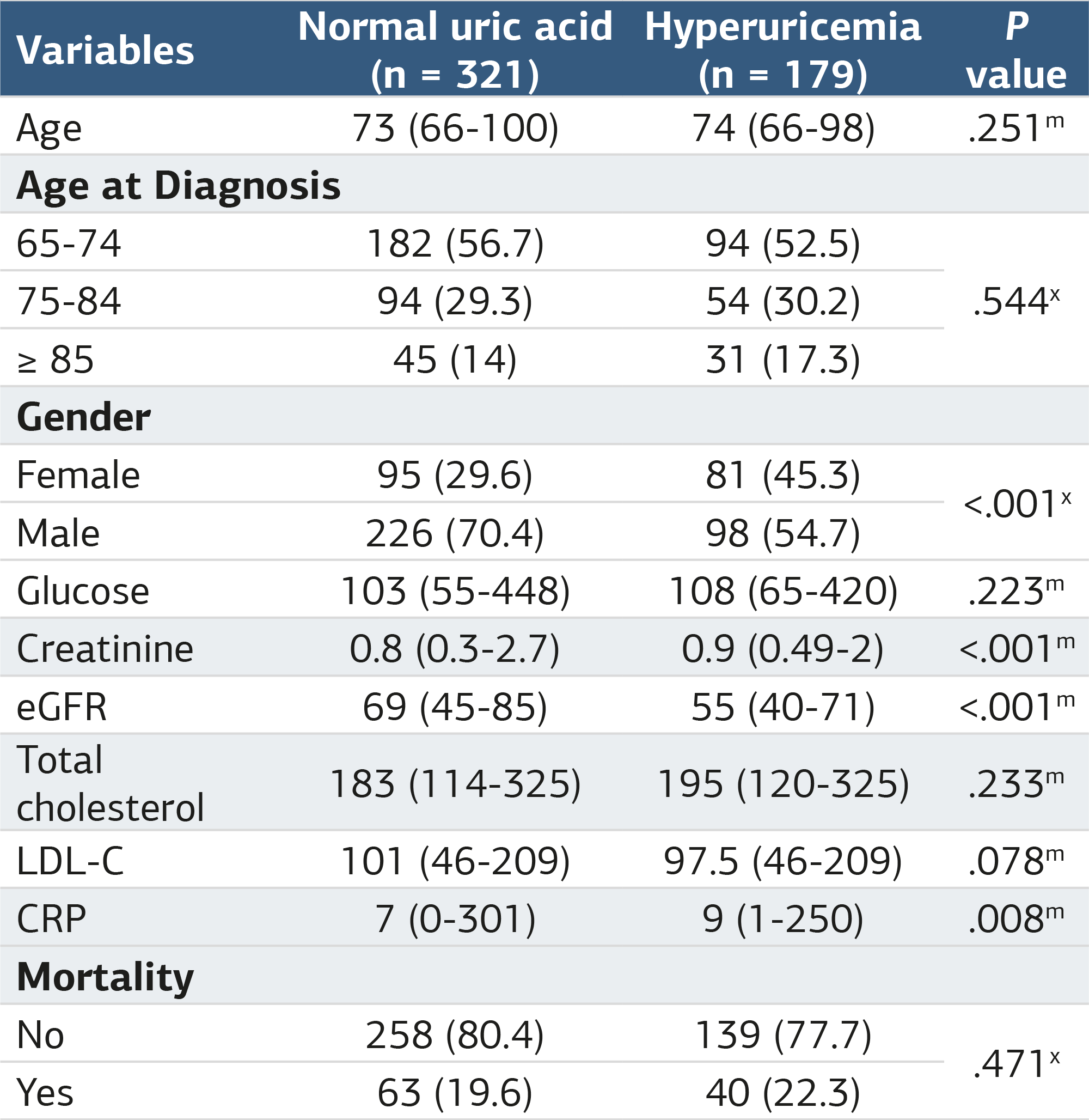
m: Mann Whitney U test, x: Pearson chi-square test, median (min.-max.), n (%)
Table 3. Evaluation of factors affecting atrial fibrillation regression analysis
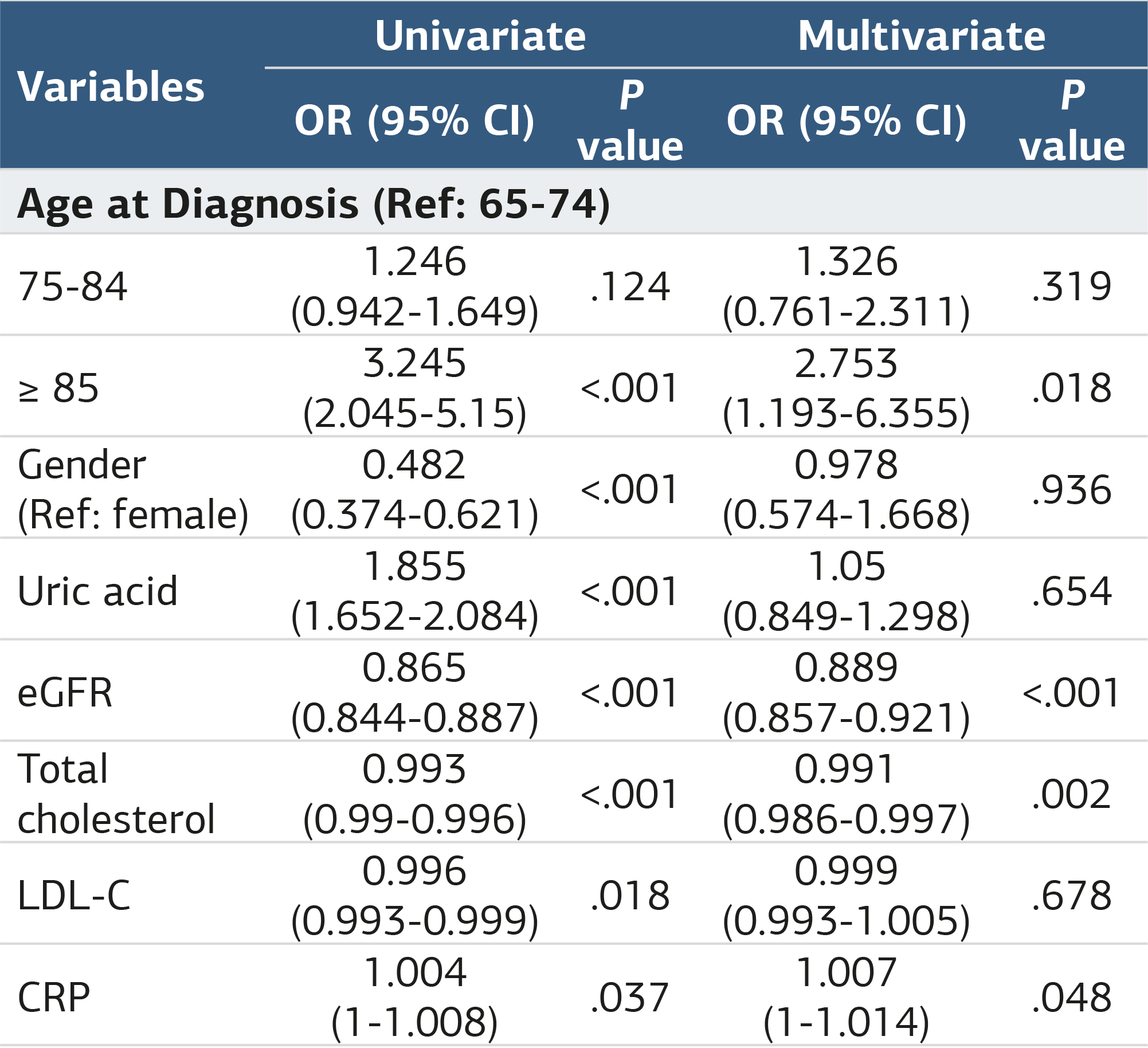
OR: Odds ratio, CI: confidence interval, Accuracy = 0.700
Additional Information
Publisher’s Note
Bayrakol MP remains neutral with regard to jurisdictional and institutional claims.
Rights and Permissions

This work is licensed under a Creative Commons Attribution-NonCommercial 4.0 International License (CC BY-NC 4.0). To view a copy of the license, visit https://creativecommons.org/licenses/by-nc/4.0/
About This Article
How to Cite This Article
Musa İlker Durak, Beyza Algül Durak, Naim Ata, Mustafa Mahir Ülgü, Şuayip Birinci. Factors increasing the risk of atrial fibrillation and hyperuricemia in geriatric normotensive patients. Ann Clin Anal Med 2025;16(8):568-572. doi:10.4328/ACAM.22664
Publication History
- Received:
- 20.03.2025
- Accepted:
- 05.05.2025
- Published Online:
- 19.05.2025
- Printed:
- 01.08.2025