
Abstract
AimThe etiology of PCOS is primarily accepted as an ovarian disorder, and many mechanisms and theories have been proposed regarding the causes of this disease picture. It is thought that the relationship between kisspeptin and the hypothalamic-pituitary-gonadal axis may be related to changes in GnRH secretion in patients with PCOS.MethodsIn our study, 37 patients with newly diagnosed Polycystic Ovary Syndrome and 38 healthy control groups were analyzed.ResultsNo significant difference was found between kisspeptin, glutathione peroxidase, and superoxide dismutase levels in the patient and control groups. However, the mean catalase level was found to be significantly lower in the PCOS group compared to the control group (285.73 ± 26.10 vs. 382.30 ± 39.76, P < .05). No significant correlation was observed between kisspeptin and HOMA, free testosterone, and DHEA-S levels in our PCOS group. However, catalase levels were observed to be statistically significantly correlated with kisspeptin (r = 0.340, P < .05). ConclusionIt is obvious that new studies are needed to evaluate PCOS phenotypes and subgroups in a larger series in order to understand the real role of kisspeptin in PCOS pathophysiology and to analyze its metabolic relationships.
Keywords
Introduction
PCOS is a syndrome with many clinical findings in the short term, such as anovulation, amenorrhea, oligomenorrhea, menstrual irregularities, dysfunctional uterine bleeding, and hirsutism. More serious long-term risks include infertility, endometrial thickening, endometrial cancer, lipid metabolism disorder, cardiovascular disease, and breast cancer development risk. PCOS is an endocrine-metabolic disease that is well-known to be associated with long-term health problems such as diabetes mellitus and coronary artery disease.1 The increased cardiovascular risk in polycystic ovary syndrome is thought to be due to insulin resistance, hyperandrogenemia, and dyslipidemia.2 Kisspeptin is a protein consisting of 54 amino acids and was first obtained from human placenta in 2001. It is encoded by the kiss-1 gene. Problems in kiss-1 gene expression have been shown to be associated with hypogonadotrophic hypogonadism. Therefore, it is thought that kisspeptin is effective on pulsatile GnRH secretion.3,4
Kisspeptins are a family of neuropeptides with an RF-Amid structure encoded by the Kiss-1 gene (1q32) (neuropeptides containing C-terminal dearginine-phenylalanine (Arg-Phe) are called RF-Amids). It has been suggested that kisspeptin, synthesized locally in the ovaries, may play a role in ovulation. Kisspeptins in the peripheral circulation show their functions by crossing the blood-brain barrier and/or by acting directly on GnRH neurons. The signals formed as a result of the binding of kisspeptins to GPR54 receptors on GnRH neurons in the hypothalamus ensure the release of GnRH from the median eminence to the portal hypophyseal circulation. GnRH binds to GnRH receptors in the pituitary gland and causes the release of gonadotropins (FSH, LH) from the pituitary gland. It is thought that the only receptor of kisspeptins on GnRH neurons is GPR54, and its primary function is to support GnRH secretion.5
Oxidative stress occurs as a result of the imbalance between free radical formation and the antioxidant system that fights against oxidative damage. Recent studies and publications have shown that oxidative stress plays a role in many important pathological processes. The damage caused by oxidative stress also plays an important role in the pathogenesis of criteria that constitute metabolic syndrome, such as hyperglycemia, hypertriglyceridemia, obesity, and hypertension. Therefore, this study also aimed to compare the levels of oxidative stress parameters in PCOS, which has a multifactorial etiology.
Materials and Methods
The study group consisted of women of reproductive age (18-39 years old) who applied to Pamukkale University, gynecology and obstetrics clinic, and who met Rotterdam PCOS diagnostic criteria (chronic oligo/anovulation, clinical/biochemical hyperandrogenism, transvaginal ultrasonographically subcapsular follicles in their ovaries (more than 12)). Patients with diabetes mellitus, Cushing syndrome, androgen-secreting tumors, and late-onset 21-hydroxylase deficiency, including endocrinopathy, infectious diseases, hypertension, thyroid dysfunction, hyperprolactinemia, chronic liver disease, those using drugs that affect or change insulin secretion and function, sex hormones, and lipid profile, and alcohol and cigarette users were not included in the study.
Healthy women of reproductive age (18-39 years old) who did not have the diseases mentioned above and had regular menstrual cycles (25-34 days of menstruation lasting 2-7 days) were included in the study as a control group.
This study aimed to make an evaluation using parametric statistical methods. For this purpose, the minimum number of cases that would be sufficient to obtain a normal Gaussian distribution in the studied parameters was calculated with the “power analysis” method. Of all the cases included in the study, spontaneous or progesterone-induced cycles were 3-5. On the 12th day, venous blood samples were taken between 09:00-10:00 in the morning after 12 hours of fasting. Serum fasting glucose (FBG), triglyceride (TG), total cholesterol (TC), high-density lipoprotein cholesterol (HDL), insulin, dehydroepiandrosterone sulphate (DHEAS), free testosterone, follicle-stimulating hormone (FSH), luteinizing hormone (LH), Total testosterone, Kisspeptin, Glutathione Peroxidase, Catalase and Superoxide dismutase levels were studied from the samples taken. On the day the serum samples were taken, waist circumference, hip circumference, height, and weight of the subjects were measured, and waist-hip ratio and body mass index (BMI) (kg/m2) were calculated.
In the determination of insulin resistance, the “homeostasis model assessment (HOMA-IR)” score [fasting insulin concentration (mIU/L) x glucose (mmol/L)/22.5] was used. For the measurement of kisspeptin levels in serum, HumanKisspeptin1ElisaKit (Cat. NO EA3122Hu) was used. The kits were taken out of +4 °C one hour before and allowed to reach room temperature. Standards were prepared at 6 different concentrations specified in the kit protocol, and 6 different wells were determined as blanks. The study was planned as duplicate standards and samples (50 uL). After 50uL of biotinylated antigen was added to the wells containing standards and samples, they were incubated at 37 °C for 1 hour. At the end of incubation, 96 wells were washed 5 times with 1X wash buffer. Afterwards, 50 μLavidin-HRP was added and incubated for one hour at 37 degrees. The washing was repeated 5 times by pouring with a wrist movement. After preparing Substrate A and B solutions, 50 μL were added one after another and incubated for 10 minutes at 37 °C in a dark environment. At the end of incubation, absorbances were measured at 450 nm wavelength in a Promega device. Results were given as ng/L. Human SOD Elisa Kit (Cat. NO EA0918Hu) was used for measuring SOD activity in serum. Human Catalase Elisa Kit (Cat. NO EA3053Hu) was used for measuring catalase activity in serum. At the end of the incubation, absorbances were measured at 450nm wavelength in a Promega device. Results were given as KU/L. Human GPX Elisa Kit (Cat. NO EA3696Hu) was used for measuring Glutathione Peroxidase activity in serum.Ethical ApprovalThe study was approved by the Ethics Committee of Pamukkale University (Date: 27.09.2016, Decision No: 17).Statistical AnalysisSPSS (Statistical Package for the Social Sciences, version 17.0) program was used for statistical analysis. Data were expressed as mean ± standard error (X ± SE). Since normal “Gaussian” distribution was observed in many of the studied parameters, the “T-test” method, which is a parametric method, was used in the evaluation of the data. Correlation analysis between the parameters was calculated with “Pearson’s Correlation Coefficient”. The significance limit for all statistical analyses was accepted as P < .05.
Reporting GuidelinesThis study was reported according to the STROBE guidelines.
Results
The basic demographic and basic anthropometric characteristics of the patient and control groups are summarized in Table 1. A significant difference was observed only for body weight between the patient and control groups. (P < .05). No significant difference was found for age, BMI (Body Mass Index), Gravide, Parity, and Waist/Hip ratio. [P > .05]
Acne, hair loss, seborrhea, and acanthosis nigricans findings of the cases in the entire study group were also evaluated. The results of this evaluation are summarized in Table 2. In the PCOS patient group, LH levels and LH/FSH ratio were found to be significantly higher than the control group, while FSH levels were found to be lower. In addition, DHEA-S and Free Testosterone were also observed to be statistically higher in the patient group. However, no significant difference was found between the patient and control groups for Fasting Blood Glucose, HOMA-IR, Total Cholesterol, HDL, LDL, Triglyceride levels (Table 3).
According to the results obtained, no significant difference was found between kisspeptin, glutathione peroxidase, and superoxide dismutase levels in the patient and control groups. However, the mean catalase level was found to be significantly lower in the PCOS group compared to the control group. The results of these analyses are shown in Table 3. In addition, PCOS patients were examined in 2 subgroups according to AMH (below or above 6 ng/dl). In this comparison, kisspeptin levels were found to be significantly lower in the group with low AMH compared to the other group, between these two groups separated according to AMH levels (45.20 ng/l and 120.19 ng/l, respectively, P = .038).
The relationship between kisspeptin levels and insulin resistance and hyperandrogenism was analyzed within the PCOS group. For this purpose, a correlation analysis was performed between kisspeptin levels and HOMA-IR results, and no significant correlation was observed between the two parameters (r = -0.032, P > .05). Similarly, a correlation analysis was performed between kisspeptin levels and free testosterone and DHEA-S levels, and the correlation coefficients were found to be 0.17 and -0.55, respectively (P > .05). Only catalase was observed to be significantly different in oxidative stress parameters between the PCOS and control groups, and catalase levels were observed to be statistically significantly correlated
with kisspeptin within the PCOS group (r = 0.340, P < .05).
Discussion
The most striking result of our study is that only catalase was significantly different among oxidative stress parameters between the PCOS and control groups, and catalase levels were statistically significantly correlated with kisspeptin in the PCOS group. In our study, no statistical difference was found between the patient group and the control group in terms of age, body weight, BMI, height, gravity, parity, waist circumference, hip circumference, and waist/hip ratio. This situation shows that homogenization was achieved in demographic and anthropometric measurements between the patient and control groups. We also think that this situation makes the data in our study more reliable. Acne and hair loss were significantly more common in the PCOS group. As expected, LH levels and LH/FSH ratio were significantly higher in the patient group compared to the control group, while FSH levels were lower. In addition, DHEA-S and Free Testosterone were also statistically significantly higher in the patient group. In addition, no significant difference was found between the levels of kisspeptin, glutathione peroxidase, and superoxide dismutase in the patient and control groups. PCOS is defined as oligo-anovulation, clinical and/or biochemical hyperandrogenism findings, and polycystic ovary appearance on ultrasound.6 In our study, the PCOS group also had oligomenorrhea-amenorrhea, hirsutism, increased serum free testosterone and DHEA-S levels, high modified Ferriman-Gallway Score, and significantly elevated polycystic ovary appearance on ultrasound when compared to the control group.
Hirsutism is the most common clinical finding of hyperandrogenism in patients with PCOS and is mostly evaluated with the modified Ferriman Gallwey (mFG) method. Before scoring, the patient should not have had laser or electrolysis for three months, their hair should not have been removed for 4 weeks, and their hair should not have been shaved for 5 days. In this method, the hair density in a total of 9 body regions, including the upper lip, chin, chest area, lower and upper back, lower and upper abdominal areas, upper arms and legs, is scored between 1 and 4, and when the total mFG score is ≥8 points, it is evaluated as hirsutism.7 In our study, it was observed that the mFG score was significantly higher in patients with PCOS. The main hormones that provide ovulation and menstruation are FSH and LH. The release of these hormones is impaired in PCOS.8,9 Pulsatile release of gonadotropin-releasing hormone (GnRH) causes the release of LH and FSH. LH stimulates theca cells in the ovaries and causes androgen production (especially androstenedione). FSH stimulates granulosa cells and converts androgen to estrone. Normally, FSH is secreted more than LH, but in PCOS, LH is secreted in higher amounts than FSH, and thus, androgen production, especially androstenedione production, increases. Thus, more androstenedione is converted to testosterone in peripheral tissues, and hyperandrogenism occurs.10,11 In our study, LH and LH/FSH levels were found to be significantly higher in the PCOS patient group, in direct proportion to literature data. Again, in our study, laboratory findings of hyperandrogenism, free testosterone, and DHEA-S levels were found to be significantly higher in the PCOS study group. As a result of these data, clinical and laboratory findings of hyperandrogenism were significantly higher in the patient group, which shows the accuracy of patient selection. It has been shown that insulin resistance and hyperinsulinemia are more common in women with PCOS compared to normal women of similar age and weight.12
In our study, FBG and fasting insulin levels were examined in the PCOS patient and control groups, and HOMA-IR values were calculated. In the results we obtained, FBG, fasting insulin, and HOMA-IR values were found to be higher in the patient groups, but no statistically significant difference was shown between the patient and control groups. Kisspeptin levels and insulin resistance were also analyzed in our PCOS patient group. For this purpose, a correlation analysis was performed between kisspeptin levels and HOMA results, and no significant correlation was observed between the two parameters. Problems in kiss-1 gene expression are associated with hypogonadotrophy-hypogonadism. Therefore, it is thought that kisspeptin is effective on pulsatile GnRH secretion. It is thought that the relationship between kisspeptin and the hypothalamo-pituitary-gonadal axis may be related to changes in GnRH secretion in PCOS patients. A recent study reported by Ozay et al. from Türkiye found that kisspeptin levels were higher in PCOS patients than in controls, but it did not reach statistical significance. This may be due to the fact that the PCOS group is not homogeneous enough. Similarly, no significant difference in kisspeptin levels was observed between the two groups in our study. However, it may be possible to encounter different results in future studies where the PCOS group will be classified more precisely within itself. According to our oxidative stress markers in our study, serum catalase levels were found to be significantly lower in the patient group compared to the control group, but no significant difference was found for glutathione peroxidase and superoxide dismutase. Ozer et al. found glutathione peroxidase and catalase levels to be lower in PCOS cases in a similar study design. However, they also did not find a significant difference for SOD in their study. This different result in our study may be related to the sample size, as well as to differences in the diagnosis of PCOS. Therefore, we think that in order to obtain comparable results, other studies with larger series are needed in which more objective parameters will be considered in addition to standard diagnostic criteria. In the PCOS patient group, a correlation analysis was performed between kisspeptin levels and serum glutathione peroxidase, catalase, and superoxide dismutase levels, and only catalase was observed to be significantly different, and it was observed that catalase levels were statistically significantly correlated with kisspeptin in the PCOS group.
In our study, as a general perspective, in the analysis conducted within the PCOS group, it is understood that kisspeptin levels show a positive correlation with catalase values. A similar relationship is not observed for glutathione peroxidase and superoxide dismutase. Again, no significant relationship was observed between kisspeptin levels and insulin resistance and hyperandrogenism in PCOS patients. However, when examined in detail, it is striking that kisspeptin levels are not distributed homogeneously in PCOS cases and vary among different subgroups. Therefore, without a more detailed comparison of PCOS subgroups, it is not possible to reach a definitive conclusion about the nature of the real relationship between kisspeptin and the aforementioned parameters.
Limitations
We tried to prevent differences between the groups by trying to keep our groups as homogeneous as possible. Blood samples were taken under the same conditions for each patient. The gynecologist who performed the ultrasonographic examination was the same person. These points are the strengths of our study. In addition to the small sample size, while kisspeptin, glutathione peroxidase, and superoxide dismutase levels were found to be similar in our PCOS and control groups, catalase levels were observed to be significantly lower in PCOS patients.
Conclusion
It is obvious that new studies are needed to evaluate PCOS phenotypes and subgroups in a larger series in order to understand the real role of kisspeptin in PCOS pathophysiology and to analyze its metabolic relationships.
Declarations
Animal and Human Rights Statement
All procedures performed in this study were in accordance with the ethical standards of the institutional and/or national research committee and with the 1964 Helsinki Declaration and its later amendments or comparable ethical standards.
Informed Consent
Informed consent was obtained from participants.
Data Availability
The datasets used and/or analyzed during the current study are not publicly available due to patient privacy reasons but are available from the corresponding author on reasonable request.
Conflict of Interest
The authors declare that there is no conflict of interest.
Funding
None.
Abbreviations
BMI: Body mass index
DHEA-S: Dehydroepiandrosterone sulfate
FBG: Fasting blood glucose
FSH: Follicle-stimulating hormone
HDL: High-density lipoprotein
HOMA-IR: Homeostasis model assessment of insulin resistance
LH: Luteinizing hormone
PCOS: Polycystic ovary syndrome
SOD: Superoxide dismutase
TG: Triglyceride
References
- Azziz R, Woods KS, Reyna R, Key TJ, Knochenhauer ES, Yildiz BO. The prevalence and features of the polycystic ovary syndrome in an unselected population. J Clin Endocrinol Metab. 2004;89(6):2745-2749. doi:10.1210/jc.2003-032046
- Witchel SF, Tena-Sempere M. The Kiss1 system and polycystic ovary syndrome: lessons from physiology and putative pathophysiologic implications. Fertil Steril. 2013;100(1):12-22. doi:10.1016/j.fertnstert.2013.05.024
- Goodarzi MO, Quinones MJ, Azziz R, Rotter JI, Hsueh WA, Yang H. Polycystic ovary syndrome in Mexican Americans: prevalence and association with the severity of insulin resistance. Fertil Steril. 2005;84(3):766-769. doi:10.1016/j.fertnstert.2005.03.051
- Goodarzi MO, Azziz R. Diagnosis, epidemiology, and genetics of the polycystic ovary syndrome. Best Pract Res Clin Endocrinol Metab. 2006;20(2):193-205. doi:10.1016/j.beem.2006.02.005
- Ruohonen ST, Poutanen M, Tena-Sempere M. Role of kisspeptins in the control of the hypothalamic-pituitary-ovarian axis: old dogmas and new challenges. Fertil Steril. 2020;114(3):465-474. doi:10.1016/j.fertnstert.2020.06.038
- Daneshmand S, Weitsman SR, Navab A, Jakimiuk AJ, Magoffin DA. Overexpression of theca-cell messenger RNA in polycystic ovary syndrome does not correlate with polymorphisms in the cholesterol side-chain cleavage and 17 alpha-hydroxylase/C(17-20) lyase promoters. Fertil Steril. 2002;77(2):274-280. doi:10.1016/s0015-0282(01)02999-5
- Hatch R, Rosenfield RL, Kim MH, Tredway D. Hirsutism: implications, etiology, and management. Am J Obstet Gynecol. 1981;140(7):815-830. doi:10.1016/0002-9378(81)90746-8
- Siddiqui S, Mateen S, Ahmad R, Moin S. A brief insight into the etiology, genetics, and immunology of polycystic ovarian syndrome. J Assist Reprod Genet. 2022;39(11):2439-2473. doi:10.1007/s10815-022-02625-7
- Yildiz BO. Oral contraceptives in polycystic ovary syndrome: risk-benefit assessment. Semin Reprod Med. 2008;26(1):111-120. doi:10.1055/s-2007-992931
- Tsilchorozidou T, Overton C, Conway GS. The pathophysiology of polycystic ovary syndrome. Clin Endocrinol (Oxf). 2004;60(1):1-17. doi:10.1046/j.1365-2265.2003.01842.x
- González Centeno A, Hernández Marín I, Mendoza R, Tovar Rodríguez JM, Ayala AR. Ovarios poliquísticos: expresión clínica y bioquímica [Polycystic ovarian disease: clinical and biochemical expression]. Ginecol Obstet Mex. 2003;71:253-258.
- Dunaif A, Segal KR, Shelley DR, Green G, Dobrjansky A, Licholai T. Evidence for distinctive and intrinsic defects in insulin action in polycystic ovary syndrome. Diabetes. 1992;41(10):1257-1266. doi:10.2337/diab.41.10.1257
Tables
Table 1. Demographic and anthropometric measurements of the patient and control groups
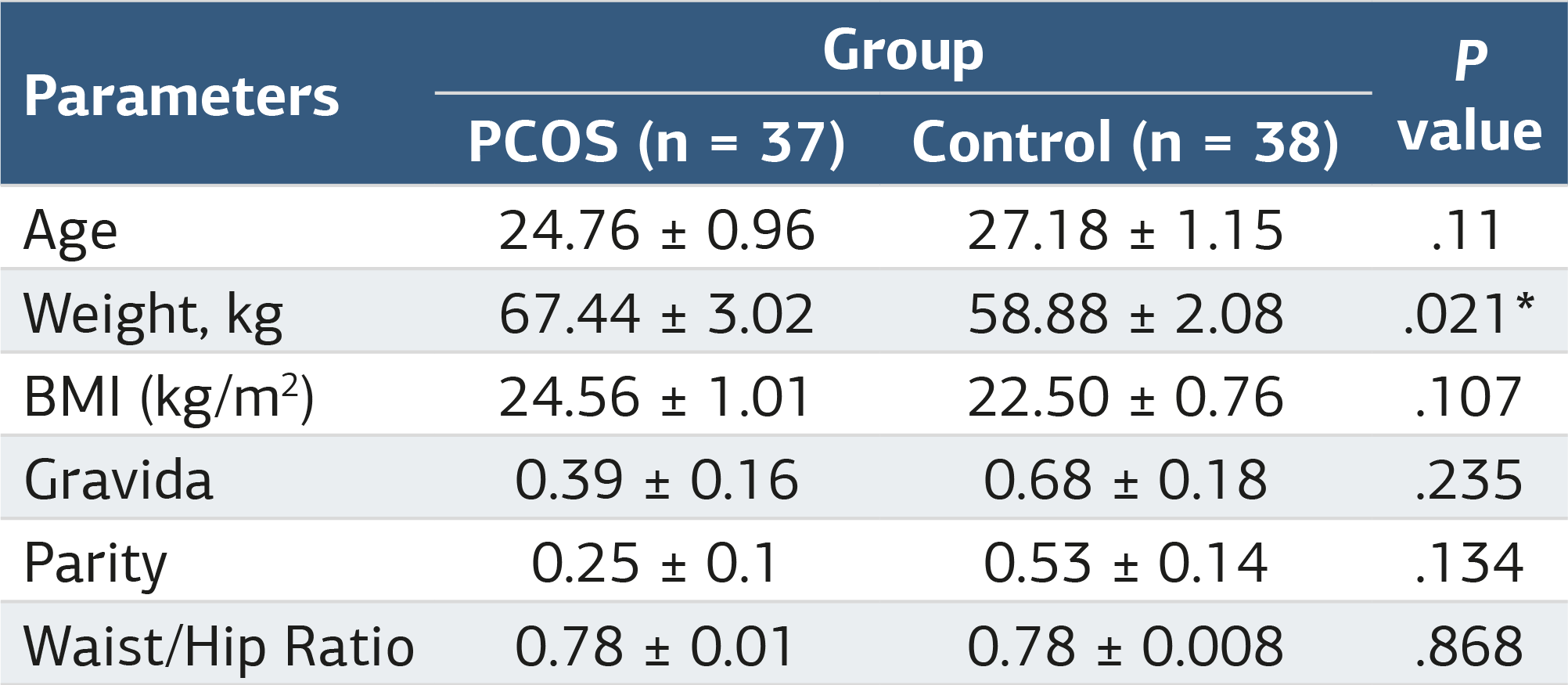
BMI:Body mass index *: Statistically significant difference (P < .05)
Table 2. Acne, hair loss, seborrhea, and acanthosis nigricans status in patient and control groups
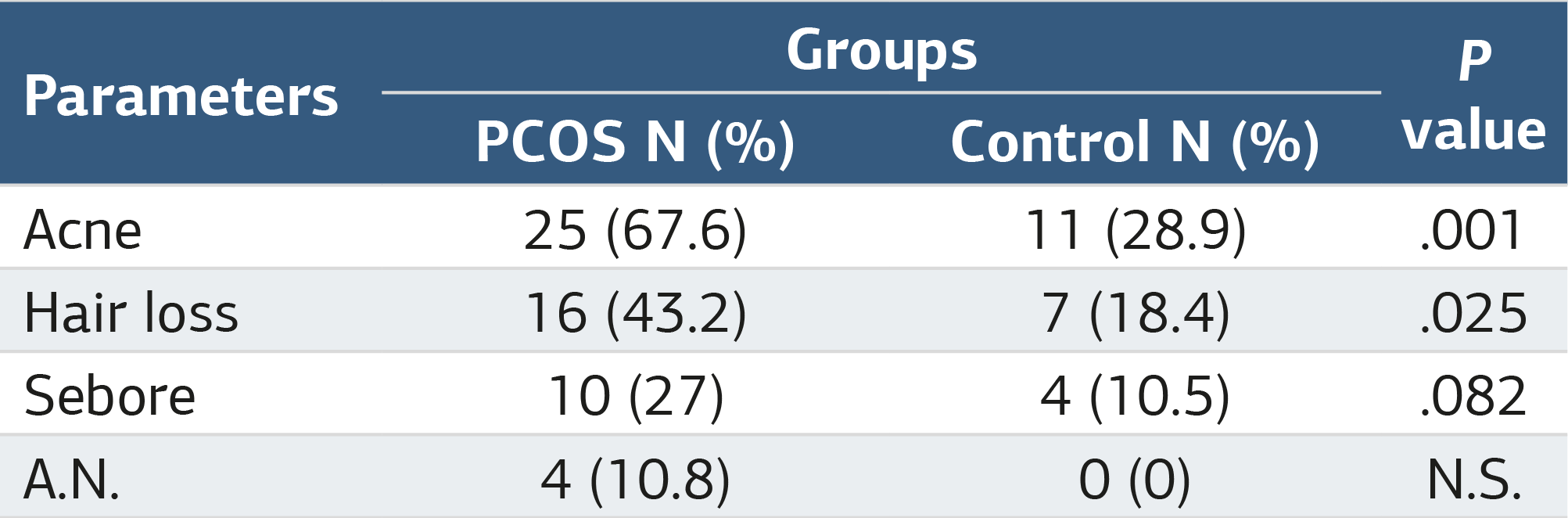
A.N:Akantozis nigrikans, N.S : Not suitable
Table 3. Biochemical results of PCOS and control groups
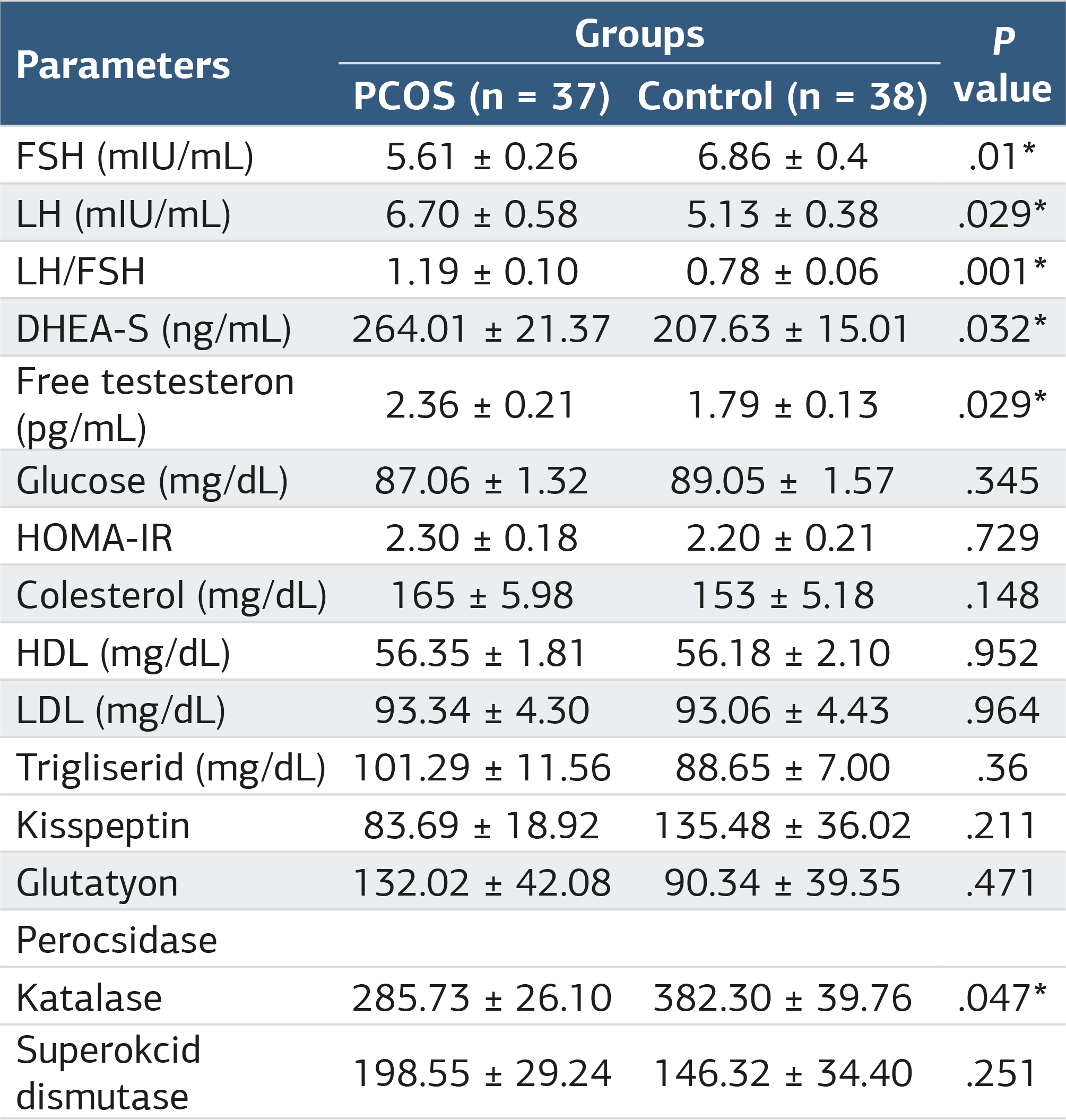
*: Statistically significant difference (P < .05)
Additional Information
Publisher’s Note
Bayrakol MP remains neutral with regard to jurisdictional and institutional claims.
Rights and Permissions

This work is licensed under a Creative Commons Attribution-NonCommercial 4.0 International License (CC BY-NC 4.0). To view a copy of the license, visit https://creativecommons.org/licenses/by-nc/4.0/
About This Article
How to Cite This Article
Onur Türkmen, İlyas Turan, İbrahim Veysel Fenkçi, Erhan Okuyan. Is there a relationship between kisspeptin, oxidative stress, and polycystic ovary syndrome?. Ann Clin Anal Med 2025;16(8):598-602. doi:10.4328/ACAM.22783
Publication History
- Received:
- 22.06.2025
- Accepted:
- 28.07.2025
- Published Online:
- 31.07.2025
- Printed:
- 01.08.2025